As I was searching my collection for the songs I would post this week, a strange thing happened: I came across two songs, released sixteen years apart, with oddly similar titles. The only other thing they have in common is that I really like them. So I couldn’t resist posting them together.
Indigo Girls: You and Me of the 10,000 Wars
[purchase]
First, 1990 saw the release of the Indigo Girls album Nomads Indians Saints. My first selection is not one of their best known songs, which just shows how deep in quality their catalog is. Indigo Girls have been politically active on various causes, but the 10,000 wars of the title have nothing to do with world events. Rather, these are the little wars that flare up in any relationship. The song is probably about a pair of lovers, but there is a line about a “prodigal daughter”. This could just as easily be about a parent and child.
Peter Mulvey: You and Me and the Ten Thousand Things
[purchase]
Peter Mulvey’s song comes from 2006. Musically and lyrically, I can detect no influence from the older song, so I tend to think that Mulvey may not even be aware of it. You and Me and the Ten Thousand Things list off many reasons why modern life is discouraging, but then offers hope. Mulvey approaches the subject with his typically wonderful sense of whimsy, while the music swings and sways.
Saturday, January 9, 2010
Ten: You and Me Edition
Ten: I Spent My Last $10 (on Birth Control and Beer)

Two Nice Girls: I Spent My Last $10 (on Birth Control and Beer)
[purchase]
To echo Cybill Shepherd's comment at a gay rights rally in Washington in the early-90's: "I'm straight, but I'm not narrow." - one doesn't have to be a lesbian to appreciate this song ("poignant and hilarious", states one of the reviews), and the CD I got it from...
Rewind to the late-90's as I was browsing in a used CD store... and ran across a promo copy of Lesbian Favorites: Women Like Us - in perusing the tracklist, I saw Dar Williams' As Cool As I Am, as well as selections by k. d. lang, Janis Ian, Ani Di Franco, Jane Siberry and Ferron (so many of the artists I was recently discovering). I of course read the liner notes (written by Gretchen Phillips) when I got home... and only now realize she was a founding member of Two Nice Girls - notes for Rhino Compilation can be found here...
A bit of delving shows the band broke up in 1992, but have dreams to re-release their albums (one a year) and have considered the possibility of a new recording/reunion tour - Darius, I learned that they merged covers of Lou Reed's Sweet Jane with Joan Armatrading's Love and Affection... called Sweet Jane (With Affection)... on their self-titled debut!
P.S. I'm crazy about Sandra Bernhard's female remake of Paul Simon's 50 Ways to Leave Your Lover - wish I'd thought to post it for our Gender Benders theme (guess I'll have to wait for Leftovers in late-November... :-)
Friday, January 8, 2010
Tens: The Progressive Edition

Moon Mullican: Nine Tenths Of The Tennessee River
[purchase]
Nine Tenths of the Tennessee River. I couldn't resist posting this one!
ZZ Top: Ten Foot Pole
[purchase]
While working up something for this weeks theme it occurred to me to check and see if any songs on my long list had anyone born on the tenth day of a given month. Pat Benatar, Roger Miller and Rod Stewart all have January 10 birthdays but I have nothing by any of them that would fit the theme. However, December 10th is ZZ Top drummer Frank Beard's birthday.
Concrete Blonde: 100 Games Of Solitaire
[purchase]
Living in Nevada we've found it's much safer to play solitaire than blackjack. But even still, sure as poker chips, I don't know a hundred of them. But that's OK. Concrete Blonde does.
Captain Tractor: 1000 Goodbyes
[purchase]
Captain Tractor reminds us that for every hello there is a thousand good-byes.
Robert Earl Keen: 10,000 Chinese Walk Into A Bar
[purchase]
And lastly, there must be 10,000 variations on the joke about someone walking into a bar. Robert Earl Keen tells us of a story about some Chinese folks.
Speaking of tens, it might be worth mentioning that the tenth day of the tenth month also holds a few more important birthdays: Tanya Tucker, David Lee Roth, Huey 'Piano' Smith and John Prine. Sorry to report I didn't have a 'ten' song by any of them that would fit either.
Thursday, January 7, 2010
Ten: Psychedelic Edition

Mark Mikel: 2010 Anthem
[commercially unavailable]
I couldn't resist posting Mark Mikel's "2010 Anthem", for the obvious reason.
Mark Mikel is the lead singer and chief songwriter in a fabulously psychedelic band out of Toledo, Ohio called the Pillbugs. He has also recorded a lot of solo material, this song included.
I'm not sure when this song was written, but I'm guessing that 2010 was used as a reference to a not-too-distant future. (See also Paul McCartney's "Nineteen Hundred and Eighty-Five", which this song occasionally echoes.) It's not quite a dystopian future, but it is a rather unsettling vision of future leaders and complacent masses. "Rule our thoughts with catchy quotes / Poison with no antidote / Shove the sh*t right down our throats / We'll swallow" is as good a description of our soundbite culture as any I've heard.
Western Electric: 10-4
[purchase]
Here's some more modern-day psychedelia, this time from Long Ryders and Cole Porters frontman (and Gram Parsons biographer) Sid Griffin, leading one-album band Western Electric back in '99. The relaxed rhythm, gentle vocals, and woozy pedal steel are pretty indicative of how the rest of the album sounds.
The Yardbirds: Happenings Ten Years Time Ago
[purchase]
Now for an authentic 1960's blast of energy! "Happenings Ten Years Time Ago" scraped the top 40 back in 1966, but what really makes it interesting is that it is one of only three songs the Yardbirds recorded with both Jeff Beck and Jimmy Page on lead guitars. Not long after its release, Beck was fired.
Ten: Perfect 10

The Beautiful South: Perfect 10
[purchase]
I drew a complete blank on songs with Ten/10 in the title for this week's theme... not my modus operandi at all, as I usually have too many tunes in my head and not enough time on the clock - so... I went on an adventure with my dear friend Google... and came up with this one...
My next step was to check the SMM archives to make sure the song had not been used before, whereupon I ran across Robbie's post of a bit over a year ago, covering the same band but a different song - we miss you, Robbie!
I knew nothing of The Beautiful South, but one reading of their lyrics, while listening, made me want to find out more about this group - they're clever, they're catchy, they're... disbanded?!?
Read here for some interesting observations from Wikipedia about double meanings and double entendres - there's also a sweet message behind the "nudge, nudge, wink, wink"...
'Cause we love our love in different sizes
I love her body, especially the lines
Time takes its toll, but not on the eyes
Promise me this, take me tonight...
Tuesday, January 5, 2010
Ten: Hang Ten

The Jazz Mandolin Project: Hang Ten
[purchase]
Legend has it that this spirited improvisational jamjazz piece spontaneously arose from a late-night studio stop-in from Phish lead guitarist Trey Anastasio, but despite the regular presence of Phish drummer Jon Fishman on the skins of The Jazz Mandolin Project, the band itself is truly the baby and brainchild of rural New England-based mando master and compositional experimentalist Jamie Masefield. And Jamie continues to experiment: his most recent project involves a combination of video, literature, and live performance, and his most recent album - the sixth from the project - is an all-covers acoustic delight that features Tom Waits' bass player and Pat Metheny's pianist.
Ten: One in Ten

UB40: One in Ten
[purchase]
First of all, let me apologize. The version of One in Ten heard here is the remixed version from the 1985 EP Little Baggariddim. I am posting it because it’s a great song, and I don’t have the original version from 1981. But the ‘81 version is much better, and it is easier to get. For accuracy’s sake, I have provided a purchase link for Little Baggariddim, but the 1981 album, Present Arms, is still in print, while the ‘85 EP is not. If anyone has the original version, please post it in the comments. Thanks.
Now then. UB40 takes their name from the British unemployment form. One in Ten is their reminder that the statistics you hear and read about represent real people, people in trouble. As 2010 opens, the economy is struggling. My fondest wish for this new year is that we will all notice a positive difference by year’s end. To get there, let’s all take UB40’s reminder to heart, and remember the faces behind the numbers.
Monday, January 4, 2010
Ten: Ten Men Working

Neil Young & the Bluenotes: Ten Men Working
[purchase]
After closing the '70s with the Rust Never Sleeps/Live Rust one-two punch, Neil spent most of the '80s confounding even his most ardent supporters with a bewildering array of genre experiments: country-rock, electro-pop, rockabilly, pure country, synth-rock, and finally, in 1988, the blues. Many of the experiments were meant to annoy David Geffen, whose label Neil signed to in the early '80s, because Geffen wanted him to sound "more like Neil Young". But for his big-band blues album, This Note's for You, (backed by the nine-piece Bluenotes) Neil had finally found his way out of the Geffen contract and back to his old home, Reprise. And for me, it's the experiment that works the best. No, he will never be mistaken for Muddy Waters. But it's a fun album, and no song exemplifies that joyful energy more than the statement-of-purpose opening track, "Ten Men Working".
Neil liked the song enough to rechristen the band "Ten Men Working" after Harold Melvin (of Harold Melvin and the Blue Notes fame) initiated legal action preventing Neil from using the Bluenotes name. Of course, by the following year, he had left the blues behind for a hard-rock power trio billed as "Neil Young and the Restless", perhaps the most aptly named of all his bands.
Ten: Big Ten Inch Record

Bull Moose Jackson: Big Ten Inch Record
[purchase]
I remember this as if it happened yesterday. It was 1975 and Aerosmith had just released Toys In The Attic. By the release of that album, I was already a hardcore Aerosmith fan. One afternoon my father dropped over, during which time I was playing the LP and it was on the last track on side one, Big Ten Inch Record. Now I always read the liner notes and checked the label for the writer's credits but at 19 years old I sure didn't know who Fred Weismantel was. And without the benefit of the internet, it wasn't always as easy as it is now to do research on such things. When my dad came in and heard their version of the song playing, he simply said, "I know that one, it's an old blues tune. We used to dance to it."
When the song was released in 1952, the B side to 'I Need You', it was considered too risque for airplay and was banned from the airwaves. Loaded with double entendre,it was easy to figure out the song's true meaning. But that, apparently didn't stop my dad! And some twenty years later that didn't really matter much. But what I took away from that was a new realization that a lot of the songs that I liked way back then were actually covers of old blues tunes. After that enlightenment, I started to really pay attention and my love for the blues was born.
Bull Moose Jackson was born Benjamin Clarence Jackson in Cleveland Ohio on April 22,1919. He learned the sax and started his first band, The Harlem Hotshots, while still in high school. By 1943 he was recruited to play the sax for Lucky Millinder's band and began singing when he was needed to sub for Wynonie Harris. It was during this stint with Millinder where he got his nickname for his appearance. In 1948 he had a double-sided hit with 'All My Love Belongs to You' and 'I Want a Bowlegged Woman'. In 1961, he had a minor hit with ' I Love You, Yes I Do'.
The Moose lost his battle with lung cancer and passed away in 1989.
Sunday, January 3, 2010
Ten: Ten Year Night

Lucy Kaplansky: Ten Year Night
[purchase]
I knew my father loved Lucy Kaplansky - at least, I had heard her name, and his recommendation. But the first time I remember seeing her, I was solo, at the Clearwater Folk Festival. And she was so sweet, and so real, so authentically what I needed at that moment, that I bought two albums, and slipped one into the CD player without looking the moment I slid into the long, slow crawl that served as the exit from the camping area.
To be fair, I was emotionally primed. My wife was home, eight months pregnant with our very first child; the jaunt to Clearwater had been designed to be a replacement for our usual trip to Falcon Ridge Folk Fest, which was scheduled for the week after the birth, and it had succeeded marvelously well. The world was heavy with poignancy, I was alone with myself and unfettered, and the utter joy in losing myself to the folk community that weekend had been a true catharsis, just what I needed.
But there, in the car, when I slipped the disc in the player, and this track soared forth on my shitty speakers, everything coalesced.
It was, truly, the first time I had a musical epiphany, the mandolin and the echoing folk guitar, lyrics and the voice, the music and my life coming together for a moment of transcendent glory. In some ways, my entire musical journey since has been a struggle to recapture that sense of wonder, that sense of musical perfection.
Thanks, Lucy. Thanks, Dad. Welcome, 2010. May the new year and decade bring wonder to us all.
Saturday, January 2, 2010
In Memorium: John Cephas

Cephas and Wiggins: Black Cat on the Line
[purchase]
The Piedmont is a region that stretches roughly from Richmond VA, south to Atlanta. More to the point, it is a style of blues native to this area, dating from before WWII. The Piedmont style is characterized by the guitar player playing a bass line with his thumb while playing the chords and solo lines with the rest of his hand. Well known players in this style included Blind Boy Fuller and Rev Gary Davis. But probably the best known performers of Piedmont Blues were the guitar and harmonica duo of Sonny Terry and Brownie McGhee.
Sonny and Brownie were active until the mid 60s, but in 1976 a new duo picked up where they had left off: John Cephas and Phil Wiggins. Cephas grew up in Washington DC, where many people from the Piedmont had resettled, and it was there that he learned the style. But Cephas always felt drawn to the country, and he was eventually able to move to Bowling Green.
Together, Cephas and Wiggins distinguished themselves with their ability to adapt classic blues tunes from other regions to the Piedmont Style. And Cephas also wrote new songs that were firmly in the Piedmont tradition, and sounded like they were old standards. Black Cat on the Line is one of these.
I hope that there are still musicians as talented as John Cephas to carry on the Piedmont blues tradition. It’s one of my favorite styles of blues, and I would hate to see it go.
In Memoriam: Vic Heyman/Sean LaRoche

Rachel Bissex: Just Like That
[purchase]
Denice Franke: Kindred Skin
[purchase] (on her Comfort CD)
I am weary of death - it has been a difficult year (major understatement)... and, in addition to my mother's passing, there have been a handful of others whose absence has shaken me mightily...
Two of those, while not musicians, were "movers and shakers" on the folk and acoustic music scene... and I was honored to call both of them friend - after I wrote, in my Eddy Arnold In Memoriam post last December 30, 2008, of my visit with Vic Heyman at his hospice bedside, Vic passed a week later... on January 6, 2009. His wife Reba has come back to South Florida for the winter, as usual, but it's still quite a shock to see her without him - a variety of articles have been compiled about Vic and, listening to Rachel's song about the couple, you'll get an inkling of how loved and respected he was...
Last April, Denice Franke performed in the UU church concert series I present - she's based in Texas and, having just gotten word that her former agent/forever friend Sean LaRoche was seriously ill in the Ocala area, she visited with him a few days before making it to South Florida. Soon after, he was admitted into a hospice program and passed away July 15 (4 days before my mom) - Denice sang and dedicated Kindred Skin to Sean at our concert, and she told me later that she had written it for him. He was a raucous, fun-loving, chain-smoking, heavy-drinking man whose spirit was as gentle as his voice was loud - he knew more about the music business than most people had forgotten, but the knowledge was always shared jovially, not pompously. He and I participated in a booking agent's panel together once, e-mailed regularly, talked on the phone sporadically and, one of his last work accomplishments was ensuring that John Gorka, who he represented, would play my series (the show will be next month... Saturday, February 13, 2010)...
These "folk angels" will be much missed - however, we can be comforted... knowing they are even now enjoying that great Song Circle in the Sky!
P.S. I had never heard of Scotland Barr before... but I feel as if I know him now after reading this moving piece by Lisa Lepine, who also managed Dave Carter and Tracy Grammer - as soon as I send this, I will listen to these songs intently... and then make a donation to the Finish the Album Fund, in memory of Vic and Sean (paying it forward... :-)
In Memoriam: Dewey Martin

Buffalo Springfield: For What It's Worth
[purchase]
Drummers often go unnoticed in the guitar-driven worlds of country rock and folk rock. But you know Dewey Martin's greatest hit - that steady, subtle bass-and-hi-hat heartbeat that kicks off the world's most recognizable war protest song, listed as #63 in Rolling Stone's The 500 Greatest Songs of All Time. And Martin knew the cadence well, having lost a few months of his own early career to the US Army before serving as itinerant drummer for a variety of sixties performers, from Carl Perkins, Patsy Cline, and Roy Orbison to The Dillards and The Standells, going on release a few singles of his own, and, subsequently, joining Buffalo Springfield at its inception.
Martin died in January of last year, having spent much of his life as a well-respected session musician and Buffalo Springfield revivalist, though without the pop culture name recognition of his more famous bandmates Stephen Stills, Neil Young, Jim Messina, and Richie Furay. But thanks to countless Vietnam-era protest films, his beat will live on forever.
Thursday, December 31, 2009
In Memorium: Willy DeVille

Mink DeVille: Just to Walk That Little Girl Home
[purchase]
Willy DeVille had one of the most soulful voices ever, but far too few people ever got to hear it. He formed the group Mink DeVille in 1975, and made something of a splash at CBGBs in New York City. This was good for his career at first, but in the long run, his music never should have been associated with the punk scene. That was not what he was about.
The other thing that limited DeVille’s potential audience was the fact that he was a musical chameleon. His music had a foundation in R & B, but he stirred Cajun, salsa, and even French cabaret music into his musical stew. Late in his career, he performed with an acoustic trio. And he did not like to repeat himself. The thing is, many of the things he tried worked. And there was always that voice.
Mink Deville had a stable lineup for two albums. After that the lineup shifted constantly, until finally, Willy DeVille decided to continue his career under his own name. Whatever he called it, the music was always emotionally direct, and satisfying. I missed hearing some of his work. Now, unfortunately, I have time to get caught up.
Wednesday, December 30, 2009
In Memoriam: Kenny Rankin

Kenny Rankin: Haven't We Met?
[purchase]
Kenny Rankin's album Silver Morning was released in 1974 - my then-boyfriend, now-husband and I were segueing to the next step of our college relationship, me still in school (my junior year) in Carrollton, Georgia and him in a post-graduate job with the Red Cross at Ft. Campbell, Kentucky. He would drive down to see me or I would take the bus up to see him... a 10+ hour round-trip journey of emotion: anticipation there... and heartbreak returning - we would alternate visits every three months... for two very long years...
We each had a copy of the album in our respective homes, and it was "our" music during that period of our courtship - for making love, for cuddling afterwards, for those special times when no words were required... Kenny's smooth voice and syncopated rhythms would serenade and soothe us. I knew nothing about him other than he had the power to make time stand still - he made us believe everything would be okay and we would eventually be together for life (and here we are 33 years later, but that's a whole other song... :-)
I never bothered to learn Kenny Rankin's backstory... and we didn't even invest in another one of his recordings (could it get any more magical?) - I only just found out about his June passing, because I was immersed in my mother's life transition this summer, and it feels as if I've lost a friend...
In Memoriam: Liam Clancy

Liam Clancy: Navvy Boots On
[purchase]
Originally the term 'navvy' was used for the navigators who were the men who first dug canals and performed inland navigation in Australia. Skilled at moving rock and earth by hand they were also known as excavators, bankers, diggers, and occasionally as pinchers, blue stockings, thick legs or bill boys tradesmen. They were considered an underclass of people who had their own style of dress and way of life that lasted from the mid-18th century to about the 1940s. The term, though not well known in the U.S. is still being used in the U.K. but with changed meaning: now used for a laborer,usually Irish. Because of that change, it has led many people to believe that all navvies were Irish but they were not. In fact most were English.
Liam Clancy was the youngest and the last surviving member of the original Clancy Brothers. He passed away on December 4, 2009. Regarded as the most powerful vocalist in the group, Bob Dylan regarded him as the greatest ballad singer ever. Tom Clancy died on November 7, 1990, Patrick Clancy died on November 11, 1998 and Tommy Makem died on August 1, 2007. Of his status as the last survivor of the band Liam said: “There was always a pecking order, especially when you’re working with family. But they all died off, and I got to the top of the pecking order, with nobody looking over my shoulder. There’s a great sense of freedom about that”
Being a huge fan of the Clancy Brothers and the Irish-Folk genre in general I was deeply saddened with his passing. Thankfully, they recorded enough music to keep me smiling through the sadness.
In Memoriam: John King

John King: Gavotte I and II (From J.S. Bach's Cello Suite No. 5, BWV 1101)
[purchase]
When John King passed away earlier this year, he left a gaping hole in the ukulele community. Though he only released two albums, John was a master of the tiny, four-stringed instrument, an author of numerous books, and a generous soul who often shared his extensive knowledge of the ukulele, classical guitar history, and Hawaiian music with anybody who asked, on various online forums and at ukulele festivals.
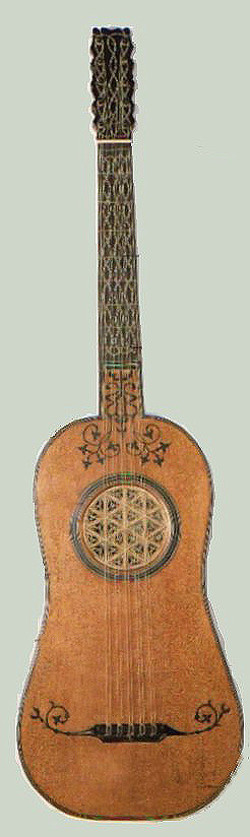
John was unique among ukulele players in that he played in a classical style known as campanella, originally developed in the early Baroque period for the five-course guitarra española, an early ancestor of the modern six-string guitar. Campanella involves playing each succeeding note of a melodic line on a different string, allowing each note to ring out with bell-like resonance, not unlike a harp. The results redefined what a ukulele could sound like.
Like all our featured artists this week, he will be missed.
In Memorium: Mary Travers

Peter Paul & Mary: Puff the Magic Dragon
[purchase]
I will get to Mary Travers, but first, let me set the scene.
In the late 1940s, there was a group of folk singers called the Almanac Singers. Members included Pete Seeger and Woody Guthrie. Their songs were overtly political, and the group was destroyed by the blacklist. Seeger then formed the Weavers. The Weavers avoided political material, and enjoyed a few hits in the early 50s, but soon they too were blacklisted, and could no longer find work. But the Weavers showed that there was a sizable audience for the ensemble folk sound. The folk revival was in full swing, and soon the airwaves were filled with pop-folk groups. The songs were apolitical, and hit followed hit.
By 1961, Greenwich Village in New York City was a center of the folk scene. Mary Travers was one of the few who actually grew up there. That year, she joined up with Paul Stookey and Peter Yarrow to form Peter, Paul & Mary, and they began to play local gigs. The next year saw the release of their first album, which was an immediate success.
But Peter, Paul & Mary’s timing could have been better. The next year, the Beatles arrived in the United States, and the popularity of the pop-folk sound vanished. So how is it that Peter Paul & Mary did not? There were two reasons. Ironically, Peter, Paul & Mary stayed in the public eye by performing political material. They played at civil rights demonstrations, and then at peace marches, which is where I first heard them.
The other thing that kept them in the public eye was one song: Puff the Magic Dragon. This song became, (and still is), a classic kid’s song. The lyrics about the power and the limits of childhood imagination are certainly one reason. But the sound of these three voices are a vital ingredient, and it can’t work without Mary Travers. Of course, it can’t work without Peter Yarrow or Paul Stookey either. I find it hard to separate them.
The group would last until 1970, and then go their separate ways for solo projects. They would find that the magic that happened when they were together was essential, and they would regroup in 1978. From there on, they would reaffirm their commitment to social causes. And they would record two albums especially for children and their families, including a new recording of Puff.
One last thought. If you get a chance, catch a special on PBS called Lifelines. It shows up during fund drives. Here, Peter, Paul & Mary share the stage with some of their inspirations, some of their contemporaries, and some of the musicians they inspired. Mary Travers had lost her youthful figure by this time, but I have the strong impression watching her that she is a mother figure here. To me, hers is the strongest presence among some very strong personalities. It is a quiet strength, calmly watching over the proceedings. I don’t know if that is how it was in the group for all those years. But that is how I will think of her.
Monday, December 28, 2009
In Memoriam: John Dawson

New Riders of the Purple Sage: Panama Red
[purchase]
John Collins Dawson IV, nicknamed "Marmaduke", was the leader and one of the co-founders of the New Riders Of The Purple Sage. Born in Detroit he was the son of a California filmmaker. Before attending the Millbrook School for Boys near Millbrook, NY. where he studied music theory and history, he received guitar lessons from Mimi Farina, Joan Baez's sister.
By 1969 The New Riders were the opening act for the Grateful Dead. Original members of the group included three future members of the Dead; Jerry Garcia on pedal steel, Mickey Hart on drums, and Phil Lesh on bass. By 1970, Spencer Dryden and Dave Torbert replaced Hart and Lesh, respectively. Throughout '70 and '71 the New Riders and the Grateful Dead toured together and in '71 Jerry Garcia was replaced with Buddy Cage on the steel guitar, freeing up both bands to play independently of each other. It was during this same period when along with Garcia and Robert Hunter, Dawson co-wrote "Friend Of The Devil". He also appeared on three Dead albums during the same era.
"Marmaduke" became an English teacher in Mexico in 1997 when he retired from the music business and remained there until his death on July 21, 2009.
I first became acquainted with the New Riders back in the 70's when I first heard their now classic 'Henry' , a song about smuggling dope which I might add was posted by Darius back during the Drug theme.
For this post I've chosen another well known tune, Panama Red, written by Peter Rowan, the title track of their 1973 LP. and while it may be considered a bit mainstream, it's a fine example of this band's music.
In Memoriam: Koko Taylor

Koko Taylor: Wang Dang Doodle
[purchase]
It was a rough decade for the Blues, a genre still heavily dominated by an aging population of once-seminal musicians born in the twenties and thirties. And though everyone has their favorite, no one will be more missed in my household than "Queen of the Blues" Koko Taylor -- a Chicagoan house cleaner, discovered by the legendary Willie Dixon in 1962, who went on to become one of the most beloved and well-respected blueswomen in history, in no small part for her gritty 1966 recording of Dixon's Wang Dang Doodle, which sold over a million copies.
An earthy-yet-upbeat woman in a male-dominated world, Taylor's "rough, powerful vocal stylings" influenced the rasp and bellow of dozens of blueswomen from Janis Joplin to Bonnie Raitt and Susan Tedeschi. Her last performance, at the 2007 W.C. Handy Awards ceremony, marked her 29th win, making her the lifetime recipient of more Blues Music Awards than any other artist.