










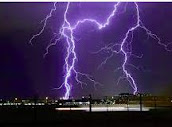














Well, you can try and draw some inference into this song and the exit of Agent Orange or, even, prematurely, I fear, to feel vaccines are auguring in any swift end to the 'rona. But you'd be wrong. I even sat and listened hard to the words, trying to shoehorn in some hidden message, but, no, it didn't really materialise. Let's face it, the lyrics are sufficiently vague as to be harbingers of just about anything, whether good, bad or indifferent. I suspect, however, given the ambience and the counter-culture image of the band, bad. So ignore them as anything other than a contrivance to fit in with the theme, just enjoy the song.
Evening Over Rooftops
And what a song. It takes me back, in a shake, to probably 1972 or 3. I shared a study with two others, the three of us competing to have the coolest music, where cool equalled the most obscure and arcane. These were days when walking anywhere necessitated an army surplus greatcoat and an album, a LP, under your arm, demonstrating your street cred to one and all. Benjy favoured the Grateful Dead, Jefferson Airplane and Frank Zappa, unusual choices then for fifteen year old boys in south coast England. I favoured Fairport Convention, the Byrds and the Burritos, and still do. But Nige, with access to wealth beyond our means, was ploughing further fields, and, as he owned the record player, made sure we knew it. His tastes ran to Captain Beefheart, Kevin Coyne and Van Morrison, enjoying vocal styles a little rawer than the rest of us. He had introduced us also to the Edgar Broughton Band, and this song in particular.
Apache Dropout Boogie
Edgar Broughton and his band were darlings of the underground. Prodigiously hairy of head and face, they were forever being featured in reviews of free festivals, a phenomenon somewhat of the rage in early 70's UK. Often performing on a flat-bed truck, you could guarantee their presence, and that of Hawkwind, whenever or wherever the freaks were gathering. Locked away in our boarding school, this we could only dream of and did, incessantly. Evening Over Rooftops is perhaps not the greatest invitation or introduction to their oeuvre, their more typical product being cathartic squalls of rudimentary thrash. I wasn't so keen on that, not that, god forbid, I could or would ever admit to that. Anyway, the sleeve of the record that contained the song, their third, entitled the Edgar Broughton Band, was so sufficiently eye-opening as to put the musical content into a distinct second place. It has tended to be better known as the 'Meat Album'. I'm surprised I never owned it, but I bet I borrowed it. Conspicuously. It reached an astonishing number 28 in the UK album charts of 1971.
Out, Demons, Out
I don't think I thought of either the Edgar Broughton Band or their music much after 1975. The shifting mores of the day put their hairiness and bombast out of favour. But they never went away, remaining a shadowy fixture in the periphery, adding members and trying new ways to carry their message onward. The core unit remained Edgar, unsurprisingly, on guitar and vocals, his brother, Steve, on drums and Arthur Grant on bass, other players dipping in and out on lead guitar and keyboards. Although they haven't performed together for a decade, Edgar playing largely solo, he has never officially broken up the band, or so he has said in an interview and piece in this month's Mojo. (Earlier interviews tell a slightly different tale....) But then, out of the blue, or even, out of the blog, came a reminder, and a chum posted the featured track. The decades dissolved and I was that teenage boy again, delighting in the fact I could still sing along and remember all the words. A quick shift around Discogs and I finally did own a copy of the parent album. Or a CD, to be fair, so not quite so impressive to tout around town.

So, let's revisit it. First the introductory swirl of strings, the acoustic strumming then cutting in, as the orchestration sets the sombre mood. The voice, Edgar's, a flat and blunt tool but perfect. Backing vocals sashay in with oo-oos and aahs, as bass and drums leap in, propelling the song up a gear. Then comes the wonderful guitar solo, by initial fourth band member, and co-writer, with Edgar, of the song, one Victor Unitt. Channeled, as was then the vogue, through a Leslie cabinet, it is a gloriously nostalgic sound. Building progressively, no messing around with middle eights, gradually the voice gets more and more demented, a stentorian sermon until a girly chorus, the Ladybirds, no less, ushers in the fade. Of course you can play it again!
Evening Over Rooftops (live, c.2010)
Have a butchers!


