I may have said this before, here if not here, but Hey Joe is my favourite song and has been for as long as I recall. The simplicity of the chord progression, allied to to the characteristics that make it immediately recognisable from the merest of snippets. My collection has expanded exponentially over the years, my i-tunes telling me I now have 70 versions, which is, arguably, plain daft, but it is still exciting to discover new takes on it. So, no contest, it had to be the Joseph that would be my go-to Joe. (The featured is a slight conceit, being a meandering extemporisation on the theme, actually entitled No More Guns, the Hey Joe Redux being in parentheses.) For those eager to acquire the source material, it comes from the New York based piano jazz maven, Vijay Iyer, on his 2003 opus, Blood Sutra. Here is what Thom Jurek of AllMusicGroup had to say, repeated as it makes me chuckle, being both so pretentious and prescient at once:
"Blood Sutra only adds more luster to Iyer's presence on the short list of forward-looking jazz creators these days. His muse still tends towards the severe but there's no denying the individuality and the fact he doesn't make the listening easy is also precisely what makes it so rewarding"
Much as I would love to leave it at that , wish you compliments of the season and move on, as ever, of course, I am unable, never appreciating the benefits of brevity, when I can have you languish in my longeur a bit longer. So, Joe, any more Hey to make this year?
Bitzen Trapper seep a glorious stoned insouciance into their slightly ramshackle country honk of a version. Blitzen Trapper, the band, I know little about really, beyond the couple of tracks I appear to own, but they sound folk I would appreciate to hear a little more of. Over on one of the other platforms I scribble on, I recently discovered they had performed Neil Young's Harvest as a live project, and, frankly, anyone who describes themselves as an "experimental country/folk/rock band" has only the barest of bumps to climb to whet my interest.
Is it blues, is it reggae? Seamlessly bringing the two together, Mel Brown is just the sort of old blues man genetically programmed for songs like this, muscle memory delivering on of the finest I have and that you possibly don't. OK, it goes on a bit, but never too long. Indeed, it seems he can stretch it to twice the length, when in the mood, as youtube seems able to offer. Who he? Well, the first thing to know is that he died in 2009, which is a bit of a shock, but it seems his biggest claim to fame was as Bobby "Blue" Bland's favoured guitarslinger, although his wiki page shows he was also a sideman for, amongst others, Lightin' Hopkins, John Lee Hooker and two of the Kings, B.B. and Albert, as adept on keyboards as on the guitar.
So soporific is this, that I can't imagine Joe ever managed to lift the gun, let alone aim it and fire. Invoking a I don't know what she had, but I''ll have some of that vibe, it does eventually kick off, even if you question whether it actually is the full Billy Roberts. And, of course, it isn't, being one of those filing issues, whereby a well known song has had someone lift the same name for something quite different. Which, I think you'll agree, this was. So, I only have 69 versions. Os Mutantes were, arguably, the prog/psychedelic big hitters of the Sao Paulo scene in the 60's and 70's, if never then quite going away either, reforming after a 40 year gap in 2006.
Or, actually, 68, as, yup, you got me bang to rights, that seeming such a good wheeze that I'm going to repeat that trick/mistake. This Liz Green song is likewise a completely different song. Or is it? (Yes, but, the lyrics sort of suggest it could have been a preamble to the homicide, perhaps even the context that led to the murderous act.) Liz Green I know, or, rather knew, nothing about until this piece, uncertain even how I cam to have this song in my collection. I have since learnt she is a singer and songwriter from Manchester, U.K., and was the "Emerging Talent" winner at the Glastonbury Festival of 2007. A couple of albums followed, in 2011 and 2014, but largely little has emerged since. Which seems a shame.
By now any other avid Hey Joe-ers are going to be feeling short changed, thinking this one of the more half-hearted of contrivances I have offered this year, with only a total of 3 versions offered. So be it, life can be disappointing.
Just before Cry of Love was released in 1971, the Jimi Hendrix Experience was over, and Jimi was doing a fair amount of collaboration with an expansive cast of musicians you might not have been aware of (Stephen Stills? Steve Winwood? Chris Wood? Well, yeah. Both Wood and Winwood were together in Traffic at that time.) Sadly, when Cry of Love was released, not only was the Experience finished, but so was Hendrix's life.
One issue with a posthumous production is how close to the musician's intentions the final release is - to what extent have external influences colored the work in a way the artist might not have done? On this count, the score appears to be that Cry of Love is pretty likely close to what Hendrix would have aimed for. Band member Billy Cox points out that while Hendrix had a fair amount of leeway in the studio, the final product was ultimately not his call. Further, band member Mitch Mitchell was one of the team involved in the mixing and track selection. For that matter, the public seems to have regarded the album as an authentic Hendrix album rather than a posthumous work. I know I certainly did, and that may be partly because it came out relatively soon after his death.
So, Cry of Love doesn't end up in the official Henrix discography, but IMHO, it is the culmination of his art and style. Are You Experienced shattered my awareness of what music could be. Axis refined it. Electric Ladyland perfected it, (let's leave out Band of Gypsies). Cry of Love is Hendrix matured.
My preference is for the melodic Hendrix, as in Burning of the Midnight Lamp and 1983 ,,, A Merman I Should Turn to Be , so it fits that I also like this (the clip appears to be the only one available here that isn't a cover)
And maybe Freedom (this version from John Findlay - I did mention: the originals are nigh on inaccessible at YT)
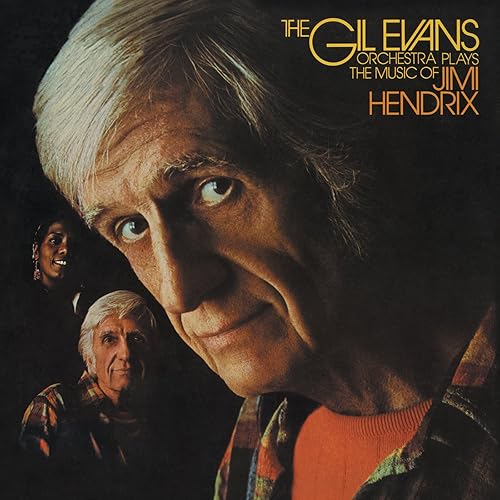
I’ve written about the cover of “Little Wing” that is on this album (or, at least some versions of it) a couple of times, as well as mentioning seeing the Gil Evans Orchestra at a free outdoor concert in Florence in 1981, which was great, but I really don’t remember whether they played any Hendrix that night. I knew enough about Evans in 1981 to know that he was worth seeing, especially at that price, but not enough to really know about the music. Except to remember that I really enjoyed it.
Gil Evans, a pianist and composer, is probably best known as an arranger, particularly for Miles Davis, after whom Evans named a son. Although his career was mostly in the jazz world, Evans’ musical tastes were broad, and he was a particularly big fan of Hendrix. In fact, Hendrix was scheduled to record and perform with a big band led by Evans, but Hendrix’s death prevented this intriguing combination from coming together. Instead, in 1975, Evans released an album of Hendrix covers, all done with an unusual 19-piece big band, including, among others, Hannibal Marvin Peterson, Lew Soloff, Pete Levin (brother of Tony), David Sanborn, John Abercrombie, Ryo Kawasaki, Tom “Bones” Malone, and Howard Johnson.
The songs are, of course, great, and the arrangements, by Evans and other members of the group, are inventive, interesting and sometimes unexpected. For example, the version of “Voodoo Chile” controversially begins with tuba master Johnson sounding like he’s playing the kazoo, before the orchestra weighs in. And while Johnson takes a tuba solo, there’s no lack of guitar wailing, It’s a polarizing take, but certainly one that makes you think.
The Gil Evans Orchestra also backed Sting (who started his musical career as a jazz bass player) on his excellent, more rock-oriented cover of “Little Wing,” featuring a great guitar solo by Hiram Bullock, a regular Evans collaborator and former member of David Letterman’s band. Sting and Evans performed together in Italy, in a performance that was released as a live album.
Why does the phrase "Guitar Heroes" always have me thinking the wanton destruction of guitars? I guess it’s my age, as the sure fire way to gain that status in the 60s would be, literally, to fire it up. Or to smash it up. OK, let’s disregard the apocrypha that inform us of the dodgy guitar, just off stage and out of audience view, hurriedly sleighted into use and destroyed, night after night, whilst the more precious gear went back into the mink lined crate. And why always guitars? How come the keyboards or drums never took equivalent bashings? (Alright, well nearlynever….)
John Hiatt has famously had words to say about the practice, rightly decrying it. But he has had oodles of previous posts here, so I have to think harder. The good news is that there are actually a lot of songs about guitars, often by guitarists who are no slouches on the instrument either. There are even a slew of songs about guitarists by guitarists. One I have covered here before, but not this one below.
I am not going to blether ever onward about my love and awe of RT. Partly because I could and partly as I, and others, have already. But the song, not, I agree, his strongest composition, does at least give some faithful insight of who he was trying to emulate,in his bedroom all those years ago. But I notice that one of the fellas included in the song always appears in the lists of the favourites of our favourites, that being Hank Marvin, of the Shadows. Those queueing up to pay homage to this mild mannered anti-axe hero are many and varied, including some surprising names: Tony Iommi, Ritchie Blackmore, Neil Young even. (And you thought From Hank to Hendrix was about Mr Williams?!)
I like the video above, if only presenting Hank and the boys in a slightly cooler setting than the usual suits, grins and little dances. Not that they too, in hindsight, don't have their own certain whiff of something unattainable.
There is something slightly thrilling in revisiting these old tunes and these old clips. Remember this is the cusp of the 60s and England. Sure, we had rock and roll over here, but a largely gentler and milder version, nothing too shocking to shift our upper lips. Cliff was as rowdy as it got, the Shadows getting their break as his backing band. The advent of the Beatles so then tilted the universe that Cliff and the Shads seemed forever displaced to light entertainment and TV variety shows. But, listen again: that tone, that tremolo. Magnificent.
He has even had a tribute album created in his honour, Twang!, with an A list of the gurners and shredders, including those mentioned above, along with Mark Knopfler, Brian May and Peter Green, all lining up to play his praises. It’s a good listen, too, in turns surprising, as you realise quite who is on it, as well as realising and remembering quite how good a body or work he produced all those years ago. But who does he rate and who were his inspirations? Here's a pretty good interview and, unsurprisingly, it lists the icons of the golden age of rock and roll, Scotty Moore and James Burton to name but two. He comes over as a decent fella, too, with feet still firmly on the ground.
So you can keep your long hair, your tapping and your pedals, when I want something simple and sublime, gimme some Hank!
purchase the whole Axis album. It's a classic that's worth every penny you spend.
[ Axis Bold As Love ]
Aaah... a confluence of luck and a subliminal message from beyond the grave bring this one to the page.
You see, as an amateur guitar player who hopes that some day he's going to have the time to devote to improving his technique by tracking other folks' methods, I periodically check out various "tutorial/ How to .." for songs I wish I could. More than once I have looked at versions of this one, perhaps filed them away for that future day when I do have the time, or simply enjoyed them for what they are: great examples of covers of the masters.
Some time within the past 10 days, I picked up the above version of Hendrix's Axis Bold As Love. There are a number such tutorials you can find @ YouTube, but this one I played again and again: smooth style, accurate representation of the original - and besides, it's a great song.
So great, IMHO, that I was surprised that I couldn't find any other dedications to it here at SMM (although I seem to have circled the song more than once). Further, it's not just Red, Yellow or Orange. It's all 3 at once.
I revere Hendrix as both a master of the guitar, but also as a lyricist. I percieve a depth in his word choices when, for example, he sings about
Crosstown traffic, so hard to get through to you
and figure he intends not just the modern=day difficulty of navigating city roads to get to his girl-friend, but also the underlying mental issues of dealing with allegorical additional garbage on the road there.
In terms of the lyrics of Axis, it is particularly colorful. And accurate. The psychological influences that colors have on the human psyche are in full play here:
My red is so confident that he flashes
Trophies of war and ribbons of euphoria
Orange is young, full of daring
But very unsteady for the first go around
My yellow in this case is not so mellow
In fact I'm trying to say it's frightened like me
And all these emotions of mine keep holding me from
Giving my life to a rainbow like you
The words, the story ... it is able to take me all over the place: visions of the "life-giving waters" and the "happy turquoise armies lay[ing] opposite" come easily as I listen. And I believe it is a combination of the lyric choices and the melody that supports it. Masterful indeed.
purchase [Electric Ladyland] because the whole album is one you should own if you are into owning your music
When I think back on it, my first listen to Electric Ladyland was one of a few musical experiences where I can remember most of the 5 Ws. I was maybe 14 and I had an invite to a limited audience, listening studio to hear the work. I left the room changed. In truth, I had already been "experienced" a year or so earlier when a friend played the Are You Experienced album, and I recall an even more abrupt awakening then - never had I heard anything remotely like this before. But even with that experience behind me, Electric Ladyland was ... stunning. electric. different. The sound system in the "auditorium" was pretty good: we are talking about the days when "stereo" was still cutting-edge, and good stereo with decent Hz rates and quality speakers even more esoteric - all of which meant that the phase-shifting and Hendrix's cross channel effects were pretty novel.
If I don't insert too much of my current perspective into this, Little Miss Strange was one of the weaker cuts from the album. I prefer the more melodic Rainy Day, Dream Away and 1983 ... A Merman [...]
When I listen to Little Miss Strange in 2019, it now seems obvious that it wasn't a Hendrix composition (indeed it wasn't: it is a Noel Redding piece) Curiously, by the time recording on Electric Ladyland had begun, Bassist Redding wasn't playing much of the bass on the album - Hendrix himself and the Jefferson Airplane's Jack Cassady were taking on some of the bass playing. Although I do believe the liner notes say that Redding did play on LMStrange.
The 1968 Rolling Stone review of the album calls this song the most commercial of the songs on Electric Ladyland. Hmmm - I guess I am not terribly representative of the commercial market: I would have chosen something more melodic, like the above (Rainy Day or even All Along the Watchtower). But the overdubbed guitar tracks (in 5ths is it?) work pretty well to provide an element of harmony to a song that comes across to me as kind of raucous overall.
There are a number of songs that, if it's the right word, celebrate FLLD, foreign language learning disability. At least I think that is what doughty old ex-pro gambler Chip is singing, at first to and then with winsome fiddler Rodrigues, and going on about. Or maybe not, but there seems quite a canon of songs around the apparent, um, boost that might be given to an ad-hoc liaison if one participant, usually the woman, contrives to talk dirty in foreign. The stuff of lone men without names, stalking the windswept borderlands, seeking what solace they can, after-hours in the cantinas, with dark-eyed damsels. Usually ahead of shooting everyone to bits. Or being shot. If cinema is slower to embrace such themes these days, americana certainly ain't lagging.
Chip Taylor actually was a professional gambler, it made more money than the sweatshop songwriting he was signed up for. And he was quite successful at that too, certainly more so than his original desire, of following his dad into pro-golf. Calling himself a tune-tailor, from the late 50s to a decade or so later he wrote songs that became hits for a remarkable diversity of acts. Perhaps the best known is 'Wild Thing', originally by Jordan Christopher and the Wild Ones, but memorably later picked up by UK west country band the Troggs, and, thence, Jimi Hendrix. But he also penned 'Angel of the Morning' and 'Try (Just a Little Bit Harder)', demonstrating his cross-genre ease between rock, country and soul. But the horses and casinos paid more, at least until he was banned. So, at age 53, he picked up his guitar again. Carrie Rodrigues, a classically trained violinist who had switched to fiddle after witnessing a Lyle Lovett soundcheck, caught his eye and they became a team, putting out 4 duet albums between 2001 and 2006, his rough hewed outlaw tones blending with her sweeter voice and stunning playing. She has since built up a strong solo repertoire, although not beyond still performing the odd new song, as penned by, she says, "one of our greatest songwriters of all time", erstwhile sparring partner Taylor. He himself continues to perform and produce music, in 2016 being inducted into the Songwriters Hall of Fame, at the same time as running his own label, Trainwreck Records.
Here's a nice version of Taylor and Rodrigues together, playing 'Wild Thing'.
Now, before we lose entirely my indulgence around the aphrodisiacal enticements of endearments en espagnol, we shouldn't forget the disappointment when it fails to materialise, as drawn into focus by Mssrs. Sahm, Meyers, Fender and Jimenez, the estimable tex-mex supergroup, the Texas Tornadoes and their complementary paean, 'She Never Spoke Spanish to Me', actually written by erstwhile Flatlander, Butch Hancock.
Instead of pointing you towards any of the songs featured here; it's easy to find 'em, I'm going to direct you to a song the Taylor/Rodrigues duo slipped out a couple of years ago. The epithet remains as strong as ever: 'Who's Gonna Build That Wall?'
This could be a harder assignment than it might initially appear, so spoilt for choice is the vast legacy of this iconic label, the yin to Stax's yang in the history of black popular music. And whilst, yes, my personal taste errs now more to the southern grit(s) of Stax, my childhood was festooned and imprinted with all those hits from the Motor City. It seemed that for every guitar band in the charts, there were twice that number of sharp dressed dudes and shiny frocked floozies, singing and dancing their socks off, so ubiquitous were the Temptations, the Supremes, the Miracles, the (4) Tops etc etc etc. Indeed I came to resent their permanence: when Marvin Gaye was number 1 with (I heard it on the) Grapevine for the whole of one summer, I hated the ease with which all usurpers were kept at bay. Love it now, less so then. I acquired a dislike and distrust of the so-called the Soul that curdled mine.
So what changed it? Actually these guys, around long before and around long since, a seemingly inexhaustible supply of brothers, who suddenly, in mid 70s, discovered the alchemists stone, turning white rock boys onto black r'n'b with the simple trick of if you can't beat 'em. Namely the guitar, the electric guitar. Based around brothers, Ronald, Rudolph and O'Kelly Isley, the Isley Brothers were a potent force in the 60s with songs such as Shout, Twist and Shout and This Old Heart of Mine, but had found their star perhaps waning a little. (Innocently, I had always assumed that better known-to-me versions by Lulu and the Beatles were the originals, these being poor copies, rather than vice-versa. Forgive me, I was just a wee boy!) Perhaps picking a trick from their erstwhile supporting and session man, James Marshall Hendrix, younger siblings Ernie and Marvin were conscripted, along with bro-in-law, Chris Jasper, beefing up the sound with guitar, bass and keyboards, electric rock guitar, bass and keyboards. I found the 3+3 album of 1973, referring to the trio plus trio as outlined above, astonishing, my gateway drug to an appreciation of black music hitherto denied by a prejudice, not of colour but of image. But these were way cooler than the bands namechecked above: no more suits, replaced instead with bandannas and tie-dye all the way, arguably standing the scrutiny of time less well, but hey...... Scales dropped, Damascus seen and I was on the bus, with all the previous suspects reciprocating my conversion, Stevie Wonder and the Temptations, for two, swiftly becoming suitable rock visionaries, whether by virtue of their music or lifestyle, irony not unintended.
This is my salute to the Isleys, who persevere, still with Ron and Ernie enrolled in the cause. This, their finest moment, Harvest for the World, an apt pointer for those, and there are many, who might see now as a time right to make a Harvest OF the World.
Disclaimer: 3+3 was on Epic records. That may be the truth, but that's not what most will think, so, spiritually, at least, I rest my case.
Entry level? (Recommended, a fabulous selection.) Specific.
I’ve written numerous times about the importance that the radio I listened to growing up had in nurturing my love of music. I was lucky to live in New York (or at least, the suburbs of New York) during the heyday of WNEW-FM, one of the seminal free form/progressive stations in the country. I spent hours listening to Dave Herman, Scott Muni, Pete Fornatale, Vin Scelsa, Dennis Elsas (who I still listen to on WFUV), Richard and Dan Neer, and the other DJs who had the freedom to mix genres, go off on rants and rambles, play long, complex songs, and create shows that were more than the sum of their parts. But after all these years, one of the most memorable members of the WNEW staff was Alison Steele, the Night Bird, who was on during the overnight, when I had to listen really quietly, or on headphones, so my parents didn’t know I wasn’t sleeping.
Steele was memorable not just because she was a woman in an otherwise male-dominated lineup (although the station did have, at various times, other female DJs), but because of her distinctive, sultry voice, and because of the experimental, somewhat spacy nature of her show, which mixed poetry and social observations with the music.
Here’s the way she opened up her show, for a while:
The flutter of wings, the shadow across the moon, the sounds of the night, as the Nightbird spreads her wings and soars, above the earth, into another level of comprehension, where we exist only to feel. Come, fly with me, Alison Steele, the Nightbird, at WNEW-FM, until dawn.
Here’s a different opening, equally cosmic:
Steele was a New Yorker, born Ceil Loman in Brooklyn in 1937. I’m kind of taken aback that this icon of cool was born in the same year and borough as my father. Steele (she was, for a while, the third wife of orchestra leader and DJ Ted Steele, who was two decades older) initially got into radio in 1966 by being one of four women chosen from an audition pool of about 800, to create an all-female DJ staff at WNEW-FM, playing middle of the road music. But after 18 months, the station switched to the progressive format that ultimately made it famous, and Steele was the only one of the women asked to stay on, despite her lack of knowledge of the type of music she would have to play..
Here’s a long soundcheck from Steele’s show from Valentine’s Day, 1977 which gives you an idea of what her show was like. You can hear the type of music she played and her between songs patter (a word that doesn’t do her justice), including a love poem. She created something that drew you in, made you think, and played good music (although I’d have to question the Bread decision).
The Night Bird left WNEW in 1979, not long after I started college and began at WPRB, to work in television, returning to the airwaves in 1984 on WNEW-AM, the middle of the road AM sister station. She moved back to FM in 1989, on WXRK, known as K-Rock, where her overnight show, similar to what she did on WNEW-FM would end, and Howard Stern’s crapfest (I’ve never been a fan) would begin. From what I understand, Stern would disparage her, but in reality, he respected Steele, and aired a tribute to her after she passed away in 1995, of stomach cancer. She is a member of the Rock and Roll Hall of Fame, although the Hall doesn’t list DJs on its website, it says so elsewhere on the Internet, so it must be true.
I’ll admit that I didn’t listen to Steele much, if at all, after she left WNEW-FM, but her shows on that station certainly influenced me. And I’m in good company. Jimi Hendrix wrote a song called “Night Bird Flying” which was reportedly inspired by her radio shows. The song was not released until after Hendrix died. As you may know, the Hendrix estate is very, very protective of Jimi’s music, and you can’t even find a video of the song in its entirety to watch. But there is this officially sanctioned Behind The Scenes video discussing the song, mostly by producer/engineer Eddie Kramer, which should give you a sense of the song.
I guess in
all my days of listening to rock/pop, nothing has affected me quite the way
that “Are You Experienced” did. I had been listening to Smokey Robinson, the
Box Tops ..whatever came over the AM band airwaves back in the late 60s - from BBC's Top of the Pops or
Radio Luxembourg. And then
one day, a friend of my younger brother’s showed up with a copy of “Experienced”.
Similar to how a chameleon plays a trick by changing colours to fool his predator,
Hendrix messed with my senses. Like nothing ever before. The sounds coming from
the speakers were so jarring to my ears and brain that I might as well have changed
colours. Now, for today's generation, this may be hard to fathom: we are so used
to all sorts of musical styles, variations, genres and such, that I may not be able to get you to understand how transformational and out-of-this-world was
the sound of Hendrix’s music.
"Are You
Experienced" was cutting/crude and rough. Go back and listen to the guitar
strokes of Purple Haze. Then compare them with the harmonies of anything else on
the late 60s radio airwaves. This sound/noise re-defined music: cacophony that was harmony. This was melodic aural abuse.
Even the cover
artwork of "Axis" continued the chameleon effect: this was cover artwork unlike
anything that came before. The recordings included sounds that no one else was
capable of making: stereo crossover, feedback that sounded good, wah-wah no one
else could produce. This was truly music from another planet. It certainly blew
my mind. Imagine: on one hand you’ve got the Beach Boys' good vibrations … on the other, there’s Jimi.
I’ll claim
that – chameleon theme – Hendrix's progression was relatively smooth. I guess the
chameleon doesn’t change his colours in a flash – there must be a progression
of sorts – and so it appears with Jimi. A rather raw “Experienced” progresses/morphs
into the sounds of “Axis”, then matures to the sounds of “Electric Ladyland”
and then to “Cry of Love”.
See if you
agree with my definition of chameleon:
Early
Hendrix (Purple Haze):
Late
Hendrix (Drifting):
Of course,
any musician worth his “salt” is going to evolve: just look at (among so many
others) the Beatles (masters of chameleon-ship)
Most popular songs are built on the same formula: the I, IV,
Vstructure. This, of course refers to
the commonly used chord progression of
most popular music (as inA=I, D=IV and
E=V – counting up the scale from the “root/starting” note). For the most part,
“they’re all the same”. What’s amazing is the fact that – despite the
prevalence of the I-IV-V format – they don’t all sound the same.
The realm of the “mashup” (which I raised a month ago) seems
to fit our current topic: a new song based on two or more pre-existing ones.
But we’ll steer clear of that genre here. Likewise, as per our guidance, we
steer clear of covers, wherein the musician(s) re-interpret the I-IV-V format
of some previous troubadour – of which there are many that come to mind.
As J. David said earlier this week, it’s often times hard to
separate influence from outright theft. And asJoe Ross pointed out and as I noted recently in reference to Weird Al
basing some of his work on others’, there are those who creatively take from
others.
Then, there’s the collection of songs that aren’t necessarily
deliberately borrowed, but, rather, include source material that is so much a part
of the whole rock/pop genre that it’s hard to credit any specific artist with
the original conceit: the two are so far apart.
Last week I based my selection about our related “Musical
Quotes” on a rather flimsy two words: New York, New York. Moving up the scale
this week, I present a song that would appear to be built on a few more words:
we’re going for 8. Who knows who came up with the phrase “Let the good times
roll”? Who knows who added “Come on baby” to the mix? A 1950s duo called
Shirley and Lee are credited with a song that includes these 8 words back in ’56.
Numerous others have used bits and pieces of it. However, it seems to me that
none can claim to have transformed it the way Jimi did on Electric Ladyland.
You tell me, is it the same stuff?
In the mid 60s, Lonnie Youngblood had his own band under various names, including Lonnie Youngblood and the Bloodhounds and Lonnie Youngblood and the Red Jackets. It appears that Dartmouth College was on to him as a "great" since he was called back more than once (there is a story that his repeat appearances there are a part of the legend of the Animal House film). At about this time, he also sat in with Sam and Dave, Ben E. King and James Brown among others. If you've ever heard of him, you are most likely to have run across him on account of the guitarist he hired to play and record with him in New York in 1966 (apparently at about $25 per session) , a musician calling himself Jimmy James (or perhaps Maurice James, but still known as "Jimmy"). A few months after these sessions, this guitarist moved to London and started the Jimi Hendrix Experience.
My selection this week comes across as a rather standard blues recording produced in a small studio in NYC. The historical notes about this recording are somewhat uncertain - various claims are made about who did what, but it does seem clear that Lonnie Youngblood did the vocals (and probably some of the sax) and Jimi Hendrix did the guitar parts. It sounds like a rather standard blues song in the mid 60s style, but I urge you to listen carefully to the intro guitar and the short guitar solo (at about 1:20) that - to me - certify that this is indeed Hendrix working his way toward the style we acknowledge as his.
Again, because the historical record is a bit fuzzy, in addition to the vocals that are credited to Lonnie Youngblood, I want to assume that at least some of the backing brass is Lonnie Youngbloood - being that his instrument was the saxophone. However, there is little doubt in my mind that the short guitar riffs you hear at the beginning, in the solo and throughout are %100 Hendrix.
Stephen Stills's first solo album is a buffet of guest appearances. I could post to this week's theme at least five times from this album alone, and each post would include an amazing guest appearance by a well known artist (think Eric Clapton, Cass Elliot, Ringo Starr and others). But I think out of all of the guest appearances on this album the best one has to be the performance by Jimi Hendrix on Old Times Good Times. I have always thought it was a bit odd that Hendrix, a superstar at this point in his career, didn't force himself on the song more than he did. He plays a solo, but it's not blaring and self-serving like Clapton's is on the following track, instead his contribution is more understated and supportive. But this is exactly what makes his work on this song so excellent. He adds a unique sound, a bluesy grit, that few other people could add as effectively.
Manic Depression comes from The Jimi Hendrix Experience's debut album, Are You Experienced. It's an apropos choice for this week's theme, given that the man behind the tricky beat, drummer Mitch Mitchell, passed away earlier this week.
Manic Depression finds Mitchell in explosive form, the 12/8 drum gallop showcases the strong Elvin Jones influence on Mitch's style, a perfect foil to Jimi's psychotic psychedelic fret work. I'm pretty sure it's easier to dance to architecture than to this tune - I've a couple more fine examples of Mitchell's playing with The Jimi Hendrix Experience over in comments at my latest snuhthing/anything post: connive to thrive friday five.
Here are two takes on Bob Dylan’s most famous song. One sublime; the other ridiculous.
While the most acclaimed Dylan cover of all time is probably Jimi’s version of All Along The Watchtower, which took a great song and made it even better, my favorite Dylan cover has always been Jimi’s live take on Like A Rolling Stone. It’s the antithesis of Cabot’s overwrought take. Hendrix's laid-back, slightly-funky version is pure magic. It takes a great song and makes it even more groovy.
Case in point: My favorite part is how Hendrix changes the lyric “the language that he used” to “the sweet talk that he used.”
Yes I know this is the second Jimi post today. Don’t worry.
I loves me some Jimi Hendrix - I always enjoy having a good excuse to post some of his music. Jimi was one of the best interpreters of Dylan's oeuvre, never making secret that he was his favorite songwriter. Here Hendrix covers Drifter's Escape, one of Bob's lesser-known tunes. This was originally released as part of 1972's Loose Ends, it was the victim of a posthumous Alan Douglas remix. Douglas was infamous for his butchery of Jimi's unreleased recordings, often erasing the original accompaniment and replacing it with studio musicians not familiar with his music.
Thankfully, the Hendrix family was able to wrest control over the master tapes and restored the mixes he made before his death. That's where today's selection comes from - 1997's South Saturn Delta compilation. After years of listening to Douglas' slaughtering of the song, this is a real treat.
As much as I love Jimi Hendrix (my main inspiration for becoming a working musician), Angel creeped me out for years, since it seemed Jimi was predicting his own death. After I got over that, the song became one of my favorites. Hendrix's lyricism is often overlooked, Angel is a great example of his poetry.
The genesis for Angel was from a dream Jimi had where his mother came down from Heaven to take him back with her. Three years later, right before his death, he went back in the studio and finished it. It was included in the first of many posthumous releases, The Cry Of Love and nowadays is packaged as part of First Rays Of The New Rising Sun. Experience Angel, one of Jimi's best compositions.
Star Maker Machine does not accept music submissions from artists or promoters. However, most of the contributors here do accept submissions for our own blogs, listed below. Please visit our blogs, take the time to listen to what we post, and then feel free to contact us if you feel that your music would be a good fit.