












Showing posts with label Chicago. Show all posts

Wednesday, June 8, 2022

More: I Love You More Today Than Yesterday

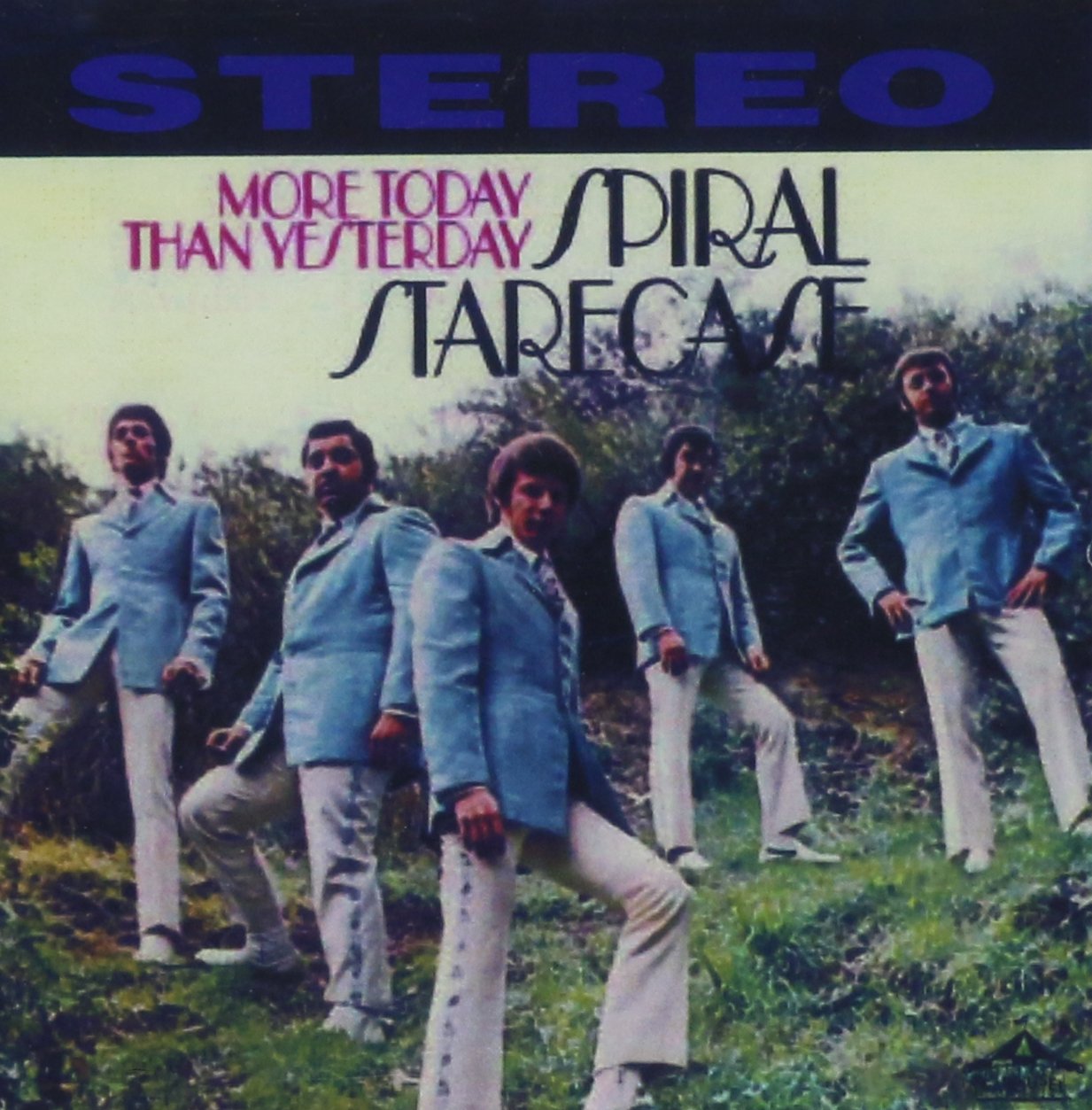
Spiral Starecase: I Love You More Today Than Yesterday
[purchase] 

My blogging lately has really slowed. Typically, around this time every year, I tend to take time off to recharge my batteries, but I’m going to try to keep going this year without a true “blogcation,” to coin a very bad phrase. Since this is a labor of love, I do it in my spare time, and lately, that spare time has been occupied by work relating to my 40th college Reunion, which took place a couple of weeks ago. I was on the organizing team, and I’m also my class secretary, a job which I’ve somehow expanded to such a point that I’ve been swamped lately, creating video slideshows and other content for my classmates. It’s another labor of love, but I hope that the extra work I created for myself is winding down, and I can try to get back to regular writing here. And maybe even elsewhere. 

I have written before that 1969 really was the year that I started listening to music, and it was that year that Spiral Starecase released their one hit, “I Love You More Today Than Yesterday,” a bouncy, fun, maybe even a little sappy profession of love. I think that the comment in the Allmusic bio of the band about their “one-hit wonder” status is great: “The Spiral Starecase may be a one-hit wonder group, but if you're only going to be allotted one, then their “More Today Than Yesterday” is the type of solitary charter you want as your lasting legacy.” And it is true. It’s a song that I remember hearing constantly over the years. It’s been covered by artists as diverse as Sonny and Cher, Lena Horne, Nick Carter, Diana Ross, Kermit Ruffins, the 2012 version of Chicago, and Goldfinger. And many others. 

The Spiral Starecase was formed in the early 1960s in Sacramento as the Fydallions, and featured lead singer Pat Upton, who has a great voice. Columbia Records strongly suggested that they change their name before signing them, and they made a small spelling change to the title of an old movie, and voila, they had a name. And maybe that sort of misspelling was considered cool in the psychedelic era, not that the band was at all psychedelic. 

They had a couple of regional hits in the Phoenix area, but when working on their first album, Upton was encouraged to write, and contributed the feature song, which he had written while the band was playing at the Flamingo in Las Vegas. And there is a little bit of Vegas lounge singer in the song, isn’t there? Despite the quality of the tune and its longevity, it only reached 12 on the Billboard Hot 100, although 1969 was a great year for singles. 

Due to the dynamic duo of musical failures, poor management and disputes over finances, the band disbanded after the release of one album and a few more singles (somehow they escaped the third reason that good bands fail—problems with the record label). 

An Upton-less version of the band toured in the 70s and 80s, proving that you can be successful with one famous song, even if the original singer isn’t singing it. Upton became a session musician, eventually hooking up with Ricky Nelson as a backup singer, and in 1985 declined to get on the flight that killed Nelson, five members of his band, and others. He died in 2016, at the age of 75.

Saturday, February 24, 2018

Breakup Songs:Chicago - If You Leave Me Now


purchase [If You Leave Me Now]

Chicago's first two albums were great. Really great.They were one of a few bands that ever broke out with a double album as their first market appearance.
The two albums included among other hits:
Does Anybody Know What Time It Is
Questions 67 and 68
I'm a Man
25 or 6 to 4
Where Do We Go From Here

After that ... not so sure. Not so strong starting with Chicago III, which was also a double album.
The Internet tells us that they then went into a downward spin of sorts, probably related to their [perceived/expected] success and management.

The Internet also tells me that Chicago's "If You Leave Me Now" is primarily bass player Peter Cetera's song. There appears to have been some contention within the band/producers at that time related to the softer, more emotional Cetera style as opposed to the harder-driving original Chicago sound (heavier on blaring horns and Kath's guitar).
Again, the Internet informs me that Cetera wrote the song around the melody.
The song did quite well on the charts, which may have influenced the producers' direction: Cetera's compositions took on a more prominent role after this hit.

James William Guercio -the producer - is credited with acoustic lead. Also played bass for the Beach Boys at one time as well as working with Blood, Sweat & Tears.

Friday, August 18, 2017

Chaos/Confusion: Someday August 29 1968


purchase [Chicago Transit Authority] (because the whole album is a classic, not just this song)


Chicago, at one one of their more political moments (68-69) used the sound-track from a street protest where the discernible chant in the background is "The whole world is watching". Those may not be the actual words heard on the streets today, but it is certainly no less true.


The effect of the chaos, cacophony that acts as the intro to the song carries with it images of confusion, chaos, hate and fear ("... faces full of ...")

Typical of Chicago's style, the song makes great use of horns: there's an in-built urgency/blast behind any horn section, and it does a lot for this piece: kind of a punctuation at just the right time - a punch to add an element of urgency to the chaos.

In light of various points of chaos around the world, it might be best to consider a line or two from the lyrics:


Someday you will see how long we've waited for the time ... show you how we've got to get together with you all...

Someone once said "Those who cant remember the past are doomed to repeat it."

Wednesday, April 5, 2017

STEEL: Revolting Cocks "Stainless Steel Providers"


Make a motorcycle sound with your lips. My 1 1/2 year-old son does it whenever he sees a motorcycle, bike or scooter.

Leave the saliva on your mouth for the rest of the article. Let it dribble down.

The audacious industrial label Wax Trax is one of Chicago’s most important contributions to music history. Two Wax Trax bands especially-- Ministry and the Revolting Cocks-- are/were revolutionary groups that were crowded under the industrial umbrella as a result of their drum programming and sampling and the bands they toured with, though neither band threw themselves entirely into the clank-on-steel sounds of bands like Nitzer Ebb or Einsturzende Neubaden, the latter which literally played with junkyard steel on stage.

Ministry followed an interesting trajectory, from moody, funky synth-pop (Revenge), to nihilistic industrial (Land of Rape and Honey) and then onto industrial-metal (The Mind is a Terrible Thing to Taste and New World Order) before sliding into stolid, straightforward metal on ensuing albums. They were/are politically vitriolic and have always had a decent sense of humor, though they were never as smart as they wanted to be. But at least in the 80s and early 90s, they were pull-your-pants-down-in-front-of-a-cop reckless and a couple pints in front of everyone else who had cloudy visions of making the industrial dance/metal music Ministry and Revco were at the time. And it’s a hell of a testament to the creative talents in both bands that they were as prolific as they were despite taking tons of drugs.

Each band had an adventurous mixed cocktail of members throughout their tenures, though mainstays were guitarist/vocalist Al Jourgensen and bassist Paul Barker. Revco--the side project- was sleezier and dancier than Ministry, but far more formidable than an alter-ego. As much as Al (referred to as “Uncle Al” in many circles) proclaims to hate the nascent stage of Ministry and its funky synthpop (once saying that most bands sell out after their first record but he sold out before he even got started), the first three Revolting Cocks albums (1986-1990) and parts of Finger Lickin’ Good (1993, “Cracking Up” and “If Ya Think I’m Sexy”) pump a smug affection for dance music, though Revco was always plunge- yourself-into-a-barrel-of-tahini and do a lap dance kind of dance music more than chart busting stuff. Maybe this is Barker more than Jourgenson for after Barker left Revco, Revco left the dance party and settled for simple and tame electro-metal rather than anything with a unique, dancy vision.

So let’s talk Barker as Al gets most of the attention. He was tall with curly black hair and glasses whereas other members of the two bands were in dreadlocks, mohawks , gelled crew cuts or sometimes shaved clean on the crown. Barker came across like a young, cool professor who preferred his students to his colleagues. His bass lines were catchy, dark and eternally simple, the nerve from which every 5-8 minute Revco song was energized.

Revco was one dirty bacchanalia and ever body was welcome, including their sometimes topless dancers the Revolting Pussies. A few of the many contributors include Skinny Puppy’s Nivek Ogre, NIN’s Trent Reznor, Chris Connelly, drummer William Rieflin (now of King Crimson and REM), Belgium’s inimitable Luc Van Acker and Front 242’s Richard 23. The best exhibition of Revco’s wildness and rabid bite is the live You Goddamned son of a Bitch (1998), the extended version including a cover of PiL’s “Public Image” and two songs off of Beers Steers and Queers including the crotch-hammering “Stainless Steel Providers.”

“Stainless Steel Providers”, which debuted on You Goddamned…. before showing up on 1900’s underappreciated Beers Steers and Queers is kick started with the revving up of a motorcycle, a sound which sparks the rhythm throughout. On the live version a menacing industrial din moans underneath. Vocalist Chris Connelly, who includes the song on his personal favorites (Initials C.C. Outtakes and Rarities Volume 1), delivers more attitude than on the album version. He’s a tripping and pissed off neurotic delivering a diatribe on a couple empty cases of Old Milwaukee at a party. And what’s it all about?

            Quick locate and detonate your public enemy
            Stainless steel, believe it’s real
            It’s all you mean to me
            What’s that sound, what’s that sound
            It bleeds efficiency

Guns?

Steel. Revco and Ministry usually paraded around in cowboy hats and leather. In some of their videos they fired around Chicago in motorcycles, such as in the video for Ministry’s “Stigmata” where Jourgenson is being dragged by a rope attached to a shiny, steel hog driven by a near giggling Barker.  Vrrrroooom Vroooooom. I wondered if they actually rode motorcycles or if it was some kind of irony being as close as they were to Milwaukee’s Harley Davidson Plant. Motorcycle gangs and cowboys--two groups whose image exudes maximum masculinity. But the two bands have always dressed like this. Al even talked about retiring, moving to Texas and playing country music. But how long can you be ironic until it becomes you?

In my late 30s, some friends of mine started a bowling night on Sundays. They dressed in loose and long polyester shirts, donned Blatz hats and drank Pabst Blue Ribbon. After a few months, Sunday Bowling Night became Friday Bowling Night. They started betting on their scores. They stuck by PBR while pale ales started becoming popular. Then they stopped going to shows. Bowling was easier and more interactive. They got home earlier and could watch tv.

My friends with a broad taste in music don’t get this band. I have one high school buddy who loved their work enough to pump it in his car on cruises past Dairy Queen and McDonalds through our tiny downtown on Friday nights. He dug industrial music but in truth, he loved anything with a huge bass: “Well, you might say this song is tits Becker but lets see how its bass checks out on my speakers!” And in his Honda Civic we’d go, me always in the back seat, where I felt more comfortable than the shotgun in the front everyone competed for. I connected with him for the first time in 20 years this summer and he still listens to industrial music.

I never saw Revco though I saw Ministry three times. Rieflin, Connelly, Luc Van Acker, Barker and Richard 23 apparently did a short 6-date tour a couple years ago as just “The Cocks”. I checked out the clips. Though it wasn’t as reckless as the 80s and 90s, you could sense a belief in the tunes endurability. Luc Van Acker was comfortable in his royal tubbiness. Richard still had the gelled crew cut and Kojak shades.  Barker still geeked around in back, hunched over the bass.

On the record, I never saw the problem with bowling. I liked the dark lighting, the streaks of neon, the smell and the clatter of pins knocking around. I think it’s a fine way to spend a Wednesday night.

Sunday, January 10, 2016

Beginning: Beginnings


Chicago: Beginnings
[purchase]

As the end of the old year makes us think about those we have lost, the start of a new year makes us think of beginnings, fresh starts and new things, and thus the theme for the next two weeks.

I’ve previously mentioned that the beginning of my concert going life was a Chicago show at the Saratoga Performing Arts Center with my parents. Chicago was one of the first bands that I called my favorite, and I will defend their early output as brilliant. After that though, they went downhill, and fast, to the point that they became a joke. Take their first 5 or 6, or even 8 albums, and they created a body of work that warrants their impending induction into the Rock and Roll Hall of Fame. Take their next almost 30 albums, and you have an impressive stack of mostly junk.

I’m not going to get into a long analysis of what happened. I mean, listen to the first album—Chicago Transit Authority from 1969. Complex songs, long, interesting solos, intricate horn arrangements, political statements, and yes, some catchy tunes. As time went on, though, the balance between the complex and the commercial began to shift until, certainly by Chicago X, and probably sooner, there was little interesting, and lots of shlock. Whether it was the influence of Svengali producer James William Guercio, or an increasing desire by some band members to make a buck, or the changing music marketplace, or whatever, it happened, and that’s about where I jumped off the Chicago train, never really to return. And then came David Foster, and the guys from Toto, and a revolving door, and it really got ugly.

But let’s forget all of that stuff, because it is forgettable, and just focus on “Beginnings,” from the debut. CTA was a double album, a rarity for a first album, and side one of the original vinyl has three songs—the aptly titled, “Introduction,” a jazzy, horn laden song, which then flowed into the piano intro to the great “Does Any Anybody Really Know What Time It Is? (wait—you don’t remember the piano intro? Because it was cut for radio play), which led into the guitar strum opening of the nearly eight minute long “Beginnings.” Written and sung by keyboard player Robert Lamm, it is a wonderful love song. It captures that feeling of the start of a relationship, when everything is exciting, time stops when you and your lover are together, and you want that feeling to go on forever. It expresses these emotions without being sappy or maudlin, and features great horn work, fabulous drumming by Danny Seraphine, and, yes, a nearly 2 minute Latin percussion fade out (wait, you don’t remember that? Because it was cut.....) “Beginnings” was the band’s second single and failed to chart. But in 1971, when Chicago was more popular and established, it was re-released, and hit #7 on the Billboard Singles Chart.

It would be easy to analogize the new love feeling of “Beginnings,” a feeling that everyone knows doesn’t last, to the gradual crappification and critical rejection of Chicago, so I’m going to do that, because unlike Ike & Tina Turner, sometimes, I like to do something nice and easy. The question (not "Questions 67 and 68," the next song on the album, a personal favorite of mine, and from the number of times he played it on The Late Show, of Paul Shaffer’s), is what happens after that first heady rush of love cools down. Does it morph into a real, true, long-term love, like you find with people who are happily married for decades (like me!), or with bands that you like forever, or does it flame out, and lead to separation, or giving up on a one-time favorite?

When Chicago gets inducted into the Hall, there are going to be articles bemoaning their inclusion, and I get it—they have inflicted many, many bad songs on our ears since the mid-1970s. But before you join the hater bandwagon, listen to Chicago Transit Authority, from its “Introduction,” through the noise of Terry Kath’s “Free Form Guitar,” past the great cover of “I’m A Man,” to the overtly political last side, featuring samples from anitwar protests at the 1968 Democratic Convention and the searing nearly 15 minute instrumental, “Liberation,” and tell me that these guys didn’t begin their career with a masterpiece.

Sunday, February 23, 2014

Scrabble Value Letters (Q): Questions 67 & 68


Chicago: Questions 67 & 68
[Purchase]


I actually bought this album when it first came out. I was in a boarding school just north of Philly in the early 70s, and my friends and I would ride the train into Philadelphia and .. buy records and stuff. It's a long time back, but my recollection is that there was this place called Tower Records, not far from the train station downtown, and LP costs were something like $7.99, $8.99 ...

Chicago Transit Authority came into being during that period in American history when youth protest was almost the norm (was it only me and my friends? Is the thought of acceptable protest worth a pause in your view of history?). For various reasons, their message and sound mellowed relatively quickly. They ran into legal issues related to their use of the Chicago train system's name, and their musical sound turned more towards their harmonied horns than piercing guitar solos. However, more than one of their original songs made the "Top" lists (and obviously enough money to keep the brand name running to this day.)

There are better versions of the song out there, but I wanted one that was close to the original: "Chicago" is still touring - in one iteration or another, but it isnt the same. At least not to me.

In the linked clip above, we've got the original band including lead guitar by Terry Kath, who sadly died quite early and - if I am not mistaken - Peter Cetera doing the vocals. If the YouTube credit info is accurate, it is from their earlier days: the dancing in front of the stage as well as the costumes seem to support the time stamp!

This wouldn't normally be my first choice for a Chicago tune, but it fits the Scrabble Theme running for the next two weeks: starts with Q.

Sunday, May 26, 2013

Numbers: 25 or 6 to 4


Chicago/Earth, Wind & Fire: 25 or 6 to 4 (YouTube)
Purchase CTA version


Not one, not two, but three numbers in a single title: 25 or 6 to 4 (and when you say it aloud, you hear a fourth, no?) Releasing their first album in the late 60s as the Chicago Transit Authority, the band quickly renamed themselves Chicago when faced with legal action from the “official” CTA.
My friends and I (and obviously millions more) had their music on heavy rotation in the early 70s. You must know their major hits such as Does Anybody Really Know What Time It Is and Color My World. They rank 13th on the Billboard list of All Time Top Artists.
There was speculation that the songs was about drugs (“Flashing lights against the sky …”?) So much else in that era was. However, Chicago band member and the song’s composer, Robert Lamm, says it is a reference to 3:35AM (“Waiting for the break of day …”)
There are a number of YouTube versions of this song, but as I viewed them, one stood out in particular: Chicago and EWF together. Sorry: the sync seems to be off just a little, but the color, energy (check out Verdine White, the EWF bass player!) and sound quality here is better than in many of the other online files.
Earth Wind and Fire rank a little lower on Billboard’s list, but still within the Top 100. Like Chicago, they also hail from the Windy City and trace their roots back to within a year or two of Chicago’s. Like Chicago, one of their strengths is a horn section. I think they make a great combination on stage.


Sunday, July 1, 2012

National Celebrations: Saturday in the Park


Chicago: Saturday in the Park
[purchase]

This week’s theme gives me a chance to write a little about my wife. She loves music and has a beautiful voice. When we first met, our shared love of music was one of the things that we bonded over. One of our earliest dates, in fact, was to see Bring on the Night, the documentary about the creation of Sting’s first solo album. Of course, no two people have exactly the same musical taste. Mine tend to skew harder and gruffer than hers, which are more folky and mellow. However, there is a significant enough overlap that we can coexist. (Aside—there is a station on Sirius XM called “The Bridge” which plays soft rock and which I call the Roach Motel of radio—once we start listening, I can’t get out, because my wife pretty much loves every song they play, leaving me with no chance to change stations and hear a different genre.)

When we had been dating for a little while, I was living in Manhattan working as a lawyer at a big Wall Street firm, and my (future) wife lived in Queens and had a job in Manhattan. She often stayed at my apartment, but only because it was convenient. Really. On Election Day, I worked and she didn’t, and when I came home, I discovered that she had moved in. One might think that this showed a certain level of commitment, and I guess it did. But we always said that we knew that we were bound to stay together when we integrated our record collections. Hundreds of vinyl albums, alphabetized together, would be very difficult, if not impossible, to separate, so we were stuck with each other.

She didn’t have any Sex Pistols, or Clash, or Genesis, and I didn’t have any James Taylor or Carly Simon, but there was overlap, and we both had pretty large Chicago collections.

Chicago was one of my first favorite bands. I saw my first concert when I convinced my parents to take me to see them at the Saratoga Performing Arts Center, where I also smelled marijuana for the first time. (And where, a few weeks ago, I returned to see my son graduate from college. Cue “Twilight Zone” music.) I still love early Chicago, when they played complex music, often with social or political messages, and even when they played love songs. In general, I think that a horn section makes any song better. Of course, in the late-1970’s (after original guitarist Terry Kath died), their music became increasingly schlocky and generally awful and unlistenable, to the point where most “serious” music fans wouldn’t admit their early greatness.

“Saturday in the Park,” from Chicago V is one of their most well-known songs, and one of their best. Supposedly written by Robert Lamm after a July 4 walk through Central Park where he saw the varied musicians and entertainers that were performing, it is a snapshot of the holiday activities. Not everyone uses their national celebration to make obvious, patriotic statements. Lamm’s song about the way that people, in the middle of New York (during one of the city’s worst periods), could enjoy themselves, hear Italian songs, laugh, dance and eat ice cream, is maybe a more convincing statement about the greatness of America than something that shoves the sentiment down your throat.