


























Redbird: You Are the Everything
[purchase]
I have been a fan of Kris Delmhorst since my friend Stephen/Mosh turned me on to her music in the fall of '98, and I had a chance to see her live at the February '99 Folk Alliance in Albuquerque, in a small hotel room with the mattresses pushed up again the walls, with about six other people - the following year she was one of the Top Twenty songwriter competition finalists for our South Florida Folk Festival and, but for a poorly-timed snowstorm which delayed her flight out of Boston, I would have presented her in a house concert a few days before her festival performance...
Kris has always been a favorite, and it was a delight to see her last week, a decade later, at Club Passim a few days before I headed to the Falcon Ridge Folk Festival - she was solo, but I was reminded of her collaboration with Peter Mulvey and husband Jeffrey Foucault as the trio Redbird. She spoke that night of culling through many past concert recordings to choose tracks for their upcoming live CD... and even recreated Rubber Ducky for our benefit - it seemed fitting, because now she and Jeffrey have a two-year-old daughter!
This love song is an R.E.M. cover, and they've done a gorgeous job with stunning harmonies and stripped-down instrumentation - I look at her and I see the beauty of the light of music (thanks, Kris!)...
photo credit: Stephen Moshkovitz, 7/20/10
Saturday, July 31, 2010
You First:: You Are the Everything
You First: You Love the Thunder

Jackson Browne: You Love the Thunder
[purchase]
You Love the Thunder comes from one of my favorite albums, Running on Empty. This is not a live album, but a tour album. So the songs are split between examples of Jackson Browne’s live sound at the time, as heard here, and songs about the life of a musician on the road. You Love the Thunder is a live track, and it hints at the “life on the road” theme, as it tells of a troubled relationship. Thunder is the oldest metaphor there is for a turbulent relationship, but I’ve never heard it stated better.
Friday, July 30, 2010
You First: You Gotta Move

Cassandra Wilson: You Gotta Move
[purchase]
You Gotta Move is an old song, originally by Mississippi Fred McDowell. There are any number of cover versions, done as gospel, blues, and rock n roll. The Rolling Stones and Aerosmith have both done versions. And yet, at its heart, this is one of the simplest songs you will ever hear. There is barely anything to the lyrics, and the song moves along on a slow blues groove that is almost unchanging. So what is the appeal?
Actually, the simplicity is the source of the song’s power. You Gotta Move is a chant, a plea for mercy at the moment of judgment. Cassandra Wilson understands this, and strips the song down to its essentials. There is the groove, played first on solo guitar. When the percussion joins in, it’s not even a full drum set, but just a plastic tub, playing not much more than a heartbeat. There are handclaps, echoing the heartbeat, and that’s it for instrumentation. The background vocals make this a shared experience, but also emphasize that the song is a chant. Nothing else is needed. The power of the song comes through loud and clear.
Thursday, July 29, 2010
You First: You Will Always Be The Same

Ryan Adams: You Will Always Be The Same
[purchase]
The last time I posted a Ryan Adams song here at Star Maker Machine, I said just about all I have to say about his softer, more acoustic side:
Though it's somewhat blasphemous to say so, I'm a much bigger fan of Ryan Adams the sensitive folkpop artist than Ryan Adams the alt-country rocker. It's not that I don't understand the appeal, really -- the man can write a hook in any form, and his heavier side makes for some danm good listening. I just think there's few other artists recording today who can hit the emotional nail on the head with such heartfelt quietude. And the tangled web of confused loss and longing which frames Cry On Demand makes it one of the best pensive, brooding acoustic ballads in his catalog.
Adams himself has said that the quieter songs on Demolition, a 2002 album cobbled together heartbreakingly from an unreleased three-album run in 2001, "belonged to better records". Which leaves little to say about this song. Except to note that it's utterly heartbreaking, and proves my thesis perfectly.
You First: You Can Leave Your Hat On

art by Michele Hyacynth
Randy Newman: You Can Leave Your Hat On
[purchase]
Joe Cocker: You Can Leave Your Hat On
[purchase]
Tom Jones: You Can Leave Your Hat On
[purchase]
Marc Broussard: You Can Leave Your Hat On
[purchase]
Let's call this post "Four Decades of Soft-Core Sexual Suggestion."
Got your attention now?
I'm going to declare Randy Newman the King of Intellectual Musical Wit (the heir-apparent, though, might be Steely Dan). Here's a test for our clearly above-average Star Maker Machine reader: did you get all OMG offended! at his epic song 'Short People' and lobby your state legislature to make playing it on the radio a crime (as Maryland attempted), or did you see it as the anti-prejudicial statement it really was? In other words, do you get Randy Newman?
'You Can Leave Your Hat On' is another in Newman's wink-wink-nudge-nudge repertoire. The title phrase seems to be the only item of clothing the narrator doesn't want removed. Newman released his version in 1972 (on 'Sail Away'); it was picked up in a big way by English blues rocker Joe Cocker in 1986 and featured in a strip scene in the film '9½ Weeks'. Tom Jones, the Welsh crooner, did the same favor in 1997 for the film 'The Full Monty'. (And he sang it live in 2002 at 'Party at the Palace', a pop concert at Buckingham Palace honoring Queen Elizabeth's 50 years on the throne. Somehow imaging Queen Liz shaking her booty to this tune keeps crawling into my brain. Bad! Bad!) Finally, blues-rock artist Marc Broussard paid homage to it on the 2006 Newman tribute album, 'Sail Away: The Songs of Randy Newman'.
You give me reason to live…You give me reason to live…You give me reason to live…
You First: You Ain't Goin' Nowhere

Bob Dylan & The Band: You Ain't Goin' Nowhere
[purchase]
Bob Dylan (with Happy Traum): You Ain't Goin' Nowhere
[purchase]
Nitty Gritty Dirt Band (with Roger McGuinn and Chris Hillman): You Ain't Going Nowhere
[purchase]
Shawn Colvin, Mary Chapin Carpenter, and Roseanne Cash: You Ain't Goin' Nowhere
[purchase]
Cracker (with Adam Duritz and Joan Osborne): You Ain't Going Nowhere
[purchase]
Folks who know me well know that my current favorite pastime is sitting around with other musicians playing and singing songs. In the past few years, I've found several groups of people to play with on a regular or semi-regular basis. With every group, I've brought this old Dylan song. Some people know it, some don't, but it always goes over well. It's easy to play (just three chords), fun to sing, and offers plenty of room for solos.
Dylan first recorded it with what became the Band during his 1967 Woodstock time-out, but the first released version was by the Byrds, who countrified it for their groundbreaking Sweetheart of the Rodeo the following year. Bob's version was eventually released on The Basement Tapes in 1975, but before that, he recorded a radically different version with Happy Traum on banjo for his Greatest Hits, Vol. 2 album (complete with a dig at Roger McGuinn for messing up the lyrics on the Byrds' version).
Since then, the song has been covered by many, and it's usually the Byrds' version that's followed, and that's the template used by The Nitty Gritty Dirt Band (with Byrds Roger McGuinn and Chris Hillman), Cracker (with Adam Duritz and Joan Osborne) and the trio of Shawn Colvin, Mary Chapin Carpenter, and Roseanne Cash.
You First: You Avoid Parties

The Posies: You Avoid Parties
[purchase]
My first encounter with The Posies was a radio broadcast of a live show in early 1996 at the club Gino (R.I.P.) in Stockholm.
Having read glowing reviews of their then current album Amazing Disgrace, The Posies had gotten my attention and I made sure to tape the show (I still have the tape!) and I've lost count of how many times I've listened to it. From the opening chords of Dream All Day to the Nirvana/Jimi Hendrix/The Who style instrument demolition at the end of Burn & Shine, every second was mesmerizing.
I soon bought Amazing Disgrace and two of the previous albums - Frosting On The Beater (1993) and Dear 23 (1990). While all three are great Dear 23 have always had a special place in my heart. It's so wonderfully overproduced, glossy and pretty even your grandmother would like it.
Wednesday, July 28, 2010
You First: You Can Call Me Al

Paul Simon: You Can Call Me Al
[purchase]
Ahhh, Graceland. What an exhilarating thing it was when I first heard the album. Yes, Paul Simon had already been around forever at that point, but this was a brand new sound. But, because I read world music magazines, I soon had to deal with the question of cultural imperialism.
The idea is this. There is some pure version of the music of every tribe in the world. This purity is destroyed when native musicians are exposed to music from outside their culture. Somehow, the villain in this is always western music. Paul Simon, in this construction, committed a worse sin by actually having these musicians play with him.
But here’s the thing: in these same magazines, I learned something of the history of South African music. The township sound that Simon was so drawn to in the first place was heavily influenced by doo-wop. So was Simon, but he took it in a different direction. Elsewhere in Africa, King Sunny Ade and Fela Kuti were influenced by the music of James Brown and Miles Davis. Now take it back even further, and you find that the music of James Brown and Miles Davis evolved from the music of Africa. Music doesn’t stand still, and musicians are influenced by whatever is available to them. It is fascinating to hear music that retains its cultural purity, and has been unchanged for centuries. But it is just not that likely to happen in the modern world, and the music that replaces it is just as fascinating. I offer You Can Call Me Al as a fine example of what I mean, and I don’t think Paul Simon has anything to apologize for.
Tuesday, July 27, 2010
You First: You And Your Sister

Chris Bell: You And Your Sister
Chris Bell: You And Your Sister [country version]
[purchase]
The song has high potential as a sappy power ballad, as evidenced by the ultimate posthumous release of the so-called "country version" and the even cheesier "acoustic version" of the song. But the original offers raw redemption, with Chris Bell's broken delivery and slightly off-tune bass holding it together until the highly orchestral, swirling atmospheric bridge kicks in and all is lost to summery teen angst - just as the heavy-hearted homosexual, heroin addict, and struggling Christian himself was lost to a late night car crash in '78, the same year the song was first released as a non-album single.
Big Star fans note: that's fellow Big Star founder Alex Chilton on the harmonies, himself lost this past year to a March heart attack. And This Mortal Coil also does a stunning hushed harmony cover of You And Your Sister, which is still live at the March tribute to Chilton / Big Star I posted over at Cover Lay Down.
Monday, July 26, 2010
You First: You You You You You
The 6ths (featuring Katharine Whalen): You You You You You
[Purchase]
Perhaps it's a bit overkill for the theme, but really, I adore this song and it just doesn't get any more You-ier than this. Do I get bonus points?
The 6ths are one of Stephen Merritt's (of Magnetic Fields fame) side projects. On this record he has different guest vocalists on each track. This track features Katharine Whalen (of Squirrel Nut Zippers). It's simple and charming, not unlike the Magnetic Field's 69 Love Songs collection, and despite the song maybe being a little TOO sweet and clingy considering she says they've just met in the first line, it's one of the more straight forward and optimistically romantic songs you can imagine coming out of the pessimistic Merritt.

Sunday, July 25, 2010
You First: You Are The Sunshine Of My Life

Stevie Wonder: You Are The Sunshine Of My Life
[purchase]
There are three compelling reasons to post this song:
1. It was a number 1 hit, on both the Billboard Hot 100 and the adult contemporary charts.
2. It won a Grammy for Best Male Pop Vocal Performance.
3. It comes from one of Stevie Wonder's most productive periods of his career. The song is from 1972's "Talking Book'. By the way, those two vocals in the beginning are by James Gilstrap and Lani Groves, something I just learned today.
Imma shut up and let Stevie do the rest.
Saturday, July 24, 2010
Parentheses / You First: You Make Me Feel (Mighty Real)

Jimmy Somerville : You Make Me Feel (Mighty Real)
[purchase]
You might have noticed by now that I have a great affection for male vocalists who have ranges pitched higher than usual. That explains my affection for Jimmy Somerville, former lead singer for the 80s synth pop groups Bronski Beat and the Communards. Even among these select singers, Somerville's voice is a flat-out falsetto, which I think suits the dance floor perfectly. He's had a string of club dance hits, commonly covers of R&B songs ("Don't Leave Me This Way", "I Feel Love", "Never Can Say Goodbye").
Apart from that awesome voice, Somerville is noteworthy in being one of the first openly gay recording artists, a rarity in the early 80's. Bronski Beat featured all gay performers, and their music reflects this—their first hit single, "Smalltown Boy", and its follow-up, "Why", both express the sting of anti-gay prejudice.
"You Make Me Feel (Mighty Real)" was a disco hit for Sylvester James; Somerville recorded it in 1989 for his first solo album. Sylvester himself was also gay; his music flourished in the San Francisco discos in Harvey Milk's Castro District.
Parentheses: Stay (I Missed You)
Lisa Loeb & Nine Stories: Stay (I Missed You)
[Purchase]
Some music fans are lucky enough to grow up in households where music is prevalent and important, and others have to find it on their own. For me, I was a casual music listener, but mostly just heard whatever was on the radio until I had an epiphany in 1996. This epiphany came in the form of a hit single on the radio called "Stay (I Missed You)". As for the theme, the song in question lost it's parentheses for the album, but the single was definitely called this, as was it on the Reality Bites soundtrack, where it was first heard.
Cliche almost now, but at the time the song grabbed me and wouldn't let me go. I was in high school and music was just "fun" to me and didn't get much deeper than that. But then I heard a song by a girl, and I related to it, it felt conversational, confessional, and enlightening. I bought Lisa Loeb's debut album shortly after that and didn't listen to anything else for nearly 6 months. It led me to buy soundtracks and compilations that led me to other bands that were equally enlightening. It was a side of music I didn't know existed, and it led to sides of me I hadn't known how to express before.
Obviously, others felt similarly about the song, as it became the first song to hit #1 by an unsigned artist. Since then Lisa hasn't made an album that hit quite like that first one did, but we can never really replace the feeling of a first love.

Parentheses: Whole Lot Of Shakin' In My Heart (Since I Met You)

Smokey Robinson & The Miracles: Whole Lot Of Shakin' In My Heart (Since I Met You)
[purchase]
I'm in a bit of a hurry, about to head out and make the town quiver with excitement, being Saturday night and all. I just want to squeeze one more post in before tomorrow.
I will only say that Smokey Robinson is one of the most consistently amazing performers of the last 50 years.
Friday, July 23, 2010
Parentheses: Voodoo Chile (Slight Return)

Angélique Kidjo: Voodoo Chile (Slight Return)
[purchase]
Voodoo Chile (Slight Return) is the version that everyone seems to know, but there actually also was a non-parenthetical "Voodoo Chile" on Hendrix's 1968 LP, Electric Ladyland, which is a 15-minute slow, soulful burn. But the (Slight Return) version's the one that's got all those covers by rock's best guitarists, including Stevie Ray Vaughan, Buddy Guy, Kenny Wayne Shepherd, and Eric Clapton.
You've heard all those, though. I thought I'd share a non-guitar-focused version by West African artist Angélique Kidjo from her 1998 album, Oremi. In this cover, the rhythm and vocals become the focus.
Parentheses: That’s Right (You’re Not From Texas)

Lyle Lovett: That‘s Right (You‘re Not From Texas)
[purchase]
Do you remember the movie Urban Cowboy, and the mechanical bulls that were everywhere for a time? Did you ever wonder how native Texans felt about this? At a time when seemingly everyone in the United States wanted to pretend they were from Texas, Lyle Lovett wrote this song. Lovett dealt with the whole situation with good natured humor, and he also included, in the second verse, a heartfelt tribute to Uncle Walt’s Band. The music is Lovett’s take on one of Texas’ great contributions to American culture, western swing. I can hear in my head a high pitched “aww haww” from Bob Wills as I listen to this.
Parentheses: Exit Music (For A Film)

Radiohead: Exit Music (For A Film)
[purchase]
OK Computer, an album which tends to be in the top 10 whenever someone feels like summing up the best albums of 1990s. Overhyped and overrated some people would say. I however is not one of those people - OK Computer is exactly as great and monumental as the critics claim.
It was immediately hailed as a masterpiece, a concept album perfectly capturing the essence of the spiritually detached modern man's search for a sense of purpose, the very embodiment of the zeitgeist. The Dark Side Of The Moon of the 90s, you might say. A study of the difficulties to stay sane and human in an increasingly technological and stressful world.
The band dismissed this and claimed there was nothing zeitgeist-y about it, and that it was most definitely not a concept album.
I don't know about that, but I do know it captured my zeitgeist. I bought both OK Computer and Chuck Palahniuk's Fight Club on the same day in the fall of 1997, and they were exactly what that spotty 16 year old needed at that point in his life. I can't explain it in detail, but both just sort of fit. They opened my eyes and spoke to me in a way nothing has, before or since. Things actually made sense for a change, and the world wasn't the same the next day.
Both gave me a sense of direction at a point in my life when I needed it the most, and pushed me down the right path just as I was about to head down the wrong one. As corny and juvenile as it might sound, I've always felt I became a better person on that rainy September afternoon thirteen years ago.
Thursday, July 22, 2010
Parentheses: This Must Be the Place (Naive Melody)
Shawn Colvin: This Must Be the Place (Naive Melody)
[purchase]
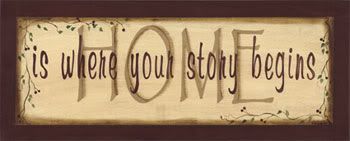
Home is where you hang your hat. Home is where they have to let you in. Home is where the heart is. Home Sweet Home. There's no place like home...
Home is less a physical location and more a state of mind - home is where you feel comfortable and loved and wanted...
I have left one home in South Florida for another in the hills of New York - I departed with deep kisses and I will arrive to warm hugs (Boyhowdy and Darius and Fil, oh my!), to name but a few I look forward to crossing paths with this weekend...
I still have never heard the original Talking Heads song, but as soon as I listened to Shawn Colvin's version on her Cover Girl CD, it quickly became a favorite - it defines home (i.e. love) as valuable yet vulnerable, faithful yet fleeting, secure yet sensitive...
We who have it, wherever however whoever, realize how lucky we are and how little we can take it for granted - we count our blessings while keeping a vigil...
Home is where I want to be
But I guess I'm already there
Parentheses: The 60's British Edition

The Beatles: Norwegian Wood (This Bird Has Flown)
[purchase]
The Moody Blues: The Afternoon: a) Forever Afternoon (Tuesday?) b) (Evening) Time To Get Away
[purchase]
The Zombies: Butcher's Tale (Western Front 1914)
[purchase]
Being the incurable anglophile that I am, I just had to squeeze in some old favorites of mine, by three bands all groundbreaking and trendsetting in their own way.
Wednesday, July 21, 2010
Parentheses: The Philly Sound (of the Delfonics)

The Delfonics: La-La (Means I Love You)
[purchase]
The Delfonics: Didn't I (Blow Your Mind This Time)
[purchase]
Soul music in the 60s centered around two major cities: most people think of Detroit—Motown—right off the bat, but Philadelphia was equally important in delivering quality soul music to an eager audience. Artists that define the Philly Sound, with its lush harmonies and rich, string-laden arrangements, include Harold Melvin and the Blue Notes, the Stylistics, the O'Jays, the Spinners, Hues Corporation, and our featured group, the Delfonics.
Two of their biggest hits have parenthetical titles. Listening to both, I can easily hear the roots of the style known a decade later as Quiet Storm. Both were written by Thom Bell, who also came up with the equally wonderful "If You Don't Know Me By Now" and "Me and Mrs. Jones."


