Showing posts with label Bob Dylan. Show all posts

Saturday, October 15, 2022

Musician Authors: Bob Dylan


purchase [ The Philosophy of Modern Song ]


If you use Amazon as your guide to the number of books Bob Dylan has written, you'll end up with a number a little north of 50. If you rely on Quora for your research, the answer is two. Two that he has actually penned himself. However, that Quora entry/tally - apparently a little out of date - doesn't include <The Philosophy of Modern Song>, so make that three (3). Those three being Tarantula, Chronicles Volume One and The Philosophy of Modern Song.

That said, there is no dispute that he received the Nobel prize for literature. There was, however, a bit of a kerfuffle associated with his acceptance, both because he initially balked and equally because there was debate about whether his product was worthy of a "literature" award (incidentally, also bestowed previously for poetic output).

There aren't many who belittle Dylan's thought-provoking lyrics, so ... let's let that argument pass: he *is* an author (and as I noted a week ago, that in and of itself, should count for this theme.)

The Philosophy of Modern Song, Bob Dylan's most recent written work after his Nobel Prize for Literature in 2016, looks interesting. I confess that all I have so far been able to read are the snippets that NYT published the other day. That said, the few pages the NYT shared make me want to read more. More, because I have been feeling that a lot of my coverage of topics for SMM could really do with more background research. More, because it reads well. More because it is relevant to someone  invested in music.

NYT tells us the book is 65 essays about songs, and the article offers up 2 excerpts: the text for Sinatra's Strangers in the Night and Townshend's My Generation. They're both short - about 2 pages each. But they are piercing in their own way. Kind of like you'd expect from a Dylan lyric -  except more conversational and less cryptic/poetic.

and, from ig.ft.com: 

"Ballad in Plain D", from Bob Dylan's fourth album, Another Side of Bob Dylan (1964) is the only song he ever publicly admitted he wished he hadn't written. "Oh yeah, that one! I look back and say, "I must have been a real schmuck to write that," he said in 1985.


Tuesday, September 27, 2022

THE ROAD: GOES ON FOREVER AND THE PARTY NEVER ENDS.

The mythological lure of the road has long attracted attention in way more than just musical memes. We’ll get to that in due course, but it got me thinking around the whole idea of a road trip. Like, what was the first? Jack Kerouac’s On The Road, came initially to mind, until I realised how shortsighted and narrow was my entry angle, remembering the Richard Thompson response: best songs of the millennia, or of all time, did not start with Sinatra. So that in mind, throwing out my net a bit wider, are we talking the Crusades; that was a sort of tour? Or Christ’s 40 day desert gig, did that count? I think a prime contender would have to be Ulysses, his 12 tasks and all that. Tack on the Trojan War and the tour is encroaching Dylanesque Never Ending logistics.

I could be getting carried away here, but it has an appeal. I wonder what was on his rider? And who ran the merch stall? And for all the buzz around Homer, the “official releases”, I’ll bet there were live sets and bootlegs, swapped in chariot parks, before the show. It wouldn’t surprise me if someone somewhere is still putting together a box set, the Ithaca tapes, perhaps. I’m sure I read about it on the Steve Hoffman forum.

So, as they, say. Robert Earl Keen. Whatever happened to him? Nothing bad, to be fair, as he still tours and plays, but, as with, say, Steve Forbert, so much early promise seeming never quite to be capitalised upon. From Houston, Texas, he hit the ground running in the mid 80s, with a signature stripped back sound, bluegrass style instrumentation, allied to rootsy modern folk songs, all sung in his gritty mournful moan. I loved it, and West Textures, his 2nd album was a bona fide delight. Still is, the songs rendered timeless by that old timey anchor. The song that entitles this piece is his best known song, but they all have legs. Heck, at that time, he, Lyle Lovett and Nanci Griffith seemed an insurmountable triad of potential, at whose altars I knelt, in awe. So young and so much talent.

Keen  had a particular knack for a story song, with TRGOFATPNE being the prime evidence. I alway feel the idea for such long haul yarn spinning came from Bob Dylan, Lily, Rosemary and the Jack of Hearts always coming to mind as the trigger to Keen’s muse.(I suppose, given the earlier paras written, due credit for all epics should maybe go to forbears from times long past, Alfred, Lord Tennyson, for his Charge of the Light Brigade, Longfellow  for Hiawatha, or, logically, good ol’ boy Homer himself, but the tunes have been largely lost.) The relatively simple construct, the repetition and the loping propulsive rhythm together produce a suspension of time, the story taking the fill of concentration. Keen was able to show he was no one trick pony, mind, as his next album, A Bigger Piece of Sky, four years later, in 1993, had another cracker, Jesse With the Long Hair Hanging Down. With shock, I note this barely hits 3 and 3/4 minutes, it casting a way longer shadow in my memory, but, details, schmetails, this is still a saga song, just a wee bit shorter. 

Oft seen as his high water mark, A Bigger Piece of Sky, whilst it had its moments, never quite hit my spot as had West Textures. In truth, I sort of went off him a bit after that, as somebody told him his forte might be in humorous songs, an oxymoron by any definition, at least in my book. But he has plugged away, with 20 studio recordings to his name. I gather he is about to hang up his cowboy boots, making me sad I never caught him live. Indeed, of that 80’s trio of performers, Nanci was the only one who ever seemed much to visit the UK, seeing her a host of times between then and the mid 90’s. But I did get to hear one near swansong, as Keen covered a host of his traditional influences: here is what I thought about that album.

A final thought about Keen might be to thank him not only for my beloved West Textures, but also to his enlightening me to the presence and worth of anothe songwriter, one Kevin ‘Blackie’ Farrell, himself no stranger get to the long form song. The exquisite Sonora’s Death Row, covered by Keen on West Textures, is one of his, as is another of my favourites, Mama Hated Diesels, as performed by Commander Cody’s Lost Planet Airmen. Farrell probably deserves a pice in his own right, memo to self, but it’s good to at least have the opportunity to namecheck him, until then.

May the road rise to meet you…….

Wednesday, March 30, 2022

Shelter: Shelter

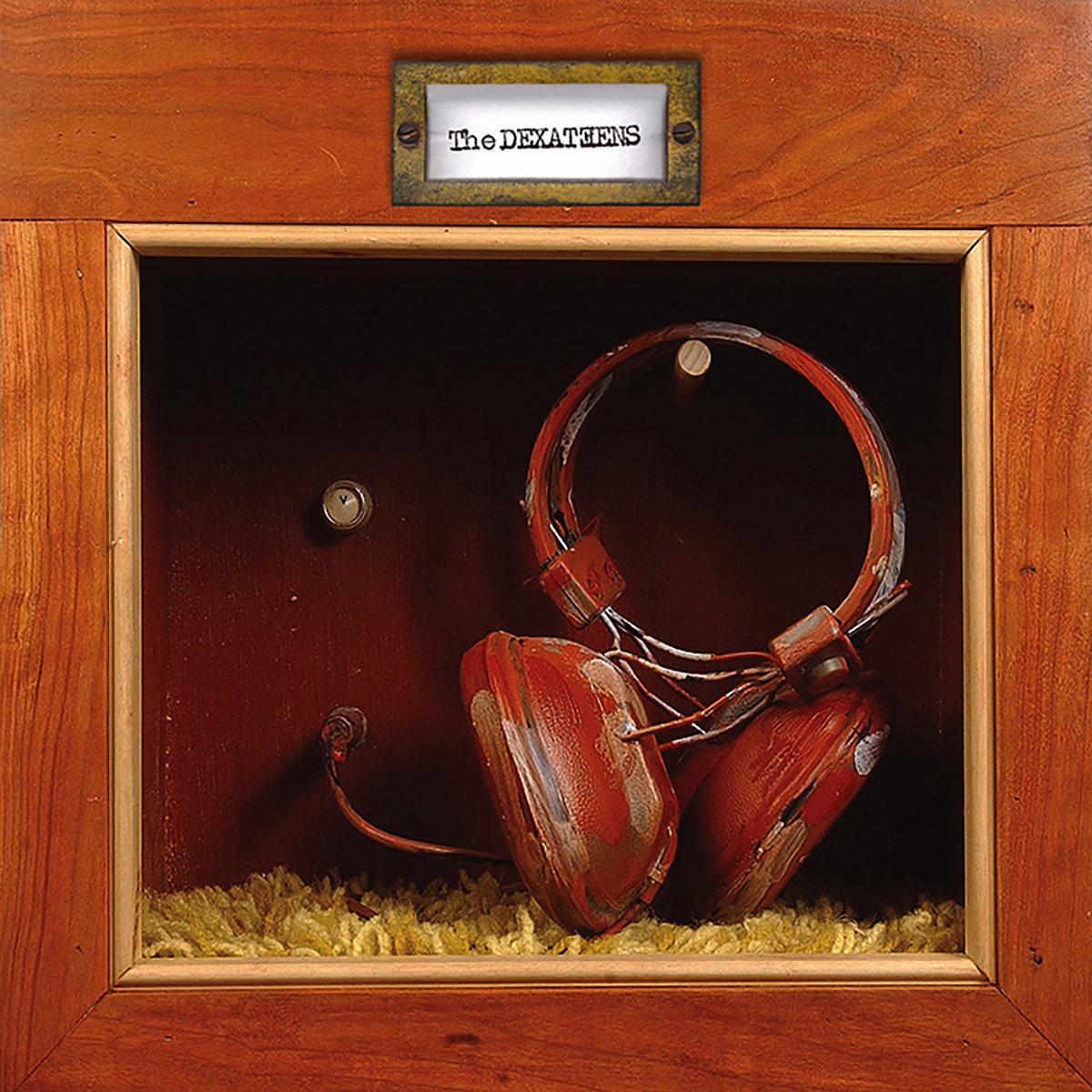
The Dexateens: Shelter
[purchase]

I seem to be writing about my song selection process a lot lately, which may mean that I’m trying to fill space because I’m running out of songs that have particular meaning for me. I hope not, because that would be bad for a blogger who mostly responds to theme prompts, but we’ll see—and maybe I need to take another short sabbatical to recharge. I’m spending a good deal of time these days working on projects directly or indirectly related to my 40th college reunion in May, which I’m sure I’ll figure out a way to write about down the road, and that also explains why I’ve been writing once per theme more often than twice these days. Also, there’s work and family. And good TV. 

So, when I heard the theme, my first thought was a King Crimson song, but seriously, who really wants me to write about another King Crimson song, and an instrumental, at that? (The volume of my Crimson-related posts surprises even me, considering that they are not my favorite band. What is my favorite band? I really don’t know.) My second thought was to pick the obvious Rolling Stones song, but I’ve written about that before. There’s also a Dylan classic, but writing about Dylan can be heavy lifting, and I don’t have the patience for that right now. 

Which inevitably led me to an iTunes library search, where I landed upon today’s feature song, “Shelter,” by The Dexateens. Is it a great song? No. Is it a good song by an underappreciated band in the vaguely Americana genre? Yes. Which means that it’s a good one for me to write about. (Although having finished this post, I realize that I mentioned the band a few years ago).

The Dexateens were formed in the late 1990s in Tuscaloosa, Alabama, featuring singer-songwriters and guitarists Elliott McPherson and John Smith, with drummer Craig "Sweet Dog" Pickering and bassist Matt Patton. If that last name seems familiar, we’ll get there. Their name came not from the same source as Dexys Midnight Runners, but instead from a guitar pick that Smith’s brother had gotten signed by Dex Romweber, a musician that you might have heard of. Or not. Although he’s pretty good and it is a memorable name. Mixing punk with southern rock, The Dexateens’ self-titled debut album from 2004 is excellent—raw and rocking, and “Shelter” is a Stonesy-stomp. 

I’m not sure when I first heard about The Dexateens, but it wouldn’t surprise me if it was in 2007, when their fine album Hardwire Healing was released, and it was co-produced by Patterson Hood of the Drive-By Truckers and David Barbe, who has worked with the Truckers (as well as playing bass in Sugar). I suspect that this was the hook that got me to check out the band, which has de-emphasized punk over the years. After some personnel changes, the band broke up in 2010. Patton joined the Truckers on bass (and as the occasional Ramones cover singer), and also plays with The Dexateens, which re-formed in 2013. And, he co-owns a recording studio in Mississippi (where part of the Ramones cover video in the link was shot). Busy man. 

 So, check out The Dexateens if you aren’t familiar with them.

Thursday, October 7, 2021

What If: Buddy Holly Lived?

Buddy Holly: Crying, Waiting, Hoping (Apartment Tapes version)
[purchase]

This may be the hardest theme we’ve tackled here, and I’ll take responsibility for it, for better or worse. As a history major in college, and general history buff, I’ve also been a fan of “alternative history,” where one historical fact changes, and you speculate on how things might have been different. One good recent example of this was the HBO series, The Plot Against America (and the 2004 Philip Roth novel that it was based on), which launches from the premise that Charles Lindbergh defeats Franklin Roosevelt in the 1940 election. I’ve also read a ton of “what if the South won the Civil War” fiction, which shouldn’t surprise anyone who knows me or has read my writing. 

But, as I often have to remind myself, this is a music blog, so we are going think about what would have happened if Buddy Holly’s plane hadn’t crashed on that cold February morning in 1959 in Iowa. I’m no Holly expert (although I’ve done some reading about his career), so I’m under no impression that this might be a “definitive” discussion. And because I’m not writing a piece of speculative fiction, and have to therefore pick one path and follow it, we’ll look at a few possibilities, focused more on Holly’s potential career than his potential effect on music as a whole (or the effect of the deaths of the others who were on the plane that day). 

In "American Pie," Don McLean famously referred to the crash that killed Holly, Ritchie Valens, the Big Bopper (J.P. Richardson, Jr.), and pilot Roger Peterson, as the “day the music died,” but while that’s a great and memorable lyric, of course, it wasn’t. Most notably, two big Holly fans in Liverpool had recently formed a band named after an insect, in tribute to Holly’s band, the Crickets, and had Holly not died that day, I’m pretty confident that Beatlemania still would have swept through the world a few years later, changing the musical landscape forever, and pushing aside the type of “rock ‘n’ roll” music that Holly and his ilk had made popular (even as the Beatles covered Holly’s songs live and on record). In fact, I’d wager that had Holly lived, he would have been a fan of the Beatles, and even worked with them in some form—maybe writing songs with or for them or performing with them, or releasing his own Beatles covers (everyone else did). But probably not producing the Beatles, since they already had a pretty fair producer. (And don’t forget that the Rolling Stones covered “Not Fade Away” on their first album.) 

Another huge Holly fan was Bob Dylan, who actually saw Holly on the ill-fated Winter Dance Party tour in Duluth, MN, about 3 days before the crash, and referenced Holly as his first musical influence in his Nobel Prize lecture. So, again, Holly’s death wouldn’t have prevented Dylan’s rise and influence on music, and again, I’d bet that they might have collaborated—or at least, become acquainted—particularly after Dylan began to perform regularly in New York. You can easily imagine Holly, with Maria Elena, and maybe a friend like Phil Everly or Waylon Jennings, trying to watch the young Dylan incognito from the back of the club, and being impressed by his talents. 

But I’m getting a little ahead of myself. 

One way of looking at this question is by starting by analyzing Holly’s life and music before he died. In late 1958, Holly and wife Maria Elena, moved to Greenwich Village, in part to get a new start, but also to get involved in the New York music scene of the time. Holly, who was not only a musical genius, but appeared to have a more sophisticated business sense than many of his contemporaries, wanted to start his own label and open his own studio. So, maybe, part of Holly’s future would have been as a music executive and producer of other acts. 

During this period, Holly explored his love for jazz, regularly frequenting jazz clubs in the Village and elsewhere in the city. And he would go down to Washington Square Park and play with the other musicians hanging out there. The last formal recording session that Holly participated in was in New York, in collaboration with the Dick Jacobs Orchestra, recording four songs with heavy string orchestration. So, by some analyses, at this point, Holly was moving away from the stripped down rock ‘n’ roll that made him famous to a more sophisticated, smooth pop sound. For example, one of these songs, Paul Anka’s “It Doesn’t Matter Anymore,” might have presaged a future career for Holly as another Anka-style pop singer. 

At the same time, though, Holly was recording himself in his living room—what have later become known as the “Apartment Tapes,” and from these, you can hear Holly working both on his songwriting and lyrical craft, but also experimenting with tempo and styles. (Many of these demos were later overdubbed and released posthumously.) Add to this the reports that Holly planned to record with black artists such as Ray Charles, Mahalia Jackson and other soul singers (he was, memorably, the first white act to play Harlem’s Apollo Theater), and the prospect of Holly as a pop crooner becomes less likely. Nor do I see him turning to Vegas, like his friend Elvis Presley.

Another way to look at it is to consider the careers of two other musicians who were on the Winter Dance Party tour, but declined to get on the plane—Waylon Jennings, who was Holly’s bass player on the tour and gave up his seat to the Big Bopper, who was sick, and Dion DiMucci, who didn’t want to spend the extra money. There are some who think that Holly’s future, had he survived, would have been to move more toward country music, like Jennings, considering his Texas roots and twang. But I don’t think that Holly would have wanted to be so limited, because his musical tastes were so broad. Dion, of course, had early success, but when that faded, changed his sound to a more mature folk/pop approach, before moving through a Christian music phase, and more recently, focusing on blues, and I suspect that Holly, too, would have kept trying different things. 

Ultimately, I don't think that Holly would have become an “oldies” act, performing versions of his hits to aging fans. Instead, I think that Holly would have gone on to a varied career—writing songs for himself and others, in various styles that would have reflected his curiosity, interests and the new sounds that were developing in the 1960s and 70s, producing and nurturing artists, and continuing to perform new music for years.

Wednesday, August 11, 2021

Muscle Shoals: Various


purchase [ Slow Train Coming ]

Muscle Shoals has a special place in the pantheon of music from the 1960s on. It's the name of multiple recording studios located in the city of the same name in Alabama. The studio we first think of grew out of another studio operation known as FAME Studios, and was unique in that it was the first such operation owned by a group of session musicians. Yes, they partnered with Jerry Wexler to make it work. And yes, the location was previously a coffin viewing showroom.

But the name Muscle Shoals has come to mean a specific sound - first in a soul and R&B style (Percy Sledge & Aretha) and then in rock (the Rolling Stones, Traffic). FAME owner Rodney Hall described the sound as funkier and more laid back than others. The curator of the Alabama Music Hall of Fame notes the existence of a triangle, with Memphis being the home of blues, Nashville, of course, the home of country and the third leg, Muscle Shoals, being a blend.

One of the first musicians to record at Hall's studio was Wilson Picket. The story goes that when he arrived and saw the folks picking cotton, he wasn't at all convinced that this would work out. Later, when Pickett returned to the studio, he found that there was a long-haired slide guitar player by the name of Duane Allman as one of the studio's guitarists. They recorded this cover of the Beatles' Hey Jude


The word began to get around about the Muscle Shoals sound: Clapton heard it and so did the Stones. A large part of Sticky Fingers was recorded there in 1969. Keith Richards has been quoted as saying "I thought it was one of the easiest and rockin'-est sessions that we had ever done."


Bob Dylan's Slow Train Coming was also recorded at Muscle Shoals. Lead guitar is Mark Knopfler and the horns are the studio band. Dylan was looking for a richer, funkier sound and it appears he got what he was looking for despite the concern of some of the musicians about the religious content.


Sunday, June 27, 2021

Opposites: Southern Man/Girl From The North Country

Neil Young: Southern Man
[
purchase]

Bob Dylan: Girl From The North Country
[
purchase]

Bob Dylan w/Johnny Cash: Girl From The North Country
[purchase] 

Watching the Trump Party and its propaganda outlets whip themselves into a frenzy over what they are mischaracterizing as  “Critical Race Theory,” either due to political calculation or ignorance (or both), when what they are really afraid of is not the actual theory, but the “Truth,” could easily send me spinning off into a discussion, centered around Neil Young’s 1970 song, “Southern Man,” about institutional racism, the Civil War, and the Lost Cause myth, but I’ve written about that before. 

Instead, let’s (mostly) talk about the two songs I’ve chosen for the Opposites theme which are basically double opposites—one about a southern man, the other about a northern woman (although, if gender is really a spectrum, are they really opposites?) But there are even more things about the songs that are opposites. 

Young’s “Southern Man,” as most readers of this blog probably know, was released in 1970, at the height of the anti-war and civil rights unrest in the country. It is an angry song, about racism and slavery, and features harsh, searing electric guitars. (It also famously inspired, at least in part, Lynyrd Skynyrd’s “Sweet Home Alabama,” but there really wasn’t any sort of rivalry between Young and Skynyrd, who were mutual fans of each other. Really.) 

Bob Dylan’s “Girl From The North Country,” on the other hand, released in 1963, is a wistful, acoustic love song, maybe about one of Dylan’s actual former girlfriends, or some of them, or all of them, or none of them. While it didn’t inspire a response song, it did inspire Dylan to record a duet version of the song with Johnny Cash, which was released in 1969, about a year before “Southern Man.” 

Despite the Opposite features of the songs, there was great mutual respect among Young, Dylan and Cash. They’ve performed together and covered each other’s songs, and Dylan and Young were both on Cash’s TV show (where Cash and Dylan sang “Girl From The North Country” together—you can read more about it, and watch the video here.). The Young performance was part of a a special episode of Cash’s show, shot at Vanderbilt University. It focused on students’ issues, including drugs, and Cash openly discussed his own problems, before introducing Young at the Ryman Auditorium, where he performed “The Needle And The Damage Done” and another song. 

I’m guessing that was pretty much the opposite of what many of Cash’s country music fans would have expected. 

A small footnote—after the Ryman performance, Young and his guests, Linda Ronstadt and James Taylor, hit the studio and worked on songs for the forthcoming Harvest album.

Tuesday, May 25, 2021

Jazz Covers: Keith Jarrett-My Back Pages


Keith Jarrett: My Back Pages
[purchase] 

Over at Cover Me, in honor of Bob Dylan’s 80th birthday earlier this week, the staff, including yours truly, contributed to a long feature ranking the 100 “best” Dylan covers (although we actually wrote about 124, because while many people see a relationship between music and math, bloggers get to do pretty much whatever we want). 

The way that Cover Me “Best Covers” pieces work is that the editors put out a call to the staff for suggestions, and they gather them, add ones they like, and then choose how many to feature. For the Dylan piece, we submitted well over 200 suggestions, which only scratches the surface of the covers out there. Then, once the poobahs come up with the final list, staffers write up the blurbs for each song, the editors rank the covers and the piece gets posted. Like many of my fellow writers, I suggested a whole bunch of really excellent covers, but not all of them made the final cut. 

One of those that didn’t make it was today’s featured song, a cover of “My Back Pages” by Keith Jarrett. I was kind of disappointed, because I hate rejection and because I think that it’s a great cover, but I used my considerable influence here at Star Maker Machine to suggest a “Jazz Covers” theme that would let me highlight the song. (Although it seems that the description posted of the theme calls for covers of jazz songs, which considering how jazz seems to consist, in large part, on interpretations of “standards,” doesn’t make all that much sense to me. But I suggested the theme, and this is what I meant…) 

I have to admit that when I first heard this song, I believe from a cassette (!) that I nabbed from a discard pile the summer that I worked at Atlantic Records, I thought it was great, and had no clue that it was a Dylan song. First off, as I mention somewhere in the Cover Me piece, my knowledge of Dylan songs was, for a long time, really limited to his most famous songs, and it was only years later that my appreciation of his work increased and broadened. So, at the time I heard this cover, I didn’t recognize the title. If you had said, who wrote the song with the lyric “but I was so much older then/I'm younger than that now.” I might have been able to name the writer. Although I also might have thought that it was The Byrds. But Jarrett’s cover is an instrumental. 

Second, honestly, the music sounds very, very different from Dylan’s (or The Byrds’ for that matter), and you kind of have to know what you are listening for. So, now that I know that it’s a cover, I can (sort of) hear it. That all being said, it is really a beautiful song in its own right. It features a 23 year-old Jarrett on piano, still relatively early in his career, accompanied by the brilliant Charlie Haden on bass and Paul Motian on drums, and was recorded live at Shelly’s Manne-Hole in Hollywood, California in August, 1968, only four years after the original was released on Another Side of Bob Dylan. 

As Motian recalled, 

In those days I think I owned about ten albums by Bob Dylan, and the Beatles and all that. I listened to all that shit, man, that shit was strong. That influenced Keith, it influenced all of us, especially Keith, and the music he was writing too. So we were getting into other areas. We’d never play semi-rock and roll kinds of things with Bill Evans, never. But with Keith that was the times, you know? We’re talking about the very late sixties and the early seventies. 

Jarrett went on to join Miles Davis’ band, and then became one of the most heralded pianists in jazz, as a solo artist, a leader, and as a part of small groups. With Haden and Motian as well as saxophonist Dewey Redman, he formed what was called the “American quartet” while simultaneously playing with Jan Garbarek, Palle Danielsson, and Jon Christensen (the “European quartet”). His collaborations with Gary Peacock and Jack DeJohnette (one of my favorite drummers), for albums of standards and originals, are also incredible. Jarrett also wrote and performed classical music, plays a bunch of other instruments, and even was a musical guest on Saturday Night Live, back when it was more common for the bookers to look beyond the pop charts for guests. 

Unfortunately, Jarrett had a series of strokes in 2018, and can no longer perform.

Sunday, February 28, 2021

MR/MS : JONES

Have you ever realised how many Jones's there are in music. And I don't mean performers, I mean in the material. Is it the commonest surname in song? (Answer: Possibly. Unless Mr and Mrs Postman of Poughkeepsie beg to differ.) So why is that, do you think? Is it because of the pervasive influence of the Welsh, creeping into all our genepools? Extensive research (wikipedia) tells me that, after Smith, Jones is one of the seven commonest names in the US and, again after Smith, the second commonest name in the UK. Plus it's short, it's anonymous by virtue of its ubiquity and it rhymes with bones. (I made that bit up. I mean, sure, it does rhyme with bones, but that may not be the reason for the popularity. But consider the possibility.)


Let's agree the above is the best Jones, a song I have adored these long 18 years since it became a staple on any mixtape song selection I have ever made. A glorious riot of teenage dreams for stardom, it is a true story. Or, at any rate, Mr Jones, singer Adam Duritz's buddy Marty Jones, and he did spend a night at the New Amsterdam, getting drunk and imagining how, if they were famous, they would get the girls they could only ogle. Funny thing fate, as, courtesy the song, Mr Duritz did become a big big star. As for Marty Jones, did he ever become someone just a little more funky? Sadly, that much I don't know.

So, back to Adam Duritz, and his wanting to be Bob Dylan. The Bob Dylan, above, I'm assuming, at peak mystique. As a boy I was, obviously, familiar with all the early hit singles, and bought Greatest Hits, an early step in my obsession with recorded music, and I remember two songs standing out in particular. Firstly, Rainy Day Women #12 & 35, because it was such utter shite, beyond the hey man, he said stoned schtick, and Ballad of a Thin Man, because it was just so damned cool. My views haven't changed, and the chunk out the vinyl just around track side 2 track 5 confirms that, it being the UK version, trainspotters, as well as revealing that Ballad of a Thin Man wasn't actually on the record. But you catch my drift.


When Mr Jones recovers from the shock of seeing his paramour in flagrante, he realises it was time to get him some cool. So off he shuffles, tail between his legs, possibly to the New Amsterdam, with the aim of smartening up his act. And, boy, can he shake his stuff. David Byrne could have been an archetypical Mr Jones, himself, almost the antithesis of hip, all nerdy shirts and mannerisms, yet somehow transcending all that and being just that figure he lampoons, but, hey, after all, "he is not so square". And that feisty arrangement, years before it became the thing, something to relish and wonder.


Mind you, it hadn't always been like that. Little did all those hipsters and hepcats know, but Mr Jones had a further backstory, the stuff of tragedy. Tragedy was, of course, de rigeur for the early Bee Gees, as their stage wear above demonstrates. (Nope, I'm not going to make a joke or insert a glib clip to any of their later work.) No wonder he had developed a little problem.....


That's right, too clever by half, here the neat insertion of a 'Jones' meaning a habit. OK, the lyrics aren't so subtle, but the song is OK in a non-threatening way, but it at least enable me to share my learning. So, if you have a 'jones' for something, we all know it is lifted from junkie slang for their fix, but, similarly, having a 'yen' for something comes from the exact same territory, 'yen' being a corruption of yan, meaning a craving, usually for opium. Well, I didn't know that.


So it's about time something turned good for our titular friend. So what better than a night out with the delightful Ms Winehouse. And before you smart alecs tell me she actually had quite a yen for a jones, it apparently refers to her, um, alleged friendship with the rapper Nas. (Actually me neither.) It isn't a bad song, even if it leads you into expecting something a bit more like this.


Finally, and to draw to a close the long and sorry saga of Jones esquire, and it's a rum old do, suggesting all sorts of shenanigans. I'm not too sure quite what Richard Butler, the lead Fur was thinking about here, but it seems, as fiction becomes fact and facts become fun, it refers to a real life Mr Jones. Sad, but true, my little scenario thus far is based upon little more than my fevered imagination. But Butler's Mr Jones, and possibly even Mrs Jones, refers to one David Jones. This one. I like to imagine all the Mr Jones' might also be. Try it.


Thursday, January 14, 2021

IN MEMORIAM: TWO STEEL PEDDLERS

To say I am fond of pedal steel guitar would be an understatement; I bloody adore the instrument and how it sounds, whether as high lonesome shorthand for classic country, or, indeed, often more whenever it pops up in unexpected settings. This year we lost two or the best, two, even if I often confused the one with the other, with this piece probably now continuing to prolong the blurring of my Bucky with my Buddy.

So, in alphabetical, we got Mr Bucky Baxter, who left us in May. Born in Florida 65 years ahead of that, he was perhaps best known for his pivotal role in the bands of Steve Earle and of Bob Dylan. Indeed, he was a Duke for the three breakthrough albums of Earle's early career, Guitar Town through Copperhead Road, appearing sporadically thereafter. His was the steel in R.E.M.'s World Leader Pretend, and on Ryan Adam's Gold album, he featured on Joe Henry's Trampoline and, possibly surprisingly, played on and produced a record, Cockahoop, by the ex-Catatonia singer, husky welsh chanteuse, Cerys Matthews. But it was as a Bob Dylan regular on the Never Ending Tour throughout most of the 90s that his name became best known. Indeed, Dylan had come across him at a Steve Earle concert, asking him to teach him how to play the instrument. (History has not revealed how well that went.) In the studio, he also appeared on Dylan's Unplugged and Time Out of Mind, the latter, not without coincidence, one of my favourite Dylan's.

Fearless Heart/Steve Earle & the Dukes (1986)

World Leader Pretend/R.E.M. (1988)

Tryin' To Get To Heaven (live)/Bob Dylan (1999)

I have to mention Dylan some more, as Baxter was there for one of the two ever times I have caught the Bob live, when he headed a stormy Friday night in July at the Phoenix festival, near Stratford-on-Avon, in 1995. If Blackbushe a decade before had been sublime, this was ridiculous, all songs unidentifiable in the muddy sound, all party to tuneless new arrangements. All unidentifiable until Baxter's steel gave a hint of the original melodies, a highlight in an otherwise forgettable evening. O, had it been to the standard of the Vienna concert, above, four years later.
Baxter wasn't all that ambitious, it seems, happy to be a contributor rather than the focus of attention. But he did make one solo recording, Most Likely No Problem, an instrumental album which is worth the seeking out, with an astonishing who who's of participants.

The Big Difficult/Bucky Baxter (1999)

Here's a nice interview which gives an idea of the man. Finally, those with a finger on the pulse might know he is/was the father of the up and coming Rayland Baxter. 
R.I.P. Bucky. 


Buddy Cage, not to be confused either with another fellow deceased steel maestro Buddy Emmons, was a Canadian by birth, born a few years ahead of Baxter, in 1946. Another musician proficient in his instrument from an early age, he first drew attention in canadian country-rockers, Great Speckled Bird. However it was his longterm tenure in the steel seat for Grateful Dead offshoot band, New Riders of the Purple Sage, between 1971 and 1982, that he will be best remembered, taking the reins of the instrument from Jerry Garcia. Frankly, a much more adept player than Garcia. He also did a load of sessions, including, the ubiquitous Dylan reference, laying down some tracks on the many and varied Blood on the Tracks sessions, if only once on the actual studio release. 

Calgary/Great Speckled Bird (1970)

Gypsy Cowboy/NRPS (1972)

Peggy O/NRPS (2010)

Although the Riders continued for several more years, Cage had not been tempted to return to that fold until 2005, until after founder member, John Dawson had put the original band to bed in 1997. Their 2012 release, 17 Pine Avenue, I thought terrific and well up to the standards of their earlier work, better even, tighter without their notorious cannabinoid looseness of yore.

The intervening years had him back to guesting on innumerable projects, but he never made a solo record. Perhaps closest might have been if the music from a Dutch tour, in 2005, had been ever committed to posterity. In cahoots with Derek Trucks and Sonny Landreth, both accomplished legends on slide, it was called Steelin' and Slidin'. (I wonder if any clips are available?)

Steelin' and Slidin'/Trucks, Cage and Landreth (2005)

Here's an interview with him from his second spell with the band. Multiple myeloma took him in February.
R.I.P. Buddy.


Saturday, November 21, 2020

No Thanks: Dead or Alive


purchase [ Woody's version  ]

<No, thanks> or <no thanks>. There is a difference. Syntax/punctuation matters.

Actually, I think this SMM theme is more about <no Thanksgiving> and other joys denied us in 2020. Yes, the holiday will come and go, but we are being told not to invite the whole family. I'm usually the host, but if I were invited, I would say "No, thanks. Not this year."

"No, thanks" leads me to think of all sorts of issues that have poppped up in 2020: Another 4 years? Classes in a room with 20 X 14 year olds? Sharing my office with a colleague who has had COVID? Riding a service bus to work with 20 others? No, thanks no thanks to our incompetent "leadership".

Then consider the other version: I have recieved no thanks for my actions related to many of the above. At this point I am expected to be thankful for still being alive?

That aside, let's focus on the music that drills down into the theme. Above Woody, then here his son Arlo: <Dead or Alive>. How appropriate!

   the sherrif wants me dead or alive ... no thanks

Arlo sounds a lot better than his old man, but that may be related to recording technologies as much as the way things evolve over time.


I think it's fair to say that Woody Guthrie was re-working a "traditional African-American work song", a tune called <Poor Lazarus>, but the chronology is a bit muddy as far as I could discover.

James Carter is credited as the author of Poor Lazarus, but the Alan Lomax recording from the state pen is dated 1959. setlist.fm lists the first Woody Guthrie performance of <Dead or Alive> recording as dated 1949. 


Poor Lazarus and Dead or Alive are pretty much the same story and I would be inclined to leave the provenance as traditional. The Guthrie legacy is managed by grandchild anna canoni and there is an informative dialog here.

The Alan Lomax/James Carter story includes this information.

Other versions based on the original: 

There's a version by Lonnie Donegan (a Brit I've never heard about, but Wikipedia calls the "King of Skiffle")


Bob Dylan made his reverence for Woody Guthrie clear: his song called <Song to Woody> and his version of <Dead or Alive>:


Friday, July 31, 2020

MASKS: MASQUE/MANFRED MANN'S EARTHBAND

O, shame the poor wag who suggested the name of the album was a suggestion to the band. Cripes, they aren't that ugly, are they? Hardly Slipknot territory, or the Straitjackets, both those bands clearly victims to the horror of looks only their mothers could love.


(OK, I accept the above may not even be the same line-up as for Masque, and who would? But it is an awkward cantilever to my introduction of an anecdote. Back when my brother was at Uni in the late 60s, and Manfred Mann, as in the then incarnation of his eponymous band, was always riding high in the charts, he too employed on of those natty beard without 'tache numbers. And specs. One day, at Glasgow's Central station, he was shouted at by two girls: "ooo, look it's Manfred." And then they ran off. That's it.)


Manfred Mann, the band, had a pretty damn fine career, littering the charts with singles and getting a rare accolade from Bob Dylan, who had suggested they did the best versions of his songs. (To be fair, have you heard the original of Mighty Quinn?) Having exhausted initial vocalist Paul Jones, who moved onto worlds bluer, and then Mike D'Abo to songs poppier, Mann ditched the band, bar drummer Mike Hutt, for the singularly unsuccessful Manfred Mann Chapter Three. The rest of the band had meanwhile largely found a home in the brief burst of joy of McGuinness Flint. You would think that would be that for the South African piano player.


However, against the odds, Mann bounced back. Always more a jazz noodler than teen delight, prog rock was just the vista his vision required, and the Earthband plunged, fully formed, into the charts with a cover, this time of a 'new' Dylan, one Bruce Springsteen. The song? Blinded by the Light, that perhaps the only part of the lyric discernible to young boys intent on singing along.


Masque was astonishingly their thirteenth (!!) album, and the last ahead of a temporary hiatus, between 1987 and 1996. Unsurprisingly, as is the way of all all warhorses, he pulls a version of the band around to this day. But Masque was the first to really catch my ear. Having been a huge fan of the Nice and ELP, where Keith Emerson would fuse classical pomp with rock, Mann too liked to weld these opposites, his ambition having always been to put out a rock version of Gustav Holst's The Planets Suite. Annoyingly the executors of Holst's estate continued to put a block on this, as they had when the idea was first aired to them years earlier. So only one track, the opener and single, Joybringer, gets the direct lift and a composing credit for Gustav, with other tracks merely alluding to occasional planets, and hints of their musical inspiration. (In fact, Jupiter/Joybringer had had a first lick of paint back in 1973, when Mann first came up with the idea, released as a non album single.) Planets Schmanets, on side two, probably sums up Mann's opinion of the executors. Confusingly, interspersed there are songs with credits to sources as disparate as Horace Silver, Paul Weller and Michael Murphey. It makes for quite a milky way of influences, all in all. If you can keep up the canter between styles, it is well worth the ride, perhaps also explaining the title, each "masque" being applied as the band skip from the classics to 1940s big band jazz to synth pop to singer-songwriter staples. Phew!


Here are the two versions of Joybringer, 1973, above, and 1985, below, for comparison.


So now you know who the Masqued Mann really was!

Friday, July 17, 2020

Wait/Don't Wait: Bob Dylan - Can't Wait


purchase [ Can't Wait ]

Dylan's <Can't Wait> went through various gestations before appearing on Time Out of Mind. There was a gospel version, a "Pink Floyd" version, and a country version. From SongFacts: Engineer Mark Howard recalled to Mojo Magazine July 2010: "Dan wanted to get back to the gospel version of 'Can't Wait' we cut in Oxnard. We cut three or four different versions and named every take. The 'Pink Floyd' version's quite psychedelic and the 'Rag Doll' version is country rock. Bob's like, 'I don't wanna hear this song any more, we got a version down.' Dan was trying to get to the original. " The Tell Tale Signs album includes 2 unreleased versions of the song.

Myself ... Nashville Skyline was the best of his albums. Maybe Blonde on Blonde rates next. I really liked Slow Train Coming, too. Time Out of Mind? Welp ... I guess I had kind of tired of Dylan by then. Lots to say, but lots of the same. *yawn* . Rolling Stone labels this period starting around the 1980s as Dylan "casting about for a purpose". More recently, he has more purpose: "world-weary ... hard boiled ... talk[ing] about truths in unambiguous terms".

<Can't Wait> is from back before the millenium. Like much about Dylan, the lyrics and more have been dissected both for the greater meaning and for insight into the "bard's" frame of mind. Examined line for line, word for word, because ... he speaks for us all. As he has done since the 60's.
But <Can't Wait> on Time Out of Mind is world-weary. It's blues in a minor key - somewhat uncommon - and the effect enhances the sense of gray desperation that Dylan vocals bring to life:
I left my life with you somewhere back there along the line
I thought somehow that I would be spared this fate
But I don’t know how much longer I can wait
(The version at the top appears to be pretty faithful to the Time Out of Mind version)

<Can't Wait> on Tell Tale Signs carries a different feel. (The version below appears to be rendered in this style)


And if you haven't yet listened to this, you might enjoy the hard boiled commentary of Murder Most Foul this past spring. Lengthy, but filled with references that - to a 60+ person of American heritage - were filled with emotions (not facts?) I could relate to.


Friday, March 27, 2020

NON-SENSE: IN THE MADNESS/STARRY EYED & LAUGHING

In the Madness

I'm going to stick with the sanity and sense delineation, not least as there is seeming so little about of late. And whilst this song may be about the madness of love, let's just enjoy the tune as we rue the madness of life. And, it's a good song isn't it? So what little seam of Laurel Canyon did it seep from, which L.A. valley, which neighbourhood in the SanFran diaspora about? Answer? None.

Lady Came From the South

Starry Eyed and Laughing were a british band of the 1970s. Yes, the 12 string jangle might seem to be that of the Byrds, and, yes, the name is most certainly lifted from a song by Bob Dylan, but it was in unglamorous Bedford, north west of London that the band first came together. And, whilst their roots were as a covers band playing the music of Bob Dylan, the Beatles and the Byrds, it could always be argued the signature instrumental timbre they lifted was that of the Searchers, doyens earlier still of the Rickenbacker electric 12 string sound. Unfortunately success never knocked that hard, and they seemed destined to be part of the ranks of second stringers, permanently second on the bill to the bigger hitters of the day.

Chimes of Freedom

First album, the eponymous SE&L, came out in 1974, and was an agreeable anglo-country-rock jaunt, with additional support from BJ Cole on steel to fill further out the sound. A year later and their second disc dropped, Thought Talk, but even with the weight of CBS records behind them, and a punishing US tour, supporting acts as disparate, with audiences ill-suited and prepared, as Weather Report, the J.Geils Band and Toots and the Maytals, they failed to crack much of a market overseas or at home. Limping on as the abbreviated Starry Eyed, abbreviated also to a 3 piece, they eventually disbanded in 1976.

Flames in the Rain

That might well have been that, but it wasn't. Rumbles of appreciation from longterm fans allowed the belated release of live material and of unreleased material and compilations, dripping out over the past 15 years, and all keeping the flame alive. So then, what of Tony Poole, the 12 string maestro of the group? He moved into production and helmed albums by, amongst others, Steeleye Span and The Men They Couldn't Hang, unsurprisingly both also bands I enjoy and have featured in these pages. However, the performing and writing itch was still extant in him, so it was a delight when I began to hear good words about a new trio, Bennett Wilson Poole. Robin Bennett, Danny Wilson (Grand Drive) and Tony Poole. Despite it being forty odd years since he left the stage lights, Poole is again chiming a glorious jangle based sound. Making a lot of happy men feel very old. And feeling alive.
With somewhat prescient lyrics that might very well fit with the madness of now.

Lifeboat: Bennett Wilson Poole (2018)

Laugh, whilst the nonsense unravels.


Wednesday, November 28, 2018

LEFTOVERS: REMEDIES: PILL HILL SERENADE/MARK LANEGAN


I knew this guy had to get a mention ahead of year end, having briefly invoked his spirit in an earlier post. But once again I fear I may be accused of subverting this theme, supposedly around ways to, if not to get well, to at least get better, so here I go, dredging up yet another allegedly drug-addled troubadour and his lullaby to papaver somniferum or some such. Of course you'd be wrong as, try as I might, I can't squeeze a narcotic reference out of the ethereally vague lovelorn lyric. And there are apparently many Pill Hills, notably in Chicago, areas of town with a hospital at the peak, surrounded by the houses of the support staff. So there.

Lanegan presents quite a contrast. His somewhat daunting appearance and edgy reputation seems to hide a real pussy cat, capable of producing beguilingly beautiful songs like this, certainly more often and reliably than the grungy thrashfests he looks as if he should be performing. And was, at the start of his career. I probably missed out on that part, he first coming to my attention in his duo with Isobel Campbell, herself fresh from a stint with sensitive Glasgow pastoral-pop vendors Belle and Sebastian. Whilst no great fan of theirs, I had picked up Campbells solo offering Milk White Sheets, her record of traditional songs and airs, enjoying it enormously. I hadn't appreciated then that she had already one album out with Lanegan, and would soon produce another. But I heard her, and nominally he, interviewed on a folk radio show. She could and did speak volubly about their music together, interspersed with a session from them, he nearly monosyllabic. However, as he sang, his sandpaper and stubble baritone gave a formidable weight to the songs, underpinning her delicate higher tones in ways that entranced me.


As is my wont, this was my hint to explore the back catalogue. Not all to my taste, his work with the Screaming Trees and Queens of the Stone Age prove a little challenging to my genteel ears, if simultaneously reinforcing my realisation that his voice is a rare gift. And he has been always busy and/or restless, with always another collaboration simmering on one side, another direction pursued on another. So as well as those already mentioned, he has worked with Greg Dulli as the Gutter Twins (or, as well, in the Twilight Singers), Soulsavers, Moby and even Massive Attack, legendary Bristol trip-hop collective. In between time(!), there have been at least 9 solo albums, gradually incorporating ever more hues of electronica, fusing it with his old testament gravel and guts vocal. A good place to start would be either with last years Gargoyle, or Blues Funeral from 2012. (Links go to a song from each.) A more recent revisited collaboration is with protege and band member, Duke Garwood, a guitarist who uses the instrument, heavily processed and fed-back, to produce atmospheric soundscapes. While his own vocals provide suitably spare melody to these shimmers, guess whose makes them sound even better? With Animals came out earlier this year, but this, Pentecostal, is from Black Pudding in 2013.

I don't know how successful Lanegan is at home. Certainly he seems to spend a lot of time in Europe and seems to tour the UK at least once a year. I was lucky enough to catch him last year.

For the record, the song featured for this piece comes from his 5th album, Field Songs, dating from 2001, but helpfully came also as part of a thoroughly decent retrospective, Has God Seen My Shadow: An Anthology 1989 - 2011.

As a covers lover, I also want to give a nod to his many and varied appearances on tribute projects and soundtracks, for artists as diverse as Bob Dylan, the Kinks and the Velvet Underground. He also has a couple of records devoted to cover versions, with songs not always as expected. For 2015's Record Store Day he produced, again with Garwood, a terrific version of Needle of Death, written by the late great Bert Jansch, which just happens to be yet another druggy song, anti, as it happens, for this Remedies theme redux.) It isn't on YouTube so don't look. Have this instead, a reminder of what happens when the remedies don't work.......


If you have watched and listened to these featured clips, and via the links, you will have noticed a distinct trend, that of dissolution and the need for redemption, with the Massive Attack video being an especially galling view. I feel Lanegan knows and faces all these demons, or their reminders, on a daily basis, with the born again vigour yet stony blankness of a old west preacher with a gun.

Praise be!

Monday, November 19, 2018

Arlo: Low & Lonely


Rick Robbins: Low & Lonely
[purchase]

You know how in “Alice’s Restaurant Massacree,” Arlo sings that it:

all started two Thanksgivings ago, was on - two years ago on Thanksgiving, when my friend and I went up to visit Alice at the Restaurant?

The friend at issue, an unindicted co-conspirator in the criminal garbage dump, was named Rick Robbins. They had been friends since the early 1960s, when they both attended the Stockbridge School, where the librarian was a woman named Alice Brock. That Alice. At the Stockbridge School, Robbins was exposed to American music from Bessie Smith to Arlo’s dad, to current stars such as Joan Baez and Bob Dylan.  He's the guy on the left.

In 1965, Robbins and Guthrie set off on the road to discover music and themselves, and spent a lot of time singing and playing folk music and the blues. But rather than opt for the life of a professional musician, Robbins settled down to build houses and learn architectural design.

Fast forward to 1995, when Robbins was trading construction work at a music studio for recording time to create a record of some songs for his family.  Rory Block, the blues guitarist and singer (who I saw the other day, opening for Richard Thompson), happened to hear him playing, added some vocals, and persuaded Robbins to release an album. Block produced the album, Walking Down The Line, which also features Ramblin' Jack Elliott, John Sebastian, Eric Weissberg, and Larry Campbell, as well as old buddy Arlo. Not bad for an unknown carpenter/folk singer, right?

Robbins and Guthrie perform a fun, jaunty version of “Low & Lonely,” a song written by “the father of the Nashville music business,” Fred Rose, who wrote, under his own name, and as “Floyd Jenkins,” a number of legendary songs including "'Deed I Do" and "Blue Eyes Crying in the Rain.” He’s the “Rose” in the name of famed music publishing firm Acuff-Rose.

“Low & Lonely” was originally released in 1942 by Rose’s partner, Roy Acuff and His Smoky Mountain Boys, and has been covered a few other times, notably by Ramblin’ Jack Elliott, one of Robbins’ main mentors and influences, Hank Williams, and George Jones, who recorded the song with Acuff’s Smoky Mountain Boys.

Robbins has released two more albums of music, most recently an album of original songs, in 2006.

Thursday, November 1, 2018

TRICK/TREAT: CHEAP TRICKS/THEA GILMORE


Ms. Gilmore has had a couple of brief mentions here previously, but really deserves the option of a fuller piece, given the pleasure her evolving talent has given over the years, even if only to me. She actually reminds me of a female Elvis Costello, a comparison that has eluded most, but bear with me, let me convince you.


The featured track is probably a good example of her earlier period, from 2006's 'Harpo's Ghost', featured as the lead single therefrom, although she had been making records since her debut, 8 years before. The vocals cascade in an avalanche of verbiage, spiky and challenging in a demeanour suggesting her aim to be, similarly, true. (This is even more pronounced on 'Rules For Jokers', from 2001, but didn't have a track appropriate, unless you deem 'Benzedrine' to be a treat. And, if you do, try this.) Her penchant for suits and hats seems also apposite, as is the clear influence musically, acknowledged by her, picking up most of her enthusiasms from the record collection of her father.
However, her father had many more records.......

Along the way had been an obligatory covers record, featuring songs by artists as varied (similar?!) as the Buzzcocks and Creedence Clearwater Revival, and a sideways excursion into the extraordinary Reel and Soul Association, an eccentric collaboration between ex-Pretender, Robbie McIntosh, and various alumni of the extended Fairport Convention diaspora.


2002 saw her tackle the Bob Dylan songbook, covering the whole of 'John Wesley Harding' in a single set piece, all the while producing her own material, gradually building a name for herself, as she spread further wide her influences. Married to the studio engineer, Nigel Stonier, who "discovered" her in her day job at the studio he was then working, himself with a background in folk music, having worked with and written for acts such as Lindisfarne, it was perhaps inevitable that would be the direction of travel. Having earlier taken part in a tribute concert for Sandy Denny, in 2011, she given the opportunity to tackle some posthumously discovered lyrics written by the late singer, and to write the accompanying music, the project entitled 'Don't Stop Singing.' Here's a brief explanation.


Of late she has revisited her back catalogue with an orchestral tour and recording, with her most recent LP of original material, 'The Counterweight', coming out last year.

But let's finally return to the Costello comparison. Here she is, on a Christmas themed recording, actually covering E.C.


I would love to see him return the compliment.

Treat yourself!


Sunday, July 15, 2018

JULY/THE CUCKOO


Sure, you know this, of course you do. You may have sung it as a child; it certainly sounds as if you should have sung it as a child. I didn't but, when I first heard it, I sort of wish I did, or had. I first came across it on the remarkable Kristin Hersh solo album, 'Hips and Makers', in 1994, somewhat of a sidestep from her earlier and later career as, arguably, THE Throwing Muse. (No argument really, but reference is always made, compulsorily, to her half-sibling in the band, Tanya Donnelly.) Tucked in towards the end of a slew of songs of sparse self-immolation comes this cover of an old english folk song, Roud 413 no less. (Me, neither.) It stands out by virtue of its simplicity, perhaps the trigger to her later album, consisting entirely of traditional appalachian ditties, 'Murder, Misery and then Goodnight', also strongly commended. Many of this songs on that set too have a link back to the ballad traditions of Britain.


So what have cuckoos to do with July? Well, everything apparently, or sort of, at least over here. Let me direct you to the lyrics, except, being from the canon of trad.arr., often the lyric varies from version to version, as there is some uncertainty as to whether they "never holler cuckoo till the 4th of July" or whether they "sucketh white flowers to keep her voice clear", the lines apparently interchangeable. This may help. But, as I was saying, it was deemed so essential that a cuckoo's song be heard to beckon in the start of summer that the venerable Times of London traditionally published,  and may well still do, yearly letters around when readers had heard their first of the year. Indeed, a book has put these together. And for those who are thinking the 4th of July late for summer, and I write on the 15th after a full 8 weeks without rain, the suggestion is that the July versions of the song emanate from singers trying to appeal to an american ear.

The list of performers who have included this song in their repertoire is huge, not unexpectedly including the greats of folk song on both sides of the pond, from Jean Ritchie to Shirley Collins, Doc Watson to Martin Simpson, let alone Bob Dylan and Joan Baez. More surprising are versions by rock/blues screamer  Janis Joplin (in Big Brother and the Holding Company) and rapper Buck 65. Here, however are a few more elegant versions, three of my, other than Kristin, favourites.

Archetypal englishman in L.A., Richard Thompson, together with Eliza, daughter of Martin, Carthy and Canadian legend Garth Hudson:


 A radically different version from blues muso-ethnologist Taj Mahal:


And Laura Veirs, with a fairly traditional take:


Hell, I haven't even included Townes, Rory and many, many more. (And some of these, mentioned and/or featured may offer the flower sucking over July. So sue me!) But, before I send you to the record store, all this romanticism should not take away the ugly truth about this bird.

Do you know, if you like the Kristin, buy the whole damn album!

Thursday, December 28, 2017

Seasons: Must Be Santa


 purchase [Christmas in the Heart]

For the last few themes, J David has been the brains, me: the brawn.
When I put up the Seasons theme, my imagination was that this would lead towards "seasonal music", but I intentionally left it fluid. Interesting to see that posts so far (looking back) have focused on the word <Season>.

I've spent the past week looking at un-conventional Xmas songs. I considered many. But then ... I finally came across one I couldn't pass up.

If you were to ask "Which musician best embodies "The Grinch", I bet you'd get a large number of votes in favor of my choice. Who, in their right mind, makes an issue [himself] of a Nobel Prize? Who appears to grump about every PR opportunity?

And who on earth would have thought that this musician would come up with a Christmas themed album!? The story has it that Columbia records and Dylan talked about the idea for some time before actually doing it. You can delve into Dylan's religious leanings, but ... the surprise isn't so much in his choice of "formal" religion as in his choice to make this an album theme: ever heard of  his 34th album called <Christmas in the Heart>? If you've bought it or even listened to it knowingly, you're one up on me.

Dylan is just about the last man I would expect to produce something along these lines. [then again .... maybe I'm wrong]

Heck ... he doesn't hardly even allow covers. The Grinch. At any rate ...
[ this link could go <poof> at any minute]


Friday, December 15, 2017

The End: Surrender


Cheap Trick: Surrender (live)
[purchase the full concert—it’s cheaper than the original version!]

When you Surrender, it is The End, right?

I’m willing to bet that the first time that most of us heard the word “Budokan,” it was because of the release of Cheap Trick’s 1978 album, Cheap Trick at Budokan.” There was a slightly earlier release, Live at the Budokan by the Ian Gillan Band, so if you were a metal head or Deep Purple fan, you might have heard of that one first (John Gustafson, the bass player in the Ian Gillan Band, also played on Roxy Music’s “Both Ends Burning,” the subject of my last piece, which is a total coincidence.)

The Budokan is, according to Wikipedia, “an indoor arena located in Chiyoda, Tokyo, Japan.. . .originally built for the judo competition in the 1964 Summer Olympics, hence its name, which translates in English as Martial Arts Hall.” The Beatles were the first rock band to play there, in 1966. Also according to Wikipedia, a couple of dozen or so live albums have been recorded there, by artists including Bob Dylan, Dream Theater, Quincy Jones, Avril Lavigne, John Hiatt and Sheryl Crow.

But I think that Cheap Trick’s album is the most well-known, and it is the only one that made Rolling Stone’s list of the 50 greatest live albums of all time (#13). Like 1976’s Frampton Comes Alive (Rolling Stone’s #41), the live set helped to break an act that had not really clicked with the public into the big time.

“Surrender” is a great, anthemic song, that appears to be about teenagers discovering that their parents aren’t as “uncool” as they believe—and, in fact, may even be cooler than they are. It is sort of an illustration of that point in your life when you realize that your parents actually are people, with experiences, who might have some wisdom that is worth listening to. What you are supposed to be surrendering to is, I think, unclear, especially since the chorus is:

Surrender, Surrender, but don’t give yourself away.

Away to what?

It really doesn’t matter, does it?

"Surrender" is a song that you can listen to over and over and over, and the live version has that little edge of excitement that the best live performances add to a song.

I remember listening to this with my kids when they were young, and bouncing around and singing at the top of our lungs:

Mommy's all right 
Daddy's all right 
They just seem a little weird 

Are we, though?