


























Des'ree: Kissing You
[purchase]
I am running out the door for a Valentine's Day/CD Release Party I am presenting in my concert series this evening with Carrie Elkin and Danny Schmidt... two of my favorite singer-songwriters who are sweeties as well as musical collaborators...
This song was a standout for me in Baz Luhrmann's Romeo + Juliet - the sultry tempo mimics a long, slow, penetrating kiss...
Saturday, February 12, 2011
The Kiss: Kissing You
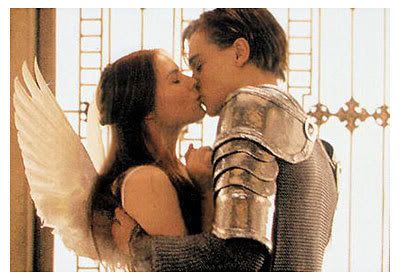
The Kiss: Passionate Kisses / Still I Long For Your Kiss

Lucinda Williams: Passionate Kisses
[purchase]
Lucinda Williams: Still I Long For Your Kiss
[purchase]
There's a ten year difference between Passionate Kisses and Still I Long For Your Kiss, and you can hear it: both contain plenty of pain, and thematically, the two songs are quite similar, but the former, recorded on Williams' self-titled album from the late eighties and later made famous via coverage, is ultimately upbeat and hopeful and empowering, while the latter song, slow and bluesy, drips with the anguish of loss and longing which typifies her breakthrough album Car Wheels On A Gravel Road.
Also true: Still I Long is a co-write, which is quite atypical for Lucinda, whose perfectionist's eye, attention to detail, and control of her musical output are notoriously precise. Listen to fellow songwriter Duane Jarvis' 2001 version of the song, learn more about Lucinda Williams' craft and career, and hear 15 other covers of Lucinda songs, including the aforementioned Grammy-winning composition as voiced by Mary Chapin Carpenter, at Cover Lay Down.
The Kiss: Ae Fond Kiss

Seamus Kennedy: Ae Fond Kiss
[purchase]
Eddi Reader: Ae Fond Kiss
[purchase]
Karen Matheson (with The Duhks and Bryan Sutton): Ae Fond Kiss
[purchase]
Ae Fond Kiss began life as a poem by Robert Burns. From 1787 to 1791, Burns had an affair with the actress Agnes McLehose, (Nancy in the song). McLehose was separated from her husband at the time, so she and Burns corresponded under the names Sylvander and Clarinda to avoid a scandal. Accounts differ as to whether the affair went beyond the exchange of letters. We do know, however, that McLehose decided in 1791 to try to reconcile with her husband, and the exchange of letters stopped. Soon enough, Burns would marry someone else. Ae Fond Kiss was written as part of the last letter he sent to his Clarinda.
The melody is traditional, and I was unable to find out who originally paired the two. But the song has become a classic of Celtic folk. There are many Scottish versions, of course, but the song has also made its way to Ireland and beyond. Seamus Kennedy works in the United States primarily these days, but he is originally from Ireland, and he gives a fine example of an Irish treatment of the song. Eddi Reader first sang Ae Fond Kiss with the group Fairground Attraction, but I am presenting her solo version here because she restores the original lyrics. Karen Matheson’s all-star version comes from Hands Across the Water, an album which raised money to help the children of tsunami victims in 2005.
I would like to close with a little survey if I may. I can imagine doing a theme, here or on my own blog, of poems that someone other than the original poet set to music. My first question is for my fellow Star Makers: would anyone be interested in doing this? And, to our readers: would you be interested in this theme? I think it would be a challenging one to put together, so my last question is for everybody: can you suggest songs for this? Comments, please.
Wednesday, February 9, 2011
The Kiss: J-Rock Kisses

Kuroyume: Kiss
[purchase]
Alice Nine: Kiss Twice, Kiss Me Deadly
[purchase]
Buck-Tick: Just One More Kiss
[purchase]
Kiyoharu: Just One More Kiss
[purchase]
It's been a while since I've shared some J-Rock with you. Luckily(?), there are many such songs that actually have the English word "kiss" in the title, and here are a few.
Kuroyume was one of the big Visual Kei groups of the '90s, and the lead singer was Kiyoharu, whom I introduced to you already. The lyrics are typically vague and emotive and a few of the phrases are sung in English:
Too Far Away, a kiss on the cheek... you, so innocent, unable to say a word
Silence, a deep kiss... you, crying, unable to do a thing…
Too Far Away, a distant kiss.. where has your innocence been hidden away?
Be Silent, a long kiss... too beautiful, I can't even speak. (translation from JPopAsia)
Alice Nine, on the other hand, is a current darling of J-Rock fans. Probably because the vocalist, Shou, is cute as a button – that's him in the image, getting affectionate with his bandmate. Hey, if boyhowdy can post girlkissing this week, I think it's only fair to represent the opposite sex at play. Oh, right, the song…as far as I can tell, it's not a James Bond title track, but instead an ode to vampire love:
If my attention fades, it's all over
In just one moment
My throat gets bitten through
My voice becomes husky
Shall we deadly dance with... (translation from JPopAsia)
Like the earlier song, some of the lyrics are English, including that title. This is my favorite of the 4 songs, mostly 'cuz Shou's voice is surprisingly deep and rich.
Finally we've got a 1988 Buck-Tick tune, with a cover by our friend Kiyoharu, from a BT tribute album, PARADE. Buck-Tick (from a Japanese word meaning 'firecracker') was another of the defining Visual Kei bands of the '80s and beyond—they're still quite active. If it inspires you, check out the YouTube video of the two vocalists singing it together recently in front of adoring fans.
Monday, February 7, 2011
The Kiss: Last Kiss

Wayne Cochran: Last Kiss
J. Frank Wilson and the Cavaliers: Last Kiss
[purchase]
Just before Christmas 1962, teenagers Jeanette Clark and J.L. Hancock died when the car they were travelling in hit a tractor on a rural road in Barnesville, Georgia. It was just a damn unlucky accident. Nobody was driving drunk, nobody was drag racing, nobody was tired of life or mortally wounded by love, and nobody was a leader of the pack.
White R&B singer Wayne Cochran, who lived nearby, was working on a song about the many accidents he had seen on the road, with a sneaky view to adding to the canon of crash songs that were popular at the time. The story goes that the 1962 crash prompted Cochran to write the song that would be known as Last Kiss for Jeanette Clark. The flaw with that story is that the song was first released in 1961 on the Gala label, a year before Christmas 1962 (a re-recorded version came out in 1963). Moreover, Cochran didn’t write the song on his own. Even if he has the sole writing credit, apparently he composed it with bandmates Joe Carpenter, Randall Hoyal and Bobby McGlon.
Cochran’s version was not a hit, but a cover by J. Frank Wilson and the Cavaliers reached the US Top 10 in 1964. In a cruel irony, Wilson was seriously injured in a car crash a year later that killed his manager Sonley Roush, whose idea it was to record Last Kiss.
In 1994 Last Kiss was covered by Pearl Jam as a fundraiser for Kosovo. It brought in some $10 million and reached #2 on the Billboard charts.
Sunday, February 6, 2011
Seven Deadly Sins -> The Kiss: I Kissed A Girl

Jill Sobule: I Kissed A Girl
[purchase]
Long before cherry chapstick popstar Katy Perry kissed her girlfriend, popfolk goddess Jill Sobule kissed hers. And she liked it, too.
It fits the lust category, I suppose, and reinforces, in a way, the way the cardinal sins open up a world of bevaior generally considered deviant from the Catholic perspective - though this is a sweet song, in the end, and an odd sort of gender-role covetousness and curiosity are more the tune here. But it's going to be Valentine's Day, and we're going to run the week on kissing, so this will do quite nicely. Need we say more?
Oh, really?
Then here's yer bonus, fresh from the cover vaults: an antithesis to pop, courtesy of one of my favorite sensitive indie folksmen.
William Fitzsimmons: I Kissed A Girl
[purchase]
Friday, February 4, 2011
Seven Deadly Sins: The Bonny Swans

Loreena McKennitt: The Bonny Swans
[purchase]
Here's our missing sin: Envy.
The Bonny Swans is a murder ballad about sexual jealousy. Childs lists it as #10 of his 305 Popular English and Scottish Ballads, and the original version goes way back to 1656 or thereabouts (Childs labels it "The Twa Sisters"). Here's Wikipedia's summary of the gruesome plot:
Two sisters go down by a body of water, sometimes a river and sometimes the sea. The older one pushes the younger in and refuses to pull her out again; generally the lyrics explicitly state her intent to drown her younger sister (over a suitor)…When the murdered girl's body floats ashore, someone makes a musical instrument out of it, generally a harp or a fiddle, with a frame of bone and the girl's "long yellow hair" for strings. The instrument then plays itself and sings about the murder…so that the elder sister is publicly revealed.
This song clearly violates two of the many warnings from this wonderfully amusing list, Things I've Learned From British Folk Ballads", to wit:
Avoid navigable waterways. Don’t let yourself be talked into going down by the wild rippling water, the wan water, the salt sea shore, the strand, the lowlands low, the Burning Thames, and any area where the grass grows green on the banks of some pool. Cliffs overlooking navigable waterways aren’t safe either.
Sharing a boyfriend with your sister is a bad plan.
Seven Deadly Sins: Johnny McEldoo

The Clancy Brothers and Tommy Makem: Johnny McEldoo
[purchase]
The story of Johnny McEldoo illustrates perfectly how the sin of gluttony can turn deadly, even though the title character and his pals survive. Geovicki’s use of anime imagery inspired my choice of picture for this post. It comes from Hayao Miyazaki’s masterpiece Spirited Away. If you haven’t seen it, I highly recommend it.
If you’re keeping score at home, you will notice that this is the seventh post this week. However, there were two posts for lust, so the missing sin is envy. I hope we will see a post for that soon, and maybe some more repeat business for the others as well. Stay tuned.
Wednesday, February 2, 2011
Seven Deadly Sins: Angry Eyes

Loggins & Messina: Angry Eyes
[purchase]
This song clearly depicts someone with a serious Wrath issue. It's from the accidental but wildly successful duo of Jim Messina and Kenny Loggins. Messina was a former member of both Buffalo Springfield and Poco who had turned toward record producing when he met songwriter Loggins. He initially agreed to produce Loggins' first album in 1972 and ended up performing as well on Kenny Loggins with Jim Messina Sittin' In. That same year they released this eponymous record.
The long version of Angry Eyes is posted here (a less-than-3-minute version appears on their greatest hits). It's noteworthy for its long jazz-rock jam---that's Al Garth soloing on sax and Messina on guitar. Remember, Steely Dan hadn't yet made the jazz-rock sound de rigueur yet, so it was pretty progressive for a couple of country-rock dudes. Hell, country-rock wasn't even that old then, either.
I like the imagery comparing "angry eyes" to a tangible weapon. I've included a subtle tip of the hat to a manga character with his own anger issues – my image shows Light Yagami from Death Note. Light's anger can actually kill people, so this song kinda suits, I think.
Seven Deadly Sins: Seven Curses

Bob Dylan: Seven Curses
Purchase
Seven Curses is a song that Dylan wrote and recorded during the The Times They Are a-Changin' sessions. It didn't make it onto the album, but it was later included on the Bootleg Series collecton, released in 1991. I consider it to be one of the most emotionally provocative and darkly beautiful songs in my moderately sized Dylan library.
The song is a cesspool of sin, but the most profound one is certainly that of Lust. The Judge is one of the cruelest and most loathsome characters that I''m aware of in pop music history. His wicked molestation and betrayal of the female protagonist is actually difficult to listen to. But that's why the song is so powerful. If you haven't heard this tune, give it a listen.
Seven Deadly Sins: I Feel Pretty
Little Richard: I Feel Pretty
[purchase]
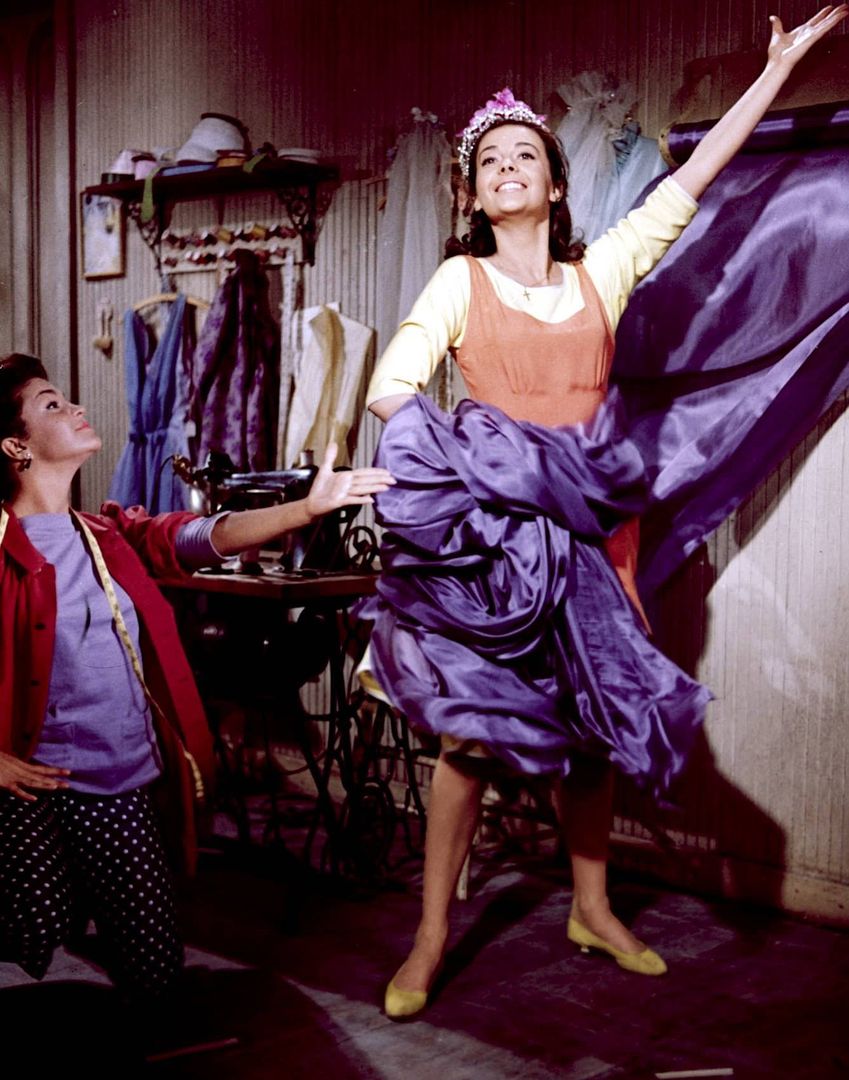
Who among us doesn't remember the classic film West Side Story... and the scene in which Natalie Wood as Maria, the shy girl from the barrio, struts her stuff in the shop after-hours, extolling the virtues of her fine self, spurred on by her new relationship with Tony - it's a buoyant and bright example of Pride (in the name of love... :-)
The song is turned on its ear in Little Richard's campy, yet more-than-capable, cover (from a CD dedicated to, and in honor of, Leonard Bernstein) - who says Pretty has to be gender-specific?
Seven Deadly Sins: Lazy Bones

Leon Redbone: Lazy Bones
[purchase]
I hope there will be more than seven posts this week, and that means that some sins may be represented by more than one song. There may also be sins we never get to at all. Sloth will not be one of those.
Lazy Bones was originally done by Hoagy Charmichael, and there have been some surprising covers, including Chanticleer and The King’s Singers. But Leon Redbone was the artist who introduced me to the song. His version has the necessary lazy vibe, and also Redbone’s trademark wink. You know listening that Leon Redbone loves these old songs, but he never takes them too seriously. They are for fun, and his versions always make me smile.
Tuesday, February 1, 2011
Seven Deadly Sins: Feelin' Love
Paula Cole: Feelin' Love
[Purchase]
There's really no other song that so embodies the feeling of lust to me than this Paula Cole track does. It embodies it and manages to make you feel the sinful feeling at the same time. In the song she talks about how a certain man makes her feel and the fantasies she has about him. It's extremely sexy.
Lust was considered a sin apparently because when we feel lust it is impossible to have room in our hearts to love our Lord, and we must ALWAYS love the Lord. But of course, lust is impossible to avoid, and almost as impossible to not act on sometimes. But oh, it surely is one of the favorite sins, and certainly one of the more fun.

Monday, January 31, 2011
Seven Deadly Sins: Easy Money

Rickie Lee Jones: Easy Money
[purchase]
Lowell George: Easy Money
[purchase]
Let’s open our week of iniquity with the sin of greed, shall we?
Rickie Lee Jones had a hit on her debut album with Chuck E’s in Love, and there were two or three other singles. I don’t think Easy Money was one of them, but it’s a great song, and probably a better indicator of where Jones’ career was headed than any of the singles. The hint of jazz is here, as is the wonderful ability to draw characters in just a few lines. Easy Money is a morality tale told with a wink.
But then Lowell George of Little Feat took on the song on his solo album. George turns this into a soul-blues shout with great horn charts. There is no wink here. Instead, this is a bluesy lament of a deal gone wrong. So George clearly heard something different than I do in Jones’ original. But his version really works too.
Friday, January 28, 2011
Saints: Joan of Arc

Leonard Cohen: Joan of Arc
[purchase]
Joan of Arc may be the most famous of the martyr saints, so I need not tell her story in detail. Leonard Cohen shows himself to be a gifted story teller here. He reimagines her martyrdom as a wedding between Joan of Arc and the flames that would consume her. Cohen has Joan at the last tired of war, and maybe seeking release. The song dates from 1970, so it may reflect Cohen’s feelings about the Vietnam War in this way.
The funny thing is, I don’t really like the music of Leonard Cohen that much. His devotees are passionate about him, and will probably resent my saying so, but I find that a little of his voice goes a long way. In fact, I never would have known about this song at all, were it not for an amazing cover by Darrell Scott. There is an informal rule here at Star Maker that we should not post anything released after 2000. We’ve bent that rule a number of times, but Scott’s Joan of Arc is from 2008, so that’s pushing it. That said, if one of my fellow Star Makers should happen to post Scott’s version in the comments, I won’t tell. I really like Cohen’s original as well, now that I’ve found it, but I just don’t know if I would want to listen to the entire album it came from in one sitting.
Thursday, January 27, 2011
Saints: Saint Genevieve

Alison Brown: Saint Genevieve
[purchase]
Like most of her solo work, this piece is an instrumental, so it's hard to say explicitly what commentary, if any, Compass Records founder and banjo-playing bandleader Alison Brown has to offer about the patron saint of Paris, France.
But music has mood, and this slow, stately, almost morose tune, with its sweet, soaring strings and gentle plucking, speaks to the pleading nature of the devout 5th century nun, a pious ascetic and vegetarian who spoke out on behalf of virgins, prisoners of war, and lenience to all wrongdoers.
Saints: Our Lady Of Fatima

Red Foley: Our Lady Of Fatima
[Out of print]
Some Catholic saints have more than one feast day, operating under several titles. None has more than Mary, the mother of Jesus. There are those that celebrate milestones, including the Immaculate Conception (which, trivia fans, refers to Mary’s own conception, not that of Jesus), others that mark her various ecclesiastical titles (Queen of Heaven), and others yet her apparitions to assorted people all over the place. The Catholic Church is reluctant to recognise most alleged apparitions, but can’t undo those that already have been approved and attract a massive following.
One of these is the alleged apparition of Mary to three shepherd children in the Portuguese village of Fatima in the 1910s. It was big news, and the deal was sealed when tens of thousands of people came to Fatima for the last of the scheduled apparitions, and saw the sun “dance”. Previously the shepherd kids, by now a national story, had said that the apparition would perform a miracle at an appointed time. Bang on time, the sun did all kinds of odd things, like swirling and zig-zagging towards the earth. Some witnesses, however, reported seeing nothing. Scientists explain the phenomenon as optical effects or mass hysteria.
Catholics are not required to believe in apparitions, but Pope John Paul II did. He credited his survival in the 1981 assassination attempt to Our Lady of Fatima, whose feast day it happened to be that day. The apparition allegedly gave the shepherd children three secrets. Two of them were boring, it seems, but the third was closely guarded. It was finally revealed in 2000 and was also boring. Catholic fanatics believe the Vatican released a fake secret and are withholding the real secret.
I don’t think country legend Red Foley was a Catholic, but his paean to the apparition at Fatima, released in 1950, is supreme kitsch, capturing the post-war American Catholicism of Bishop Fulton Sheen, that crook Cardinal Spellman, Going My Way and The Bells of St Mary's. Our Lady of Fatima was recorded with the Anita Kerr Singers, whose voices backed something like half of all RCA numbers recorded in Nashville in the 1950s; Elvis’ pals, The Jordanaires, appeared on the other half. Red Foley was Elvis’ childhood idol: his Old Shep was the first song Elvis Presley ever performed in public, at the age of 10.
Wednesday, January 26, 2011
Saints: St Stephen

Grateful Dead: St Stephen
[purchase]
The original St Stephen was the first Christian martyr. The story goes that he was criticizing the way Judaism was being practiced in Greece, and the Jews there stoned him to death. Bear in mind that this was while Christ was alive, and remember that Christ was himself a Jew. So it was Christ’s version of Judaism, which would become Christianity after His death, that Stephen was preaching.
The Grateful Dead song St Stephen may also be about Steve Gaskin. Gaskin taught a spirituality class in San Francisco in the 1960s, and he would later found a commune called The Farm. So Robert Hunter’s lyrics may be trying to equate the newness of Gaskin’s teachings with those of St Stephen in his time. Musically, St Stephen is one of the Dead’s most interesting songs, with its tempo and mood changes. I was surprised to find that the song has almost never been covered.
Update: One of our readers pointed out in the comments that I made some fairly serious errors in my telling of the life of Saint Stephen. For more on this, please check the comments to this post.
Tuesday, January 25, 2011
Saints: St. Thomas

Joshua Redman: St. Thomas
[purchase]
Poor St. Thomas. (To be more specific, poor St. Thomas the Apostle, not to be confused with St. Thomas Aquinas, or St. Thomas More, or St. Thomas of Becket, or any of the other dozen or so Thomases who are also Roman Catholic saints.)
Thomas had a long and productive saintly career. He is said to have travelled to India and introduced Christianity there (er, well, maybe not so productive there). But we know him best from one New Testament episode, and the story goes like this (with embellishment):
Thomas was not with the other disciples one fateful day---they probably sent him off for the beer and snack run. And when he returned, his apostolic buds had amazing news.
"Guess who was just here visiting with us? You'll never guess!" they told him.
"Dudes. Just tell me."
"Jesus!"
This must have struck Thomas as a really tasteless joke, since Jesus had recently gone through the "crucified, dead and buried" part of the familiar story.
"Yeah, right. Pull the other one, lads, it's got bells on."
"No, really. You just missed him."
"Look, next time, you can fetch your own damned beer if this is the thanks I get."
And then he said the famous words that he soon came to regret: "Unless I see in his hands the mark of the nails, and place my finger into the mark of the nails, and place my hand into his side, I will never believe you."
And for this, a statement of incredulity that I bet every one of us would have come up with in some form, he is best known by the not-very-cool epithet, "Doubting Thomas."
A week later, the resurrected Lord pops in again, but this time Thomas is hanging around. Now I don't think Jesus was at all harsh about Thomas's earlier doubts. He must have had a pretty good sense of humor, because you have to admit, the whole notion of resurrection was pretty unexpected. So Caravaggio is probably taking artistic liberties with the sort-of-icky scene above. I'm sure that Thomas, when invited to act out his earlier words, just said, "No, that's okay, Lord, I'm good, thanks anyway."
Thomas did get a pretty sweet Virgin Island named after him, though, so there's that.
The real reason I'm posting this song is that I just saw Joshua Redman in concert on Sunday and wanted to share something from one of the great tenor saxophonists alive today. This is a tune written by Sonny Rollins, performed in 1995 by Redman at the Village Vanguard. You may recognize the melody after the long introductory solo, at about 4:30.
Saints: St. Peter
Letters to Cleo: St. Peter
[Purchase]
Saint Peter, whose real name was actually Simon until Jesus renamed him, was one of the original Apostles, and considered to be chosen by Jesus himself as the first Pope. These days he's mostly known as the doorman at the Pearly Gates of heaven because of a line in the scripture about Jesus handing him the keys to heaven, thus he is often depicted holding a set of keys.
In scripture, Apostle Peter was considered the most devout, the most enthusiastic follower of Christ, and thus why he became heaven's proprietor. In the song, St. Peter is used for a bit of symbolism. The song is about someone who lies, who is not what he says he is. In the Bible, Jesus predicts that Peter will deny him three times in the course of a day, and in deed, he does deny his faith three times, despite being the most devout of all. But he also represents judgment of those who've sinned, a bit of a dichotomy, and both ways are expressed in the song. So, in this case, knowing a bit of history makes for a great song, despite it being a bit bitter considering it's name-dropping one of the Lord's close buddies.
And I can't believe I hadn't posted a Letters to Cleo song here yet. Perhaps this theme had some divine intervention?

Subscribe to:
Posts (Atom)


