Back when I was in colllege I had a guitar-playing friend named Dickster whose band focused on Grateful Dead covers. Well before that time, I had already zeroed in on The Dead myself as a band very much worth listening to.
Many years later, as I perused the archive.org repository of live music and noticed that the Grateful Dead were very amenible to free dissemination of their concert recordings (somewhat less so now), my respect for them increased. (16,000 + media here)
There's a lot written about the Dead's <Jack Straw> that I would be theiving to post as original here, but I'll summarize the story:
Apparently Grateful Dead guitarist Bob Weir and lyricist Robert Hunter took the basic story line of Steinbeck's <Of Mice and Men> and worked it over several permutations into a final version that told the story of two outlaws::Shannon and Jack Straw.
The [final] version has Jerry Garcia singing/narrating the role of the outlaw Shannon while Weir relates Jack's version.
David Dodd takes the story on in minute detail with alternative interpretations of who does what to whom (murder, rob, bury...) but what comes across is one of the finest musical stories of both the Grateful Dead's extensive repertoire as well as a song that vies for all-time classic.
Before I read Dodd's in-depth essay, I had simply enjoyed the song on its surface value: somewhat typical Dead: laidback tempo, great collaboration of the band all around. The Dodd article adds so much more depth.
Thinking over the word <boss> and its connotations, it occured to me that the word probably came into the English language via Dutch. A little research and ... voila .. "boss is Dutch in origin"... it comes from base or bass or baas. However, being the polyglot that I am, I can't help surmising that there is more to this than that. The Turkish word for "put pressure on" (as in oppress a worker, or force) is <bas>. I am going to go one step further than Collins and Oxford dictionaries and posit that the root goes back further than the Dutch - back to the Ottomans, in fact. It's just an observation, but it makes an awful lot of sense. (You heard it here first.) bas=baas=boss.
So... who's the boss? Well, even that phrase, popularized in many forms, has a somewhat murkey provenance. A 1914 Oliver Hardy film?
The boss is "the person that other people have to obey". That could also take us down a rabbit hole of what it means "to obey", but it also conveys "authority and expertise", and with this we have a more accessible value to the word as it applies to musicians like Springsteen (known as "the boss" for some reason.)
I'll try to take a cue from our own Jordan Becker (and in the process confess that I too often paste information you can find in your own searches - tho' I generally say as much). This week it''s not Springsteen . although it could have been. Not bossanova (tho, again, I love Carlos' music in any form, and thanks Seuras). And not Blue Cheer who were also on my list of potentials on account of their "Summertime Blues" (wherein we have the <I hate my boss> theme).
Pardon me while I provide some freely accessible Wiki data as I assume you haven't yet been there nor know it. Big Boss Man is a Luther Dixon/Al Smith song first recorded by Jimmy Reed - and you would be excused for not knowing the names. That said, some of Dixon's songs were recorded by the Beatles, the Jackson 5 and more.
Sing "You ain’t so big, you’re just tall, that’s all."[
Above it's the Grateful Dead's version and below we have Jimmy Reed, then B.B. King and Elvis.
I’ve written in the past about how I started paying attention to music in 1969. as a result of hearing WABC, the classic New York Top 40 station, in the station wagon that took me to my summer day camp. And that fall, I have a vague recognition of being in the car with my mother, and hearing “Take A Letter Maria” on our car radio, and proclaiming it a hit. I was 8 years old, and already thought that I was a music critic. And here I am, more than 50 years later, still pretending to be a music critic of sorts.
The funny thing is that my 8 year old self was right. “Take A Letter Maria” became a No. 2 hit on Billboard’s Hot 100 chart, blocked from the top spot by The 5th Dimension’s “Wedding Bell Blues,” also a great song.
I’d be shocked if anyone reading this doesn’t know the song—it is sung from the perspective of a man who had just learned of his wife’s infidelity, and dictates a letter to his secretary, the titular Maria, informing his wife of their separation. At the end, he asks Maria to dinner. It’s a surprisingly peppy song, considering the subject matter, with Latin influences and mariachi horns. I think that the narrator is supposed to come off as a sympathetic character, trying to recover from the discovery that his marriage is over, and he’s been cuckolded. And overall, I think that holds up today, despite the fact that he breaks up with his wife by letter (the functional equivalent of the uncool breakup by text), and the fact that in today’s environment, asking out Maria would raise questions of power differentials and sexual harassment. To be fair, we don’t know whether Maria accepted the invitation. Also, I have to admit that the fact that he instructs Maria to “send a copy to my lawyer” makes me happy.
“Take A Letter Maria” was written and recorded by R.B. Greaves, and I’d be shocked if most of the people reading this knew that, and if they did, if they knew anything else about Greaves.
Greaves, who was the nephew of the great Sam Cooke, was raised on a Seminole reservation, but moved to England in 1963. A few years later, performing as Sonny Childe, and fronting a band called The TNT, Greaves became a popular live soul/R&B act in England and recorded a few singles, before leaving The TNT during the summer of 1967. (Without Childe/Greaves, The TNT became the backing band for P.P. Arnold, probably best known for her versions of “The First Cut is the Deepest” and “Angel of the Morning.”)
Greaves’ big hit was recorded at the legendary Muscle Shoals Sound Studio, and featured the house musicians, including Donna Jean Thatcher (probably better known from her days with the Grateful Dead as Donna Jean Godchaux), Eddie Hinton, Jimmy Johnson and David Hood. And it was produced by Atlantic Records head Ahmet Ertegun (not even close to being best known as my ultimate boss during the summer of 1982).
Greaves’ followup, a cover of the Bacharach/David song, “Always Something There to Remind Me,” stalled at No. 27 on the Billboard chart, and that, pretty much, was that for Greaves, although he continued recording into the 1970s. He died of prostate cancer in September 2012 at the age of 68.
Patterson Hood, of the Drive-By Truckers, who is the son of David Hood, the bass player on “Maria,” has covered the song during solo shows, sometimes with his father on bass. Here’s one such performance, in which Patterson talks about how the Rolling Stones wanted to record in Muscle Shoals in 1969, before leaving to perform at Altamont, and that on that day, Greaves recorded “Maria” during the day, and the Stones appeared at night to record “Brown Sugar.”
Trying for a double whammy, associating both the song and the performer with the theme, doncha know! Well, no, not as it turns out. And, anyway, a song about a runaway train would sit awkwardly alongside the usual culprits occupying the songs of this short lived and single album-ed band. Yes, but I still suspect a tongue may well have been twixt tongue and cheek as the name for the song's main man came to be chosen. With a nod, I feel, more to the Grateful Dead than to the old west.
Sir Casey Jones/Eighteenth Day of May (2006)
Eighteenth Day of May were a glorious anachronism, a potent mix of folk-rock UK and folk-rock US, the first a post Fairport plunder of trad. arr., the second a Byrdsian singer-songwriter jangle. Here but for a brief blink in the spotlight, emerging first in 2003, all burnt out by the end of 2006, they left behind them a legacy of only one completed full length recording and a lot of lingering expectation.
Initially an acoustic trio, Alison Brice on consummate Denny-esque vocals and flute, with guitarists Ben Phillipson and Richard Olsen, each capable on a range of stringed instruments. With a mission statement based about the Incredible String Band, they seemed thirty years plus late for the game. However, following the vibe of many a folkie before and since, they embraced Judas and went electric, adding bass and drums. And, more importantly, viola, in second female member, Alison Cotton. A serendipitous appearance on a magazine cover disc led to to their catching the ear of Hannibal records supremo, Joe Boyd. That Joe Boyd, the same as had fostered loving care and attention on the early Fairport Convention, recognising here some kindred spirits. There's a neat interview with them round about that time.
Lady Margaret/Eighteenth Day of May (2006)
The eponymous LP, which came out in 2005, received probably more praise than plaudits, a critics favourite rather than causing any great bother to the charts. Little else in 2005 sounded quite like this, perhaps a reason why it has lasted so well, exuding a timeless charm. As a card carrying lover of this style of musical alchemy, it has remained a thing of wonder to me and not small number of like-minded chums. So imagine my joy as I read of an expanded re-release of the debut, along with various other bits and bobs that would have potentially made up the second album, had they managed to gel that long. And imagine my dismay as it came and went, obviously released on the 18th of May, a limited 600 copy release, on vinyl, now already available only for silly money. Shame, but I live in hope of a further release, perhaps on CD next time, please. Hell, even a download would do.
Sir Casey Jones/Eighteenth Day of May: Live at Green Man festival, 2006
Since the demise of the band there have been flickerings from ex-members, predominantly Olsen and Cotton. Cotton actually stayed for a while with Phillipson and the rhythm section, with a near Eighteenth Day of May part two ensemble, Trimdon Grange Explosion, but they too only managed a single eponymous LP. So far, at least. For something a little more avant garde, she also has a developing solo career of drones and loops, voice and viola to the fore. Olsen I had heard no more of until I was alerted to the similarly jangly sounds, if with a more country-rock bent to them, of Hanging Stars. With three releases to their name, bubbling under the surface of the small pond of music styles tending to attract little current mainstream favour, they are right up my proverbial, echoes of the Flying Burrito Brothers and Love imbuing their sounds. I hadn't even realised their frontman was the one and same Richard Olsen, that knowledge somehow adding buckets of kudos to my enjoyment.
The Bonnie Banks of Fordie/Trimdon Grange Explosion (2019)
Honeywater/Hanging Stars (2017)
So, turning full circle, on this 22nd day of May, a few days late, please investigate these three strands, each straggling from the premise and promise that there is no such thing as out-dated musical styles, just buttoned down ears afraid to tempt fate.
If we are talking about questions, I suppose the question word <why> is at the fore of this theme. What better choice then, than a song that asks that self-same question: why?
Without any previous background knowledge, I would have posited that the Beatles' <Why Don't We Do It In The Road?> was a Lennon composition. You know? Free Love ... Push the limits...
To my surprise, I learn that it is a McCartney piece with Starr's assistance and that - to top it off - Lennon is said to have been hurt that he was not included.
By the time the <White Album> came out, the band was all but defunct. As opposed the the relative conformity/sequence/progression of songs on <Revolver>, <Sgt Peppers>, <Magical Mystery Tour>, the <White Album> is disparate, disjointed in terms of theme.
Granted, there is a certain amount of non-sense coming in from time to time starting earlier. Earliest Beatles songs were very muchly boy/girl themed, and then we start getting things like "We all live in a yellow submarine". WTF? I mean, I can kind of see "We're Sgt Peppers Lonely Hearts Club Band" in terms of lyrics, but by this point in time, we've gone a bit off the rail - in terms of what AM radio thrived on.
And then there's "why dont we do it in the road?"
I suppose there's the distant possibility that what we could be doing in the road is scat, but that's not much more sociologically acceptable than the actual, more obvious notion behind the song.
McCartney apparently witnessed 2 monkeys in the act in the streets of India. But as I said, this seems much more the kind of question that Lennon would have raised - delving into and questioning the social stigmas that define our behaviors. You know: if love is so beautiful/the answer to all our troubles, then why don't we do "it" in the road?
(It's extraordinary the things you discover in this job, one being the difference a space between 2 words can make. And the similarity. 'Dead Grass' is the name of an album by the late great fidler extraordinaire Vassar Clements, of whose music I have been a fan since I was 15. 'Deadgrass' is the name of a band who peddle the self same concept as did that album, albeit as a current working live band. And whose bio seems resolutely to avoid any reference to the earlier. Funny that.)
So, 'Dead Grass', then? More or less as it says on the tin, the music of the Grateful Dead through a bluegrass filter. Arguably not as great a leap as it sounds, Garcia's pre-Dead background in jugbands and his lifelong love of and sidetracking into banjo based acoustic hillbilly music being well known. I have racks of this stuff from Old and in the Way, through myriad duet sets with David Grisman, a celebrated mandolin player, also a member of OaitW. Vassar Clements, himself no stranger to Garcia and the band, having played on 'In the Wake of the Flood' and been also a 3rd member of OaitW, was, or certainly looked, much older school than his cohorts, and had an interesting life.
Born in 1928 and self-taught on the fiddle, he soon came to the attention of Bill Monroe, joining his Bluegrass Boys, barely as he turned 20. After a few years live experience he was ready for greater recognition, spending time with many of the bluegrass giants, including playing, alongside Lester Flatt and Earl Scruggs on this masterpiece. However, the middle of the 60s saw him fall prey to the bottle, and it seemed it had fully let him down, he scraping by in dead-end jobs.
Newly sober and developing a new name for himself, in sessions, he was fortunate enough to find himself swept up into the commotion of a groundbreaking moment in american music, The Nitty Gritty Dirt Band's 'Will the Circle Be Unbroken', in 1972.
This fabulous collaborative piece of work was the idea of the Dirt Band and their then manager, to team up their no mean talents with those of the generation behind them, putting a bunch of longhaired hippies into the room with a bunch of distrustful short-back-and-sides elder statesmen, like Roy Acuff, Jimmie Martin and the aforementioned Scruggs. Astonishingly it gelled, the recorded between song dialogue reflecting the initial suspicions. Clements featured heavily, arguably, alongside Doc Watson, the blind guitar-picking maestro, coming off the best of an impressive roster. From there, his second wind was off, Grateful Dead sessions, work with an immediately post Allman's Dickey Betts and a solo career. As mentioned earlier, he joined up with Jerry Garcia, Dave Grisman, bass player John Kahn and another ex-Bluegrass Boy, Peter Rowan, on guitar, to form Old and in the Way. With Garcia on banjo, they had a modus operandi of playing both traditional songs and grassed up covers of contemporary songs. Whilst no Dead songs made it on to any of their records, I would think it strange if they didn't sneak the odd one into their live sets, no doubt fuelling the idea for 'Dead Grass', which appeared in 2000, arguably helped along by the 'Pickin' On' series. For me, 'Dead Grass' has the greater whiff of authenticity, Clements being a tangible link to the band, the songs remaining songs, proper songs with vocals, rather than the slight sterility of meticulously rehearsed instrumentals.
In the intervening years Clements had remained busy, taking forward his concept of Hillbilly Jazz, a freewheeling amalgam of blue grass, western swing, jazz and old-times standards. The similarly entitled 1975 album is a thing of some wonder. Seldom ever can Bob Wills and Benny Goodman have sat alongside each other in the song credits. Very much Clement's project, backing musicians included David Bromberg and longtime Elvis drummer, D.J. Fontana. I remember reading about this record a year or two after 'Will The Circle', never ever seeming to be able to find a copy. I finally remedied that about 15 years ago, about the time Amazon were becoming a player, and from whom you could get anything. A joy better late than never.
There were a few more similar recordings, but the ever itchy fingered Clements kept stretching his boundaries, including a fascinating duet live recording with Stephane Grappelli, their styles seemingly poles apart, the Hot Club de Paris translated to a log cabin in the Appalachians. It shouldn't, but it works, believe me. Towards the end of his life; he died in 2005, he was exploring the blues, his final recording being 'Livin' With the Blues', another belter, alongside the likes of Elvin Bishop, Maria Muldaur and likeminded genre-defining harmonica man, Norton Buffalo.
I love fiddle music and how it can touch any style. If my top three exponents include Sugar Cane Harris and Dave Swarbrick, Clements is surely the king.
<Green, Green Grass of Home> may well be the first Trees/Grass song that comes to mind for people my age. Possibly followed by <Tie a Yellow Ribbon>. I cannot say that either of them does much for me besides bring back memories - we were severely exposed to both as they sat atop the charts for longer than I would have placed them there.
For me, Green, Green Grass was a Tom Jones hit. I've brought this next point up before, but since we are talking memories... My pop music exposure during Tom Jones' Green Green Grass period was via a short-wave transistor radio connection to pirate radio Radio Luxembourg, more than 1,500 miles away. This meant that the signal came and went such that you mostly caught snippets of the song.
In perusing the Wikipedia article for the song, I was struck by the number of known covers of the song beyond Tom Jones: Johnny Darrell and Porter Wagoner, credited with the first public exposures, and then Jerry Lee Lewis, Joan Baez, Elvis, Nick Cave, Kenny Rogers - and believe it or not, the Grateful Dead.
I also had not fully focused on the lyrics - certainly registering the general melancholy, but ascribing that to an aspect of what I assumed Country music was like. And perhaps not totally wrongly - there are no few songs that lament the state of some po' boy on Death Row, for that's the story the song tells. If you hadn't noticed:
There's a guard, and there's a sad old padre, Arm in arm, we'll walk at daybreak Yes, they'll all come to see me in the shade of that old oak tree, So they lay me 'neath the green, green grass of home
Wikipedia tells us that Crosby's 1971 first solo album <If Only I Could Remember My Name> was selected for the Vatican's top pop 10 albums of all time list. What? David Crosby? The Vatican?
Said Crosby: It baffles me as much as it baffles you, man.
If Only I Could Remember My Name came on the heels of Deja Vu and was Crosby's solo album that coincided with the solo albums from each of the rest of CSNY.
The album seems rather raw to me. Others have labeled it as experimental. That is certainly true of this piece: the lyrics don't even kick in until the song is more or less finished, and up until that point, we listen to what I would call a rather wandering guitar. Very much <a la Jerry Garcia/Grateful Dead>. No surprise then to learn that Garcia helped to arrange and produce the album.
A news article in a recent Guardian noted that 1 percent of Brits own virtually all the land in the country. Although Crosby was probably more focused on the US, this song rifs on that theme.
What are their names? What do they care about you? About the state of the world beyond their wealth? What does their "charity" mean for the future of the planet (like rebuilding Notre Dame)?
The entire lyrics aren't long and the "choir" singing it includes most of the Airplane, the Dead, Joni Mitchell and CSNY
I wonder who they are
The men who really run this land
And I wonder why they run it
With such a thoughtless hand
What are their names
And on what streets do they live
I'd like to ride right over
This afternoon and give
Them a piece of my mind
About peace for mankind
Peace is not an awful lot to ask
Can you identify a musician's "signature style" just by hearing them play on a particular track? For a vocal artist, it's pretty straight forward - their "instrument" is highly unique. But whaddabout a guitar player or a keyboard player? To the knowledgeable, a Fender sounds different from a Gibson. A country picker sounds different from a rocker and so on ... But what is it about their style, their sound that sets them apart?
In the case of Nicky Hopkins - need I say, one of the most sought after session keyboard artists throughout the 70s and 80s - it appears that it was personality more than keyboard fingering that set him apart. Great work, but could you identify him on a track just by hearing it?
I've been to the Keyboard mag site and an article titled "5 Ways to Play Like Nicky Hopkins" in search of an answer. Among other notes, they report one of his signature techniques involved: " a sus2 embellishing the third scale degree". If that tells you more than your ears tell you ... Wow! Their review of his style only gets more technical as it continues (beyond my ability to follow).
His Rolling Stone obituary said he played "fast, accurate pounding piano lines to flesh out the sound of everything ...", as well as "skill, reliability and cheerful personality ensured he was the sort of session player untutored rockers could relate to". I want to believe that it is this that put him in such demand. When you play with others, how you fit in at the moment is as important as your speed or your technique.
My bad: I hadn't realized that Nicky Hopkins had passed - and it's been 25 years. I knew his name/fame primarily because of his session work with the Stones and the Kinks, but never delved particularly deeper than acknowledging his chops here and there. So ... let's post this under <Nick> but let it lead us into <In Memoriam>, even if he didn't pass this past year. (SMM might have missed him back when he did ... wait: SMM wasn't yet online back then!)
His Wikipedia page reveals so much more: all over the place, he was. The full list is overwhelming:
A taste below:
Art Garfunkel (above)
Jeff Beck (above)
The Rolling Stones - Sympathy (above)
The Grateful Dead/Quicksilver (Edward the Mad Shirt Grinder)
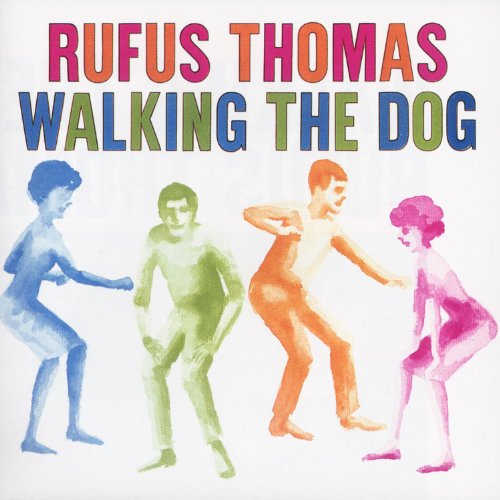
At this point, Rufus Thomas is probably best remembered for this fun, nursery rhyme influenced song, but it was only one of his hits, mostly novelty dance songs, often about dogs or other animals, in a long musical career that started as a child tap dancer on the streets of Memphis in the 1920s, and included stints in minstrel shows in the 1930s, as a vaudeville performer in the 1940s, as a songwriter, performer and DJ in the 1950s, as a popular recording artist in the 1960s, and he continued to perform and record thereafter, often billed as “The World’s Oldest Teenager” and “The Funkiest Man Alive,” until not long before he died in 2001 at the age of 84.
Thomas recorded for Sun and for Stax, the minister at his wedding was Aretha Franklin’s father C.L. Franklin, he worked for 20 years in a textile factory, he acted in Jim Jarmusch and Robert Altman movies, and he performed with Prince, at the 1996 Olympics, and with the Blues Brothers Band. And his daughter Carla Thomas is considered the Queen of Memphis Soul (and who I missed when I wrote this.)
As I was writing this piece, I thought back to walking our family dog, Strummer, who died back in 2014. In July. You can read more about him, and our relationship, here.
I've never been so dedicated as to call myself a Dead Head, but I have spent many a happy hour groovin' to their sound.
And more than once I have noted here and in my now retired alternate blog (noted to the right side here for its inactivity for many a moon) my appreciation that the Dead have been pretty liberal in the way they allow dissemination of their product.
One of the best sources of Dead concerts is the Internet Archive, where there is in fact a dedicated channel to their live shows - much of it downloadable. Their message? Might as well let them record and share. Sharing our music is good.
I consider myself lucky in that I experienced some of the 70s free-flowing culture - frequently hitch-hiking up and down the East Coast, but not so much with abandon - I was generally headed to a place where I could lay my head on a known pillow.
There's a lot of funky stuff out there if you're willing to let it go and give it a try. The message being, "Might as well give it a try."
Decide for yourself if I read it right:
Never had such a good time in my life before
I'd like to have it one time more
Whoa! One good ride from start to end
I'd like to take that ride again, again!
Ran out of track and I caught the plane
Back in the county with the blues again
Great North Special been on my mind
I might like to ride it just one more time
The word <might> shows up not infrequently in the Dead's lyrics, most often not in terms of might, as in power, but as in might, not sure what the future brings.
There's a lot about the Grateful Dead that could be included under the heading of chaos.
Carol Brightman's book about the band is appropriately titled Sweet Chaos. Reviewer David Hadju is not as kind on either the book or the band as Rolling Stone is. (Read the NYT review here).
As tour manager Sam Cutler from the early 70s notes in the 6 part Amazon series called Long Strange Trip, the band's lack of a leader meant a fair amount of chaos reigned, that decisions were difficult to make. Garcia ends up being a reluctant leader in the public eye, but it is the last thing he really wants.
One of the outstanding decisions the band does make, however, is their concert taping policy: scores of fans would show up to concerts with sophisticated taping equipment - with the band's blessing. In the Amazon material, Garcia comments that once the band has played their show, he is more than happy for that night's material to be of use to other people since he is done with it. It's that policy that makes it easy to share this with you.
Most shows had two sets: a more structured sequence of their classic, recognizable songs and a less structured set that some of the band describe as part of their role as travel enablers: aiming to take the audience on a trip.
From the hundreds of free recordings available at the Internet Archive, you can listen to versions of the same songs done over the years and hear the variations in solos, vocals and improvisation. "Playing in the Band" might be 7 minutes one night and 23 the next. Another song might begin as a kind of wandering cacophony before breaking into its recognizable form. Others just wander in loosely structured chaos, such as this version of "Space"
for more tunes from that particular concert (04/07/85 at Philly's Spectrum) click here.
The Grateful Dead album Workingman’s Dead was released in 1970. I was ten years old, but my oldest brother made sure I heard it right away. And so began my love of the music of the Grateful Dead. Dire Wolf was the song that won me over. I could not have articulated at the time what is was that drew me to the song, but I can now. It was the song’s folkloric quality. The narrative is steeped in the traditions and attitudes of the western cowboys and settlers. The Grateful Dead told stories of these people throughout their career, and these songs were not based on any historical figures. Instead, they were a retelling of an attitude. Women were idealized backwoods angels, as in Sugar Magnolia and Althea. Men were gamblers and gunslingers, but they were also loving fathers and uncles, interested in mentoring their sons and nephews about the ways of the world. That world would unfold for me over the course of many years and many songs. But Dire Wolf is simpler than that. It is a representation of how Death comes for a man like the ones in these later songs. Death is a menacing figure, yes, but he is invited in for a game of cards. The song’s narrator does not want to die, but the cards are literally stacked against him. Still the game is a friendly one, and perhaps it helps the narrator accept that it is his time. As a ten year old, I had no experience of death, but I knew at some level that the song’s theme was universal.
The mythos that the Grateful Dead introduced me to with Dire Wolf was one that also encompassed a wide range of musical influences. The song itself introduced elements I would recall years later when I began to learn about the traditions of country music. But the Grateful Dead also covered blues folk, and jazz, and they made an astonishing range of songs seem like natural part of a the world view that began to develop in Dire Wolf, even when the band was covering someone else’s song. I would later explore many of these musical styles based on these introductions, especially the blues.
Grateful Dead: Dire Wolf (live, San Francisco Civic Auditorium, 12/28/83)
In my tribute to the Grateful Dead, I could hardly neglect to mention their influence as a live band. I actually never got a chance to see them live, but I nevertheless bought into their ideas of what live performance should be. The vocals on live Grateful Dead tracks can sometimes be painful to listen to, which eliminated from my consideration several performances of this song. But the song itself is a living thing. Each performance is a snapshot in the life of the band and its members, and so how the song is performed changes and evolves. This version from 1983 is far removed from the country trappings of the studio version, but it is still definitely Dire Wolf. Now the song is a rock song, with interesting keyboard lines that reflect a lineup change from when the studio version was done.
There is no purchase link for this version of the song. The Grateful Dead catalog includes a dauntingly long list of single concert releases from shows starting in 1966, and ending in 1993. Surprisingly, only one release, Dick’s Picks 6, includes a show from 1983, and the band did not perform Dire Wolf that night. There are no shows at all from 1984. If the rest of the show was as good as this Dire Wolf, this is a show that should be made available.
I remember that when I first heard the Blues Brothers do this song, I wondered why they were covering the Grateful Dead. Hard to Handle was a staple of their live shows in the early days of the Grateful Dead. Pigpen was the Dead’s designated blues singer in those days, and this song appeared to give him more trouble vocally than most. There are many concert versions that don’t say the best things about his voice if you listen too closely. Now at last I know why. Blues singing of the kind Pigpen did best is very different from soulful R&B shouting, as practiced by a master like Otis Redding. This is what Pigpen was trying for, and the Blues Brothers came closer. But there is simply no substitute for Otis Redding. In Redding’s hands, all of the power of this soulful boast is revealed, and you can hear why anybody would want to cover the song in the first place. But Redding delivers a performance that sounds so natural that the challenges of covering the song do not become apparent until you try it.
Rather than dive straight into songs with jail, gaol or prison, I am going to run with the lyrics that alight always in my mind at any mention of prison. I refer to this perennial favourite, by the Darkstar hitmakers themselves. The first version I ever heard, and the one that sticks is the one below, 'Friend of the Devil', covered by Lyle Lovett. This was on my Grateful Dead entry level initiation, on a wonderful and recommended LP, 'Deadicated', a tribute to the band featuring, as well as Lovett, other dignitaries varying from Indigo Girls to Los Lobos, via Burning Spear and Suzanne Vega. It is terrific.
So why did I need this easy entrance? Primarily, fear. As a teenager in the UK, the Dead were a massive iconic template from far way in California. I had read and knew all about them, Haight, the Acid Tests, the Egyptian concerts and triple, quadruple sets featuring, if you were lucky, the aforementioned Darkstar, an old rock and roll standard and, at best, a couple of other songs, spread out and shpongled into epic proportion. It seemed all bit much, a bit exotic for my innocent ears. OK, I got there in the end, actually in my first U.S. jaunt, the sad, usual first american experience of us brits, the wonder(?!) of Orlando. I recall difficulty finding a record store, going on a mini-spree when I found one, jay-walking diagonally across a huge x-roads. Before I knew it I had 3 of their records, including the one with the original version, 1970's 'American Beauty'. (Am I allowed to say it isn't as good?)
I guess I should explain the prison relationship, it being all within the lyrics, a masterpiece of american western gothic, a lyric by Robert Hunter, longterm lyrical cohort to the tunes of Jerry Garcia. (In the interests of fairness, I need to add that New Riders of the Purple Sage guitarist John 'Marmaduke" Dawson also contributed to the song.) I love these story songs of derring do and it is one of the best in the milieu.
I lit up from Reno I was trailed by twenty hounds Didn't get to sleep that night Till the morning came around
I set out running but I'll take my time A friend of the Devil is a friend of mine If I get home before daylight I just might get some sleep tonight
I ran into the Devil, babe He loaned me twenty bills I spent that night in Utah In a cave up in the hills
I set out running etc,
I ran down to the levee But the Devil caught me there He took my twenty dollar bill And he vanished in the air
I set out running etc.
Got two reasons why I cry Away each lonely night The first one's named sweet Anne Marie And she's my heart's delight Second one is prison, baby The sheriff's on my trail And if he catches up with me I'll spend my life in jail
Got a wife in Chino, babe And one in Cherokee First one says she's got my child But it don't look like me
I set out running etc,
Got two reasons why I cry Away each lonely night The first one's named sweet Anne Marie And she's my heart's delight Second one is prison, baby The sheriff's on my trail And if he catches up with me I'll spend my life in jail
Got a wife in Chino, babe The one in Cherokee The first one says she's got my child But it don't look like me
I set out running etc.
As ever, the idea of the largely middle class and effete Garcia being in trouble for anything other than his consumables or his tax-return is a little bit laughable, but, hey, rock'n'roll! I have a nagging doubt and concern however as to who, or what was the devil, though. Answers on a postcard.
The Dead are in my head a lot these days, the recent 5cd charity tribute, 'Day of the Dead', justly garnering a lot of media attention and revitalising my interest and curiosity in the band. Nobody born in the late 50s or 60s could fail but to be aware of this momentous band, but fewer actually have heard that much of them or have them on their shelves. OK, I discount of course the tie-dyed masses who can still congregate at the drop of a tab and can discourse eloquently, if carefully and slowly, as to the relative superiority between different performance, Oakwood 90 versus Santa Barbara 68, say, which, for all I know exist within the vast vaults of live available recordings, legit and otherwise. (Hell, I even know someone who felt this 80 disc box set an essential. Eight zero!!) I confess I have never really got the Dead live, or, for that matter, live recordings generally. Had I ever actually seen them actually play I guess that would have been a game changer, but their trips over the pond here to blighty were few, and I was at school when they played Bickershaw festival in 1972. Listening quietly and soberly to live concerts on disc or youtube at home seems somehow, sorry, such a waste of my precious time. One day, maybe, but I'm a studio guy. I like my records tailor made for the home listening experience, without the audience attention, duff notes and drum solos.
Like so many bands I became aware of in my teens, the Grateful Dead I probably liked as an idea more than as an actuality. Like Frank Zappa and the Mothers, they were a name I was happy to drop, establishing my dude credentials, or should that be pretensions, a band for a T shirt or a name check. I hadn't even really heard that much until I hit my country-rock infatuation. The initial releases of American Beauty were flawed by pretty dodgy stereo separation but I could still identify with the strength of the songs, so it was a delight when CDs ushered in remastered versions, and I belatedly put my wallet and my ears where my imagination and affectation had previously been. Yes, a decade or so late but that's me, always late to the party. My first trip to the U.S. resulted in the necessity of buying a Garcia T shirt and the latest record by the band, maybe purely so I could say where I bought them. Man. (Actually, Orlando, so maybe not so cool.......) This was 'In the Dark' in 1987, a patchy record but one that contains this, my favourite Dead song, one that even now I am thinking of how I can make seem appropriate to play at my funeral. (This is a habit of mine, making playlists for events I may not even be attending myself.) Since then I have cherry picked their studio catalogue, finding songs I like alongside one that, frankly, I don't so much, but an enjoyable trip anyway. (I am so not going to say long or strange within the context of this piece!)
So finally to the song in the title. I didn't get around to hearing this until probably only a year of so back, probably not until the release of this recommended double studio retrospective, which makes it last year. Sure, I had read about it, and was aware of the vitriol poured upon it. Indeed, the idea of the Dead do disco did always seem to smack of some bizarre desperation, and I hadn't wanted to hear the depth of the described disgrace. And I am 100% sure that, in the day and at the time, I would have been as horrified as the next hipster, sucking disco being anathema to me until I begrudgingly let Blondie and Roxy Music sneak some into my consciousness. But do you know, I really rather like it. In fact, I'd go further, I love it. Add the fact that it is an ear worm of such persistence that I find myself humming it all over the place. It is cheesy, cheerful and chock full of a chutzpah that, damn it, just ought to make the sanctimonious nay-sayers smile and celebrate. Maybe a bit like the shock of other icons and idols of yesteryear playing Sinatra songs, unthinkable in the day, but, you know, it works. Likewise, contrary to my above comments, I did take a wander through the youtube, browsing the live spectacle, and, if anything, the clip below adds to my pleasure. Garcia is smiling. I am now old enough to dispel the notion that rock gods should not smile during the serious ritual of performance. I love to see musicians enjoy their art rather than suffering for it. It's here
I mentioned the charity record at we started. It's too long, there are too many indulgent and lazy re-runs of lesser known songs, the sound is muddy and it is bloody brilliant. How is that my conclusion? Well, probably because between the reedy vocals and wibbly meanderings there are out and out gems. In particular those featuring the National directly and indirectly shine, arguably unsurprisingly as twin brothers, Bryce and Aaron, both of that band, curated the whole project. But Bonnie 'Prince' Billy and Orchestre Baobab, an afro-cuban band from Senegal of all places, throw in a couple of doozies. Even the reliably much reviled Mumford and Sons give a not half decent version of my second favourite Dead song, 'Friend of the Devil'.( War on Drugs take on 'Touch of Grey' hits my spot, too.) As for the version of my title song, thus by default my third favourite Dead song, this is by Unknown Mortal Orchestra and is pretty handy too, adding only a little extra funkiness. Below is their performance of it on Conan:
I'm am not going to send you to the big river this week, nor point you to the original recording. In the spirit of the whole, do some good, buy the charity set direct from the label.
At first I had a silly and somewhat vainglorious notion of
posting a song relating to each and every element. That would get the posts up, I thought, failing to recall quite how many of the buggers there were. After a
quick chat with my friend wiki I realised/remembered there were 118 of them, meaning a minimum of
14 posts a day, given I have already left this so late. And then, as I perused
the list, I saw that few are exactly household names, sufficiently known as to
be stimulating the pens of even the most scholarly lyricist. But these ideas
are hard to shake off, and so, like a grass seed in the ear of a dog, here’s a
germinated selection of some of the less likely. (None of your oxygens or lithiums, mind, that would be too
easy.)
So, here’s to part 1, hoping I won’t be stepping on the
shoes of too many colleagues, themselves eagerly pursuing these very titles for
more complete discussion and discourse.
HELIUM: The Plain White Ts are what I would call
inoffensive. Easily digestible, processed and slightly punky pop, with melodies
and purpose to satisfy the easily pleased. Don’t get me wrong, I don’t dislike
them, I just don’t sort of need them. This track, written by their main
songwriter, Tom Higgenson, comes from 2013’s ‘Should’ve Gone to Bed’, and is
typically catchy, tho’ I fear I may have forgotten it by tomorrow.
NITROGEN PINK: Polly Scattergood sounds as if
she ought to be good, if not better than this song, her debut single in 2007.
Sadly, the vocals are too knowingly off-kilter. The construction behind it is
OK, but, tellingly, 2009 was her last release. And WTF is Nitrogen Pink anyway?
(Possibly something Bjork inhales?)
SODIUM LIGHT BABY: Matt Johnson, aka The The, produced a
flurry of dance influenced records from the mid 80s until, after a gap, 2000,
this song coming from his 6th, ‘Dusk’, in 1993. With the move
towards a more guitar based sound, courtesy Johnny Marr, I hear a tinge,
appropriately perhaps, of the ‘Mad’chester Happy Mondays sound, but with better
vocals.
MAGNESIUM NIGHT LIGHT: Actually this is a pair of tracks,
being a composite of Infrared Roses and the aforementioned. I’d tell you where
the join is, but, to be fair, despite listening, I have no way of knowing. It’s
an instrumental and I’m guessing it’s live. No doubt, because it is the
Grateful Dead, you had to be there, but I never thought I would be missing
Jerry’s vocal ‘strengths’. Can I be the first to go on record and say I prefer
their studio stuff.
Don't buy Magnesium; you can't. (But it does have a touch of grey about it.)
ALUMINUM: Or Aluminium, as we charmingly call it over here.
The White Stripes or, massively overated as, likewise, we call them over here.
I like the Jack White/Brendan Benson ‘Raconteurs’ stuff, largely, I suspect, as
Benson has the discipline to rein in White’s more, um, experimental side.
Pleasantly short.
SILICON JESUS: I had never heard this or of Psykosonik,
making my aimless wittering of worth, if only to me, ‘cos I rather like it’s
somewhat generic and derivative take on techno. If Plain White Ts went
electronic with a few sequencers I think they would sound like this.(How many different Jesus’s can you think of
in popular music?)
SULFUR: The temptation to belittle and deride Slipknot with
more ribtickling mirth around the spelling of Sulphur is actually dissipated by
a gallingly shocking fact. This is quite good. OK, get rid of the vocals and
it’s very good. Who knew? Having never knowingly allowed myself to listen to
them, should I now be exploring their back catalogue? This is from 2008s ‘All
Hope is Gone’ and it is almost fusion in its frantic pace. Mind you, I’m not
that keen on fusion either.
CHLORINE: From 2014, a group called Title Fight about whom I
know next to nothing. The youtube metacritics argue about how or not hardcore
they are, and AMG says nothing. ‘Pitchfork’ told me more, without, true to
form, actually telling me anything. It’s their second LP, if that helps.
POTASSIUM: Bones, another new-to-me, in a broadly
electronica beats tonepoem, with a glorious harmonium like intro. Given LastFM
tell me there are 5 different groups/individuals called by this name, it was intriguing as to whether this was/is
the same Bones who has an earlier song called, intriguingly for this piece, ‘Calcium’? If so, Bones is a
ridiculously prolific individual called Elmo Kennedy O’Connor, and is described as
a rapper. (Well, if this is rap, like Slipknot above, or nearly like Slipknot above, count
me in for more.)
This week‘s theme was inspired, of course, by last week‘s historic Supreme Court ruling on gay marriage. I rejoice in that decision, and I hope no one thinks I am making light of it with this post. But in the music world, there was another event last week that I would like to celebrate. The Fare Thee Well tour celebrated the fiftieth anniversary of the founding of the Grateful Dead. The grand finale was three nights of shows at Chicago’s Soldier Field. This was also the site of the last Grateful Dead shows twenty years ago. At that time, it was reasonable to assume that the Grateful Dead were done, since leader Jerry Garcia had died. Garcia was a wonderful guitar player and songwriter. But more important to the band was his personality. Garcia‘s voice was not always on pitch, but there was always a great warmth to the man that came through whenever he sang. Garcia welcomed you in to his musical world, and once you were there, the whole band dazzled you with their musical acrobatics.
How then was it possible for there to be Grateful Dead shows last week? The surviving members of the band brought in Trey Anastasio of Phish to sing some of Garcia‘s parts, and to play lead guitar. Because this is jam band music, Anastasio interprets the music in his own way, but also sounds like he has been with the band his whole life. In a way, he has. Phish is the leading jam band of these times, and all jam bands owe a debt to the Grateful Dead for setting the standards of the form, and showing what is possible. Further, I found a cover of Scarlet Begonias/ Fire on the Mountain by Phish while gathering material for this post. So my second video shows Anastasio with a stupid grin on his face for most of the video‘s eighteen minutes; the man is clearly living a fantasy for as long as this strange trip lasts.
I will leave to the hard-core Dead Heads among our readers the question of when the Dead began playing this medley of Scarlet Begonias and Fire on the Mountain. But I would argue that 1977 was the year for some of the band’s best performances of it. After that year, Scarlet/ Fire became a staple of their shows. The purchase link is to a version from May of that year, and some Dead Heads commenting on Amazon regard this as the Dead‘s definitive performance of the song. Sadly, I could not find a decent quality video of this performance that presented the whole thing one video, instead of splitting it into two. So I went with a performance from a month earlier. By the same token, I could not find a readily available CD of the performance I chose. This April performance has some of the painful vocals of Donna Godchaux. With the Dead, she often had pitch problems, and sometimes belted out her parts when a softer approach would have served the material better, and both of those problems show up here as well. Despite that, this is still a fine example of the Grateful Dead at an artistic peak. By contrast, the new Scarlet/ Fire lacks Garcia‘s warmth, but Donna‘s miscues are gone as well. The excitement of the band‘s playing is still as present as ever.
A final note: especially if you are not a jam band fan, this post contains a lot of music! The first video is 21 minutes long, with an additional 18 minutes for the second one. So let me offer a small break. The first video has a point at about the 16 minute mark where the music almost but not completely stops. Despite that, this marks, not a continuation of a medley, but the start of a new song, Good Lovin‘. So you can stop at that 16 minute mark if you want to.
Star Maker Machine does not accept music submissions from artists or promoters. However, most of the contributors here do accept submissions for our own blogs, listed below. Please visit our blogs, take the time to listen to what we post, and then feel free to contact us if you feel that your music would be a good fit.



























:format(jpeg):mode_rgb():quality(90)/discogs-images/R-8447283-1461785389-4167.jpeg.jpg)