












Showing posts with label Muddy Waters. Show all posts

Monday, April 19, 2021

Double Entendres: My Butcher Man


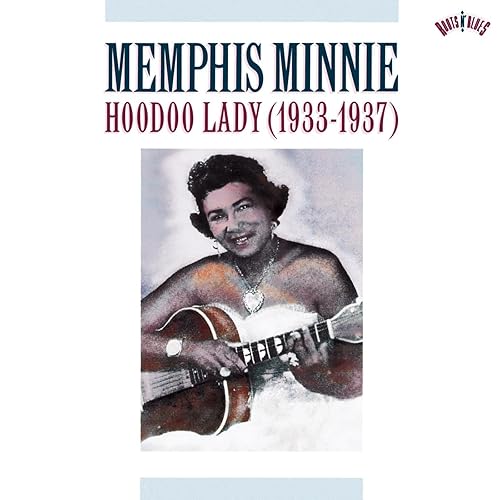
Memphis Minnie: My Butcher Man
[purchase

There’s a long history in music of songs with double entendre lyrics. Now, Cardi B. and Megan Thee Stallion can go on network TV and sing about their WAP (although it appears that they bleeped out the word “pussy” at the Grammys), and that song, and other sexually explicit ones, are played on the radio, streaming, and wherever popular music is found. But there was a time when sexually explicit songs had to be couched in innuendo and double entendres. 

The benefit of this approach is that the song could get wider distribution, those who got the references, felt that they were in the know, and the artist could feel like he or she got over on authority. I understood this well back when I contributed to halftime shows for the Princeton Band, which were censored by the University, and we used to joke that if we ever wanted to play a particular famous folk song, we’d have to call it, “She’ll Be Arriving Around The Mountain When She Arrives.” So we slipped a lot of references past the censors—the first joke I wrote as a freshman was about freshman male social life, and had the band form a shower with water shooting from the spout, as we played "He’s Got The Whole World By The Hand." It was fun, we had lots of laughs, and eventually got in trouble with both Princeton and the United States Army… 

This theme, like many I’ve suggested here, was inspired by a song I heard in the car. This time, I had on the B.B. King’s Bluesville station and I heard “My Butcher Man,” by Memphis Minnie, with her then-husband, Kansas Joe McCoy. It became pretty clear that Minnie was not really singing about the man’s butchering skill. The song includes lines such as: 

I’m going to tell everybody I've got the best butcher man in town
He can slice your ham, he can cut it from the fat on down

He slice my pork chops and he grinds my sausage, too
Ain't nothing in the line of butcherin' that my butcher man can't do

Butcher man, in the morning, won't you please stop by my house
I've got enough butcherin' for you to do if you promise me you just only hush your mouth? 

And finally, if the references weren’t clear enough:

If anybody asks you, "Butcher man, where have you been?"
Show 'em that long-bladed knife, tell 'em you been butchering out in the slaughter pens
Let's go, butcher man, for me
 

Memphis Minnie was born Lizzie Douglas in 1897 in New Orleans, She ran away from home at the age of 13, and started playing on street corners, eventually moving up touring with the Ringling Bros. Circus and then as a singer and guitarist in the Beale Street blues scene. She was, by all accounts, a tough, street smart woman. One observer remembered: ”Any men fool with her she’d go right after them right away. She didn’t take no foolishness off them. Guitar, pocket-knife, pistol, anything she get her hand on she’d use it.” Apparently, the blues business wasn’t sufficiently lucrative, so Minnie’ reportedly subsidized her income with prostitution, charging the relatively large sum of $12 for her services. Minnie also gained a reputation for partying and gambling. She was an early adopter of the electric guitar, and didn’t shy away from guitar contests against the likes of Big Bill Broonzy, Tampa Red and Muddy Waters, sometimes winning. 

Minnie recorded over 200 songs, and wrote many of them, including “My Butcher Man,” “Me and My Chauffeur Blues,” (another song filled with double entendres, originally credited to someone else, and was later recorded by the Jefferson Airplane, who credited yet another different person), and “When The Levee Breaks,” (with Kansas Joe, later re-worked by Led Zeppelin, who actually gave Minnie a writing credit without litigation). 

This genre of music was sometimes called “Dirty Blues,” and often featured double entendres. In researching this piece, I found a fascinating article written in 1927, a few years before “My Butcher Man” was written, by Guy B. Johnson, a white “scholar of black culture and longtime advocate of improved race relations,” as his obituary in The New York Times stated when he died at 90, in 1991 (and whose last name, itself, is a double entendre….). One of Johnson’s observations was 

that the majority of the expressions in the blues relating to the sex act are sung from the point of view of woman and are mostly concerned with the quality of the movements made by the mail during coitus. 

He then goes on to describe many examples, proving clearly that academic writing, even about sex, can be bone-dry. 

Johnson concludes, 

Double meaning in secular song is after all nothing new. Folk song students know that many standard folk songs have come up out of the slime. But it is doubtful if any group ever has carried its ordinary vulgarities over into respectable song life so completely and successfully as the American Negro. And the ease with which the Negro has put this thing over leads one to suspect that the white man, too, enjoys seeing “the other meaning.”

Wednesday, March 29, 2017

Prison: Alan Lomax, Prison recordings, circa 1947-1948


For people that know the work of Alan Lomax, begun in 1946 as ‘field recordings’, the history, and thus the essentiality, of the work is equal to the power of the voices, styles, stories and history he captured. Born in 1915, Lomax spent almost 60 years continuing the work of his equally famous father, John, in recording literal and actual history, as understood through the guise of folk music.  Armed with various recording devices, including an automatic disk recorder, family Lomax traveled the United States and captured the unique songs and sounds and voices—some of which no longer exist—that displayed the entirety of the unique American ethnography of the people that came from so many places to call this land home. 

From Louisiana (Cajun music) to the Midwest and the multi-ethnic immigrant European communities, and especially the American South, from the Mississippi Delta to the Appalachian Mountains—the Lomaxs were able to create an archive that has become a uniquely personal, sociological and historical atlas of living art and expression.  And thus forever preserve various the kind of lives, customs and traditions that would have faded and been forever lost.

Historically, there is no greater sense of touching history than what comes from a tangible connection and the Lomax family were somewhat magician-like in the way they documented lives and the artistic fiber that made so many people who they were, at an ethnic and cultural level, to be sure, but also in what they were beyond their cultural identifiers. To record someone signing, reciting a poem, telling you the story of their life: that is capturing the emotional soul of a being and in their art, their story can be truly understood, without needing analysis or dissection. Art lays bare what is inside someone, and through voice, the strands of one’s emotional DNA are clear. What Alan and John Lomax did was preserve, yes, but they were also capturing history in a way that was never possible before.


Alan Lomax was a great proponent of what he termed “cultural equity" and promoted a movement called “One World.” Today, this would be termed more familiarly as multiculturalism.  What he was after was showing how a shared cultural identity, in all its various forms, was what bound us together, and that our differences did not divide us—it was just the opposite. There are two statements Lomax made in defense of his world view that I feel I have to share. He said both, “The dimension of cultural equity needs to be added to the humane continuum of liberty, freedom of speech and religion, and social justice,” and, "Folklore can show us that this dream is age-old and common to all mankind. It asks that we recognize the cultural rights of weaker peoples in sharing this dream. And it can make their adjustment to a world society an easier and more creative process. The stuff of folklore—the orally transmitted wisdom, art and music of the people can provide ten thousand bridges across which men of all nations may stride to say, “You are my brother.” [1]
IInterestingly, the FBI investigated Alan Lomax repeatedly for many years though no charges were ever filed against him. What were the Feds looking for on a folklorist armed with a pen and recording equipment? Take a guess…We are talking J. Edgar Hoover’s America, after all…but, I don’t want to go into politics.

You might know that the Lomaxs were the first to put such luminaries as Leadbelly, Muddy Waters, Honeyboy Edwards, and Woody Guthrie to tape. The debt we owe to the Lomax family can’t be understated and the Smithsonian’s Folkways label and the Library of Congress’s American Folklife Center, make it possible for all the myriad sounds can still be heard, studied and appreciated. ( A note for the historians among us: The Lomaxs traveled much farther afield than the US, and their history is just as fascinating as what they were able to preserve. But for our purposes, we are going to focus on one small portion and geographical region of their body of work.)

Of particular interest to me, and apropos of our theme this round, are the recordings that were captured in the American South, particularly Mississippi in 1947 and 1948. Known as the prison recordings, I can think of no music I’ve ever heard more haunting and visceral. Southern Penitentiaries were often forced labor work camps, and according the Association for Cultural Equality, “Southern agricultural penitentiaries were in many respects replicas of nineteenth-century plantations, where groups of slaves did arduous work by hand, supervised by white men with guns and constant threat of awful physical punishment. It is hardly surprising that the music of plantation culture — the work songs — went to the prisons as well.”  [2]

Drawing on the tradition of work songs sung in the field by slaves on the plantations, work songs in prisons carried much the same function of rhythm and spoke to the same sort of misery and desperation. Meant to help keep time in tandem working gangs, the songs have an undeniable rhythm and a raw, but beautiful cadence. But there is a palpable sense of anguish and misery that cuts through the acapella chorus, a choir of miserable souls bound to some duty, but somehow transcending the despair through the lifting of their voices. Hammer falls, wood cutting, tie-tamping—the sound of tools sinking into wood and striking the earth provide an imperfect rhythm track, but one that is equal ghost to the pained, drawn and anguished vocals.

The Lomaxs made a multitude of these prison recordings at the Parchman Farm, part of the Mississippi State Penitentiary system, and the liner notes to these recordings add to the haunted nature of the songs. The names of the inmates read like a gallery of souls from Dante’s Inferno, which, while it is an oft-used metaphor, seems fitting. One wonders about those men: what had they done to end up there, how long did they last? Dig deeply into the archives and you can listen to some of the non-musical tracks that were recorded, where the inmates talk about just that: what put them in the klink, what they planned on doing once they got out. It’s an amazing piece of preservation, but the songs themselves speak volumes that documentary interviews cannot. The rhythms, the stories the signers tell, are as vivid a portrait of pain and regret as you’ll ever hear. There is something vital in preserving even the saddest, most miserable of human experiences. I spoke of empathy in my previous post, but as an abstract of being invited into a fictional portrayal of a life we’re happy not to have for our own. But, in the prison recordings, there is no hiding from the reality. The longing, the anger, the prayers for release are unadorned by visuals or the writer’s syntactical flourishes. What you hear on these tapes is true, and therefore impossible to ignore for the spirit it carries. Pleas for release, for a woman left behind to remain true, for someone to believe their professed innocence—all these themes and more can be found in the songs, but knowing there is very little “performance” behind the words; the signers are being truthful in the only way that a man behind bars can express his plight in true terms.

With so many powerful songs to choose from, it’s hard to pick one or two that most capture the essential nature of the work. But, two of the more powerful tracks that have always stuck with me are “Early in the Morning” and “Rosie.”

“Early in the Morning” was sung by four inmate at the Parchman Farm in 1947. The palpable pain of the lead vocalist, credited as Tangle Eye, strikes an intense, material counter to the hollow thunking rhythm track which is actually the inmates’ axes striking wood. The lyrics are more about the rhythm than about making meaning. Though there is a bit of humor in what is being said, the lyrics cover traditional subjects that might accompany the experience of a man forced to work, forcibly taken far from home: complaints about having to get up early in the morning, admonishing his woman not to believe stories some other man might be her, and how he’s counting on her to remain faithful. That prayerful begging to keep a promise and remain true is one that can be found throughout these recordings and in “Early in the Morning”, we get a strange bit of juxtaposition, between the work and the woman:

Well-rocks ’n gravel make -a
Make a solid road
It takes a good lookin woman to make a
To make a good lookin whore[3]
Regardless of who he is singing to, Tangle Eye’s voice is fragile as a cracked vase and the axes striking wood, or perhaps it’s hoes striking dirt, bring to mind the desperation of the nearly dead. Or the kind of sadness that makes one wish for that specific release.

The other track I want to highlight is called “Rosie.” “Rosie” resonates with me as it was one of the first selections I heard from the Lomax archive. So, there is that sense of nostalgia, coupled with the power of how a song can muscle its way in and sink into your conscious, thus becoming part of your deeper understanding of music, the kind not easily described in terms that make sense of the feeling.  “Rosie” is a sad song, and a simple one in its sentiment:  be true while I’m away. It’s a classic call and response, the lead singer calling: “Be my woman, gal—“ and the rest of his gang answering back, “—I’ll be your man!” the lead vocal reminds Rosie to “Stick to the promise, gal, that—“ / “—you made me.” And that promise is not marry to “til I go free!”  But, by the end, we have an understanding of what worries the convict most, while his love is out there free and he’s locked away:


Call: "When she walks she reels and-"
Response: "-rocks behind."
Call: "Ain't that enough to worry-"
Response: "-[a] convict's mind."[4]

“Rosie” has a lighter tone than many of the songs in the prison collections, and I’ve heard renditions where Rosie is a young woman who sashays temptingly just beyond the gate, but ever out of the prisoners reach and thus as much a torment as she is a beauty. She might even have made some promises that to a desperate man might mean more than she bargained for. One of the interesting things I read while researching Lomax’s notes was the strange setup of many of these labor camps: "These recordings were made in 1947 in the Mississippi State Penitentiary at Parchman. The singers were all Negro prisoners, who, according to the practice of Mississippi, were serving out their time by working on a huge state cotton plantation in the fertile Yazoo Delta. Only a few strands of wire separated the prison from adjoining plantations. Only the sight of an occasional armed guard or a barred window in one of the frame dormitories made one realize that this was a prison. The land produced the same crop; there was the same work for the Negroes to do on both sides of the fence. And there was no Delta Negro who was not aware of how easy it was for him to find himself on the wrong side of those few strands of barbed wire...”[5] Being so close to civilization, yet inexorably separated from it, had to be its own explicit kind of torture.

And, regarding that unique sound of the rhythm, and why the prisoners could sing such complex tunes wile working, I found this: “Songs like "Rosie" not only coordinated the dangerous teamwork of several men chopping trees but also made the workers more productive and helped the time pass. As with slave songs, the work songs also helped prisoners give vent to intense pent-up feelings, whether the words were specifically about that or not. Such singing and chanting can also ease the spirit, bring harmony to the group, and can even bring some pleasure to the moment. [6]


The prison recordings have been collected and released in many collections, and the Smithsonian’s Folk Ways releases are a good place to start. You can find a few collections in the Spotify library, as well. To read more about what went into these recordings, who you are hearing, the when and the where, so to speak, there is a wealth of information on the web, but culturalequity.org is an invaluable resource. The site puts the history into a fascinating perspective.


I’ll end with what I touched on earlier: recordings like these, and the rest of the Lomax archives are beyond music, for listening’s sake. Preserving the voices, and thus the experience, of those minority segments of society, either due to simple numbers, marginalization, or poor choices that land one in jail, is essential to understanding who we are as a collective. That sense of collective humanity is one our modern world’s great failings: the lack of recognizing it, in particular. Hearing another’s voice, and the experiences behind that voice, reminds us of the essential sense that we are more connected than we are separate. And when we forget that we really are more similar than different, we tend to forget that first and foremost, we are on this earth to treat each other well. Music, of all the arts, can remind us of this in the most profound ways.


[1] https://en.wikipedia.org/wiki/Alan_Lomax#Cultural_equity
[2] http://research.culturalequity.org/get-audio-ix.do?ix=session&id=PR47&idType=abbrev&sortBy=abc
[4] https://www.musixmatch.com/lyrics/Alan-Lomax/Rosie