








Showing posts with label Jefferson Airplane. Show all posts

Sunday, November 6, 2022

PIRATES: LONG JOHN SILVER

 Captain Hook aside, is there a greater pirate than Long John? I think not and am not even going to bothered if any dullard mentions Depp and company in those awful films. Jack Sparrow? Jack Shit, say I, even if Keef turned up for one of them. Any kudos he may have brought to the franchise was instantly lost by his stupid moustache.

But what does he have to do with anything musical? Long John, clearly, not Depp, who, as any fule knos, has none whatsoever. (Hollywood Vampires, my arse….) Well, given the, um, maturity of our readership, I am going out on one to suggest you are aware of an Airplane named Jefferson. Yay! Team!!! (No, not Starship; go to the foot of the class.)

I loved J.A. OK, I was a little young and the wrong side the world. So maybe I liked more the idea of the band, as reported, week by week, in the inky UK rock press. San Fran, hippies, anti-war, summer of love, all of that, and it all seemed so cool. I loved them before I ever heard them. I think Volunteers got brought into school, actually by one of the teachers. (With longish hair and a ‘tache, we imaginatively nicknamed him Zappa.) I liked, but, in truth, preferred the album Burgers, by the offshoot band Hot Tuna. Jack’n’Jorma became my heroes, as did the magisterial talent of Papa John Creach, who was just so damned cool. Impossibly old, if probably in his 40s, bald, black and stick-thin, with a fiddle sound to die for.

A later purchase of the double vinyl best of, Flight Log, or double album as we called LPs made of plastic back then, turned out to be all the Airplane I ever bought, even though I have a stash of Tuna’s output, plus Kaukonen solos and, even one of the good Mr Creach. So this theme was too good to waste on anything else, this near to crash landing of the band, and seemingly not with much love gifted its way. I have never heard it. Well, until typing this sentence.

The band were in a bit of a pickle in 1972, with solo and side projects having more allure for the bickering band members. Marty Balin had jumped ship and new drummer, Joey Covington appears  only for some of it, uncertain if he fell off board or was pushed. Which, as the astute will observe, adds extra allegiance to this weeks theme. (Gangplanks, boom tish!) Lester Bangs, the idiosyncratically acerbic no holds barred critic didn’t like it, in a review of such faint praise as to damn it to hell. 

Long John Silver

It opens with the rattle and rumble of the title track, a somewhat generic roustabout biggie, held primarily by the engine room, where Jack Casady’s bass is stoked to the fore. Grace Slick sounds, frankly, the “drunk as a fart” she later claimed to be, during the making of the album. It’s OK, needing Aerie (Gang of Eagles), a moody Slick piano ballad, to lift things. Maybe that should be slick and moody, but either way it works, and the feel is almost Sandy Denny-esque in construction, the minor key elevations reminiscent of that singer’s songs. Which is ironic, when you consider her band, Fairport Convention, cited Jefferson Airplane as such an inspirational influence. Twilight Double Leader is another shrill and somewhat derivative rocker, enlivened only by Creach's fiddle, which swoops and sires appealingly. 

Aerie

Milk Train splutters and spurts, again made better by fiddle, but really has me wondering what I saw in Slick, her voice a raggedy hoot of shrillness so far, apart from Aerie. Kaukonen slots in some half way decent guitar as it meanders to a close. Most don't, but I quite liked Son of Jesus, but I don't pay as much attention to the supposedly risible lyrics as I ought. But, you know, even when I do, it neither offends nor makes me laugh. Typical J.A. fare, really. Good song. and Easter? is great, a steamy slow burner, impassioned vocals over a piano led progression. OK, it gets a bit bonkers, as Slick gets overheated, needing Kaukonen to sneak in with some guitar. (What's with all these religious allusions, though?)

Trial By Fire

Trial By Fire has the unmistakeable feel of a song that might have otherwise been on the next Tuna album, the bass and guitars all a'weave, the electric and acoustic jousting with each other. Alexander the Medium, great title, by the way, is a change in direction from anything else much here. I love it, the tune evocative in style of a Sally Army band. Creach has his fiddle on a slightly sharper setting and it works, and the instrumental breakdown at the end is the most successful on the album yet, which, as the longest track, was something maybe they knew. The final track is also a belter, Eat Starch Mum, if with nonsense lyrics, with a thrust not a million miles from Volunteers, the track.

Alexander the Medium

So there you get it. I done a review, albeit of an album that came out 50 years ago this year. It probably hasn't aged that well, particularly the vocal characteristics of their lead singer, or the then best appreciated and remembered of them. But it has a few moments. So, in the parlance of the character who inspired it, no black spot.

Buy it if you still want to.


Sunday, April 10, 2022

Paul Songs: Paul Kantner


purchase [  Volunteers ]


From what I have read, Paul Kantner was the driving force behind the Jefferson Airplane/Starship. Obviously neither was a one-man show, but aside from his credits as co-founder of the band, he is also credited as the one who rescussitated the band following their height of fame years. Sure ... there were other equally important "Jefferson" members (wouldn't want to belittle any of them, but Grace Slick and Marty Balin probably come next in the list for both incarnations).

While there are a number of other bands that came out the mid 60s/Summer of Love era in and around San Fransisco, for psychedelia, two stand out in my personal preferences, and they couldn't be more different in approach. (I know, this is a gross simplification that leaves out the more than 100 other Bay Area bands from that time, but .. Sly, Santana, Creedence don't really fit the psychedelia filter). So ... more different. The Dead = laid-back, rambling, a tinge of country: Airplane= in-your-face, hard-edged, with a sharp message: "Tear down the walls, m***f***s ")

Was Kanter a great guitar player? (One of the Google questions you'll see if you go digging.) Aside from asking for your personal opinion, I'll give mine. Considering the state of guitars, guitar playing, rock music in the late 60's ... I would say "good, not great". Having never seen him live (where you can really get a sense of one's skills), he did a good job with what he needed to do. Not flamboyant, but consider the effect (that is what counts?) of the guitar (opening guitar) on the Volunteers song: Nothing incredible - except that it is just what the song - and the song's message - needs.


Saturday, April 24, 2021

DOUBLE ENTENDRES: ICE CREAM MAN/MARY COUGHLAN

As I read Jordan's last piece, erudite and informative, it got me a'thinking around the other taboo subject in popular song, seemingly equally common a subject matter as rumpy pumpy, namely drugs, the paths of blues and jazz as awash with as much reliance, if not more, upon uppers, downers and in-betweeners as more recent times. The censor was seldom enthusiastic about such, and remains still a little averse today, worried about the corruption of young and fertile minds. Thus the need to disguise in simile and metaphor. (Here I feel I should add, having delved deep into the subcultural yearnings put my way over 50 plus years of enjoying the devil's music, never have I felt it necessary to partake, give or take the odd jazz cigarette as a teen and young adult. Never did anything beyond make me cough, together with a need to poo (TMI), however many times I listened to Paul McCartney.)

The BBC were notoriously eagle-eared for references, frequently banning anything that could be possibly construed as smacking of, well, smack or, indeed, anything else. So as well as the ex-Beatle's paean to hot air ballooning, so too were songs by myriad other acts struck from air-play. So alongside anything overtly sexual, anything that contained the name of a commercial product, the list of presumed drug songs deemed unsuitable included other, earlier songs involving the very same perverter of the young, Paul McCartney*. None of these could really be classed double entendres, as, bizarrely, colour your reference in the imagery of food or, more commonly, candy, much as with sex, and you could take the arbiters of taste on quite a trip. Or references to literature, the classics being drug free zones, right?

Ice cream is frequently invoked as a euphemism for narcotics, and has been since forever. In part the idea of a special treat and part the network of delivery outlets. For, as well as being for sale in shops and restaurants, there is the time hallowed ice-cream man in his, or her, ice-cream van, bring his product to a curb side near you. I used to think this purely a British phenomenon, but John Carpenter and Jonathan Richman have taught me different. (Richman's Ice Cream Man, despite the lyrics, a give away in any other hands, is arguably one of the few where you can feel some confidence that it really is a Mr Whippy he sings about.) 

Heroin has been a scourge of the central belt of Scotland for decades, the combination of grim concrete estates, with populations transplanted from slum squalor to out of town desolation, built with little thought of leisure and recreation factored in by town planners. Add the Scottish love of sweet things and, particularly of ice cream, no Scottish town without a family of Italian emigres, with cafes and ice-cream emporia, resident since the early part of the twentieth century, and any business brain can begin to see a hole in the market. For the hole in Daddy's arm every bit as much as the hole in his kids tummy. Even genuine ice-cream vans initially became subject to vicious turf wars, but it wasn't too long before the rinky dink tone of Greensleeves  denoted that something else was there for the buying.

Mary Coughlan is a terrific singer, with a smoky voice at as much ease in folk and blues as she is in rock and jazz, ploughing her idiosyncratic fare for 35 years. I see I wrote about her in 2013. The featured song for this piece comes from her second album, Under the Influence, in 1987. That title too might be a broad hint, but my suspicions and her admissions point to towards her own poisons being largely booze. But there are two songs about ice-cream, two in a row, tracks two and three on side one. OK, the second is a brief instrumental, but the first, by Johnny Mulhearn, is sung through the eyes of a housewife, hooked on the scag brought to her and the other women on the street by the same van selling cones and wafers to her children. Based on a both a true story, one with a happy ending, in that the dealer was arrested and imprisoned, with a good deal of anecdata from The Glasgow ice-cream wars, as mentioned above. She mentions the song in this interview.

Still so keen on that 99?

*I know, literary extension...

Monday, April 19, 2021

Double Entendres: My Butcher Man


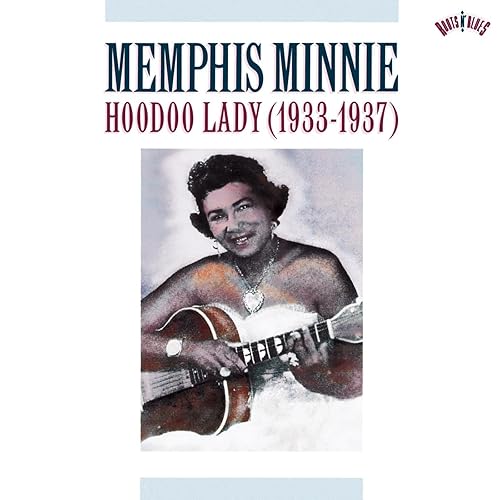
Memphis Minnie: My Butcher Man
[purchase

There’s a long history in music of songs with double entendre lyrics. Now, Cardi B. and Megan Thee Stallion can go on network TV and sing about their WAP (although it appears that they bleeped out the word “pussy” at the Grammys), and that song, and other sexually explicit ones, are played on the radio, streaming, and wherever popular music is found. But there was a time when sexually explicit songs had to be couched in innuendo and double entendres. 

The benefit of this approach is that the song could get wider distribution, those who got the references, felt that they were in the know, and the artist could feel like he or she got over on authority. I understood this well back when I contributed to halftime shows for the Princeton Band, which were censored by the University, and we used to joke that if we ever wanted to play a particular famous folk song, we’d have to call it, “She’ll Be Arriving Around The Mountain When She Arrives.” So we slipped a lot of references past the censors—the first joke I wrote as a freshman was about freshman male social life, and had the band form a shower with water shooting from the spout, as we played "He’s Got The Whole World By The Hand." It was fun, we had lots of laughs, and eventually got in trouble with both Princeton and the United States Army… 

This theme, like many I’ve suggested here, was inspired by a song I heard in the car. This time, I had on the B.B. King’s Bluesville station and I heard “My Butcher Man,” by Memphis Minnie, with her then-husband, Kansas Joe McCoy. It became pretty clear that Minnie was not really singing about the man’s butchering skill. The song includes lines such as: 

I’m going to tell everybody I've got the best butcher man in town
He can slice your ham, he can cut it from the fat on down

He slice my pork chops and he grinds my sausage, too
Ain't nothing in the line of butcherin' that my butcher man can't do

Butcher man, in the morning, won't you please stop by my house
I've got enough butcherin' for you to do if you promise me you just only hush your mouth? 

And finally, if the references weren’t clear enough:

If anybody asks you, "Butcher man, where have you been?"
Show 'em that long-bladed knife, tell 'em you been butchering out in the slaughter pens
Let's go, butcher man, for me
 

Memphis Minnie was born Lizzie Douglas in 1897 in New Orleans, She ran away from home at the age of 13, and started playing on street corners, eventually moving up touring with the Ringling Bros. Circus and then as a singer and guitarist in the Beale Street blues scene. She was, by all accounts, a tough, street smart woman. One observer remembered: ”Any men fool with her she’d go right after them right away. She didn’t take no foolishness off them. Guitar, pocket-knife, pistol, anything she get her hand on she’d use it.” Apparently, the blues business wasn’t sufficiently lucrative, so Minnie’ reportedly subsidized her income with prostitution, charging the relatively large sum of $12 for her services. Minnie also gained a reputation for partying and gambling. She was an early adopter of the electric guitar, and didn’t shy away from guitar contests against the likes of Big Bill Broonzy, Tampa Red and Muddy Waters, sometimes winning. 

Minnie recorded over 200 songs, and wrote many of them, including “My Butcher Man,” “Me and My Chauffeur Blues,” (another song filled with double entendres, originally credited to someone else, and was later recorded by the Jefferson Airplane, who credited yet another different person), and “When The Levee Breaks,” (with Kansas Joe, later re-worked by Led Zeppelin, who actually gave Minnie a writing credit without litigation). 

This genre of music was sometimes called “Dirty Blues,” and often featured double entendres. In researching this piece, I found a fascinating article written in 1927, a few years before “My Butcher Man” was written, by Guy B. Johnson, a white “scholar of black culture and longtime advocate of improved race relations,” as his obituary in The New York Times stated when he died at 90, in 1991 (and whose last name, itself, is a double entendre….). One of Johnson’s observations was 

that the majority of the expressions in the blues relating to the sex act are sung from the point of view of woman and are mostly concerned with the quality of the movements made by the mail during coitus. 

He then goes on to describe many examples, proving clearly that academic writing, even about sex, can be bone-dry. 

Johnson concludes, 

Double meaning in secular song is after all nothing new. Folk song students know that many standard folk songs have come up out of the slime. But it is doubtful if any group ever has carried its ordinary vulgarities over into respectable song life so completely and successfully as the American Negro. And the ease with which the Negro has put this thing over leads one to suspect that the white man, too, enjoys seeing “the other meaning.”

Friday, February 5, 2021

Walls/Obstructions: Crown of Creation


purchase [Crown of Creation]

Digging around for a possible alternative using the obstruction co-theme, what to my surprise but ... the Airplane again. Actually, it shouldn't be much of a surprise: For the most part, much of the 60's music scene was a process of breaching  the walls of "the establishment", and that establishment being an obstruction to peace, love and understanding. 60's music was a veritable cabal of mop-heads and irreverent protesters determined to undermine through music, to exhort the pop music masses to follow the evil ways of rock and roll.  Near the forefront of this rebellious movement was Jefferson Airplane. They were not alone: certainly CSNY, SDS, the Black Panthers .... heck MLJ ... but the Airplane certainly pushed the limits with their cry to Break Down the Walls... 

The song Crown of Creation is pre-Volunteers, the album/song of <break down the walls>), but the energy is clearly building even as early as  the Airplane's first "JA Takes Off". Jeff Tamarkin's "Got A Revolution" is an entertaining and informative history of JA if you want to dig deeper.

Written by Kantner, the lyrics are inspired by and their use officially approved by John Wyndham is his book The Chrysalids, a 50s sci-fi novel about a post-apocalyptic civilization that survives after the destruction of a sinning technologically advanced culture. Although this came out a year or so before Volunteers, the not-so veiled messages that society is out of tune with reality is present.

Z-Man's review remarks at Allmusic note that Crown is "unnerving ... a portentous forwarning of what mankind's enmity could someday provoke" while rating the song a B+ (Triad and The House at Pooneil Corners from said album get A's). Tamarkin says "The song pulsates with a martial rhythm ... the agitated energy reflects its time .."

The qualifying lyrics: "... they cannot tolerate our minds ... we cannot tolerate their obstruction"


Coincidentally, as happened in my last post, there is also a band of the same name, this time from Germany.


Thursday, May 28, 2020

War/Peace: War In Peace


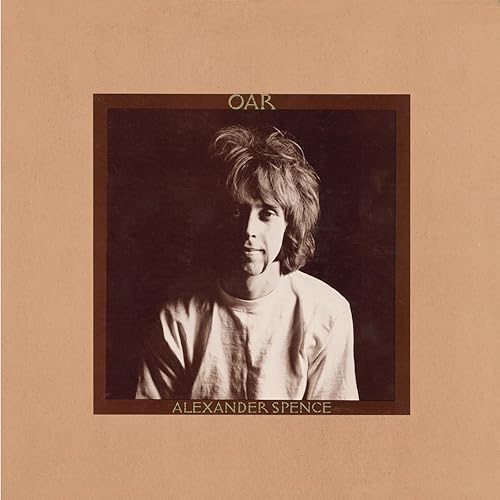
Alexander “Skip” Spence: War In Peace
[purchase]

I know that many people—and not only people in the 50+ demographic—think that the best era for music was the late 1960s-late 1970s. I’m not going to debate that now, but there’s certainly an argument to be made. And I think that there are those who would argue that much of the best music from that era was created because of, or enhanced by, the use of drugs. Yet, we also know that drugs also had negative effects—think of all of the great musicians from that era who died young from overdoses, or in other ways  directly or indirectly related to their addictions.

Then, there’s the group of musicians who stayed alive, but whose careers were cut short, or hampered, by drug related mental illness (although in many cases, the causal link between the drug use and the mental illness isn’t certain).

One such musician, who has been mostly forgotten over the years, is Alexander “Skip” Spence, who was briefly a guitarist in Quicksilver Messenger Service, then became the drummer in Jefferson Airplane, departing after their first album, in part because he wasn’t a drummer, to become a founding member of Moby Grape. But by 1970, his musical career was effectively over.

By most accounts, Spence was an excellent musician (on guitar and other instruments, including the drums that he learned to join the Airplane) and songwriter (writing, among other songs “You’re My Best Friend,” which appeared on Surrealistic Pillow, released after he left the Airplane, and Moby Grape’s “Omaha,” later covered by The Golden Palominos, with Michael Stipe on vocals). If you read about Moby Grape, you’ll find quotes from contemporary critics saying that they were the best band from the San Francisco area during that era—better than the Grateful Dead and Quicksilver and the Airplane. But despite the quality of Moby Grape’s debut album, a bunch of record company missteps and a disappointing second album, among other things, led to the band never breaking through.

Among those other things was Spence’s increasingly erratic behavior. While working on the band’s second album in New York, Spence, under the influence of LSD, and maybe other substances, took a fire axe and attempted to break down the hotel room doors of band mates Don Stevenson and Jerry Miller. He then went to the studio at the CBS building, where he was disarmed and wrestled to the ground. The album’s producer, David Rubinson, pressed charges, and after a brief period in jail, Spence was sent to Bellevue Hospital where he was diagnosed with schizophrenia.

During his six months in Bellevue, and despite not having access to a guitar, Spence had written a number of songs, and on his release, he was met by Rubinson (the same guy who pressed charges). Spence implored Rubinson to get him to a studio so that he could record the songs while they were still fresh in his mind. Showing how different the record business was in those days, Rubinson negotiated an advance from Columbia Records the next day, and Spence went to Nashville, on a motorcycle, to record the songs. Within six days, Spence cut nearly 30 songs, playing all of the instruments, singing all of the vocals and doing the arrangements himself. At this point, he was all of 23 years old.

Whittled down to 12 songs, the album, titled Oar, was released in May, 1969. Utterly unable to figure out what to do with its strange and eclectic music, Columbia simply ignored it, and it sold very few copies—it is often referred to as the worst selling album for the label to that point. (Hey, Richard Thompson’s first solo album, Henry The Human Fly, was considered the worst selling album at Warner Brothers Records, so that doesn’t necessarily mean that it is crap.) “When the people at Columbia heard it, Oar made no sense to them at all,” remembers Rubinson, who had sifted through the reels of tape, mixed the album and sequenced its dozen tracks. “It was so honest and real that the record company couldn’t relate to it. Neither could radio or critics. So they put it out, barely, and it sank without a trace.” To some, the album was the soundtrack to Spence’s mental illness, but to others, it was evidence of his emergence from it.

Over time, Oar gained admirers (and two reissues, with bonus tracks), including Robert Plant, Jeff Tweedy, Beck, Tom Waits, Robyn Hitchcock, Julian Cope, Chrissie Hynde, Mark Lanegan, and Jay Farrar (many of whom appeared on a tribute album, More Oar: A Tribute to the Skip Spence Album) and it appears in a number of “Best Album” lists.

“War in Peace” isn’t the best song on Oar, or the strangest, and it is actually quite listenable, if you aren’t concerned about understanding the lyrics. There’s some good electric guitar, including a bit at the end that is generally acknowledged to be an homage to (ripoff of?) Cream’s “Sunshine of Your Love.”  

Oar was Spence’s last album. He contributed a little to Moby Grape reunion albums and appeared sporadically at live shows both with Moby Grape and other bands, and he recorded a song (which was not used) for the X-Files soundtrack but his mental illness, drug and alcohol addictions and related physical health issues, prevented him from having any sort of a music career. At times, he was committed to mental hospitals, was homeless, and, for a time, was living in a house provided by his former Moby Grape band members, who appear to not to have held a grudge for that whole fire axe incident. Robert Plant helped with medical bills at times.

Spence died in April, 1999, of advanced lung cancer, at the age of 52. The last music he heard was a copy of the More Oar tribute album, which featured a cover of “War in Peace” by Mudhoney.

Thursday, April 18, 2019

What?!: What Are Their Names


purchase [If Only I Could Remember My Name]

Wikipedia tells us that Crosby's 1971 first solo album <If Only I Could Remember My Name> was selected for the Vatican's top pop 10 albums of all time list. What? David Crosby? The Vatican?
Said Crosby: It baffles me as much as it baffles you, man.

If Only I Could Remember My Name came on the heels of Deja Vu and was Crosby's solo album that coincided with the solo albums from each of the rest of CSNY.

The album seems rather raw to me. Others have labeled it as experimental. That is certainly true of this piece: the lyrics don't even kick in until the song is more or less finished, and up until that point, we listen to what I would call a rather wandering guitar. Very much <a la Jerry Garcia/Grateful Dead>. No surprise then to learn that Garcia helped to arrange and produce the album.

A news article in a recent Guardian noted that 1 percent of Brits own virtually all the land in the country. Although Crosby was probably more focused on the US, this song rifs on that theme.
What are their names? What do they care about you? About the state of the world beyond their wealth?  What does their "charity" mean for the future of the planet (like rebuilding Notre Dame)?

The entire lyrics aren't long and the "choir" singing it includes most of the Airplane, the Dead, Joni Mitchell and CSNY

I wonder who they are
The men who really run this land
And I wonder why they run it
With such a thoughtless hand
What are their names
And on what streets do they live
I'd like to ride right over
This afternoon and give
Them a piece of my mind
About peace for mankind
Peace is not an awful lot to ask


Thursday, January 31, 2019

Spies & Secrets: It's No Secret


purchase [Jefferson Airplane Takes Off]

James Bond, The Man from UNCLE, Our Man Flint ... the 60s spawned an interest in spies that played out in various TV and movie productions both in the US and in the UK.

Way out in San Fransisco, things were headed in a different direction. The "kids" out there tended to look askance at government antics - establishment lies and secrets. Some thumbed their noses, some were outright in-your-face hostile, in the streets protesting the government, while others chose to share their anti-government message in lyrics and song. Among those choosing music was Jefferson Airplane. Check out the lyrics for We Can Be Together.

Just a few weeks back, J.David noted the passing of Marty Balin, but in doing so, probably didn't anticipate that someone else would bring it back around in the Spies/Secrets theme.

Jefferson Airplane Takes Off. One of the earliest albums I owned. My musical proclivity then, as now, was pretty eclectic. Probably my favorite from this, their first album is <Let's Get Together> - a full on plea for the hippie-dom philosophy of "we are all brothers (and sisters)". After that track? It's a toss-up between <Come Up the Years> and <It's No Secret>.

<It's No Secret> isn't a song about spies. It's a plaintive Marty Balin love song. This, of course, before Grace Slick. And there doesn't appear to be any spying going on here. After all "it's no secret".
But consider the lyrics (credited to Balin):
As I get older the years they get heavy for you
Oh is it any wonder why I feel that my whole life is through
Yeah, when I stop feeling how strong my love is for you
Oh, know I'll be empty wanting your love like I do


This is nothing like the Beatles <Love Me Do>. The chord changes are beyond the Beatles' I-IV-V, and the notion of love that the song expounds is beyond the innocence of the "Love Me Do" type.

Incidentally, there are other <It's No Secret>s out there - because sometimes love IS a personal secret:

Elvis on a totally different track (he sings "... no secret what God can do"):


Kylie Minogue


Wednesday, January 16, 2019

In Memoriam--Marty Balin


Another "cheat" post for this theme, in honor of the great Marty Balin, one of the founders of Jefferson Airplane, whose blue-eyed soul voice featured in many of the Airplane's greatest songs, as well as probably Jefferson Starship's best. And he got knocked out on stage by Hell's Angels at Altamont.  Back in 2016, over at Cover Me, I wrote a long birthday piece about Balin, featuring covers of some of his Airplane, Starship, and solo songs.  You can read that here.  I was a big Airplane/Starship fan back in high school, as you probably can guess from that Cover Me piece, and these two, not to mention a few things on this site.

Balin died in September, at the age of 76.  Here's his obit from Rolling Stone.  Grace Slick, with all of her substance abuse and health issues, lives on--she'll be 80 in October, by the way.

Wednesday, January 4, 2017

In memoriam: Paul Kantner


purchase [Jefferson Airplane Volunteers]

By about the time that <Blows Against the Empire> came out, I had moved on. That said, I had a copy of <Takes Off> and <Volunteers> more or less as soon as they came out. Certainly, their Woodstock performance was critical to my appreciation of Jefferson Airplane. The view they espoused or symbolized was equally formative to my perception of music and the world in general. But somehow, about the time of the switch to Starship in place of Airplane, they lost me. Might have been my developing musical tastes, the offer of so much more in that realm than what they were into. But it never took away from my sense and recognition that they were seminal.

When I think Airplane, I call up Kantner, Slick, Balin, Casady, Kaukonen. I likewise call up Hot Tuna.
I cant say that Paul Kantner stood out for me - except that he was in it all along. Co-founder. It's not like I studied his guitar chops or anything. But that is from a perspective somewhat not too focused on who's who - I just knew that he was critical to the band.

There was certainly something unusual about the band at the time of <Takes Off>. Partly it was their sound - kind of raw but still harmonic. Partly it was the message they seemed to represent (singing "Our generation's got soul" - in whatever connotations you wish to ascribe - and the message/vision became even better defined with <Volunteers/We Can Be Together> ...  "we are all outlaws in the eyes of America ... to find a better time .. Up against the wall mother fu**er .. tear down the wall". Woah . Hold on a minute (shades of Nixon or someone else), . Part of the West Coast/SF scene but more driven than the Dead in their sound and their message. Friends... we are talking 1969 - that's almost 50 years ago... and look where we are now.

Maybe even more poignant and serendipitous in a sad way: the fact that Signe Anderson (the voice on <Takes Off>) happened to die on exactly the same day that Paul Kantner did. Anniversary coming up in a week or so: Jan 28.


Friday, October 14, 2016

SONGS FROM MY 1ST ALBUM: L.A.WOMAN

It's a tricky one this, as, of course, is honesty, weaving a devious path between credibility and risibility. Achieving both, no doubt. And the heightened self-aggrandisement of claiming that coveted hipper than thou award is no mean attraction. So I lie. There, I've said it. L.A.Woman was not my first album. That was Sgt Pepper, but my sister bought me that because she wanted it. And it wasn't my second. That was Pictures at an Exhibition (E.L.P.), and my parents, bless them, bought me that, based on my instructions. But it was my third, and the first, bought with my accumulated savings from Christmas and birthdays. So it counts, don't it? Sort of. And I am so grateful of that, because, let me set the record straight, for once and for all, it is and remains one of the finest recordings of this and last century.


Let me take you back. I was 14 in 1971. That's a good age to be becoming obsessed by music and it was a good year to be becoming obsessed by music. Now, better people than I have already laid down the challenge that this was the year of the lodestone, most notably, David Hepworth, UK eminence grise of music journalism, sometime presenter of The (Old Grey) Whistle Test, the "serious" grown up big brother of Top of the Pops, clips from each show which litter my previous posts. He was also responsible, in one form or another, for the magazines, amongst others, Smash Hits, Q, Mojo and The Word, often alongside laconic sidekick, Mark Ellen. This is what he says about that year, even going so far as to write a book about it. But I knew none of that then, I was just eagerly lapping up all the sounds exposed to my wide ears. Most afternoons were spent visiting my friendly and local record shop, Complete Audio Systems, of Eastbourne, Sussex, known to one and all as Cas(s)music. With an astonishing indulgence, they happily allowed a stream of spotty schoolboys to put on headphones and nod away for hours listening to side 1 of this, side 2 of that, even if purchases were, well, infrequent. The owner clearly seemed to have a U.S. west coast bent, presumably explaining my enduring love for the obscure and arcane offerings from late 60s and early 70s California: It's a Beautiful Day, Stoneground, Tonto's Expanding Headband, all equally devoured, alongside more familiar fare, Zappa, the Byrds and Jefferson Airplane. Christ, I must have been an insufferable and precocious brat, but happy and fond-remembered days. The Doors, of course, I knew from their big hit single some 4 years previous, but was certainly unprepared for the splendour of the set piece magnum opus that saw my headphones ripped off, replaced by those of my chum Nigel. The storm became ridden and  I was instantly smitten.


 The cover, reproduced at the top, above, had something to do with it, originally having the picture of the band printed onto the yellow inner sleeve, visible through a perspex window, rather than later versions where it was printed as one, all on card. Gone was movie star looks love god Morrison, now a bearded grizzly bear stared balefully out. (I should add I had a thing about beards in those days ahead of being able to grow anything myself. For me the Beach Boys became hip the minute I saw the cover of Live In Concert, ahead even of hearing the songs.......Even Mike Love. Hell, especially Mike Love!) As was my wont, I duly went back and read the inkies of the day, Melody Maker and N.M.E. (New Musical Express) to discover the backstory of booze and bedevilment. I never got round to hearing any more of the record before I was back at the shop, paying my near £2 (about $2.50 today) for my own pristine copy.

Unusually I never quite took to the title track. I found it too long, too loud and too, um, obvious. Yes, I have warmed more to it in the intervening years, but my tastes were more to the mellower aspects, Riders and my lasting favourite, Hyacinth House, below. (AKA, probably, the "cocktail music" epithet made by fast exiting erstwhile producer, Paul Rothschild) I was so convinced as to the perfection of this song that I insisted on playing it to my mother, whose tastes were more of the Jim Reeves persuasion. I forget her opinion, but I felt it helped explain that awful question so beloved of parents, so what sort of music is it that you like? I never felt comfortable saying "rock", as that would have meant "and roll" to my disapproving mother.


But there was also my introduction, more than likely, to any concept of the blues, as a genre and as a genre with a history. Their cover of the John Lee Hooker staple, Crawling King Snake, certainly had an effect on me, the line about getting down on your hands and knees (baby) in particular playing strange tricks on my pubescent mind. Spider on the wall? Wooooo, way too much for my limited understanding to contain and possibly having laundry outcomes. (TMI...)


Luckily I could fall back on the mysticism of Morrisons poetry, and, at 14, yes, it was poetry and, yes, it was mystic. Bob Dylan may just have now been awarded the 2016 Nobel Prize for literature, but I know who I would have awarded it to in 1971. And, however corny, today, 45 years on, indeed do I still feel and share the "immaculate" we is, even if I were never stoned.


I could play more, point you to more, but time and space have their purpose. I know the Doors have swung in and out of favour, aided and abetted by innumerable books and films, a mythology as much as anything. The naysayers can go take one, I won't and don't listen. How many records from 45 years ago do you still play? How many records of 45 years ago still gain plaudits? It's true, often only of this generations and of any generations awkward teens, but that is truth enough for me.

You mean you don't already own this? Buy!
O, and that book by David Hepworth? There too.

Friday, July 3, 2015

Fireworks: Naked, If I Want To


Moby Grape: Naked, If I Want To
[purchase]

I was at the gym the other day, trying to distract myself from how much I don’t like being at the gym by thinking about something to write about. And then this song came on my iPod, with its lyrics about “fireworks on the fourth of every single July,” giving me a topic.

Moby Grape. If ever there was a name that immediately brings to mind the psychedelic era, it is Moby Grape. Despite the fact that their self-titled debut album, from which this song comes, is generally considered a masterpiece, and at least one critic has stated that it was better than any album released by their better known temporal and geographic contemporaries the Jefferson Airplane and Grateful Dead, they are all but forgotten today. (But not at Star Maker Machine.)  Unfortunately, if Moby Grape is remembered at all, it is for singer/guitarist Skip Spence’s LSD induced mental illness, or for their failure, for a number of reasons, to ever record a worthy follow up. There’s also an unfortunately all-too-common history of record company bumbling, band strife and litigation, none of which is as interesting as the music.

“Naked, If I Want To” is a short, countryish song, 55 seconds long, written by guitarist/singer Jerry Miller, and it is about the irrationality of certain laws. The band released an electric version of the song on its second album, Wow, but I kind of like the original.

You’d think that such a short song by an overlooked band would be forgotten, and you would be wrong. None other than Robert Plant has covered it:


And Cat Power has done both a slow version:


And a fast version (in which she sounds more than a little like Grace Slick, who joined the Airplane after Spence departed):


In both cases stretching the song out well beyond its original concise confines.

Monday, July 7, 2014

Revolution: Volunteers


Jefferson Airplane at Woodstock: Volunteers
[purchase] the album


I recently read an eye-opening article that relates to my “revolution” choice. The link came my way via “Longreads”, which I access thru Flipboard. The “long” article chronicles a free outdoor music festival that pre-dates both the seminal Monterey International Pop Festival in ’67 and Woodstock in '69. The festival was called the Fantasy Fair and Magic Mountain Music Festival and it took place in ’67, about a week before the Monterey festival that launched Jimi Hendrix and Otis Redding, among others.

Here’s a link to the article itself, but for those who prefer to miss out on this article of great historical import, a summary: SF radio station KFRC, in an effort to increase ratings, sets up a free show the week before Monterey. Partly because it is a last minute effort, but partly because few of those involved have yet to get a taste of mammon, the whole thing comes off as one big love-in. Without a backstage area, the bands end up hanging with the audience ... and more. Less than one week later at Monterey, the whole thing has turned commercial – despite the smell of “revolution” in the air.

The point behind all this is not so much the logistics, but rather that which was in the air from ’67 on, and more than one band called it for what is was: a revolution. In France, the students were in the streets; in the US, students were in the streets and in front of the courthouses, in the UK, the Beatles were in the studio with “Revolution”. The revolution extended to the privacy of the bedroom and up-ended social mores. Yada yada yada. You know the rest.

The article plausibly claims that Magic Mountain was the spark that lead to Woodstock. Certainly, it was a major event in the history of many of the bands: some went from local to national on the basis of their performance (or maybe simply their participation in) this weekend. If nothing else, the tech crew that pulled off Magic Mountain learned and morphed into the team that also put Woodstock together.

Among the bands that appeared at Magic Mountain, Monterey and 2 years later at Woodstock, was Jefferson Airplane. In many ways, without getting as deeply political as CSNY (Chicago, and again Chicago), the Airplane managed to give the impression of standing for revolution. Was it Grace Slick’s style/appearance? Was it Jorma Kaukonen or Paul Kantnor, Marty Balin or even Nicky Hopkins or the combination of all of the above and the confluence of time,  the stars and the moon?

In any event, the link above will lead you to part of the Airplane’s 100 minute set on the 2nd day of Woodstock back in 1969. The question I might ask is if the hippie  ”revolution” actually happened? Does it count as a revolution today? It sure has taken a long time to make only a little progress (didn’t David Crosby sing “seems to be a long time ...” in reference to the changes?)
In Volunteers, the Airplane sing:

Hey now it's time for you and me
got a revolution got to revolution
Come on now we're marching to the sea
got a revolution got to revolution
The flipside of the record is equally revolutionary: We Can be Together, and so I link to that as well.
In We Can Be Together, they sing:

We are forces of chaos and anarchy
Everything they say we are we are
And we are very
Proud of ourselves
Up against the wall
Up against the wall fred (motherfucker)
Tear down the walls


Whew! Seems to me you would be hard pressed to get away with this these days!
 

Friday, June 13, 2014

Hotels and Motels:Songs About the Chelsea Hotel


Jefferson Airplane: Third Week in the Chelsea
[purchase]

I am willing to bet that there is no other hotel or motel in the world that has inspired more songs than the Chelsea, located in the lower Manhattan neighborhood of the same name. Recently purchased and closed for renovations, the hotel has long been identified as a place for artists, performers, writers and musicians to live and work, which probably explains its popularity in song.

Wikipedia lists 22 different songs referencing the hotel, and one of them, Leonard Cohen’s “Chelsea Hotel #2” has been often covered. You could create a pretty credible cultural Hall of Fame consisting just of residents of the Chelsea, which for years was a residential hotel, including Bob Dylan, Charles Bukowski, Janis Joplin, William S. Burroughs, Tom Waits, Leonard Cohen, Patti Smith, Jasper Johns, Claes Oldenberg, Iggy Pop, Arthur C. Clarke, Allen Ginsburg, Diego Rivera, Mark Twain, Arthur Miller, Tennessee Williams, Stanley Kubrick, Uma Thurman, Jane Fonda, Alice Cooper, Larry Rivers, Christo, Julian Schnabel, Alejandro Escovedo, Jimi Hendrix, Willem de Kooning, Robert Mapplethorpe, Gore Vidal, Jean-Paul Sartre, Simone de Beauvoir, Dennis Hopper, Thomas Wolfe, Elliot Gould, Elaine Stritch, Edie Sedgwick, and many, many more. And, of course, Sid Vicious’ girlfriend, Nancy Spungen, was found dead at the hotel, as were Dylan Thomas and Charles R. Jackson, the author of The Lost Weekend.

Cohen’s song has been discussed previously on this blog, here, and a cover by Lloyd Cole is discussed here, Dylan’s “Sara” was mentioned, if briefly, here, and a post about Joni Mitchell's "Chelsea Morning" is here. But there are many, many others to talk about.

My favorite is “Third Week in the Chelsea,” the second song from Jefferson Airplane’s Bark album that I have written about (which is pretty interesting, considering that it is generally considered a pretty mediocre album). It was written by guitarist Jorma Kaukonen, and it is a beautiful song, filled with sadness and resignation about the impending demise of one of the great bands of its era. It is a classic of the “leaving the band” genre, right up there with Peter Gabriel’s “Solsbury Hill.” Although the whole thing is great, this stanza always kills me:

All my friends keep telling me that it would be a shame 
To break up such a grand success and tear apart a name 
But all I know is what I feel whenever I'm not playin' 
Emptiness ain't where it's at and neither's feeling pain 

Because, when it is time to go, it is time to go. Luckily, he had Hot Tuna to fall back on.

Leonard Cohen’s song, which we really aren’t going to discuss, was about an (oral) sexual encounter at the hotel with a woman he later acknowledged was Janis Joplin. Jeffrey Lewis, a New York singer/songwriter, wrote “The Chelsea Hotel Oral Sex Song” which is both about and not about Leonard Cohen’s song, and has a certain shaggy dog charm of its own (and no actual oral sex):


Dan Bern, who is often compared to one time resident Bob Dylan, because they are both Jews from the Midwest who have raspy voices, play guitar and write interesting songs (making the comparison somewhat plausible), also wrote a song about having sex at the Chelsea. This version was recorded at the Turning Point in Piermont, New York, just across the Tappan Zee Bridge from my house, which gets surprisingly good acts, considering that it is about the size of a small living room. And it has a trumpet solo.


And, finally, here’s Okkervil River’s “Bruce Wayne Campbell Interviewed On The Roof Of The Chelsea Hotel, 1979.”


Campbell was the real name of the former Chelsea Hotel resident, singer Jobriath, who is considered to be the first openly gay rock musician signed to a major label, as well as one of the first well known musicians to die of AIDS.

The song appeared on Okkervil River’s The Stand Ins album, which is filled with songs musing about celebrity and pop culture. Jobriath, whose albums received generally good reviews (and had both Peter Frampton and John Paul Jones contribute to his glam-rock, very David Bowie-esque music), found his career derailed first by excessive hype by his management, then his disillusionment with the industry, and finally by his illness. He apparently did an interview from the roof of the Chelsea in 1979, but it was different from what Okkervil River sang about. Although not directly related to the hotel, here’s one of his songs, “Take Me I’m Yours,” about S&M, which certainly could have happened at the Chelsea Hotel.

Friday, July 5, 2013

The Other Guy(s): Jefferson Airplane


Jefferson Airplane: Chauffeur’s Blues
[purchase]

Obviously, I like this theme, so I’m back with a third entry. And to pile it on, it is about two “other guys,” one of whom isn’t a guy.

When I was in high school, my friend Chris and I worked our way back from the then-popular Jefferson Starship through the discography of the Jefferson Airplane. I remember hours spent in the cutout bins at Korvette’s in Nanuet flipping through records to find their music. If you are a casual fan of the band, you know about Grace Slick’s powerful vocals, and maybe even Marty Balin’s blue-eyed soul singing or Paul Kantner’s folkier sounds. Or maybe you are a fan of their interesting harmonies, or the few songs that Jorma Kaukonen sang before moving full time to Hot Tuna. Four vocalists is pretty good for a single band, and these days it is rare to find a popular group that allows more than one, or sometimes two, singers to take regular lead vocals.

But the Airplane had even more singers. The Jefferson Airplane discography (not including live albums, solo projects and compilations) consists of 7 albums released between 1966 and 1972 (plus a reunion album from 1989). And although Kantner, Kaukonen and bass player Jack Casady were constants, Slick joined after their first album, Balin was there at the start, but left before the sixth album was done, and there were a number of drummers and other members that played with the band.

So, before Grace Slick, there was Signe Toly Anderson (no relation to previous “Other Guy” subject Jon). In the early days of the band, and on their debut record, Jefferson Airplane Takes Off, her role was mostly to sing backup and harmony. She left the band in 1966, following the birth of her daughter Lillith (and possibly because other members of the band didn’t get along with her husband.) On October 15, 1966, the Airplane played the Fillmore, and at the end of the show, Balin announced that Anderson was leaving the band. Anderson’s farewell to the audience is a classic Sixties statement—“I want you all to wear smiles and daisies and box balloons. I love you all. Thank you and goodbye.” The band then played “Chauffeur’s Blues,” with Anderson on lead vocals, followed by one more song. The next night Slick performed with the band.

Anderson returned to Oregon, where she raised a family and sang with a jazz band before suffering from a number of health problems. She has made occasional appearances at reunion shows, with the KBC Band (Kantner, Balin, Casady), and with later incarnations of Jefferson Starship.

Jefferson Airplane: Pretty As You Feel
[purchase]

Fast forward to 1970, when the Airplane were recording the followup to their last great record, Volunteers. Drummer Spencer Dryden, who had joined the band after the first record, had left, ultimately to end up in the New Riders of the Purple Sage.  He was replaced by Joey Covington, a self-taught drummer who had played with Hot Tuna, in unrecorded performances. Then Balin left the band, and they were looking to replace his material on the album, which became Bark. Covington was jamming one night with Kaukonen, Casady, Carlos Santana and percussionist Michael Shrieve on a piece that was given the working title of “Shitty As You Feel,” and little was expected of it. But the engineer, Pat “Maurice” Ieraci thought otherwise, and the title was changed to something more printable. Slick and Kantner overdubbed vocals, Papa John Creach added some fiddle, and a good song emerged. “Pretty As You Feel,” with Covington’s lead vocal, was released as a single and hit 60 on the Billboard chart, the last charting single for the Jefferson Airplane.

Covington left the band in 1972 for a relatively obscure solo career and as a sideman, and passed away last month at the age of 67 in a car accident.

Sunday, January 29, 2012

Getting There: Starship


Paul Kantner & Jefferson Starship: Starship
[purchase]
This is not the Jefferson Starship of “Miracles” (which is still a great song, by a good band, in my opinion, despite its lack of critical respect) or the Starship of “We Built This City” (a bad song by a bad band, in my opinion, consistent with its critical loathing). This Jefferson Starship was what Paul Kantner, of the recently disintegrated Jefferson Airplane, decided to call the band that recorded a science fiction/popular revolution concept album called “Blows Against the Empire” originally released in 1970. The album included contributions from Kantner, Grace Slick, Jerry Garcia, Bill Kreutzmann, Mickey Hart, Graham Nash, David Crosby, Jack Casady, David Freiberg and others.
I came to this album, which became one of my favorites, in high school, probably 5 or 6 years after it was released, never having heard it before. I, like many others who listened to classic rock radio in the mid-70’s, became a fan of Jefferson Starship and bought “Red Octopus” because of “Miracles.” In what was probably the first time my obsession with music manifested itself, my friend Chris and I started working our way through the Starship and Airplane discography, mostly by buying albums from the Korvette’s cutout bins. There was no Allmusic or Wikipedia, so we learned about the albums by reading books and magazine articles, or by just buying what the store had and listening. Our exploration of the catalogue led us to listen to classics, like the Airplane’s “Surrealistic Pillow” and not-so-classics such as Slick’s “Manhole.” The first time I heard “Blows,” easily the best of the Kantner/Slick solo projects during this era, I fell in love with its goofy, but sincere, idealism and the loose, well played music. I read the liner notes booklet so many times that it fell apart.
The story of “Blows Against the Empire” tells of a revolutionary band that steals a government built spaceship with the intention of traveling through space and creating a utopian society. Its theme fits the era of its recording and release, during the anti-war movement, the Reagan governorship of California and the Nixon presidency, and shortly after the first moon landing. The music, written by the performers, and others, including Marty Balin and Rosalie Sorrells, includes rock, folk and noise, but the bulk of the album is beautiful jammy folk rock, with great vocal harmonies and guitar playing. “Starship”, the finale, features Kantner on acoustic guitar and vocal and Slick on vocal and keyboards, with Garcia on lead guitar, Crosby, Nash and Freiberg (of Quicksilver Messenger Service and later versions of Jefferson Starship) on vocals, and Harvey Brooks (of Electric Flag, and who worked with Dylan and Miles Davis, among others) on bass.
It took a while for the album to be released on CD, and I remember buying it and enjoying it for the first time in years. It is still a good listen, even if its themes of revolution and space travel seem a little dated now (although with Newt Gingrich’s pledge to build a moon base if elected president, maybe Kantner will rally his friends and try to hijack the moonship).

Sunday, December 11, 2011

Accidental Kidsongs: Lather


Jefferson Airplane: Lather

[purchase]

Nowadays, there is an entire industry built around kid’s songs. Most record stores or sections of much size at all have at least a few titles. Amazon has more than anyone could possibly keep track of. But none of that existed when I was a boy. Even if an artist released an album intended for children, it would be found in the appropriate section with their other releases. So my parents had to use their judgment about what my brothers and I should hear. The artists I was most exposed to intentionally were Spike Jones, Tom Lehrer, and Alan Sherman. But there were certainly times when I heard, and latched onto, something they probably would not have chosen for me. In particular, my oldest brother would bring home the latest music, and strange things could happen.

I was not quite eight years old when Jefferson Airplane released their album Crown of Creation. My brother was thirteen, and not the best judge of what was suitable for his little brother. All he knew was that he had something he was excited about, and he wanted to share it. So he put on the album, and I was immediately taken with the song Lather. I suppose it may have been the concept of a grown-up who I could relate to. I still love the song, but now I get some of the more disturbing details that went right past me as a child. I certainly am not “snorting the best licks in town”, but I still miss my old toys sometimes, and those are the times I am glad I have children of my own.

Saturday, June 11, 2011

1967: White Rabbit


Jefferson Airplane: White Rabbit

[purchase]

As FiL reminded us, 1967 was the year that psychedelic music arrived, led by Magical Mystery Tour, but with many artists ready and able to follow. Alice in Wonderland was a natural reference point for a generation whose motto was, “tune in, turn on, drop out”. And no one expressed the Alice connection better than the Jefferson Airplane and lead singer Grace Slick, with White Rabbit. But of course, this is also a 1967 song that has endured, and that means that it has been played to death. So I switched it up a bit. White Rabbit as usually heard has a running time of 2:30, and indeed, this version goes silent at that point. But then the band comes back in without the vocals, and does an extended jam on the tune that extends the playing time by almost three more minutes. This is not the aimless noodling that jam bands are so often accused of these days; rather , this is a tightly imagined instrumental variation on a theme, with almost jazz-like flourishes. Amazon calls this the “mono single version”, which explains the sound quality. I don’t know how this version came to be. If any reader has that information, please share it in the comments. Thanks.