Led Zeppelin: Celebration Day
[purchase]
Friday, December 16, 2022
Celebrate: Celebration Day
Posted by Jordan Becker at 8:30 AM 0 comments
Labels: Ahmet Ertegun, Celebrate, celebration, Jason Bonham, Jimmy Page, John Bonham, John Paul Jones, Led Zeppelin, Lene Lovich, Rick Rubin, Robert Plant, The Roches
Sunday, July 4, 2021
OPPOSITES: LIGHT/HEAVY
Hmm, a third week, a third challenge. Silly? Serious? Low-brow? High-brow? Light-weight? That’s it! Avoirdupois! Weight. Of course, as a nominally music appreciation site, it can also be your difference twixt Sabbath and Sweet Thursday, so, well, just so.
Me, I am going for weight, going for the compare and contrast between a ton of feathers and a ton of lead. (And, believe me, I toyed with what you’re thinking, feeling it a tad obvious…..) So, for the sake of the songs, light and heavy. And if you fancy a drink with that, be my guest, whether it be a light and bitter or a pint of heavy. More anon.
Posted by Seuras Og at 12:49 PM View Comments
Labels: Any Trouble, Black Sabbath, Christine Collister, Enigma, hollies, Led Zeppelin, Neil Diamond, Rufus Wainwright, Sweet Thursday
Monday, April 19, 2021
Double Entendres: My Butcher Man
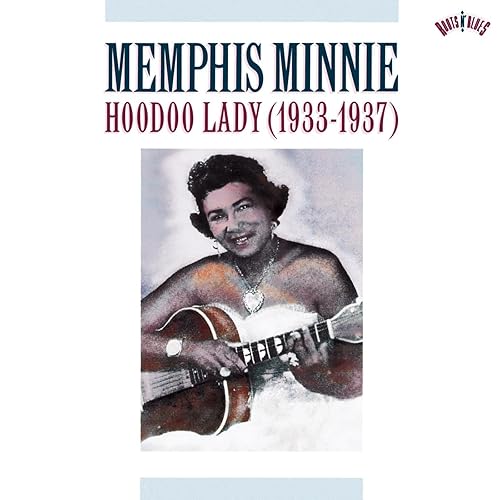
Memphis Minnie: My Butcher Man
[purchase]
There’s a long history in music of songs with double entendre lyrics. Now, Cardi B. and Megan Thee Stallion can go on network TV and sing about their WAP (although it appears that they bleeped out the word “pussy” at the Grammys), and that song, and other sexually explicit ones, are played on the radio, streaming, and wherever popular music is found. But there was a time when sexually explicit songs had to be couched in innuendo and double entendres.
The benefit of this approach is that the song could get wider distribution, those who got the references, felt that they were in the know, and the artist could feel like he or she got over on authority. I understood this well back when I contributed to halftime shows for the Princeton Band, which were censored by the University, and we used to joke that if we ever wanted to play a particular famous folk song, we’d have to call it, “She’ll Be Arriving Around The Mountain When She Arrives.” So we slipped a lot of references past the censors—the first joke I wrote as a freshman was about freshman male social life, and had the band form a shower with water shooting from the spout, as we played "He’s Got The Whole World By The Hand." It was fun, we had lots of laughs, and eventually got in trouble with both Princeton and the United States Army…
This theme, like many I’ve suggested here, was inspired by a song I heard in the car. This time, I had on the B.B. King’s Bluesville station and I heard “My Butcher Man,” by Memphis Minnie, with her then-husband, Kansas Joe McCoy. It became pretty clear that Minnie was not really singing about the man’s butchering skill. The song includes lines such as:
I’m going to tell everybody I've got the best butcher man in town
He can slice your ham, he can cut it from the fat on down
He slice my pork chops and he grinds my sausage, too
Ain't nothing in the line of butcherin' that my butcher man can't do
Butcher man, in the morning, won't you please stop by my house
I've got enough butcherin' for you to do if you promise me you just only hush your mouth?
And finally, if the references weren’t clear enough:
If anybody asks you, "Butcher man, where have you been?"
Show 'em that long-bladed knife, tell 'em you been butchering out in the slaughter pens
Let's go, butcher man, for me
Memphis Minnie was born Lizzie Douglas in 1897 in New Orleans, She ran away from home at the age of 13, and started playing on street corners, eventually moving up touring with the Ringling Bros. Circus and then as a singer and guitarist in the Beale Street blues scene. She was, by all accounts, a tough, street smart woman. One observer remembered: ”Any men fool with her she’d go right after them right away. She didn’t take no foolishness off them. Guitar, pocket-knife, pistol, anything she get her hand on she’d use it.” Apparently, the blues business wasn’t sufficiently lucrative, so Minnie’ reportedly subsidized her income with prostitution, charging the relatively large sum of $12 for her services. Minnie also gained a reputation for partying and gambling. She was an early adopter of the electric guitar, and didn’t shy away from guitar contests against the likes of Big Bill Broonzy, Tampa Red and Muddy Waters, sometimes winning.
Minnie recorded over 200 songs, and wrote many of them, including “My Butcher Man,” “Me and My Chauffeur Blues,” (another song filled with double entendres, originally credited to someone else, and was later recorded by the Jefferson Airplane, who credited yet another different person), and “When The Levee Breaks,” (with Kansas Joe, later re-worked by Led Zeppelin, who actually gave Minnie a writing credit without litigation).
This genre of music was sometimes called “Dirty Blues,” and often featured double entendres. In researching this piece, I found a fascinating article written in 1927, a few years before “My Butcher Man” was written, by Guy B. Johnson, a white “scholar of black culture and longtime advocate of improved race relations,” as his obituary in The New York Times stated when he died at 90, in 1991 (and whose last name, itself, is a double entendre….). One of Johnson’s observations was
that the majority of the expressions in the blues relating to the sex act are sung from the point of view of woman and are mostly concerned with the quality of the movements made by the mail during coitus.
He then goes on to describe many examples, proving clearly that academic writing, even about sex, can be bone-dry.
Johnson concludes,
Double meaning in secular song is after all nothing new. Folk song students know that many standard folk songs have come up out of the slime. But it is doubtful if any group ever has carried its ordinary vulgarities over into respectable song life so completely and successfully as the American Negro. And the ease with which the Negro has put this thing over leads one to suspect that the white man, too, enjoys seeing “the other meaning.”
Posted by Jordan Becker at 8:30 AM 0 comments
Labels: Big Bill Broonzy, Cardi B., Double entendres, Jefferson Airplane, Kansas Joe McCoy, Led Zeppelin, Megan Thee Stallion, Memphis Minnie, Muddy Waters, Tampa Red
Thursday, October 15, 2020
Guitar Heroes: Scrap Metal
Gretchen Menn: Scrap Metal
[purchase]
The guitar, of course, is the signature instrument of rock music, and it should also come as no surprise that over the years, I’ve written about, or at least mentioned, most of my favorite guitarists on this blog and elsewhere. Never Eddie Van Halen, whose untimely loss inspired this theme, but he’s a guitarist whose talent I appreciated, but I never was a big fan of the music he created (and it was nice to see that most serious obituaries of EVH mentioned one of my true favorites, Allan Holdsworth, as a primary influence on him. Which sounds weird--as if I was happy that EVH died. I’m not.)
So, rather than tread down another well-worn path, I decided to write about a great guitarist, about whom I know very little—Gretchen Menn. I first learned about Menn when my wife showed me something in a Smith College publication about her. Menn, a proud member of the class of ’97 (my wife is ’82; my daughter is ’15), was a music major at Smith, and it led me to check out her music. And it turns out that, in pretty much every way, Menn is a real badass.
According to her website bio, Menn, whose father was the editor in chief of Guitar Player magazine, studied classical guitar before moving on to rock and jazz. At Smith, she “convinced a professor to allow her to launch a special studies project on the music of Frank Zappa. Her analyses of “The Sheik Yerbouti Tango” and “The Girl in the Magnesium Dress” showed an interest in genre-bending composition that would manifest later in her original instrumentals.”
After college, she went to flight school, flying regional jets before turning to a music career, playing in a few different projects before releasing her debut album, Hale Souls, from which our featured song, “Scrap Metal” comes. It’s a classic guitar shredding showcase, and as a shredder, Menn takes a backseat to no one. But she is much more than just a technical wizard. Again, quoting from her website, “[s]he has studied, in equal parts, the music of Mozart, Beethoven, Steve Morse, Frank Zappa, and Jimmy Page.”
Speaking of Jimmy Page, Menn is the guitarist, playing Page’s parts, in Zepparella, an all-female Led Zeppelin tribute band. You can see her here channeling Page, bowed guitar and all:
In 2016, Menn released her second solo album, Abandon All Hope, a musical adaptation of Dante’s Inferno. Not surprisingly, it is a little more complex and varied in tone than her debut, and includes strings and other instruments (and a chorus), all orchestrated by Menn. Here’s the first track, “Shadows.”
Posted by Jordan Becker at 8:30 AM 2 comments
Labels: Allan Holdsworth, Eddie Van Halen, Frank Zappa, Gretchen Menn, Guitar Heroes, Jimmy Page, Led Zeppelin, Steve Morse, Zepparella
Friday, June 12, 2020
Open/Close: Opening Out
Renaissance: Opening Out
[purchase]
It’s been a while since I’ve reached into my prog-rock bag, so let’s talk about Renaissance. I’m guessing that most of you, when and if you think of Renaissance, you think of the classically-influenced band fronted by singer Annie Haslam, the incredible singer with the amazing five-octave range. And if you are a slightly bigger fan, you might recognize some of the other members of the band’s “classic” lineup, bassist Jon Camp, guitarist Michael Dunford, keyboard player Jon Tout, and drummer Terry Sullivan. That’s the band that I was aware of and saw live in the late 1970s. But not a single one of those musicians were part of the band when it started. And after this “classic” period, the band again went through a revolving door of musicians--for a while there were even competing bands touring as Renaissance. A full discussion of that gets tedious (and for some, it might have already), but I will hit a few high points before getting to the song at issue.
Renaissance was formed in 1969 when the Yardbirds were in the process of morphing into Led Zeppelin. Two of the departing Yardbirds, Keith Relf and Jim McCarty, eventually formed a band that included, among others, Keith’s sister Jane Relf, a singer, but after an album and a tour, this band exploded while working on their second album (Illusion, initially released only in Germany), leaving only pianist John Hawken and Jane Relf. One of the additional musicians that joined at this point was Dunford. After a few more spins of the revolving door, Haslam and Tout joined, and Dunford moved to a behind the scenes role.
The band’s manager, Miles Copeland, III (yeah, the same one who later managed The Police and started famed new wave label I.R.S. Records), refocused the band on Haslam’s soaring voice and Tout’s keyboards, and after cycling through bass players (including John Wetton), they brought in Camp. It took a while to land on drummer Sullivan, and various guitarists came and went before Dunford returned to play guitar. This lineup, essentially, recorded the band’s most famous albums which included some brilliant music, but also some that suffered from the excesses of the genre, from 1972’s Prologue through 1979’s Azure d’Or. But 1979 was a bad time for classically influenced, complex rock, and the band hemorrhaged members before trying to pivot towards more new-wave/pop sounds, releasing two mostly forgotten albums on Copeland’s I.R.S. Records before disbanding.
In the mid-90s, both Dunford and Haslam toured with separate “Renaissance” bands, subsequent reformations with various core members and new additions went nowhere, and the deaths of lyricist Betty Thatcher, Dunford, and Tout in the late 2000s prevented any further reunions. A version of Renaissance, fronted by Haslam, but with none of the members of the classic lineup, toured recently (until you couldn’t anymore), and has released some albums, but again, not to much notice.
Oh-and just to confuse things further, back in the 70s, after the death of Keith Relf, Jim McCarty reformed his version of the band, naming it Illusion, and released two albums, the second of which was called Illusion, so that both that band and the original Renaissance have second albums with the same name. And the McCarty led-group released an album in 2001 as “Renaissance-Illusion.”
Our featured song is “Opening Out,” from 1978’s A Song For All Seasons, which was produced by David Hentschel, who had come off a run of producing a series of Genesis albums that gradually transitioned towards more straightforward pop and better commercial success. A Song For All Seasons, too, had generally shorter songs than before, but still mostly contained the sort of prog rock that Renaissance was known for, although it did spawn a hit single in the UK, “Northern Lights.” “Opening Out,” which was the b-side to that single, features Haslam’s voice, The Royal Philharmonic Orchestra, and some nice, yearning lyrics, but seems to fade out a little too soon.
Posted by Jordan Becker at 11:47 AM View Comments
Labels: Annie Haslam, Genesis, John Wetton, Led Zeppelin, Michael Dunford, Open/Close, Renaissance, The Yardbirds
Monday, June 1, 2020
WAR/PEACE: THE BATTLE OF EVERMORE
It's funny, I had never really quite appreciated this song to have actually been about a battle or, indeed, warfare at all. It had always just been a joyous cascade of sounds: the tinkling mandolin and the soaring vocal interplay between Plant and Denny, with the lyrics never quite imprinting. Apart, of course, from the repeated refrain, Bring it back, bring it back........
After the twin behemoths of Black Dog and Rock'n'Roll pour out of the speakers, Evermore then becomes a mercurial palate cleanser, a consummate contrast and perhaps the only song that could then beckon in the majesty of Stairway to Heaven. (Yes, I did say majesty; I know it is de rigeur to sneer at it now, but, hell, c'mon, if you were 14 in 1971!) Call me an old fart, please do, but side 1, Led Zep 4, is about as astonishing a side of vinyl as ever made. Side 2, less so, but nonetheless.
Posted by Seuras Og at 7:11 AM View Comments
Labels: Alison Krauss, Fairport Convention, Kristina Donohue, Led Zeppelin, Najma Akhtar, Robert Plant, Sandy Denny, War/Peace
Sunday, December 2, 2018
LEFTOVERS: LEAVES: TEA
Let's get this straight, tea is so not my cup of tea. I can't stand the stuff, being an avowedly (instant) coffee man. Yet it is an enduring image in the world of popular song, often used to evoke a peculiar englishness that has, bar the drinking of it, gone. But it gives me the opportunity for a list post, which, in the leftovers pile, will at least avoid any flak for using up "all the ideas" Thus, in time honoured, please warm your pots.......
Cup of Tea/Shack. Lovely peaceful vibes, with a hint of ye olde psychedelia which belies its youth, the song being barely a decade old. Given that it stems from the never more aptly named Head brothers, arguments might exist as to whether this song is about assam or darjeeling. Or indeed anything more exotic, but it has a timeless, restful quality I can drown in.
Penny Royal Tea/Kristin Hersh. I know, I know, it's a Kurt song, but I prefer this version to the original, excepting the Unplugged performance. I wondered quite what Penny Royal tea was, thinking it may even be a brand of teabags available in Walmart or some such, then that the song may have been a play of words, bemoaning the pitiful returns on his song publication rights: royal tea/royalty, right? As ever, wiki is my friend, and it is apparently an often unsuccessful chinese abortifacient...
Tea and Sympathy/Janis Ian. Beautiful string arrangement with typically understated Ian vocals, a wry reflection on loss. And at last a song about tea tea. I would politely endure a cup of tea under the circumstances described, and traditionally have about one cup a year, usually with aged relatives. And similar references, no doubt.
Tea For One/Led Zeppelin. Not an entirely dissimilar concept as above, portrayed and presented a little differently, it's true. Percy missing his missus, tea for one being the metaphor for alone. Whilst I can't imagine vintage Zeppelin drinking anything but (vintage) champagne, OK, maybe brown ale for Bonzo, strangely the idea of the current Plant drinking a mug of tea, probably in a Wolverhampton Wanderers mug, seems entirely apposite.
Tea Leaf Prophecy/Herbie Hancock featuring Joni Mitchell. Her song, mind, but this version has always appealed more, the original still displaying residual vestiges of a folk tendency within this, as we later learnt, decidedly jazz singer. It is also good to have a salient reminder of the erstwhile bonus in every olden days cuppa, that of having your fortune made available courtesy the leaves left in the base of the cup. Try doing that with a teabag, Mr Lipton!
Tea Stain/Tindersticks. Cripes, I love(d) this band. As an instrumental this isn't perhaps the most representative of their output, but does give the european arthouse soundtrack quality they inhabit so well. It's a pity as I can picture their lugubrious singer, Stuart Staples, finding it only too easy to imagine him with old tea stains down the front of a crumpled white shirt. (You wanna hear him sing? Sadly I can find no further tea references, Will coffee do?)
Tea For The Tillerman/Cat Stevens. Bit of vintage Cat when he was still Cat, rather than Yusuf realising he didn't sell so well without a bracketed reminder. This album and the follow up, Teaser and the Firecat, soundtracked my miserable teens, the angst and ennui of his vocals hitting a chord with lonely adolescents everywhere. There seem to be a lot of websites arguing the meaning of the phrase, but I think the picture says it well enough, whether the jovial beardy is the man who tills the soil or pulls the tiller. Personally I think the 1 minute version on the album is probably better.
Tea Leaves/The Snails. I'll be honest. This isn't the song I wanted to include, hoping that a song of equally little-known band UK The Scaremongers might be available on YouTube. It wasn't, but I encourage you look for the song, part of the Sound of Mature Huddersfield as they style themselves.
This song? It OK.
So, that's yer lot. Eight, as anything more might be seen as hogging it, seeking vaingloriously too wide a demographic where at least one song might appeal. (Memo to self, what do they drink in Tarrytown?) No room even for this......
Explore!
Posted by Seuras Og at 7:35 AM View Comments
Labels: cat stevens, Herbie Hancock, Janis Ian, joni mitchell, Kristin Hersh, Leaves, Led Zeppelin, Leftovers, Nirvana, Shack, Stephane Grapelli & Yehudi Menuhin, Tea, The Scaremongers, The Snails, Tindersticks
Sunday, November 11, 2018
ARLO: R.LO: ROBERT LOCKWOOD JR
Well is this the one to finally get me my marching orders? The 'Thanksgiving' theme is the one I generally sit out, it being a holiday I neither partake or understand fully, together with (this theme's) Arlo being someone I know precisely 2 songs about, the restaurant and the 'sickle. Other Arlo's have me stuck after the Good Dinosaur. But then I remembered the penchant for abbreviating names so de rigour your side, you know, J-Lo and, um, I can't think of any more, but, hey, never let evidence get in the way of a good idea. So I give you R-Lo. (Drumroll.) No, not that one.
Robert Lockwood, Jr, was one of the last credible links between the very early days blues of the blues and the appropriation of their legacy by white boys in the 60s, managing to haul back some of the credit, if little of the cash, raked in by these latter-day pillagers. Robert Johnson was the King of the (Delta) Blues, and Lockwood was (almost) his step-son, Johnson living, albeit intermittently, with his mother over a 10 year period, the seminal part of his childhood and early adulthood. What better guitar tutor could he have had, and he spent these years picking up many of the tics and trades of his default stepfather, performing with him and other local luminaries. Indeed, such was the similarities in style that an early nickname was Robert Junior.
During the 30's he plied his trade as a working musician, coming into contact with a who's who of who is who, even if it was before they were. So Elmore James, Howlin' Wolf and Sonny Boy Williamson were all contemporaries with whom he played, until he was able to kick off his own career, in 1941, with a brace of 78rpm discs, which includes the song, 'Black Spider Blues', featured above, before he and Williamson started a long connection with the King Biscuit Time radio show. Cited as an influence on B.B. King, he later played in an early version of his band, before working in the band of harp player extraordinaire, Little Walter, the Coronets, which also included the likes of Willie Dixon and Otis Spann. Quite a c.v.!
In his mid-40s he moved to Cleveland, becoming a well-established local performer and bandleader. with residencies at many a venue that lasted right up to his final years. But it was in his 60s that he made a further notch in the bedstead of blues history, discovering the 12-string guitar, adopting it and using it near exclusively for the final 3 decades of his life, in 2008 winning a posthumous Grammy for his performance with 3 other veterans, 'Honeyboy' Edwards, 'Pinetop' Perkins and 'Mule' Johnson, as the Last of the Great Missisippi Delta Bluesmen, made in 2004. And this a decade or so after he was an endowed with the highest honour in folk and traditional arts bestowed in the U.S., a National Heritage Fellow.
Modern history is full of tales like this, largely often forgotten footnotes. But there are possibly many other than enthusiasts who are familiar with his material. I refer back again to my earlier comments about the late 60s and early 70s blues boom, from the Rolling Stones, Mike Bloomfield and John Mayall, through and via Cream and the Allmans to, ultimately, Led Zeppelin and beyond. There have been a slew of records reinterpreting the music of said bands, often with performances by the individuals who influenced them in the first place. One such was 'Whole Lotta Blues: Songs of Led Zeppelin', which featured Lockwood on both parts of 'Bring It On Home'.
He died, age 91, in 2006. Here's a great short film about him.
This is a good place to start listening, emanating for his time in the 50s a a band leader, but he also appears in just about any compilation of blues greats that you might find.
O, an afterthought, harking back to the intended theme of my imposition, Thanksgiving by way of Arlo, Lockwood was born in the town of Turkey Scratch, Arkansas.
Posted by Seuras Og at 9:15 AM View Comments
Labels: Arlo, Led Zeppelin, Little Walter, Otis Spann, robert johnson, Robert Lockwood Jr, Sonny Boy Williamson
Sunday, April 8, 2018
Steps and Stairs: "No Stairway. Denied!"
So, wait: we're doing a "steps and stairs" themed set here and no one's gonna talk about the most obvious choice there is? Led Zeppelin's "Stairway to Heaven"?
Yeah, I get it--I wouldn't write about it, either. Given that the song is one of the biggest epics in the history of rock 'n roll, and growing up I think I heard it more than any other song, by many, many listens, it's odd that "Stairway" has such an odious reputation.
Perhaps, as this great piece from GQ elucidates, we all hate "Stairway" because, like "Smoke on the Water", "Back in Black" or "Iron Man", it's the first song anyone learns to play and thus, not only did rock radio run the track on a near non-stop loop, every kid we've ever known who plays the guitar started by playing "Stairway" (well, the opening riff, at least). And made you listen as he fumbled and plucked his way through it. Over and over.
Or maybe, we just got tired of it, despite Led Zeppelin's best efforts to keep their music from being overexposed and overused. Zeppelin are famous for refusing licensing of their music, and from what I can recall, Cameron Crowe's Almost Famous and Jack Black's School Of Rock are but a tiny handful of films to feature a Zep tune. I suppose it's a question of integrity. Which is fine. Nothing wrong with trying to preserve the sacred in your artwork. This makes sense when you think about this: perhaps the band's greatest, or at least most monumental song is also their most maligned. I mean, we haven't reached "Mmmmbop" or "Boyfriend" levels of hatred, but if there is one joke about Led Zeppelin that persists, it's the "No Stairway" one. I know growing up, it was an absolute staple of the FM rock stations I listened to, and I easily heard it once a day, for many years in a row. So, Led Zeppelin has tried to maintain some control where they can. The surviving band members charge a lot of money to use their songs in movies (somewhere in the seven figures), if they relent at all, and have only recently been loosening up and allowing their music to be used. Hence, the famous little easter egg story of where I took the title of this post from: when Wayne goes to play "Stairway" in a scene from Wayne's World, the filmmakers were not allowed to use the actual song. They were allowed to use about three notes before they were in violation of the copyright, so what Wayne (Mike Myers) actually plays is in no way "Stairway." Yet, the scene illustrates the point: people love the song, but never really want to hear it again.
But, what I find funny is this: for as much ill will that "Stairway" generates, it really is epic--I'd bet it's often the first "blow your mind" rock track young kids hear, and I'd bet on the odds that "Stairway" has been a stadium's worth of fans gateway song to a lifetime of rock music addiction. And it has the power and the majesty to continue to amaze those who are just coming to rock music. So, like anything we love and overuse, "Stairway to Heaven" will always be a song whose value and worth remain high, though the song itself will maintain a quiet presence. Dust it off every few years, but for the most part, let it rest.
Posted by Andy La Raygun at 12:59 AM View Comments
Labels: Led Zeppelin, Stairway to Heaven, Steps and stairs, Wayne's World
Saturday, December 23, 2017
SEASONS: SEASON OF THE WITCH
Beatniks are out to make it rich
Oh no, must be the season of the witch
Must be the season of the witch, yeah
Must be the season of the witch.
Posted by Seuras Og at 6:23 AM View Comments
Labels: donovan, Dr. John, Hole, Joan Jett, Julie Driscoll, Led Zeppelin, Lou Rawls, Luna, Richard Thompson, Season of the Witch, Seasons, The Dream Syndicate, The Vanilla Fudge
Wednesday, July 6, 2016
The Number 4: Four Sticks
Led Zeppelin: Four Sticks
[purchase]
I never knew why “Four Sticks” had that title, and until I decided to write this, I never cared enough to try to find out. I’ve mentioned in the past that I’m not a stickler for good lyrics, which is not to say that I don’t appreciate them, but that I’m generally more concerned with the feel of a whole song. So what “Four Sticks” meant, or what the lyrics to the song are (which don’t mention any number of sticks at all) wasn’t all that important. But when I decided to write about this song, it seemed like a good idea to find out, if possible, why the title was chosen.
And it turns out to be pretty simple—drummer John Bohnam used four sticks when he played the song, believing that he needed the extra wood to get the volume he wanted. No mystical or mythical back story, just the pure need for power.
“Four Sticks” appears on one of the legendary rock albums of all time, the theme-appropriate fourth Led Zeppelin album, which is technically untitled, but usually referred to as Led Zeppelin IV (or the fourth album, or Runes, or Four Symbols). Each member of the band adopted a symbol (Sandy Denny, who sang on one song, got her own symbol), in an attempt to deflect attention from the band and the members personally and put the focus on the music, as a reaction to criticism that their popularity was all based on hype. As it turned out, pretty much every song on the album entered and has remained part of the classic-rock canon, most notably “Stairway to Heaven,” in my teenage years considered to be the greatest rock song of all time (before the predictable backlash, including from Robert Plant). The album sold many millions of copies, and is regularly cited as one of the best rock albums ever.
“Four Sticks,” though, is generally considered to be the worst song on the album. The band seemed to agree with this assessment—they apparently played it only once live, although it has been occasionally trotted out by Page and Plant, and re-recorded with Indian and Middle Eastern arrangements. It is also the only song from IV not on the band’s 1990 box set. It is a complicated song, in odd time signatures, with uninteresting lyrics. The original’s power, though, is undeniable, thanks in no small part to the four sticks used by Bonham.
Remarkably, more than a quarter century after their official breakup following Bonham’s death, Led Zeppelin has been in the news, with the jury verdict absolving them of plagiarizing from the song “Taurus,” by Spirit in creating “Stairway to Heaven.” That Led Zep was accused of plagiarism is not surprising—they have been accused of it numerous times, and have altered songwriting credits to reflect this. But this time, I just don’t hear it.
Posted by Jordan Becker at 8:30 AM View Comments
Labels: Jimmy Page, Led Zeppelin, Robert Plant, Spirit, the number 4
Saturday, August 1, 2015
It's Elemental--A Mixtape of Sorts
Posted by Andy La Raygun at 5:04 AM View Comments
Labels: 12 Steps Down, AC/DC, Artists United Against Apartheid, Black Sabbath, Bob Marley, Counting Crows, Hey Ya!, Iron Man, Kids in Philly, Led Zeppelin, Marah, Outkast, Recovering the Satellites, U2
Wednesday, November 26, 2014
Pilgrims & Immigrants: Immigrant Song
[purchase]
Sometimes the right choice is the obvious one. For people of my generation, I would bet that if you said, “name a song about immigrants or pilgrims,” the majority would mention Led Zeppelin’s “Immigrant Song.” And while I have been trying to come up with other things to write about, and I still might, I kept coming back to this one.
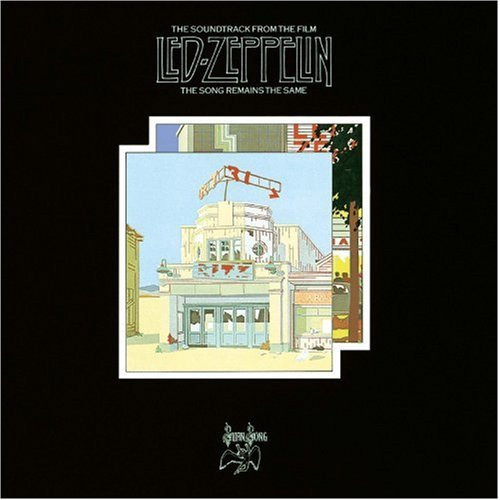
I’ve written in the past about how my friend Chris and I learned about music together in high school, and how we introduced each other to bands. There was a time when he liked Led Zeppelin, and I wasn’t a fan. He dragged me to see The Song Remains the Same, and my mind was changed forever. I know, it is a crappy movie in many ways, and the performances might not have been their best, but in an era when you didn’t have access to YouTube clips and online videos, I didn’t have much to compare it to. And I was blown away by their sound and their power. Not long after that, we saw them play live at Madison Square Garden, and again, that tour was not considered to be their best, and they messed up “Stairway to Heaven,” but it was still incredible. By the time we saw them, though, “Immigrant Song,” was no longer part of the setlist.
The song was written in response to a show on the band’s 1970 tour in Iceland, and is filled with Viking imagery, telling the tale of the Norsemen’s conquest of new lands. It uses the phrase “hammer of the gods,” which became synonymous with Led Zeppelin’s sound, and was the title of a notorious book about the band, which they hated. And it probably started the connection between heavy metal music and Scandinavian/Viking themes. But most of all, it has an incredible riff and Robert Plant’s iconic wail. One of Zep’s few actual singles, it was successful around the world.
Almost two years ago, I started working from home, and while there are some downsides to that arrangement, one plus is that I can occasionally grab a midday nap. I know that there are innumerable studies that make the case that the nap increases productivity, and I certainly agree with that, and wish that our Protestant Work Ethic society would be more accepting of grabbing a few Z’s during the day. But now that I’m my own boss, I can implement the “Naps Allowed” policy. When I try to nap, I like to put on a half-interesting TV show to help me doze off. It works for me.
One day, I felt the need to crash, and saw that the History Channel was running a marathon of a show called Vikings. With the History Channel, though, the chance of getting actual “history” and not some pseudo-historical crap is low, but when I turned it on, I found out that it was actually a drama about Vikings, and not a dry documentary. Turns out, it was too interesting for napping, and I got hooked. I went online and found out that the show was, in fact, getting good reviews, so I binge watched the first season to be ready for season 2, which was about to start. And it was great.
The show tells the story of Ragnar Lothbrok, a semi-historical figure, who, according to the show, was the Viking who suggested that they stop attacking each other’s villages in Scandinavia and head west to find new lands, ultimately finding England, which was a whole new market for pillaging. Although most episodes have some graphic violence (and, apparently in the version that airs in Europe, some nudity), for the most part, the show is about the politics and lives of the Vikings. From what I have read, it is relatively accurate (although poetic license has been taken with some of the characters and plots). I suspect, though, that as harsh and dirty as their lives appear on the show, it was worse in real life, and I also suspect that not every Viking, male or female, looked like a model, but that’s TV. And next season, they will be storming Paris.
“Immigrant Song” was covered by Trent Reznor and Atticus Ross with Karen O as the opening theme for the English-language version of the film The Girl With The Dragon Tattoo (in which a prominent role is played by Swedish actor Stellan Skarsgård, whose son Gustaf is an important member of the Vikings cast as the eccentric shipbuilder Floki). Some enterprising YouTuber set this cover to scenes from Vikings:
Posted by Jordan Becker at 2:12 PM View Comments
Labels: Atticus Ross, Karen O, Led Zeppelin, pilgrims & immigrants, Trent Reznor, Vikings
Friday, January 3, 2014
In Memoriam: Storm Thorgerson and Arturo Vega
[purchase The Gathering Storm - The Album Art of Storm Thorgerson]
[purchase the iconic Ramones T-Shirt]
They were both artists, they were both influential in the music world, and they both died in 2013. But Storm Thorgerson and Arturo Vega were also very different, in their lives, in their art and in the music that they were associated with.
Thorgerson was born in England in 1944 and was a friend of Syd Barrett, Roger Waters and David Gilmour. He was a graduate of the University of Leicester and obtained a Master of Arts degree from the Royal College of Art. In 1968, he founded Hipgnosis, a graphic arts company, and Thorgerson and the company designed many of the most iconic album covers of the 1970s and 1980s, regularly for prog rock groups. The cover of Pink Floyd’s Dark Side of the Moon, designed by Thorgerson, is often considered to be the greatest album cover of all time. Thorgerson’s work frequently was surreal, with sharply focused and well lit figures in bizarre or unexpected situations. Back when an album cover was a relatively large surface, Thorgerson’s designs were definitely a lure to record store browsers. And if you were someone who partook of psychedelic substances, they could be looked at for hours in an attempt to unlock their meaning. Or so I have been told.
It would take too long to list all of the incredible covers that Thorgerson had a role in designing and creating, but to list a few (other than most Pink Floyd covers)—Led Zeppelin’s Houses of the Holy and Presence, Genesis’ The Lamb Lies Down on Broadway, Yes’ Tormato and Going for the One, the first three Peter Gabriel albums, and albums by Renaissance, Brand X. 10cc and The Mars Volta. And I am probably leaving out your favorite. It was not, however, all classic rock or prog—his portfolio included covers for Ian Dury and the Blockheads, The Cranberries, The Cult, Megadeth and The Offspring.
In addition to designing album covers, Thorgerson directed music videos for artists such as Yes, Robert Plant, Pink Floyd and Nik Kershaw.
Thorgerson suffered a stroke in 2003 and later battled cancer, which claimed his life in April, 2013.
Arturo Vega’s career may not have had the same broad scope as Torgerson’s, but his work, primarily for The Ramones, who rejected all of the pomp and excess of many of the bands that hired Torgerson, may well be as influential, and probably sold more t-shirts. But art isn’t a competition (unlike, apparently, cupcakes).
Vega was born in 1947 in Chihuahua, Mexico, but moved to New York in his early 20’s to try and become an artist. New York at that time was not the chain store paradise that it is today, and the early-1970’s music scene that grew out of bands like the Velvet Underground were spawned from grungy, dangerous downtown neighborhoods which are probably remembered more fondly now than they were back then.
While living in a loft in the East Village in 1973, Vega met Douglas Colvin, who complemented the music on Vega’s stereo. Colvin later morphed into Dee Dee Ramone, and Vega became known as the “Fifth Ramone.” In addition to often feeding, housing and supporting the band, Vega was what would now be called a branding consultant. He helped to develop their look, their lighting, and, most of all, designed one of the truly great rock band logos ever. The faux presidential seal, featuring an eagle holding an apple branch (to signify that The Ramones were as American as apple pie) and a baseball bat (in honor of Johnny Ramone’s favorite sport), with a “Hey Ho, Let’s Go” banner in its beak, surrounded by the names of the members, is not only instantly recognizable, it represented a subtle, if unmistakable “fuck you” to the establishment.
Vega claims to have seen all but 2 of the bands 2,200 plus live shows and sold t-shirts with that logo, which helped to support the band when they weren’t selling that many albums or tickets. He continued to sell Ramones shirts and memorabilia, and his logo became a badge of coolness, even with people who weren’t even born when The Ramones broke up. Although Vega worked with other musicians, he will always be identified with The Ramones, and without Vega, The Ramones might never have survived to become a force that changed music forever.
He died, of undisclosed causes, in June.
Posted by Jordan Becker at 10:00 AM View Comments
Labels: Arturo Vega, Genesis, In Memoriam, Led Zeppelin, Peter Gabriel, pink floyd, Storm Thorgerson, The Ramones, Yes


:format(jpeg):mode_rgb():quality(90)/discogs-images/R-12810161-1542391567-8436.jpeg.jpg)
:format(jpeg):mode_rgb():quality(90)/discogs-images/R-1316291-1426431432-8388.jpeg.jpg)