












Showing posts with label Boss. Show all posts

Sunday, December 11, 2022

LEFTOVERS: BOSS: THE FEVER


OK, sorta kinda a contrivance here, given I have been away a week or two, with, if not a fever, the treatment for one I had earlier. Anyone here had biliary colic or cholecystitis? Not fun, right? And that was how I found myself in the casualty (emergency room) of my local hospital, some time back in the summer, ahead of a scan showing me the presence of a big old bag of stones. The bag my gall bladder, the stones painful. Cue change of diet whilst I was put on the list for the necessary surgery, to rid me of the offending organ and it's unruly passengers. Against the odds, as we have a bit of a post covid crisis in our national health system, I got given a date and underwent the knife a couple of weeks ago. Nominally a day case, they do it, these days, by laparoscope, or keyhole surgery as it is called. Instead of cutting me in half, they make four small incisions and wiggle about inside me, via levers and pulleys. A "very big" and "very dirty" bag and stone combo was thus drawn out of me, allowing me home the same day. (Actually, not, as it happened, as my other bladder took umbrage at the anaesthetic and decided not to work until the last bus had departed, meaning an overnight stay.) I was hoping to have pictorial evidence of all this, expecting I might be offered, as a trophy, the removed detritus, but no such luck. This is, apparently, no longer hospital policy. Boo.

Two weeks off work was all I was offered, expecting that to be insufficient, surprising myself by how quickly everything bounced back, and how little pain the various stab wounds gave me. They use glue, these days, to cover up all the evidence, with hefty dollops of Loctite squirted over the incisions. That was fun as it peeled away..... 

So here I lie, early am on the (Sun)day before I return to work. Time for  catch-up post and any of the Dr and Hospital songs I could shoehorn in, this seemed to fit best into the open ended theme of leftovers. We did "Boss" earlier in the year, and I certainly shied away from Mr Springsteen at that juncture: far too obvious. As, sadly, has the man himself become, his star irredeemably faded in recent years, tarnished by the limelight of Vegas and lacklustre material. (Don't get me started on his latest travesty, the dreadful collection of dreck, dredged up from the vault of songs even Rod Stewart wouldn't dare cover. Good songs, sure, in their own right, but despoiled by the vanity of the project.) This track first came out with '18 Tracks', the 1999 album to lure in punters to his then back catalogue, but had been originally made during the session for his second record, 1973's 'The Wild, the Innocent and the E Street Shuffle'. And isn't it good? I bought the compilation as it was released, and it has sat on the shelves, progressively gathering dust as my love affair with the Boss diminished. So, then, a timely reminder of what the man was capable of in his prime. the two live versions each coming from 1978, the first being performed by Southside Johnny and his also containing Steve Van Zandt band, with Bruce as a guest. Both traffic versions.
Fever.

Saturday, February 5, 2022

Boss: Big Boss Man


purchase [ Jimmy Reed ]

Thinking over the word <boss> and its connotations, it occured to me that the word probably came into the English language via Dutch. A little research and ... voila .. "boss is Dutch in origin"... it  comes from base or bass or baas. However, being the polyglot that I am, I can't help surmising that there is more to this than that. The Turkish word for "put pressure on" (as in oppress a worker, or force) is <bas>. I am going to go one step further than Collins and Oxford dictionaries and posit that the root goes back further than the Dutch - back to the Ottomans,  in fact. It's just an observation, but it makes an awful lot of sense. (You heard it here first.) bas=baas=boss.

So... who's the boss? Well, even that phrase, popularized in many forms, has a somewhat murkey provenance. A 1914 Oliver Hardy film? 

The boss is "the person that other people have to obey". That could also take us down a rabbit hole of what it means "to obey", but it also conveys "authority and expertise", and with this we have a more accessible value to the word as it applies to musicians like Springsteen (known as "the boss" for some reason.)

I'll try to take a cue from our own Jordan Becker (and in the process confess that I too often paste information you can find in your own searches - tho'  I generally say as much). This week it''s not Springsteen . although it could have been. Not bossanova (tho, again, I love Carlos' music in any form, and thanks Seuras).  And not Blue Cheer who were also on my list of potentials on account of their "Summertime Blues"  (wherein we have the <I hate my boss> theme).

Pardon me while I provide some freely accessible Wiki data as I assume you haven't yet been there nor know it. Big Boss Man is a Luther Dixon/Al Smith song first recorded by Jimmy Reed - and you would be excused for not knowing the names. That said, some of Dixon's songs were recorded by the Beatles, the Jackson 5 and more.

Sing  "You ain’t so big, you’re just tall, that’s all."[

Above it's the Grateful Dead's version and below we have Jimmy Reed, then B.B. King and Elvis.


Saturday, January 29, 2022

BOSS:ANOVA

Sorry, guys, going out on a Springsteen free limb here, eager to see if there is any love for the bossa. To folk of a certain age, myself included, that can open up a vista over one of the most over-exposed and ubiquitous songs of the last century, the cloying Girl From Ipanema, but don't go, stick around. It isn't actually a bad song, you've just heard it too many times.

The Girl from Ipanema/Amy Winehouse

Anyway, this isn't about the song, it's about the style. Arguably no more than a variation on the Brazilian life-source, the samba, it swept in on a wave of innovation in the late 1950's, a condensation of the intrinsic rhythmic shuffle to the minimal, buoyed by off kilter chords and progressions, all syncopated to the max. The splendidly named Milton Banana was probably the originator, the drummer/percussionist for Joao Gilberto. Gilberto's Chega de Saudade (1958) was the first record recognised within this new form, the style then breaking in the film, Black Narcissus, a year later.

Manhā de Carneval (from Black Narcissus)/Elizete Cardoso

That's about as far down that historical alley I want to go, even bypassing the superb contributions to the genre gifted by celebrated saxman Stan Getz, who blows the breathiest whisper that instrument can manage and still be audible. A glorious tone. Because I've got you here to catch what has been happening to the style since the 60s. The enthusiasm actually fell away in the homelands, the breezy music sitting uncomfortably with the political frictions occurring in Brazil, even if every jazzer and his dog in the US was tearing Ipanema to shreds in supper clubs and hotel lobbies across the nation. As latin rhythms determined a more streetwise and funky uplift, courtesy Carlos Santana, so the cool jazz lite of the 'nova was on the fade.

Wild Horses/Karen Souza

It was actually my love for cover versions, an unceasing quest of mine these past two or three decades, that lead me back to Bossanova, let alone many another arcane and forgotten style. The Rolling Stones, always a favourite band of mine, have attracted versions across the musical map, encompassing blues, reggae and zydeco, all these having been avidly devoured. So when I discovered a label, PMB, originally based in Argentina, seemingly hellbent of exploiting the emergent love for chilled beats, and morphing this with the sounds and style of Bossanova, I was made up. As well as the Stones, there are also volumes devoted to Bob Marley, the Ramones and Madonna, the bandwagon then drifting to other labels, quick to produce similar Beatles renditions. OK, not all of this is good and some is a good deal even less than good, but, when it hits base, it is perfect. Well worth a punt, as easy to pick up cheap second hand copies.

Love Will Tear Us Apart/Nouvelle Vague

Meanwhile, over in France, Oliver Libaux and Marc Collin were having similar revelations, as they set up the band/collective Nouvelle Vague, which translates roughly both as New Wave, which is one of the possible translations also for Bossa Nova. Since 2004 they have produced a sizeable body of work, largely slightly kitschy covers of New Wave artists in the anglophone sense of the word. And, yes, I have most of their work too. But surely the style should be more than for smart arse copyists?

Essa Moça Tá Diferente/Bossacucanova

I'm afraid, as tends to happen, the worm hole of bossa covers led me to new artists and new material. Bossacucanova are amongst those who consider the format still keeping alive, and have injected a little more electronica to sit alongside. I can't say it grabs me as much as I hoped, so it is gratifying to round this piece off with something that really does bestride the decades, managing to keep the delicate angularity of the original songs, with a heft of 21st century credibility. Unsurprising, therefore, to realise she is second generation Bossa. Her father was Joao Gilberto, who wrote and sang the original Girl From Ipanema. Tanto Tempo was her big breakthrough album in 2000, and I can thoroughly commend it. But I had thought her a spent force, until I learnt of Agora, an album that came out during lockdown, in 2020, and which rapidly became one of my records of that year. 

Teletransportador/Bebel Gilberto


Thursday, January 27, 2022

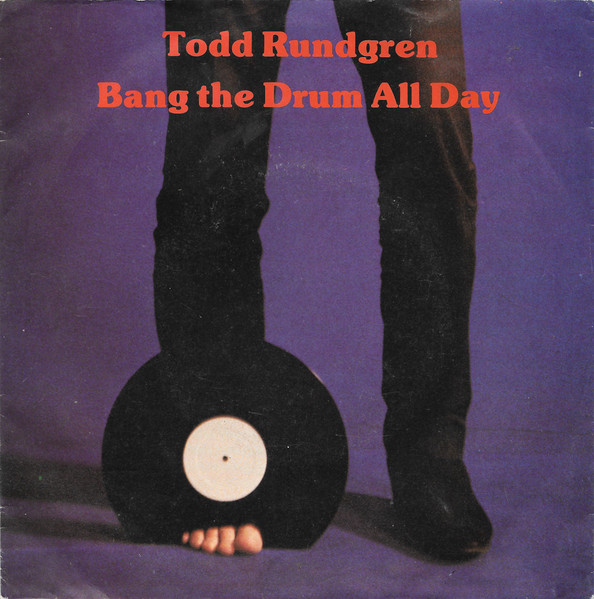
Boss: Bang The Drum All Day


Todd Rundgren: Bang The Drum All Day
[purchase] 

Unless a song immediately jumps into my head when our theme is announced (or if I had one in mind when I suggested a theme), my first move is to do searches of my iTunes library. Yes, I’m an owner, not a renter. I was unimpressed by the songs that had the word “Boss” in the title (and didn’t want to write about a Bruuuuuuuuce song). You may know that there’s a site called lyrics.com, where you can search for words in lyrics, and narrow by genre and other filters.  It's a godsend for music bloggers, believe me. 

I powered through the filtered list (you are welcome to speculate as to what genres I chose, and which I excluded) and came up with a bunch of really good songs to write about. And because in situations like this, I like to write about artists who I haven’t posted about before, one song became the obvious choice—Todd Rundgren’s “Bang The Drum All Day.” Not only is it a great, fun song, but as I’ve mentioned here, I’m a bad drummer, and frankly would prefer to bang on a drum than work, most of the time. Since banging on drums is unlikely to make it possible to pay my bills, sadly I still have to work. 

Another thing that made me want to write about this song is that, it appears, since SMM’s founding back in 2008, no one has written a post about one of Rundgren's songs. He’s been mentioned and his production work has been referenced, but despite the fact that the guy has written a bunch of serious classic rock songs in a career that started in the late 1960s and has included more than three dozen solo and band albums, as well as being a true innovator, none of the many former or current SMM writers have written about him. 

Now, if you read my stuff, at this point, you’d probably expect the next line to be, “Born in Philadelphia in 1948, Rundgren….” followed by a long discussion of his career mostly pilfered from Wikipedia or Allmusic, with the occasional snarky aside. But I’m not going to go there. If you want to know more about Rundgren’s life and career, click on one of those links. Or both. Because you don’t want to work, either.

It may be that “Bang The Drum All Day” will end up being Rundgren’s most enduring song, although “Hello It’s Me” and “Can We Still Be Friends” might give it a run for its money. ("I Saw The Light," too.) It was, initially, a throwaway song that Rundgren claims came to him mostly in a dream, and since he had a home studio, was able to roll out of bed and record it-he plays all the instruments on the song. Rundgren has said that his record company didn’t see the song as a single from his 1983 album The Ever Popular Tortured Artist Effect, but eventually it was released and topped out at 63 on the Billboard Pop Singles chart, and 39 on the Billboard Mainstream Rock chart. 

But it had legs. 

What makes the song fit our theme, of course, are the lyrics: 

Every day when I get home from work
I feel so frustrated
The boss is a jerk
And I get my sticks and go out to the shed
And I pound on that drum like it was the boss's head

But what made the song popular was its fun message and the catchy music. Rundgren explained: 

I like the idea that I've written a song that is well known to a broad segment of the population…and they have no idea why they know it! In the same sense that everybody knows 'Happy Birthday,' but they can't remember the first time they heard it, and they have no idea who wrote it. But you've penetrated the cultural consciousness in a way that transcends the typical pop song, and what it means is that if I never have another hit record on the radio again, that song is still going to be around likely twenty-five years from now. 

And although Rundgren also claims that he hates playing the song because it makes him feel “ape-like,” he also considers it his most impactful song, “because I made so much money off of it.” Not only through sales and airplay, but because it has been used in many commercials, TV shows and movies, at football games (most notably Green Bay Packers games) and as a theme song. 

Despite making all that money from “Bang,” it still seems that Rundgren still wants to work (or maybe has to.)