Showing posts with label Homecoming. Show all posts

Friday, October 26, 2018

Homecoming: Sweet Home Chicago


purchase [Sweet Home Chicago ]

Sweet Home Chicago is so old and such a classic that it almost rates as kind of trite to post it.
And then again, there are renditions of the song that stand out, even after 80 plus years [Robert Johnson, 1936 or before], sometimes because of the interpretation, sometimes because of the line-up of musicians (each with their own interpretation).

More credit to you if you can name these guys in order of appearance (some are pretty easy, others need a little expertise).
But, whatever, the clip is a pretty good example of unique interpretations of a riff.

The list ( if I ain't confused):

Buddy Guy starts us off.
Johnny Winter appears to solo, but it isn't clear that he's playing.
Hubert Sumlin does a solo. (1931-2011, and a member of Howlin' Wolf's band)
Clapton and Buddy Guy sing a verse.
John Meyer - love the way he swings his guitar and the unusual notes he hits in his solo.
Johnny Winter's actual solo,
followed by Jimmie Vaughan's solo
And a Clapton/Buddy Guy wrap

The history of the song is particularly entertaining, because, while credited to Robert Johnson, there are a fair number of preceding progenitors and a plethora of interpretations of the lyrics. I'll simply provide you with a link to the informative Wiki article (and, because Turkey continues to ban access to Wikipedia, it's a link to the alternative Wikipedia that those of us over here have to use, unless we're on a VPN)

Groove ...


Thursday, October 25, 2018

Homecoming: Take The Long Way Home


Supertramp: Take The Long Way Home
[purchase]

What exactly was Supertramp, anyway? They started out as a prog band financed by a modern day Medici, Dutch millionaire Stanley August “Sam” Miesegaes, but only became successful when they lost their patron and, over the course of a few albums, gradually tempered their proggier influences with radio-friendly pop, only to lose a key member at the height of their long-sought popularity and drift into obscurity and irrelevance. In addition to the tension between longer, complex songs and catchy pop tunes, the band also had to deal with the fact that its two main songwriters, Rick Davies and Roger Hodgson, had different personalities and different musical styles—one harder and jazzier and the other more folky and melodic—which ultimately led to the breakup. (If you are dying to know who wrote which Supertramp song, because most of the songs were credited to both Davies and Hodgson, look here.)

I became aware of Supertramp with their 1977 album, Even in the Quietest Moments… an album that, to my mind, is their most successful balancing of the various influences. It had a hit single, “Give a Little Bit,” but it also had an excellent ten and half minute song, “Fool’s Overture.”

My college radio career began during the early part of 1979, and in March of that year, Supertramp released Breakfast in America. It was, for the most part, a swing toward the pop side of their personality, and it was a huge hit—reaching number 1 on the Billboard pop album chart, and containing four hit singles, and a couple of other songs that might have been contenders. I remember playing it, but having the sense that Supertramp was really moving away from the kind of music that we were playing on the station in those days (and we still played a pretty good amount of prog rock). Although I think that we were less doctrinaire about shunning hits than many other college stations of the time, there definitely was the sense that Breakfast in America was maybe just too commercial. I did continue to play my favorites from Quietest Moments and took the opportunity to investigate their prior two albums, which had songs that I have to believe I heard on WNEW when I was in high school. For some reason, possibly bad reviews, I never spent any time with the band’s first two albums, which were unsuccessful full on prog records (which led to the loss of their benefactor). Although in preparing to write this, I discovered that the guitarist and lyricist on Supertramp’s self-titled debut album was Richard Palmer, who, as Richard Palmer-James later wrote the lyrics for three of King Crimson’s best albums—Larks’ Tongues in Aspic, Starless and Bible Black, and Red, so maybe I’ll go back and check it out.

I think that “Take The Long Way Home” is my favorite of the hit singles from Breakfast, and I think that it holds up better than some of the others, maybe in part because the song uses what sounds like a real piano, and not the dated sounding electric one that many of the band’s songs relied on. (Although the title track also sounds good after having not listened to it for a while) And maybe it is because that while it is still a pop song it lopes along, taking, I guess, the long way home. Or maybe because of its ambivalent message. Hodgson, who wrote the song, has said that it is about

home on two levels. I mean, I'm talking about not wanting to go home to the wife, take the long way home to the wife because she treats you like part of the furniture, but there's a deeper level to the song, too. I really believe we all want to find our home, find that place in us where we feel at home, and to me, home is in the heart and that is really, when we are in touch with our heart and we're living our life from our heart, then we do feel like we found our home. 

After that blockbuster came a placeholding live album, and an even poppier studio followup, which while having a couple of hits, really was a pale imitation of Breakfast. At that point Hodgson left the band to record some mostly forgotten solo albums. Davies kept the band together, releasing some more experimental records that had some initial chart success, but not for long. Both Supertramp and Hodgson continued to record and tour occasionally (and separately), and no real reunion ever bore fruit. In 2015, Davies was diagnosed with multiple myeloma, forcing a tour cancellation, and the band’s website simply says “There are no upcoming tour dates scheduled currently.” Hodgson’s website, on the other hand, shows a vigorous touring schedule through the rest of 2018 and 2019.

Wednesday, October 24, 2018

Homecoming: Sweet Home Alabama


purchase [Sweet Home Alabama]

If you are talking about coming home, you cannot dismiss this. Granted, I already have a name for posting the obvious, but this one belongs here.

The song was mired in the polemic Neil Young raised about what does the "South" mean - both to Southerners and to those outside, What does it mean to fly the Confederate flag? And then ... in response, Lynard Skynard was trying to send Neil Young (and the world) a message. 40 years down the road, so much has changed (not just in rock), but I do wonder what these guys were thinking when they penned these lines:

Watergate does not bother me
Does your conscience bother you

You could not survive that line these days, but we <forgive> it as a classic,

The linked video is relatively amazing for its time ('74): it is pretty close to synced on time as it cuts from scene to scene (No small feat for 1974), and it includes modern features such as focus on the lead guitar during the solo (all recent innovations back in the '70s)

As to the theme ...
There are few things more hurtful than an attack on your home. And I don't know if that is what prompted the song, but it sure seems so, The lyrics say as much: F*&ck you Neil Young, we have our own narrative of our history. Because, after all the "truth" of history left to later generations is in the words that the present generation chooses to write - fake or not...


And what to make of the very discernible female backing vocals that are equally not visible anywhere in the clip. A classic piece, that, like most of its associates, falls far short of today's standards.

Monday, October 22, 2018

Homecoming: Blue Bayou

Our Homecoming theme got off to a great start, but then seems to have wilted. So I propose to define it as “songs about coming home, or wanting to.” That means two things: the song does not have to have the word Home in the title; and I can post this gem.

Linda Ronstadt: Blue Bayou

[purchase]

I first heard Blue Bayou when Linda Ronstadt released her version in 1977. My oldest brother was, and still is, a music snob, and one of his rules at the time was that no artist was worth your time unless they did original songs. (The musical gods would later have their revenge on him by making him love jazz, where many classics are covers) But, getting back to 1977, I knew I disagreed, because I had already discovered folk music. Blue Bayou was and is a powerful expression of yearning for home. Ronstadt completely sells the emotion of it, belting it out without oversinging. The song became an early hit for Ronstadt that really jump started her career, and it is easy to hear why. She completely sells the lyric. As you listen, you want to find out what happened to keep her from feeling that she can go home again.

Roy Orbison: Blue Bayou

[purchase]

What did happen was that Roy Orbison, 14 years earlier, had become a star whose livelihood meant he had to live his life on the road, away from the places and people he loved. Orbison was at the peak of his career in 1963, when this was released. Ironically, where Blue Bayou would mark the commercial arrival of Linda Ronstadt, it would mark the beginning of a commercial decline for Orbison. This version charted, but not in the way Orbison had become used to. It peaked at #29 on the pop charts, staying there for only one week. Soon after, the Beatles would arrive in the US, and Orbison would have to scale back his career. This original version of Blue Bayou features a great vocal, and it has a bass line that sounds great. Ronstadt’s version replaces that bass line, and I could not find another version that does it this way. That said, the female background vocals are cheesy, even for their time, and the song would have been better without them. Blue Bayou became a minor part of Orbison’s catalog, and I could find no other versions until Ronstadt’s. It is Linda Ronstadt who is being covered by everyone who comes after her.

Faith Ako: Blue Bayou

[purchase the album Kulaiwi here]

Blue Bayou usually works best with a soaring high tenor or soprano vocal. Faith Ako however makes it work beautifully with her rich alto. Ako is my great discovery for this post. Most of her songs are Hawaiian, as she is, but this one breaks the language barrier to allow those of us who don’t speak Hawaiian to appreciate her artistry. The instrumental flourishes here are stunning, and this arrangement works in any language.

The Cox Family: Blue Bayou

[purchase]

Even though Linda Ronstadt’s Blue Bayou is the standard, her arrangement sounds dated. In particular, the way the electric piano is used became a terrible cliché by the time the 70s were over. The Cox family strips the song down to a wonderfully spare acoustic arrangement, and then adds gorgeous vocal harmonies. There is a great live version live version of the Cox Family doing this one with Allison Kraus available on YouTube. I did not include it here because it is not available for purchase.

Raul Malo, Pat Flynn, Rob Ickes, and Dave Pomeroy: Blue Bayou

[purchase]

Finally, I had to include this version. Thanks to Linda Ronstadt, the vast majority of artists who cover this are women. I think there is also another reason why versions with male vocals are rare: there are very few male singers who can do justice to the song. I could think of only two who I would want to hear. One is Chis Isaak. I suspect that he has heard comparisons to Roy Orbison way too often, and wants nothing to do with it. The other is Raul Malo of the Mavericks. In fact, The Mavericks have done the song live, and Malo has also performed it with his own band. But the only recorded version I could find is this stunning acoustic version. As I suspected, Malo is a great choice to sing it, and the arrangement is great too.

Tuesday, October 16, 2018

HOMECOMING: TAKE ME BACK HOME/SOULSAVERS


OK, so it was only when the facebook link to my last post alerted me that I realised Homecoming to be peculiarly and specifically an american concept, relating to (high) schools inviting back past alumni, for a dance to celebrate the existence of the institution in question. And football?! Who knew? Certainly not me, although I suddenly get a whole lot of references from "Romy and Micheles High School Reunion" to the Monkees. Anyway, this piece too, like those of my colleagues, is nothing at all to do with that. (Except, arguably, on a metaphysical level.........)

Soulsavers are a remarkable concept, the idea of Rich Machin and Ian Glover, two british producers who somehow have conjured a knack of getting some of the most distinctive vocalists around to sing on their electronica take on what I would broadly categorise as gospel music, possibly not (but probably) including in any religious sense. Perhaps if a little veiled as to any particular divinity. Sorry, sprawling intro, but it is tricky for modern musicians to overtly ally themselves to any accepted spirituality beyond the vague. Or maybe difficult for me and my generation, avowedly secular, to accept such. I can find little back story as to how these two honed their craft. 2003 saw their first record, 'Tough Guys Don't Dance', the template immediately set out with sombre and dark sounds, sombre and dark imagery and sombre, dark, often lugubrious vocals. Here's 'Love' from that record, a style remaining and in no need of change. The singer is Josh Haden, son of Charlie, and erstwhile lead singer of the short lived 'Spain', well worthy of recommendation in their own right.

Second album, 'It's Not How You Fall, It's How You Land', saw them bring in Mark Lanegan, whose gothic tones have increasingly added a little black, or is it white, magic to any number of artists, as well as building up quite a catalogue of his own. With his back story of gaol and addiction, who better to sing of a curiously old testament redemption and revival?

Third album, 'Broken', again included Lanegan, amongst others including Jason Pierce, whose 'Spiritualised' had been mining, and still do, a similar vein. This took deeper still the atmospheric, exemplified by this version of this Will Oldham (Bonnie Prince Billy) track, he also appearing on this and the last record. (And here's Billy's version.)


The song featured in this article comes from number 4, 'The Light the Dead See', which, on the back of the critical breakthrough achieved by 'Broken', had the genius of recruiting Dave Gahan in the Lanegan role. Perhaps as famous for his overdosing near-death experiences as for his fronting of electro-band Depeche Mode, interviews had already revealed his deep melancholic beliefs. When Soulsavers were chosen to support Depeche Mode on a 2012 tour, it was perhaps inevitable he would end up writing and singing with/for them. Not for nothing was the title of his main bands 1993 album 'Songs of Love and Devotion'.

'Take Me Back Home' is one of many highlights from this remarkable album, the references aplenty as to where that home may be. It can move me to impossible places, to states akin to a mystical reverie, almost damascene in intensity. It is only my hard fought for cynicism that enables me to pretend I hear not the beseechments to (a) god. Or to God? As intensity goes it can go little further. And it can't get more overt than the song below.


Gahan has stayed on board a while longer, to the extent of the next release coming under the Dave Gahan & Soulsavers soubriquet, a step backwards for me, experientially, even if the songs, on 'Angels & Ghosts', were nearly as powerful. Strangely, the giving of a name extruded a taste of Mammon. Some of the magic was gone. Perhaps indicatively, the next release was back to the core duo, and instrumental, a film soundtrack, 'Kubrick', no clues in the lyrics, and fewer from the subject matter of the film. But no mistaking the music.

I remain an atheist. I think.

I could just point you toward the named track. Hell, or is that heck, hit the main page.


HOMECOMING: Homeward Bound


purchase [Homeward Bound]

OK. Sorry. With this post I show my age, but I can't help myself.

Simon & Garfunkel's [Parsley, Sage...] was among my first LPs, and for those of us of that generation, it was momentous. It bridged a gap between generations by making folk  ... popular. If not exactly rock. That came next.

For those of my age, Simon & Garfunkel was/were integral - our entrance to the world of pop.rock.

The theme of [Going home/homecoming] carries more baggage for Americans if not for other cultures (maybe think Spring break in Florida).

My choice may be no high school homecoming (that's a separate realm all to itself), but it touches on the theme of going back. Back to a past that you recall, but is probably no longer the same.

The American Homecoming weekend tradition plays upon these emotions: bringing you together with those days (in the hopes that you will stay connected/subscribing)

Homecoming: A Sort of Homecoming


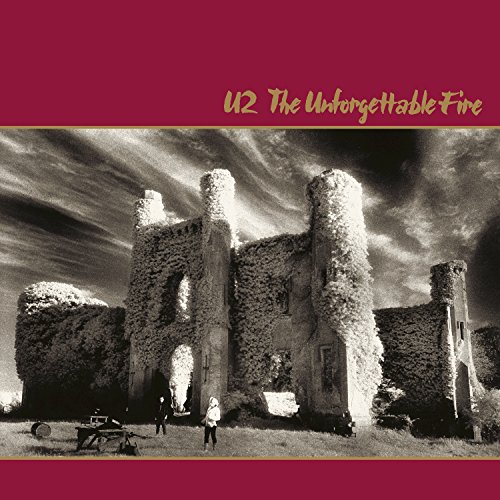
U2: A Sort of Homecoming
[purchase]

“A Sort of Homecoming” is a strange song in the U2 canon. It was not a hit, it is rarely played live (more on that, later), but it has long been one of my favorites—and in researching this piece, I found that there are many U2 fans who really love the song. As most of us know, U2 burst upon the scene with their remarkable debut, Boy, in 1980. I remember hearing it and playing it on WPRB, and being struck by the uniqueness of their sound, their earnestness, and their confidence, despite the fact that they were so young. The next album, October, was a minor stumble—not terrible, but somehow not fully realized. Their third album, War, was, start to finish, a great album, filled with anthems and love songs, delivered with passion, bravado, and musical talent. I saw them on that tour, at the Pier in New York, and was blown away. The album was a huge hit, and the album spawned hit singles—it was U2’s breakthrough into mass popularity.

When the band prepared to record its follow up, though, they wanted to move in a different direction, with less bombast and sloganeering. They wanted to work with Brian Eno, who initially was unimpressed by the band, and was planning to fob them off on his engineer, Daniel Lanois. Ultimately, though, Eno was convinced, and he agreed to work with U2 (along with Lanois), and try to create a more mature sound for the band. Not surprisingly, considering the production team, the collaboration resulted in The Unforgettable Fire, which was a more atmospheric and subtle album, but without losing the power of War. The two records are probably my favorite U2 albums (most critics probably go with The Joshua Tree or Achtung, Baby!, and I like them, too, but not as much).

“A Sort of Homecoming” is named after a line by poet Paul Celan, who Bono had been reading, in a speech he delivered on October 20, 1960, about five months after Bono was born, when Celan was awarded the Georg Büchner Prize. In that speech, Ceran discussed Büchner’s work, art, and poetry, and in his view, the circularity of poetry. He went on to say (in German, but I found a translation):

Is it on such paths that poems take us when we think of them? And are these paths only detours, detours from you to you? But they are, among how many others, the paths on which language becomes voice. They are encounters, paths from a voice to a listening You, natural paths, outlines for existence, perhaps, for projecting ourselves into the search for ourselves. . . . A kind of homecoming. 

I’ll bet you never thought that we’d be discussing German literature when you started reading this music blog post, did you? But critics note that this song, and the whole Unforgettable Fire album, show a more Celan-like spiritual doubt as compared to the more certain religious themes of their prior work.

Although I've never read Celan (but have read a little Büchner), what grabbed me about the song was the sense of yearning, both lyrically and musically, that is palpable from its quiet, polyrhythmic opening, to its more intense end. Note that the song is not called just “Homecoming,” it is “A Sort of Homecoming,” so it is fitting that lyrically it works on so many levels—as a personal homecoming to Bono’s native Ireland, as the “homecoming” of his late mother, as a return from war (possibly the violence that was engulfing Ireland at the time), and as a spiritual renewal. And maybe more. Ultimately, though, the song ends with the comforting thought:

Oh don't sorrow, no don't weep 
For tonight, at last 
I am coming home 
I am coming home 

U2 played the song pretty regularly from 1984-1987, as they toured in support of The Unforgettable Fire and its follow-up, The Joshua Tree. There’s an excellent, if more triumphant and less atmospheric, live version from 1984, released on 1985’s EP Wide Awake In America (which is an odd title, because the song was actually recorded at a soundcheck before a show in London, with the crowd noises dubbed in later). But they basically ditched it from their setlist until a performance in 2001 at Slane Castle, in Ireland, which was described on one site as “somewhat shambolic, with Bono struggling to remember the lyrics.”

It made another appearance that year under very unusual circumstances, in Oakland on November 16, 2001. A devoted U2 fan and guitarist, Scott Perretta, had seen U2 pull people out of the audience on occasion to play guitar, and decided to see if he could make that happen for him. He went to the show on November 15 with a sign that said Me + Guitar = People? Knockin? Watchtower? Anything! and planted himself by the stage. U2 security asked if could actually play, because the band got pissed off when poseurs were selected and couldn’t. Assured by Peretta’s friends that he was legit, the security director said that if Bono was interested, he’d give Peretta a signal. But it didn’t happen.

Until the next night, when Peretta could see Bono and the Edge checking out his sign, and they invited him onstage. Peretta started playing the opening to “Homecoming,” which surprised them (since it wasn't on the sign, and wasn't as noted above, a regular part of their set), but they went with it, despite the fact that Bono couldn’t remember the lyrics.  He started ad-libbing about the song, crediting Van Morrison for its inspiration, before turning it into a prayer for the United States, which only two months before had suffered the 9/11 attacks. The crowd went wild. Here’s the audio of the performance. Here’s Peretta’s detailed recollection of the night, and here and here are short audience videos showing him onstage.

As Peretta wrote about that night: “I can die happy now.”

Sunday, October 14, 2018

HOMECOMING: FEEL LIKE GOING HOME


Ain't this just the saddest song, a heartfelt plea, no, a searing moan, from a fading and failing heart, stranded out on the road, miles from home, and in probably the wrong direction? Hear it again here, in demo format, and it is way bleaker still, a last gasp, a vainglorious grasping at an unattainable rose-tinted past. Magnificent.

In truth I know little about Rich beyond this song. This version featured here is a late career 1993 reprise which, give or take the choir, exudes just a bit more pathos than the 1973 original or the better known 1975 version. It was quite a shock to discover this song was actually the work of a then quite young man. He first cropped up on Sun records, starting out, nominally, as a rocker, ahead of cementing his name in the Nashville 60s 'Countrypolitan' movement. I have also discovered he was behind this shocker of a song, an ear worm that can destroy any moment: I usually find myself singing it as I go shopping or mow the lawn, then finding it sticks with me for days, to the eternal annoyance of all I come into contact with. (And, no, I am not going to grace it by name, for fear of triggering another bout.) In fact, he had a number of careers, across a number of labels and styles, although all broadly within the country canon. It is also fair to say he was a colourful figure, that euphemism so beloved of obituary writers for unrepentant boozehounds. He died, fairly suddenly, of a pulmonary embolism, in transit for, ironically, not home, but going on vacation.

It is a song that hasn't had that many covers, the ones I have being on a Jools Holland country LP, featuring sometime popstrel Sam, daughter of Joe, Brown and on Mark Knopfler's early side project, the Notting Hillbillies. The first, clearly more a showcase for the bandleader's ivory tinkling, the latter  just a bit too slow for comfort. But the one that stands out for me is the one below, as performed by Scotland's majestic Battlefield Band, where the song seems to be drenched in hues of expatriate regret, almost a genetic memory of the homeland, tugging ceaselessly at the heartstrings of the vast scots-irish diaspora, no matter how many generations since the auld country became little more than a distant dream.


Rich.
Battlefield.