












Showing posts with label Linda Ronstadt. Show all posts

Sunday, June 27, 2021

Opposites: Southern Man/Girl From The North Country

Neil Young: Southern Man
[
purchase]

Bob Dylan: Girl From The North Country
[
purchase]

Bob Dylan w/Johnny Cash: Girl From The North Country
[purchase

Watching the Trump Party and its propaganda outlets whip themselves into a frenzy over what they are mischaracterizing as  “Critical Race Theory,” either due to political calculation or ignorance (or both), when what they are really afraid of is not the actual theory, but the “Truth,” could easily send me spinning off into a discussion, centered around Neil Young’s 1970 song, “Southern Man,” about institutional racism, the Civil War, and the Lost Cause myth, but I’ve written about that before. 

Instead, let’s (mostly) talk about the two songs I’ve chosen for the Opposites theme which are basically double opposites—one about a southern man, the other about a northern woman (although, if gender is really a spectrum, are they really opposites?) But there are even more things about the songs that are opposites. 

Young’s “Southern Man,” as most readers of this blog probably know, was released in 1970, at the height of the anti-war and civil rights unrest in the country. It is an angry song, about racism and slavery, and features harsh, searing electric guitars. (It also famously inspired, at least in part, Lynyrd Skynyrd’s “Sweet Home Alabama,” but there really wasn’t any sort of rivalry between Young and Skynyrd, who were mutual fans of each other. Really.) 

Bob Dylan’s “Girl From The North Country,” on the other hand, released in 1963, is a wistful, acoustic love song, maybe about one of Dylan’s actual former girlfriends, or some of them, or all of them, or none of them. While it didn’t inspire a response song, it did inspire Dylan to record a duet version of the song with Johnny Cash, which was released in 1969, about a year before “Southern Man.” 

Despite the Opposite features of the songs, there was great mutual respect among Young, Dylan and Cash. They’ve performed together and covered each other’s songs, and Dylan and Young were both on Cash’s TV show (where Cash and Dylan sang “Girl From The North Country” together—you can read more about it, and watch the video here.). The Young performance was part of a a special episode of Cash’s show, shot at Vanderbilt University. It focused on students’ issues, including drugs, and Cash openly discussed his own problems, before introducing Young at the Ryman Auditorium, where he performed “The Needle And The Damage Done” and another song. 

I’m guessing that was pretty much the opposite of what many of Cash’s country music fans would have expected. 

A small footnote—after the Ryman performance, Young and his guests, Linda Ronstadt and James Taylor, hit the studio and worked on songs for the forthcoming Harvest album.
Tuesday, February 25, 2020

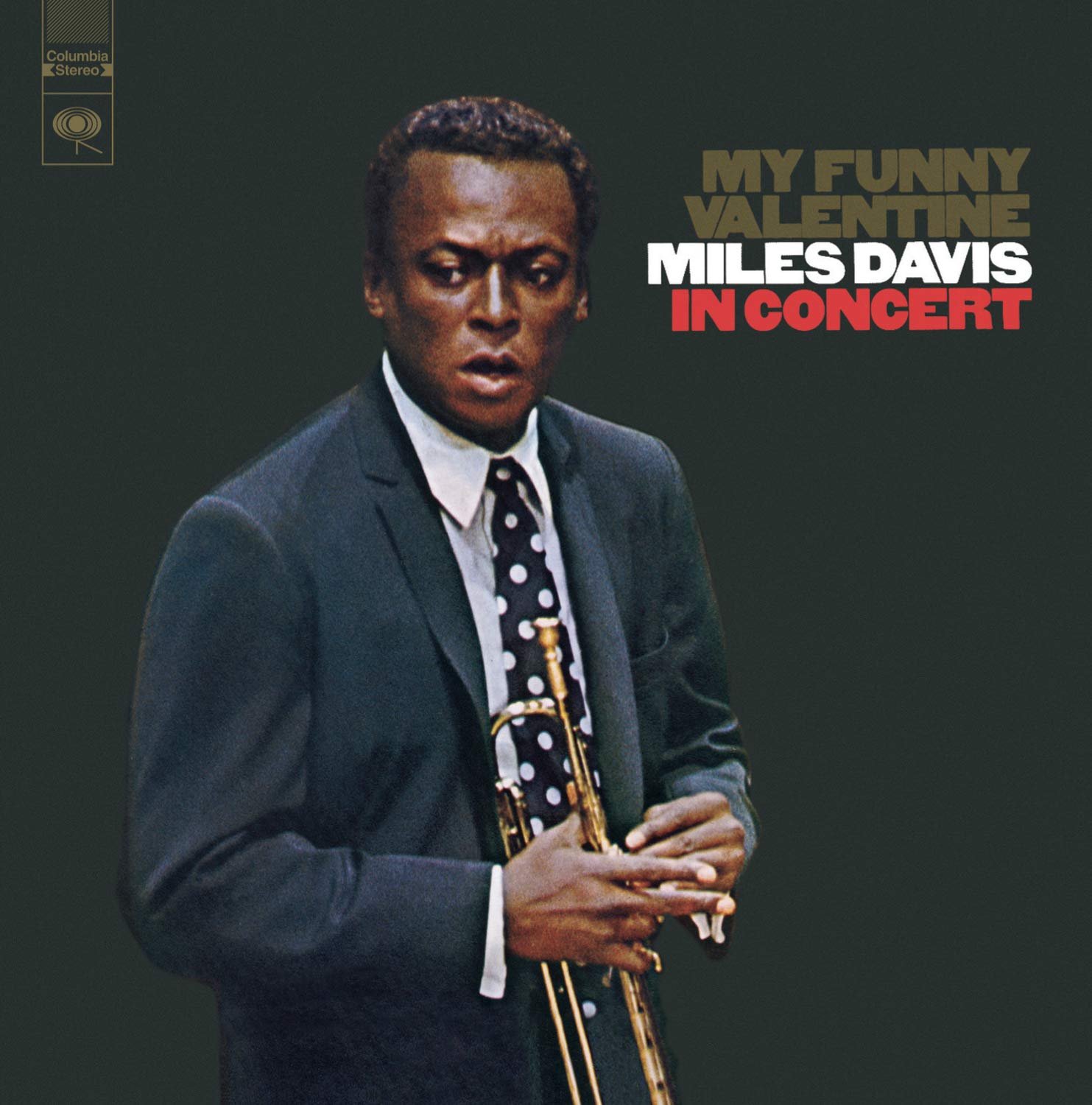
Valentines: My Funny Valentine


Miles Davis: My Funny Valentine
[purchase]

What makes a standard a standard? Clearly, there has to be something timeless about the songwriting, and there probably has to be a performance of the song that captures the imagination of other musicians, and through them the interest of their audiences. Certainly, “My Funny Valentine” qualifies as a standard. According to Wikipedia, the song, written by the great team of Rodgers & Hart for the 1937 musical Babes In Arms, appears on more than 1300 albums performed by over 600 artists, ranging from Chet Baker to Miles Davis, to Frank Sinatra, to Ella Fitzgerald to Chaka Khan, to Linda Ronstadt, to Elvis Costello. Apparently, it has become a song that many jazz musicians are sick of; yet it continues to be performed and recorded (although I read somewhere that in the 50s, one New York club owner banned the song).

I think that what makes the song so compelling is that while it is a love song, it isn’t a song where the singer objectifies his or her love. To the contrary, the song is a catalogue of physical imperfections that nevertheless do not detract from the ardor that the singer professes. And since most of us aren’t perfect and fall in love with imperfect people, there’s a universality in this sentiment.

It appears that it took almost two decades for the song to move from Broadway to the Great American Songbook. In fact, when Babes In Arms was made into a movie in 1939 featuring Judy Garland and Mickey Rooney, the future classic wasn’t even used. But a gentle, quiet version of the song, sung in 1954 by the trumpeter Chet Baker (who had performed on an instrumental version with Gerry Mulligan the prior year that was so good that the Library of Congress added to the National Recording Registry in 2015) made the music world reconsider “My Funny Valentine.” Sinatra recorded it the same year, a couple of years later, Miles Davis recorded it with his quintet, and it was off to the races.

In fact, in 1957, the song appeared in the film Pal Joey, which was loosely adapted from Rodgers and Hart's 1940 musical of the same name, despite the fact that it hadn’t appeared in the musical. Sort of a musical make up call.

The version featured above, though, is from My Funny Valentine: Miles Davis in Concert, recorded on February 12, 1964, at the Philharmonic Hall of Lincoln Center in New York City, and in addition to Davis, features Herbie Hancock on piano, Ron Carter on bass, Tony Williams on drums and George Coleman, whose sax solo is remarkable.

I don’t think that we post many 15 minute jazz pieces here, so, when we do, it better be good—and this really is.

Tuesday, October 22, 2019

WITCH: BEWITCHED,BOTHERED AND BEWILDERED


The Great American songbook is something that has me normally running for the hills, especially when utilised as a vehicle for ageing rockers who have overdrawn on their inspirations. Most such vanity projects have given such a bad name to the originals that one could be fooled too that the originals are cheesy and cheap.  And sometimes they are, but there are a bevy of writers of such reliability that any such fear is misplaced. These would include Cole Porter, the Gershwins  and Richard Rodgers, cited mainly as three who transcend the celluloid vintage of their origin and can hold their heads up against often the most lumpen of current interpreters. My title song, above, as played out by Ella (do I really have to add) Fitzgerald, was written by Richard Rodgers (music) and Lorenz Hart (lyrics). Although Ella was not the first, and, as someone I totally didn't "get" until maybe a decade ago, arguably she provides the definitive  version. Quite how I couldn't see past the elderly and bespectacled, grandmarmy-like woman she had become, now defies me, it taking my Uncle George, a jazz lover who instilled in me the love of music if not, initially or necessarily, his tastes, to get me to see with my ears open, hear with my eyes open. He played me some Aretha Franklin, shocking me with his eclecticism, seamlessly then comparing and contrasting with Ella, getting me to allow both in my appreciation.

It's a great song, though, isn't it? From a 1940 musical, Pal Joey, it was originally sung by a Vivienne Segal on Broadway, reprised in a revival, 14 years later, with an ongoing life of it's own since then, with perhaps the most bizarre appearance coming in the UK royalty biopic, The Crown, as possibly sung by King George V and his daughter, Princess Margaret.
Here are three of the better contemporary versions. (With apologies to those who would say otherwise, Frank doesn't count as sufficiently contemporary.)


Boz Scaggs has one of those voices that hinges on the cusp of being just, and only just, right, fitting no definition of being good in any accepted classical sense. But, on the right material, perfect. Personally I am no lover of peak Boz, his disco years, Lido Shuffle and all that, much preferring his earlier and later more blues based work. But here, the juxtaposition of his strained holler alongside the consummate lounge jazz setting, is a glorious peanut butter/jelly combination. It comes from a 2003 release, But Beautiful: Standards, Volume 1. Strangely, no second volume has yet appeared.


Rufus Wainwright adores this stuff and it adores him. Many say he sings like a corncrake; I have to say I differ, finding his high camp self-belief so intoxicating as to have me forget the sentimentality of (some of) his material and the archness of his presentation. This version shouldn't really do it, as he milks the saccharine and cloys it to near curdle. But I love it. Just don't tell anyone. This comes from the film of Alan Bennett's The History Boys, my imagination that Bennett himself would be not amiss to crooning along with it.


Yes, that Jeff Lynne, Mr E.L.O. Astonishing, as I really cannot abide most of his output, in particular some of his trademark mannerisms, the echolalia backing vocals, for one, which threaten to appear here, retreating, thankfully,  just as swiftly. This avoids the tweeness he often can bring to material, his voice managing to sound warm and genuine. It doesn't even make me think, that much, of the Beatles. Like the Boz Scaggs above, this comes from an oft overlooked record in his canon, Long Wave, in 2012, a album entirely of covers from the 40s and into the 50s.

Of course, there are some other crackers, Linda Ronstadt and Sinead O'Connor, as two women who have the pipes to nail it, each capable of singing the phone book and still sounding sweet. And clunkers aplenty, mentioning no names.

Bewitched? Boz, Rufus, Jeff. Or just Ella.


Monday, October 22, 2018

Homecoming: Blue Bayou

Our Homecoming theme got off to a great start, but then seems to have wilted. So I propose to define it as “songs about coming home, or wanting to.” That means two things: the song does not have to have the word Home in the title; and I can post this gem.

Linda Ronstadt: Blue Bayou

[purchase]

I first heard Blue Bayou when Linda Ronstadt released her version in 1977. My oldest brother was, and still is, a music snob, and one of his rules at the time was that no artist was worth your time unless they did original songs. (The musical gods would later have their revenge on him by making him love jazz, where many classics are covers) But, getting back to 1977, I knew I disagreed, because I had already discovered folk music. Blue Bayou was and is a powerful expression of yearning for home. Ronstadt completely sells the emotion of it, belting it out without oversinging. The song became an early hit for Ronstadt that really jump started her career, and it is easy to hear why. She completely sells the lyric. As you listen, you want to find out what happened to keep her from feeling that she can go home again.

Roy Orbison: Blue Bayou

[purchase]

What did happen was that Roy Orbison, 14 years earlier, had become a star whose livelihood meant he had to live his life on the road, away from the places and people he loved. Orbison was at the peak of his career in 1963, when this was released. Ironically, where Blue Bayou would mark the commercial arrival of Linda Ronstadt, it would mark the beginning of a commercial decline for Orbison. This version charted, but not in the way Orbison had become used to. It peaked at #29 on the pop charts, staying there for only one week. Soon after, the Beatles would arrive in the US, and Orbison would have to scale back his career. This original version of Blue Bayou features a great vocal, and it has a bass line that sounds great. Ronstadt’s version replaces that bass line, and I could not find another version that does it this way. That said, the female background vocals are cheesy, even for their time, and the song would have been better without them. Blue Bayou became a minor part of Orbison’s catalog, and I could find no other versions until Ronstadt’s. It is Linda Ronstadt who is being covered by everyone who comes after her.

Faith Ako: Blue Bayou

[purchase the album Kulaiwi here]

Blue Bayou usually works best with a soaring high tenor or soprano vocal. Faith Ako however makes it work beautifully with her rich alto. Ako is my great discovery for this post. Most of her songs are Hawaiian, as she is, but this one breaks the language barrier to allow those of us who don’t speak Hawaiian to appreciate her artistry. The instrumental flourishes here are stunning, and this arrangement works in any language.

The Cox Family: Blue Bayou

[purchase]

Even though Linda Ronstadt’s Blue Bayou is the standard, her arrangement sounds dated. In particular, the way the electric piano is used became a terrible cliché by the time the 70s were over. The Cox family strips the song down to a wonderfully spare acoustic arrangement, and then adds gorgeous vocal harmonies. There is a great live version live version of the Cox Family doing this one with Allison Kraus available on YouTube. I did not include it here because it is not available for purchase.

Raul Malo, Pat Flynn, Rob Ickes, and Dave Pomeroy: Blue Bayou

[purchase]

Finally, I had to include this version. Thanks to Linda Ronstadt, the vast majority of artists who cover this are women. I think there is also another reason why versions with male vocals are rare: there are very few male singers who can do justice to the song. I could think of only two who I would want to hear. One is Chis Isaak. I suspect that he has heard comparisons to Roy Orbison way too often, and wants nothing to do with it. The other is Raul Malo of the Mavericks. In fact, The Mavericks have done the song live, and Malo has also performed it with his own band. But the only recorded version I could find is this stunning acoustic version. As I suspected, Malo is a great choice to sing it, and the arrangement is great too.

Friday, May 18, 2018

May/Might: She May Call You Up Tonight


The Left Banke: She May Call You Up Tonight 
[purchase]

When you think of the Left Banke, if you do, you probably think about “Walk Away Renee,” or maybe “Pretty Ballerina.” And maybe, just maybe, you think about “She May Call You Up Tonight.” After that, though, I bet you are drawing a blank. Certainly, those are three great songs that helped to define a style referred to as “baroque rock,” but after that, the Left Banke’s musical output is pretty much unknown.

I’m in the camp of people who know about those three songs, and basically nothing else about the Left Banke. Luckily, though, I have access to the Interwebs. Turns out, the band has one of those stories that is all too familiar. Early success, internal bickering, revolving door membership, even competing versions of the band, and various reunions over the years, with varying lineups. There are even some brushes with future fame—versions of the band included, at times, Michael McKean, better known as an actor, including as David St. Hubbins of Spinal Tap, and Bert Sommer, who played Woof in the original Broadway production of Hair in 1969-70 (and whose actual hair was immortalized on the Playbill). A young Steven Tyler sang background vocals on the band’s little-heard second album. But you cannot deny that the Left Banke’s sound was influential well beyond the band’s output or commercial success. You can hear their influence in early Linda Ronstadt, in Eric Carmen, and Belle & Sebastian, among many others.

I’m pretty sure, though, that while I may have heard the original version of “She May Call You Up Tonight” at some point, I really paid attention to it when I heard Richard Thompson do it live, with son Teddy, at the Tarrytown Music Hall. I remember thinking that it sounded familiar, but was totally unable to place it. There’s a recording of it, with Teddy, on 1998’s live album Celtschmerz. There’s also another version on Thompson’s Chrono Show album, featuring performances from his 2004 tour. The Wikipedia article for that album says that Thompson had been doing the song live since the 1970s, and it must have been something that the Fairport Convention crowd was into (Thompson has been quoted about his love for the Left Banke’s debut album)—The Albion Country Band, led by former Fairport member Ashley Hutchings, played it live in 1972 (with a gender change), with Richard and Linda Thompson guesting, Ian Matthews (who left Fairport in 1969) did a cover of it in 1980, and Linda Thompson did the gender-changed version of it on her solo album in 1985, after breaking up with Richard.

Tuesday, September 12, 2017

Incompetent/Can’t: You’re No Good


Linda Ronstadt: You’re No Good
[purchase]

So far, it seems like all of our posts on this topic are self-critical—I can’t dance, I can’t stand up, I’m a simpleton, etc. But in reality, isn’t it usually someone else that raises the issue of someone’s incompetence? Most of us, I think, have enough of an ego to think that we are at least competent, if not even better than average, but there is someone—a boss, a (former) significant other, a stranger—who tells you, in no uncertain terms, that you suck. [WARNING--link is NSFW]

Over at one of my other blogging homes, Cover Me, there is a relatively new feature, “That’s a Cover?” in which we write about songs that are so well-known that many people might not know that it is a cover. For example, I wrote one a few months ago about The Youngbloods’ iconic 60s tune “Get Together,” which was at least the fourth version of the song. Linda Ronstadt’s cover of “You’re No Good,” also falls into that category.

Not to mention, the song makes it pretty clear that the singer believes the subject to be incompetent:

You're no good, you're no good, you're no good 
Baby, you're no good (you hear what I say)[original lyrics—later versions used “I’m gonna say it again"] 
You're no good, you're no good, you're no good 
Baby, you're no good.

Although admittedly, later on, the singer inevitably (at least for this theme) criticizes herself.

Written by Clint Ballard, Jr., the song was first recorded in 1963 by Dee Dee Warwick (Dionne’s little sister), and produced by Lieber & Stoller.


This version stalled on the singles chart at #117. Warwick had a moderately successful career, although not as much as big sister Dionne, and she struggled with addiction and health issues before passing away in 2008.

The first “hit” version of “You’re No Good” was by Betty Everett, also in 1963, A bit more soulful (and featuring Maurice White, later of Earth, Wind & Fire, on drums), this version topped out at #51 on the singles chart, and was more successful on R&B charts.


Everett’s next song, "The Shoop Shoop Song (It's in His Kiss)" made it to #6 on the singles chart, and although she did have a few more hits, her later career was not as successful, and she passed away in 2001.

The Swinging Blue Jeans, a now pretty much forgotten Merseybeat band, did a gender-reversed version of the song in 1964. It was quite successful in England and France, and even hit #97 on the US charts. It sounds like a version from a now pretty much forgotten Merseybeat band:


The SBJ’s had a few more cover hits, but eventually, as their Wikipedia entry sadly notes, “The band eventually retired to the cabaret circuit.”

There have been many other covers of the song, some in other languages (and even by Van Fucking Halen), but none have had the durability or success of Linda Ronstadt’s version.

Ronstadt began performing the song during 1973, and recorded it with producer Peter Asher (whose sister Jane dated a member of a well-remembered Merseybeat band that Peter also worked with) for her breakthrough album, Heart Like a Wheel. Her version, which became a #1 hit in the US, showcases Ronstadt’s powerful, soulful vocals, and has a great arrangement. Interestingly, Ronstadt has said:

I thought the production on "You're No Good" (her 1974 breakthrough No. 1 single) was very good, but I didn't sing it very well. As a song, it was just an afterthought. It's not the kind of song I got a lot of satisfaction out of singing. 

You could have fooled me. Because she’s so good.

Tuesday, February 10, 2015

JUKEBOX: HEY, MISTER, THAT'S ME UP ON THE......

Time for a quickie again, much as promoted by erstwhile and occasional Darius of this parish, 'cos there isn't always time for learned theses and sometimes just the song will do.


I have to admit to one big soft spot for Sweet Baby James, tho' I prefer the soft-rock addled troubadour of the 70s to his later more earnest presentation. Who can but fail to be bowled over by the plaintiveness of his vocal in this no-little self-reverential song? And if you aren't, what about :


The lovely Linda Ronstadt etches the country up a notch or two, and, if I am not mistaken, ol' JT plays the guitar on this version too. What, you want more quirky?


That's Judith Owen, occasional Richard Thompson sides(wo)man and wife, no less, of Harry Shearer. And if you want outright odd, how about this, about which I know nothing:


I guess the problem with this song, and, arguably, it's author and most well-known interpreter, is that they were, for a while, just too damn ubiquitous. But I don't care. They can do no wrong with me. (Well, except for that godawful Mexico song.........)

Nostalgia fest: Buy it! (This page covers all the above and more.)

Tuesday, May 1, 2012

Unusual Instruments: After the Gold Rush

Dolly Parton, Linda Ronstadt & Emmylou Harris: After the Gold Rush

[purchase]

...In which Emmylou Harris, Linda Ronstadt and Dolly Parton meet Benjamin Franklin. Or, more specifically, the instrument Franklin invented in 1761 -- the glass armonica, the first instrument to be invented in Colonial America. The glass armonica comprises 37 chromatically tuned bowls, mounted on a rotating spindle. The armonicist operates the instrument with a foot pedal, and rubs the spinning glass with his fingers. The result is an ethereal, almost spooky, tone. Hearing -- but not seeing -- her husband play the instrument for the first time, Mrs. Franklin said she feared she’d died and was listening to the sound of angels.

Franklin’s invention was particularly well received in Europe. Marie Antoinette was said to have taken armonica lessons. Mozart was inspired to write two works for it. Mozart in turn introduced it to physician Franz Mesmer, who used the instrument’s dulcet tones to help, well, mesmerize his patients. The arminoca’s faint sound made it difficult to be heard in concert halls, and the prolonged exposure to the glass posed health risks to the armonicists. Soon the instrument faded away. The (seriously) glass armonica website estimates there are only a dozen glass armonica players in the world today.

One of those is a fellow named Dennis James, who plays armonica on Harris, Ronstadt and Parton’s cover of Neil Young's "After the Gold Rush." It appears on their Trio II CD, released in 1999. (Ronstadt’s 1992 record, Winter Light, also featured James on armonica.) Even without the armonica solo, it's a strange cover -- the ladies change the lyrics a bit, and Parton later claimed none of them had any idea what the song was about. Still, the accompanying video was quite popular on VH-1 and country music video channels, in part because of the fascinating instrument that managed to one-up the trio’s angelic harmonies. (Watch a performance on David Letterman’s Late Show here; the armonica solo starts at about 3:46.)

Friday, December 3, 2010

Leftovers (Other People's Songs): Different Drum


The Stone Poneys: Different Drum

[purchase]

The Version of "Different Drum" that most of us know is the one released by Linda Ronstadt and The Stone Poneys in 1967, but that version was neither the original nor the first cover of the tune.  Michael Nesmith of The Monkees penned the tune in 1966, and its first release came later that year on The Greenbriar Boys album Better Late Than Never (if anyone has that version, I'd love to hear it).

Even before that, however, Nesmith managed to sneak the tune onto an episode of The Monkees' TV show (see YouTube clip below).  He finally recorded a proper version of the song in 1972 for his album And the Hits Just Keep on Comin'.  Nesmith includes the song's fourth verse that Ronstadt left out of her hit.

Michael Nesmith: Different Drum (Buy Album)

Friday, April 24, 2009

Drugs: Willin'


Little Feat: Willin'
[purchase]

Linda Ronstadt: Willin'
[purchase]

Richard Shindell: Willin'
[purchase] (scroll down to Courier)

"And if you give me: weed, whites, and wine
and you show me a sign
I'll be willin', to be movin'..."

Written in 1970, "Willin' " was a mainstay of Little Feat, the band Lowell George had helped to found in 1970 and was a leading member of until his death on June 29, 1979. The song, John Tobler contends in the liner notes of As Time Goes By. The Very Best of Little Feat (1993), "quickly became a favorite among America’s truckdrivers, many of whom continue to regard it as the anthem of their profession . . . although absurdly it never has been a hit."

In George's lifetime, "Willin' " was recorded in three different versions (though more and more have surfaced). On the band’s debut album, Little Feat (1971), George made do with his own raspy voice and guitar, and the sparse accompaniment of Ry Cooder’s terse steel guitar. On Sailin’ Shoes (1972), the song was done by the whole band, the chorus harmonized by four voices, and the piano solo was added by Bill Payne — "eh bill o' pain," as pronounced by George six years later, on the spectacularly successful live double album, Waiting for Columbus (1978). There, "Willin’" became hymnic, and was followed without interruption by "Don’t Bogart That Joint," another classic tune George had a hand in (he was briefly a member of Fraternity of Man, too).


More here...

I just realized/remembered that Don't Bogart That Joint does *not* appear on my Waiting for Columbus CD... and, upon reading the liner notes, discovered this:

The tracks "Don't Bogart That Joint" and "Apolitical Blues" which appear on the double album and cassette have been omitted so as to facilitate a single specially-priced compact disc" - d*mmit!

Hmmm... I just thought of something - wondering if we can have a Truck Driving Songs theme one of these weeks?... :-)

Saturday, November 15, 2008

The Aristocrats: King of Bohemia


Linda Ronstadt and Ann Savoy


Linda Ronstadt: King of Bohemia

[purchase]

Linda Ronstadt became a pop star in the 1970s, and mined her pop-country rock sound until the early 80s. But popular tastes veered in other directions, and Ronstadt began to see her commercial appeal recede. So, in 1983, she took a risk, and recorded an album of standards with Nelson Riddle, who had made his name thirty years earlier, as Frank Sinatra’s arranger. Surprisingly, Ronstadt’s risk payed off, resulting in her most popular album in five years. From that point on, Ronstadt’s career has consisted of periodic attempts to record another hit, mixed with albums that she recorded for the shear joy of the music. While she has never had another huge hit with any of the material of the sort that first made her famous, her “shear joy” albums have resulted in some of her finest artistic achievements. It’s just a shame that more people aren’t listening.

The most recent of these “shear joy” albums was Adieu False Heart, recorded with the wonderful Cajun musician, Ann Savoy. “King of Bohemia” is the only song on the album that features Ronstadt without Savoy, but its approach is consistent with the rest of the album. The song is a cover of a Richard Thompson tune, and Ronstadt preserves in her version the one line that is gender-specific, (“With your rich girl rags and all.”) It’s not at all clear to me where the title comes from, and without it, it’s pretty hard to shoehorn this song into this week’s theme, but I really wanted present this.

Richard Thompson: King of Bohemia

[purchase]

It’s not usually my habit to present two songs by the same artist in different posts in the same week, but I wanted to make a case for Linda Ronstadt’s artistry. To my ears, Thompson’s original version sounds like an unfinished demo. The rhythm is choppy, the spare arrangement sounds like it needs the rest of the band, even the vocal seems uncertain, as if Thompson wanted to go back later and finish it, but never got the chance.

Linda Ronstadt took this “demo”, and found the rest of the song. Her arrangement and vocal found a perfect match for the emotion of Thompson’s words. And the result is a thing of beauty.