









Showing posts with label U2. Show all posts

Thursday, April 28, 2022

BLOOM: BLOOMSDAY

I may be six weeks or so early, or, then again, actually I guess I'm really six weeks shy of a century late. 06/06/1922, a date that scans both, coveniently, to both UK and US readers. The 6th of June is the momentous day that spirals out in James Joyce's sprawling Ulysses. Whether the day was actually in 1922 is uncertain*, but, given it that the year the book was first published, that is the shorthand I am applying, and one, no doubt, that will be used when that date comes around this year. So who's read it?

No, I confess, me neither, but it is on a perpetual longlist of books I must get around to in due course. As is War and Peace, I guess, and a number of others that somehow always have me picking up something, um, easier, as I go to the book shop. Because it has this reputation, those knowing aficionados nodding sagely, as the lightweights like me admit their reticence.

Molly Bloom is the main female character in Joyce's book, the free spirited wife of the main protagonist, Leopold Bloom. I bet you didn't know she was based the character of Penelope, in Homer's Odyssey, wife to Odysseus, or Ulysses, in the Roman iteration. With one core difference, in that Penelope was unfailingly faithful to her errant spouse, Molly is unfailingly promiscuous, or, at least, unprepared to accept sexlessness within a stagnating marriage, as she conducts an affair with Hugh "Blazes" Boylan. (Reading that character's name, so wilful is the sheer Irishness of it, becomes one yet further nail in the decison-making coffin about reading the tome.) The final section of the book is famous for being a free-form and unpunctuated stream of consciousness: Molly's soliloquy. One of the eight sentences contains what used to be the largest number of words in any one literary sense, 4,391 words. (What would Blogger dashboard make of that, I wonder, as it automatically critiques my own bizarre constructions?)

She has provoked a number of songs and tunes over the years, or should I say inspired. The first is an instrumental written by Alan Munde, the banjoist, sometime Flying Burrito Brother and member of Country Gazette. It is a delightfully brisk construction, best shown by the dual guitar play of Norman Blake and Tony Rice, although his own version also has merit.

Tom Paxton, the venerable folk singer, around and influential forever, included a paean to her in his 1970 Tom Paxton 6, a joyous blast of strummed banjo and kazoos, the lyric concentrating on her potty mouth, the irresistible lure of a sweary woman something of no small wonder.

But the main song here today comes from Kate Bush, the by now near recluse, living out her life quietly in the country, rarely breaking out into the limelight, despite the clamours of her never more loyal fanbase. The song The Sensual World, from the album of the same name, was released in 1989. Bush fills the album with a plethora of world music influences, from the uillean pipes of Davy Spillane to the exotic open throated vocals of Trio Bulgarka. A wonderful record, I remember buying it, it being the moment I finally "got" the artist, and, I confess, also, the last moment I found myself in that moment, give or take her wondrous play on Sexual Healing

What I hadn't then realised was how this title track was based on Molly's soliloquy, her manager possibly talking her out of her original plan, to use only words from Molly's mouth in the words of the song, perhaps fearing an assault from Joyce's estate. So, 22 years later, in 2011, on her Director's Cut revision, rewritings and remixes album, it was a treat to hear it as originally planned, lyrics all Joyce, the re-recorded vocal also benefitting from the more lived in and world weary timbre of her vocals.


Finally, I guess i should get back to the main theme of this piece, as in Bloomsday, the international day of recognition and remembrance for James Joyce and this most celebrated of his works. Biggest, understandably, in Ireland and the U.S., it has taken on legs across the world. I actuall took part in one such celebration, in about 2003, as a then member of Birmingham's Buckland Club, so named after Frank Buckland, a 19th century surgeon, zoologist and naturalist, who had the aspiration and ambition to eat his way through the entire plant and animal kingdoms. The club celebrated Bloomsday that year by a peripatetic feast, each course at separate venues across the city. Much as I would like to give a bite by bite account, I fear I am unable, possibly as much as a result of the necessary imbibing as to the food. But, what I do recall is the kidney starter, included as a celebration of Joyce's exquisite description of how the offal should be best served:

“Mr Leopold Bloom ate with relish the inner organs of beasts and fowls. He liked thick giblet soup, nutty gizzards, a stuffed roast heart, liverslices fried with crustcrumbs, fried hencods' roes. Most of all he liked grilled mutton kidneys which gave to his palate a fine tang of faintly scented urine.”

I discover that there are two songs also around this important date, each by giants of the Irish rock aristocracy, so I leave you with each, U2 and then Fontaines D.C.


The book of the songs.....

* Date unknown? What tosh, the "original" Bloomsday was in 1904, the date Leopold Bloom is reminiscing about during Joyce's 1922. Which makes it highly likely my Buckland Club jolly was in 2004, not 2003.


Monday, February 8, 2021

Walls/Obstructions: The Walls Came Down


The Call: The Walls Came Down
[purchase

If we were playing a game where I asked you to guess what band I was talking about, and the clues were: This band released their first album in the early 1980s. They wrote powerful rock anthems, with meaningful lyrics, sometimes with Christian themes, and performed them passionately and well, you very well might think I was talking about U2, which went on to become one of the biggest, most successful bands of all time. But of course, you saw the picture and read the title, so you know that I am talking about The Call, which, despite some success, did not go on to become one of the biggest, most successful bands of all time. 

OK, were they as good as U2? Not in my mind. But were they better than a lot of their contemporaries who went on to more fame and fortune? Definitely. 

The Call was formed in 1980 in Santa Cruz, and the leader and lead singer was Michael Been, who was born in Oklahoma, but moved to Chicago after high school. A performer from an early age, Been entered the Illinois state comedy competition (who knew that was a thing), coming in second, ahead of his friend John Belushi. 

After attending the University of Illinois in Chicago and playing in local bands, Been moved to the Los Angeles area in 1972, played in some bands, was a session musician, including on some Christian music albums, before relocating to Santa Cruz and, eventually forming The Call. Their first, self-titled, album was on a major label, was produced by Hugh Padgham, and had the Band’s Garth Hudson on a few tracks. I remember liking it a lot, and playing some tracks from it on WPRB. I wasn’t the only one. Peter Gabriel referred to the band as “the future of American music,” and recruited them to open for him. Gabriel later played on The Call’s third album, as did Simple Minds’ Jim Kerr and Robbie Robertson, and Bono appeared on their 1990 album Red Moon, as did T-Bone Burnett. Martin Scorsese cast Been in The Last Temptation of Christ, as the apostle John. Despite this appreciation, their success was limited and fleeting. 

The second album, Modern Romans, was released after I graduated from college, but I listened to it often, and loved our featured song, “The Walls Came Down.” A stridently anti-war song, it was inspired when Been saw the idealism of the '60s give way to more materialistic and militaristic mindsets of the Reagan years, including the Grenada and Lebanon conflicts. It uses the biblical imagery of Jericho’s walls coming down (without ever mentioning Jericho), and ends, though with the modern sentiment: 

I don't think there are any Russians
And there ain't no Yanks
Just corporate criminals
Playin' with tanks 

The band broke up after releasing Red Moon in 1990, and put out a reunion album in 1997, but that was it. Been played as a sideman for others, including Harry Dean Stanton, but for years acted as a sound engineer for Black Rebel Motorcycle Club, which featured his son, singer and bassist Robert Levon Been. (I haven’t been able to determine whether he was named in honor of two members of The Band, but it certainly makes sense). Been died of a heart attack in 2010, backstage at a music festival in Belgium, where BRMC was appearing. 

So, why did The Call not reach even half of U2’s fame? Were they too strident and angry? Was front man Been’s lack of classical good looks part of the issue? Read some of the tributes to Been and The Call here, and you get a sense that they were one of those bands that should have been bigger, but just never got there, and no one can really explain why.

Wednesday, March 4, 2020

Superstitions: An Cat Dubh/Into The Heart


U2: An Cat Dubh/Into The Heart
[purchase]

When you think about U2’s great debut album, Boy, “An Cat Dubh/Into The Heart” is probably not the first thing that you think of. Maybe, like me, you think about how the album’s unique sound, earnestness and confidence, despite the young age of the band members, was impressive. Or about how “I Will Follow” blew you away. Or maybe you think about how this album launched U2 to the heights of the music business. Is it the best U2 album? No. Is it my favorite U2 album? No. Was it a groundbreaking, remarkable debut? Yes.

Nevertheless, these two joined songs are strong, even if they weren’t my go-to tracks when I played this album on WPRB, which I did many, many times. (The second half, “Into The Heart,” is about childhood, maturity and the loss of innocence.)

“An Cat Dubh” means “The Black Cat” in Irish, and so we have officially satisfied the theme. Now, when I think about the black cat superstition, I think about bad luck. But because I care about you, the Star Maker Machine reader, I do research. Not exhaustive research, but at least a look at Wikipedia (I know…) And it appears that in Celtic lore, black cats can be lucky! Also, according to that article, pirates believed that if a black cat walks towards someone, that person will have bad luck, but if a black cat walks away from someone, then that person will have good luck—although in the UK, the belief is the opposite. So, if you see a black cat, it could be good luck or bad luck, and depending on the way that it walks, it could be good luck or bad luck. Or the opposite. Here’s another article. Look—superstitions aren’t real, so it doesn’t matter, knock on wood.

Meanwhile, the song “An Cat Dubh” is really about sex. It was written about a short relationship that Bono had while separated from his then-girlfriend, now wife Ali. The lyrics of the song, though, are a little more obscure—they are about a cat that kills a blackbird and then sleeps beside it. I guess that’s what we call a metaphor. And you can decide whether the black cat is lucky or not—I’m pretty sure I know how the bird thinks, though.

Tuesday, October 16, 2018

Homecoming: A Sort of Homecoming


U2: A Sort of Homecoming
[purchase]

“A Sort of Homecoming” is a strange song in the U2 canon. It was not a hit, it is rarely played live (more on that, later), but it has long been one of my favorites—and in researching this piece, I found that there are many U2 fans who really love the song. As most of us know, U2 burst upon the scene with their remarkable debut, Boy, in 1980. I remember hearing it and playing it on WPRB, and being struck by the uniqueness of their sound, their earnestness, and their confidence, despite the fact that they were so young. The next album, October, was a minor stumble—not terrible, but somehow not fully realized. Their third album, War, was, start to finish, a great album, filled with anthems and love songs, delivered with passion, bravado, and musical talent. I saw them on that tour, at the Pier in New York, and was blown away. The album was a huge hit, and the album spawned hit singles—it was U2’s breakthrough into mass popularity.

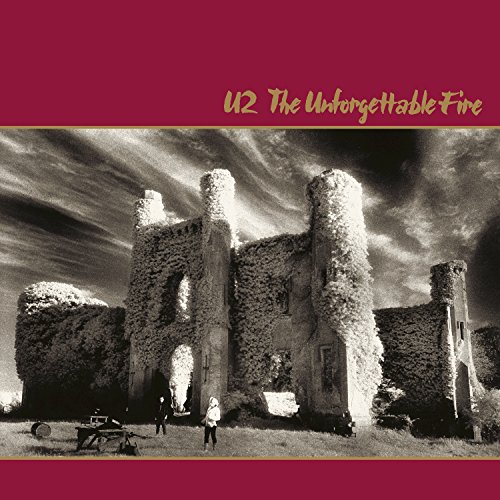
When the band prepared to record its follow up, though, they wanted to move in a different direction, with less bombast and sloganeering. They wanted to work with Brian Eno, who initially was unimpressed by the band, and was planning to fob them off on his engineer, Daniel Lanois. Ultimately, though, Eno was convinced, and he agreed to work with U2 (along with Lanois), and try to create a more mature sound for the band. Not surprisingly, considering the production team, the collaboration resulted in The Unforgettable Fire, which was a more atmospheric and subtle album, but without losing the power of War. The two records are probably my favorite U2 albums (most critics probably go with The Joshua Tree or Achtung, Baby!, and I like them, too, but not as much).

“A Sort of Homecoming” is named after a line by poet Paul Celan, who Bono had been reading, in a speech he delivered on October 20, 1960, about five months after Bono was born, when Celan was awarded the Georg Büchner Prize. In that speech, Ceran discussed Büchner’s work, art, and poetry, and in his view, the circularity of poetry. He went on to say (in German, but I found a translation):

Is it on such paths that poems take us when we think of them? And are these paths only detours, detours from you to you? But they are, among how many others, the paths on which language becomes voice. They are encounters, paths from a voice to a listening You, natural paths, outlines for existence, perhaps, for projecting ourselves into the search for ourselves. . . . A kind of homecoming. 

I’ll bet you never thought that we’d be discussing German literature when you started reading this music blog post, did you? But critics note that this song, and the whole Unforgettable Fire album, show a more Celan-like spiritual doubt as compared to the more certain religious themes of their prior work.

Although I've never read Celan (but have read a little Büchner), what grabbed me about the song was the sense of yearning, both lyrically and musically, that is palpable from its quiet, polyrhythmic opening, to its more intense end. Note that the song is not called just “Homecoming,” it is “A Sort of Homecoming,” so it is fitting that lyrically it works on so many levels—as a personal homecoming to Bono’s native Ireland, as the “homecoming” of his late mother, as a return from war (possibly the violence that was engulfing Ireland at the time), and as a spiritual renewal. And maybe more. Ultimately, though, the song ends with the comforting thought:

Oh don't sorrow, no don't weep 
For tonight, at last 
I am coming home 
I am coming home 

U2 played the song pretty regularly from 1984-1987, as they toured in support of The Unforgettable Fire and its follow-up, The Joshua Tree. There’s an excellent, if more triumphant and less atmospheric, live version from 1984, released on 1985’s EP Wide Awake In America (which is an odd title, because the song was actually recorded at a soundcheck before a show in London, with the crowd noises dubbed in later). But they basically ditched it from their setlist until a performance in 2001 at Slane Castle, in Ireland, which was described on one site as “somewhat shambolic, with Bono struggling to remember the lyrics.”

It made another appearance that year under very unusual circumstances, in Oakland on November 16, 2001. A devoted U2 fan and guitarist, Scott Perretta, had seen U2 pull people out of the audience on occasion to play guitar, and decided to see if he could make that happen for him. He went to the show on November 15 with a sign that said Me + Guitar = People? Knockin? Watchtower? Anything! and planted himself by the stage. U2 security asked if could actually play, because the band got pissed off when poseurs were selected and couldn’t. Assured by Peretta’s friends that he was legit, the security director said that if Bono was interested, he’d give Peretta a signal. But it didn’t happen.

Until the next night, when Peretta could see Bono and the Edge checking out his sign, and they invited him onstage. Peretta started playing the opening to “Homecoming,” which surprised them (since it wasn't on the sign, and wasn't as noted above, a regular part of their set), but they went with it, despite the fact that Bono couldn’t remember the lyrics.  He started ad-libbing about the song, crediting Van Morrison for its inspiration, before turning it into a prayer for the United States, which only two months before had suffered the 9/11 attacks. The crowd went wild. Here’s the audio of the performance. Here’s Peretta’s detailed recollection of the night, and here and here are short audience videos showing him onstage.

As Peretta wrote about that night: “I can die happy now.”

Thursday, December 14, 2017

The End: Until the End of the World


U2 - Achtung Baby [purchase]

One blog post does not contrition make. I speak of my dereliction towards U2 over the years. I need to acknowledge and affirm their musical supremacy as part of my pre-New Years absolution (or is that resolution?)

Bono - of course, a major force for many things worldly: active, vocal, often right. U2 as a band: incredibly tight. I recall I "met" U2 at about the 1985 Live Aid event. I had heard of, but not listened much to them before. Then - off and on for 30 years- they've been on the edge of my radar. Bono - always in the news, so it's hard to ignore his [critical, in multiple senses] sound/voice. As for the band as a whole, various albums/outputs have caught my attention as being damn fine, but never enough to "convert" me to being a U2 <fan>.
Always excellent? Yes.
At the top of my list? Rarely.
Respected? Always.

There's an element of intelligence to U2's music [partly stemming from their  respect for the world at large] that over-rides most any faults in personalities or musical composition that touches on their brand/style.

The official video for U2s <Until the End of the World> is such a today-relevant parody. It's  the end of the end [well ... the end of 2017 AD at least]... And the lyrics come from years ago ... well before we were in the position we are in today. My words begin to  sound like the verbage coming out of the White House yesterday. I mean ... say what [junk]?

On another level, if you follow the MSM (need I spell it out: main stream media), you'd be right to think the <end of the world> is right around the corner: from the US > N. Korea; from the Middle East > Jerusalem; from Africa > Boko Haram or other unknowns; from the UK > Brexit. Seems like they are all "off their rockers" - but they won't be paying the price from deep inside their radiation-proof bunkers. The justified/mitigated cost is the 50-300,000 collateral victims  figured into their equations. Or so it seems.

But at least it's not the end of the world - some of us WILL survive. This is the message that U2 returns to time and again.


The end .. it's not over until ...

Thursday, November 2, 2017

Train: Somewhere Down The Crazy River

 
Robbie Robertson: Somewhere Down The Crazy River
[purchase]

Writing for three different music blogs often results in crossover posts. I wrote about The Jam here recently, and have just submitted a piece about another Jam song to Cover Me. And I recently wrote about The Last Waltz at Another Old Guy, so I guess that I have Robbie Robertson on my mind.

Strangely, though, this song popped into my head, despite the fact that its title doesn’t have the key word in it, and would seem more appropriate for a Boat theme. And yet, it works.  It took Robertson 11 years before he released his first, self-titled, solo album in 1987, and tried to stretch beyond the Americana sounds that he played for so many years with The Band. The album was produced by Daniel Lanois, who was also working with U2 and Peter Gabriel at the same time, and all of the members of U2, as well as Gabriel and members of his band all appear on the album. Lanois’ typically dreamy, atmospheric sound pervades the album.

“Somewhere Down the Crazy River” is an odd song. Robertson only sang lead on two Band songs, and Levon Helm has claimed that Robertson’s mic was off during the Last Waltz concert (and the Internet rumor mill has his mic off during most Band shows), so it is not Robertson’s singing that he will be remembered for. According to Lanois, he secretly recorded Robertson telling a story about hanging out with Levon Helm in Arkansas, fishing with dynamite on hot nights. Because that’s apparently what one does. Meanwhile, Robertson was fiddling with a Suzuki Omnichord, which Lanois also recorded, and he superimposed the storytelling over that, creating the basic tracks for the song. In between the spoken word parts, which have a sort of Tom Waits feel, Robertson sings, perfectly well, I might add:

Catch the blue train
To places never been before
Look for me
Somewhere down the crazy river
Catch the blue train
All the way to Kokomo
You can find me
Somewhere down the crazy river

In each case, the second “Somewhere Down the Crazy River,” is sung, somewhat distorted, by Sam Llanas of The BoDeans. Also featured on the track are fine bass playing and drumming by Tony Levin and Manu Katché, both of  Gabriel’s band (among other things). And Bono is somewhere in the mix, too. It is curiously compelling, which is a tribute to the combination of Robertson’s charismatic, deep voice, his storytelling ability, Lanois’ production and the talent of the musicians. And despite its unconventional sound, it was released as the album’s first single, and was successful.

The video for the song (above), was directed, like The Last Waltz, by Martin Scorsese, whose infatuation with Robertson’s face was still in force. Robertson’s lust interest is played by Maria McKee, at the time the lead singer of the pioneering “cow-punk” band Lone Justice, who were a mid-80s “next big thing” that never happened. Which in itself was sad, since McKee’s voice is incredible (and her solo career never went anywhere, either). She sings on a different song on the album, and one can only assume that she was chosen to be in the video for her looks. When asked about her “acting skills,” McKee was quoted as saying: "... what did I do, I was just being licked by Robbie..."

Wednesday, October 19, 2016

My First Cassette: The Joshua Tree


purchase [The Joshua Tree]

In October of 1987 I purchased The Joshua Tree, so well matched for the most beautifully dark and moody time of the year in windy and wet-leaved Wisconsin. It was a 10-minute walk from the Exclusive Company record store on Main Street to my home on Hickory Street. I felt a foreign cool carrying home that cassette in the Exclusive Company’s famous black bag with silver writing. I had hoped I would bump into a girl who’d ask me what I bought at the Exclusive, and we’d open into a conversation about the hit songs. Of course at that time, nobody knew what else was on a tape unless you bought it and listened to it all the way through. That’s where the value was, of course: the surprises only you could access through the purchase.

Within the first year I had purchased The Joshua Tree, my first cassette and first music purchase ever, I probably listened to it over 100 times at night as I fell asleep. In this capacity, it was rivaled only that year by side one of New Order’s Power Corruption and Lies and side two of the Cure’s Standing on a Beach singles collection. I could only listen to one side because I had the kind of tape player that didn’t switch sides naturally and instead when it reached the end of a side it banged rather than clicked to a finish. If I had the energy, I’d wake up and flip it.  

I cried over getting dumped to this tape; I sprinted home with Sun Country Peach Wine Cooler on my breath to meet curfew listening to this tape, twisting the jack of my cheap headphones expertly to avoid it playing into only one of my ears; I psyched myself up before swim races listening to “Bullet the Blue Sky”, “In Gods’ Country” and “Where the Streets Have No Name”. I remember walking the five minutes to Sunday Night bible study feeling edgier from listening to it, ready to challenge my very friendly CCD teacher.  I get goose bumps now realizing how naïve and lame I must have sounded talking about how Bono didn’t stand for American politics nor institutionalized religion.

It took a couple months before I started fast-forwarding through the Joshua Tree in order to skip the hits and start with “Bullet the Blue Sky”.  Before the tape could bang to a stop, I’d get up and turn it over for the darker and more drifting side two, usually waking up again during the rolling “In God’s Country” and the harrowing “Exit”.

Bullet the Blue Sky, with Bono’s sudden grunts and groans, Larry Mullen Jr’s barrel-chested drum approach and the Edge’s thick guitar is audaciously akin to “Whole Lotta Love”. Even the melody is similar. In hindsight it’s also the tune that sonically, along with Bono’s spoken-word delivery (“…pealing those dollar bills/slappin’ em down ‘100’ ‘200’ and I can see those fighter planes…”), probably foreshadows 1991’s ultra-cool but tepid Achtung Baby.

Until this week I hadn’t listened to this nearly perfect album for over ten years and not until now did I realize how bluesy it is, almost a futuristic dark Americana sound. At the time I was mostly seduced by Bono’s conviction and the Edge’s guitar playing, which develops on the signature infinite guitar sound (originated by Michael Brook) that he started on the Unforgettable Fire. A lot of people had their hands producing this effort including Brian Eno, Flood, Daniel Lanois and even Steve Lillywhite. It’s a wonder it doesn’t sound disjointed.


Saturday, August 1, 2015

It's Elemental--A Mixtape of Sorts


What is most elemental about summer? For me, it’s getting out on the road and being gone gone gone.
Like one of our other bloggers, I make my life as an expat teacher, so travel is a pretty...well, elemental part of life. and I'm gone as much as can be.

Which doesn’t leave a lot of time for writing—at least for me. I’m a creature of habit when it comes to getting the words down, and I often lament that I’m not taking advantage of new environments to inspire my work into new directions. Great writers would scoff at that notion--that it's hard to write when you're on the road. Maybe I spend too much time seeking out and imbibing the local booze...
  
When I do travel, though, I love listening to music, especially music inspired by the places I am. When I went to Philadelphia a few years back for a ball game and a night of boozing it up at one of my favorite bars, 12 Steps Down  I listened to Marah’s brilliant rock epic Kids In Philly the entire weekend, and the music made more sense when backed up by the visual vibe of the streets it spoke about.
 (an aside: Marah? One of the greatest f@#king bands you've never heard--The LAST Rock 'n Roll band!)
Meeting your music this way—viscerally, tactically, by-hand—is the best way to hear what it means.

Same goes for this batch of tunes I’ve picked out for our theme this month: elements. Each of these are songs I’ve dug into deeply in their proper places, by inspiration, by the fact that the song was written in or is about the place I heard it, or…just because it made sense to associate the place with the song. And speaking of, that is another great way to connect to a tune: loving it because of the time and place you first heard it, and forever associating it with the place. For example, I can not hear OutKast’s “Hey Ya!”  without going back to Spoleto, Italy 2003, when I was falling in love with the Umbrian hills and “Hey Ya!” was coming out of every radio I passed. It was the soundtrack to a great time. Always will be. And even if I don't particualrly like the song, the association has the magical, unnameable resonance forever attached to it, so, I will always listen when it comes on the radio.

That being said, here is a small selection, culled from a much longer list, from the strange soundtrack of my life with a brief explanation of how each song came to achieve its own unique significance.  (Making sure I could satisfy the ‘elements’ requirement made this all the more interesting…)

Iron Man by Black Sabbath—The Pawnshop, Woodbridge, Virginia.
There was a pawnshop right next to the Music and Arts Center where I first took guitar lessons. I was in 7th grade at the time, and while the guitar lessons were great, the pawn shop was it’s own wonderful treasure chest. Among the usual pawnshop fare—guns, jewelry, power tools—the place had a huge section of vinyl for sale. This is where I bought AC/DC’s Backin Black and Dirty Deeds; LedZeppelin Four; and Black Sabbath’s Paranoid, which featured Iron Man, a strange little exercise in sci-fi headbanging. And the main riff , the one everyone knows, was pretty much the first thing any nascent guitar student learned. When I hear Iron Man, I always think back to rushing headlong across Rt.1 with my pocket full of saved up quarters, wondering musical gem I was about to find.


 Mercury by Counting Crows—Outerbanks, North Carolina
This gem from Recovering the Satellites is a ghost walking in a blues funeral suit. Recovering the Satellites was my constant soundtrack after graduating from college. Released in October of 1996, this disc was a perfect accompaniment to a quiet winter of near-total solitude when I lived in Nag’s Head, North Carolina, trying to figure out what to do with my life. The album, soaring and contemplative, full of affirmation and dark, whispery sadness, was the perfect turbulent collection of songs I needed to get from one ending to a new beginning. It was also a different, sometimes harder and much more complex sound than their debut, August And Everything After. And where that album spun gold out a feeling of nostalgia for American solitude and Van Morrison-esque lyricism, Recovering nearly roared to life at moments, and for this listener, cemented Counting Crows’ reputation as one of America’s finest bands. Mercury , one of the quieter tracks on Recovering, is a song about a girl who is unstable, and whose changes of mind and heart put the speaker through that special hell known as ‘love’, and though she changes like mercury, ‘she’s alright with me…’ Multilayered slide and whisper guitars and a rhythm like a creaking ship on the water, Mercury showed the band was capable of brilliant musical chameleonism, and they made a brilliant career out of exploring and expanding rock n roll soundscapes. And Mercury will forever remind me of sitting on a cold, windy beach at night, with my guitar, trying to capture not only that sound, but also a clue.

Silver and Gold, U2—Cape Town, SA
Another bluesy stomp, with the politically charged lyrics that are now almost an afterthought when it comes to the definition of U2’s sound and themes. Originally released on a compilation called Artists United Against Apartheid, with Keith Richards and Ron Wood, the better-known version appeared on Rattle and Hum. Both versions smoke—but it is Bono’s lyrical reaction to apartheid politics, the boom drop drums and the Edge’s lightning sweep guitars make this a loud and strident statement. When I was in South Africa, I kept hearing Bono’s famous refrain, “Am I bugging you? I don’t mean to bug you—OK, Edge, play the blues!” After listing a imagistic litany of grievances and abuses that dwelled in black and white on subjects like rich versus poor and freedom versus slavery, Bono’s question to the listener is hard to ignore. The song is literally on fire, taking about fevers burning white hot, and doing its best to explain to those who might not understand, why it is the oppressed is ready to take up arms against an oppressor.
One doesn’t need to study too long to know that sad tale that is modern South African history. The sense of wrong doing is palpable when you go there and
It’s hard not to shake your head in terrible wonder at what happened in South Africa for so long. Ghost stories about troubled times that seem like they might never really go away—but Bono’s take—that money and greed will always trump good will and morality—rings particularly true and rang in my head the entire trip.

Iron Lion Zion- Bob Marley—St. Anne’s Parish, Jamaica

Honestly, I never paid attention to Marley until I went to Jamaica and stayed off-reservation, so to speak. Bob Marley’s Legend was a prerequisite requirement for college admissions and honestly, every tool I knew that wore frat letters could sing Redemption Song by heart, and thought Get Up, Stand Up was all they needed to know to get a poli-sci degree. Marley was realpolitik to most of the kids I partied with and I thought I might crack if I had to dance another slow groove with some girl to Waiting In Vain. So, I never listened. Ever. Unless I was at…oh, any party ever.  Fast forward a few years later, my misspent college days far behind me, I got the opportunity to in a private seaside mansion in a pretty remote part of Jamaica, on the shore in Saint Anne’s Parish, where Marley was born. It was a pretty amazing trip—far away from the resorts and the pale, never- smoked-a-jay-tourists lounging it up in Montego Bay and really, just kind of out there. No Internet, no phone—just the vibe of solitude and the sound of the surf. Honestly, with what I know about the place now, I probably would never stay that far away from any kind of security, but at the time, it was pretty cool just to be in the middle of the island, walking to the villages, snorkeling in the open water and fishing for our dinner every night. Someone in our group was a big Marley fan, well beyond the greatest hits, and when I said I didn’t dig the music, he told me to put Rastaman Vibration, “dig into the stuff that doesn’t get played all the time.” By the end of the week, I’d gone deep, devoured all the LPs, and heard the songs that never got played on the college radio station.  By pure stroke of luck, he’d brought all his CDs with him—this was pre-ipod and mp3 days. So, in fitting with our theme, I pick Iron, Lion Zion as my representation of this time and the amazing memories I have of Jamaica. The track comes from the Songs of Freedom box set, which is where anyone not interested in hearing Legend for the billionth time needs to start. And the song itself is a good primer for the complicated political and religious belief system that mark so much of Marley’s music. Rastaman Vibration remains my favorite album by Marley, and even though, I don’t listen to Legend on principal no matter what song happens to come up by the man, I will always be reminded of good times on a strange, quiet part of the island of Jamaica.


...As I write this, I am waiting to get on a plane to head back to America. While I’m excited to see home, see my family, drink amazing IPAs and eat Mexican, I wonder excitedly at what new music I will discover on this trip and hope to find yet another perfect song that will define this summer and all the strange places I will be…


(Hint—I’ve been digging hard on the Dead this summer, so….and the new Wilco…hmmm….? What's next?)

Monday, June 22, 2015

fireworks: U2/Promenade


U2: Promenade
purchase [promenade]

Yes, the fourth is still a few days away, but the upcoming celebration was a part of the thought behind our current theme of fireworks. July 4th ... there may be reunion somewhere in your fireworks, but I'll make no further attempt at a conceit/an effort to combine these two themes. Just a fire-related thought or two to get us rolling ...

Things in the sky above use are naturally spacy (as in ether = air?). You look up. You see the stars. You see lights. You see beyond.  And it's often even more awesome/beautiful when there are human-made colors and lights above your head. For example, airplanes, satellites and fireworks.

This is one of those songs that embodies the qualities of the air/the sky: As in the lyrics, as in the stars above - there is a spiral to the guitar, to the music. The song makes use of a repetition that seems to embody the motion of the stars, to lights in the sky: to the continuity of "earth, sky, sea and rain". To me, it calls to mind the roman candles of its lyrics, lights that spiral and spin through the heavens and enthrall us from below.

For some reason, this song also called to mind a realization that there is a similar effect in Midnight Mile off of Sticky Fingers - part of it is that guitar, part of it is the vocal style and part of it is the ethereal lyrics. Cf:


Saturday, April 7, 2012

Bible Stories: 40

U2: 40
[purchase]


Raised as the child of UCC (United Church of Christ) missionaries in a Moslem country where proselytizing was a crime, I come at religion from a different perspective. (Don’t we all?) I haven’t had much to do with formal religion for nigh on 40 years, but I did get a healthy dose of Protestant ethics and teachings in my childhood. And although I hardly ever even make it to Christmas Eve services any more, I still consider myself to have a religion. However, in the words of Taj Mahal: “ain’t nobody’s business but my own.”

We (Christians, Moslems, Jews) learn about a man called David (lived ~ 1000 BCE), who sang and played the harp for Saul when he was feeling blue (1 Samuel,16:23). This is the same David who killed Goliath - see Any Major Dude’s comments about the God of the Old Testament. Various biblical studies comment on David’s musical proclivity: it is partly through references to him/his singing that we know about singing as a part of worship. He is credited with writing almost half of the Psalms. There are references to his “crying” his songs that make me reflect on how the Moslem imam/pastor cries out (actually: sings) the call to prayer 5 times a day.

I noted above that we all come to our religion from different places. U2’s Bono is well known for his charitable work – a “sure sign” of religiosity. My research notes that his dad was Catholic but his stronger childhood religious influence was from his mom, an Anglican. However, like myself, his religion is personal. He says:

I'm a believer, but religion is the thing when God, like Elvis, has left the building. But when God is in the house, you get something else.

In his introduction to Canongate’s Pocket Canon printing of Psalms, he further explains:

Psalm 40 is interesting in that it suggests a time in which grace will replace karma, and love will replace the very strict laws of Moses (in other words, fulfill them). I love that thought. David, who committed some of the most selfish as well as selfless acts, was depending on it. That the scriptures are brim full of hustlers, murderers, cowards, adulterers and mercenaries used to shock me. Now it is a source of great comfort.

The lyrics of 40 from U2’s War album (1983), like numerous other U2 songs, include overt biblical references. In the Bible, Psalm 40 says, “He lifted me out of the slimy pit, out of the mud and mire; he set my feet on a rock and gave me a firm place to stand.  He put a new song in my mouth …” U2 sings, “He lift me up out of the pit, out of the miry clay.. He set my feet upon a rock, and made my footsteps firm …”


Saturday, February 11, 2012

1988: Love Rescue Me


U2 w/ Bob Dylan: Love Rescue Me

[purchase]

U2's 1988 two-disc release Rattle and Hum is a hybridized bastard of an album, designed to accompany a rockumentary of the same name, with live cuts, b-sides, and revisionings of the U2 back catalog mixed with a handful of new originals, borrowed fragments such as Jimi Hendrix's Star Spangled Banner, and cover songs performed with B.B. King, Bob Dylan, and New York gospel choir The New Voices of Freedom completing the journey of exploration of American roots music which previous studio album The Joshua Tree had begun, while acknowledging the confusion which the band had experienced in attaining major mega-star status on tour for that previous album.

Though I recognize that this allows us to interpret any resultant lack of cohesiveness in the tracks and performances as deliberate artistic statement, and though I still have great affection for Achtung Baby, which would follow a few years later, in many ways, the disjointed result of this mixed-source approach to album-and-film creation is nonetheless a mess, making it easy for purists to mark it as the moment when the Irish band jumped the shark, turning away from the angry UK-centric political noise of their early post-punk incarnation to a broader theme of global social justice couched in sentimental love.

Notably, however, the critical ill-will that received the album and film release were totally unmatched by the global fan reception to the recently-elevated superstars, making this one of the best-selling albums of U2's career. In this way, the very fame which so confused the band and confounded the potential of this recording led to huge profit, thus cementing Bono's ability to spend the next two decades at the preening, pretentious forefront of social policy-making without having to worry about making sense on stage.

But all whole-album exploration aside, having recently performed it in a UU church service with full choir, I find a powerful gospel song for the ages under the lurching, over-emotive, genre-drifting production choices of the original Love Rescue Me, which moves from hollow folkrock balladry to Springsteen-esque sax-rock in mid-song only to collapse into an oddly quiet coda at the end which sounds like it should have faded out a verse earlier. The performance may be difficult to love, but the lyrics (cowritten by Bono and Dylan) and melodic composition (attributed to U2) are stunning in their simplicity. Subsequent choral versions of the song, such as the amazing version recorded by international music education and support foundation Playing For Change, are revelatory exposures of the song's core potential, and should be listened to immediately afterwards to cleanse the palate and complete the appreciation process.

Monday, June 28, 2010

New York: Angel of Harlem

Billie+Holiday


U2: Angel of Harlem

[purchase]

Harlem is a well-known Manhattan neighborhood, north of Central Park and Columbia University, tucked between the Hudson and Harlem Rivers. Some call it the home of Black America, as migration of African-Americans from the south to industrial northern cities, and especially New York City, took hold in the twentieth century. The 1920s and later ushered in a cultural explosion of Black expression in music, art, and literature, known as the Harlem Renaissance. Jazz was a huge part of this movement.

Billie Holiday, U2's "Angel of Harlem", grew up in New York City and found fame in the Harlem nightclubs. She had a terrible childhood, a hard life, and an even harder death, but she still managed to create a legend for herself. U2 pays tribute to Lady Day in this 1988 song, from Rattle and Hum.

Sunday, October 5, 2008

Dylan Covers: All Along The Watchtower


Dave Mason: All Along The Watchtower

U2: All Along The Watchtower

[purchase]


All Along The Watchtower was written during Dylan's reclusive stay at Woodstock following his motorcycle accident.  Following Blonde On Blonde, and during the Summer of Love while every band on earth was trying to sound as big and important as they possibly could, it must have been a bit of a shock when Dylan released an album with only a bass, drum, and guitar. None of the songs on the album have a chorus, and most of the lyrics had allusions to biblical and religious figures and parables.  Like much of Dylan's work, this is definitely an album out of it's time.

Charlie McCoy, the bass player on the John Wesley Harding album, said, "Kenny and I were amazed at the change from Blonde on Blonde to John Wesley Harding.  The recording was different.  Of course, he sounded different.  He looked different.  We just flew through that stuff."  The three John Wesley Harding sessions totaled nine hours (while it took The Beatles five months to record Sgt. Pepper).

Again from McCoy, "We went in there and knocked 'em out like demos.  It seemed to be the rougher the better.  He would hear a mistake and laugh a little bit to himself as if to say, 'Great, man, that's just great.  Just what I'm looking for.'"

Jimi Hendrix had a huge hit with his cover of All Along The Watchtower only six months after the release of the original, but Jimi has already been featured on this theme, so I'm shying away from him.  Instead, here are covers by one of the founding members of Traffic, Dave Mason, and by U2.  This song has also been covered by at least 10 other artists.


Wednesday, May 28, 2008

1984: A Sort of Homecoming


U2: A Sort Of Homecoming

[purchase]

To my knowledge no one has broached the topic of U2 yet on this blog, and I'm a little hesitant to be the one to do it.

Here's the deal: To appreciate any art, music included, it's important to remember the time-context in which the piece was produced. Sgt. Pepper released in 2008 might be a pretty cool album, but the same album released in 1967 was landscape-changing. The Ramones' initial release would sound simple and over-done now, but in 1976 it was an oasis in a desert (or so I'm told -- I was only nine).

With that in mind, I think it's very difficult at this point in history to see U2, the band, the way they were in 1984 when we are so accustomed to seeing U2 the band, the ego, and the political/media machine as they are now.

I know all too well what they have become. I have watched them as their musical chops have diminished even as their egos and their popularity have, paradoxically, exploded. They are not a great band anymore, at least not in my opinion. They are really not even a good band any more. But, c'mon -- to talk about 1984 without talking about U2 would be ridiculous. They were definitely a great band back then.

I think you have to be at least my age, or close to it, to remember U2 before they had "greatest band in the world" status. They were never a punk band, as they laughably claim now, but they were incredibly unique, powerful, and at times even moving. I saw them on their Unforgettable Fire tour in San Francisco in 1985. They played on a small stage that was completely devoid of giant lemons and shopping carts. They all wore t-shirts and jeans. If I remember correctly the tickets were $9. And they played to the crowd more than any band I had ever seen.

So, close your eyes and see if you can block out all of the images (and sounds) of the last 10-20 years and hear the music of U2 when the music was good, and when the music was still what it was about.