









Showing posts with label lynyrd skynyrd. Show all posts

Friday, September 23, 2022

The Road: What’s Your Name?

Lynyrd Skynyrd: What’s Your Name?
[purchase

Growing up in the 1970s, as I did, the life of a rock musician seemed pretty fucking cool. Especially the famous ones, who got to jet around the world, perform in arenas and stadiums, have all sorts of fun contract riders to attend to their every anticipated needs, and apparently make tons of money. (Although in reality, for most touring musicians, it wasn’t this great) It seemed like the essence of freedom (although it probably became a bit of a regimented slog at some point, or there wouldn’t be so many life on the road is a bummer songs.) Plus there were the drugs, which I knew could be deadly or at least damaging, but seemed like they could be fun in moderation. And the groupies. I’m betting that a large number of people who became rock musicians did so in some large part for the promise of sex, with a different conquest in every town. A concept which was different in the pre-AIDS era.

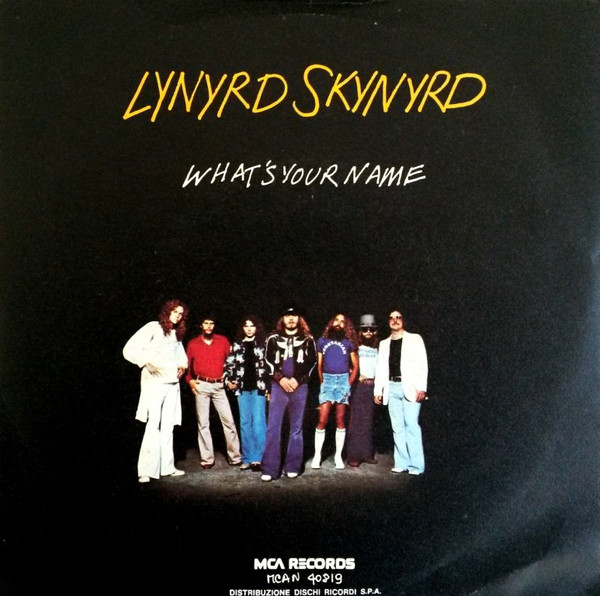
Which brings us to our featured song, 1977’s “What’s Your Name?” by Southern rock masters Lynyrd Skynyrd. I wrote a long piece about the band HERE, so if you want some background on them, including the whole Neil Young “controversy,” check it out, and we’ll still be here when you are done. 

The song, from the band’s final album recorded before the plane crash album (but released just after), Street Survivors, is based on a true incident (which did not actually take place in Boise, Idaho, however), when the band was thrown out of a hotel bar while on tour because, as the song says, “one of the crew had a go with one of the guests.” Repairing to their rooms, the narrator asks a woman (ok, a “little girl”) to join him upstairs for a “drink of champagne.” He’s not looking for a deep, meaningful relationship, but rather, as stated in the opening, he’s looking for “a little queen,” and he intends to “treat her right.” Which I think we can all agree, means sex. And, he’s not bullshitting her, either—he’s “shooting you straight,” about his intention. 

Fast forward to nine a.m the next morning, and our champagne quaffing musician is up suitably early to prepare for a 600 mile ride to the next show. Apparently, the night went well-as he says, “it sure was grand,” and offers to get his bedmate a taxi home. And he suggests that they get together when the band swings through town the next year. There’s only one real problem—he doesn’t remember (or never knew) her name, so he asks for this critical piece of information.

“What’s Your Name?” is a fun rocker, and reached No. 13 on the Billboard Hot 100, posthumously. 

Now, bear with me for a second. At the risk of blowing any feminist cred that I’ve achieved, I’d argue that by 1977’s standards, “What’s Your Name?” is fairly progressive, despite its hint of underage sex and anonymous coupling. As far as the underage part goes, I’m willing to consider that “little girl” is a term of endearment, not a literal description. And yes, it’s a bit sexist, but again—1977, and rock musicians. Secondly, I’d argue that the song depicts a fully consensual relationship—there’s no evidence that the woman was already incapacitated when the singer offers her champagne in his room, and he’s clearly “shooting her straight.” Third, the next morning, he’s complimentary and polite, offers to call a cab, and seems to sincerely want to see her again the next year. 

Look, I can also see how this could be interpreted differently (I found one source referring to the song as “perpetuating misogynistic fantasies”)—I’m not an idiot, and I have a wife and daughter (and mother-in-law) who graduated from women’s’ colleges —and by 2022 standards, there are certainly some issues here. But if you actually read some of the stuff linked to in the Cover Me piece about how (at least the pre-crash version of) Lynyrd Skynrd’s politics have been misinterpreted, again through the lens of the 1970s, I’d argue that simply tarring them as a bunch of sexists as a result of “What’s Your Name?” is at least a little bit unfair. I mean, they very well might have been a bunch of sexists, but not just because of the song.

Sunday, June 27, 2021

Opposites: Southern Man/Girl From The North Country

Neil Young: Southern Man
[
purchase]

Bob Dylan: Girl From The North Country
[
purchase]

Bob Dylan w/Johnny Cash: Girl From The North Country
[purchase

Watching the Trump Party and its propaganda outlets whip themselves into a frenzy over what they are mischaracterizing as  “Critical Race Theory,” either due to political calculation or ignorance (or both), when what they are really afraid of is not the actual theory, but the “Truth,” could easily send me spinning off into a discussion, centered around Neil Young’s 1970 song, “Southern Man,” about institutional racism, the Civil War, and the Lost Cause myth, but I’ve written about that before. 

Instead, let’s (mostly) talk about the two songs I’ve chosen for the Opposites theme which are basically double opposites—one about a southern man, the other about a northern woman (although, if gender is really a spectrum, are they really opposites?) But there are even more things about the songs that are opposites. 

Young’s “Southern Man,” as most readers of this blog probably know, was released in 1970, at the height of the anti-war and civil rights unrest in the country. It is an angry song, about racism and slavery, and features harsh, searing electric guitars. (It also famously inspired, at least in part, Lynyrd Skynyrd’s “Sweet Home Alabama,” but there really wasn’t any sort of rivalry between Young and Skynyrd, who were mutual fans of each other. Really.) 

Bob Dylan’s “Girl From The North Country,” on the other hand, released in 1963, is a wistful, acoustic love song, maybe about one of Dylan’s actual former girlfriends, or some of them, or all of them, or none of them. While it didn’t inspire a response song, it did inspire Dylan to record a duet version of the song with Johnny Cash, which was released in 1969, about a year before “Southern Man.” 

Despite the Opposite features of the songs, there was great mutual respect among Young, Dylan and Cash. They’ve performed together and covered each other’s songs, and Dylan and Young were both on Cash’s TV show (where Cash and Dylan sang “Girl From The North Country” together—you can read more about it, and watch the video here.). The Young performance was part of a a special episode of Cash’s show, shot at Vanderbilt University. It focused on students’ issues, including drugs, and Cash openly discussed his own problems, before introducing Young at the Ryman Auditorium, where he performed “The Needle And The Damage Done” and another song. 

I’m guessing that was pretty much the opposite of what many of Cash’s country music fans would have expected. 

A small footnote—after the Ryman performance, Young and his guests, Linda Ronstadt and James Taylor, hit the studio and worked on songs for the forthcoming Harvest album.

Friday, July 12, 2019

ALABAMA:THE BLIND BOYS OF

Being neither resident in the state, or even the country, my observations from afar lead me to feel Alabama doesn't get much good press, even in the medium of popular song. Especially in the medium of popular song. And when the only two positives come from Al Jolson and Lynyrd Skynyrd, you know you're in trouble. (Nah, I take that back about Skynyrd, I bloody love that song, but it only exists as an attempt to justify the place from the ire of others. But we all know that. Right?)


Moving swiftly on, there is one Alabama icon that really does make me gleam, that being this astonishingly lasting vocal group from the state. Granted it can not have been an easy start in life, born both blind and black below the Mason-Dixon line in the pre-war years of the great depression. But maybe, just maybe, being at the now anaethemically named Alabama Institute for the Negro Blind gave these boys a start they mightn't have otherwise achieved. For they were boys, just 9 years old as they gave their first concerts, in the school chorus as the Happyland Jubilee Singers. The idea of blind gospel singers seems somewhat of a lame trope these days, a cliche to fill gaps in our knowledge, yet it was actually quite a big deal back then, the Happyland Jubilee Singers getting their big break from a 'Battle of the Blind Boys' music competition. (Beat that, Simon Cowell, although X Factor does increasingly feel it is muscling in on disabilities.) Up against the Jackson Harmoneers, the publicity gave both bands a boost, as they became the Five Blind Boys of Alabama and the Five Blind Boys of Mississippi respectively, touring both together and, sometimes, as each other. The Alabama version got a record contract and a hit, in 1948, and that was the end, all but, of the rival version.

Gospel was big in the 1950, and it was to this genre the boys stayed true. Original founding member Clarence Fountain had this to say about this decision. Of course, as the decades have rolled by, there have been many instances where they have seemed to sing of more secular themes, but never have they sung a lyric where an ambivalence about to whom the song is addressed cannot be drawn. Thus, as the 60s became the 70s, with R'n'B and Soul taking great strides through the white dominance of the day, so the Blind Boys were there, reminding all as to where these musical forms had a common home. (Indeed, how many of the giants in those styles hadn't started off in the church? Aretha and Al were certainly no exceptions.)

It wasn't because any of this I was drawn to the group, almost more despite the religion. I have little truck with it myself, probably since, as a teenager and when asked, ahead of having my appendix out, my father proclaimed me as heathen. (The nurse duly wrote that down.) But I do love a harmony vocal, but, rather the honey smooth, the more raggedy the better, think Lindisfarne and the Jayhawks, so when the Blind Boys starting cropping up on albums I was listening too, my attention was picqued. These were often tribute albums, whereby the great and the good would queue up to pass cover on their peers, such as Richard Thompson. And then came Solomon Burke's majestic comeback in 2002. So, when in 2004 they collaborated with Ben Harper, more so because of their involvement, this was a record I had to have: 'There Will be a Light'. And again, in 2005, with 'Atom Bomb', they having been now tucked under the wing of Peter Gabriel's Real World record label. Astonishingly, a full 50 albums into their career, suddenly they were hot property, filling concert halls both alone and in cahoots with musicians from all walks and at all stages of their careers. True, there have had to be changes along the way; there are none of the original 5 left, let alone performing, newer members snucking in seamlessly over the decades, different voices, different timbres, the overall sound, the overall performance remaining little changed. The current line-up does however still include Jimmy Carter, also a pupil at that Alabama Institute, but too young for their debut in 1939. Whilst a touring member ahead of that time, it was only officially in 1982 that he made his recording presence as a member. Nonetheless, his legacy with the originals is sufficient to consider him as one. Here's his take on it all. (Clarence, mentioned above and in the interview, died last year.)

I can't even begin to give full due acclaim to this wonderful institution, coming so late to their game, having to be born and whatnot, but, scattered both within the piece and below, enjoy some musical heaven.


Finally, and with enormous excitement, I can report I am finally getting to see them live, next month, at the Cambridge Folk Festival, here in the U.K., alongside Amadou and Maryam, blind husband and wife world music titans from Mali, who themselves met similarly, at Mali's Institute for the Young Blind. I cannot wait.


Any of these....

Saturday, January 12, 2019

In Memoriam: Ed King


purchase [ Second Helping album ]

It seemed to me that there were a lot more choices for the 2017 <In Memoriam> theme than for 2018. The Ranker website seems to prove me wrong: 37 to 35. Wonder why I got that impression.

Looking at the  Ranker list, I first thought: Charles Aznavour?
As an expat, I am probably more aware of M. -(that's Monsieur) Aznavour- than your average American, but .. I couldn't claim no affinity, no ties beyond having heard a lot of him as I grew up.

Then, it occurred to me that - considering that I (a) posted once about him [indirectly] this year, and that (b) I performed the same back in November, Ed King might be my best "go to" for this theme.

If you go back a ways in time, you'll find Ed King playing with Strawberry Alarm Clock back in the '60s.


 And then he played with Lynyrd until he couldn't hack it no more in the mid '70s [and there is a decent film about the experience called If I  Leave Here Tomorrow, preview below], fortuitously leaving before the horrible crash that took the lives of many of the band members.


Howsomever, I confess that I couldn't have named Ed King, or for that matter, any of the Lynyrd Skynyrd band. Knew of them? Sure. Ronnie Van Zant. More than that? Not much. But, once again, for my part ... the value of SMM - another chance to learn a little more than I knew yesterday.

Wednesday, October 24, 2018

Homecoming: Sweet Home Alabama


purchase [Sweet Home Alabama]

If you are talking about coming home, you cannot dismiss this. Granted, I already have a name for posting the obvious, but this one belongs here.

The song was mired in the polemic Neil Young raised about what does the "South" mean - both to Southerners and to those outside, What does it mean to fly the Confederate flag? And then ... in response, Lynard Skynard was trying to send Neil Young (and the world) a message. 40 years down the road, so much has changed (not just in rock), but I do wonder what these guys were thinking when they penned these lines:

Watergate does not bother me
Does your conscience bother you

You could not survive that line these days, but we <forgive> it as a classic,

The linked video is relatively amazing for its time ('74): it is pretty close to synced on time as it cuts from scene to scene (No small feat for 1974), and it includes modern features such as focus on the lead guitar during the solo (all recent innovations back in the '70s)

As to the theme ...
There are few things more hurtful than an attack on your home. And I don't know if that is what prompted the song, but it sure seems so, The lyrics say as much: F*&ck you Neil Young, we have our own narrative of our history. Because, after all the "truth" of history left to later generations is in the words that the present generation chooses to write - fake or not...


And what to make of the very discernible female backing vocals that are equally not visible anywhere in the clip. A classic piece, that, like most of its associates, falls far short of today's standards.

Wednesday, March 28, 2018

Steps & Stairs: Gimme Three Steps


Lynyrd Skynyrd: Gimme Three Steps
[purchase]

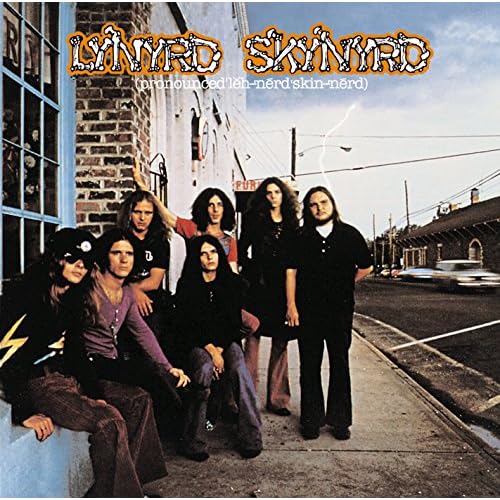
A few years back, I wrote a piece for Cover Me that was timed to run on the anniversary of the plane crash that killed three members of Lynyrd Skynyrd, Ronnie Van Zant, Steve Gaines, and his sister Cassie Gaines, along with the pilot, co-pilot and the band’s assistant road manager. The rest of the band, manager and crew all suffered serious injuries. I melded the blog’s In Memoriam series with a Full Album treatment, focusing on the band’s debut, Pronounced ‘Lĕh-‘nérd ‘Skin-‘nérd. One of the things that struck me as I was writing it was that a number of the songs were drawn from the remarkably colorful life of singer Ronnie Van Zant, including “I Ain’t The One,” meaning “the father,” "Tuesday's Gone," about the change in his life following a major label deal, and, most amusingly, “Gimme Three Steps.”

The song recounts a true incident when Van Zant used a fake ID to enter a bar in Jacksonville, Florida and made the mistake of dancing with another man’s wife or girlfriend. When the aggrieved gentleman appeared to be reaching for a gun, Van Zant told him: "If you're going to shoot me it's going to be in the ass or the elbows... just gimme a few steps and I'll be gone." He ran out of the bar and back to the truck where his bandmates Gary Rossington and Allen Collins were waiting. They reportedly wrote the song that day, possibly in the truck. It is unclear whether that bar was The West Tavern, later known as the Pastime, or another bar called The Little Brown Jug, whose name conveniently allowed them to rhyme it with “cutting the rug,” but it hardly matters. In addition to being a great tune, what makes the song a classic is Van Zant’s presence of mind to ask for a head start, then beating a hasty, panicked retreat when circumstances resulted in his getting that lead preventing him from getting shot. Because, if nothing else, if he had been killed in that bar, not only wouldn’t we have “Gimme Three Steps,” but the last song on Pronounced would never have been recorded, and concertgoers would have nothing stupid to yell out.

If you have read any of my stuff here, there, or there, you know that I’m a huge fan of the Drive-By Truckers, and the album that broke them to a wider audience, Southern Rock Opera, is filled with Skynyrd references and allusions. They’ve even been known to work a little “Gimme” into one of their songs, live. And here’s something I just found, a Village Voice article from 2002 about the Truckers, after the release of Southern Rock Opera, entitled "Gimme Three Stepsisters," which gets into some of the Skynyrd stuff. (Not a bad article, despite getting the drummer’s name wrong).

And, if you read my stuff here, there or there, you also know that I’m a big fan of Uncle Tupelo (and the bands that formed from its demise). Their last gig ever ended with a sloppy cover of “Gimme Three Steps” featuring Bottle Rockets singer (and former Uncle Tupelo roadie), Brian Henneman, on lead vocals.

Thursday, January 25, 2018

Sinking & Falling: Free Fall


Dixie Dregs: Free Fall
[purchase]

One of my minor pleasures is when I get to write about a band that I like, but which has never been featured here. The Dixie Dregs fit that bill. And speaking of Bill, the only time I saw the Dregs was, inexplicably, in a dive bar in Kingston, New Jersey in August, 1981, with some fellow WPRB staffers, including my friend Bill Rosenblatt. (Inexplicably, because setlist.fm shows that a couple of months before that show, they played Pier 84 in New York, a fairly large venue, the night after playing the Mann Music Center in Philadelphia, another large venue, and a couple of weeks later, they played the Lakeland, Florida, Civic Center, which holds 8,000 people.)

My memory of that show is basically limited to the fact that they were incredible, especially in a place the size of a large living room, and that I was able to talk with them, go “backstage” (the kitchen, if I remember) and drink their beer. Bill’s more detailed memories of the evening can be found here. We did promote some other shows at the Tin Lizzie, but this was the only “big name” that I remember being there (although the Internet has evidence that Jorma Kaukonen played there about a year later, after I graduated).

It is also fun to be able to follow my first post in this theme, about a ska-punk song, with a sunny, fusion song. The Dixie Dregs were one of the best fusion bands of the 70s and early 80s, and as is my habit when someone else has written something better than I could, I’ll quote Rosenblatt:

The Dixie Dregs were a band from Georgia that played jazzy instrumental rock in a style that sounded sort of like Kansas without the vocals, or Lynyrd Skynyrd meets Mahavishnu Orchestra.. . .Their leader was guitar virtuoso Steve Morse, who would later join Kansas and Deep Purple when those bands reached their “playing the zoo” stages. 

Although they were mostly from Georgia, they really came together as a band at the University of Miami, at a time when musicians such as Jaco Pastorius, Pat Metheny (and future members of his band, Dan Gottlieb and Mark Egan) and Bruce Hornsby were studying and/or teaching there. After self-releasing an album of demos, they were signed by Capricorn Records, the Allman Brothers’ label, and released their first official album, Free Fall. The title track, which leads off the album, is a good example of their music—generally upbeat, complex but not annoyingly complicated, impeccably played, and with a southern twang. And no vocals (until an early 1980s bad experiment with guest vocalists…..). I found a review of the album that refers to the song as "a jazz-country-funk breakdown with a digital synth alien laser beam effect solo, whilst a footstompingly good delay-drenched electric violin follows up with a pentatonic jam." 

The Dixie Dregs (briefly officially shortened to The Dregs late in the game) continued to release a string of similarly excellent albums, despite some turnover in personnel, until 1982, without much commercial success despite critical acclaim and a few Grammy nominations. Because instrumentals are a hard sell anyway, and certainly during the 80s. There were a few reunions in the late 1980s and early 1990s, but basically, the band has been quiet. Until now—a tour of the Free Fall lineup has been scheduled, and it doesn’t look like they are playing any place like the Tin Lizzie.

Friday, May 12, 2017

Songs From Movies About Musicians: Gimme Shelter

[purchase 20 Feet From Stardom]

One of the best documentaries about musicians was 2013’s 20 Feet From Stardom, which focused on the background singers that we all have heard, but often don’t recognize by name. Not only was it interesting and filled with great music, the film addresses one of my regular writing subjects—why are some incredibly talented musicians not as famous as they probably should be. 20 Feet discusses many of the reasons—bad advice, bad luck, bad decisions, and even a lack of that certain something that allows you to traverse that 20 feet. I’ve mentioned the film before, in my piece about Darlene Love, who is probably the most famous of the singers featured in the film.

But maybe the most famous vocal discussed in 20 Feet, and for me the most memorable segment, was about Merry Clayton’s searing “rape, murder” vocal part in the Rolling Stones’ “Gimme Shelter.” Luckily, I don’t have to describe the scene in detail, because the video above is a clip from the movie, in which Clayton and Mick Jagger discuss the circumstances. But if you can’t watch the video, in short strokes, Clayton was called out of bed to sing for a band that she hadn’t heard of, was whisked to the studio, pregnant and in her pajamas, to add a searing and unforgettable part to what would become a classic song. Not only are the vocals powerful, the way her voice cracks only adds to the emotional impact of the part. In the video above, you can hear the isolated vocal tracks, which is cool. Here’s Clayton’s cover of “Gimme Shelter,” featuring occasional Stones sideman Billy Preston:


Clayton, born on Christmas Day (which led to her name) in New Orleans, was a veteran singer by the time the Stones roused her from bed. Her powerful vocals were also featured on, among other songs, Neil Young’s “The Old Laughing Lady,” and Lynyrd Skynrd’s “Sweet Home Alabama” (reluctantly). While Clayton never covered “Sweet Home,” she did do a great, soulful version of the song that it responded to:


In addition, she has had an acting career, both musically—Clayton was the Acid Queen in the first London stage production of The Who’s Tommy—and in movies and TV. More recently, she contributed vocals to albums by G. Love & Special Sauce and one of my least favorite bands, Coldplay.

Unfortunately, in 2014, Clayton was in a serious car accident that led to her having both legs amputated at the knees. She returned to the public eye in 2015, receiving an award from the Jazz Foundation of America (where Keith Richards performed "Gimme Shelter" in her honor with, among others, fellow 20 Feet star Lisa Fischer, who sang the song for years on tour with the Stones) and supporting Obamacare and the MusicCares charity that installed a chairlift in her home, and reportedly is working on a new album.

Saturday, January 28, 2012

Standards: Free Bird


Lynyrd Skynyrd: Free Bird

[purchase]

I have thousands upon thousands of cover songs in my collection, comprising hundreds upon hundreds of takes on scores and scores of songs generally considered standards, from all genres and source types - Tin Pan Alley, Childe Ballads, Appalachian songs, American Jazz, the Christian hymnal, overcovered country, bluegrass, motown, pop, folk and rock and roll classics, and more. I mean, isn't pretty much every Dylan and Beatles song a standard by now? Do I really want to post yet another favorite version of bluegrass classic Rain and Snow? Heck, I just spent the afternoon compiling 18 of my favorite covers of Townes Van Zandt's If I Needed You for an in-depth exploration of divergent coverage over at Cover Lay Down, and I'm not even convinced that THAT song should be considered a standard, given how often my concert-going guests fail to recognize it as a cover when they hear it alongside me.

Which is to say: the challenge of being the resident coverblogger when this sort of theme comes up is that I get completely overwhelmed: after years of deep pursuit and collection, I know too much to approach this topic any way but sideways. But I couldn't let this week go by without posting something. And so I spent the week thinking, and rejecting dozens of ways to take on our theme sincerely. And, in the end, I decided to come in at the eleventh hour to post a goddamn ORIGINAL - in part because, as it turned out, to both my initial surprise and, upon further thought, my sincere acceptance and relief, I had not a single cover of the song in my collection at all.

In fact, I even had to go out and track down the original track just to bring it to the table. And then I actually listened to it, all the way through.

And you know what? It turns out Free Bird is a really great song.

This song - which fittingly first found release as the final track of Lynyrd Skynyrd's debut album - is hardly ever covered in the studio, giving it but a dubious claim to the status of "classic song" or standard as typically defined here this week. But thanks to the long-running cultural meme of yelling out its name at concerts, despite the Wall Street Journal's assertion that most artists hate the song and never play it, I'd argue that this song is both a) the most heard song title of all time, and b) almost definitely the most covered song in live performance ever, even if many of those covers are but fragments played to tease and acknowledge the joke before moving on.

Oh, sure, Yesterday is famously the most covered song in the history of recorded music. I'm sure you all know a couple of verses of Blowing In The Wind, too, and hear it in a totally different voice than the one that echoes in my head. But if you're a regular concertgoer, I bet you've heard the first few bars of Free Bird played and sung in concert more than any Beatles or Dylan song, bar none. And I'll bet you can sing along, too - for the first four lines or so, anyway. I bet you know all the air guitar moves for it, too.

And if that doesn't make it a standard, I'll eat my 1-terabyte external hard drive.

Wednesday, April 29, 2009

This and That: Ronnie and Neil


Drive-By Truckers - Ronnie and Neil

[purchase]

Ahhhh. Star Makers. A long time has passed since I last posted here. It wasn't by design mind you. I've been busy with a ninebullets.net redesign and I picked up a side gig contributing to Creative Loafing's local music blog, Tampa Calling and suddenly was a pressed for time and since nothing was immediately for the themes so SMM started to fall through the cracks. I promised myself I would make a greater effort to get at least 2 posts up a week over here....so let's get started.

When asked, the Drive-By Truckers singer, Patterson Hood, explains his reasons for writing this song as such, "I wrote this song to tell of the misunderstood friendship between Ronnie VanZant and Neil Young, who were widely believed to be bitter adversaries, but were in truth very good friends and mutual admirers..."

In lieu of more commentary I thought I'd post the lyrics to this song cause I think they deserve to be read:

Church blows up in Birmingham
Four little black girls killed for no goddamn good reason
All this hate and violence can't come to no good end
A stain on the good name.
A whole lot of good people dragged threw the blood and glass
Blood stains on their good names and all of us take the blame

Meanwhile in North Alabama, Wilson Pickett comes to town
To record that sweet soul music, to get that Muscle Shoals sound

Meanwhile in North Alabama, Aretha Franklin comes to town
To record that sweet soul music, to get that Muscle Shoals sound

And out in California, a rock star from Canada writes a couple of great songs about the
Bad shit that went down
"Southern Man" and "Alabama" certainly told some truth
But there were a lot of good folks down here and Neil Young wasn't around

Meanwhile in North Alabama, Lynyrd Skynyrd came to town
To record with Jimmy Johnson at Muscle Shoals Sound
And they met some real good people, not racist pieces of shit
And they wrote a song about it and that song became a hit

Ronnie and Neil Ronnie and Neil
Rock stars today ain't half as real
Speaking there minds on how they feel
Let them guitars blast for Ronnie and Neil

Now Ronnie and Neil became good friends their feud was just in song
Skynyrd was a bunch of Neil Young fans and Neil he loved that song
So He wrote "Powderfinger" for Skynyrd to record
But Ronnie ended up singing "Sweet Home Alabama" to the lord

And Neil helped carry Ronnie in his casket to the ground
And to my way of thinking, us southern men need both of them around

Ronnie and Neil Ronnie and Neil
Rock stars today ain't half as real
Speaking their minds on how they feel
Let them guitars blast for Ronnie and Neil

Wednesday, September 24, 2008

The Music Biz: Working for MCA


Lynyrd Skynyrd - Working for MCA

[purchase]

I've decided to stick to the mainstream today with a little ditty about "white trash being wined and dined by record label execs". Working for MCA comes from Skynyrd's 1974 album, Second Helping which also happened to feature fan favorite, Sweet Home Alabama as well as one of my very favorite Skynyrd songs, The Ballad of Curtis Loew.

To mangle a Kris Kristopherson verse: If you don't like Lynyrd Skynyrd you can kiss my ass.