Showing posts with label Mavis Staples. Show all posts

Monday, August 16, 2021

Muscle Shoals-I'll Take You There

The Staple Singers: I’ll Take You There
[purchase]

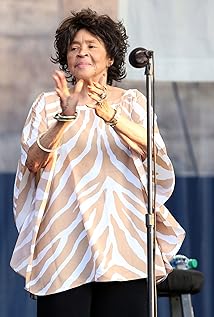
I’m a little surprised that I’ve never devoted a post to the great Mavis Staples—although she is mentioned at length in the In Memoriam piece that I wrote in January 2019 honoring her sister Yvonne. I’ve seen Mavis perform a few times, and every time she simply blew me away. She’s in her 80’s, has recorded amazing music her whole life—including a bunch of great albums over the past few years, and as I write this, is on tour, with dates scheduled in North America and Europe through next summer. If you get a chance to see her, do it, because sadly, she isn’t going to be around forever. And go see Mavis!, the movie from 2015 about her life, which is streamable. And while you are at it, make sure you see Summer of Soul, in which the young Mavis duets with her idol Mahalia Jackson, maybe the best performance in a movie filled with incredible performances. It’s on Hulu, but should be seen in a theater, unless you have a huge screen and big speakers. 

What makes Mavis Staples so great goes beyond her voice, or even her ability to interpret a song. She somehow is able to mix the gospel music she grew up on, with secular soul music and the protest and message music of the 1960s and beyond, and do it in a way that is both uplifting and surprisingly sexy (without being trashy). 

Her first No. 1 pop hit, “I’ll Take You There,” with her family group The Staple Singers, is a great example of this mix—and more. Recorded at the Muscle Shoals Studio and featuring the Muscle Shoals Rhythm Section (Eddie Hinton on lead guitar, David Hood on bass, Barry Beckett on piano, Roger Hawkins on drums, with additional guitar from Jimmy Johnson and Raymond Banks), with the Memphis Horns dubbed in later, its message can be interpreted as laying out the path to heaven, or to a world where the civil rights movement—still active when the song was released in 1972—had succeeded. And there’s something in Mavis’ delivery (much of which was ad libbed), which indicates that maybe she’s offering to lead to somewhere more private. 

What I didn’t know is that the introduction to the song and much of the melody and arrangement, are borrowed from/influenced by a reggae song, “The Liquidator,” by the Harry J Allstars. Check it out here. Al Bell, one of the owners of Stax Records, who wrote and produced the song, had brought a copy of “The Liquidator” to the sessions and played it for the musicians, who thought it was a demo, and not an actual released song. David Hood said, "The Liquidator thing, we didn't know what that was. As I recall, [Bell] came in and brought what they call a dub. It was like an acetate or something, a disk that you put on the record player and play. And it had no lyrics on it. We just thought it was an instrumental track that somebody had done for a song. And it was only years later when I found out that that had been a record." 

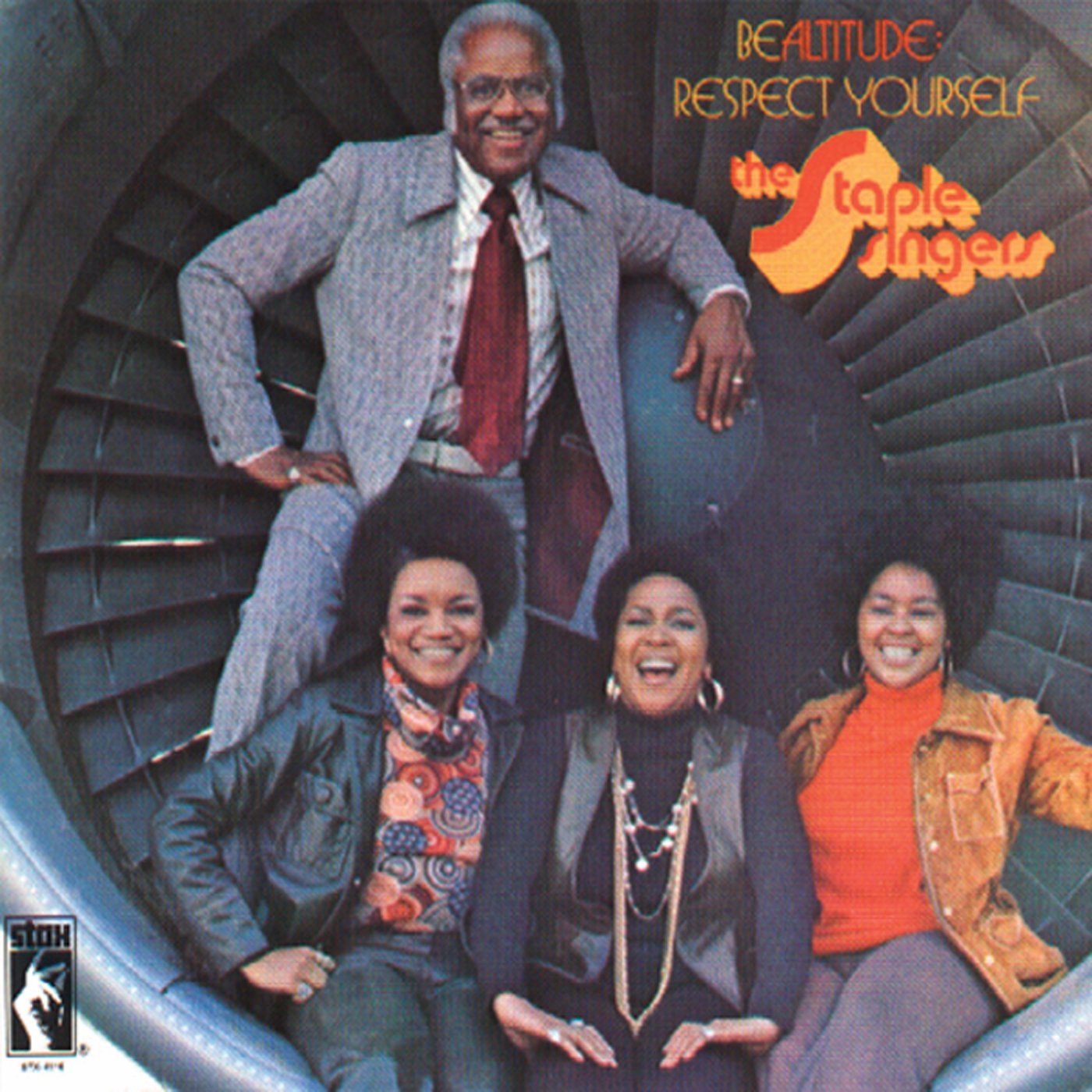
As we know from Seuras’ piece about the Muscle Shoals/Traffic connection, members of the rhythm section, including Hood and Hawkins, toured with Traffic, who regularly listened to Island labelmate Bob Marley and the Wailers’ album Catch A Fire, and as Hood recalled, "We kept hearing that. I thought, 'Wow, this is the greatest, wildest music I've ever heard.’" In fact, reggae influences permeate the entire album that “I’ll Take You There,” was on, Be Altitude: Respect Yourself.

Finally, here’s a nice piece by David Hood’s son Patterson, who you probably know from his regular job with Drive-By Truckers, about growing up in the Muscle Shoals area (including finding out that his father was the bass player on “I’ll Take You There”), and much more. Patterson’s a fine prose writer, as well as a great songwriter (which you probably know, if you’ve read my stuff here and elsewhere).

Saturday, April 25, 2020

ELECTRICITY: BRITISH ELECTRIC FOUNDATION


Well, this was a link-up too good to miss, Human League-r Phillip Oakey's Together in Electric Dreams with Giorgio Moroder, and, now, the ones that got away with their own side project. I'm not going to revisit the League backstory two posts in a row, but, take it from me, Martyn Ware and Ian Craig Marsh were the two to watch on their escape from that band, being the musical brains to Oakey's brawn. And the B.E.F., for a while, were their only project, the only release coming out of cassette, in 1980. This was Music for Stowaways, the "stowaway" being the original name given Sony's Walkman in the UK, listening to music on the move being then a novelty and in its infancy. Tell me then about mp3 streaming on a telephone, which doubles as a camera, and I'd laugh in your face.

Decline of the West/B.E.F. (Music for Stowaways)

Heaven 17, the band, were initially just part of B.E.F., Glenn Gregory merely one of the circus of singers used for their next record, Music of Quality and Distinction, Volume 1, although, confusingly, H17, the band, had hit the ground running first. Music of Quality and Distinction was an ambitious covers project featuring a mix of singers drawn from disparate backgrounds, tacked to the electronic production techniques Marsh and Ware were also liberally applying to individual recordings by such as Tina Turner and Terence Trent D'Arby. Gregory was a photographer friend who had been involved with an early incarnation of Wang Chung, and had the sort of voice they were looking for, ironically not a million miles removed from that of Phil Oakey. Other participants were 60's popstrel Sandie Shaw, the yet to be disgraced and denounced Gary Glitter and the aforesaid Tina Turner, alongside more contemporaneous names as Billy McKenzie and Paula Yates, the now deceased ex-wife of Bob Geldof, better then known as a TV face on breakfast television.

Perfect Day/B.E.F. feat. Glenn Gregory (MoQaD V1)

The project seemed to be then put aside, as H17 built themselves a sturdy and reliable name. But, following a nine year gap, a second volume appeared, reprising the appearances of Gregory, McKenzie and Turner, and introducing the likes of Green Gartside (Scritti Politti), Mavis Staples and Lalah Hathaway to the team, the latter providing them with a welcome hit single.

Family Affair/B.E.F. feat. Lalah Hathaway (MoQaD V2)

You would think that would have been that, not least as Marsh formally quit working with Ware in 2006, surely signifying the end of both H17 and B.E.F.. However, both projects continued, but given Heaven 17 were also using additional vocalists, notably Billie Godfrey, and performing cover versions, it would sometimes now become difficult to see where one project began and the other ended. This schizophrenia expanded further as a third B.E.F. project slipped out, Volume Three (aka Dark), in 2013, with the likes of Boy George and Kim Wilde entering the fray, each long after their 80s heydays. In 2016 the two projects even toured together, an array of guests plumping out the B.E.F. catalogue ahead of an array of guests plumping out the H17 catalogue. Confused? Here's their website to explain it all again.


God Only Knows/B.E.F. feat. Shingai Soniwa (MoQaD V3)

As of 2020, lockdown has significantly hampered their 40 years anniversary tour, although dates are rescheduled for late in the year, all things equal. I am planning to catch Ware and Gregory as whomsoever/whatsoever they are in December, hoping for some B.E.F. to slip into a nominally H17 celebration.

Switch on!


Thursday, January 17, 2019

In Memoriam: Yvonne Staples & Edwin Hawkins


Edwin Hawkins Singers: Oh Happy Day
[purchase]

The elephant in the room here is Aretha Franklin, a musical titan who died last year, and who I suspect will not be discussed during this theme on the theory that her passing has gotten its due elsewhere. Franklin, of course, started out in gospel music, before expanding her audience to many styles of secular music. When Franklin, who grew up in Detroit, was a young woman on the gospel circuit, she would often stay in the Chicago home of Pops Staples, where she became friendly with his children, including Mavis and Yvonne who were a few years older. Yvonne Staples passed away in April, at the age of 80.

Like Franklin, the Staple Singers started in gospel before branching out. Yvonne, the third Staples child, was a wonderful singer, but did not seek the limelight, deferring to Mavis’ extraordinary gift. Although Yvonne was always willing to be part of the family act, she often dropped out of performing, focusing on the group’s business matters, or her other interests. However, if Pops called, she returned. As she once said, “When Daddy asked us to do something, we did it. No questions asked.”

Yvonne and younger sister Mavis were very close, and when Pops died in 2000, Mavis became depressed and stopped performing. As Mavis recalled, her big sister let her have it: “Yvonne said, ‘Mavis, your daddy would want you to keep singing. You’ve got to get up. You’re daddy’s legacy.’ … And that’s when she started with the other words: ‘Damn it, Mavis,’ and worse. It woke me up.” Yvonne toured with her sister for years, contributing harmonies and often sitting regally in a chair while Mavis played to the crowd. And apparently, Yvonne was the one who cracked the whip to make sure that the band performed at their best.

According to Mavis, as Franklin’s and the Staples’ careers took off, they grew apart. But when Pops died, Franklin invited Yvonne and Mavis to visit her in the Hamptons, and Yvonne’s death led to Mavis and Aretha reconnecting for some phone calls before Franklin’s death.

In 1987, Franklin released a gospel album, One Lord, One Faith, One Baptism, on which she and Staples performed a version of the hymn “Oh Happy Day,” which became a hit in 1969 in a version by the Edwin Hawkins Singers. Arranged by Hawkins, from an 18th Century hymn originally by Phillip Doddridge, the song was a surprise worldwide hit, and featured the powerhouse vocals of Dorothy Combs Morrison, who also toured with, among others, Van Morrison and Boz Scaggs.

Hawkins, who died just over a year ago at 74, was backing his family’s gospel group on keyboards by the age of 7. He was co-founder of the Northern California State Youth Choir of the Church of God in Christ, which recorded “Oh Happy Day” as a fundraiser, but in early 1969, it came to the attention of Abe “Voco” Keshishian, an influential DJ at underground station KSAN in the Bay Area, who started to play the song. You can see the original album packaging here.   Then, Dan Sorkin, a morning DJ at influential AM station, KSFO began pushing the song. It generated enough buzz that a bidding war to release the song broke out, with Buddah Records getting the rights.

Released under the shorter, less gospel sounding name of the Edwin Hawkins Singers, the song became a crossover hit, and won a Grammy for Best Soul Gospel Performance. Apparently, the song's departures from tradition was divisive in the gospel community, but eventually became influential both by opening the door for other gospel musicians to include more pop sounds in their music and by making gospel-based music more palatable to secular music fans. Thus paving the way for both Franklin and the Staples to become successful mainstream artists.

In 1970, the Singers, along with Melanie, had another hit, "Lay Down (Candles in the Rain),” but basically that was in for the pop charts, although Hawkins won a total of four Grammys in gospel categories, the most recent in 1993.

Thursday, June 15, 2017

Hard: Hard Times Come Again No More

Hard Times Come Again No More is a song that dates from well before the Great Depression, but it’s easy to see why you might not think so. The song is a secular hymn, a plea directed to the comfortable for compassion for those less fortunate. It speaks to times when those in power would have the poor and the middle class compete against each other, rather than risk us joining together to find common solutions to our problems. We are in such a time now, and the Great Depression was a period that brought about such a joining together for an all-too-short moment. The song, however, shows that the need for compassion is much older. Stephen Foster wrote Hard Times Come Again No More in 1854, and it became a favorite on both sides of the Civil War. In seeking out versions of the song for this post, I found that some of the best versions express the idea that none of us are alone in the way the song is arranged.

Jennifer Warnes: Hard Times Come Again No More

[purchase]

Jennifer Warnes finds a stark beauty in the song with the sparest arrangement here. She gets a small group of friends together for an a capella version that expresses solidarity with the sounds of human voices alone.

Mavis Staples: Hard Times Come Again No More

[purchase]

Mavis Staples is best known for her work with the Staples Singers, although her solo work has become better known lately. Either way, she is a gospel singer at heart. Even a secular song like this one becomes a prayer when she sings it. This jibes perfectly with Stephen Foster’s intent, and results in a powerful performance.

Nanci Griffith: Hard Times Come Again No More

[purchase]

Nanci Griffith makes a specific connection to the hard times that have been experienced by the Irish people. Her version includes notable Irish musicians such as Dolores Keane and Sharon Shannon. Griffith starts with a small ensemble, and gradually builds to the full arrangement, which is a great musical device for expressing the theme of the lyric.

Paolo Nutini and the Chieftains: Hard Times Come Again No More

[purchase]

Finally, I could not resist closing with the Chieftains’ version with Paolo Nutini. The universality of the theme of the song is still very much intact, but the Irish connection is now explicit. The Chieftains find a perfect fit for the song as an Irish ballad, and deliver a version that lingers after the last note. Stick around for the coda played on pipes and drums; it really takes this one home.

Wednesday, June 11, 2008

Advice: Respect Yourself / Keep Your Eyes On The Prize


The Staple Singers: Respect Yourself

[purchase]

This advice song, written by James Ingram and Mark Rice over at Stax records in the chaotic aftermath of the civil rights movement, was intended to serve as a message of empowerment for the black community. As a sign of its success and its relevance, it peaked at number 12 on the Billboard Top 100 when it was first released by the Staple Singers in 1971.

This would be even more impressive, were it not for the fact that, sixteen years later, long after most folks would like to believe that the days of white singers stealing the songs of the black community for even bigger mass appeal and profit were long gone, Bruce Willis managed to get the same damn song to number five on the same damn chart.

I may be a cover blogger at home, but even I know how to follow good advice, folks; I've heard Bruce Willis sing, and let me tell you, even with June Pointer on backup vocals, he's no Pops Staples. Instead, you'll have to be satisfied with the original, plus this bonus advice song, a gut-wrenching blues take on a traditional civil rights anthem from Mavis Staples' absolutely stunning We'll Never Turn Back, released just last year -- that's sixteen years again after Bruce Willis mangled her family band's earlier work -- and therefore doubly poignant in this context.

Mavis Staples: Keep Your Eyes On The Prize [purchase]

You tell 'em, Mavis.