












Showing posts with label Muscle Shoals. Show all posts

Monday, August 16, 2021

Muscle Shoals-I'll Take You There

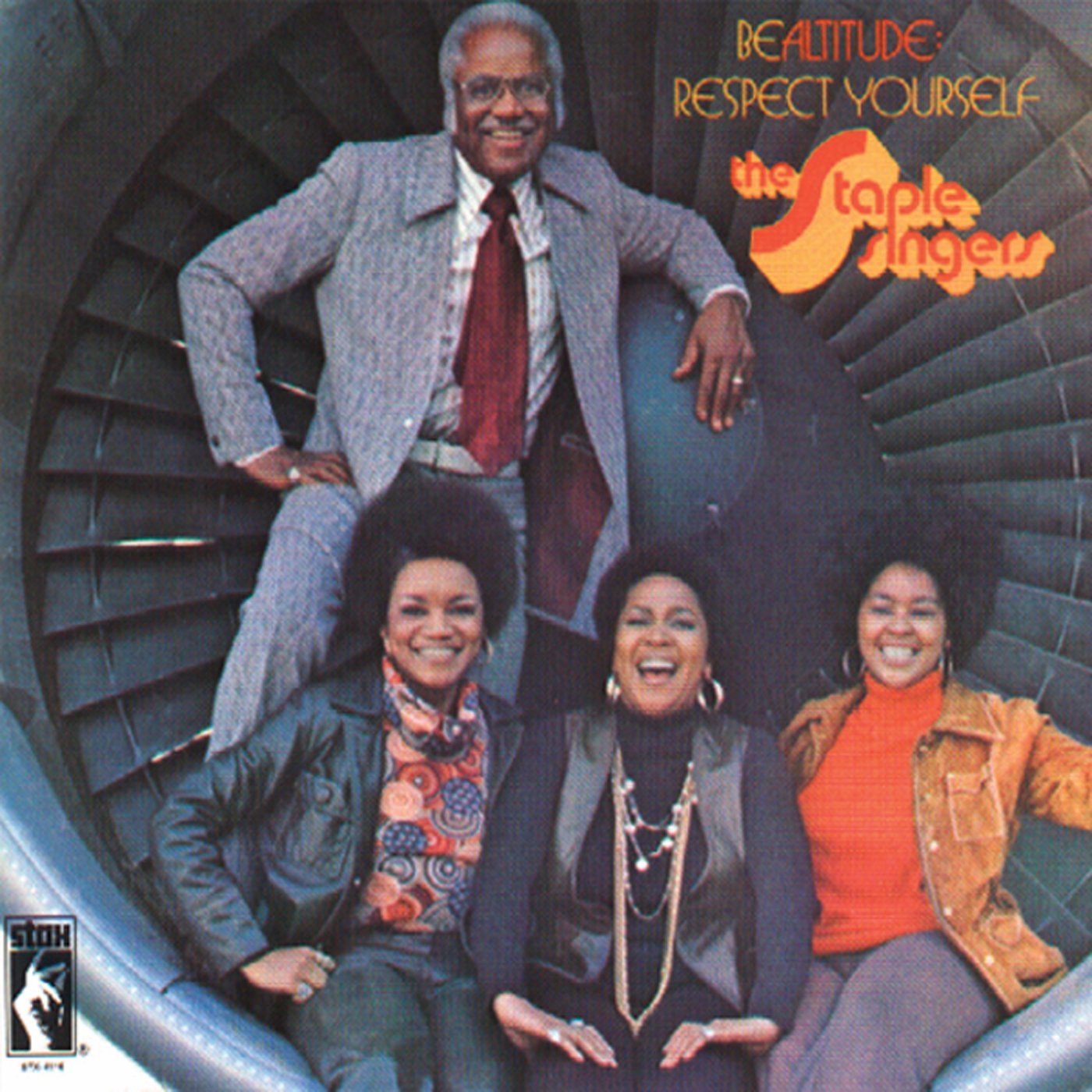
The Staple Singers: I’ll Take You There
[purchase]

I’m a little surprised that I’ve never devoted a post to the great Mavis Staples—although she is mentioned at length in the In Memoriam piece that I wrote in January 2019 honoring her sister Yvonne. I’ve seen Mavis perform a few times, and every time she simply blew me away. She’s in her 80’s, has recorded amazing music her whole life—including a bunch of great albums over the past few years, and as I write this, is on tour, with dates scheduled in North America and Europe through next summer. If you get a chance to see her, do it, because sadly, she isn’t going to be around forever. And go see Mavis!, the movie from 2015 about her life, which is streamable. And while you are at it, make sure you see Summer of Soul, in which the young Mavis duets with her idol Mahalia Jackson, maybe the best performance in a movie filled with incredible performances. It’s on Hulu, but should be seen in a theater, unless you have a huge screen and big speakers. 

What makes Mavis Staples so great goes beyond her voice, or even her ability to interpret a song. She somehow is able to mix the gospel music she grew up on, with secular soul music and the protest and message music of the 1960s and beyond, and do it in a way that is both uplifting and surprisingly sexy (without being trashy). 

Her first No. 1 pop hit, “I’ll Take You There,” with her family group The Staple Singers, is a great example of this mix—and more. Recorded at the Muscle Shoals Studio and featuring the Muscle Shoals Rhythm Section (Eddie Hinton on lead guitar, David Hood on bass, Barry Beckett on piano, Roger Hawkins on drums, with additional guitar from Jimmy Johnson and Raymond Banks), with the Memphis Horns dubbed in later, its message can be interpreted as laying out the path to heaven, or to a world where the civil rights movement—still active when the song was released in 1972—had succeeded. And there’s something in Mavis’ delivery (much of which was ad libbed), which indicates that maybe she’s offering to lead to somewhere more private. 

What I didn’t know is that the introduction to the song and much of the melody and arrangement, are borrowed from/influenced by a reggae song, “The Liquidator,” by the Harry J Allstars. Check it out here. Al Bell, one of the owners of Stax Records, who wrote and produced the song, had brought a copy of “The Liquidator” to the sessions and played it for the musicians, who thought it was a demo, and not an actual released song. David Hood said, "The Liquidator thing, we didn't know what that was. As I recall, [Bell] came in and brought what they call a dub. It was like an acetate or something, a disk that you put on the record player and play. And it had no lyrics on it. We just thought it was an instrumental track that somebody had done for a song. And it was only years later when I found out that that had been a record." 

As we know from Seuras’ piece about the Muscle Shoals/Traffic connection, members of the rhythm section, including Hood and Hawkins, toured with Traffic, who regularly listened to Island labelmate Bob Marley and the Wailers’ album Catch A Fire, and as Hood recalled, "We kept hearing that. I thought, 'Wow, this is the greatest, wildest music I've ever heard.’" In fact, reggae influences permeate the entire album that “I’ll Take You There,” was on, Be Altitude: Respect Yourself.

Finally, here’s a nice piece by David Hood’s son Patterson, who you probably know from his regular job with Drive-By Truckers, about growing up in the Muscle Shoals area (including finding out that his father was the bass player on “I’ll Take You There”), and much more. Patterson’s a fine prose writer, as well as a great songwriter (which you probably know, if you’ve read my stuff here and elsewhere).

Friday, August 13, 2021

MUSCLE SHOALS: SWAMPERS/TRAFFIC


How to even begin to cover the enormity and importance of this influential studio, musically, culturally and even politically, apropos race relations, seems impossible, and I am not even going to go very much into much of that. That the music that has come out of it, and the individuals that have shaped and formed that music, have enriched and enhanced my life is inescapable, and the older I get, so the more I am intrigued in the looking back to the origins of the pioneering styles emanating therefrom. Again, this is not the place. Today I am going to illustrate how I, then a teenage boy in England, came to first discover the music, and musicians, of Muscle Shoals.

Traffic are/were about as english a group as you could ever find. From their early psychedelic whimsy to the whole getting together in the country folk/jazz vibe, Steve Winwood seemed an ambassador for tweed and corduroy. The combination of his soulful vocals and swirling hammond, with an equal adeptness for melodic guitar solos, and Chris Wood's mournful sax and flutes was visionary, the backbeat of Jim Capaldi's drumming a constant and reassuring presence. I confess I preferred them as a three-piece to the earlier Dave Mason iteration, his songs always seeming to come from a different place than the direction of flow offered by the other three. To say I was fond of the John Barleycorn album would be an understatement. I loved it and still do. 

Following that epochal LP, the band foundered a bit, with Mason back again, then out again, and the engagement of various other musicians from various sources, expanding the percussion opportunities with Reebop, a Ghanaian percussionist, and Jim Gordon, fresh from Derek and the Dominos. They also added a bassist, Ric Grech, who had been, with Winwood, in Blind Faith, that brief dalliance of a "supergroup" that had put Traffic on pause for a moment in the years before. Prior to Grech, and something Winwood has returned to of late, bass parts were played on the hammond organ, by foot pedal. 'Welcome to the Canteen', a live album, was a bit of a transition, even being credited to the individual musicians, rather than to Traffic per se. But it opened their minds to the ideas and opportunities of additional influences, reprising and revising earlier material.

I remember the first time high heard 'The Low Spark of High Heeled Boys', the song, and being completely blown away by it. I suspect it was on TV, the Old Grey Whistle Test, a programme I have often referred to. Astonishingly, the album didn't chart in the UK, even if sold well across the pond. But where was the three piece? Suddenly this was a massive, mighty and meaty sound, with chunky bass and a backwall of additional musical accompaniment that gelled as a whole unit, rather than seeming an optional extra. This, should you wonder if I were ever getting there, was courtesy the majesty of the Muscle Shoals rhythm section, aka Roger Hawkins and David Hood, drums and bass respectively

The next album, 'Shoot Out at the Fantasy Factory', went a step further, now enrolling fellow Swampers, as the Muscle Shoals alumni were called, Jimmy Johnson on additional guitar and Barry Beckett on keyboards. The sound was getting bigger and bigger. For the ensuing world tour, Hawkins, Hood and Beckett stayed on board, the ensuing double live recording, 'On the Road', still seen as a classic live record. With taxman Chris Woods faltering health and substance abuse issues, internal relations soured, and the Swampers, along with Reebop, jumped ship. Traffic were never quite the same, with one somewhat uneven release, ahead of Wood's death and then a twenty year hiatus before their final release in the collective name, in 1994.

Although essentially duplicating instrumentation, apart from the horns, already within the core of Traffic, the Swampers gave so much more than just that wider wall of sound to the band. Opportunity was given for Capaldi to step away from the drum kit and to be creative in other ways. Similarly, with musical jack of all trades Winwood, unable to play keyboards and guitar at the same time, for the first time all these instruments could play alongside each other, rather than purely by studio chicanery. It is a regret I was too young to ever see them live.

So what happened to the fabled four after Traffic? Their day job back at Muscle Shoals had never gone, and they continued to add their trademark sound to innumerable recordings. To give an idea of their work ethic, I am going myself to be lazy, and direct you to their wiki pages, as space cannot allow the sheer size of their collective and respective cv.s. Roger Hawkins died in May, earlier this year. David Hood still lives and plays. Most recently he has been a member of the Waterboys, his senior statesman gravitas adding considerably to the band, who have a semblance of the vibe of Traffic, if with a more celtic hue. He is also the father of Patterson Hood, of the Drive-By Truckers. Barry Beckett died in 2009 and Jimmy Johnson in 2019. Just count all those credits.

So, raise a glass and raise a glass high to these giants, back room boys without whom so much of modern popular music could not exist.


On the Road.

Wednesday, August 11, 2021

Muscle Shoals: Various


purchase [ Slow Train Coming ]

Muscle Shoals has a special place in the pantheon of music from the 1960s on. It's the name of multiple recording studios located in the city of the same name in Alabama. The studio we first think of grew out of another studio operation known as FAME Studios, and was unique in that it was the first such operation owned by a group of session musicians. Yes, they partnered with Jerry Wexler to make it work. And yes, the location was previously a coffin viewing showroom.

But the name Muscle Shoals has come to mean a specific sound - first in a soul and R&B style (Percy Sledge & Aretha) and then in rock (the Rolling Stones, Traffic). FAME owner Rodney Hall described the sound as funkier and more laid back than others. The curator of the Alabama Music Hall of Fame notes the existence of a triangle, with Memphis being the home of blues, Nashville, of course, the home of country and the third leg, Muscle Shoals, being a blend.

One of the first musicians to record at Hall's studio was Wilson Picket. The story goes that when he arrived and saw the folks picking cotton, he wasn't at all convinced that this would work out. Later, when Pickett returned to the studio, he found that there was a long-haired slide guitar player by the name of Duane Allman as one of the studio's guitarists. They recorded this cover of the Beatles' Hey Jude


The word began to get around about the Muscle Shoals sound: Clapton heard it and so did the Stones. A large part of Sticky Fingers was recorded there in 1969. Keith Richards has been quoted as saying "I thought it was one of the easiest and rockin'-est sessions that we had ever done."


Bob Dylan's Slow Train Coming was also recorded at Muscle Shoals. Lead guitar is Mark Knopfler and the horns are the studio band. Dylan was looking for a richer, funkier sound and it appears he got what he was looking for despite the concern of some of the musicians about the religious content.


Wednesday, December 18, 2019

Leftovers: Cutlery (that Cuts) (and Alabama)/A Knife and Fork


Rockpile: A Knife and Fork
[purchase]

I took some time off from this blog over the summer, so for the Leftovers theme I’m trying to hit some of what I missed--and this post covers three in one!

I have to believe that more food is eaten from Thanksgiving to New Year’s Day than any other similar period during the year. At least in my family, this period is filled with big family meals, parties, dinners out, and many, many cookies, thanks mostly to my wife, the master baker. As someone who struggles with weight and diet and the related health issues that this has caused, it seemed appropriate to write about this song, a cautionary tale about overeating.

My introduction to the song came from its inclusion on the only studio album released under the Rockpile name, Seconds of Pleasure, despite the fact that the musicians (Nick Lowe, Dave Edmunds, Billy Bremner, and Terry Williams) acted as the band for both Edmunds and Lowe on a number of solo releases. At the time of the album’s release, I remember being a little disappointed, despite the fact that there were a number of strong tracks, but as a fan of both Edmunds and Lowe, maybe I expected too much. I think that the critical opinion of the album has improved over the years, though.

What I didn’t realize until I started writing this was that “A Knife and Fork” is a cover—which is a little embarrassing for someone who sporadically contributes to a cover blog. It was originally written and performed by a mostly forgotten performer, Kip Anderson, back in 1967. The song was recorded at the legendary FAME Studios in Muscle Shoals, Alabama (hey—that’s another theme that I missed), and was produced by Rick Hall. Check out the original version:


Look, I’m a big Dave Edmunds/Rockpile fan—ask my college roommates—and their cover of the song is good—I liked it then, and I like it now, although I was never a huge fan of when Edmunds’ voice sounds processed. But if you compare it to the more soulful, horn-filled original, the Rockpile version feels restrained. So, I have to say, the original is better. Because, in part, everything is better with a horn section.

Edmunds, to his credit, often covered obscure songs, giving them a new life—on Seconds of Pleasure, for example, in addition to giving Kip Anderson some royalties, he covered a lesser known Chuck Berry song.

Although I do expect to indulge during this festive period (and I already have), I hope that the situation isn’t as dire as the song portends.

Tuesday, September 16, 2014

Royal -> Songs Under 3 Minutes: The Weight


Aretha Franklin (w/ Duane Allman): The Weight
[purchase]

When I heard about this theme, I thought that I might try to write about some of the shortest songs in my library, but none of these songlets inspired me. So I decided to look at songs that just made the cut—the songs that clocked in at 2:59. I had a surprising number of these, and decided to see if any of them jumped out at me as a potential topic. That’s one of the great things about writing for Star Maker Machine—our bi-weekly themes force me to reexamine my music library, and often I uncover songs that I haven’t listened to in a while, or other hidden gems. Today’s song is one of them, and it makes a nice transition from our Royal theme, too.

The original version of this great, but enigmatic, song was 4:34, and the fine cover by Diana Ross and the Supremes (and the Temptations) was exactly 3:00. The Staples Singers’ well-known version was also 4:34, so it doesn’t work. But there is another version, one that was performed by the Queen of Soul, Aretha Franklin, with Duane Allman on slide guitar, that is exactly 2:59. Bingo. It is a damn good version, which some believe is even better than the classic original, and that’s a tall order. I’m embarrassed to say that despite the fact that I have a copy of it, I was essentially unaware of it. By the way, “The Weight” has been covered many times, by many different artists (here’s an article from my other blogging home, but not by me, featuring five good ones).

Also, being a Band song, there is an ongoing dispute about who should have gotten credit for the song—it is officially credited only to Robbie Robertson. Levon Helm, who ended up disliking his bandmate just a bit (One quote from Helm on Robertson: “I hate the motherfucker. “I’d kick his ass if I can get to him. He’s a thieving, lying son of a bitch.”) has stated that the lyrics were 60% Robertson, Richard Manuel and Rick Danko about 20% each, and 5 or 10% for Helm (proving that Levon was a better musician than mathematician), and that Garth Hudson should have gotten some credit for the music. Whoever wrote the lyrics, their symbolism has been subject to a great deal of discussion over the years, and here are only a few examples of attempts to explain them.

Aretha’s 1970 album, This Girl’s In Love With You, from whence the featured song comes, was recorded at a difficult time for Franklin, both personally (her marriage had recently ended) and professionally. The album is filled with covers of pop songs, including two Beatles songs, in an apparent attempt at crossover success. Half of the album was recorded in Miami, where she often was late to sessions because she was in her suite at the Fontainebleau Hotel cooking soul food, and the other half was recorded in Muscle Shoals, Alabama’s legendary FAME Studio, where she had initially established her reputation. Many reviewers dismiss the disc as a mishmash and uninspired.

At the time that Franklin was recording part of the album in Alabama, Duane Allman, who had been playing with, among others, his brother Gregg, in the Allman Joys and Hour Glass, and who had cut some demos with Gregg and future Allman Brother Butch Trucks, as The 31st of February, was working as a studio musician at the FAME Studios. He either was invited by owner Rick Hall, or just showed up looking for work, but either way, he was put to work on a number of songs, including a great, Grammy Award winning instrumental cover of Joe South’s “Games People Play,” with King Curtis on sax. His unmistakable slide guitar part meshes well with Franklin’s vocals on “The Weight,” which, not surprisingly, skew toward a religious, gospel interpretation of the song, that may not actually be there (the Nazareth in the song, for example, is actually in Pennsylvania). Also backing Franklin on the track was the great Muscle Shoals rhythm section, Roger Hawkins, Jimmy Johnson, Barry Beckett, and David Hood, known as The Swampers (later memorialized by Lynyrd Skynrd in “Sweet Home Alabama”). For more background, check out this fine documentary about Muscle Shoals.

In reviewing This Girl’s In Love With You, critic Robert Christgau wrote: “I admit that when she sings "The Weight" it sounds as if she knows what it means. But I still don't.” On the other hand, album producer Jerry Wexler had second thoughts about the song, later stating that despite the fact that the song charted on both the R&B and Hot 100 charts, “I regret having submitted that song to her. . . . this is where commercial stupidity and greed got the upper hand in me.”

But the great thing about music, or art of any kind, for that matter, is that each audience member gets to decide whether you think something is great, trash, or something in between. I know what I think about this song, and I suspect that after listening to it, you will agree with me and Christgau, and not Wexler.