Showing posts with label Mahalia Jackson. Show all posts

Thursday, March 10, 2022

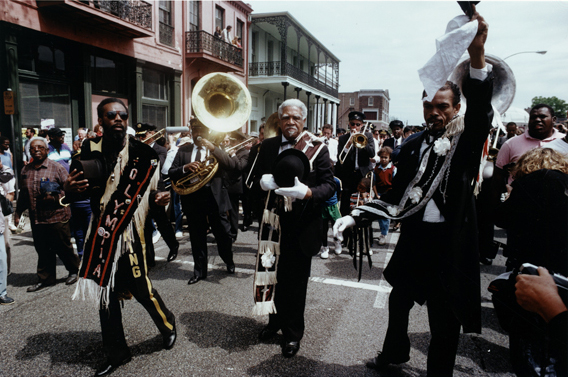
Marching: When The Saints Go Marching In

Although the month of March is named after the Roman god of war, Mars, while the English verb “to march” is derived a different source, the Old French “marcher,” meaning "to stride, march, walk," we here at SMM seem to insist on tying the two together, which is why most of the songs that would have marched into my consciousness for this theme already did so in prior years, leaving me not without options, but without options that I cared to write about. 

But one of the things about being among the last remaining regular writers on this site, which has gone through dozens since it started back in 2008, is that it is important to try to write at least once, if not more, for each theme, so I realized that Mardi Gras was just over a week ago, and therefore a discussion of “When The Saints Go Marching In” would work. And, in a tip of the hat to another of the other remaining regular SMM contributors (and recent birthday boy), Seuras Og, I’m going to model my post on one of his regular formats. 

Like many standards, the origins of the song are unclear. It seems that there were a number of gospel/spiritual songs with similar titles, but in 1923, the Paramount Jubilee Singers recorded a song similar to the one we all know and love, titled, “When All The Saints Go Marching In:”


Other recorded versions of the song, with varying lyrics, were recorded throughout the the 1920s and 30s, often becoming less hymn-like and more uptempo, but the song’s popularity really started when Louis Armstrong recorded a version in 1938, which also cemented the song’s identification with New Orleans:


There are probably thousands of covers of this standard, especially if you include every Dixieland or brass band that does it live (and on video....), but we will look at a few notable ones, in roughly chronological order: Here’s a peppy, folk approach from The Weavers in 1951:


Not surprisingly, Mahalia Jackson returned the song to its gospel roots in 1955:


Elvis Presley, and the rest of the “Million Dollar Quartet (Jerry Lee Lewis, Carl Perkins and Johnny Cash), did a loose rockabilly version that wasn’t released to the public until 1990:


In 1956, Sister Rosetta Tharp started turning “The Saints” into a rock ‘n’ roll song:


And Fats Domino finished the transformation in 1958:


Judy Garland and Liza Minnelli took a more pop approach when they performed the song in 1964:


The following year, Lester Flatt & Earl Scruggs, not surprisingly, took “The Saints” in a bluegrass direction:


Jumping forward a few decades, here’s a traditional take by New Orleans’ Preservation Hall Jazz Band from 1983:


In the mid-2000s, Bruce Springsteen regularly performed the song, in a pretty subdued arrangement, on his Seeger Sessions tour, with this version from 2006 being released on the Live in Dublin album:


Look, I could go on forever, and some of you may think I already have, so I’ll close this out with a version from New Orleans’ great Dirty Dozen Brass Band from 2012 that is pretty traditional (and a bit funky) and loads of fun:

Thursday, October 7, 2021

What If: Buddy Holly Lived?

Buddy Holly: Crying, Waiting, Hoping (Apartment Tapes version)
[purchase]

This may be the hardest theme we’ve tackled here, and I’ll take responsibility for it, for better or worse. As a history major in college, and general history buff, I’ve also been a fan of “alternative history,” where one historical fact changes, and you speculate on how things might have been different. One good recent example of this was the HBO series, The Plot Against America (and the 2004 Philip Roth novel that it was based on), which launches from the premise that Charles Lindbergh defeats Franklin Roosevelt in the 1940 election. I’ve also read a ton of “what if the South won the Civil War” fiction, which shouldn’t surprise anyone who knows me or has read my writing

But, as I often have to remind myself, this is a music blog, so we are going think about what would have happened if Buddy Holly’s plane hadn’t crashed on that cold February morning in 1959 in Iowa. I’m no Holly expert (although I’ve done some reading about his career), so I’m under no impression that this might be a “definitive” discussion. And because I’m not writing a piece of speculative fiction, and have to therefore pick one path and follow it, we’ll look at a few possibilities, focused more on Holly’s potential career than his potential effect on music as a whole (or the effect of the deaths of the others who were on the plane that day). 

In "American Pie," Don McLean famously referred to the crash that killed Holly, Ritchie Valens, the Big Bopper (J.P. Richardson, Jr.), and pilot Roger Peterson, as the “day the music died,” but while that’s a great and memorable lyric, of course, it wasn’t. Most notably, two big Holly fans in Liverpool had recently formed a band named after an insect, in tribute to Holly’s band, the Crickets, and had Holly not died that day, I’m pretty confident that Beatlemania still would have swept through the world a few years later, changing the musical landscape forever, and pushing aside the type of “rock ‘n’ roll” music that Holly and his ilk had made popular (even as the Beatles covered Holly’s songs live and on record). In fact, I’d wager that had Holly lived, he would have been a fan of the Beatles, and even worked with them in some form—maybe writing songs with or for them or performing with them, or releasing his own Beatles covers (everyone else did). But probably not producing the Beatles, since they already had a pretty fair producer. (And don’t forget that the Rolling Stones covered “Not Fade Away” on their first album.) 

Another huge Holly fan was Bob Dylan, who actually saw Holly on the ill-fated Winter Dance Party tour in Duluth, MN, about 3 days before the crash, and referenced Holly as his first musical influence in his Nobel Prize lecture. So, again, Holly’s death wouldn’t have prevented Dylan’s rise and influence on music, and again, I’d bet that they might have collaborated—or at least, become acquainted—particularly after Dylan began to perform regularly in New York. You can easily imagine Holly, with Maria Elena, and maybe a friend like Phil Everly or Waylon Jennings, trying to watch the young Dylan incognito from the back of the club, and being impressed by his talents. 

But I’m getting a little ahead of myself. 

One way of looking at this question is by starting by analyzing Holly’s life and music before he died. In late 1958, Holly and wife Maria Elena, moved to Greenwich Village, in part to get a new start, but also to get involved in the New York music scene of the time. Holly, who was not only a musical genius, but appeared to have a more sophisticated business sense than many of his contemporaries, wanted to start his own label and open his own studio. So, maybe, part of Holly’s future would have been as a music executive and producer of other acts. 

During this period, Holly explored his love for jazz, regularly frequenting jazz clubs in the Village and elsewhere in the city. And he would go down to Washington Square Park and play with the other musicians hanging out there. The last formal recording session that Holly participated in was in New York, in collaboration with the Dick Jacobs Orchestra, recording four songs with heavy string orchestration. So, by some analyses, at this point, Holly was moving away from the stripped down rock ‘n’ roll that made him famous to a more sophisticated, smooth pop sound. For example, one of these songs, Paul Anka’s “It Doesn’t Matter Anymore,” might have presaged a future career for Holly as another Anka-style pop singer. 

At the same time, though, Holly was recording himself in his living room—what have later become known as the “Apartment Tapes,” and from these, you can hear Holly working both on his songwriting and lyrical craft, but also experimenting with tempo and styles. (Many of these demos were later overdubbed and released posthumously.) Add to this the reports that Holly planned to record with black artists such as Ray Charles, Mahalia Jackson and other soul singers (he was, memorably, the first white act to play Harlem’s Apollo Theater), and the prospect of Holly as a pop crooner becomes less likely. Nor do I see him turning to Vegas, like his friend Elvis Presley.

Another way to look at it is to consider the careers of two other musicians who were on the Winter Dance Party tour, but declined to get on the plane—Waylon Jennings, who was Holly’s bass player on the tour and gave up his seat to the Big Bopper, who was sick, and Dion DiMucci, who didn’t want to spend the extra money. There are some who think that Holly’s future, had he survived, would have been to move more toward country music, like Jennings, considering his Texas roots and twang. But I don’t think that Holly would have wanted to be so limited, because his musical tastes were so broad. Dion, of course, had early success, but when that faded, changed his sound to a more mature folk/pop approach, before moving through a Christian music phase, and more recently, focusing on blues, and I suspect that Holly, too, would have kept trying different things. 

Ultimately, I don't think that Holly would have become an “oldies” act, performing versions of his hits to aging fans. Instead, I think that Holly would have gone on to a varied career—writing songs for himself and others, in various styles that would have reflected his curiosity, interests and the new sounds that were developing in the 1960s and 70s, producing and nurturing artists, and continuing to perform new music for years.

Monday, August 16, 2021

Muscle Shoals-I'll Take You There

The Staple Singers: I’ll Take You There
[purchase]

I’m a little surprised that I’ve never devoted a post to the great Mavis Staples—although she is mentioned at length in the In Memoriam piece that I wrote in January 2019 honoring her sister Yvonne. I’ve seen Mavis perform a few times, and every time she simply blew me away. She’s in her 80’s, has recorded amazing music her whole life—including a bunch of great albums over the past few years, and as I write this, is on tour, with dates scheduled in North America and Europe through next summer. If you get a chance to see her, do it, because sadly, she isn’t going to be around forever. And go see Mavis!, the movie from 2015 about her life, which is streamable. And while you are at it, make sure you see Summer of Soul, in which the young Mavis duets with her idol Mahalia Jackson, maybe the best performance in a movie filled with incredible performances. It’s on Hulu, but should be seen in a theater, unless you have a huge screen and big speakers. 

What makes Mavis Staples so great goes beyond her voice, or even her ability to interpret a song. She somehow is able to mix the gospel music she grew up on, with secular soul music and the protest and message music of the 1960s and beyond, and do it in a way that is both uplifting and surprisingly sexy (without being trashy). 

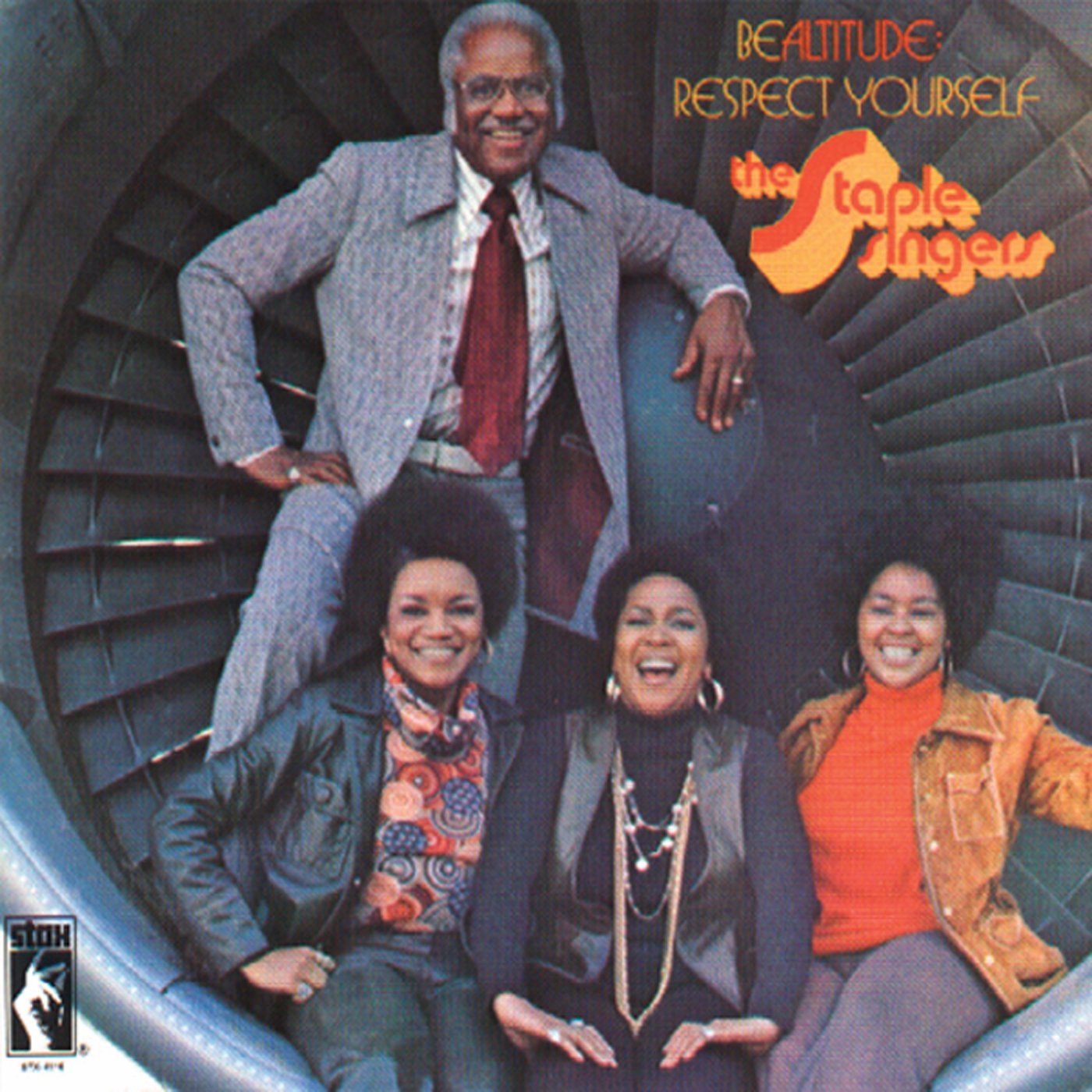
Her first No. 1 pop hit, “I’ll Take You There,” with her family group The Staple Singers, is a great example of this mix—and more. Recorded at the Muscle Shoals Studio and featuring the Muscle Shoals Rhythm Section (Eddie Hinton on lead guitar, David Hood on bass, Barry Beckett on piano, Roger Hawkins on drums, with additional guitar from Jimmy Johnson and Raymond Banks), with the Memphis Horns dubbed in later, its message can be interpreted as laying out the path to heaven, or to a world where the civil rights movement—still active when the song was released in 1972—had succeeded. And there’s something in Mavis’ delivery (much of which was ad libbed), which indicates that maybe she’s offering to lead to somewhere more private. 

What I didn’t know is that the introduction to the song and much of the melody and arrangement, are borrowed from/influenced by a reggae song, “The Liquidator,” by the Harry J Allstars. Check it out here. Al Bell, one of the owners of Stax Records, who wrote and produced the song, had brought a copy of “The Liquidator” to the sessions and played it for the musicians, who thought it was a demo, and not an actual released song. David Hood said, "The Liquidator thing, we didn't know what that was. As I recall, [Bell] came in and brought what they call a dub. It was like an acetate or something, a disk that you put on the record player and play. And it had no lyrics on it. We just thought it was an instrumental track that somebody had done for a song. And it was only years later when I found out that that had been a record." 

As we know from Seuras’ piece about the Muscle Shoals/Traffic connection, members of the rhythm section, including Hood and Hawkins, toured with Traffic, who regularly listened to Island labelmate Bob Marley and the Wailers’ album Catch A Fire, and as Hood recalled, "We kept hearing that. I thought, 'Wow, this is the greatest, wildest music I've ever heard.’" In fact, reggae influences permeate the entire album that “I’ll Take You There,” was on, Be Altitude: Respect Yourself.

Finally, here’s a nice piece by David Hood’s son Patterson, who you probably know from his regular job with Drive-By Truckers, about growing up in the Muscle Shoals area (including finding out that his father was the bass player on “I’ll Take You There”), and much more. Patterson’s a fine prose writer, as well as a great songwriter (which you probably know, if you’ve read my stuff here and elsewhere).

Friday, March 12, 2021

MR/MS: JACKSON

Anyone with even the most cursory knowledge of this site will appreciate that there is likely little hip hop demographic within the reading or the writing. By way neither of apology or excuse, I guess this is a an age and colour thing, old white guys seldom experts outside their narrow zones of comfort. If I were younger, maybe a bit more: my son was a huge fan of the genre twenty odd years ago and certainly gave me limitless opportunity to absorb, wanted or not. And, I admit, largely not. But, as I peruse my i-tunes, I have rather more than I realised, and have no little grudging respect for certain artists, tending to prefer the melodic to the militant, the abstract to the angry. Like this, the contrast between the staccato delivery of the verses and the dreamy chorus grabbing my ears back then, even as I was scrubbing the graffiti off my son's bedroom walls.

Now, I guess I could now make this a hastily regurgitated precis of the life and times of the band, OutKast, or the duo, as they were, but I fear my sources would be obvious. Plus, we can all read wikipedia for ourselves, but I hadn't realise that the song relates to the relationship of Andre 3000, one of the pair, with singer Erykah Badu, or more specifically with her mother, the Ms "Jackson" the lyrics are addressed to. Whilst not necessarily a fan of the individual, she apparently loved the song, a fair bit more, in fact, than her daughter, who found it a little close to the bone. So, nearly avoiding also any clumsy link to the other OutKast song in my collection, lets celebrate a couple or so other Ms Jacksons...

Wanda Jackson isn't either actually quite my demographic, this little ditty hailing from the year of my birth, and comes from days when cultural sensitivities were, shall we say, less well honed. But, as a piece of rough hewn rockabilly, it certainly has some pizazz and she has continued ploughing that field right up until, astonishingly, as recently as 2012, that being when her last record was released. Little had changed.

So which one's Luscious, you ask? And given the Lucious, no s, Jackson was a male basketball player, and after whom this all-girl band named themselves, does this fit the strict criterion I apply to all my nonsense. Hell, no, but it's my post, and I like the band, as much for being there as for the music they produced.

Jade Jackson is/was 'One of 10 New Country Artists You Should Know", according to Rolling Stone in 2017, and has a bit more balls than many of the winsome souls who that sort of category might have you bringing to mind. In fact, she has me thinking more of a modern day Wanda. I know little of her beyond this song, but I like it. In fact, I may go check out some of her other work.

From the present back to the past I tread, desperately trying to bypass the Ms Jackson that is Janet, Mahalia being one I cannot possible exclude, a truly majestic vocal presence that lingers to this day. Whether gospel is or not your thing, I defy you to ignore the power and presence displayed. No wonder that Sinead O'Connor chose to revisit just this song for her latest come-back.

Who's your favourite Ms Jackson?

Tuesday, February 4, 2020

Rockets/Space: Outa-Space


Billy Preston: Outa-Space
[purchase]

When I was 10, in the summer of 1971, my parents sent me to sleep away camp for the first time, and it was not a good experience. It was not a good camp (although based on some stuff I saw on Facebook, it might have been at one time), and I was homesick. But it wasn’t only me—it was common for campers to try to sneak out of camp, despite the fact that there was really nothing within walking distance (and I know, because we tried…but that’s another story that includes being locked in a hot van with nothing but Rice Krispies….). Also, the water tasted of sulfur. Other than that, it wasn’t too bad.

My complaints about that summer resonated with my parents, who then spent more time researching summer camps, before choosing to send me and my sister to Timber Lake Camp, which was an excellent camp that no one tried to escape, and had delicious drinking water. I absolutely loved my two summers there (and my couple of weeks as a counselor, years later, right before I went to college). Our experience at TLC led to a big influx of campers from my extended family and hometown over the years, and my sister and brother are still in touch with friends that they made there. (A few years after I stopped going, the camp was purchased by Jay Jacobs, now the NY State Democratic Chairman, and made even fancier and better than when I was there, and it was pretty good back then).

As I have previously mentioned, my first experience with radio, which in many ways was an onramp to my love of radio and music and without which I probably would not be a music blogger, was at WTLC, the camp radio station. But this isn’t about that. I think that most camps wake up their campers with some sort of “Reveille,” because there is something vaguely military about people sleeping in bunks. But at Timber Lake, in the summer of 1972, the counselors were, for the most part, young men and women in their late teens and early twenties, and during that era, in that place, I have to assume that the military wasn’t particularly popular. Instead, we were usually awakened by some loud rock music playing on the loudspeaker.

And if you asked me what songs they played, the only one that I remember was Billy Preston’s “Outa-Space,” a funky, spacy instrumental. It made waking up relatively fun, and I’m pretty sure that I played the song on the radio, learning that it was by Billy Preston, about whom I basically knew nothing.

What I know now, is that “Outa-Space” was a big success for Preston, despite the fact that his record company refused his request to release it as a single—instead, it was a b-side that DJ’s flipped. It sold more than a million copies and hit number one on the Billboard R&B chart and number two on the Billboard Hot 100 during that summer, and won a Grammy. And I also learned that its distinctive sound came from Preston experimenting with a clavinet run through a wah wah pedal.

Preston, a self-taught child prodigy, backed Mahalia Jackson when he was 10, joined Little Richard’s band in his teens, and while with Richard in Hamburg, met The Beatles, with whom he played a few years later, and who signed him to their Apple label. He is one of the candidates for the mythical “Fifth Beatle” title, but it wasn’t until he left Apple, and joined A&M Records, that he had solo success. His first release for that label, I Wrote A Simple Song, included “Outa-Space.” Over the next two years, Preston followed up a bunch of hit singles, "Will It Go Round in Circles,” "Nothing from Nothing", and the also theme appropriate "Space Race."

In addition to playing with The Beatles, Preston opened for and played with The Rolling Stones, wrote “You Are So Beautiful” for Joe Cocker, was the first musical guest on what was then called NBC's Saturday Night, did session work with Luther Vandross, Whitney Houston, and Patti Labelle, and toured with Eric Clapton and The Band. However, cocaine addiction and a sexual assault charge derailed his career in the early ‘90s, before he made a handful of live and recorded guest appearances in the 2000s. Preston died in 2006.

One of the great things about writing for this blog is that it often forces you to revisit music that you haven’t really paid attention to for years, and I have to say that “Outa-Space” sounds just as good today as it did to my 11 year old self back in 1972.

Wednesday, September 10, 2014

Royal: Queens


As a native of the New York borough of Queens, I’ve been a bit miffed by the virtual (but not complete) absence of any references to Queens during this theme. I could have written about bands and artists who came from that borough, like the Ramones or Paul Simon, or even Run-DMC, or some of the famous jazz musicians who lived there, like Louis Armstrong. Or, I could have made it easy, and written about Queen, or the Queens of the Stone Age. Or picked a song like “Killer Queen,” “Queen Bee,” or, god forbid, “Dancing Queen.” But, no, I’m going to go in a different direction, and talk a bit about some of the great musicians who have been crowned Queen of some genre or another. Because there isn’t an official organization devoted to the creation of music royalty (as opposed to organizations that collect music royalties), in some cases there may be competing claimants for the crown. For the purposes of this post, I deem myself the final authority, and hope that my decisions don’t lead to, say, a War of the Roses. And, because these titles are not granted by the United States, none of these citizens are in violation of Article I, Section 9, Clause 8 of the United States Constitution, the Title of Nobility Clause (or, for that matter, the Sanity Clause).

Let’s get started with the Queen of Soul, Aretha Franklin:


From the next country over, we have the Queen of R&B, Ruth Brown:


The Queen of Gospel, Mahaila Jackson, occupies an older throne:


Nearby, the Queen of the Blues, Koko Taylor reigns:


Meanwhile, down in Louisiana, the Soul Queen of New Orleans, Irma Thomas, lets the good times roll:


We can't forget the Queen of Jazz, Ella Fitzgerald (who lived for a while in Queens):


Influenced by some of her fellow rulers, the Queen of Rock & Roll (who also held the crown as Queen of Psychedelic Soul, presumably subject to Aretha), Janis Joplin’s reign was too short:


In Opryland, Loretta Lynn, the Queen of Country, holds sway:


Meanwhile, hailing from Staten Island is the Queen of Folk, Joan Baez:


Cuban Celia Cruz’s status as Queen of Salsa was never threatened by the revolution (although she became a citizen of the United States):


And we end this discussion with the Queen of Reinvention, yes, Cher: