












Showing posts with label The Quarrymen. Show all posts

Sunday, December 31, 2023

In Memoriam-Chas Newby, A Beatle for Four Gigs


[purchase The Quarrymen Live in Penny Lane, featuring Chas Newby on bass and vocal]

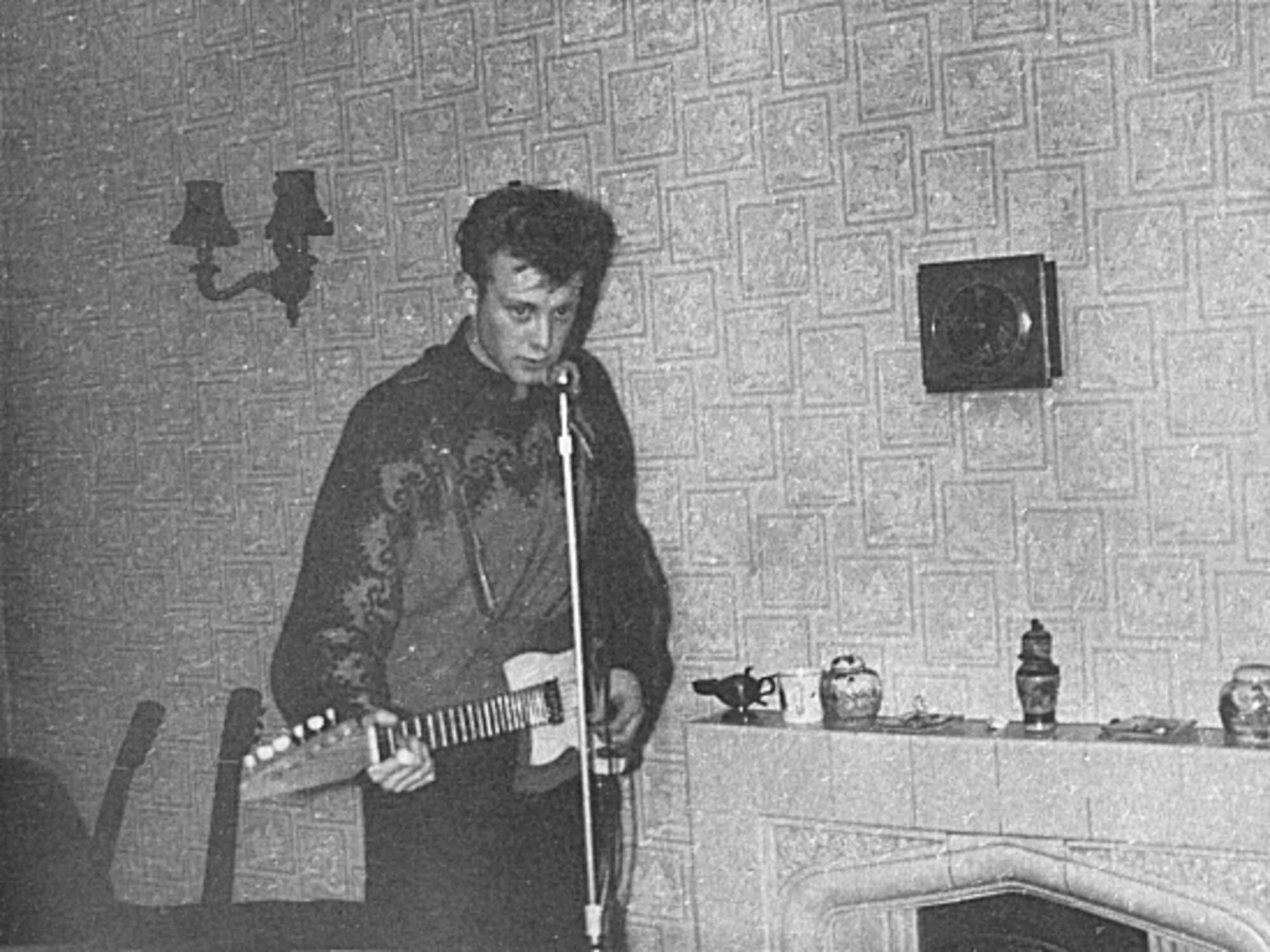
You’re a teenage (left-handed) bass player, and a former band mate asks you to fill in on a few gigs with a cover band that had recently been on tour, because their bass player is unavailable.  Needing a bit of extra Christmas cash, Chas Newby agreed, and played four shows in England with his old friend Pete, and his fellow band members, John, Paul and George.  Chas had fun and pocketed all of £4.  But when John suggested he stay with the band for a tour in West Germany, Newby declined, figuring that he had a better chance of success in his preferred field of chemistry.

Of course, the rest is history.  Nearly two years after Newby declined Lennon’s offer, the Beatles hit it big with “Love Me Do,” featuring Paul McCartney on (left-handed) bass.

As Newby said:

To me then it was just four gigs with a different band. Music was never going to be a living for me. All of us at that time were thinking what we were going to do with our lives, some doing teaching, or science, or whatever.

I wanted to do chemistry. John, Paul and George, they just wanted to be musicians.

They had been away in Hamburg. They’d played a hell of a lot over there so they were very tight, very proficient, and they gave it some stick. But I did the four gigs and went back to my college course the week afterwards.

In fact, Newby went back to St. Helens College and continued his studies in chemistry, eventually getting his Master’s from Manchester University.  In 1971, a decade after his brief encounter with possible superstardom, he joined Triplex Safety Glass, which manufactured windscreens for trains and aircraft.  He retired in 1990 and became a math teacher. 

Further proof of his being merely a blip in Beatles’ history, Chas only had one encounter with any of the band after his four gigs (the last of which was 63 years ago today--New Year's Eve 1960--at the Casbah).  In 1962, he recounted:

I was on my way home and I pulled up at some traffic lights. There, waiting at the crossing, was George. I said hello and asked if he needed a lift. He said he was waiting for someone and that was that. Off I went.

Before his death on May 22, 2023, Newby played in a charity band, The Racketts, and in the reformed Quarrymen, which once counted John, Paul, George, and Newby’s predecessor in the Beatles, Stu, as members.

Thursday, January 7, 2016

In Memoriam: Joe B. Mauldin

[purchase]
There are lots of talented musicians who have had zero professional success, and there are many reasons for that. On the other hand, sometimes just being in the right place at the right time can lead to a place in rock history—even a spot in the Rock & Roll Hall of Fame.

Joe B. Mauldin is a name that is probably unknown to many, even die-hard rock fans. But, as the bass player of The Crickets, backing up Buddy Holly, it is fair to say that he helped create rock & roll.

Mauldin grew up in Lubbock, and was friends with Holly and other musicians in the area. At 15, while still in high school, he played with a band called The Four Teens, which included another local musician, Larry Welborn, on guitar. When Holly made his legendary trek to Clovis, New Mexico, to record with producer Norman Petty, he brought along drummer Jerry Allison, rhythm guitarist Niki Sullivan and Welborn, with whom he had played in an earlier group, to play bass. They recorded a number of songs, including “That’ll Be The Day,” during those initial sessions.

But going forward, the band needed a permanent bass player, since Welborn had other commitments, and also wanted to play guitar. Welborn’s “Wally Pipp” moment came when Mauldin—all of 16 years old—replaced him in the band, soon to be named The Crickets, for boring contractual reasons. Welborn went on to a long, if obscure, musical career, and, if you believe him in this interview (and I do), he had no hard feelings. In fact, he even joined The Crickets briefly in the 1960s.

I’ve written before about the place that Buddy Holly has in my family (and also about the effect that Holly had on Don McLean), so I won’t repeat that here. Joe B. Mauldin, at the time he joined The Crickets, was considered only an adequate bass player—not as good as Welborn—but he was only 16, so let’s give him a break. And playing with Holly and Allison led to rapid improvement, until his playing influenced generations of rockers, including another group of young musicians in Liverpool called The Quarrymen (who, in tribute, changed their name to something also insect related).

The video above, from the Arthur Murray Party TV show, features a subdued Crickets, all gussied up for the occasion, including Mauldin, who was generally more animated in his live appearances. Not long after this, Holly moved to New York and severed ties with his band, who continued on, for years, even after Holly died.

Mauldin moved to Los Angeles in 1965 and became a sound engineer, mostly with Gold Star Studios, and worked with Phil Spector, Herb Alpert, Ike and Tina Turner and Leon Russell, while also backing country musicians as “Joe Benson Mauldin” and occasionally participating in Crickets-related reunions. Because he had sold his portrayal rights to another film that never got made, in the movie The Buddy Holly Story, Mauldin’s character is called “Ray Bob,” portrayed by actor Charles Martin Smith, maybe best known for his part in American Graffiti, or as a TV and movie director (drummer Allison, called “Jesse Charles” in the movie, hated his portrayal as a racist, borderline alcoholic).

The Crickets, including Mauldin, were inducted into the Rock & Roll Hall of Fame in 2012, joining Holly, who fittingly was inducted in the first class in 1986.

Joe B. Mauldin died on February 7, 2015, of cancer, in Nashville.

Saturday, October 24, 2009

Early: In Spite Of All The Danger


The Quarrymen: In Spite Of All The Danger

[purchase]

Sometime in 1957, either in July or sometime in October or November, John Lennon, Paul McCartney, George Harrison, John Lowe and Colin Hanton walked into the small shop and home recording studio of one Percy Phillips at 38 Kensington, Liverpool. With one microphone in the middle of the room they recorded That‘ll Be The Day and a tune written by McCartney and Harrison titled In Spite Of All The Danger. Sung by Lennon this little doo-wop ballad was recorded directly to vinyl in order to save money, avoiding the fee to transfer a master tape to acetate. The original 78 was lost until in 1981 when it was rediscovered by Lowe. The plan to auction it off at Sotheby's changed when McCartney paid him an undisclosed amount of money. McCartney later had 50 copies pressed to give to friends as Christmas presents. Here then is one of the earliest recordings by the Beatles, before they even knew they'd be the Beatles. And in spite of all it's scratchiness, it still leave a great preview of what was yet to come by one of the all time greatest bands in recording history.

Actually posted by Bert, technical issues will hopefully be resolved soon.