






Showing posts with label Woodwinds. Show all posts

Monday, December 6, 2021

LEFTOVERS: WOODWINDS: DICK HECKSTALL-SMITH

I'm enjoying my leftovers this year, the opportunity to concentrate on individuals who have caught my ears and my heart these last several few decades. The late Dick H-S is one of these, and given he died very nearly 17 years ago, his may be a name may are unfamiliar with. However you may well be familiar with some of the bands he added his mercurial sax playing to, even if, again, only by their name or that of better known members. So he was a member of Blues Incorporated, The Graham Bond Organisation, John Mayall's Bluesbreakers and then Colosseum, treading the boards with names such as Charlie Watts, Jack Bruce, Ginger Baker, John McLaughlin and Mick Taylor. I first spotted him in that last band, as I flipped thru' the discs in the Eastbourne record store that indulged my daily appearances there, as a schoolboy, listening to all the weird and wonderful bands of the early 70s. The cover of their first album intrigued me: who was the old and bald bloke in city attire, alongside the rest of the band, all otherwise in de rigeur hair and flares combos?

Valentyne Suite was a very cool choice of record at my school. The second album by Colosseum, it also had the virtue of being cheaper than most other LPs, perhaps as it was the first release of the Vertigo label, an offshoot of Phonogram, and designed to make the label seem hipper, in much the way as other companies were doing the same, viz Harvest "disguising" its more staid EMI parent. Again, as was not unusual, it had a side long suite on one side, a popular step by the 'underground' (later 'progressive') bands of the day, like Pink Floyd and the yet to be uncool Emerson, Lake and Palmer. A mix of blues, rock, jazz and classical themes infused this title piece, and it remains one of my favourite nostalgic wallows. The other side contained four rather jazzier options, which, then at least, had fewer plays, my mind not yet ready for the J word. It was Dave Greenslade's organ solo that most instantly appealed, but, with time, my appreciation of the saxophone sounds of Heckstall-Smith that gathered most traction, alternately corncrake and clarion in turn. The bass and drums, Tony Reeves and Jon Hiseman, were pretty tidy also, with the guitar of (whatever happened to) James Litherland appropriately present and correct.

Valentyne Suite/Colosseum (1969)

Of course, there was a lot more to the band than just this piece, and I avidly devoured further releases, at least until the changes in band membership led to the unaccountable decision to bring in old foghorn leghorn himself, Chris Farlowe, which was a step too far, effectively ruining the b(r)and. But, to give a little more Dick, whilst you know the tune, I quite like here what they do with it:

Beware the Ides of March/Colosseum (1969)

Heckstall-Smith and his two simultaneous saxophones was certainly not done when Colosseum first split, in 1971, taking part in various group and solo projects, if all somewhat beneath the radar. Indeed, even when regrouping with old friends, acclaim and attention remained distant, at least until a 90s reformation of Colosseum, if marred, inevitably, by the vocal mayhem alluded to earlier. But welcome otherwise. A late solo recording, Blue and Beyond, also contained some moments to cherish, not least when linking up with old friends like Mick Taylor, in 2001. By now he was looking rather more the expected jazz daddio hipster look. 

Spooky But Nice/Dick Heckstall-Smith & Friends (2001)

Here he is again, with old mucker Jack Bruce, at a live festival appearance.

Mellow Down Easy/Jack Bruce & Friends (1988)

Plus, for good measure, here is the reformed Colosseum, with a live reprise of Valentyne Suite.

Valentyne Suite/Colosseum (1994)

He died in 2004, with a not insubstantial body of work, yet is more likely to be remembered for who he played alongside than for his own exemplary brand of woodwind. I hope this may tickle the odd palate into looking backward at his catalogue.

Those who enjoy lively lookings back at the life and times of the jobbing musician could do a lot worse than checking out his book, Blowing the Blues, from 2004, the year he died, itself an expanded version of an earlier volume, 1984's The Safest Place in the World. On that subject, the fact he died of acute liver failure, if aged 70, may possibly fit well with any image of the jazz, blues and rock scenes he inhabited for the 50 years preceding.

Here.


Sunday, September 19, 2021

Woodwinds: Jack Bruce & Wheels of Fire Again


purchase [Fresh Cream]


I really, honestly had not planned it so that it would so coincidental, but  .. back to Wheels of Fire because Jack Bruce was so multi-intrumental that he also played woodwinds on the album.

As a kid, my first instrument was the recorder; we had a quintet or maybe even a setext of alto, soprano and even one tenor recorders in the fanily at one point (I still have posession of my father's tenor recorder - looks like a clarinet in size - definitely not your typical school recorder)

The instrument most commonly used in the classroom setting is the soprano. Available in plastic, of course. Yamaha notes that there are 6 sizes, from sopranino down to great bass, although perhaps "down" isn't quite appropriate: the great bass is approximately the size of a human.

Although I think I can identify its presence/sound, I'll take Ginger Baker's word for it when he identifies the song where Jack Bruce plays the recorder as <Pressed Rat and Warthog>. From gingerbaker.com:

On “Pressed Rat and Wart Hog” Jack plays two basses. The second bass comes in at the end and it’s a six string. Eric’s on three times. I’m on twice with trumpet and tonette. When I played tonette, Jack played recorder.

Here's a more contemporary rendition, but there's no recorder.


Sunday, September 12, 2021

WOODWINDS: FLUTE LOOPS

 Flutes tend to get a lot of stick these days, whether hewn from a stick or crafted in the finest bamboo, brass or even bone. They just aren't seen as cool anymore. Even in folk music, for long the mainstay of this edge blown aerophone(!), there is a danger it is being surreptitiously supplanted by the low whistle, that new usurper on the scene. (The low whistle, whilst based on the simple "penny" instrument, probably only became an entity when Finbar Furey, the Irish Uillean piper asked Brian Overton to fashion a "big" whistle from, legend has it, a piece of surplus plumbing. However, culture vultures, it likely existed before in the format of a fipple flute, an instrument that then later lost favour.)

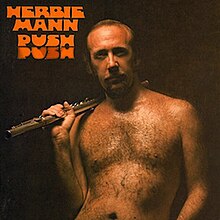
But the flute isn't yet history and has life beyond ridicule, however hard Ron Burgundy has tried. Jazz flautists have a small yet important page in the history of that music, if often more an extra trick up the sleeve of saxophonists, than necessarily the main deal. Herbie Mann came closest to making the jazz flute cool, if also, by that dreadful album cover, near inventing the parody above. In the 1970s he had even enough crossover appeal to be seen as cool to have a copy of any other of his works under your arm. I especially liked Memphis Underground, from 1969. Other notable jazzers with a taste for tooting, sorry, fluting, as many many jazz musicians allegedly had a penchant for tooting, would include Eric Dolphy and Rahsaan Roland Kirk, who could switch effortlessly between any number of saxes and flute. He could play more than one at a time, but am uncertain if that were ever possible between saxophone and flute. And, yes, that was nose flute at one stage in that clip, sparing having to mention it later.....

Rock flute had a very narrow window, beginning and near ending with Ian Anderson's manic persona in Jethro Tull. But, ahead of their folk-prog prime, they were a more straight ahead blues band, and the blues-rock scene was littered with flute solos. If were a band I was particularly fond of, with their vibe a mix and match of jazz, blues, rock and r'n'b. Both their reedmen, Dick Morrissey and Dave Quincy, were adept on the instrument. Of course, prog rock was awash with flute, much appreciated in whimsical and pastoral interludes in sidelong epics about dragons and princesses. Early Genesis were enthusiasts, as Peter Gabriel could play a bit, something he has kept distinctly quite about since going solo.


Folk flute has had two distinct rotes, in trad. inspired music and in fey singer-songwriter, of which the former has tended to date better. The list of Irish and Scottish bands able to whip out a flute, amongst all the all other panoply of pipes and fiddles are legion, with the name Michael McGoldrick perhaps standing out. Initially with Capercaillie, he has a successful solo career alongside working with and in Mark Knopfler's band, as well as in the house band for Transatlantic Sessions. His name, and that of Brian Finnegan, are two names that can act as a guarantee of classy playing, should you ever spot either on a CD  cover. Before Capercaillie, they actually played together, in the same band, Flook, along with a third flautist, Sarah Allen. Here's an old clip, followed by some early John Martyn, who was certainly anything other than fey, even if this example may be. The flute is by estimable jazz parper Harold McNair, often alongside Donovan in his early recordings also.


Country flute? Blues flute? Well, not a lot. I suppose Marshall Tucker Band might (just) about fulfil the first and Canned Heat, arguably, the latter, but that isn't all there is to this to this piece as I have to include a nod to more modern forms of music. A clip or two, even, from this century might help give some semblance of my not being some ancient dinosaur, even if I am. So, with a leap and a bound it is, oh, still only 1994, but the Prodigy, hey, kids, Granpa's gone all hepcat, daddio. Actually before they hit their chart topping prime, I remember hearing this and being absolutely astonished, and unable to get the ear worm flute melody out my head. I still can't.

Is 2010 near enough for you? Ever heard of Shpongle? I love 'em, that weird hinterland of dance and world musics, bundleed up into a somewhat lysergic trance like state, not that I have any experience of that particular trip, and placed into the somewhat niche genre of psybient: psychedelic ambient. Whilst it is true that one of the duo, flautist Raja Ram, actually kickstarted his career as far back as the late 60s, as a member of Ladbroke Grove raga-rock stoners, Quintessence, his, um, diet, has clearly done little harm, and he continues to ply his chosen path with no little wizardry. Whilst Ram is still upright, flute still has a place.

Too much here to pint you to all their product, so let's just go here, for something completely different. Keep them flutes a tooting!!


Thursday, September 9, 2021

Woodwinds: Sing, Sing, Sing

Benny Goodman: Sing, Sing, Sing
[purchase

My last couple of postings haven’t been all that popular with the readership. I’m not sure why an instrumental cello cover of a King Crimson song, or a difficult Velvet Underground song featuring a droning viola might not be all that attractive…..So to try to pander to the readers and rack up views, I’m going to write about a 12 minute jazz song that was performed in 1938. I suspect that it will blow up the Internet! 

When the great clarinetist and bandleader Benny Goodman considered playing a concert at New York’s Carnegie Hall in the late 1930s, jazz had never been performed there. Initially concerned that jazz would not go over well at the bastion of classical music propriety, it was only after his movie, Hollywood Hotel, was a hit, that Goodman decided to go for it, and canceled recording dates to rehearse inside the venerable venue. Goodman’s initial concerns about financial success proved unfounded, when the 2760 seats sold out weeks in advance—the best seats cost $2.75, but third balcony and standing room seats cost 85 cents (depending on the website, $2.75 then is worth somewhere between $30 and $55 today, which is not bad, considering that if you wanted to go to Carnegie Hall next February to see Jon Batiste, the tickets range from $46-$65—but if you wanted to see Michael Feinstein, it would set you back between $83-$100). 

Goodman’s orchestra was racially mixed, which was also groundbreaking for its time, and many writers have remarked that this concert was the point at which jazz became respectable (although some might consider that a bad thing, I guess). 

In addition to performances by Goodman’s small groups and big band, there was a jam session that included members of the Count Basie and Duke Ellington orchestras. But the finale was what Goodman considered a “killer-diller” designed to get the patrons up and dancing—the Louis Prima penned “Sing, Sing, Sing.” As a brief aside, my introduction to this great song was when my high school band director, Mr. Sitts, had us play a marching band arrangement of the song at halftime of a football game. What I most remember about that was that I was playing bass drum, and had to keep a steady beat with one hand, while playing another rhythm with my other hand, which to this day, I remember being difficult. But Clarkstown North had a pretty strong marching band back in those days, so we did what we had to do. 

The song begins with drumming from the great Gene Krupa, who had zero problems playing independent rhythms with both hands and feet, and eventually, pretty much everyone gets a solo, with Goodman’s appearing to ascend above the clarinet’s range. The song brought the audience to its feet, with some dancing in the aisles, not something that happened during the classical performances at Carnegie Hall. 

The concert was recorded onto acetates as well as on aluminum transcription discs, but were not released contemporaneously because Goodman was distracted by other projects, and because of the use of musicians from various bands, there were difficult contractual issues to resolve. The aluminum discs, which were of higher quality, were filed away by CBS and forgotten. In 1950, Goodman’s niece, who had taken over his apartment, found the degraded acetate, and through difficult work, much of it was restored, and similarly difficult legal work cleared the music for release in 1950, becoming one of the first 33 1/3 records to sell over a million copies. Phil Schaap, who passed away on Tuesday, found a second set of acetates and worked to improve the quality, and the album was re-released in 1985. In 1998, a CD version was released based on the aluminum masters, improving the sound quality again, and there have been various CD releases and remasters since.

Tuesday, September 7, 2021

WOODWINDS: KATE ST.JOHN

Woodwinds seem often made of brass, which is confusing, but don't include horns, except the english horn, which seems to be a form of clarinet. And, even more extraordinarily, that includes bagpipes and accordions, but don't panic, I'm not going there, at least not this week. So, choices, choices and I think I'm going for oboe, as it looks so darn difficult, like trying to blow a hard-boiled egg down a curtain rod. And because the list of greatest oboe player in rock is a short and exclusive list. To be fair most people falter after Andy Mackay

I'd like to show you and explain how Kate St. John has a better claim to that title. And, as I write this down, I find myself suddenly panicking, realising she is probably playing cor anglais, or some such, in the songs I use to apply my thesis. Luckily, hardly any reader will be capable of telling the difference; it seems it is all to do with available pitch, the cor anglais (or english horn, see above, who knew) having access to the lower notes.

So, that exquisite sound on Julian Cope's 'World Shut Your Mouth' album is oboe/cor anglais and is played by Kate St John. Originally classically trained, well, you'd have to be, she will be familiar to older readers as being a core member of those fey purveyors of winsome pop, The Dream Academy, who, for some strange reason I confuse with the nothing like them at all Dream Syndicate, who never knowingly branded woodwinds at all, in love or warfare. (OK, I lied.....). I like the video below as it actually shows off Ms St. John on active service, the Smith's cover version being the one from the film, 'Ferris Bueller's Day Off'.


At this time she was married to Sid Griffin, the all americana leader of the Long Ryders, who actually were label mates of Dream Syndicate, adding to the confusion. The oboe never comes to mind often in country tinged music, but, hey, she gets there, not until his next band, the Coal Porters. (And it is cor anglais here, nitpickers!!) A Gram Parsons song, too, no less.


Later, in the 1990s, she worked with a lot withVan Morrison, often on saxophone but still managing to to get her chosen out for when Van needed to go his most transcendental. A lovely, evocative sound, it also transfers well into new age music. In the short lived band Channel Light Vessel, she hooked up with Roger, brother of Brian, Eno, Bill Nelson and Laraaji. I suspect I was one of the few who bought anything by them, with it being, it's true, seldom the record I need to hear too much of, but it has its moments.


Other contributions have included playing with the Waterboys on their 2011 'Appointment With Mr Yeats'; if she could do Donne with Van, she could certainly do Yeats with Scott!! Whether it all works is arguably up for grabs, but it has the song below is worth it for the burst of play that comes after Scott's doleful sing song recital.


In more art imitating life, she got also to tour with Morrissey, perhaps getting to play her oboe part for 'Please, Please Let Me Get What I Want' with one of the songwriters. Other folk who paid up for her live contributions have included Marianne Faithfull and Damon Albarn. And she has been credited to discs for those as varied as the Pet Shop Boys, XTC and Boyzone. However, by now married to Neil MacColl, son of Ewan and half-brother of Kirsty, she has found a niche as the musical director for a number of big production shows and projects. These have included Joe Boyd's Nick Drake tributes, some of the late Hal Willner works, like his Rogues Gallery Sea Chanteys project, and various collective performances of the Richard Thompson and extended family performances. Husband and wife have also worked together on a number of film and TV scores. Whilst this means she is now more often arranging and on keyboards, like the song below, it is too good not to include, her link with MacColl drawing her into folk networks and the songs of her late father-in-law, had he ever been alive to meet her.


Busy, busy woman, and, now you know, I dare say there is way more of her you have heard than earlier you ever knew. 

Take a chance?