









Showing posts with label Genesis. Show all posts

Wednesday, May 25, 2022

Only: The Only Ones


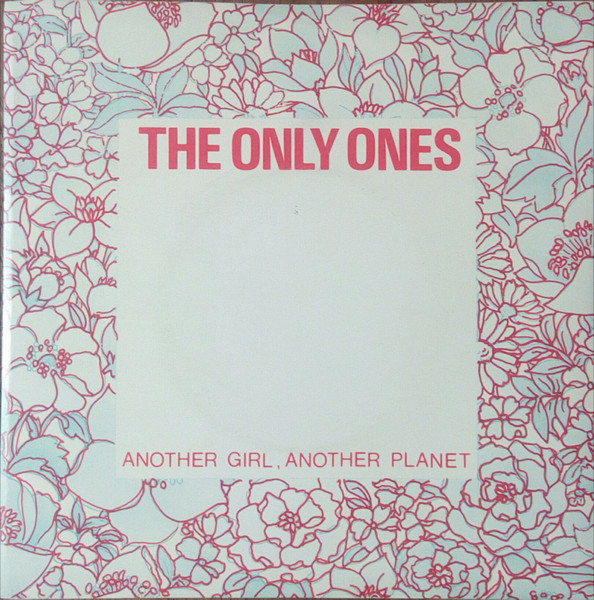
The Only Ones: Another Girl, Another Planet
[purchase

If you are a regular, and long-time, reader of Cover Me, this piece may seem a little familiar.  But I don't think that it counts as plagiarism if I steal from myself.  Think of it as an "adaptation," OK?  And this is a song that deserves a post on this blog, too.

It is somewhat ironic that most people know only one song by the Only Ones— “Another Girl, Another Planet.”  Originally released in 1978, it received minimal airplay and attention (but it was pretty regularly played on WPRB during my time there), but its reputation has grown exponentially over the years.  The Allmusic review of the song asserts that it is “arguably, the greatest rock single ever recorded.”  Of course, people will “argue” about anything, and choosing “Another Girl” as the greatest rock single ever is a bit of a reach, but you have to give the reviewer his due for taking a stand.  It is a great song, and it is fitting that it ultimately received the acclaim that it deserved.

The Only Ones formed in London in 1976, led by distinctively anguished vocalist and songwriter Peter Perrett joined by guitarist/keyboard player John Perry, Alan Mair on bass, and drummer Mike Kellie.  Featuring strong songwriting by Perrett and surprisingly (for punks of the era) competent playing by the band, they self-released a single, “Lovers of Today.” It sold well enough that a bidding war broke out among major labels looking for the next big thing.

While the label battles raged, the band took refuge at Escape Studio, run by producer John Burns, to record some tracks.  The unlikely marriage of Burns – who had started in the industry engineering albums by bands like King Crimson, Jethro Tull, and Humble Pie, and who had co-produced three decidedly not-punk Genesis albums – and the Only Ones somehow worked.  They finished their efforts at Escape with three 16-track demos, including “Another Girl, Another Planet.” In fact, after signing with CBS Records, and re-recording “Another Girl” at a bigger, fancier, 24-track studio, it ultimately became clear that the “demo” was the right version, and it is the one that was released (with a bit of additional overdubbing to take advantage of the additional tracks).

Despite the quality of the song, it encountered resistance, in part because it was not punk enough for the purists and too punk for mainstream play, but also because the song was perceived to be about drugs.  It wasn’t.  As Perrett stated in a 2015 interview:

It was inspired by this girl from Yugoslavia. I didn’t go out with her, but she was like a total space cadet, which when I was really young I found interesting. She was just a bit weird – she’d say crazy things, and it just got me thinking that every girl has something different to offer.

As for the drug imagery?  Perrett explains:

I put in drug-related imagery, but it wasn’t about drugs. At that time I was more addicted to sex and infatuation than I was to drugs.

Although the band’s three studio albums were generally well received, and they even opened for the Who, by  1982 the Only Ones had disbanded, in large part due to Perrett’s drug problems.  When Johnny Thunders (who later, sort of, covered the song) suggests that you need to clean your act up, you know you are messed up.  There was a short-lived reunion in 2007, and another in 2014.  Perrett released an album, How The West Was Won, in 2017 to excellent reviews, and is touring (although his US and Canada dates were cancelled due to visa problems).

Despite its lack of chart success, “Another Girl, Another Planet” has become a regular part of Best Of lists, compilation albums, box sets, and soundtracks over the years, and has become an often covered song.  And if you want to here Five Good Covers of the song, and links to a few more, check out the Cover Me link above.

I'll try to write something new for next week.
Thursday, April 21, 2022

Bloom: When The Apple Blossoms Bloom In The Windmills Of Your Mind I’ll Be Your Valentine

ELP: When The Apple Blossoms Bloom In The Windmills Of Your Mind I’ll Be Your Valentine
[purchase

You might have noticed that I’ve long been a fan of prog rock and have often filled this space with discussions of it. You also might have noticed that I’ve never written about one of the most well-known prog bands, Emerson, Lake & Palmer (although, I have mentioned their bassist/vocalist Greg Lake, mostly in the context of his work with King Crimson, which I have written about probably too many times). And that’s because I was never that big a fan of ELP. Although there are a handful or so of their songs that I’ve liked, and I appreciated their musical virtuosity, I don’t think that I have ever bought a full ELP album in any format. There was always something about their music that left me a little cold, while I think that the more emotional music of their contemporaries Genesis and Yes appealed to me more. 

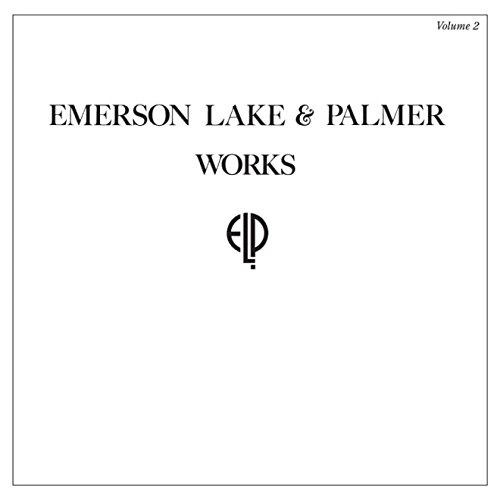
Despite a run of popular and well-received (except by the prog-haters) albums in the early 1970s, it seemed that by the middle of the decade, as the genre began to lose favor, ELP also appeared to lose creativity and cohesiveness. Their 1977 album, Works Vol.1 was a double album, with each member of the band getting one side, and the fourth side was collaborative. Although it sold well, it really wasn’t good, although the band’s version of Aaron Copland’s “Fanfare For The Common Man” was fun (and is on my list of ELP songs that I like). Later that year, they released Works, Vol. 2 which was essentially an odds and ends compilation of B-sides and unreleased tracks. Since most of these came from an earlier period when ELP was firing on all creative cylinders, it has more good stuff on it, including our feature song. 

“When The Apple Blossoms Bloom In The Windmills Of Your Mind I’ll Be Your Valentine” is a relatively short song for ELP, clocking in at just under 4 minutes, with a title that takes almost as long as that to say. (but if you want long titles, check out the Red Sparowes). It’s an upbeat and relatively unpretentious (by ELP standards) instrumental that may well have started as a jam. You can hear the musical talent of the three musicians and enjoy their playing on this track. It was recorded during the Brain Salad Surgery sessions and was released as the B-side to the “Jerusalem” single. 

Works, Vol. 2 was less commercially successful than its predecessor, which is probably what economists call a lagging indicator. But it also pretty much the end for ELP. Their next album, the contractually required Love Beach, which features the band members posing with mostly open shirts near a beach, appeared to be an attempt to pivot toward more pop-oriented music, much as Yes and Genesis were doing in this period, but without any real conviction. Moreover, the band was breaking apart even more, with Lake and Palmer recording their parts and fleeing the studio, leaving Emerson to finalize the album. It sold OK, but was not well received by critics, even those who still liked the genre. 

Other than a few live releases, a few partial reunions that included other musicians replacing absent core members, and a brief full reunion in the 90s, that was pretty much it for ELP. Emerson died in 2016 of a self-inflicted gunshot, and Lake died of cancer the same year.

Monday, February 28, 2022

Weather: Which Way The Wind Blows

Anthony Phillips: Which Way the Wind Blows
[purchase

I’ve been having trouble with this theme (and, based on the lack of posts, I’m not the only one)—not that there is a lack of appropriate songs, because there are tons, but for me, there has to be some reason to write about the song—like a personal story, a political connection, or just because I want to write about the artist or song. So, when this song came up in a search, and I listened to it again (after many years), I realized that this song could actually have worked for our “What If” theme that I enjoyed. Plus it has been nearly two months since I’ve delved into the world of prog-rock obscurity, so why not? 

This song sort of answers the burning question, “What if Anthony Phillips had never left Genesis?” 

I’m pretty sure that I’ve discussed the origins of one of my favorite bands somewhere—original members Peter Gabriel, Tony Banks, Mike Rutherford, Anthony Phillips and Chris Stewart all met in the 1960s at the Charterhouse School in England. Eventually connecting with older Charterhouse alum, the singer, songwriter, producer and convicted child abuser Jonathan King, who named the band and got them signed. Stewart left and was replaced by another Charterhouse alum, John Silver, who was later replaced by John Mayhew. After recording their second album Trespass, Phillips, the guitarist, quit, due to bad health and stage fright, and was eventually replaced by Steve Hackett; Mayhew was sacked and replaced as drummer by Phil Collins. 

So, let’s say that Phillips never left, so Hackett never joined. In the short term, there probably wouldn’t have been much difference because both guitarists, who became good friends, acknowledge that their sound and sensibilities were very similar, but our featured song gives you a sense of what the band might have sounded like after Gabriel left, and Collins stepped up as lead singer. 

After Phillips left Genesis, he wanted to continue a project he had been working on with Rutherford but first decided to expand and improve his musical knowledge and ability, studying classical music, orchestration and harmony, and taking lessons in guitar and piano. Eventually, Phillips and Rutherford returned to their project, which was slowed by the fact that Rutherford’s commitments to the increasingly popular Genesis were taking up more and more time. A push to finish the album came in fall 1974, when Steve Hackett injured his hand, delaying a Genesis tour, and allowing Phillips and Rutherford time to complete the bulk of the recording. In addition to bringing Collins in to sing on two tracks, Hackett’s younger brother John contributed flute on some of the songs. 

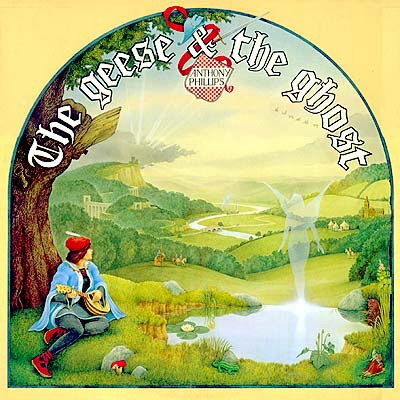
The album, The Geese and the Ghost, was finally finished in 1976, but Genesis’ label Charisma refused to release it, so it sat in the vaults until March 1977, just as punk was on the rise, and the sort of lyrical classical/folk influenced prog rock of the album was falling out of favor, and it was a commercial failure. Compare that to Hackett’s first solo album, Voyage of the Acolyte, which was mostly recorded around the same time, and also included contributions from Collins on vocals (and drums), Rutherford and John Hackett, but was released in 1975, and charted in the UK and (just barely) in the US. 

Our featured song, “Which Way The Wind Blows,” is a quiet ballad featuring Phillips, Rutherford and Collins, and would not have sounded at all out of place on Trick of the Tail, the first Genesis album on which Collins served as lead vocalist, released in 1976. Compare it, for example, to “Ripples,” from that album. 

Phillips tried to move toward a more pop direction, but that also was unsuccessful (although I found this track fun), and while he has released other solo albums, Phillips’ focus was more on soundtracks and “library music,” and occasionally guesting on projects with Rutherford, Camel, and Hackett.


Sunday, September 12, 2021

WOODWINDS: FLUTE LOOPS

 Flutes tend to get a lot of stick these days, whether hewn from a stick or crafted in the finest bamboo, brass or even bone. They just aren't seen as cool anymore. Even in folk music, for long the mainstay of this edge blown aerophone(!), there is a danger it is being surreptitiously supplanted by the low whistle, that new usurper on the scene. (The low whistle, whilst based on the simple "penny" instrument, probably only became an entity when Finbar Furey, the Irish Uillean piper asked Brian Overton to fashion a "big" whistle from, legend has it, a piece of surplus plumbing. However, culture vultures, it likely existed before in the format of a fipple flute, an instrument that then later lost favour.)

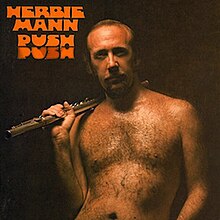
But the flute isn't yet history and has life beyond ridicule, however hard Ron Burgundy has tried. Jazz flautists have a small yet important page in the history of that music, if often more an extra trick up the sleeve of saxophonists, than necessarily the main deal. Herbie Mann came closest to making the jazz flute cool, if also, by that dreadful album cover, near inventing the parody above. In the 1970s he had even enough crossover appeal to be seen as cool to have a copy of any other of his works under your arm. I especially liked Memphis Underground, from 1969. Other notable jazzers with a taste for tooting, sorry, fluting, as many many jazz musicians allegedly had a penchant for tooting, would include Eric Dolphy and Rahsaan Roland Kirk, who could switch effortlessly between any number of saxes and flute. He could play more than one at a time, but am uncertain if that were ever possible between saxophone and flute. And, yes, that was nose flute at one stage in that clip, sparing having to mention it later.....

Rock flute had a very narrow window, beginning and near ending with Ian Anderson's manic persona in Jethro Tull. But, ahead of their folk-prog prime, they were a more straight ahead blues band, and the blues-rock scene was littered with flute solos. If were a band I was particularly fond of, with their vibe a mix and match of jazz, blues, rock and r'n'b. Both their reedmen, Dick Morrissey and Dave Quincy, were adept on the instrument. Of course, prog rock was awash with flute, much appreciated in whimsical and pastoral interludes in sidelong epics about dragons and princesses. Early Genesis were enthusiasts, as Peter Gabriel could play a bit, something he has kept distinctly quite about since going solo.


Folk flute has had two distinct rotes, in trad. inspired music and in fey singer-songwriter, of which the former has tended to date better. The list of Irish and Scottish bands able to whip out a flute, amongst all the all other panoply of pipes and fiddles are legion, with the name Michael McGoldrick perhaps standing out. Initially with Capercaillie, he has a successful solo career alongside working with and in Mark Knopfler's band, as well as in the house band for Transatlantic Sessions. His name, and that of Brian Finnegan, are two names that can act as a guarantee of classy playing, should you ever spot either on a CD  cover. Before Capercaillie, they actually played together, in the same band, Flook, along with a third flautist, Sarah Allen. Here's an old clip, followed by some early John Martyn, who was certainly anything other than fey, even if this example may be. The flute is by estimable jazz parper Harold McNair, often alongside Donovan in his early recordings also.


Country flute? Blues flute? Well, not a lot. I suppose Marshall Tucker Band might (just) about fulfil the first and Canned Heat, arguably, the latter, but that isn't all there is to this to this piece as I have to include a nod to more modern forms of music. A clip or two, even, from this century might help give some semblance of my not being some ancient dinosaur, even if I am. So, with a leap and a bound it is, oh, still only 1994, but the Prodigy, hey, kids, Granpa's gone all hepcat, daddio. Actually before they hit their chart topping prime, I remember hearing this and being absolutely astonished, and unable to get the ear worm flute melody out my head. I still can't.

Is 2010 near enough for you? Ever heard of Shpongle? I love 'em, that weird hinterland of dance and world musics, bundleed up into a somewhat lysergic trance like state, not that I have any experience of that particular trip, and placed into the somewhat niche genre of psybient: psychedelic ambient. Whilst it is true that one of the duo, flautist Raja Ram, actually kickstarted his career as far back as the late 60s, as a member of Ladbroke Grove raga-rock stoners, Quintessence, his, um, diet, has clearly done little harm, and he continues to ply his chosen path with no little wizardry. Whilst Ram is still upright, flute still has a place.

Too much here to pint you to all their product, so let's just go here, for something completely different. Keep them flutes a tooting!!


Wednesday, October 7, 2020

Empty: The Void (Filler)


Titus Andronicus: The Void (Filler)
[purchase

Titus Andronicus is a frustrating band. (Shakespeare’s Titus Andronicus, a play that I’ve never seen, is also supposed to be pretty frustrating, and for years was considered to be his worst play. But, as it always seems to happen, it appears that this appraisal has changed. End of gratuitous Shakespeare section). They’re frustrating because they have incredibly grand ambitions, but don’t always live up to them. Because some of their music is really great, and some of it is headscratching. Because the band’s leader, Patrick Stickles, can be incredibly open and interesting when interviewed, but sometimes comes off as difficult. Although he suffers from various mental health issues, which may explain some or all of this. And, by some reports, sometimes their live shows are great, and others stink. 

And I need to admit that part of my frustration is that I recognize that Titus Andronicus is a band that requires the kind of attention that I haven’t really been able to focus on music since maybe college. 

Back when I was in high school, it was not uncommon for bands to create “rock operas” or albums that had some sort of overarching narrative. Some of these were and are considered classics, and others were considered silly or pretentious or indecipherable. As punk music began to gain notice, one of the things that you heard regularly was that the simple, stripped down music was a reaction to the excesses of classic rock and prog, and all of the hifalutin’ pretense, particularly the rock opera and its ilk. 

Eventually, though, punks succumbed to the artistic temptation of trying to create a song cycle with a narrative, and the stories that were told often rivaled the prog masters for incomprehensibility. Although the music was, generally, more concise. 

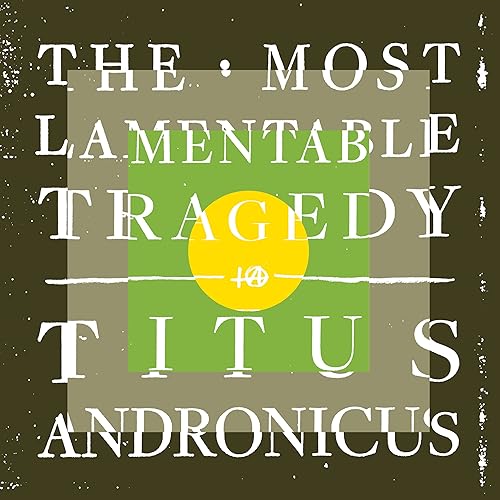
It probably came as no surprise to fans of Titus Andronicus, though, a band that fused punk with large helpings of Springsteen-esqe rock, that Sickles would attempt his own rock opera. As a Civil War buff of sorts, I first became aware of the band in 2010 when they released The Monitor, which used themes from the Civil War to reflect Stickles’ emotional issues. And some of the music really was thrilling. Their next album, Local Business, was more straight-ahead rock, but for 2015’s The Most Lamentable Tragedy, Stickels created a rock opera lasting more than an hour and half, on the topics of mental health and neurodiversity. As Spin explained

the rock opera’s plot is roughly as follows: A manic-depressive young man meets a lookalike who shows him, through pharmacology and/or religious awakening, a better way of life. He meets and falls for a girl, but has become drug-dependent and experiences a breakdown. He nearly ends it all, but learns at the last second that life is worth trudging through. It’s basically impossible to track the story just by listening — Stickles’ guttural spitting makes many tracks indecipherable — but Quadrophenia and American Idiot were hardly coherent original screenplays, either.

And have you ever read the liner notes to The Lamb Lies Down on Broadway?

The music is also diverse; while most of it skews punkward, there are also electronic/noise interludes, poppy songs, some clear Springsteen homages, fiddle-heavy Celtic rock, and a version of “Auld Lang Syne.” And it was reviewed in The New York Times

Toward the end, is “Into the Void (Filler),” a hard rocker with more than a little bit of Bob Mould/Hüsker Dü influence. I’ve read the lyrics and I’m frankly not at all sure about what it means, but if it is part of a piece about mental illness, maybe it not a surprise that it is hard to decipher. I still don’t know, though, whether the “Filler” in the title refers to filling the titular void, or that the song is filler, but I don’t think so, because it's pretty good (although I've never seen it mentioned in any of the reviews I read in preparing this piece).

I saw Titus Andronicus in 2013 at Terminal 5 in New York with my son, where they were the second act on a bill with The Menzingers opening and Lucero closing. I was excited to see Lucero for the first time since 2006 and to hear Titus Andronicus, but had never heard of The Menzingers. I think that Terminal 5 had really crappy sound, so the loud fast dense sound of Titus Andronicus was hard to listen to or understand (and looking at the setlist now, it appears they played a few songs from the not yet released The Most Lamentable Tragedy). Lucero was fine, although not as good as the first time, although it was maybe because of the bad sound. The Menzingers, though, made a good impression.

Friday, June 12, 2020

Open/Close: Opening Out


Renaissance: Opening Out
[purchase]

It’s been a while since I’ve reached into my prog-rock bag, so let’s talk about Renaissance. I’m guessing that most of you, when and if you think of Renaissance, you think of the classically-influenced band fronted by singer Annie Haslam, the incredible singer with the amazing five-octave range. And if you are a slightly bigger fan, you might recognize some of the other members of the band’s “classic” lineup, bassist Jon Camp, guitarist Michael Dunford, keyboard player Jon Tout, and drummer Terry Sullivan. That’s the band that I was aware of and saw live in the late 1970s. But not a single one of those musicians were part of the band when it started.  And after this “classic” period, the band again went through a revolving door of musicians--for a while there were even competing bands touring as Renaissance. A full discussion of that gets tedious (and for some, it might have already), but I will hit a few high points before getting to the song at issue.

Renaissance was formed in 1969 when the Yardbirds were in the process of morphing into Led Zeppelin. Two of the departing Yardbirds, Keith Relf and Jim McCarty, eventually formed a band that included, among others, Keith’s sister Jane Relf, a singer, but after an album and a tour, this band exploded while working on their second album (Illusion, initially released only in Germany), leaving only pianist John Hawken and Jane Relf. One of the additional musicians that joined at this point was Dunford. After a few more spins of the revolving door, Haslam and Tout joined, and Dunford moved to a behind the scenes role.

The band’s manager, Miles Copeland, III (yeah, the same one who later managed The Police and started famed new wave label I.R.S. Records), refocused the band on Haslam’s soaring voice and Tout’s keyboards, and after cycling through bass players (including John Wetton), they brought in Camp. It took a while to land on drummer Sullivan, and various guitarists came and went before Dunford returned to play guitar. This lineup, essentially, recorded the band’s most famous albums which included some brilliant music, but also some that suffered from the excesses of the genre, from 1972’s Prologue through 1979’s Azure d’Or. But 1979 was a bad time for classically influenced, complex rock, and the band hemorrhaged members before trying to pivot towards more new-wave/pop sounds, releasing two mostly forgotten albums on Copeland’s I.R.S. Records before disbanding.

In the mid-90s, both Dunford and Haslam toured with separate “Renaissance” bands, subsequent reformations with various core members and new additions went nowhere, and the deaths of lyricist Betty Thatcher, Dunford, and Tout in the late 2000s prevented any further reunions. A version of Renaissance, fronted by Haslam, but with none of the members of the classic lineup, toured recently (until you couldn’t anymore), and has released some albums, but again, not to much notice.

Oh-and just to confuse things further, back in the 70s, after the death of Keith Relf, Jim McCarty reformed his version of the band, naming it Illusion, and released two albums, the second of which was called Illusion, so that both that band and the original Renaissance have second albums with the same name. And the McCarty led-group released an album in 2001 as “Renaissance-Illusion.”

Our featured song is “Opening Out,” from 1978’s A Song For All Seasons, which was produced by David Hentschel, who had come off a run of producing a series of Genesis albums that gradually transitioned towards more straightforward pop and better commercial success. A Song For All Seasons, too, had generally shorter songs than before, but still mostly contained the sort of prog rock that Renaissance was known for, although it did spawn a hit single in the UK, “Northern Lights.” “Opening Out,” which was the b-side to that single, features Haslam’s voice, The Royal Philharmonic Orchestra, and some nice, yearning lyrics, but seems to fade out a little too soon.

Friday, June 7, 2019

Trees/Grass: Stumpy Meets The Firecracker In Stencil Forest


Happy The Man: Stumpy Meets The Firecracker In Stencil Forest
[purchase]

It has been a while since I’ve written about prog rock, and I initially considered writing about two songs from one of my favorite Genesis albums, Selling England By The Pound, “The Battle of Epping Forest,” based on a real gang war, because “forest,” and/or “I Know What I Like (In Your Wardrobe),” about a groundskeeper who says, “Me, I'm just a lawnmower/You can tell me by the way I walk.”

But no, let’s go deeper into the prog rock weeds.

Prog, at least back in its heyday of the early/mid 70s was really a European thing. Most of the famous bands associated with the genre are English, German, French, Italian, etc. But there were American prog bands. Back in 2015, Rolling Stone published a list of the 50 Greatest Prog Rock Albums of All Time, and fittingly, most were from European bands, most of which you have probably heard of (including the aforementioned Selling England By The Pound, at No. 6. The highest ranked U.S. album was from Frank Zappa and the Mothers of Invention, One Size Fits All (Canadians Rush, though had albums ranked 3 and 11.)

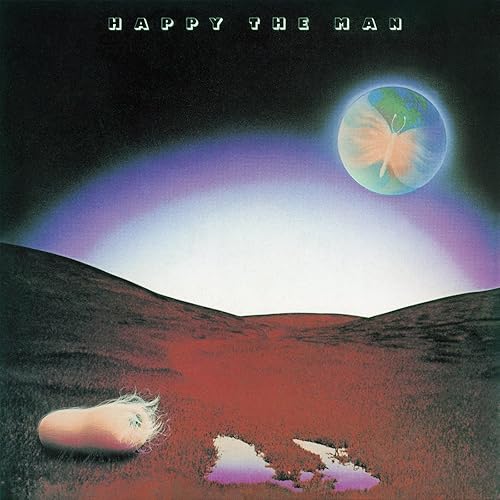
Bringing up the rear, at 50, was the self-titled debut album from a band that many consider the greatest American prog band of them all, Happy The Man, maybe, the greatest band that you’ve never heard of.

Formed in and around James Madison University in Virginia in 1973, the band predictably went through lineup changes before settling down, moving to Washington, D.C., and becoming well-known enough that Arista Records signed them. And at about the same time, the newly solo Peter Gabriel met with the band and demoed a couple of songs, before Gabriel decided to go in a different direction for his first album. I kind of wish he had stuck with HTM, though, because it probably would have been great.

These guys could play, with complex songs mixing Zappa, Gentle Giant and Canterbury Scene type songs with more Genesis like ballads. What they really couldn’t do was sing, or write lyrics (often an issue with bands of this type). But if you stick to the instrumentals, you will be blown away.

“Stumpy Meets The Firecracker In Stencil Forest” is a great, knotty instrumental, featuring great guitar, sax and synth playing, and if the often excessive length of prog songs turns you off, it is a compact 4:16. (And look, just because the title references a “stencil forest,” that doesn’t mean that it doesn’t have trees. The Black Forest isn’t black, and is filled with trees. Rain forests aren’t made of rain. Bighorn National Forest isn’t filled with sheep. Just saying.)

After releasing their debut, Happy The Man toured around the country, opening for bands as diverse as Renaissance and Hot Tuna, and recorded and released a second just slightly less amazing album, Crafty Hands. Neither album sold at all, and Arista dropped them. A third album was recorded in 1979, but not released until 1983 (I’ve never heard it), and keyboard player Kit Watkins left to join the somewhat more famous British band Camel. Other members of HTM formed and played in obscure bands or as solo acts over the years, and there was a brief reunion in the early 2000s.

If you like this genre of music and haven’t heard of Happy The Man, check out this song, and their first two albums (feel free to skip the three songs with vocals, but they do have some merit).

Tuesday, October 30, 2018

Trick/Treat: A Trick of the Tail


Genesis: A Trick of The Tail
[purchase]

So, my last post was about a band that started off very proggy, then gradually got poppier, before hitting it big. Why not follow that with a post about band that started off very proggy, then gradually got poppier, before hitting it big?

There are some differences, however. First, writing about Supertramp was a new experience for me, and to be fair, they were a band that I liked, but never really loved. Genesis, on the other hand, is a band that I have long loved, even after it was no longer remotely fashionable, and about which I have written a few times. Also, Supertramp’s early albums are pretty much forgotten, while Genesis’ (except their first), are still fondly remembered by those who enjoy the genre. And Supertramp essentially faded into oblivion after their major breakthrough, while Genesis continued to be successful, as they became more and more mainstream, to the point that even I gave up on them.

Many fans consider Genesis’ album The Lamb Lies Down on Broadway to be a creative peak, and in some ways, it was—complex, dark, and in many places, brilliant. On the other hand, its attempt at a story was pretty much incomprehensible and there are parts of the album that sort of work in the story, but you really don’t want to listen to more than once. As most Genesis-ophiles know, after The Lamb, singer and visual focus Peter Gabriel decided to stop being part of the scenery and left the band.

Despite what many people may believe, The Lamb was not only a Gabriel project—most of the music for that album was written by the other members of the band, with the lyrics being written by Gabriel—a departure from the band’s prior more collegial practices, which led to the tensions resulting in Gabriel’s quitting. Although the music press assumed that this would be the end of the band, the remaining members wanted to continue—and the fact that they did so successfully does put to lie the myth that Gabriel was the creative heart of Genesis.

Determined to create a great new album, the band wrote a bunch of songs that hearkened back to the album before The Lamb, Selling England By The Pound, with a more pastoral, more English, more fun sound, and also included some jazzier sections, influenced by Phil Collins’ work with Brand X. It is an oft-told story that they auditioned a number of singers, assisted by Collins, but none clicked. So, like many organizations, they decided to promote from within, and Collins seized the front-man role and ran with it, ultimately doing credible versions of many of the songs originally sung by Gabriel. No, he didn’t have Gabriel’s edginess or weirdness, but he had a nice voice, and a genial, amusing stage presence.

The album, A Trick of the Tail may well be the point where Genesis best balanced its prog-rock heritage and its newer pop sensibility. There are many songs on this album that I love as much as anything that preceded them, and the title track, while not my favorite, is still a fine song. Based loosely on one of William Golding’s not-Lord-of–the-Flies books, The Inheritors (remember, songwriter Tony Banks was a graduate of the Charterhouse School, one of the oldest “public” schools in England), it is about an alien character who leaves his own world for that of humans, where he is captured and displayed as a freak, before escaping back to his “city of gold,” evading the humans who sought to plunder it. It is a bouncy pop tune, with the playfulness of older songs such as, say, “Harold The Barrel,” or “I Know What I Like,” and while it has its more complex moments, it is definitely a move toward pop, but to me, not in a bad way.

It also was the first Genesis song to have a video, and it is truly appalling. I mean really, really bad. Which is remarkable, because it was directed by the same guy who did the great video for “Bohemian Rhapsody.”

So, check out both the album and song (but not the video, for god's sake), and you are in for a treat. (Sorry.)

Monday, February 5, 2018

Aliens: Flight of the Moorglade


Jon Anderson: Flight of the Moorglade
[purchase]

Reading my music writing probably might give you the impression that I listen to prog rock all the time, but I don’t. More than anything, I listen to what would be classified as Americana music, but I am clearly an unrepentant lover of progressive rock. But just because I enjoy the music, that doesn’t mean that I can’t mock some of its excesses. And maybe the easiest things to make fun of about the 70s prog that I enjoy are the concept albums, with their often bizarre narratives. I mean, there are some pretty straightforward ones, like Rick Wakeman’s Journey to the Center of the Earth, essentially a dramatization of the Jules Verne novel, or Gryphon’s Red Queen to Gryphon Three, about chess (a hidden gem, by the way), or even Pink Floyd’s The Wall, basically a story about a person's difficult childhood and life.

But then there are the crazy ones, like Gong’s acid-fueled three album Radio Gnome Trilogy, or pretty much anything by Magma, or Genesis’ The Lamb Lies Down on Broadway, which purports to be about a Puerto Rican youth living in New York City, but turns surreal (and is one of my favorite albums, anyway).

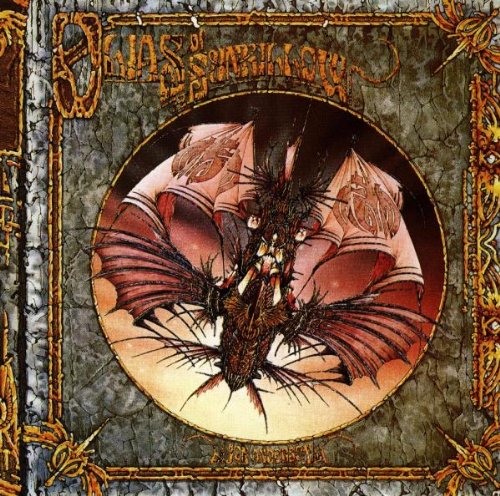
This genre of music, which is often tied up with fantasy and science fiction, is ripe for stories of aliens and interplanetary travel (although as we have seen, other genres go there, too.) And thus, we come to Jon Anderson’s Olias of Sunhillow, the Yes singer’s solo debut, released in 1976, after Yes released Relayer (an album that I have zero memory of) and before Going For The One (which I enjoyed more), during a period when the band’s members were all releasing solo albums. Wikipedia describes the album as telling:

the story of an alien race and their journey to a new world (the story printed in the LP jacket calls it "the earth", lowercase 'e') due to a volcanic catastrophe. Olias, the title character, is the chosen architect of the glider Moorglade Mover, which will be used to fly his people to their new home. Ranyart is the navigator for the glider, and Qoquaq (pronounced 'ko-quake') is the leader who unites the four tribes of Sunhillow to partake in the exodus. 

Now, let me start off by saying that I like this album, and particularly the featured track, very much. Anderson is credited with all of the voices and instruments on the album, which took two years in conception, and 8 months of work, to record. There have long been rumors that Vangelis, who had unsuccessfully auditioned for Yes at that time, and who Anderson collaborated with, played some of the parts, but both men have denied this, and unless Devin Nunes has a memo to the contrary, I see no reason to dispute that (actually, if Nunes had such a memo, it might be more likely that I’d take a contrary position, but I’m going off the rails here).

If you want a chuckle, go ahead and read the whole elaborate story, which was printed on the inner album sleeve. And because most of you won’t buy the album, here’s a link to a website devoted to Olias of Sunhillow which contains the story, and more.

Meanwhile, it appears that Anderson has been working on a sequel to Olias since 2001, to be called The Songs of Zamran: Son of Olias, and as recently as 2014, Anderson confirmed that he is still working on it. Based on his comments over the years, it will be a multi-hour work, and possibly released as an app, including visuals. Here's a preview, from 2013.  And why not, I say?

Wednesday, September 27, 2017

Down: Geese


Camel: The Flight of the Snow Goose  
Anthony Phillips: The Geese and The Ghost
[purchase The Snow Goose]
[purchase The Geese and The Ghost]

One of the joys of a theme-focused blog is that it gives you a challenge to wrack your brain and try to think of a related topic. And it can be fun to take the theme to an unexpected place. Clearly, the obvious way to interpret “Down” is consistent with the thumbnail being used to illustrate the theme—“toward or in a lower place or position.” But the word has other meanings, including certain feathers of a bird used for insulation, often from a goose. So, here we are.

Camel is one of those English prog-rock bands from the 70s that had some success, both critically and commercially, but aren’t generally grouped in the top tier of the genre’s acts. Nevertheless, they released a bunch of good albums and have continued to perform and record until the present day, with a dizzying revolving door of members surrounding founding member Andrew Latimer.

After releasing two albums with minimal success, the band decided to try a concept album. Rejecting a few novels to base their work on, they ultimately decided to attempt to create a work based on a 1941 novella by Paul Gallico (a prolific writer probably best known for The Poseidon Adventure), titled The Snow Goose. It tells the very sentimental story of the friendship and love between Philip Rhayader, a disabled artist living in a remote lighthouse in Essex, England, and a local girl, Fritha. A wounded snow goose is nursed back to flight by Fritha, whose friendship with Rhayader grows, while the goose returns over the years to the lighthouse. Rhayader uses his sailboat to rescue hundreds of soldiers in the Dunkirk evacuation, but is lost. The goose finds Fritha on the marshes, which she interprets as Rhayader’s soul leaving her, and she realizes her love for the lost man. The lighthouse is leveled by German aircraft, destroying all of Rhayader’s work, except for a portrait of Fritha, as a child, holding the injured snow goose.

The story struck a chord, and the book won an O. Henry Prize in 1941. It was read on the radio in 1944, turned into a BBC TV movie in 1971 featuring Richard Harris (as the goose—just kidding), and that won a Golden Globe and was nominated for both a BAFTA and Emmy. When Camel announced that it planned to release their musical adaptation of the book, Gallico gallantly threatened to sue the band (yay, lawyers!), so they were forced to call the album Music Inspired By The Snow Goose, and they had to abandon the idea of using lyrics based on the text, rendering the album fully instrumental. Despite these obstacles, the album, released in 1975, was both a critical and commercial success.

It is a beautiful, moving work, featuring rock instrumentation along with the London Symphony Orchestra (and, on one song, a duffle coat, used to simulate the flapping of wings). It is hard to pick a favorite song, but to be theme-appropriate, I picked “Flight of the Snow Goose,” which starts off slowly, but builds to a triumphant end.

In doing my research for this, I found a review which claimed that the Gallico novella also inspired another song, Anthony Phillips’ “The Geese and The Ghost.” Turns out, that isn't true. In fact, the title derives from two sounds on the ARP Pro-Soloist synthesizer which was used on the album.

Phillips was the original guitarist in Genesis, but left after recording their second album, Trespass, ultimately being replaced by Steve Hackett. Phillips left due to a combination of stage fright and other health reasons, and an aversion to being in the public eye. After leaving Genesis, Phillips decided to study music, and didn’t record anything for a number of years. His solo debut, The Geese and The Ghost, featuring some music that he had worked on while still in Genesis with friend and former schoolmate Mike Rutherford, and solo compositions, was released in 1977.  In addition to Rutherford, Phil Collins provided some vocals (recorded before he succeeded Peter Gabriel as Genesis’ singer) and Hackett’s brother John added flute.

In general, the album is somewhat folky, with orchestral flourishes, and the title track is beautiful. Genesis fans could definitely hear a kinship to some of the quieter moments of Trespass. Phillips went on to release music to little commercial success, more successfully create “library music” for use in films and TV shows, and appear on other artists' albums playing guitar and keyboards.

In fact, in 1982, Phillips appeared on Camel’s album The Single Factor, and co-wrote a song with Andy Latimer. That album is utterly devoid of any goose-related material (which unfortunately cannot be said of our local athletic fields).

Tuesday, September 5, 2017

INCOMPETENT/CAN'T: I CAN'T DANCE

That much is true, and I have tried, Lord, I have tried. Indeed there have been times when I tried so hard, I thought I could, the joy and sweat both unbridled as the floor emptied about me. In fact, my dancing years can be contained within 3 succinct eras. But first the song:


This song, originally by Tom T. Hall, nails many of my feelings, even rationalisations, on the subject, and is written from the position of the lovelorn and forlorn dancehall wallflower, forever watching from the periphery, unable to get his girl on account his "affliction." Tom T. makes it matter of fact in his country boogie shuffle, but Gram imbues an extra poignancy and urgency into his cover, which, incidentally, is pegged up a pace or two, into a somewhat clumsy rhythm that is actually well nigh impossible to dance to. Even if you could.

So how did I deal with this, in phase 1, my youth? Luckily, it being the late 60s and early 70s, with the birth of the underground scene and prog, I could pin my flag to those genres. Sitting cross-legged, head bowed forward, shaking in, or slightly out of, time with the stop-start rhythms of Yes, King Crimson and E.L.P. warranted no knowledge of dancing. Dancing music: soul, r'n'b and disco, was for fools, whether they got the girl, and they usually did, or not.

Stage 2 was an awkward amalgam of conflicting pulls on my position. Punk arrived, and the demolition of all before it, including any orthodox styles of dance. And, yes, I could pogo, I discovered. And, with new wave, that slo-mo running beloved of, predominantly, Sting, came within my canon. But there was also the increased importance of Folk-Rock to me during these years, as I, simultaneously to the Clash and Costello, immersed myself deeper in all things trad.arr. I joined a Morris Dance side. There I had to discipline myself into the rigidity of 4/4 rhythmic movement. Like this:


It was hard, it was difficult, but I nailed it, albeit barely competently. It was bliss. Our side would convene once weekly for practice, and meet at weekends to give displays at school fairs and village fetes. Possibly as a result of this confidence, or probably the women I was taken with, I suddenly "got" the dance floor, hoovering up Motown and Stax into my record collection. I had the confidence of a dyspraxic Travolta and hurtled around equivalently. And for all the toes I trampled and ribs I barged, I apologise. Unreservedly.

For now, phase 3, I know I really can't dance. It is a pity, as my wife loves to and is an avid aficionado of electronica/dance. I love it too, but confine myself to listening in the car. As I drive. Occasionally thumping the windscreen repeatedly with my fist if particularly carried away. Just in case, at the age of 60 I have again joined a morris side, but I know I probably fool myself. And the moves are so much harder than they ever were.

A final reflection comes from proggers turned poppers, Genesis, originally just the sort of anti-dancing music I delighted in,  all those phase 1 years ago, latterly topping all sorts of charts with dance worthy tunes. Although I tell myself I shouldn't, I quite like this change in their style and fortunes, this song demonstrating that they too are not entirely unaware of the irony. So, like this song, maybe this dancing lark is my guilty pleasure.


But don't buy them, buy this

Wednesday, July 19, 2017

On/Off: Turn It On Again

Genesis: Turn It On Again
[purchase]

If you are a fan of Genesis, as I have made it abundantly clear that I am, there are a number of turning points where people jumped on and off the band’s wagon. Genesis’ rise to popularity probably began with their second album, Trespass, which introduced the band’s dense, theatrical progressive style (their debut, From Genesis to Revelation, sounds mostly like a cross between The Moody Blues and pre-disco Bee Gees). From there, the band gathered followers until 1974’s epic (and epically confusing) concept double album, The Lamb Lies Down on Broadway. Then, lead singer and focal point, Peter Gabriel climbed up Solsbury Hill and out of the band.

Gabriel was, of course, replaced by Phil Collins, and while the next few albums were somewhat lighter and simpler than in the Gabriel-era, they were still recognizably prog. Many Gabriel lovers were reflexively turned off, but Collins’ greater accessibility (and even a love song) retained some fans and attracted more. But when guitarist Steve Hackett defected, and Genesis released …And Then There Were Three…, with an actual pop hit, much of the old guard jumped off.

Not me, though. I had moved to college at that point, and was working at WPRB, at a time when our staff included both lovers of prog and punk (and lovers of both), when the rock music world was really changing. And while it seemed that Genesis might have been done, instead, we got Duke, which I liked. It had long, proggy songs, but also harder rock, and maybe one of the band’s most divisive songs, “Misunderstanding,” an obvious attempt at a pop hit that sounded like nothing the band had ever done. Collins reportedly based the song on The Beach Boys' "Sail On, Sailor", Sly and the Family Stone's "Hot Fun in the Summertime" and (ugh!) Toto's "Hold the Line.” The album was the band’s first to top the UK charts, and hit 11 on the US Billboard Hot 200. I remember long discussions in the WPRB studios as to whether Duke indicated that the band was staying on course, or whether “Misunderstanding” and some of the other poppier tracks were an indication that they were off the tracks.

As it happened, “Turn It On Again,” our featured and theme-appropriate song, was probably the song that showed the direction that Genesis was heading towards. An apparently fairly straight ahead rocker about a man obsessed with television, it nevertheless had sections in odd time signatures (13/4 and 9/4). (Aside—the first song I thought about for this theme, The Tubes’ “Turn Me On,” another TV focused tune, was actually the subject of this piece I wrote back in 2014).

When the band reconvened to create their new album, they reportedly decided to focus on simpler songs, and the result was Abacab. That album’s harder edges, punchier synths, “gated” drum sound and even horns, led to commercial success, reaching number one on the UK Albums Chart and number 7 on the US Billboard 200, but I think that it is fair to say that fans of songs like “Supper’s Ready,” jumped off the bandwagon in droves. A popular (mostly) live double album was next, followed by a self-titled disc in 1983, that, while still retaining a few longer pieces, is probably mostly remembered for its pop hits, and the catchy, but ultimately very embarrassing song, “Illegal Alien.” The album reached No. 1 in the UK and No. 9 in the US, so clearly their fanbase was increasing, but, I suspect, even more longtime supporters were turned off.

I flipped the “off” switch on my fandom after the next disc, Invisible Touch, which had some well-crafted songs, but ultimately left me cold. Although I heard some of the songs on the next album, We Can’t Dance, on the radio, I didn’t buy it. The next album was recorded without Collins, and I think it is fair to say that most Genesis fans were put off by Calling All Stations—I know that I never turned it on.

That all being said, there have been rumors over the past few years of a Genesis reunion, now that Phil Collins has rescinded his retirement notice. If I were a betting man, and I’m not, I’d say the chances of a Collins/Rutherford/Banks reunion is high—it would incredibly lucrative to get them on stage (and probably a popular album, if they cut one). Hackett, who often tours playing old Genesis songs, has indicated a willingness to join, but I’d bet that scheduling would make that a less likely option. And I think that the chances of Gabriel signing on would be low, although the concept has been bandied about. I’d be interested in seeing them, increasingly so depending on how much of the “classic” lineup was on stage, but suspect that it would be a stadium tour, which turns me off.

Tuesday, December 6, 2016

Leftovers: Ste*--Prog Rock Guitarists Steve Howe, Steve Hackett and Steve Hillage


Yes: Mood For A Day  
[purchase Fragile by Yes]

Steve Hackett: Ace Of Wands
[purchase Voyage of the Acolyte by Steve Hackett]

Steve Hillage: Castle In The Clouds/Hurdy Gurdy Man (Live)
[purchase Live Herald by Steve Hillage]

Ste* was one of the odder themes we had in 2016, and in response, I wrote about brilliant guitarist Steve Tibbetts, a relatively obscure musician whose music, as I said, “exists somewhere in the never particularly commercial intersection of jazz fusion, world music and ambient music.” Thinking about our Leftovers theme, I realized that I was aware of three more guitar virtuosi whose first name is Steve. So, I figured, why not write a little about each of them, in reverse order of their fame.

Despite the fact that all three of them are remarkable guitarists, and have continued to make music for years, I pretty much stopped following their careers years ago. Whether it was a change in their music, or changes in my tastes, or, more likely, a combination of both, I’m really not knowledgeable about their work from after the 1980s, which may well be very good. I do still enjoy the music that they made back in the day.

Steve Howe (who was already the subject of a Ste* post), of course, is best known for his work with Yes. Born in 1947 in North London, he made his first recording, a cover of Chuck Berry’s “Maybelline” in 1964 with the Syndicats, and played in a number of other bands, including Tomorrow and Bodast. Check out this Bodast tune, “Nether Street,” part of which was later used in Yes’ “Starship Trooper.” After passing on the chance to join the Nice and Jethro Tull, once it was clear that Bodast was not going to get a deal, he agreed to join Yes, replacing Peter Banks. Howe’s eclectic influences, including classical, jazz, and rock helped to create the distinctive Yes sound during their best and most iconic period.

He left Yes when it broke up in 1981, wasn’t asked back for the reformation of the band (so, he didn’t play on “Owner of a Lonely Heart”), and reunited with most of the “classic” Yes lineup in Anderson Bruford Wakeman and Howe. He has participated in some, but not all, of the various Yes lineups over the years. I really stopped listening to Howe after he left Yes the first time. I never really paid much attention to his solo albums (including the ones he made while still in the band), or any of the later Yes efforts that he appeared on. There were a few good songs on the first Asia album, but I felt that the band was less than the sum of its parts, and his project with Steve Hackett, GTR, also failed to interest me. Howe continues to record with Yes and in a jazz trio featuring his son on drums, and to perform.

Steve Hackett, Howe’s GTR bandmate, is best known for his work with Genesis. Born in 1950 in central London, he was a self-taught guitarist. After gigging with a few bands, in 1970, he joined Quiet World with his brother John, a flutist, and appeared on their only album, before leaving the band. Hackett put an ad in Melody Maker magazine for musicians "determined to strive beyond existing stagnant music forms." Peter Gabriel answered the ad because his band, Genesis, had lost their original guitarist, Anthony Phillips. Like Howe, Hackett wasn’t the first guitarist in the band which made him famous, but was part of the band’s best, and best known, lineup.

Over time, Hackett began to feel marginalized by Genesis which gradually put less of his music on its albums. After the tour supporting the Wind And Wuthering album in 1977, Hackett left the band. I followed Hackett’s solo work for a while. His first solo album, Voyage of the Acolyte, recorded while he was still in Genesis, featured the band's drummer Phil Collins, who also sang on one song (before he was the lead singer of Genesis), and bassist Mike Rutherford, along with John Hackett, and is probably a minor prog rock classic. I was also a big fan of 1979’s Spectral Mornings, and continued to listen to, and enjoy Hackett’s solo work, to a somewhat diminishing degree, through the mid-1980s.

One of Hackett’s big problems is that he is a great guitarist and a bad singer. So, when he writes songs with lyrics, he either has to bring in outside vocalists with varying success, or sings himself, usually with the assistance of significant processing, and mostly unsuccessfully. After that, I again pretty much lost track of Hackett’s career—occasionally listening to some of his studio and live Genesis “revisited” work, but ignoring most of his varied output, which has ranged from classical, to world music, to blues, to prog and rock. Hackett also continues to record, as a solo artist and with others, and to tour as a solo act, and with a mostly Genesis-based show.

Steve Hillage, the youngest and least well-known of the trio of Steves, was born in 1951 in northeast London. Hillage played in a number of bands as a teenager, a couple of which even recorded and released albums. While attending university in the Canterbury area starting in 1969, Hillage began to play with other musicians and bands in the Canterbury scene. In 1971, he formed Khan, which released one album of psychedelic prog, before breaking up. Hillage then joined Kevin Ayers’ band before becoming a member of Gong in 1973, as the band was starting work in its “Radio Gnome” trilogy. But when Gong inevitably disintegrated, Hillage began a solo career.

I was introduced to Hillage while at WPRB, almost certainly from hearing his great live, spacy cover of Donovan’s “Hurdy Gurdy Man,” from the 1979 album Live Herald, which led me to the rest of his solo work. I will admit that my immersion into the Gong world focused mostly on the later, Pierre Moerlen-led albums which were almost entirely Hillage-free, and it was only much later that I spent any time listening to the bizarre Daevid Allen era band’s eclectic psychedelia that featured Hillage.

Just as I was getting into Hillage’s music, he began to move away from the prog rock guitar heroics that I liked, and into ambient dance music, which I didn’t, so I basically stopped paying attention to his career after the late 70’s. Over the years, Hillage produced albums for a variety of acts, including Simple Minds (pre-Breakfast Club fame) and continues to focus on performing and recording dance music under the name System 7 and Mirror System with his long time musical and personal partner, Miquette Giraudy. He also occasionally participates in Gong reunions. And, for some reason, he appeared on this Elton John cover “sung” by William Shatner.

I’d love to be able to tie this up with some clever ending, but like a post-Thanksgiving turkey, cranberry and stuffing sandwich, it is sometimes better just to be happy that things work together, without overthinking why.

Friday, April 18, 2014

The Case For: Phil Collins


Phil Collins: In The Air Tonight
[purchase]

If Phil Collins had disappeared from the face of the earth at the end of 1981, this article would probably not be necessary. He would likely be remembered as a fine drummer who ably backed Peter Gabriel in Genesis, did a nice job succeeding Gabriel as a singer for a few solid albums, was an in-demand drummer for solo albums by other prog rockers, moonlighted in the fusion group Brand X and put out an excellent solo album, featuring one truly memorable track, featured above.

But Phil didn’t disappear, and after 1981, critical opinion of most of his work began to plummet in inverse proportion to his earnings, until he became sort of a punch line. And while it is hard to defend some of his more saccharine later efforts, on the whole, his entire body of work includes enough high points—including some after 1981—to support a claim for respect, not derision.

Collins joined Genesis in 1970, after the band had gone through a number of drummers. Unlike the other members of the band, who were from upper class families, Collins was a middle class kid, who had been a child actor and model (and an extra in A Hard Day’s Night.) After his first real band, Flaming Youth (in which he drummed, sang and played keyboards) broke up, Collins answered an ad, auditioned and joined Genesis, stabilizing the position as the band gained popularity. He quickly proved to be an excellent prog rock drummer, adept in both harder rocking styles and more atmospheric sounds, and able to handle unusual time signatures and patterns. I’ve previously written about “Supper’s Ready,” and you can go back and listen to it for Collins’ inventive drumming. Here’s a later song from the Gabriel era, “Cinema Show” that showcases his drumming (even if it is not quite as good as the Bill Bruford/Collins version from the Second’s Out album).


When Gabriel left, the band reportedly auditioned more than 400 wannabes before settling on Collins, and he proved to be a more than adequate replacement. Lacking Gabriel’s quirks and quirkiness, the Collins-fronted version of Genesis gradually simplified and poppified its sound until it reached massive popularity. Collins, however, was not the only one to “blame” for this change—his fellow band members, Mike Rutherford and Tony Banks also wrote the songs, and were completely on board with the turn toward the mainstream. It would not have been possible, though, without Collins’ pleasant vocals, but he didn’t stop being a top drummer. Here’s a post-Gabriel Genesis song that again features Collins’ superb drumming.

At the same time, Collins played (and occasionally sang) with the jazz-rock group Brand X, in which he displayed a slightly different side to his drumming. Here’s a clip of a bearded and hairy Collins being interviewed on English television in 1979 before joining Brand X for a live performance.


Collins also provided drums (and vocals) on Steve Hackett’s first solo album, played on former Yes guitarist Peter Banksearly solo works, contributed drum parts to tracks on Brian Eno’s albums, including “Sky Saw” from the classic Another Green World, and played on Robert Fripp’s Exposure.

Then came the 1980s. Asked by Gabriel to play on his third (and arguably best) solo album (often referred to as Melt), Collins, abetted by producer Steve Lillywhite and engineer Hugh Padgham, used a booming drum effect, called the “gated drum” sound, which they may or may not have invented, on the song “Intruder.” It proved to be one of the defining sounds of 1980s rock. When Collins decided to record his first solo album, Face Value, he brought in Padgham as co-producer, and the gated drum sound was used to great effect in, particularly, “In the Air Tonight,” which still holds up as a great song. The rest of Face Value is also pretty good and quirky, and Collins makes good use of a horn section and some old school R&B arrangements.

Face Value was a critical and commercial success. Later in 1981, Genesis released probably its last good album, Abacab, which used both the gated drum sound and horns. And while there were the occasional good songs on later Genesis albums, and Collins solo albums, at this point, the dross began to outweigh the quality. Collins’ involvement with Brand X also ended at about this time, and, for all intents and purposes, Collins became a smooth pop musician, with most of the rough and interesting edges gone.

In an article in the New Musical Express a few years ago, prompted by Collins’ (now-rescinded) announcement of his retirement from music, titled “Is it Time We All Stopped Hating Phil Collins?” Tim Chester noted that while Collins is “responsible for some of the cheesiest music ever committed to acetate,” this "obscures some of his most genius contributions to music.”

So, go listen to the pre-1981 Collins (and the occasional bit of latter-day quality), and enjoy some excellent, interesting drumming, fine singing, and pretty good songwriting. And let the haters hate.

Friday, January 3, 2014

In Memoriam: Storm Thorgerson and Arturo Vega


[purchase The Gathering Storm - The Album Art of Storm Thorgerson]


[purchase the iconic Ramones T-Shirt]

They were both artists, they were both influential in the music world, and they both died in 2013. But Storm Thorgerson and Arturo Vega were also very different, in their lives, in their art and in the music that they were associated with.

Thorgerson was born in England in 1944 and was a friend of Syd Barrett, Roger Waters and David Gilmour. He was a graduate of the University of Leicester and obtained a Master of Arts degree from the Royal College of Art. In 1968, he founded Hipgnosis, a graphic arts company, and Thorgerson and the company designed many of the most iconic album covers of the 1970s and 1980s, regularly for prog rock groups. The cover of Pink Floyd’s Dark Side of the Moon, designed by Thorgerson, is often considered to be the greatest album cover of all time. Thorgerson’s work frequently was surreal, with sharply focused and well lit figures in bizarre or unexpected situations. Back when an album cover was a relatively large surface, Thorgerson’s designs were definitely a lure to record store browsers. And if you were someone who partook of psychedelic substances, they could be looked at for hours in an attempt to unlock their meaning. Or so I have been told.

It would take too long to list all of the incredible covers that Thorgerson had a role in designing and creating, but to list a few (other than most Pink Floyd covers)—Led Zeppelin’s Houses of the Holy and Presence, Genesis’ The Lamb Lies Down on Broadway, Yes’ Tormato and Going for the One, the first three Peter Gabriel albums, and albums by Renaissance, Brand X. 10cc and The Mars Volta. And I am probably leaving out your favorite. It was not, however, all classic rock or prog—his portfolio included covers for Ian Dury and the Blockheads, The Cranberries, The Cult, Megadeth and The Offspring.

In addition to designing album covers, Thorgerson directed music videos for artists such as Yes, Robert Plant, Pink Floyd and Nik Kershaw.

Thorgerson suffered a stroke in 2003 and later battled cancer, which claimed his life in April, 2013.

Arturo Vega’s career may not have had the same broad scope as Torgerson’s, but his work, primarily for The Ramones, who rejected all of the pomp and excess of many of the bands that hired Torgerson, may well be as influential, and probably sold more t-shirts. But art isn’t a competition (unlike, apparently, cupcakes).

Vega was born in 1947 in Chihuahua, Mexico, but moved to New York in his early 20’s to try and become an artist. New York at that time was not the chain store paradise that it is today, and the early-1970’s music scene that grew out of bands like the Velvet Underground were spawned from grungy, dangerous downtown neighborhoods which are probably remembered more fondly now than they were back then.

While living in a loft in the East Village in 1973, Vega met Douglas Colvin, who complemented the music on Vega’s stereo. Colvin later morphed into Dee Dee Ramone, and Vega became known as the “Fifth Ramone.” In addition to often feeding, housing and supporting the band, Vega was what would now be called a branding consultant. He helped to develop their look, their lighting, and, most of all, designed one of the truly great rock band logos ever. The faux presidential seal, featuring an eagle holding an apple branch (to signify that The Ramones were as American as apple pie) and a baseball bat (in honor of Johnny Ramone’s favorite sport), with a “Hey Ho, Let’s Go” banner in its beak, surrounded by the names of the members, is not only instantly recognizable, it represented a subtle, if unmistakable “fuck you” to the establishment.

Vega claims to have seen all but 2 of the bands 2,200 plus live shows and sold t-shirts with that logo, which helped to support the band when they weren’t selling that many albums or tickets. He continued to sell Ramones shirts and memorabilia, and his logo became a badge of coolness, even with people who weren’t even born when The Ramones broke up. Although Vega worked with other musicians, he will always be identified with The Ramones, and without Vega, The Ramones might never have survived to become a force that changed music forever.

He died, of undisclosed causes, in June.

Sunday, March 17, 2013

The Bard: The Cinema Show


Genesis: The Cinema Show
[purchase @ Amazon ]

In case the powers that be conspire to block your access to the mp3 above, try this URL: https://soundcloud.com/kc-the-pier-82/10-cinema-show

Back in their prime, Genesis was one of my favorites. Could have been because of my classical music upbringing: I sang tenor is such things as Handel’s “Messiah”. Could also have been on account of Peter Gabriel and Phil Collins’s innate musicality. (J. David has touched on Genesis here before)
Genesis’ 1973  release “Selling England…” reeks of British history (of which “the Bard” is an obvious part). In “The Cinema Show”, from this album, Genesis bring Shakespeare’s Romeo and Juliet into the modern age, singing:
  
   Home from work our Juliet
   Clears her morning meal
And later …
   Romeo locks his basement flat
   And scurries up the stairs

As Gensis prove: so little has changed in 500 years: the plight of Romeo and Juliet is more or less the same: a daily struggle. Indeed: a cinema show for Romeo & Juliet! A chocolate surprise in 1600...
I particularly focus regularly on the line in the song: "there is indeed more earth than sea." We are taught in school that the oceans comprise 2/3 of the surface of the Earth - but we don't learn that that which supports the seas is in fact "earth" - and that it goes miles deep.
While the Genesis versions of "The Cinema Show" are the definitive ones, Soundcloud offers less well-known renditions that may pique your fancy as well. For example:

Monday, April 2, 2012

Surprise! => Bible Stories: Supper’s Ready


Genesis: Supper’s Ready
[purchase]

I was going to write about this song for the “Surprise!” theme, but instead decided to use it for the Bible Stories theme. And yet, I am daunted by the prospect of writing about “Supper’s Ready,” a nearly 23 minute suite. It either is a masterpiece, filled with complex, varied music that was expertly played, with odd time signatures and brilliant, impressionistic lyrics, or it embodies all that was wrong with progressive rock in 1972. Or maybe both. And in keeping with that theme, this is a long and somewhat twisting post.

I was introduced to Genesis in high school by my friend Chris. At the time, we started with the early Phil Collins fronted albums, but as we pawed our way through the cutout bins at Korvettes, we educated ourselves about the Peter Gabriel led version of the band. I know that we were both completely blown away by “Supper’s Ready,” which took up pretty much the whole second side of the Foxtrot album. I know that we listened to it over and over, trying to figure out exactly what was going on. In retrospect, it is incredible that they created this song in their early 20’s, only a few years older than I was when I first heard it.

With the benefit of the Internet, I’ve gotten some guidance about “Supper’s Ready,” some directly from the perpetrators, and others from people with more time and knowledge who have tried to interpret it. I am by no means a Bible scholar, so I’m relying on others for much of this discussion.

According to Peter Gabriel, the idea for the song came from an experience that he had with his then-wife Jill, who went into a trance and started speaking in voices which led him to write a song about the struggle between good and evil. No drugs or alcohol were involved, Gabriel insists. He has been quoted as saying it is "a personal journey which ends up walking through scenes from Revelation in the Bible....I'll leave it at that." The title refers to "great supper of God" referred to in the Book of Revelation. Here is a nice concise description of what the Book of Revelation is about:
The Revelation of Jesus Christ was given to John by God “to show his servants what must soon take place.” This book is filled with mysteries about things to come. It is the final warning that the world will surely end and judgment will be certain. It gives us a tiny glimpshttp://www.blogger.com/img/blank.gife of heaven and all of the glories awaiting those who keep their robes white. Revelation takes us through the great tribulation with all its woes and the final fire that all unbelievers will face for eternity. The book reiterates the fall of Satan and the doom he and his angels are bound for. We are shown the duties of all creatures and angels of heaven and the promises of the saints that will live forever with Jesus in the New Jerusalem.
But this is a music blog, so let’s talk about that, a little. The song consists of seven parts. The first three parts begin the story of two lovers, who change form and go on a mystical journey culminating in an intense battle. Part 4 slows down and ponders the aftermath of the battle—until there is a surprise—The narrator sings “We watch in reverence, as Narcissus is turned to a flower.” And an almost Pythonesque voice says “A flower?”

At which point, the odd, “Willow Farm” section begins, an almost vaudevillian sounding piece with strange vocal effects and lyrical word play, but which continues the theme of transmutation (which is a common motif in Gabriel’s lyrics). Then, a second surprise--a door slams, a whistle blows and a voice says “all change,” followed by even odder vocal effects and word play. I’m pretty certain that the Pythonesque humor is no coincidence—the show was running in England during this time period. Genesis and Monty Python were on the same record label and, apparently, the band invested in “The Holy Grail.” Not to mention the fact that Brand X, a band which Collins was a sometimes member of, released an album that included a song called “Algon (Where An Ordinary Cup Of Drinking Chocolate Costs £8,000,000,000),” a direct reference to a Python sketch, and for which Michael Palin wrote the liner notes. But I digress.

Now, it is time to get to the Bible part—the Apocalypse in 9/8 section. The program that the band handed out when they played “Supper’s Ready” said: "At one whistle the lovers become seeds in the soil, where they recognise other seeds to be people from the world in which they had originated. While they wait for Spring, they are returned to their old world to see Apocalypse of St John in full progress. The seven trumpeteers cause a sensation, the fox keeps throwing sixes, and Pythagoras (a Greek extra) is deliriously happy as he manages to put exactly the right amount of milk and honey on his corn flakes."

We have direct references to images from the Book of Revelation, including Magog (representing the enemies of God), fire from the skies, dragons rising from the sea, the number 666, and seven trumpets playing (here, though, they are playing “sweet rock and roll”). But, it appears that good triumphs over evil, and in the last section, the music triumphantly states, with bells chiming (again directly referring to Revelations):

There's an angel standing in the sun, and he's crying with a loud voice,
"This is the supper of the mighty One",
The Lord of Lords,
King of Kings,
Has returned to lead His children home,
To take them to the new Jerusalem.

I hope that you are still with me. I probably haven’t listened to “Supper’s Ready” all the way through for years, but have done so a few times this weekend, and it still has that same powerful effect that it had on me 35 years ago. Give yourself 23 minutes and listen to it, and let me know if I am crazy.

My goal is to post about a song shorter than 3 minutes next week.