Showing posts with label Jethro Tull. Show all posts

Thursday, December 15, 2022

CELEBRATION(S): CHOCOLATE GIRL/DEACON BLUE

Celebrations is the brand name for a selection of miniature chocolate bars over here. And, for all I know, elsewhere, but given it being the time of year when such abound, so surely worth a mention. From the house of Mars, so you can expect small versions of the ubiquitous Mars bar, Bounty, Topic and Snickers. Arguably better than the old school alternatives, Cadbury's Roses or Quality Street, originally by the long extinct choc firm, Mackintosh, which were just fairly random chocolate box offerings, where, if unlucky, every one chosen was either a sickly "creme" or a rock hard toffee. I was always unlucky. At least with Celebrations you know what you are getting.

Unfortunately I am no great fan, pre-  or post-gall bladder, of chocolate, perhaps from all those bloody cremes, so that is all I have to say on the subject, beyond an excuse to roll out some appropriately themed songs for your delectation.

Mars Bonfire is the immaculate nom de guerre of the lead guitarist of the Sparrows, whom nobody remembers. However, through his brother, also a Sparrow, becoming a drummer for Steppenwolf, he got to write a few songs for that band, notably their best known song, Born To Be Wild. The Sparrows we're an interesting band as they also included the later Steppenwolf singer, John Kay, and Bruce Palmer, later of Buffalo Springfield. So you could say that Mars, Eugene to his mother, got left behind, but I am sure the royalties helped prevent too much bitterness. It is a great song and it is often claimed to have invented the idea of heavy metal into music, to describe the noise of the motor bike. Nice story. Probably apocryphal.

Bounty bars always divided the playground, with few admitting to much pleasure in the eating of them. However, via the wonder of saucy advertising, certainly teenage boys were galvanised into keeping on trying. Me, I preferred the red-wrappered plain choc version, which isn't included in the Celebrations pack. The song I am unfamiliar with but, sticking with Canada, where half of Steppenwolf evolved from, so too is the performer here, Dean Brody, a Canadian. Apart from a rapper, very few songs mention bounties. It's an OK song, and includes the now more successful than the singer, Lindi Ortega, who I have seen live and enjoyed.

Of course I am not going to dabble around the net seeking a song about Snickers. Anyone with half a brain or twice a life will know these nutty monsters are really called Marathon, still baulking at the name change. Which was back in 1990. Gulp. (US readers her may be looking confused, as it was always a Snickers over that side the pond, I understand.) And, without putting me and the rest of the post under any degree of pressure, there is also a song by a Canadian band to fit the bill. Me, I never bought into the whole Rush shtick, but I do like a Snickers, if pushed and my life depended on it. (Late joke alert: you can rush a snickers, but you can't rush a marathon! Boom boom!!)

Topic? You're joking right? Closest I can get is to evoke the old joke around hazelnuts in every bite. As in, what has a hazelnut in every bite, the pillar of Mars advertising back in the day. The playground answers related more to the genus Sciuridae, better known as the squirrel. I am uncertain quite what a cat squirrel is, amongst the family of so named rodents, but a Dr Ross, a bluesman of the mid 20th century, was sufficiently moved to write a song around one. Later covered by both Cream and by Jethro Tull, I hope he got his dues. The suggestion that is was penned by Mr Trad augurs ill that he did. As far as I can tell, he had no Canadian connection, putting paid to that promise.

We are delving deeper into the carton. Twix is next out. If that makes you think of the song featured above, the chances are that you didn't even know it was a song with a life outside the 30 second TV ad for the Twix bar in the late 1980s. Yello were, possibly still are the odd Swiss electronic duo, who make Sparks, by comparison, seem mainstream in their image. And that 30 second advert is actually a 3 minute song. (Can you make it to the end?)

Maltesers are not just the sweet you can eat between meals, they are also the folk who hail from Malta, a tiny island in the mediterranean, famous for being, the island, awarded the George Cross in WW2, for their rugged defence against the would be invading forces. They have since built up a vibrant scene of internationally known artists, so the various wiki pages tell me. World famous only in Malta, methinks, but this lot seem the least inoffensive and it is quite pleasant in a dreamy way. Stalko they are called, should you wish to dig deeper, with a couple of albums to their name. (No marks for those who point out the extra e in Malteasers. Cos there isn't one. Or that Milky Way is the one you eat between meals, with Maltesers being the Chocolate? Maltesers! one)

I bet you are beginning to struggle with what else is up for grabs. Unless you read the addendum to the last para. Or Santa has already delivered you early a box of Celebrations, in which case you will know it is now into space we head, with the doughty Milky Way, another choc bar misleadingly touted as a dietary aid to weight loss in its initial entry to the market. You might gain less weight if you eat a Milky Way a day, over a Mars. I cannot guarantee the effect on your work, rest or play, or, more to the point, your dental bills. To celebrate, SWIDT, this sweetie, lets pick an obvious culprit, and sweep up some groovy pictures of the constellation along the way. The Tornadoes band famously featured the blondly quiffed Heinz Burt, who went on to invent baked beans. What a guy!

Sticking with the heavens, last on the list and last in the pack is the cloying Galaxy Caramel. Galaxy is the brand Mars use for their chocolate bar, which is the biggest competitor to the Cadbury's Dairy Milk, I would imagine, at least in the UK. (Is Hershey really chocolate? I think not.) Most of the folk I would ever buy chocolate for seem to prefer it, it being smoother. Until you put a gloop, that is, of runny toffeee into it, sweet and sticky, capable of dissolving enamel on contact. Be that as it may, lets finish up with this track, an audio-visual presentation of the point of contact between the caramel and your mouth. You will need to brush your teeth after this one, for sure.

Happy Celebrations!

Wednesday, May 25, 2022

Only: The Only Ones


The Only Ones: Another Girl, Another Planet
[purchase

If you are a regular, and long-time, reader of Cover Me, this piece may seem a little familiar.  But I don't think that it counts as plagiarism if I steal from myself.  Think of it as an "adaptation," OK?  And this is a song that deserves a post on this blog, too.

It is somewhat ironic that most people know only one song by the Only Ones— “Another Girl, Another Planet.”  Originally released in 1978, it received minimal airplay and attention (but it was pretty regularly played on WPRB during my time there), but its reputation has grown exponentially over the years.  The Allmusic review of the song asserts that it is “arguably, the greatest rock single ever recorded.”  Of course, people will “argue” about anything, and choosing “Another Girl” as the greatest rock single ever is a bit of a reach, but you have to give the reviewer his due for taking a stand.  It is a great song, and it is fitting that it ultimately received the acclaim that it deserved.

The Only Ones formed in London in 1976, led by distinctively anguished vocalist and songwriter Peter Perrett joined by guitarist/keyboard player John Perry, Alan Mair on bass, and drummer Mike Kellie.  Featuring strong songwriting by Perrett and surprisingly (for punks of the era) competent playing by the band, they self-released a single, “Lovers of Today.” It sold well enough that a bidding war broke out among major labels looking for the next big thing.

While the label battles raged, the band took refuge at Escape Studio, run by producer John Burns, to record some tracks.  The unlikely marriage of Burns – who had started in the industry engineering albums by bands like King Crimson, Jethro Tull, and Humble Pie, and who had co-produced three decidedly not-punk Genesis albums – and the Only Ones somehow worked.  They finished their efforts at Escape with three 16-track demos, including “Another Girl, Another Planet.” In fact, after signing with CBS Records, and re-recording “Another Girl” at a bigger, fancier, 24-track studio, it ultimately became clear that the “demo” was the right version, and it is the one that was released (with a bit of additional overdubbing to take advantage of the additional tracks).

Despite the quality of the song, it encountered resistance, in part because it was not punk enough for the purists and too punk for mainstream play, but also because the song was perceived to be about drugs.  It wasn’t.  As Perrett stated in a 2015 interview:

It was inspired by this girl from Yugoslavia. I didn’t go out with her, but she was like a total space cadet, which when I was really young I found interesting. She was just a bit weird – she’d say crazy things, and it just got me thinking that every girl has something different to offer.

As for the drug imagery?  Perrett explains:

I put in drug-related imagery, but it wasn’t about drugs. At that time I was more addicted to sex and infatuation than I was to drugs.

Although the band’s three studio albums were generally well received, and they even opened for the Who, by  1982 the Only Ones had disbanded, in large part due to Perrett’s drug problems.  When Johnny Thunders (who later, sort of, covered the song) suggests that you need to clean your act up, you know you are messed up.  There was a short-lived reunion in 2007, and another in 2014.  Perrett released an album, How The West Was Won, in 2017 to excellent reviews, and is touring (although his US and Canada dates were cancelled due to visa problems).

Despite its lack of chart success, “Another Girl, Another Planet” has become a regular part of Best Of lists, compilation albums, box sets, and soundtracks over the years, and has become an often covered song.  And if you want to here Five Good Covers of the song, and links to a few more, check out the Cover Me link above.

I'll try to write something new for next week.

Thursday, October 28, 2021

ROCK HALL SNUBS: JETHRO TULL

Still puzzling over the R&RHoF shindig and the hotness under the collar as to who and who hasn't been elected. I even read a little about the electoral college that issues the shortlist for the great and good to then dissect. And, yeah, disquiet and discomfort as to how and why the great and good are deemed so, and how much they have, or not, a clue. It sort of wants me wishing I had paid attention during the brief life of the UK equivalent, that you missed reading about here. I would love to be railing and rallying at those nameless visigoths, as they revive the career of some long forgotten bar band from Birmingham with one sweep of their Sharpies, simultaneously forgetting the contribution of some once mighty dinosaur, now deemed uncool and forgettable. There is a terrific site I found, dedicated to this very state of affairs in the US hall: www.notinhalloffame.com/rock-and-roll . The name sort of gives it away, but it gives an exhaustive list, with commentary, of those forsaken and left to moulder in the roadway. I shall ignore how many in the first few pages of the list seem to come from as far away from rock as I can see; Eminem, Willie Nelson and John Coltrane, FFS, irrespective of their undoubted capabilities elsewhere, commending them otherwise on the thoroughness of their exhortations. (Plus, for those inclined, they do the same for other halls of fame, such as Country, where Willie surely must be and belongs, Hockey, Baseball and Bubble Gum. (OK, not bubble gum.) And where I learnt what a chum of mine calls The Mighty Tull have many times been proposed and never yet inducted. Which seems, um, odd.

The "real" Jethro Tull, agriculturist and doyen of crop rotation, 1664 - 1741

Let's get this straight, I am not the greatest fan of this band, I only have a few of their albums, a phrase that must instantly mark me down as a music nerd. But, for any lack of overt love, I have a ton of admiration: you don't get to be one of the biggest draws, both sides of the atlantic, have 11 discs go at least gold, 13 if you include live outings, based on luck and timing alone. Especially when that timing covers from 1968 to today. (Yup, you may have thought the band dead, but a bun is in the oven for next year, so hold your (heavy) horses, I'll get to that.)

Starting off as just another blues rock band at the tail end of the 60s, the UK being an incredible fertile breeding ground for that style at that time, exporting container loads of coal from their british roots to Chicago, Memphis and all the other homes of the blues. But they had a secret weapon, in the maverick flute wielding frontman, Ian Anderson, a manic scarecrow, wobbling on one leg in the spotlight, all billowing hair and beard, gurning, grimacing and gesticulating like the man possessed he seemed to be. Plus he could play, tootling barrages of notes out his instrument, hardly, Canned Heat notwithstanding, a usual instrument for the genre. Or, indeed, in rock music then much at all. Which isn't then to say he didn't have a crack band behind him, with Mick Abrahams amongst the more accomplished guitar wranglers of the day. But that first iteration didn't break much beyond the clubs and halls of London, Abrahams seeking a more authentic delta plough to furrow, whilst the wildly ambitious Anderson had folk, classical and prog-rock ideas aplenty in his head. Abrahams went his separate way, only ever achieving moderate acclaim with Blodwyn Pig and his eponymously named band, defiantly and definitively blues, blues, blues. And not half bad. The Tull, meanwhile, regrouped, coming to the attention of a 12 year old boy on the south coast of England, who found the single below right up his street, the first he ever bought with his own money. Martin Barre was now on guitar and would remain as Anderson's right hand man for many a long year.

Living in the Past 1969

Over the next few years they remained, for me, a singles band, with an unblemished run over the next decade. The albums, sort of, passed me by, but I couldn't help but hold a soft spot for 1971's 'Aqualung', a favourite amongst my school chums, not least for the dirty old man persona of the title track, the image of which seemed to fit so well the streetsleeping appearance of Anderson at the time. To be fair, it is only that and 'Locomotive Breath' I can readily bring to mind from then, but I will defend the right to call it a classic. I sort of lost interest in the albums thereafter, having other infatuations to delve into, but they remained good guys. Later still, as Dave Pegg, from and contemporaneously in Fairport Convention, a band I really did adore, joined, my appreciation from afar went up a further notch, even if I couldn't hum you a single tune.

Aqualung 1971

Throughout the last century they were just always there, one of THE bands, guaranteed to sell out a tour and to be making waves both sides of the ocean. Members came and went, dozens of members, actually, came and went. Strangely, I don't think I ever caught them live, bar Anderson, Barre and sometime drummer Doane Perry appearing at a Cropredy Festival. This yearly shindig, hosted and curated by Fairport, always ends in a Saturday night finale, where the band and members past and present parade for up to four hours, guest called in to add to the glamour. Robert Plant is one such regular guest, Ian Anderson another, and, that year, the augmented Fairport nailed a triumphant 'Locomotive Breath'. (Sadly I can't find a clip....)

A bizarre star of affairs arose in 1989, with the Grammys inaugurating a recognition of hard rock and/or metal, with Metallica pump primed for the award. Some consternation, thus, when Tull won this, their most recent material neither heavy nor metal, if anything, having a tang more of Dire Straits. But it kept them in the spotlight.

Crest of a Knave 1987

Into this century and new material has slowed right down. Indeed, in 2011/2, the b(r)and was officially put to bed and the band broke up. The b(r)and has been kept alive by each of the original discs of their heyday being released, in glorious and garish boxsets, remixed, with added oceans of offcuts and demos. Ian Anderson has toured and made records, in his own name, but tell that to the promoters, as the words Jethro Tull invariably appear, in as big or bigger fonts than does his own name, in th publicity. Next years 'The Zealot Gene' bows to the inevitable and revives the Jethro Tull name. Meanwhile, in a parallel universe, Martin Barre, after his decades of service, has found himself a useful career, where he too can tour, if again finding the JT words always getting equal billing.

Spiral 1999

The above is the opening track from their last full album of new material, 'J-Tull Dot Com', in 1999, but a Christmas selection of traditional and rejigged old material did appear later. Anderson has said he has no interest in the artifice of the Hall of Fame. I say give Jethro Tull a place and see if he changes his tune.

Discography.

Sunday, September 12, 2021

WOODWINDS: FLUTE LOOPS

 Flutes tend to get a lot of stick these days, whether hewn from a stick or crafted in the finest bamboo, brass or even bone. They just aren't seen as cool anymore. Even in folk music, for long the mainstay of this edge blown aerophone(!), there is a danger it is being surreptitiously supplanted by the low whistle, that new usurper on the scene. (The low whistle, whilst based on the simple "penny" instrument, probably only became an entity when Finbar Furey, the Irish Uillean piper asked Brian Overton to fashion a "big" whistle from, legend has it, a piece of surplus plumbing. However, culture vultures, it likely existed before in the format of a fipple flute, an instrument that then later lost favour.)

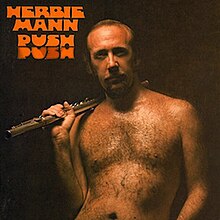
But the flute isn't yet history and has life beyond ridicule, however hard Ron Burgundy has tried. Jazz flautists have a small yet important page in the history of that music, if often more an extra trick up the sleeve of saxophonists, than necessarily the main deal. Herbie Mann came closest to making the jazz flute cool, if also, by that dreadful album cover, near inventing the parody above. In the 1970s he had even enough crossover appeal to be seen as cool to have a copy of any other of his works under your arm. I especially liked Memphis Underground, from 1969. Other notable jazzers with a taste for tooting, sorry, fluting, as many many jazz musicians allegedly had a penchant for tooting, would include Eric Dolphy and Rahsaan Roland Kirk, who could switch effortlessly between any number of saxes and flute. He could play more than one at a time, but am uncertain if that were ever possible between saxophone and flute. And, yes, that was nose flute at one stage in that clip, sparing having to mention it later.....

Rock flute had a very narrow window, beginning and near ending with Ian Anderson's manic persona in Jethro Tull. But, ahead of their folk-prog prime, they were a more straight ahead blues band, and the blues-rock scene was littered with flute solos. If were a band I was particularly fond of, with their vibe a mix and match of jazz, blues, rock and r'n'b. Both their reedmen, Dick Morrissey and Dave Quincy, were adept on the instrument. Of course, prog rock was awash with flute, much appreciated in whimsical and pastoral interludes in sidelong epics about dragons and princesses. Early Genesis were enthusiasts, as Peter Gabriel could play a bit, something he has kept distinctly quite about since going solo.


Folk flute has had two distinct rotes, in trad. inspired music and in fey singer-songwriter, of which the former has tended to date better. The list of Irish and Scottish bands able to whip out a flute, amongst all the all other panoply of pipes and fiddles are legion, with the name Michael McGoldrick perhaps standing out. Initially with Capercaillie, he has a successful solo career alongside working with and in Mark Knopfler's band, as well as in the house band for Transatlantic Sessions. His name, and that of Brian Finnegan, are two names that can act as a guarantee of classy playing, should you ever spot either on a CD  cover. Before Capercaillie, they actually played together, in the same band, Flook, along with a third flautist, Sarah Allen. Here's an old clip, followed by some early John Martyn, who was certainly anything other than fey, even if this example may be. The flute is by estimable jazz parper Harold McNair, often alongside Donovan in his early recordings also.


Country flute? Blues flute? Well, not a lot. I suppose Marshall Tucker Band might (just) about fulfil the first and Canned Heat, arguably, the latter, but that isn't all there is to this to this piece as I have to include a nod to more modern forms of music. A clip or two, even, from this century might help give some semblance of my not being some ancient dinosaur, even if I am. So, with a leap and a bound it is, oh, still only 1994, but the Prodigy, hey, kids, Granpa's gone all hepcat, daddio. Actually before they hit their chart topping prime, I remember hearing this and being absolutely astonished, and unable to get the ear worm flute melody out my head. I still can't.

Is 2010 near enough for you? Ever heard of Shpongle? I love 'em, that weird hinterland of dance and world musics, bundleed up into a somewhat lysergic trance like state, not that I have any experience of that particular trip, and placed into the somewhat niche genre of psybient: psychedelic ambient. Whilst it is true that one of the duo, flautist Raja Ram, actually kickstarted his career as far back as the late 60s, as a member of Ladbroke Grove raga-rock stoners, Quintessence, his, um, diet, has clearly done little harm, and he continues to ply his chosen path with no little wizardry. Whilst Ram is still upright, flute still has a place.

Too much here to pint you to all their product, so let's just go here, for something completely different. Keep them flutes a tooting!!


Saturday, July 24, 2021

1971: Aqualung


purchase [ Aqualung ]


My parents were serious amateur musicians. My dad directed a vocal choir of 40+ and an orchestra of 25+ in twice yearly concerts of religious music (The Dutch Chapel Choir). They  took voice lessons and, of course, got their progeny started on the right path: starting the four of us off with recorder (=blockflut) lessons for all starting at about age 7. It meant I could at least rudimentarily "read" music. I moved on the the "regular" flute and made a stab at the trombone before I segued to the guitar.

With a portable reel-to-reel tape device, I recorded a few improvizational flute and clarinet pieces with a classmate back in '69. (Wish I had them to look back on! I recall they werent too bad for a 14 year od)

'69 turned to '71 - finding me now in boarding school 1000's of miles away from parental supervision - but music was still at the forefront of my mind. One of my first independant actions was to buy a "stereo". But, owning and operating a record player involves feeding the beast. As such, I was lucky to be at the end of a Reading Railroad line that landed me about 2 blocks away from the train station in Philly- I want to think it was Tower Records that was right next to the station but my memory is hazy and it doesnt really matter. It was a 60 minute train ride, the place was stocked with everything and the prices were... competitve (I recall ~$10.00 per album in 1971). My collection grew rapidly.

As I noted previously, my first LP came with the stereo I purchased: Who's Next. (also 1971) I would be hard pressed to lay out the sequence of the expansion of my collection, but Aqualung must certainly have followed soon after. More likely it would have been Benefit first. Flute and rock, after all. By this time, I had all but lost interest in furthering my flute skills. I was more into listening than performing.

In general, Jethro Tull - for me - was and is still a little too grungy. In fact, the imagery associated with Aqualung calls up a fair amount of disgust (snot running down his nose .. Ian Anderson's strandy matted hair ...) But Benefit and Aqualung  contain some of the best of 71's music. While Ian Anderson may be the better known face/name of the band, as an amateur musician who has since gravitated to the guitar, I wouldn't want to overlook Martin Barre's sizable contribution.

Aqualung, in some ways in alignment with my remarks about 1971's Yes and Genesis, is conceptual and a reaction/disillusionment with a crumbling belief in traditional religion (ah.. back to my parents again). Barre himself has commented that Anderson got credit despite their collaboration: "I've done bits and pieces on albums.Sometimes it's a riff, sometimes it's a little segment of music..." Mark Knopfler, Joe Satriani and Steve Vai credit him as an influence.

Aqualung


Locomotive Breath


Wednesday, November 1, 2017

Train:Locomotive Breath


purchase [Locomotive Breath]


I confess that I was old enough to be in the demographic of those who purchased the Monkees <Last Train ...>. No excuses: that (and many others like Aretha and the Temptations and the Box Tops) was how I got into "pop". But I wasn't writing @ SMM  back in 2009 when a variation of the train theme came around once afore. There were posts galore - like pages and pages of posts!

But even back then, despite their best efforts, the SMM team couldn't exhaust the <train> theme.
Before I get to Aqualung's Locomotive Breath, it's worth pointing out that the chug-chugging locomotive motion is a staple of rock, not far removed from the "twist", that arm & leg flailing dance style that generated such fear about lost generations gyrating to evil music. It must not have been lost on Ian Anderson when he and his wife penned Locomotive Breath.
(Let's not go deeper into the Spanish etymology behind "loco")

One reviewer pointed out that there are few songs that truly capture the energy of the train: the massive engine that pulls heavy metal wagon after wagon over hill and dale (and the men that feed the beast inside a la John Henry) Louis Jordan's Choo Choo Ch'Boogie is a great song and it gets us part way there towards the train experience but it lacks the weight/heavy that Jethro Tull brings to bear.

Locomotive Breath takes it a step further. In reality, there's always Ian Anderson's style: nearly breathless chugging that emulates the true choo-choo of the locomotive the song names.

Aqualung itself is a fine album in many ways. It was the album that made Jethro Tull big, and Locomotive Breath was one of the charting hits. That's not to say that their albums Stand Up and Benefit weren't pretty good, but it was Aqualung that turned the corner for them.

There is a snippet of an interview with Ian Anderson at SongFacts' page for the song and a link to the full interview which you might read if you want to go deeper.

Whatever Anderson's original intentions for the album, and however the band finally recorded the song, the train effect is ... effective. The flute as a vehicle and in particular, Anderson's breathy flute style is well-suited to the locomotive metaphor.


Thursday, September 15, 2016

Teach and Learn: Jethro Tull/Teacher


purchase [Jethro Tull version of Teacher]
purchase [Victor Griffin's In-Graved]


Ian Anderson has said that Teacher is not one of his personal favorites. That it was written with the primary intention of generating a popular hit. He has also made it known that he never cared for the band's name: Jethro Tull (it was apparently laid upon them by their manager). 

Things happen. Like in the story the lyrics tell. Unlike many popular songs, the story is a fairly straight-forward narrative:  guy pays for a vacation travel for himself and a teacher, and the teacher has all the fun. I guess the narrator is left with a lesson or two: "jump up, look around, find yourself some fun ...", but in the end he admits "[I couldnt] ...find what [i] was looking for, got something on [my] mind...".

It being the 70s when the US release of Jethro Tull's Benefit album with Teacher on it came out, the lyrics may have referenced a different kind of trip - certainly for many listeners, it did. In yet another stretch of the meaning behind the lyrics, one could argue that both teaching and learning  are trips in and of themselves: processes that take people from one place to another. And yes, both words of our theme this time around are included in the lyrics.

While Anderson struggles with health issues that severely limit his vocals, the group has found a way to work through it. However,  Victor Griffin, previously of Pentagram, does the song like it was meant to be done.


Ian Anderson - Teacher

Victor Griffin - Teacher

Sunday, December 20, 2015

NON-CHRISTMAS HOLIDAY SONGS: WINTER SOLSTICE


Of course, Christmas is a nonsense, timing wise. Whether or not Jesus of Nazareth was real, and it seems likely he was, the timing of his December birth seems equivalently a sham, hurriedly shoed in to take advantage of the existing celebrations. And December 25 seems inescapably close to, roughly, Dec. 21, the shortest day, the winter solstice, long a celebration of the end of plenty, the beginning of famine and a time to kill the remaining cattle and get through the challenge of January through March. This has been drawn into focus recently for me by the History Channel's saga, "The Vikings", an accurate, yeah, right, portrayal of the life and times of Ragnar Lodbrok. Wonderful telly, questionable history. But it set me a'thinking. What music have we for a solstice? OK, so there are nasty Scandi death metal satanic tunes, but they seem not where the ancients were coming from.

Yule was the pagan winter celebration, 10-12 days of feasting, to celebrate the consequent dearth of supplies, full in the knowledge that the sun would return. Hopefully. Should you sacrifice sufficient. Here's a confident approach thereto, Jethro Tull, Ian Anderson always coming across a distinctly pagan man:


Should middle class English guy seems a bit scant, let's go Viking. Hedningarna are the obvious choice. A Swedish group who formed in 1987, working still to this day, angulating a steep path between ancient Scandinavian folk and more modern elements, rock and electronica. Here's an example of their hardcore:


Lest that be a bit impenetrable for our ears, I always feel that somebody stating the obvious can be a bit helpful. As a Celt of Hebrides lineage, brought up in the Anglo-Saxon interpretation of Christianity, something I have some difficulty in embracing, I think Dar has it just right:


So what am I saying? hell, I don't know, but probably it means, if you have something to celebrate, celebrate.

See you next year!


Friday, October 8, 2010

Discoveries: Cold Wind to Valhalla


Jethro Tull: Cold Wind to Valhalla

[purchase]

If you have read a number of my posts, you know that I grew up listening to FM radio in the 1970s. If you remember those days, you may want to know how I can call Jethro Tull a discovery. Isn’t that like saying you discovered breathing? And why didn’t you post Aqualung? Surely that was the first Jethro Tull you heard? Indeed it was. Let me explain.

This week, we have seen that there are a number of ways to discover music. A song can follow you around. You can read about it in a newspaper or magazine. You can win tickets to a show. Or a friend can make introductions. In my life, there was another route to musical discovery, a big one. I married it. If you care deeply about music, you are going to marry someone who does too, at least to some extent. Or so it was for me. When we decided to join our lives together, we also joined together our record collections. Now I had heard Aqualung long before, as I mentioned. I didn’t like it. I dismissed the song as hard rock, and I never bothered to find out what else Jethro Tull might have done. But my wife did before we met. As she learned my musical taste, she began to insist that I had to hear their albums Songs From the Wood and Minstrel in the Gallery. Finally, I did, and I was amazed. The lyrics, while not strictly authentic, were steeped in the mythology and folklore of the British Isles. And the music took the ideas of folk-rock as pioneered by Fairport Convention and Steeleye Span, and took them to the next level.

Cold Wind to Valhalla starts as a folk piece, and then turns electric. But notice how the electric guitar is mirrored by a fiddle. It sounds kind of hard-rockish, but there is more to it than that. Cold Wind is on Minstrel in the Gallery, and musically, it is the perfect bridge from what I thought I knew about Jethro Tull to what I discovered.

Incidentally, the image I have chosen for this post is obviously an album cover, but it’s an odd shape. That’s a cassette cover. To this day, we only have Minstrel and Songs on cassette. Luckily, we still have something that will play them.

Friday, August 20, 2010

Tobacco: A Small Cigar


Jethro Tull: A Small Cigar

[purchase]

This one comes from an album called Nightcap - The Unreleased Masters 1973-1991. I assume that it was a demo that was never more fully developed for the full band; it would be more correct to call this an Ian Anderson solo track. However, Anderson thought enough of the song to release it again on a proper album, Too Old to Rock N Roll, Too Young To Die, which came out nine years later. The song is certainly not what I usually think of when I think of Jethro Tull. The arrangement starts with just voice and acoustic guitar. Towards the end, a piano part joins and then replaces the guitar. And that’s all. The lyrics seem to me to be delivered with a wink, telling how a party crasher becomes the life of the party, and what he does when he leaves. It’s worth remembering that Jethro Tull is a British band, and class consciousness is much more pronounced there than here in the United States.

Tuesday, May 25, 2010

Public Domain: Bouree


Jethro Tull: Bouree

[purchase]

One approach to this week’s theme is to find traditional songs. I’ve done that already, and I will again later this week. But most classical music is also in the public domain. And that brings me to Bach. I would say that Bach perfected the art of the fugue. If you’ve ever sung a round, you have an idea what this is. In a fugue, one instrument starts the melody, and the next starts it later, and then the next, and so on. The overlapping parts produce the harmonies and also the overlapping rhythms do their part. Bach would do this with a theme and then variations, and it always worked.

This transformation of something simple into something richer is a hallmark of Bach’s music, even when the fugue is not involved. For this reason, his music appeals to a wide range of musicians today outside of the classical genre. Case in point: Ian Anderson of Jethro Tull. Anderson actually has some classical background, and he has recorded a version of Bouree with an orchestra. But this was the first recording he did of it. In Jethro Tull’s hands, Bouree becomes a folk-rock piece with jazzy overtones. Bouree became one of Jethro Tull’s signature tunes; fans expected to hear it at their shows, and often did. There are several live versions of it available, and the group improvises and plays with the arrangement, so no two versions sound the same. But Anderson and Co never lose track of the beauty of Bach’s original melody.

Tuesday, December 15, 2009

Christmastime: Birthday Card At Christmas


Jethro Tull: Birthday Card At Christmas

[purchase]

The Jethro Tull Christmas Album has three songs on it with 'Christmas' in the title. Two of them are re-recordings: A Christmas Song and Another Christmas Song. What a dilemma. But at least it narrows it down because in my opinion the entire album is magnificent and post worthy. Besides the two old Tull favorites, a new one for the album was added, Birthday Card At Christmas. It's Jethro Tull at their best. If you like Ian Anderson, Jethro Tull and/or Christmas music, or all of the above, this album is a must. It's an absolute gem.

Friday, September 18, 2009

Autumn and Harvest: John Barleycorn Must Die


Traffic: John Barleycorn Must Die

[purchase]

Before I begin, I would like to thank my fellow Star Makers for their help gathering the songs for this post. I could never have done it without you.

I am old enough to have heard Traffic’s classic John Barleycorn Must Die when it first came out, and young enough to have been a child at the time. My oldest brother brought it home, and made sure I heard it. I made two incorrect assumptions at the time. I thought Traffic wrote the song. And I heard a fair amount of psychedelic music at the time; I assumed that the lyrics told the strange tale of a man who kept being treated in cruel and unusual ways, but I never guessed that there was any deeper meaning. I knew that I loved the sound of the song, and that was enough.

But now I am older, and I understand more. John Barleycorn Must Die is a traditional English song. There is a record of a version from the 1300s, and it is likely older than that. Over time, many variants have arisen, with changes to both the melody and the words. The song became widely known throughout the British Isles. Scottish poet Robert Burns even wrote a version.


And the story is deeper than I knew. John Barleycorn is the personification of the grain, and the song tells the story of the grain from planting to harvest and beyond. The song usually begins with Barleycorn’s first death; he is buried, and dirt is heaped upon him. This, of course, is the planting of the grain. In midsummer, he grows a “long long beard” and “becomes a man”. The song goes on to describe threshing and harvesting. Barleycorn is bailed and taken to the barn. And then the grain is parceled out. Some is taken to the miller to make flour for bread. And some is saved and brewed in a vat to make ale. And some is planted, so that the whole cycle can begin again.

It is likely that versions of John Barleycorn were sung in pre-Christian times, to accompany harvest rituals. Some of these rituals survive to this day in modified form, most famously the sacrifice of the wicker man. These rituals tell the story of the death and rebirth of the god of the grain.

The lyrics used by Traffic start with three men who came from the west. This reminds me of the three wise men who came from the East in the Nativity story. The first Christians who came to the British Isles often looked for parallels between native myths and the Story of Christ, in order to help the natives accept Christianity. So these three men from the west may be an example of this. John Barleycorn shares with the Christ Story the theme of death and rebirth.

Jethro Tull: John Barleycorn

[purchase]

Jethro Tull’s version of the song is just called John Barleycorn, but it is otherwise a straightforward cover of the Traffic version, sharing the same melody and lyrics. But Jethro Tull has created an arrangement that is wholly original, and shows off the classic Jethro Tull sound. Ian Anderson’s trademark flute sound arrives midway through the song.

Tim van Eyken: Barleycorn

[purchase]

Tim van Eyken has proved himself to pure traditionalists in the English folk scene. He even played with Waterson: Carthy, the ultimate traditional English folk group. But here, he gives Barleycorn, as he calls it, a folk rock treatment. He uses a different melody and slightly different lyrics than Traffic and Tull. His three men at the beginning come not from the west but from Kent.

Steeleye Span: John Barleycorn

[purchase]

Steeleye Span gives us yet another variant on the song. Again, we have a different melody, and some variations in the lyrics. And Steeleye Span adds a refrain of “Fa la la la, it’s a lovely day” etc. This sounds like it may have originally belonged to another song entirely. There are numerous examples of this in English folk music.

Tuesday, March 17, 2009

Green: Jack-in-the-Green


Jethro Tull: Jack-in-the-Green

[purchase]

Green. As in Irish, of course. But also as in the first tender shoots of spring. The calendar still says winter, but the first shoots of flowering plants are emerging in our garden. Soon enough, there will be flowers.

Jack-in-the-Green is the personification of this promise of spring. And the song, for my money, is one of Jethro Tull’s best.

Monday, December 15, 2008

Jingle Bells: Ring Out Solstice Bells


Jethro Tull: Ring Out Solstice Bells

[purchase]

Most people count “Aqualung” as their introduction to the music of Jethro Tull. That certainly was the case for me. And for years, I never went beyond that. Jethro Tull seemed to be another hard rock band following in the footstep of Led Zeppelin, distinguished mainly by those weird sounds that Ian Anderson got out of his flute. My wife, however, taught me that there is much more to Jethro Tull than that..

It turns out that Jethro Tull came out of the same British folk-rock scene that spawned Fairport Convention, Steeleye Span, and many others. In its later years, the members of Jethro Tull even included former members of Fairport and Steeleye. So it is not surprising to find the influence of British folk music in the work of Jethro Tull.

I have discussed the presence of pre-Christian elements in British folk tradition before. On Jethro Tull’s album Songs From the Wood, Ian Anderson has taken what is subtle in traditional British songs, and made it explicit in his original compositions. “Ring Out Solstice Bells” describes what a druid solstice ritual might have been like.

So let me wish everybody a very happy Solstice. And if anybody knows any Hanukkah bell songs, I hope we’ll hear them this week, (I can’t think of any, or I would take care of it myself).