Showing posts with label Rush. Show all posts

Thursday, December 15, 2022

CELEBRATION(S): CHOCOLATE GIRL/DEACON BLUE

Celebrations is the brand name for a selection of miniature chocolate bars over here. And, for all I know, elsewhere, but given it being the time of year when such abound, so surely worth a mention. From the house of Mars, so you can expect small versions of the ubiquitous Mars bar, Bounty, Topic and Snickers. Arguably better than the old school alternatives, Cadbury's Roses or Quality Street, originally by the long extinct choc firm, Mackintosh, which were just fairly random chocolate box offerings, where, if unlucky, every one chosen was either a sickly "creme" or a rock hard toffee. I was always unlucky. At least with Celebrations you know what you are getting.

Unfortunately I am no great fan, pre-  or post-gall bladder, of chocolate, perhaps from all those bloody cremes, so that is all I have to say on the subject, beyond an excuse to roll out some appropriately themed songs for your delectation.

Mars Bonfire is the immaculate nom de guerre of the lead guitarist of the Sparrows, whom nobody remembers. However, through his brother, also a Sparrow, becoming a drummer for Steppenwolf, he got to write a few songs for that band, notably their best known song, Born To Be Wild. The Sparrows we're an interesting band as they also included the later Steppenwolf singer, John Kay, and Bruce Palmer, later of Buffalo Springfield. So you could say that Mars, Eugene to his mother, got left behind, but I am sure the royalties helped prevent too much bitterness. It is a great song and it is often claimed to have invented the idea of heavy metal into music, to describe the noise of the motor bike. Nice story. Probably apocryphal.

Bounty bars always divided the playground, with few admitting to much pleasure in the eating of them. However, via the wonder of saucy advertising, certainly teenage boys were galvanised into keeping on trying. Me, I preferred the red-wrappered plain choc version, which isn't included in the Celebrations pack. The song I am unfamiliar with but, sticking with Canada, where half of Steppenwolf evolved from, so too is the performer here, Dean Brody, a Canadian. Apart from a rapper, very few songs mention bounties. It's an OK song, and includes the now more successful than the singer, Lindi Ortega, who I have seen live and enjoyed.

Of course I am not going to dabble around the net seeking a song about Snickers. Anyone with half a brain or twice a life will know these nutty monsters are really called Marathon, still baulking at the name change. Which was back in 1990. Gulp. (US readers her may be looking confused, as it was always a Snickers over that side the pond, I understand.) And, without putting me and the rest of the post under any degree of pressure, there is also a song by a Canadian band to fit the bill. Me, I never bought into the whole Rush shtick, but I do like a Snickers, if pushed and my life depended on it. (Late joke alert: you can rush a snickers, but you can't rush a marathon! Boom boom!!)

Topic? You're joking right? Closest I can get is to evoke the old joke around hazelnuts in every bite. As in, what has a hazelnut in every bite, the pillar of Mars advertising back in the day. The playground answers related more to the genus Sciuridae, better known as the squirrel. I am uncertain quite what a cat squirrel is, amongst the family of so named rodents, but a Dr Ross, a bluesman of the mid 20th century, was sufficiently moved to write a song around one. Later covered by both Cream and by Jethro Tull, I hope he got his dues. The suggestion that is was penned by Mr Trad augurs ill that he did. As far as I can tell, he had no Canadian connection, putting paid to that promise.

We are delving deeper into the carton. Twix is next out. If that makes you think of the song featured above, the chances are that you didn't even know it was a song with a life outside the 30 second TV ad for the Twix bar in the late 1980s. Yello were, possibly still are the odd Swiss electronic duo, who make Sparks, by comparison, seem mainstream in their image. And that 30 second advert is actually a 3 minute song. (Can you make it to the end?)

Maltesers are not just the sweet you can eat between meals, they are also the folk who hail from Malta, a tiny island in the mediterranean, famous for being, the island, awarded the George Cross in WW2, for their rugged defence against the would be invading forces. They have since built up a vibrant scene of internationally known artists, so the various wiki pages tell me. World famous only in Malta, methinks, but this lot seem the least inoffensive and it is quite pleasant in a dreamy way. Stalko they are called, should you wish to dig deeper, with a couple of albums to their name. (No marks for those who point out the extra e in Malteasers. Cos there isn't one. Or that Milky Way is the one you eat between meals, with Maltesers being the Chocolate? Maltesers! one)

I bet you are beginning to struggle with what else is up for grabs. Unless you read the addendum to the last para. Or Santa has already delivered you early a box of Celebrations, in which case you will know it is now into space we head, with the doughty Milky Way, another choc bar misleadingly touted as a dietary aid to weight loss in its initial entry to the market. You might gain less weight if you eat a Milky Way a day, over a Mars. I cannot guarantee the effect on your work, rest or play, or, more to the point, your dental bills. To celebrate, SWIDT, this sweetie, lets pick an obvious culprit, and sweep up some groovy pictures of the constellation along the way. The Tornadoes band famously featured the blondly quiffed Heinz Burt, who went on to invent baked beans. What a guy!

Sticking with the heavens, last on the list and last in the pack is the cloying Galaxy Caramel. Galaxy is the brand Mars use for their chocolate bar, which is the biggest competitor to the Cadbury's Dairy Milk, I would imagine, at least in the UK. (Is Hershey really chocolate? I think not.) Most of the folk I would ever buy chocolate for seem to prefer it, it being smoother. Until you put a gloop, that is, of runny toffeee into it, sweet and sticky, capable of dissolving enamel on contact. Be that as it may, lets finish up with this track, an audio-visual presentation of the point of contact between the caramel and your mouth. You will need to brush your teeth after this one, for sure.

Happy Celebrations!

Sunday, August 16, 2020

Count/Counting: SCTV's Count Floyd

My last post, about the TV show The Great has, so far, turned out to be one of the least popular things that I’ve ever submitted to this blog, so it seems like a really, really good idea to follow that up with another TV related post. 

I’m not sure why The Theme Picker chose this theme, and frankly, I argued against it, but because I’m only a Theme Suggester and Backup Theme Picker, I lost this round. The first thing that popped into my head was to write about the SCTV character Count Floyd, memorably portrayed by Joe Flaherty. And when I read the Wikipedia article about the character, I was laughing out loud, which I think we can agree is unusual when reading Wikipedia, and that convinced me to follow this route, even it ends, like my last TV related post, with almost universal indifference. 

I’ve written about SCTV before, so I won’t repeat all of the background stuff about the show, but you are, of course, welcome to read that post before continuing.  And I'm still doing this after reading the article in Sunday's New York Times about the racism in the Second City organization.

One of the basic conceits about SCTV is that it is about a generally low budget TV network. There was a time, which I’m old enough to remember, when local TV stations ran shows featuring usually bad, low budget horror movies and/or cartoons, hosted by someone who might be vampire, a clown, an astronaut, or something else. Usually, to save money, these characters were portrayed by employees of the station. Here’s a Wikipedia article about the “horror host” tradition, and here’s the recent obituary for Bob March, who portrayed “Captain Satellite” in the Bay Area for decades. And here’s an interview with the late Frank Avruch, who was a staff announcer at a TV station in Boston before becoming probably the most widely seen Bozo the Clown. 

Count Floyd was created to host SCTV’s Monster Chiller Horror Theater, and was the alter ego of (fictional) SCTV newscaster Floyd Robertson, also played by Flaherty. Although Count Floyd was a vampire, his lack of commitment to the character often led to him howling like a werewolf. The main running joke in the sketches was that the movies tended to be awful, and often unrelated to the horror genre, forcing Count Floyd to struggle to make them seem scary, and often ending in him getting frustrated and breaking character. Count Floyd also tried to sell his supposedly young audience overpriced items, maybe hearkening to the time when Soupy Sales, a children’s show host in New York, on New Year’s Day, 1965, asked his viewers to send him “little green pieces of paper” from their parents’ wallets. 

In addition to the fact that Flaherty was hysterical, SCTV used these sketches to show bits of movie parodies, often badly executed “3D” films. such as Tip O’Neill’s 3-D House of Representatives, Dr. Tongue's 3D House Of Stewardesses, Dr. Tongue's House Of Cats, or Dr. Tongue's Evil House Of Pancakes. (Dr. Tongue was played by John Candy, and his sidekick, Bruno, was played by Eugene Levy, who has been nominated for an Emmy this year for Schitt's Creek).  And even when the movie failed to show up, Count Floyd simply made up a plot and described it. They also used the character in a “Siskel & Ebert” style review show called Scary Previews. There was even a Count Floyd album, featuring, among other songs, “Reggae Christmas Eve in Transylvania.” It was the only non-Bob & Doug McKenzie album related to SCTV. 

Like the vampire/werewolf that he was, Count Floyd didn’t die when SCTV went off the air. Rush used a Count Floyd video to introduce “The Weapon,” on tour in the early ‘80s (see the video above). And fellow SCTV alum Martin Short included new Count Floyd segments in his late 80s animated series, The Completely Mental Misadventures of Ed Grimley. But that’s not all. There’s a funny Count Floyd video about how to make funny videos. A Count Floyd video about smoke detectors. And the character popped up elsewhere, mostly in Canada, promoting various things. 

Flaherty, who played Harold Weir in the great series Freaks & Geeks, wore a vampire costume in one episode, which you can see about 24 seconds into this compilation clip, and that had to be a callback to Count Floyd. 

As recently as 2014, Canadian band The Wet Secrets used Count Floyd in their video for “Nightlife,” although strangely, he looks a little like Grandpa Munster in some of the shots.

Monday, October 28, 2019

Spirit: The Spirit of Radio


Rush: The Spirit of Radio
[purchase]

I’ve openly discussed my love of prog-rock in on this blog, so you might be surprised to discover that I’m not a big fan of Rush. They are one of those bands who I’ve never particularly gotten into, maybe in part because I have never spent much time really listening to their substantial output, but there are a handful of Rush songs that I like. One of them is “The Spirit of Radio,” from the 1980 album Permanent Waves. Why this Rush song as opposed to any other? I can’t give you a good answer, but I think that it is probably a combination of the song’s relatively straightforward structure, the somewhat surprising reggae touch at the end, and most of all, its message.

When I first got interested in music, you could still find relatively free-form radio stations that weren’t afraid to play deep tracks and long songs, and there were still DJs creating thematic sets and talking, knowledgeably, about the music. I learned so much about music from listening to, mostly, WNEW-FM during my high school days. The three members of Rush are all 8 or 9 years older than me, and came of music listening age during a time when radio was even more wide open.

But like so many things, once someone realizes that money can be made, people, or more likely, companies, with big bank accounts step in, and the distinctive character of whatever it is gets lost in favor of standardization and the profit motive. The days of free-form radio are mostly over, at least on the commercial part of the dial, and that’s a shame. Most stations play a very circumscribed set of songs, narrowly formatted, and often the DJs are just people with good voices, without the knowledge, or love, of the music that they play. At the time that Rush released “The Power of Radio” this trend was speeding up, and it was certainly something that I, sitting in the dorm-basement studios of WPRB, was acutely aware of.

As Rush guitarist Alex Lifeson said about the song:

That song was really a statement of where radio was going, where it had been. Growing up in the early 70s, FM radio was such a free forum for music; you’d have DJs who would play stuff for an hour. They’d just talk about the songs; there were no commercials or anything. So free-form, really a platform for expanding music at the time. And then it was moving more towards a format, and away from that freedom, becoming more regulated, more about selling airtime. It just speaks about that, really. 

The irony was that the song that attacked radio became a hit, and presaged a move by the band toward more radio friendly music, at least for a while.

Not only is “The Spirit of Radio” a shot at radio programmers, it is also an attack on bands that Rush believed were more in the business for the money, and not the art. In one of the most well-known lines from the song, which consciously echoed Simon & Garfunkel’s “Sounds of Silence,” Lyricist Neal Peart wrote: ‘The words of the profits are written on the studio wall, concert hall/Echoes with the sounds of salesmen.’ The salesmen, in his opinion, being the disingenuous front men of bands who told each city that it was the greatest, or that its fans were the best.

These days, of course, we don’t have to rely on radio stations to discover music anymore. There are tons of other places to hear music—streaming services, the Internet in general, satellite radio, and so on. On one hand, that’s great, because access is now in the user’s hands. But on the other hand, this model has made music much less profitable, preventing some artists from having the resources to create their art to the fullest (although it also has probably cut back on a good deal of excess). Maybe worst of all, though, is that this model makes it easy for listeners to stay in a rut. Most Sirius XM stations, for example, play a small slice of music, and when you choose music on streaming services, it is easier to pick music or artists that you already like, than to search for something new and good in the mass of available songs. That curatorial service that a good FM DJ provided, which allowed me to simply tune to 102.7 (or to have listeners tune to 103.3, when I was on the air….) and have my musical horizons broadend is mostly gone.

Friday, June 7, 2019

Trees/Grass: Stumpy Meets The Firecracker In Stencil Forest


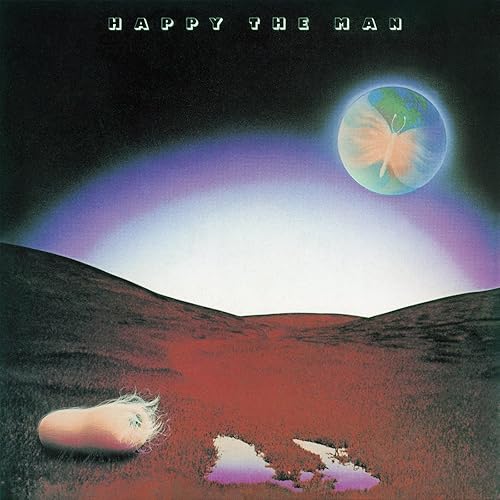
Happy The Man: Stumpy Meets The Firecracker In Stencil Forest
[purchase]

It has been a while since I’ve written about prog rock, and I initially considered writing about two songs from one of my favorite Genesis albums, Selling England By The Pound, “The Battle of Epping Forest,” based on a real gang war, because “forest,” and/or “I Know What I Like (In Your Wardrobe),” about a groundskeeper who says, “Me, I'm just a lawnmower/You can tell me by the way I walk.”

But no, let’s go deeper into the prog rock weeds.

Prog, at least back in its heyday of the early/mid 70s was really a European thing. Most of the famous bands associated with the genre are English, German, French, Italian, etc. But there were American prog bands. Back in 2015, Rolling Stone published a list of the 50 Greatest Prog Rock Albums of All Time, and fittingly, most were from European bands, most of which you have probably heard of (including the aforementioned Selling England By The Pound, at No. 6. The highest ranked U.S. album was from Frank Zappa and the Mothers of Invention, One Size Fits All (Canadians Rush, though had albums ranked 3 and 11.)

Bringing up the rear, at 50, was the self-titled debut album from a band that many consider the greatest American prog band of them all, Happy The Man, maybe, the greatest band that you’ve never heard of.

Formed in and around James Madison University in Virginia in 1973, the band predictably went through lineup changes before settling down, moving to Washington, D.C., and becoming well-known enough that Arista Records signed them. And at about the same time, the newly solo Peter Gabriel met with the band and demoed a couple of songs, before Gabriel decided to go in a different direction for his first album. I kind of wish he had stuck with HTM, though, because it probably would have been great.

These guys could play, with complex songs mixing Zappa, Gentle Giant and Canterbury Scene type songs with more Genesis like ballads. What they really couldn’t do was sing, or write lyrics (often an issue with bands of this type). But if you stick to the instrumentals, you will be blown away.

“Stumpy Meets The Firecracker In Stencil Forest” is a great, knotty instrumental, featuring great guitar, sax and synth playing, and if the often excessive length of prog songs turns you off, it is a compact 4:16. (And look, just because the title references a “stencil forest,” that doesn’t mean that it doesn’t have trees. The Black Forest isn’t black, and is filled with trees. Rain forests aren’t made of rain. Bighorn National Forest isn’t filled with sheep. Just saying.)

After releasing their debut, Happy The Man toured around the country, opening for bands as diverse as Renaissance and Hot Tuna, and recorded and released a second just slightly less amazing album, Crafty Hands. Neither album sold at all, and Arista dropped them. A third album was recorded in 1979, but not released until 1983 (I’ve never heard it), and keyboard player Kit Watkins left to join the somewhat more famous British band Camel. Other members of HTM formed and played in obscure bands or as solo acts over the years, and there was a brief reunion in the early 2000s.

If you like this genre of music and haven’t heard of Happy The Man, check out this song, and their first two albums (feel free to skip the three songs with vocals, but they do have some merit).

Saturday, May 19, 2012

The Plant Kingdom: I Am a Tree; The Trees


Guided By Voices: I am a Tree

[purchase]


Rush: The Trees

[purchase]

Most songwriters are not scientists, and vice versa. It’s probably just as well. But sometimes words get in the way of scientific fact.

Would trees survive “I have the leaves that fall off when winds blow by”? Or “I will break before I bend”? Questions, questions… But it is a great song anyway, originally from the under-appreciated Mag Earwhig, and also included on the “best of” Human Amusements at Hourly Rates. The song is by Doug Gillard, a collaborator of Robert Pollard in this particular iteration of Guided by Voices, after Pollard disbanded the “classic lineup” responsible for Bee Thousand and Alien Lanes.

And I don’t know much about Rush other than the “hits,” but the first song made me think of the second for some reason. This tune recounts a struggle between maples and oaks. Here in eastern North America, many oak species are long lived, but less shade-tolerant than sugar maple, which may replace them in dominating a forest over the long term, given moist conditions and a lack of disturbance. But here the trees “are all kept equal by hatchet, ax, and saw…”

Guest post by Paul T