












Showing posts with label John Cale. Show all posts

Monday, August 30, 2021

Bigger Strings: The Black Angel’s Death Song


Velvet Underground: The Black Angel’s Death Song
[purchase

John Cale is another musician whose work I’m aware of and have enjoyed, but never (until now) spent much time learning about his life and career. I knew he plays the viola, among other instruments, that he was one of the founders of the Velvet Underground, put out some solo albums, at least one of which I played back in my WPRB days, and did an album with Brian Eno a couple of decades ago (gasp!). This turns out to be, somewhat embarrassingly, a pretty pathetic summary. So, in brief (and admittedly, mostly gleaned from Wikipedia), Cale was born in Wales in 1942, adopted the viola as his primary instrument and studied music at Goldsmiths College, University of London. Cale once described the viola as the “saddest instrument of all and, no matter how adept you get at it or no matter how fast you play it, you can’t get away from the character of it.” 

Cale quickly became enamored by the more avant-garde and experimental classical music becoming popular in the 1960s, including organizing a Fluxus concert in 1964 and conducting the first U.K. performance of a John Cage piece. He obtained a scholarship to work with Aaron Copland at Tanglewood, but they “fell out,” and Cale then moved to New York where he participated in an 18 hour performance of an Erik Satie composition and joined La Monte Young’s Theater of Eternal Music. 

OK—enough with the classical music (I mean, really, two posts in a row writing about classical music which I know basically nothing about…. I’m really not trying to pull a Metal Machine Music and alienate you all). 

Cale also liked rock music, and joined up with Lou Reed to found what became the Velvet Underground in 1964. Cale’s taste for the experimental, particularly drones, when combined with Reed’s penchant for rock and poetry (and manager Andy Warhol’s Andy Warhol-ness) resulted in early albums that were kind of all over the place. 

One of the more experimental songs from the debut album, Velvet Underground & Nico is the cheerily named, “The Black Angel’s Death Song,” which, for the most part, features Cale’s droning and dissonant electric viola with Reed and Sterling Morrison each playing away on guitar, while Reed chant/sings wordy lyrics in a style that had to be influenced by Dylan. There’s also what sounds like feedback, but was actually Cale hissing into the mike. I know that description doesn’t make it sound all that appetizing, and the song got the band fired from their residency at Manhattan’s Café Bizarre. But while it isn’t something that I’d listen to regularly, there’s something intriguing about it that made me glad that I checked it out again for this piece. 

So, what’s the song about? It is hard to say. Reed himself has said that “The idea here was to string words together for the sheer fun of their sound, not any particular meaning.” But the imagery is so strong, I find that hard to believe. I’ve seen claims on the Internet that the song is about life’s choices, heroin, suicide, the Holocaust, and Communism. Check it out, and let me know what you think. 

Eventually, Reed and Cale fell out over the direction of the Velvets, and Cale was replaced by Doug Yule (I guess you had to have four letters in your name). Cale went on to a career as a producer (for, among others, the Stooges, Jennifer Warnes, Patti Smith, The Modern Lovers, Squeeze, and Alejandro Escovedo), collaborator (including with Reed on Songs for Drella in 1990), and solo and soundtrack artist.

Monday, June 17, 2019

Same Name/Different Artist: Squeeze


Squeeze: Take Me I’m Yours
[purchase]

I’ve always felt that Squeeze, despite some significant commercial success, never really got the respect that it was due. Top notch songwriting (to the point that Chris Difford and Glenn Tilbrook were often compared to Lennon and McCartney, which is a tough standard to live up to, but even being mentioned in that class is pretty good, right?), tight playing and great hooks made them popular in the UK, but less so in the US. Maybe there was something “too British” about them that didn’t translate so well here. But I’d stack up their second through fourth albums, and a handful of later songs, against anyone in their genre.

Plus, they played at a huge all-campus party at Princeton in 1982, and were great. I think.

This band was formed in 1974 by Difford and Tilbrook, who added Jools Holland and eventually drummer Gilson Lavis and bass player Harry Kakoulli. They decided to call themselves “Squeeze,” after the pseudo-Velvet Underground album of the same name. Their self-titled debut album (produced by former Velvet Underground member John Cale) was released in the UK in 1978 (although the two singles were actually produced by the band).

And here’s where we get to the theme.

In the United States, the band and the album  were called UK Squeeze, because a bar band from Connecticut called “Tight Squeeze” had registered the name, and the record company was leery of legal challenges. I’ve scoured the Internet for some audio or video evidence of this “Tight Squeeze,” but have been unable to locate any. Which may be a blessing (sorry, former members of Tight Squeeze, if you happen upon this blog post—send me some music and maybe I’ll edit this).

Guess what? Difford and Tilbrook and Co. were also called UK Squeeze in Australia. Because there was also a band from Sydney with that name. And while information is sparse on these guys, I did find a couple of videos, neither of which I find too compelling, but it does seem like they were popular in Australia, Germany and Scandinavia, and lead singer Robin Lee Sinclair has had a solo career, mostly as a country singer and Roy Orbison impersonator.

Our featured song, from the UK band, is “Take Me I’m Yours,” from the debut album that caused the identity crisis.

Tuesday, July 17, 2018

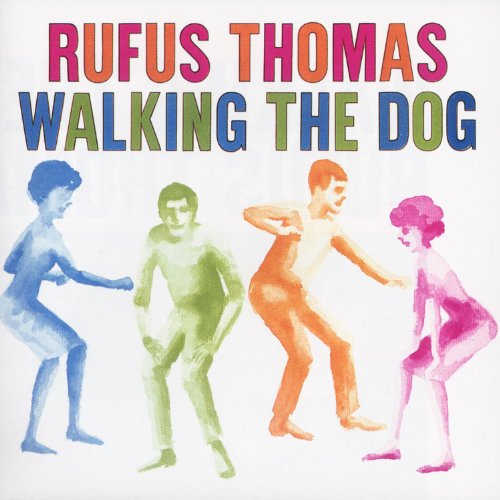
July: Walking The Dog


Rufus Thomas: Walking The Dog
[purchase]

At this point, Rufus Thomas is probably best remembered for this fun, nursery rhyme influenced song, but it was only one of his hits, mostly novelty dance songs, often about dogs or other animals, in a long musical career that started as a child tap dancer on the streets of Memphis in the 1920s, and included stints in minstrel shows in the 1930s, as a vaudeville performer in the 1940s, as a songwriter, performer and DJ in the 1950s, as a popular recording artist in the 1960s, and he continued to perform and record thereafter, often billed as “The World’s Oldest Teenager” and “The Funkiest Man Alive,” until not long before he died in 2001 at the age of 84.

Thomas recorded for Sun and for Stax, the minister at his wedding was Aretha Franklin’s father C.L. Franklin, he worked for 20 years in a textile factory, he acted in Jim Jarmusch and Robert Altman movies, and he performed with Prince, at the 1996 Olympics, and with the Blues Brothers Band. And his daughter Carla Thomas is considered the Queen of Memphis Soul (and who I missed when I wrote this.)

Pretty much everyone has covered “Walking The Dog,” from the Stones, to the Everly Brothers, to the Flamin’ Groovies, as well as Aerosmith, Roger Daltrey, Bruce Springsteen (in an epic 14 minute plus version), Ratt, The Grateful Dead, and John Cale. And many, many more.  Even in Finnish! But Thomas’ version, with its New Orleans influenced style, and the joy that he brings to the silly lyrics, is still remembered because it is just that good.

And yes, it mentions July.

As I was writing this piece, I thought back to walking our family dog, Strummer, who died back in 2014. In July. You can read more about him, and our relationship, here.

Sunday, March 30, 2014

Anniversary:Go Deeper-Sunday Morning


The Velvet Underground: Sunday Morning
[purchase]

I’ve only been writing for Star Maker Machine for a little more than two years, but I was a reader for some time before that. I’ve long appreciated the breadth of the music discussed here and the knowledge and writing skill of many of the contributors, many who have unfortunately long stopped contributing to this blog. I’ve followed some of these writers to their personal blogs, and have enjoyed learning from them. I may not be the best person to write about the history of SMM, and I hope that some of the writers who have been involved here longer can fill in the gaps in my knowledge, but I’m going to kick things off, as we look back before we move forward.

From what I can tell, this blog was started by a guy named Paul under the name “Six Songs.” The first post was on February 6, 2008, and the concept was that Paul was going to post a song six days a week, hoping to engage readers to create a conversation in the comments. The first song he posted was Emmitt Rhodes’ “With My Face on the Floor.” But on March 23, 2008, Paul posted “We’re Taking a Break,” writing:

“Posting a new song everyday is surprisingly stressful, even with the Sunday rest. So we're off for some R&R. We may be back with a new format.”

Four days later, Paul teased the blogosphere with the announcement that he had come up with a new concept, and, on March 28, 2008, he announced the new name, “Star Maker Machine,” posting a picture of Joni Mitchell, and the song “Free Man in Paris,” from whence the blog name came. And then, on March 29, 2008, Paul announced the new concept—that he would open the blog up to writers who wanted to post about music, without necessarily starting their own blog. And, in essence, the SMM journey began.

On April 5, 2008, in a nod to the original “daily song” roots of the blog, Paul announced the first theme, “Days of the Week.” The first song that Paul posted was “Sunday Morning,” by Margo Guryan. I wanted to “go deeper” with that song, for historical reasons, but, frankly, it doesn’t speak to me, even though the album that it comes from, Take a Picture, was described by Allmusic as “one of the most exquisite and appealing, if little heard, one-shot "California" (although actually recorded on the East Coast) soft-pop gems of the kaleidoscopic late '60s.” So, instead, I decided to discuss the different Velvet Underground song, with the same title, which was also fleetingly mentioned on SMM back on April 3, 2010. (I also thought about writing about the SCTV soap opera parody, but decided against it.)

When you think of the Velvet Underground, you think of dark themes, drugs, and kinky sex. You think of Lou Reed’s twisted, literate brilliance, John Cale’s unusual arrangements and instrumentation and Andy Warhol’s peculiar Warholness. “Sunday Morning” is a little different. The last song recorded for the band’s debut, The Velvet Underground and Nico, it was the leadoff track, and an attempt to create a hit single. On an album that included songs like “Heroin,” “I’m Waiting for the Man,” “Black Angel Death Song” and “Venus in Furs,” “Sunday Morning” sounds almost benign and friendly, although there is still an unsettling question about what happened the Saturday night before. It was originally going to be sung by Nico, the German singer who was shoehorned into the band by Warhol, but instead Reed took the lead. The song also features a prominent celesta part, played by Cale on an instrument he happened to find in the studio, which makes the song sound strangely happy.

After the first post, Star Maker Machine slowly began to engage other writers and commenters. It appears that Paul stopped writing for the blog in October, 2008, after posting a Pete Townshend demo of “We Won’t Get Fooled Again,” in a piece entitled “Meet the New Boss, Same as the Old Boss,” to focus on a personal music blog, “Setting the Woods on Fire,” but it appears that blog is also defunct.

As we move forward with Star Maker Machine, we hope to continue to engage, interest and amuse our readers, and maybe lead them to new musical discoveries.

Friday, April 3, 2009

April Fools: Ship of Fools


John Renbourn: Ship of Fools

[purchase]

Grateful Dead: Ship of Fools

[purchase]

World Party: Ship of Fools

[purchase]

John Cale: Ship of Fools

[purchase]

Ship of Fools. Just three words. But these words have multiple associations.

In 1494, Sebastian Brant published a book called Das Narrenschiff, which translates as “Ship of Fools”. In the book, a fleet of ships sets of for the paradise of fools. Each ship contains people who commit a particular sin, or folly, hence the term fool as used here. In the end, only one ship reaches its destination.

Michael Foucalt used the term “Ship of Fools” to describe the practice of place insane people in a ship, and banishing them to sea. Here the fools were the insane people, who were thought to have an affinity with the sea and with mariners.

And of course, Katherine Anne Porter used Foucalt’s idea in her famous novel as a metaphor for the world as it slid towards the madness of World War II. Porter was also aware of Brant’s work.

All of this his been a huge influence on songwriters. I have chosen four songs called Ship of Fools, and each is a different song. We could do an entire week of such songs here and never repeat ourselves; there are that many more that I chose not to include.

John Renbourn points out that love can sometimes be madness, by having his protagonist board a ship captained by a beautiful woman. By the time he realizes his mistake, he finds that the ship is doomed to never see land again.

In the Grateful Dead song, a man has apparently become stuck aboard the ship, having not realized its true nature in time. Now he would rather sink the ship with him on it, than continue with things as they are.
Both John Renbourn and the Grateful Dead sail the ship of madness. But, I think the ship in World Party’s song belongs to Porter. This ship is the world, and none of us can disembark.

John Cale is very much his own man. His song is furthest removed from any of the inspirations I cited. His “ship” journeys over land. If there is a literary model for Cale’s song, it would seem to be the American South of William Faulkner. But, by telling his tale as a trip by ship, Cale also brings the ship of madmen into play as a metaphor.

So, if you are an aspiring songwriter in search of inspiration, learn all you can about the phrase “ship of fools”. It is a well that has inspired many of the finest, and will continue to do so.

Wednesday, September 10, 2008

Johns: J. J. Cale vs. John Cale

Kale


J. J. Cale: Closer To You

[purchase]

John Cale: Adelaide

[purchase]

According to our usual sources, John W. Cale changed his name to "J. J." way back in the mid sixties at the urging of a "sunset strip nightclub owner" so as not to be confused with John Cale of the Velvet Underground. To be honest, it's hard to mistake the former Cale's seminal swamp of laidback southern/cajun bluesrock, which helped define the Tulsa Sound, for any of the various genre incarnations, from seventies folk-pop to the stylized artrock and protopunk of the eighties and nineties, that the latter Cale turned to after leaving the Velvet Underground at the end of that same decade. But I suppose it would be a bit startling to show up at some venue expecting to hear J.J.'s expansive, improvisational original takes on the songs that made other people famous -- Clapton's After Midnight and Cocaine, Lynard Skynard's Call Me The Breeze -- only to be confronted with a weird dude playing noisy experimental dronerock on the electric viola.

More likely comparisons would put J. J. Cale against fellow guitarslinging bluesrock jamsmen Clapton and Mark Knopfler, while the vast bulk of the work of John Cale might be more easily confusable with anyone from John Cage to Patti Smith, both of whom he's collaborated with in the past. That said, John Cale's early work has a bit of the same summery rock and roll sound that has made J. J.'s career, and J.J.'s not afraid to experiment. Here's the evidence for both.