












Showing posts with label graham parker. Show all posts

Wednesday, June 22, 2022

Back: Back of My Hand

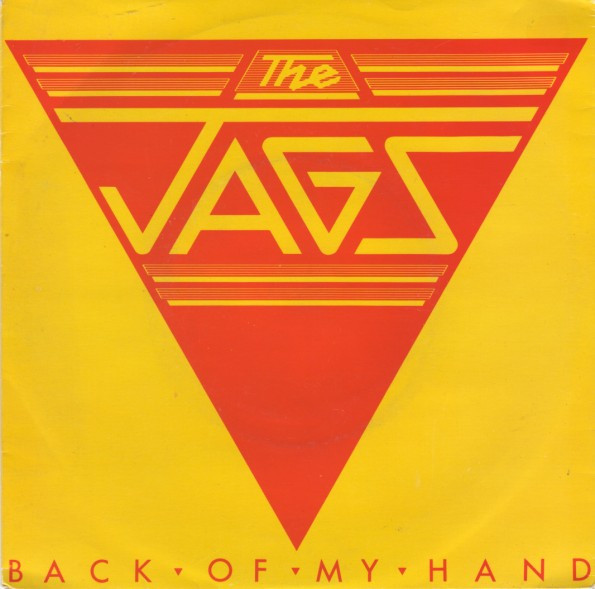
The Jags: Back of My Hand
[purchase

One of the fun things about writing for this blog is that I never really know where the piece is going to go when I start doing my “research.” There are so many songs that have the word “back” in their title (and even more with the word in the lyrics, and even more songs that I could write about, if I took a broad view of the theme). When I saw The Jags’ “Back of My Hand” come up in my search, I thought, “hey, this would be easy—a fun song that I remember from college that has pretty much been forgotten.” And yet, when I started to look into it, it became more interesting. 

The Jags were formed in 1978 by the Yorkshire-based songwriting team of singer Nick Watkinson and guitarist John Alder with Steve Prudence on bass and Alex Baird on drums. In July of 1978, they signed to Island Records and released a four-track EP, which included an early mix of “Back of My Hand.” It’s a great song—catchy, fun, but with a little edge. And no, it isn’t about hitting someone—it’s about the excitement of getting a girl to write her phone number on your skin, since the song long pre-dates cellphones. 

After dealing with the almost mandatory management issues, the song was remixed by Trevor Horn and Geoff Downes (The Buggles), and the resulting single release became a modest hit in both the US (peaking at 84) and UK (hitting 17), at a time when “new wave” music was not common on the charts. It was, I suspect, more popular on college radio (I definitely played it a few times) and more adventurous commercial stations that were beginning to embrace new wave music. That version was on the US release of their first full album, Evening Standards, although a newly recorded version was on the initial UK pressings. Honestly, I’m not 100% sure which version is embedded above, but I kind of think that it was the original version, not the Buggles remix. 

But here’s the rub. When I thought about writing about this song, my first thought was, “The Jags—that band that sounded like Elvis Costello.” And constant comparisons to Mr. MacManus appeared to torpedo the Jags. It’s kind of an interesting phenomenon. I remember that Costello was, initially, compared to Graham Parker, without damaging his career, and early Costello comparisons didn’t prevent Joe Jackson from becoming a star. So, the only conclusion must be that the Jags just weren’t that good. 

That conclusion would be wrong. 

In researching this piece, I found a number of reviews that call the song “a power pop classic,” their output in general as being of “uniformly high quality,” and having “a range of power pop that few—including Mr. Costello—ever achieved.” And I have to agree—the band was tight, and they wrote clever new wave pop songs that deserved better than just being dismissed as knockoffs. Yes, the Costello influence is hard to miss, but there’s also other things there-Thin Lizzy, maybe the Kinks. It’s a similar situation, I think, to the Knack, who were turned into a punch line despite some excellent songs because of, well, because of a bunch of reasons that I wrote more about here

After “Back of My Hand,” the Jags had some personnel changes and recorded a second album. While band members insist that they never tried to copy Elvis, as one member noted, for the second album, they tried not to sound like him. The album was unsuccessful, the band members feuded, there were legal and management squabbles, and the band broke up. As far as I can tell, none of the members appeared to join other known bands, it seems that their music is out of print, and some of it never was even released on CD. In fact, the version that I’ve uploaded is from a compilation, and the Amazon purchase link is from the soundtrack for the 2006 Owen Wilson movie, You, Me and Dupree

Then I found an article from 2013 entitled, Donate to Fund for UK Power Pop Legends The Jags’ Watkinson, in which I discovered that Watkinson had since about 2009, been, as the article put it, “living as a transvestite and performing at select clubs in the greater London area, generally under the name Virginia Plain.” The reason for the funding request was that Watkinson’s home was destroyed by a fire set when a lodger fell asleep with candles burning. And, of course, the flat was not insured, and the culprit fled and never paid a penny. Another article that I found about this situation noted that Watkinson was earning a “living as a gardener.” 

It's kind of a shame that such a talented songwriter isn’t writing songs, and that a talented band never really made it. But it shows how everything has to align for an artist to succeed.
Tuesday, March 26, 2019

Australia: Jo Jo Zep & The Falcons/Hit and Run


Jo Jo Zep & The Falcons: Hit and Run
[purchase]

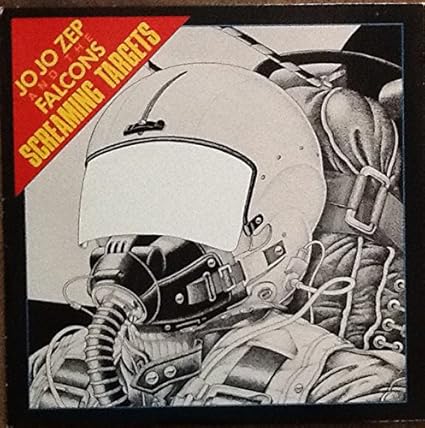
When I saw the album, Screaming Targets by Jo Jo Zep & The Falcons described by the WPRB reviewer as being from the “Australian Graham Parker,” I was certainly intrigued. I had become a huge Parker fan after the release of Squeezing Out Sparks, and used my access to the record library in the basement of Holder Hall to investigate his back catalogue. And the reviewer wasn’t wrong—there was a definite Parkeresque feel to Screaming Targets, whose songs included the rock, blues, soul and reggae influences that were all included in Parker’s work. “Hit and Run,” is a fun tune with a reggae feel, and my other favorite from the album, “Only The Lonely Heart,” is more of a straightforward rocker.

Of course, calling someone the Australian Graham Parker is unfair both to Joe Camilleri and Parker—both are unique artists with individual sounds. I remember how much fun David Letterman (him, again) had bringing performers on his show that were, say, the Elvis Presley of Uruguay, or the Frank Sinatra of Hungary (I’m making those up—I can’t find the real ones online), and while they certainly were reminiscent of whoever they were supposed to sound like, it did sort of diminish their own talent.

But Jo Jo Zep & the Falcons was a fine band in their own right. Formed in 1975 in Melbourne as Jo Jo Zep and His Little Helpers to record a cover of the Chuck Berry holiday classic, “Run Rudolph Run,” it took its name from Camilleri’s Maltese-derived nickname. The band began gigging, cycled through members and renamed itself before releasing their first single in 1976, sung not by Camilleri, but by then-guitarist Wayne Burt. After releasing their debut, Burt left, and the band focused more on R&B and blues music. By their third album, released in 1978, they had achieved popularity in Australia, as well as fans overseas, such as Parker and Elvis Costello, who covered the band’s “So Young.”

Screaming Targets, the band’s first U.S. release, spawned a world tour, but apparently, it led to tensions among the members. After another album, which was pretty good, but not as good as Screaming Targets, was unsuccessful, the band began to break up, and the “Falcons” name was jettisoned. A move to include salsa music in Jo Jo Zep’s sound led to “Taxi Mary,” a hit in Australia, a few more releases, and the end, before a reformation in 2003 and the occasional one-off performance.

Jo Jo Zep & The Falcons were inducted into the Australian Recording Industry Association (ARIA) Hall of Fame in 2007. Were they a great band? I don’t really know, because my familiarity with them is really limited to two albums, one of which was excellent, but I don’t really think so. But as Camilleri stated in an interview before the induction, "I'm chuffed. I think the Falcons did play a part in the Australian music explosion ... I'm happy it's been acknowledged. The Falcons were a band out of time. What we played wasn't what was being played. It was an R&B/reggae sound in the time of flares and funk and pop music. Somehow we slotted in."

Friday, December 28, 2018

Un-Sainted Nicks: Christmas At The Airport

Nick Lowe: Christmas At The Airport
[purchase]

I’m sort of doctrinaire about the creeping expansion of holidays. I’ve accepted President’s Day in lieu of Lincoln and Washington’s Birthdays but reject the concept of “Presidents’ Month,” which seems to be the creation of car companies. Seeing Halloween candy in the stores in August is wrong. Christmas decorating and the like should start after Thanksgiving, and your decorations should be stored away not too long after New Year’s Day. And although I am happy to listen to holiday music in December, after the gifts are opened, it is basically time to move back to secular tunes.

But Un-Sainted Nicks is our holiday theme, so I’m going to ask you to disregard my guidelines, and listen to one more Christmas song, the amusing, original “Christmas At The Airport” by Nick Lowe.

If any musical Nick should be considered for sainthood, I’d suggest that Mr. Lowe could be the one. He’s already performed a number of miracles—writing “(What’s So Funny ‘Bout) Peace, Love and Understanding,” which has been magically transformed into an Elvis Costello song, producing, among other things, said Costello’s first five albums and Graham Parker’s first three, being part of Rockpile, whose best work was released without their name on the albums, and still became legendary, and having a late-career transmogrification into a pop crooner. And if that isn’t enough, his first, incredible, solo album was named Jesus of Cool. At least in England, originally.

“Christmas At The Airport” was inspired by Lowe’s experience, waiting in an airport in Geneva, nursing a hangover from a long night drinking with Mavis Staples’ staff and band—not the American treasure herself, as Lowe is quick to declare. He thought that a jaunty pop song about someone snowed into the airport at the holidays would be interesting. You can hear him discuss this story here.

The video for the song, above, is also a gift. It tells the story of an elf’s thwarted attempts to get to the North Pole in time for Christmas, and includes most of the typical indignities that air travelers must endure, including the forced removal of shoes, having your bags rifled through, and sitting on the floor to charge your phone, along with a few particular to magical creatures. But it ends with the promise of an airport romance. And a snowman being decapitated.

Although the animation styles (and studios) are different, the video reminded me of Bojack Horseman, which as you may know, I love. Not only does the video include humans with elves, snowmen, and what may or not be human/animal hybrids, the airport stores have amusing names that would not be out of place in Bojack’s Hollywoo, such as Snakes For Your Plane Petshop, or Downward Spinal Massage.

Thursday, April 20, 2017

70s Motown: I Want You Back


Graham Parker & The Rumour: I Want You Back (Alive)
[purchase]

“I Want You Back” was recorded by the Jackson 5 as the first single the band released on Motown, on October 7, 1969, so I’m kind of pushing the theme a bit. But it became a Billboard No. 1 single for the week ending January 31, 1970, so there’s that.

By the time that Michael Jackson died in 2009, he had gotten pretty strange, what with the skin lightening, the nose, the glove, the monkey, the Neverland ranch and the sexual molestation allegations. But as a child myself when “I Want You Back” was released (MJ was born three years before me), it never struck me how strange it was that the Jackson Five songs about love and loss were being sung by an 11 year old child.

And yet, it is hard to deny that “IWYB” is a great song, with an incredible riff. It was ranked 121 on the Rolling Stone list of the 500 greatest songs of all time, and the notoriously picky Pitchfork listed it as the second best song of the 1960s (sorry, theme maker). Apparently, the Daily Telegraph said that it was “arguably the greatest pop record of all time.” As a lawyer in my non-blogging time, I’m always wary when someone uses the word “arguably,” but it is certainly in the conversation.

Not surprisingly, it has been covered many, many times. My favorite version is by Graham Parker & The Rumour, who regularly began performing the song on their 1979 tour supporting Squeezing Out Sparks, the album that briefly catapulted them to fame. It was originally released as a single, with “Mercury Poisoning,” one of the great record company “fuck you” records of all time, and later as part of the Live Sparks radio station promo disc (ultimately released to the public as a bonus CD with Squeezing Out Sparks). Parker’s version is, predictably, intense. That it is being sung by an angry adult seems way more appropriate than the pre-teen fronted original. But who says rock ‘n’ roll needs to be appropriate?

Proof that “I Want You Back” is a great song is demonstrated by the fact that it works in pretty much any genre. My friend Patrick wrote about Five Good Covers of the song, including the Parker version, here, and it also is successful in jazz instrumental and vocal versions, Brazilian versions, performed by a steel drum band (hey--that fits the last theme!), as an emo song, in Japanese, by former Michael Jackson backup singer Sheryl Crow (here, inaccurately, but more theme-appropriately, introduced by Jamie Foxx as a “1973 hit”) and, predictably, if excellently, by Bruno Mars.. Although, I’m not liking this version.

But if you want to see something incredible, again, thanks to Patrick, here’s a version with just Michael Jackson’s vocals.

Sunday, July 22, 2012

Hot: Heat in Harlem


Graham Parker & The Rumour: Heat in Harlem
[purchase]

How could I be so wrong? I consider myself a reasonably discerning critic, and I like this song, “Heat in Harlem,” by Graham Parker and the Rumour. No, it isn’t the greatest song they ever did, but it is perfectly fine and fits our theme. So, when I decided to write about it, I did some research and found out something troubling—two of the most well-known and respected rock music critics, Robert Christgau and Dave Marsh, absolutely hate the song. Not as in “don’t like it,” but “hate” it.

Understand that the critics absolutely loved Parker’s first two albums, and there was a time that some believed that he was going to be huge, instead of becoming the cranky brilliant cult figure that he ended up as. But his third album, Stick to Me, was somewhat of another story.

In his Consumer Guide in 1977, Christgau gave the album an A-, but still called it a “disappointment.” And he said that “Heat in Harlem” was “vapid and overblown.” Marsh, in his Rolling Stone review in December, 1977 referred to the song as a “dire failure.” Marsh, who is a huge Springsteen fan also said, though, “Graham Parker is unquestionably the most exciting new rock performer since Bruce Springsteen,” and that Stick to Me was the most anticipated rock record since Born to Run.

Read that paragraph again. In 1977, the man known as the Dean of Rock Critics gave Stick to Me an A-, even though it was a disappointment, and a major rock critic for the most influential music publication in the country put Graham freaking Parker in the same league as Springsteen, and said that Stick to Me was the most anticipated album since Born to Run. I understand that those two critics have many critics of their own, but my point is that these two leaders in the field of rock music criticism loved Parker but hated “Heat in Harlem.”

I listened to the song again today, and to me, it still doesn’t stink. It shows Parker trying out a little more of an R&B inspired sound, but I don’t really see it as that much of a stretch from his prior album, “Heat Treatment.” And I agree that the production is muddy, but the album, as we know it, was re-recorded in a week after the original master tapes were damaged. But the song really isn’t bad. Maybe it goes on a little long, but “vapid and overblown”? A “dire failure”? I beg to differ.

So, what’s the point? Either Christgau and Marsh, famous professional critics, considered to be leaders in the field, are wrong about this song and I, J. David, unknown, amateur blogger, considered to be the best music blogger named J. David, is right. Or people should listen to music and make their own decision. Or both.

Tuesday, July 28, 2009

Black and white : The Graham Parker 1976 edition


Graham Parker and the Rumour : White Honey

[purchase]

Graham Parker and the Rumour : Black Honey

[purchase]

This is the second contribution by an Acclaimed music forum member.
So, thanks to Harold Wexler for his great idea. Harold also provided the following comment :

Parker put these songs with diametrically opposed titles on each of his first two albums (which were both released in 1976). "White Honey" is the exuberant, soul-tinged lead track on Howlin' Wind ("White honey, get it from the candy man/White honey-EE, any time I think I can"); "Black Honey" is a downbeat, mostly acoustic, gypsy-flavored ballad from Heat Treatment ("Oh, black honey's in my soul").

Monday, September 22, 2008

The Music Biz: Mercury Poisoning


Graham Parker: Mercury Poisoning

[purchase]


In 1979, after releasing four albums for Mercury Records, Graham Parker, frustrated with their distribution and promotion departments, wrote a parting shot, Mercury Poisoning, before heading for the greener pastures of Arista Records. While at Arista, he had the two strongest albums of his career - Squeezing Out Sparks and The Up Escalator. Mercury Poisoning was a red-headed step-child, no record company wanted much to do with a song that dissed one of their brethren. It had been released as an under-promoted single and included with a promotional-only radio station album. Now, it can be had as part of Master Hits, a collection of Parker's best.

No more pretending that advertising's dying in its nest
The company is crippling me, the worst trying to ruin the best
Their promotion's so lame, they could never ever take me to the real ball game
Maybe they think I'm a pet, well I got all the diseases
I`m breaking out in sweat, you bet, 'cause
I've got mercury poisoning, it's fatal and it don't get better
I've got mercury poisoning, the best-kept secret in the West

Saturday, June 21, 2008

Footwear: Shoe Clearance


These are leftovers that I'd thought worth posting. It's too hot to trot out a few paragraphs, so I'll let the music do the talking.


Graham Parker: Socks 'N' Sandals

[purchase]

Sonic Youth: Dirty Boots

[purchase]

The Reverend Gary Davis: Got On My Traveling Shoes

[purchase]

Kevin Ayers: Stranger In Blue Suede Shoes

[purchase]

Steel Pulse: Roller Skates

[purchase]

John Lee Hooker: No Shoes

[purchase]