Showing posts with label Elvis Costello. Show all posts

Monday, January 2, 2023

IN MEMORIAM: TERRY HALL

The reaper has reaped a grim toll this last year, many across these last few weeks of the year. Including this, which surprised me quite how much it affected me. 

I guess I had always thought of myself as somewhat a casual fan of the Specials, thinking the less than a handful of discs I owned was representative more of a general broad based enthusiasm for a range of styles and genres. Until, that is, I appreciated quite how few they had made, and that I had them all. Living in the English Midlands I could hardly be unaware of them, with Coventry just down the road. Already a fan of reggae, it wasn't all that much of a jump into the actually slightly older musical form, ska, which pre-existed the slower loping rhythm I was more familiar with. This music was faster and spikier, and, as presented by the Two Tone movement, seemed an exciting mix of punk with reggae. The fact that it bridged the racial divide, black and white, at a time when racism was running amok in the UK also appealed, an aggressive eff you to the National Front, the only white lives matter movement of the day. A whole rash of singles exploded out of Coventry, a divided post-industrial city with more than its fair share of deprivation and despair, introducing The Specials, Madness and The Selecter in the first wave. Hell, even Elvis Costello jumped on board, if briefly. The year was 1979.

Gangsters

The Specials looked and sounded if they meant business, with a three man front line of two, frankly, scary black dudes in suits, shades and pork-pie hats, jumping around in a lively fashion about a sardonic looking white guy, Fred Perry shirt and scowl, he looking both out of place and time, blankly chanting his lyrics, often of alienation and angst. Behind them a four piece band, often six, with a core of goons skanking on keyboards, guitar, bass and drums, augmented by a trombone and flugelhorn pairing, each decidedly atypical instrumentation for the charts. The sardonic singer was Terry Hall, who died only weeks ago, of disseminated pancreatic cancer, itself only weeks before the band were scheduled to start their third comeback recording, a selection of reggae standards, and probably others, in their own idiosyncratic style.

A Message to You, Rudy

Gangsters was their starting point, and, boy did they look it, followed swiftly by a reprise of an old reggae hit of the 60's, A Message To You, Rudy, actually a plea for the wild youth of that day, the Kingston Jamaica 'Rude Boys' to calm down and act more responsibly. So far, so good, exciting tunes for exciting times, the first album featuring much of the same, energetic and straightforward. But, evolving into their second album, it was clear there was deeper thought than dancing and the charts. For the single, Stereotype was at a whole different level, a drawling put down of the hand that might have been seeing to feed them, a damning indictment of inner city chaotic lives. It then took the spooky cadence and worryingly prescient Ghost Town to finally place them at the top of the UK chart, the band having to have been content with five of their earlier singles being merely top 10 material. These latter two came from More Specials, an actually quite difficult album to enjoy, the singles apart. 

Ghost Town

With internal frictions within, the three front men, Hall, Lynval Golding and Neville Staple jumped ship, forming the Fun Boy Three, who took the odd disparacy of their appearances further, Hall looking increasingly bizarre alongside the two West Indians. The Lunatics (Have Taken Over The Asylum) was their opening salvo, more post punk than ska, and they too became a chart staple, most memorably a brace of singles with the female band, Bananarama. 

The Lunatics (Have Taken Over the Asylum)

When the Fun Boy Three also imploded, Hall took part in a number of collaborations, starting with The Colourfield, who produced a couple of well received albums, partly collaborating with Liverpool mover and shaker, Ian Broudie, of the Lightning Seeds. Further work included the trio, Terry, Blair & Anouschka and Vegas, a joint effort with the ex-Eurythmic, Dave Stewart, which bombed. A couple of fully solo albums, Home, in 1994, and Laugh, in 1997. I confess he had, by now, since the Colourfield in fact, had fallen off my radar.

Ballad of a Landlord

He came back with a bounce when the Specials decided to reform, in 2008. In fact, the band had never fully folded, and the keyboard player, Jerry Dammers, had kept the b(r)and alive as, initially, the Special AKA. Various members left and re-joined, making no great headway. When Dammers left to form his free form jazz ensemble, The Spatial AKA Orchestra, this led the door open for a number of opportunities, with first a Golding and Staple Specials Mark 2, featuring also some of the backing band, notably Roddy Radiation, guitar, and Horace Panter, bass. Lurching forward, some staying, some going, it was only in 2008 that something more concrete could emerge, when Hall again re-united. With six of the seven originals present, only Dammers was absent, he claiming he had ben pushed out and that 'his' band had been subject to a takeover. 

The Lunatics (Reprise)

By 2013 they were ready to start recording, but Staple again left, followed swiftly by Radiation. Drummer John Bradbury then died, so it was a somewhat reconstructed band that produced and made Encore, in 2019, the album escalating to the top of the album chart within a week. The songs were still deeply politicised, but there was now a far greater sense of gravity. Prior to Covid the band went on a mammoth tour and experienced sell-outs every step of the way. Then, ground to a halt by the virus, the band miraculously cooked up a further album, a masterful selection of covers, entitled, in no great change of direction, Protest Songs. Here's what I had to say about it over on Covermesongs. To be honest I felt this their strongest work so far, and Hall had never sounded or looked stronger. Or more in control. No small feat for a man who had outed himself to a personal history of sexual abuse, having been abducted by a teacher at his school aged 12. Which sort of explained his odd affect and the air of melancholy that hung over him, of the deep and buried issues within. 

Everybody Knows

The Specials were on a high. Never having caught them live, they were very much on my bucket list of bands to see. (Indeed, I had had even had tickets for the tour expunged by the virus.) I was looking forward to the projected reggae album, hoping for a summer tour, maybe taking in a summer festival or two. And then came the news. This description, by erstwhile bandmate, Panter, spelt it out best, presenting the facts with evident love and shock. I was shocked by how upset I felt. I still am.

R.I.P., Terry. By way of farewell, here is another cover that exemplifies his awkward and quirky charm, featuring Sinead O'Connor, unusually with hair.

All Kinds of Everything


Wednesday, October 19, 2022

LITTLE/FEW: LESS THAN ZERO


Who can forget it, the snarl and the spat out words, as the youthful Elvis Costello gave his commentary on right wing political ideology. Or sort of, in an idiosyncratically dense flurry of words, encompassing swastikas, violence and dodgy home videos, held together by references to a Mr Oswald. Who I always felt was a reference to one Oswald Mosley, the pre WW2 leader of the British Fascists, admirer and apologist for Hitler, with aims of occupying a similar place in the worldwide pantheon of bad dictators. Remember him? From Peaky Blinders?


But, but, but, across the pond, Mosley and his band of brothers, the brownshirts, cut very little memory mustard, with the only Oswald coming to anyone’s mind being the Lee Harvey one. And therein lies a tale I didn’t know.


Elvis Costello, ever the contrarian, having written his song, didn’t seem to like the discovery that none of his American fans knew not what he was on about. Or the assumption it was about someone else. So he rewrote it; the so-called ‘Dallas version’, with lyrics that might just have more to do with the US events, drawing archly oblique reference to presidents and a smoking gun. (Being the lover of wordplay he is, is that also there a veiled reference to Jack Ruby?)
In my research I found this rather more detailed discussion, well worth a link.


Bret Easton Ellis so liked the song, although which version is not alluded to, that he named his debut novel thereafter. I haven’t read it, or indeed seen the subsequent film. I think American Psycho is probably as much Ellis as I want or need, but I thought the soundtrack worth a look. And whilst it doesn’t include the song, it does include a motley variety of artists covering other artists songs, in the way soundtracks often do. Maybe cheaper than licensing the original, I wonder, but often unearthing covers of the utmost oddness and charm, and so of interest to me. Like metal band Slayer covering In-A-Gadda-Da-Vida. (It also, by the way, debuted the Bangles’ version of Hazy Shade of Winter, a song that had life outside the film, and thus became a hit.


Live (London) or live (Dallas)?

Wednesday, June 22, 2022

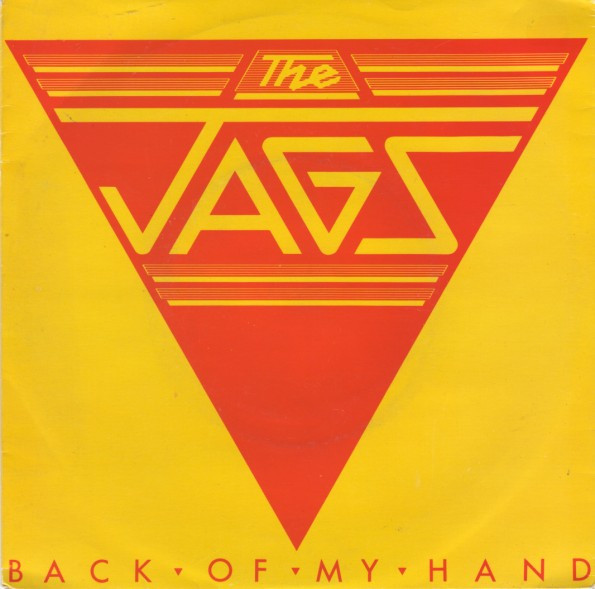
Back: Back of My Hand

The Jags: Back of My Hand
[purchase] 

One of the fun things about writing for this blog is that I never really know where the piece is going to go when I start doing my “research.” There are so many songs that have the word “back” in their title (and even more with the word in the lyrics, and even more songs that I could write about, if I took a broad view of the theme). When I saw The Jags’ “Back of My Hand” come up in my search, I thought, “hey, this would be easy—a fun song that I remember from college that has pretty much been forgotten.” And yet, when I started to look into it, it became more interesting. 

The Jags were formed in 1978 by the Yorkshire-based songwriting team of singer Nick Watkinson and guitarist John Alder with Steve Prudence on bass and Alex Baird on drums. In July of 1978, they signed to Island Records and released a four-track EP, which included an early mix of “Back of My Hand.” It’s a great song—catchy, fun, but with a little edge. And no, it isn’t about hitting someone—it’s about the excitement of getting a girl to write her phone number on your skin, since the song long pre-dates cellphones. 

After dealing with the almost mandatory management issues, the song was remixed by Trevor Horn and Geoff Downes (The Buggles), and the resulting single release became a modest hit in both the US (peaking at 84) and UK (hitting 17), at a time when “new wave” music was not common on the charts. It was, I suspect, more popular on college radio (I definitely played it a few times) and more adventurous commercial stations that were beginning to embrace new wave music. That version was on the US release of their first full album, Evening Standards, although a newly recorded version was on the initial UK pressings. Honestly, I’m not 100% sure which version is embedded above, but I kind of think that it was the original version, not the Buggles remix. 

But here’s the rub. When I thought about writing about this song, my first thought was, “The Jags—that band that sounded like Elvis Costello.” And constant comparisons to Mr. MacManus appeared to torpedo the Jags. It’s kind of an interesting phenomenon. I remember that Costello was, initially, compared to Graham Parker, without damaging his career, and early Costello comparisons didn’t prevent Joe Jackson from becoming a star. So, the only conclusion must be that the Jags just weren’t that good. 

That conclusion would be wrong. 

In researching this piece, I found a number of reviews that call the song “a power pop classic,” their output in general as being of “uniformly high quality,” and having “a range of power pop that few—including Mr. Costello—ever achieved.” And I have to agree—the band was tight, and they wrote clever new wave pop songs that deserved better than just being dismissed as knockoffs. Yes, the Costello influence is hard to miss, but there’s also other things there-Thin Lizzy, maybe the Kinks. It’s a similar situation, I think, to the Knack, who were turned into a punch line despite some excellent songs because of, well, because of a bunch of reasons that I wrote more about here. 

After “Back of My Hand,” the Jags had some personnel changes and recorded a second album. While band members insist that they never tried to copy Elvis, as one member noted, for the second album, they tried not to sound like him. The album was unsuccessful, the band members feuded, there were legal and management squabbles, and the band broke up. As far as I can tell, none of the members appeared to join other known bands, it seems that their music is out of print, and some of it never was even released on CD. In fact, the version that I’ve uploaded is from a compilation, and the Amazon purchase link is from the soundtrack for the 2006 Owen Wilson movie, You, Me and Dupree. 

Then I found an article from 2013 entitled, Donate to Fund for UK Power Pop Legends The Jags’ Watkinson, in which I discovered that Watkinson had since about 2009, been, as the article put it, “living as a transvestite and performing at select clubs in the greater London area, generally under the name Virginia Plain.” The reason for the funding request was that Watkinson’s home was destroyed by a fire set when a lodger fell asleep with candles burning. And, of course, the flat was not insured, and the culprit fled and never paid a penny. Another article that I found about this situation noted that Watkinson was earning a “living as a gardener.” 

It's kind of a shame that such a talented songwriter isn’t writing songs, and that a talented band never really made it. But it shows how everything has to align for an artist to succeed.

Wednesday, January 5, 2022

IN MEMORIAM: GEORGE FRAYNE

George who? Well, you might have known him better as the Commander, Cody, that is, the laconic, cigar chomping leader of his Lost Planet Airmen, that ragggle taggle collective of country memes and influences that beguiled and bemused many an otherwise country music loathing audience across the swathes of the 20th century's last three decades. I loved 'em, but you might have known that. 


Frayne started the band back in Ann Arbor, Michigan, as a way of getting some beer money whilst pursuing his studies, first a BA in design, topping that with a masters in sculpture and art, two years later, in 1968, before an initial foray into teaching. However, sensing an audience for the manic fusion of country, rockabilly and western swing, he and his like minded compadres did a bunk to Berkeley, during 1969, which is where they stayed, making forever there a little home of red necked hippies in Southern California. A bandleader in the old sense, he was unafraid of the others stealing his thunder, confident and competent enough to give the limelight to the rest of the band, if then to wrest back the crown for one of his idiosyncratic sung-spoken updates of vintage classics. Every album would contain one or two such pieces, like the song above, Hot Rod Lincoln, and the paean to nicotine, Smoke, Smoke, Smoke (That Cigarette). The rest of the booty would be shared out amongst the other front men of the band, Billy C. Farlow, vocalist for the rockier fare, toting a big and unplugged red guitar, and the mighty Bill Kirchen, who could write and croon a country weepy like no other, tongue in cheek, as tears fell down it. Kirchen also possessed an uncanny talent with a telecaster, going later on to have a career of his own, lasting to this day, the self-styled King of Dieselbilly. Having a bevy of ace musicians in the backline can't have hindered either, the likes of Bobby 'Blue' Black on steel and Andy Stein on fiddle and saxophone guaranteeing the chops were as sound as the influences, with second guitar John Tichy, bassist 'Buffalo' Bruce Barlow and drummer Lance Dickerson no small talents either. 


Successive record companies, Paramount and then Warner Brothers, had seemingly hoped for some cali country rock to file alongside the Eagles or Poco, which, if nothing else, showed how wrong they had assessed the cut of the band's jib. But, whilst 1971's Lost In the Ozone may have been defiantly different from quite anything else around at the time, it did at least have some minor chart action courtesy Hot Rod Lincoln. Which gave them that extra foot hold to keep doing what they did best. Meanwhile, an ocean away, in the UK, the teenaged me was discovering the pleasures of honky tonks and steel guitar, if only aurally, through the works of Gram Parsons' Flying Burrito Brothers, and I chanced upon a copy of their second album, as entranced by the cover painting as the anticipation off what may lay inside, buying it on spec. Hot Licks, Cold Steel and Trucker's Favorites delighted me and disarmed me in equal doses, the heavy hit of some of the songs initially too "and western" for my untutored ears. Mama Hated Diesels, a brilliantly bittersweet fable from the pen of Kevin 'Blackie' Farrell, had my jaw drop to the ground in horror, momentarily at least, ahead of bouncing swiftly back into a fixed rictus of joy as it progressed. Hook, line and sinker, this was my kind of band, that then cemented by the Live From Deep in the Heart of Texas album. OK, it's true, I was less taken by Country Casanova and Tales From the Ozone, which seemed a little too busily wacky and less authentic, but remember being delighted as a friend picked up the latter, able to further eulogise their earlier works to him.


Which is how, in the spring of 1976 we found ourselves at London's Hammersmith Odeon, the two of us ready and eager for a taste of the live show ourselves. Unbeknownst then, it was from this show that provided the live tapes for (some of) later that years second live recording, We've Got a Live One Here, a double album I had to dig out and play, as I prepared this piece. Surpassing any of my expectations, the band were on fire, the line-up augmented by harmonica maestro, Norton Buffalo. Plus, given both he and Kirchen were also adept trombone players, this gave an opportunity for the Ozone Brass to make their debut, the two 'bones and Stein's sax, for exuberantly OTT takes on western swing staples like San Antonio Rose and Milk Cow Blues. I was in heaven, transported back there by my recent revisiting of the vinyl record.


That was sort of it, the band imploding a not so long thereafter. Frayne kept the Commander Cody title on into a number of lesser bands, but the tide had turned, for me anyway, my ears more keenly attuned to the new wave of artists like Elvis Costello and Joe Jackson. This tended to put my country music aside for a while. Or, actually, until Costello brought it all tumbling back into focus, as he nailed his flag to that mast with Almost Blue. Many, many years later I was lucky enough to have some of my Commander Cody favourites reprised, including, at my request, Mama Hated Diesels, when Bill Kirchen made one of his irregular small club and bar tours of the UK. I was able to chat with him in the interval, as he manned the merch stall, mentioning the tour of all those years before. He said he kept in some touch with the Commander, and had fond memories of those days. Me too. (Here's my review from then.)

Here's a great interview, from 2018, with Frayne, where he too comments on keeping links with Kirchen. And reveals that John Tichy, after the band folded, became a professor of physics. It makes for a more reflective read than the somewhat more effervescent Rolling Stone article of some near 40 years earlier.

R.I.P., George, thanks for the music and all those fond memories.

Friday, May 28, 2021

JAZZ COVER: BILL FRISELL

The suggestion offered from above was to look at covers of jazz standards, you know the sort of thing, bluegrass Brubeck, country Coltrane and math-rock Miles. (OK, I may have struggled with the last, but you catch my drift.) Me, I immediately thought of the current glut of polyglot artists, nominally 'file under jazz', but equally at home cross piste. I'm thinking the likes of Brad Mehldau, Herbie Hancock and, most of all, the extraordinary guitar of Bill Frisell.

Tired of Waiting For You/Guitar in the Space Age: Bill Frisell (2014)

Frisell is an unlikely looking axe-hero, but axe-hero he is, and, whilst always thought primarily a jazzman, you may be surprised how far he crosses over and how many records by artists in the fields he has appeared on. Far more, say, than Pat Metheny, who is a name often dropped into great guitarist lists, yet seldom strays from his niche, give or take a sole dalliance with Queen and being the subject, loosely, of a Richard Thompson song. Yet, ironically, it is to Metheny he owes his place, depping for Metheny when Metheny unavailable for a session, he suggesting the bright eyed novice with tousled hair to take his place.  This was for the icy wastes of ECM, the sometimes seemingly dour Nordic label that is the go-to for glacial instrumental jazz, instantly identifiable by their 'postcards of the tundra' album covers. A number of albums with them, ahead of hooking up with John Zorn on the New York scene, all avant garde and spiky composition. But being an in-demand musician for other muses and producing like-minded material wasn't enough. So, on a move to Seattle, Frisell started cooking up something new, investigating, variously, other native musical forms: americana, rock, pop even.

This century he has spent flitting relentlessly between projects: a torrent of his own composition, further expeditions into idiosyncratically exploring and totally revising the music of others and, most delightfully, beginning to pop up in the mainstream, alongside artists such as Elvis Costello and Norah Jones. At the time of writing he has 39 recordings in his own name or as an integral part of the billing, 22 since the year 2000. Add in a series of live recordings and it another 22, plus a truly ridiculous number of collaborations, guest appearances and cameos. Check out his web page. (Bet you wouldn't expect him to have ever worked with Richard Hell and the Voidoids!)

For want of any other methodology, here are a few of his covers, whether coming from his own records, from collaborations or any other source, all displaying his maverick control of the fretboard, approaching melody always from its polar opposite, yet always finding it, often unexpectedly. A beautiful tone, this is sweet music: no atonal skronking here to frighten those with terror of the J word.

You Only Live Twice/When You Wish Upon a Star: Bill Frisell (2016)

Across the Universe/All We Are Saying: Bill Frisell (2011)

Cold Cold Heart/The Willies: Bill Frisell (2002)

I Heard It Through the Grapevine/East,West: Bill Frisell (2005)

Magnolia/Down Where the Spirit Meets the Bone: w. Lucinda Williams (2014)

Standing in the Doorway/Slipstream: w. Bonnie Raitt (2012)

As Tears Go By/Slipstream: w. Marianne Faithfull (1987)

And spot the great man, playing, in the video above.

More, here....


Thursday, April 8, 2021

PASSED OVER: PASSED ON

 Yup, can't resist, the elephant in the room, or rather the dead elephant in the room, as passed over always has me reaching for the reflex, however thoughtful or thoughtless, sorry for your loss. It isn't a phrase that sits neatly in my lexicon, smacking of euphemism and a coy avoidance of the reality. So and so has passed over, so and so has passed on, all of that. To where says the passive-aggressive agnostic inside me? The other side isn't exactly helpful and arguably is also somewhat unrealistic. Mind you, I'm not keen on rest rooms or comfort stations either, and you can blame my earthy medical anglo-saxon roots for that, where folk die and go to the toilet, or even, sometimes, even  the other way round. 

Death songs then, a surprisingly large and popular canon from time immemorial, the annals of trad. arr. littered with maidens killing and being killed. But that's too easy, here I want to explore those songs written from the viewpoint of the slain. I love 'em. Here are five of the best.

Long Black Veil has to be one of the best, the happy little tale of how the honour of the canoodling was preserved, the song's protagonist taking the rap for a murder, as his only alibi would have to have been his paramour, his neighbour's wife. So that's all right then, is it? She gets off scot free, if then still leaving the neighbour wondering quite why, or where, his wife gets the penchant for going out of a rainy night, dressed in black and howling at the moon. One of many versions, this one, by the Band is the best, the lead vocals, all of the exquisitely ragged vocals for that matter, sounding distinctly of the grave. Which, sadly, is indeed now the case.

To follow, a beautiful song, set within a glorious string setting, coming from John Wesley Harding, aka Wesley Stace, initially a skinny tie "noo wave" singer, with hints of Costello in his style and timbre, to, now, an increasingly folky solo troubadour, an artist I have much time for. The song weaves a story of come uppance with a real sting in the tale and stunned me to silence the first time heard it. A warning to any uxoricidal maniacs out there, it certainly gave me pause for thought.

The sort of song perhaps older readers will remember from their parent's collection, the old Marty Robbins chestnut, with The Old 97s giving it a good kicking, providing a bit more of the adrenaline that a real gunfight might provide, the momentum giving credence to that apparent sense of disbelief that seems to arise after a wound sustained in the heat of skirmish.At least, that's what happens in films. The Old 97s have an intrinsic knack for polishing up old tropes and giving them a modern sheen.

Neither a judiciary death nor a killing, is this one about a natural death? Of course, with the way Elvis writes his songs, the whole thing may be an allegory. But irrespective of such musing, I like the way it is the first to offer a view of the life beyond the threshold. Rather than a wraith stranded here on this earth, here the protagonist offers a description of a disappointed creator, rueing his creation. Am I alone if feeling some hope in that? It is certainly preferable to the burning pit of hell, but is it heaven? Costello has always struck me as a man who thinks deeply about the human condition, his songs often offering the sour aftertaste of catholic guilt.


Hell, you say, you mean like this? And you can always trust the Pet Shop Boys to offer an acerbic and wry view of proceedings. So maybe this song doesn't, as actually did neither the last, overtly explain how the observer came to be where they were, and in this one there is even no reference per se to anyone dying. But, surely, any accurate reportage would require the ability to be there and even Bill and Ted had to die to get there, yes? So I have to assume the witness is deceased, my column and all that. Ex-journalist Neil Tennant effortlessly lists the names of the mad, the bad and the dangerous to know as being the main occupancy, which I suspect is a little hopeful. My hell would be full of people I know.

As would my heaven.

I'm sorry for my loss. In taste.

Wednesday, July 29, 2020

Masks: Nick Lowe & Los Straitjackets

[purchase The Quality Holiday Revue (Live)]
[purchase What's So Funny About Peace, Love And Los Straitjackets]
[purchase other Lowe/Los Straitjackets music]

A few years back, we did an “Unusual Collaborations” theme, and had Nick Lowe and Los Straitjackets been working together back then, it would have seemed to fit right in. But what is more surprising is that their collaboration actually has worked so well and so seamlessly.

Lowe, of course, has proven to be an incredible musical chameleon. He’s done pub rock, punk, new wave, power pop, country, roots music, standards, holiday music and more. He’s a songwriter, a producer, a singer, a leader, a sideman, and instrumentalist. Los Straitjackets, since their formation in the late 1980s, have been an instrumental band playing rockabilly influenced surf-rock. But beyond the quality of their music, what most people know about Los Straitjackets, if they know anything about Lost Straitjackets, is that they perform in Mexican wrestling masks. Why, you ask? Apparently, they wore them at their first gig, and the crowd loved it, so they just kept doing it.

A few years back, Lowe was performing shows focusing on his more country crooner songs, but after the death of drummer Bobby Irwin in 2015, he broke up that band. When Lowe wanted to tour behind his holiday album, his record company suggested label mates Los Straitjackets as a touring band. Eventually, Lowe insisted that the band play his songs as if they were their own, and he’d just fit in. This collaboration allowed Lowe to pull out some of his old rockers again for subsequent tours, and they have released a bunch of songs together. And in 2017, Los Straitjackets released an instrumental album of Lowe covers, entitled, What's So Funny About Peace, Love And Los Straitjackets.

I got to see them perform together last year at the great Tarrytown Music Hall, and it was a great show. The video above, of the whole show was taken by someone in the audience (not me), and you can see how it was structured—A set with Lowe leading the masked Los Straitjackets, a set with just the band, ending with a Lowe cover, and another set together. For the encore, the band returned first, playing tribute to their fellow masked man, Batman, before Lowe rejoined, and then a final encore of a solo Lowe covering his friend Elvis Costello.

Tuesday, February 25, 2020

Valentines: My Funny Valentine


Miles Davis: My Funny Valentine
[purchase]

What makes a standard a standard? Clearly, there has to be something timeless about the songwriting, and there probably has to be a performance of the song that captures the imagination of other musicians, and through them the interest of their audiences. Certainly, “My Funny Valentine” qualifies as a standard. According to Wikipedia, the song, written by the great team of Rodgers & Hart for the 1937 musical Babes In Arms, appears on more than 1300 albums performed by over 600 artists, ranging from Chet Baker to Miles Davis, to Frank Sinatra, to Ella Fitzgerald to Chaka Khan, to Linda Ronstadt, to Elvis Costello. Apparently, it has become a song that many jazz musicians are sick of; yet it continues to be performed and recorded (although I read somewhere that in the 50s, one New York club owner banned the song).

I think that what makes the song so compelling is that while it is a love song, it isn’t a song where the singer objectifies his or her love. To the contrary, the song is a catalogue of physical imperfections that nevertheless do not detract from the ardor that the singer professes. And since most of us aren’t perfect and fall in love with imperfect people, there’s a universality in this sentiment.

It appears that it took almost two decades for the song to move from Broadway to the Great American Songbook. In fact, when Babes In Arms was made into a movie in 1939 featuring Judy Garland and Mickey Rooney, the future classic wasn’t even used. But a gentle, quiet version of the song, sung in 1954 by the trumpeter Chet Baker (who had performed on an instrumental version with Gerry Mulligan the prior year that was so good that the Library of Congress added to the National Recording Registry in 2015) made the music world reconsider “My Funny Valentine.” Sinatra recorded it the same year, a couple of years later, Miles Davis recorded it with his quintet, and it was off to the races.

In fact, in 1957, the song appeared in the film Pal Joey, which was loosely adapted from Rodgers and Hart's 1940 musical of the same name, despite the fact that it hadn’t appeared in the musical. Sort of a musical make up call.

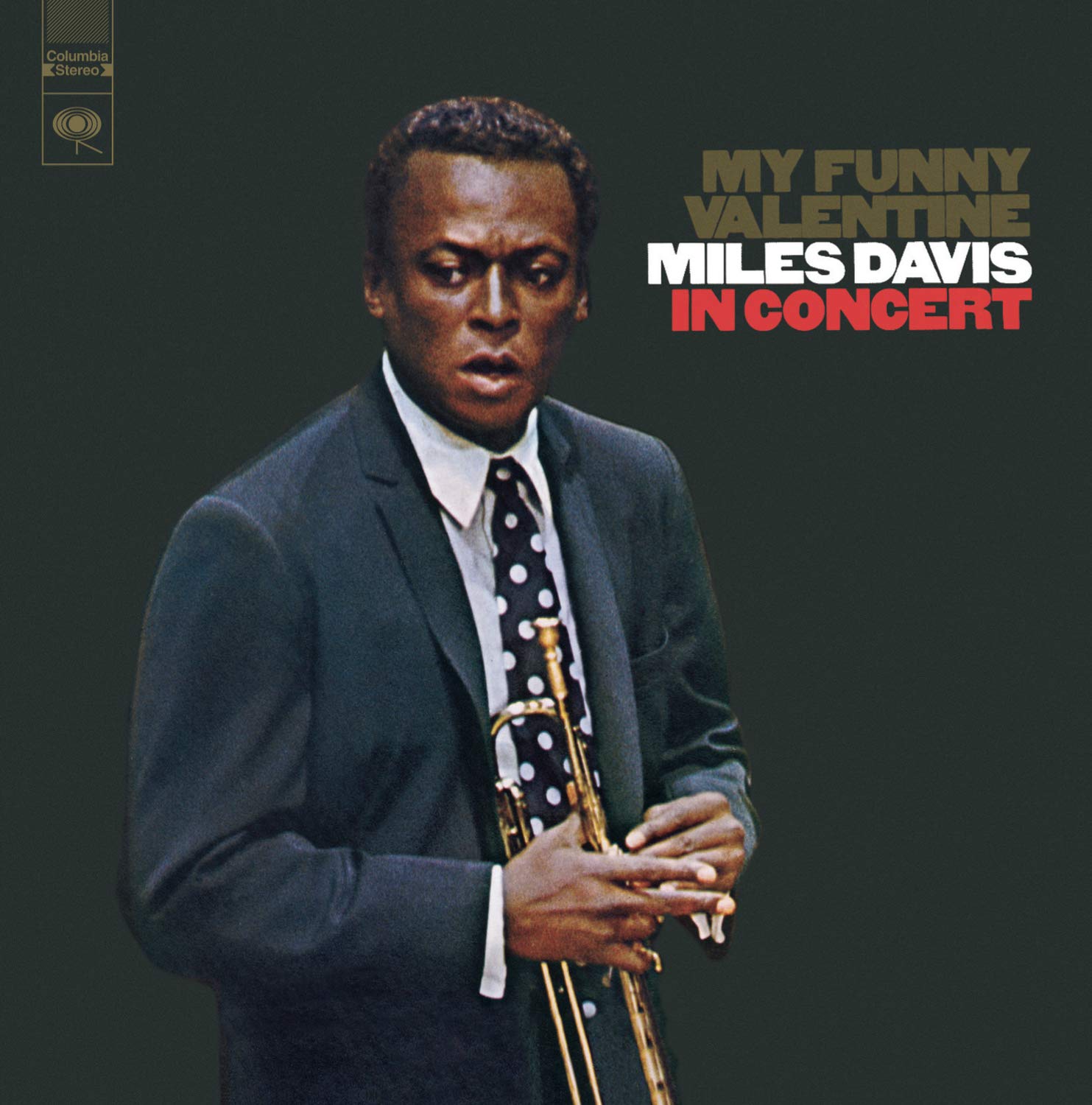
The version featured above, though, is from My Funny Valentine: Miles Davis in Concert, recorded on February 12, 1964, at the Philharmonic Hall of Lincoln Center in New York City, and in addition to Davis, features Herbie Hancock on piano, Ron Carter on bass, Tony Williams on drums and George Coleman, whose sax solo is remarkable.

I don’t think that we post many 15 minute jazz pieces here, so, when we do, it better be good—and this really is.

Tuesday, January 28, 2020

Something With Twenty: Twenty Years Ago


Magazine: Twenty Years Ago
[purchase]

I’m pretty sure that I first started paying attention to the band Magazine in 1981, when their live album Play was released in the US (It was released in the UK in 1980, which would make it 2x twenty years ago....). I have to assume that we had their earlier albums in the WPRB library, and for all I know, I played them, but Play is the first album of theirs that I remember.

What made me take notice of them was the keyboard part in the recording of the song “Definitive Gaze,” because it sounded like it could have come from any number of prog rock albums, although the band’s vocal, and general sound, were more punk than prog. Understand, that in 1981, we were still in the relatively early days of punk, or maybe more accurately at that point, new wave, and the whole basis of that movement seemed designed to sweep away the excesses of the prog and classic rock world. Nowadays, that seems kind of quaint, in an era of genre mixing, where Elvis Costello could win a Grammy for Best Traditional Pop Vocal, of all things,  but back then it seemed revolutionary.

It took me a little while to figure out that Howard Devoto, the leader and singer of Magazine had been in The Buzzcocks, a band that I discovered after he had left, and which was at that point still pretty punk, and I think that part of the reason that Devoto left was to explore a broader musical palette. Magazine was one of those bands whose popularity and influence in England was much greater than in the U.S., and they broke up in 1981, so I have to admit to losing track of them after I graduated from college, missing their reunion(s) entirely.

Another song on Play, which was originally the b-side of a single (“A Song From Under the Floorboards,” a great song, was the a-side), was “Twenty Years Ago,” which is how we, ultimately, get to our theme. It’s a good song, if not my favorite from the band, but we write to the theme here.

But it did give me the excuse to think about where I was in my life twenty years ago, in 2000, which turned out to be a pretty momentous year for me. I started the year being miserable working at a law firm, and ended it much happier working in-house at a large financial services company. My supervisor was, without a doubt, the best boss that I ever worked for, my work was interesting, and I had colleagues who were, for the most part, smart and pleasant, and I remain in contact with many of them to this day. In fact, my four years there were, overall, the best time that I ever had as a lawyer—I got some great experience, was treated as a professional, was paid reasonably well, and did enough travel to make it interesting but not burdensome.

Sadly, the company sold the business that I worked for to a competitor, and eventually, my job was going to disappear. Which led to a return to a law firm where I was less happy, and ultimately to my life as a solo practitioner.

Lots more happened during the last 20 years, some of it good—like my kids graduating from high school and college and moving on with their lives, my son getting married, and beginning my blogging hobby---and some bad—like the death of my father and father-in-law, 9/11, and Trump.

Looking back makes you realize that it is really impossible to predict the course of one’s life. I’m sure that if you asked me back in 2000 what my life, or the life of my family, would be like—or what the country or world would be like, my guesses would have been terribly wrong, except in the broadest strokes (I’m pretty sure that I would have predicted that I would still be a lawyer and still married to the love of my life, for example). And it makes me wonder where I’ll be in 2040—if I’m still kicking in my late 70’s.

Saturday, January 11, 2020

IN MEMORIAM: BARRIE MASTERS

It is the early to mid '70s, an awkward time for the awkward young men with a penchant for the music of the day and earlier. Probably a bit young for prog and still at school when the full hippie vibe was the freak flag of the day, earnest young men with spotty faces and serious record collections already under their belt. With developed tastes already embracing country, folk and other roots genres, they were a large and restless tribe, seeking a brand, seeking a label. No, I am not talking about the assault of punk rock; they were already just a tad too old and learned for that. And, anyway, we are ahead of ourselves, it being yet to ignite. I was there. I was (am) one of those boys wanting to be men. And pub rock was our saviour, whether we were old enough to go into pubs or not.


This is not the place for a discourse in this overlooked yet influential musical movement, beyond an understanding that it provided the loosening of the established masonry that punk would later pull down, if for however briefly. But, via Brinsley Schwarz, Chilli Willi & the Red Hot Peppers, Dr. Feelgood and many others, a melting pot of styles and influences were put into the mix, thrown up in the air and allowed to land, with a ramshackle 4/4 beat and a cheeky smile, short and tuneful songs to put you on your feet. Out of the movement came many of the now established names of current music, Nick Lowe and Elvis Costello being probably the best known, as well as the germination of what then did beget punk, Joe Strummer being a member of the 101ers ahead of forming the Clash. Resolutely tending to be avoidant and ambivalent of style or uniform, pub rockers were of all shapes and sizes, fashion often thrift shop, hair allowed to be long or short, styled or merely as nature intended, facial hair optional rather than a then spurned accessory. Proudly uncool, even. Eddie and the Hotrods fitted well that template. But, in front of the motley bunch of urchins on instrumental duties, they had a cataclysmic and archetypal angry young man in singer, Barrie Masters. They had been around for a while by the time of their break through, chugging out covers of 60's garage rock.

Do Anything You Wanna Do

I was too young to go into pubs, and whilst, yes, occasionally I did, these were not the London pubs that celebrated and created the movement. That came later. I had to rely on the inkies, the musical press, NME and Melody Maker, and the TV, Top of the Pops and Old Grey Whistle Test. And they provided me plenty. TOTP was the weekly chart show, Whistle Test more for the serious (and insomniac) polymath. I devoured both. I remember my first sight of the Hotrods, probably at home, half past seven on a thursday night. Crammed between dross like David Soul, I recall being so bloody excited. They were fast, they were passionate, they were exciting, making my head whirl. Instantly my favourite band, I bought not only the single, 'Do What You Wanna Do', but the album, 'Life on the Line', too. It being 1977, punk had begun, and whilst they certainly sounded punky, there was a touch more melodicism in the undercurrent of bass and the choppy rhythms. But they didn't look it, flared trousers may even have been involved, plus they had a singer called Barrie. Apart from Clive, there can be fewer less rock'n'roll names. And that, I guess, became the problem. A flourish of singles and they were gone, overtaken and subsumed by altogether rougher looking lads. Like the Damned and the Clash. The Sex Pistols, to all intents and purposes, had, by then, been and gone. (Although, for their infamous near debut, in February 1976 at the Marquee Club, guess who the Pistols were supporting? Yup, the Hotrods.) Because of all this and despite all this, for those brief moments and for that summer they were my favourite band.

Ignore Them

Of course, the band never went away. Sure, they broke up, reformed, broke up, reformed, Masters the only constant, and looked to be going on forever, the oldest teenager in town, and still looking good. (Well, quite good.) So it was a shock when, suddenly and perhaps unexpectedly, he died,  probably a heart attack, aged 63. 2019 had been an eventful year, with a successful tour in support to similar 70s refugees, Belfast's Stiff Little Fingers, followed by a celebratory gig, drawing back a legion of ex-members to play a "Done Everything We Wanna Do" concert in April. Was this a warning that the show couldn't go on forever? I don't know, but should anyone even be surprised that it probably will, the residual members of the last band, continuing into this year, first performance tonight? Somehow the Hotrods, as they will be, won't be quite the same without Eddie. And completely different without Barrie.

Done Everything We Wanna Do: the show

R.I.P.

You know you wanna do........

Friday, October 4, 2019

Strange/Weird: Stranger In The House


Elvis Costello: Stranger In The House
[purchase the expanded My Aim Is True]
[purchase My Very Special Guests]

I’m still being influenced by watching the 16 plus hours of Ken Burns’ Country Music, so here’s another post that sort of ties into it. One of the ways that Burns breaks up the flow of narration over still pictures or showing snippets of films and videos is through brief commentary by a number of different talking heads. And while seeing Marty Stuart, or Rosanne Cash, or Willie Nelson, or Merle Haggard discussing the music—or even lesser known figures such as Ray Benson or Jeannie Seely—didn’t seem strange because they were from the country world, it was initially a surprise when Elvis Costello popped up. Until I quickly remembered the Costello had long been a country music fan.

Despite the fact that Costello was, from the start, marketed as an “Angry Young Man,” and as part of Stiff Records new wave sound, his debut, My Aim is True had some very country-ish sounds—starting with the fact that the backing band was made up of members of country-rock band Clover, including future Doobie Brother John McFee playing lead and pedal steel guitar. But they decided to keep the two most country sounding songs off the album—“Radio Sweetheart” (which was the b-side to the “Less Than Zero” single and “Stranger in the House,” which was included as a bonus single in the early pressings of Costello’s second, and much less country sounding, album, This Year’s Model.

Only a few years later, Costello released “Almost Blue,” a collection of country covers which seemed shocking at the time, but has probably aged better than anyone thought.

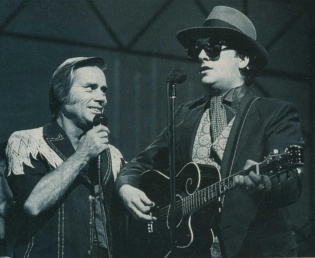
“Stranger in the House” could pass for a classic country song—it has all of the right themes, and it was written by Costello with George Jones in mind. Jones is someone who I was aware of, understood that his voice was legendary, and knew that he had a serious alcohol problem. But watching Country Music, it became clear that Jones was country music incarnate. Born in Texas, he started playing guitar as a child, and fell in love with country music listening to the Grand Ole Opry on the radio. His father was an abusive alcoholic, and he left home at 16 to be a musician.

Married four times, his third wife was country superstar Tammy Wynette, who had her own issues, and their relationship, while commercially successful, was “stormy,” as Jones’ alcohol and drug use spiraled out of control and led to mental illness. And yet, his talent was such that as bad as he got, he kept making comebacks—sometimes even with Wynette, even after they D-I-V-O-R-C-E-D.

Jones recorded “Stranger in the House” as a duet with Costello for a 1978 album, My Very Special Guests” which featured duets with singers from country and other genres.


It set the stage for another #1 hit in 1980, “He Stopped Loving Her Today,” and more recordings, despite continuing substance abuse issues. But in 1981, Jones met the woman who would become his fourth wife, Nancy Sepulvado, and she helped him (mostly) clean up his act. He continued to record and perform (and complain about the state of country music), until his death in 2013.

When you listen to the duet version of the song, it is striking how good a song it is, while Costello tries mightily, it is clear that vocally, Jones was at a completely different level.

Tuesday, March 26, 2019

Australia: Jo Jo Zep & The Falcons/Hit and Run


Jo Jo Zep & The Falcons: Hit and Run
[purchase]

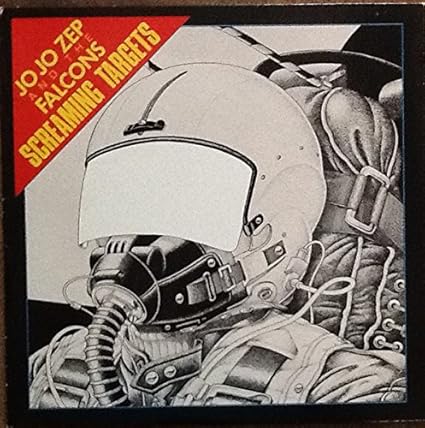
When I saw the album, Screaming Targets by Jo Jo Zep & The Falcons described by the WPRB reviewer as being from the “Australian Graham Parker,” I was certainly intrigued. I had become a huge Parker fan after the release of Squeezing Out Sparks, and used my access to the record library in the basement of Holder Hall to investigate his back catalogue. And the reviewer wasn’t wrong—there was a definite Parkeresque feel to Screaming Targets, whose songs included the rock, blues, soul and reggae influences that were all included in Parker’s work. “Hit and Run,” is a fun tune with a reggae feel, and my other favorite from the album, “Only The Lonely Heart,” is more of a straightforward rocker.

Of course, calling someone the Australian Graham Parker is unfair both to Joe Camilleri and Parker—both are unique artists with individual sounds. I remember how much fun David Letterman (him, again) had bringing performers on his show that were, say, the Elvis Presley of Uruguay, or the Frank Sinatra of Hungary (I’m making those up—I can’t find the real ones online), and while they certainly were reminiscent of whoever they were supposed to sound like, it did sort of diminish their own talent.

But Jo Jo Zep & the Falcons was a fine band in their own right. Formed in 1975 in Melbourne as Jo Jo Zep and His Little Helpers to record a cover of the Chuck Berry holiday classic, “Run Rudolph Run,” it took its name from Camilleri’s Maltese-derived nickname. The band began gigging, cycled through members and renamed itself before releasing their first single in 1976, sung not by Camilleri, but by then-guitarist Wayne Burt. After releasing their debut, Burt left, and the band focused more on R&B and blues music. By their third album, released in 1978, they had achieved popularity in Australia, as well as fans overseas, such as Parker and Elvis Costello, who covered the band’s “So Young.”

Screaming Targets, the band’s first U.S. release, spawned a world tour, but apparently, it led to tensions among the members. After another album, which was pretty good, but not as good as Screaming Targets, was unsuccessful, the band began to break up, and the “Falcons” name was jettisoned. A move to include salsa music in Jo Jo Zep’s sound led to “Taxi Mary,” a hit in Australia, a few more releases, and the end, before a reformation in 2003 and the occasional one-off performance.

Jo Jo Zep & The Falcons were inducted into the Australian Recording Industry Association (ARIA) Hall of Fame in 2007. Were they a great band? I don’t really know, because my familiarity with them is really limited to two albums, one of which was excellent, but I don’t really think so. But as Camilleri stated in an interview before the induction, "I'm chuffed. I think the Falcons did play a part in the Australian music explosion ... I'm happy it's been acknowledged. The Falcons were a band out of time. What we played wasn't what was being played. It was an R&B/reggae sound in the time of flares and funk and pop music. Somehow we slotted in."

Monday, February 4, 2019

Happy/Unhappy Couples: Happy Loving Couples


Joe Jackson: Happy Loving Couples
[purchase]

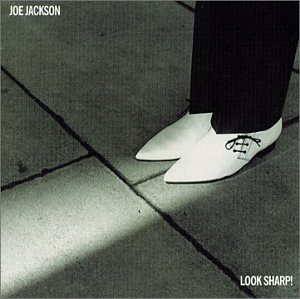
Valentine’s Day comes during the end of this theme, so it seemed like a good time to look at happy and unhappy couples. I’ve written before about Joe Jackson’s career, so I won’t repeat myself, but one thing is clear about Jackson is that he writes very sharp, often cynical lyrics, but they often demonstrate ambivalence, and his song, “Happy Loving Couples” is a fine example. My parents did pay for an expensive education, so let me bring in Tolstoy for a second—Anna Karenina somewhat famously begins, "All happy families are alike; each unhappy family is unhappy in its own way.” On the surface, that’s sort of what Jackson seems to be saying here--

Happy loving couples make it look so easy 
Happy loving couples always talk so kind 

And the narrator seems pissed at that—

Until the time that I can do my dancing with a partner
Those happy couples ain't no friends of mine

And he aspires to that sort of easy couplehood, wearing matching clothing and reading Ideal Homes magazine. But the ambivalence in the lyric is really, I think,  that his anger is not simply that he’s uncoupled, but that he realizes that a relationship takes work, and really isn’t all that easy.

The song, like many on Jackson’s debut, is rooted in classic pop/early rock, but sped up and with an edge that put it into the New Wave genre (and to be fair, there’s more than a whiff of Elvis Costello’s Less Than Zero in the chorus), and it would be criminal not to mention Graham Maby’s great bass playing on this song, and most other great Jackson songs.

I didn’t date all that often in my high school and college days (shocking, right?), and sadly more than once found that Valentine’s Day was the end of a relationship, and not the beginning. Or even the middle. But I’ve now been married for more than 30 years to the love of my life, and I know (because people have told me) that they think that our relationship seems easy, and for the most part, it is. But trust me, it isn’t always, and what seems effortless to the outside world does take work, every day. And we don’t wear matching clothes or read home magazines (at least I don’t), but we do occasionally watch Fixer Upper together, because aren’t Chip and Joanna a great, happy (looking, at least) couple?

Friday, December 28, 2018

Un-Sainted Nicks: Christmas At The Airport

Nick Lowe: Christmas At The Airport
[purchase]

I’m sort of doctrinaire about the creeping expansion of holidays. I’ve accepted President’s Day in lieu of Lincoln and Washington’s Birthdays but reject the concept of “Presidents’ Month,” which seems to be the creation of car companies. Seeing Halloween candy in the stores in August is wrong. Christmas decorating and the like should start after Thanksgiving, and your decorations should be stored away not too long after New Year’s Day. And although I am happy to listen to holiday music in December, after the gifts are opened, it is basically time to move back to secular tunes.

But Un-Sainted Nicks is our holiday theme, so I’m going to ask you to disregard my guidelines, and listen to one more Christmas song, the amusing, original “Christmas At The Airport” by Nick Lowe.

If any musical Nick should be considered for sainthood, I’d suggest that Mr. Lowe could be the one. He’s already performed a number of miracles—writing “(What’s So Funny ‘Bout) Peace, Love and Understanding,” which has been magically transformed into an Elvis Costello song, producing, among other things, said Costello’s first five albums and Graham Parker’s first three, being part of Rockpile, whose best work was released without their name on the albums, and still became legendary, and having a late-career transmogrification into a pop crooner. And if that isn’t enough, his first, incredible, solo album was named Jesus of Cool. At least in England, originally.

“Christmas At The Airport” was inspired by Lowe’s experience, waiting in an airport in Geneva, nursing a hangover from a long night drinking with Mavis Staples’ staff and band—not the American treasure herself, as Lowe is quick to declare. He thought that a jaunty pop song about someone snowed into the airport at the holidays would be interesting. You can hear him discuss this story here.

The video for the song, above, is also a gift. It tells the story of an elf’s thwarted attempts to get to the North Pole in time for Christmas, and includes most of the typical indignities that air travelers must endure, including the forced removal of shoes, having your bags rifled through, and sitting on the floor to charge your phone, along with a few particular to magical creatures. But it ends with the promise of an airport romance. And a snowman being decapitated.

Although the animation styles (and studios) are different, the video reminded me of Bojack Horseman, which as you may know, I love. Not only does the video include humans with elves, snowmen, and what may or not be human/animal hybrids, the airport stores have amusing names that would not be out of place in Bojack’s Hollywoo, such as Snakes For Your Plane Petshop, or Downward Spinal Massage.

Friday, April 27, 2018

Punk: Radio, Radio


purchase [Radio, Radio]

I'm not particular about the genre of music I pick - kind of the opposite of the Ry Cooder line, "I used to be particular ...".  And I can generally classify what I hear as being in one or another of several major categories, but there are some labels that seem arbitrary: Pop-Rock? Folk-Rock? Where do you place Springsteen? And does it matter?

I confess I never really <subscribed> to punk. Maybe it's the connotations I ascribe to the word: "punk" sounds pejorative for some reason. If you had asked me a week ago, "Do you like punk?" I would likely have said, "Not especially. Never really paid it much attention."

Checking out one online list of all time best punk hits, I see that there are many that I (inadvertently) enjoyed without having them labeled as punk.

There are equally many bands in that top list that I never (wrongfully) paid much attention to: the Sex Pistols, Blondie, the Ramones ... all certainly known to me (as in "they exist and make profitable music") but I still couldn't tell you much about them.

But among that top <punk> hits list I was working off, one stuck out partly because I had never pegged the band as punk (but as a result of this awareness, can now sort of profess a better sense of what is punk/what punk is)... and that is Elvis. Costello, that is.

His outre look -a sort of  <I don't give much of a f*** about what you think I look like... my lyrics are my lyrics and make of them what you will>...and music that may come across as discordant (but isn't). I think that partially describes the punk genre.

And I love/loved Elvis. The lyrics always seemed to vie with the best (as in Bob Dylan). The music? - not at all as monotonous as your standard I-IV-V. And catchy - many of the Costello songs got stuck inside my head to the point that they "ran" all night through my sleep. Kept me away going round and round.


Monday, September 4, 2017

Incompetent/Can't: I Can't Stand Up


purchase [Get Happy]

There was a time - about 20 years back - when Elvis Costello and Talking Heads were what I mostly listened to. Both kind of quirky (as opposed to mainstream pop), but both very much in favor with the college-type crowd (which I had long since graduated from - but maybe couldn't leave behind?).

I'm pretty sure that among the things that attracted me to both were (a) the slightly-off the standard I-IV-V chord structures of their songs and (b) the near-poetic lyrics - enough that the words frequently caused me to take a minute or more to ponder their relevance to my current frame of mind. Oh, yes, and neither appeared terribly normal in the MTV videos I saw.

Now, at about the time that <Get Happy> (the album containing Can't) was released, Costello was in hot water on account of his multiple uses of "the n word". He had drunkenly referred to Ray Charles as such, and his "Lover's Army" includes lyrics to the effect "one less white ..n.".
As a result, there are those who believe that his choice of "I Can't.." is a form of either apology or appeasement - because the song comes from the legendary Sam and Dave, who recorded it in a rather slower, more soulful tenor back in the mid 60s.


As for Costello, this song stands in contrast to his earlier dark, angry, vengeful style: granted, the pace - as compared to Same and Dave's slower soul - still rubs a bit the wrong way (also see his dis-jointed dancing on the vid), but you can almost sense that Costello is onto something new, and in fact, from here, it lead to a breakthrough in his career (and puts his racial slur gaffe more or less behind him)

We've got the "Can't" covered pretty well just in the title itself. But how about the "Incompetence"? Well, there's no requirement in SMM's current theme that any single post cover both terms - and in fact they do appear to be linked - if you're incompetent, you can't ... something. But, is there something about Costello or the song that encompasses <Incompetent> as well?
Judging from where Costello went from after this output, I would say: no sign of incompetence on his part.
Your thoughts?


Sunday, August 20, 2017

Shadows: Shadow and Jimmy

Was (Not Was): Shadow and Jimmy

[purchase]

What lurks in the shadows? For the next two weeks, we will be shadowing musicians as they explore that question. Taken literally, a shadow as an image created when a solid object blocks light from a small area. It is when the word is considered as a metaphor that things get interesting, and songwriters get inspired. A shadow can be an image of a person, and it can become distorted by the angle of the light or the contours of the surface on which it is cast. So it is not the same as the person who cast it, merely a memory or a distorted impression. “Shadow” is also a term that may be used to describe a ghost or apparition, a supernatural after image if you will. We will be exploring how songwriters work with these ideas over the course of our theme. But first, here is a much simpler explanation. In Shadow and Jimmy, Shadow just a man’s name.

Shadow and Jimmy comes from Was (Not Was)’s 1988 album What Up, Dog?. The album represented the pinnacle of the band’s success, spawning six singles, but somehow Shadow and Jimmy was never even a flip side. Don’t ask me how that happened, because I am at a loss to explain it. The song features a great lead vocal by Sweet Pea Atkinson over a backing track that has the classic feel of songs like Spanish Harlem. The song was a cowrite by David Was and Elvis Costello. David and Don Was would often bring in unexpected artists on their Was (Not Was) projects, and Don especially would later parlay the resulting connections into a very successful career as a producer. The song itself presents a portrait of two men who never finished growing up. As the lyric says, they were “always yesterday’s news”, which, in a sense, makes them both shadows. To me, they represent the parts of maleness that most of us outgrew once we left high school. They never make the leap in their thinking from the idea of girls to that of women. But they are never quite alone as a result, because they have each other. So ultimately, the song is a celebration of a friendship. It may be that some listeners didn’t know what to make of the relationship described in the song. You could dismiss the characters as losers, but Costello and Was don’t do that. Neither character has any success with the opposite sex, and it is not for lack of wanting it. But the songwriters do not want us to pity them; we are asked instead to find beauty in their loyalty to each other. Maybe the song was not a single because not enough listeners could make that leap, but Was, Costello, Atkinson, and the backing band do everything you could ask to make it possible.

Wednesday, March 1, 2017

POUR: What's Your Poison?

A rare gap in my day allowed me some further reverie around this theme, wondering whether there is a tipple that at some time has not put the poetic muse into overdrive. (Answer: quite a few, but here are a few that did!)

WATER: Clearly we start with the only real essential, that last choice at the party, adam's ale. And what better than a bit of cheesy soviet folk-jazz-rock, the russians seeming always to me big fans of plain. Yeah, right. I had never heard of Garik Sukachyov before today, but he and his "proletariat jazz" seems quite big in the eastern bloc and more, were I able to read the cyrillic of his publicity pages. The song is "Pour Me Water".


TEA: Can't stand it myself, but the life's blood, it seems of my nation, a brew being the solution to any crisis, the balm to any bluster, the antidote to any antipathy etc etc. I was expecting some Bonzo Dog type parody to celebrate this drink, but, should I be surprised it was rap, sorry, Grime, artist Yungen that celebrates this nectar. And the song? "Comfy". Not really, or, um, my cup of tea.


COFFEE: In truth from where this idea came, this song , "Truck Drivin' Man", and the band both longtime favourites of mine, with the chorus refrain of "Pour me another cup of coffee, for it is the best in the land" lilting into my head at the merest flicker of fancying a flat white. An old country staple, Commander Cody and his Lost Planet Airman nail this as theirs. (I saw erstwhile guitarist Bill Kirchen, self-styled king of Dieselbilly on a solo UK tour in 2015, asking he play it as a request. Without the rest of that stellar crew, he showed he still could.)


COKE: Nope, not that one, the fizzy drink, but I felt a need to slowly build up to liquor, keep you thirsty, as it were. The only reference I could find to pouring one comes from this little Elvis Costello mid-period beauty. From his never bettered "King of America", in 1986, this song references not necessarily its consumption, more to how it may be, in the song, comparable to the vintage wine of the more decadent europeans. (As I listen again I wonder as to whether anyone currently resident in Washington might see themselves somehow as King? What's the name of the song again? Brilliant  Mistake........)


WINE: I know beer probably comes next, but I couldn't find me a convincing one, so onto another King, Dean Martin, no stranger to either grape or grain. Possibly lost for choice, this is the only one with an explicit instruction to pour. Not much else to say. (Is it just me, but anyone reminded just a little of this?)


RUM: You get the drift, by now I am just naming a drink, any drink, and asking google for a stiff one. This is the probably unfeasably long straw I got here, along with an umbrella and, quite possibly, some dry ice. Who the f is Zac Brown and why is he singing this execrable nonsense? "Castaway". I wish it was. A hat band from the southern states, I learn, committing the common if no less cardinal sin of mistaking country music with cruise ship crap in the caribbean. (See also Jimmy Buffett. No link.)


GIN: Gin is dead classy nowadays, taking a place ahead of malt whisky in its myriad styles and varieties, all increasingly exotically and artisanally sourced, prices escalating through the stratosphere. This song, "Galaxy of the Lost" was made in 2007, so the chances are it was a Gordons, possibly ahead even of  Mr Ramsey's last ditch attempt to resurrect the also-ran loser generic (or brand leader as these things often are in the real world.) More tonic than gin in both the song and performance, by ex-Test Icicle, Lightspeed Champion.


WHISKY: Right on cue, waiting for the gin backlash, here's whisky revving in the pits, tho' maybe this band are more down the rotgut end of the market than my tipple of choice, Laphroaig, thanks for asking. Double. No ice. This? "Pour Me" by Trick Pony. I like the way the video finishes before the end of the song. It seems somehow how it should be. Like the amnesia of an alcohol related black-out.


BOURBON: I don't think this is cheating. Bourbon may be generically a whisky, but, no, not really, it is different altogether. And what is about all these country dudes and their drinking? Mind you, this song, by Alan Jackson, is a whole lot classier than the whisky above, a whole lot. Lonesome guy, a broken heart, an understanding bartender. Heck, I'm there already. But if those goddamn rednecks put that Trick Pony song on the jukebox again I swear I won't be responsible for myself.


TEQUILA: Oh, hell, I must have just lost a moment or two there, where am I? That bourbon was just soooooo smooth. But what's this shit? Like that fine line between not enough and too much, I have strayed again from good country to bad country. Or from country to western as we so hilariously put it back home. Never liked tequila anyway, whether "Pour me another Tequila, Sheila" is pouring or not. Bobby Bare sounds someone I don't need to know. Am I right?


Hating to end on a low note, perhaps, but even with that large pint of water, the tea, the coffee, the cola, all that wine, rum, gin, whisky, bourbon and tequila is going to have some effect on the next day. So here is Bobby Bare's son (Bobby Bare Junior!) to remind us quite what. I have one of his records. He seems a whole lot cooler a character than his dad. Less successfull too, I'll wager, but at least he'll be forgotten on account of his art.

Cheers, y'all!

Search here