Showing posts with label chuck berry. Show all posts

Wednesday, April 13, 2022

PAUL: TALL PAUL

Another rabbit warren of antique archaicism to fall down today, as we grasp at the few straws offered by Tin Pan Alley to the Pauls of this world. Johns, and Johnnys are, of course, two a penny, and even Williams get more action, if more frequently foreshortened to Billy. So, then, pop pickers, who remembers “Tall Paul”? Don’t worry, I don’t either, but it was 1959 when Annette Funicello took it to the Billboard chart, where it reached number 7. 

There’s a nice tale about the song, suggesting it was written for Paul Anka, not least as he and Funicello were briefly an item. Anka responded vigorously to deny this, citing he was not remotely tall, an inescapable truth. Funicello was an erstwhile Mousketeer for the Mickey Mouse club, long before, I should add, any more recent incumbent, and the song was written by the Sherman brothers, Robert B. and Richard M., who specialised in writing for Disney, and penned most of the soundtrack for Mary Poppins. The song? Well. It ain’t up to much, typical fare for the times, but it did provoke a response. 

The tradition of a song producing a response, unrelated, from another group or singer is long and celebrated. Possibly the best example would be the songs traded between the star crossed squeezes, Neil Sedaka and Carole King. “Oh, Carol” was a massive hit for the former, and “Oh Neil”, her reply, was not, perhaps explained by her, in the interim, having married Gerry Goffin. More recently there was the somewhat more nuanced bromance between Morrissey and Billy MacKenzie. The Smiths brought out “William, It Was Really Nothing”, the seemingly somewhat a little infatuated Associates singer, with the explosive H bomb of a voice, riposted with “Stephen, You’re Really Something.” Probably more a little bit of celebrity one-upmanship, it makes for a great tale, if largely and likely apocryphal. 


Anyway, “Tall Paul” too garnished a reply, from a songwriter, Ray Hildebrand, who elected to give it a duet status, enrolling the niece of his landlord, Jill Jackson, to help him sing it. Picked up by showbiz mogul and producer, Major Bill Smith, who, despite outranking Colonel Tom Parker, was in an entirely different league. He gave Ray and Jill the name Paul and Paula, and a hit was born, hitting the number 1 spot in 1962. I was confident that was that, but it appears they went on to have a career of sorts, with further hits and a few albums, ahead of Hildebrand quitting the glitz, returning to college and embracing the Church. A later “Dear Paula” did not chart. 

Coming soon, in a future theme entitled Bernard, will be more enticing tales of derring do, but, until then, grab ‘em while you can…… 

Tall Paul 

Hey Paula


Wednesday, December 18, 2019

Leftovers: Cutlery (that Cuts) (and Alabama)/A Knife and Fork


Rockpile: A Knife and Fork
[purchase]

I took some time off from this blog over the summer, so for the Leftovers theme I’m trying to hit some of what I missed--and this post covers three in one!

I have to believe that more food is eaten from Thanksgiving to New Year’s Day than any other similar period during the year. At least in my family, this period is filled with big family meals, parties, dinners out, and many, many cookies, thanks mostly to my wife, the master baker. As someone who struggles with weight and diet and the related health issues that this has caused, it seemed appropriate to write about this song, a cautionary tale about overeating.

My introduction to the song came from its inclusion on the only studio album released under the Rockpile name, Seconds of Pleasure, despite the fact that the musicians (Nick Lowe, Dave Edmunds, Billy Bremner, and Terry Williams) acted as the band for both Edmunds and Lowe on a number of solo releases. At the time of the album’s release, I remember being a little disappointed, despite the fact that there were a number of strong tracks, but as a fan of both Edmunds and Lowe, maybe I expected too much. I think that the critical opinion of the album has improved over the years, though.

What I didn’t realize until I started writing this was that “A Knife and Fork” is a cover—which is a little embarrassing for someone who sporadically contributes to a cover blog. It was originally written and performed by a mostly forgotten performer, Kip Anderson, back in 1967. The song was recorded at the legendary FAME Studios in Muscle Shoals, Alabama (hey—that’s another theme that I missed), and was produced by Rick Hall. Check out the original version:


Look, I’m a big Dave Edmunds/Rockpile fan—ask my college roommates—and their cover of the song is good—I liked it then, and I like it now, although I was never a huge fan of when Edmunds’ voice sounds processed. But if you compare it to the more soulful, horn-filled original, the Rockpile version feels restrained. So, I have to say, the original is better. Because, in part, everything is better with a horn section.

Edmunds, to his credit, often covered obscure songs, giving them a new life—on Seconds of Pleasure, for example, in addition to giving Kip Anderson some royalties, he covered a lesser known Chuck Berry song.

Although I do expect to indulge during this festive period (and I already have), I hope that the situation isn’t as dire as the song portends.

Wednesday, July 17, 2019

Alabama: Mobile


Purchase [  Let It Rock]

If you had no other American reference to go by, you could be forgiven for confusing the pronunciation of the Alabama city of Mobile. There are at least 3 forms, but one is correct. 'Course, it's not the only US city name to throw the unsuspecting, is it?

Located on I-10 (which is inherently kind of a cross-roads -as are all of US Interstate hiway cities), Mobile, like the state itself is classic Deep South, and that includes the good as well as the better known bad. Hey, the city that lays claim to the first Mardi Gras must have (had) something going for it beyond the fact that it is the state's port city (AL doesn't have much coast anyway.)

While the city is hardly bereft of music recording studios, its better known role in music is more as a source of lyric inspiration. As in Chuck Berry's Let It Rock.
It doesn't appear that Berry experienced the train gang referred to in his lyrics, but, growing up in the South, he certainly had all the background necessary to put together a valid narrative incorporating the right themes in a song. And Alabama has gone back and forth on the use of chain gangs even after a mid-90s general halt to their use.

But rather than a song about gangs, trains or the deep south for that matter, it's a rock and roll song about how life is just plain tough, a song about the blues. And it sounds a lot like Berry's most famous song, don't it?

Tuesday, March 26, 2019

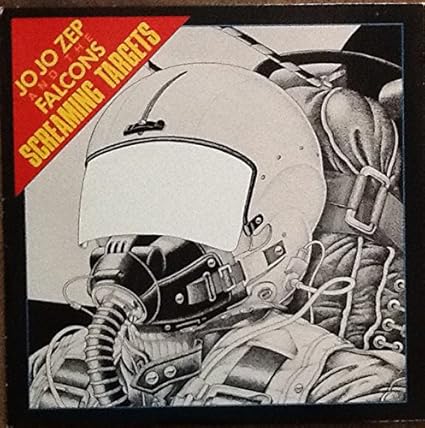
Australia: Jo Jo Zep & The Falcons/Hit and Run


Jo Jo Zep & The Falcons: Hit and Run
[purchase]

When I saw the album, Screaming Targets by Jo Jo Zep & The Falcons described by the WPRB reviewer as being from the “Australian Graham Parker,” I was certainly intrigued. I had become a huge Parker fan after the release of Squeezing Out Sparks, and used my access to the record library in the basement of Holder Hall to investigate his back catalogue. And the reviewer wasn’t wrong—there was a definite Parkeresque feel to Screaming Targets, whose songs included the rock, blues, soul and reggae influences that were all included in Parker’s work. “Hit and Run,” is a fun tune with a reggae feel, and my other favorite from the album, “Only The Lonely Heart,” is more of a straightforward rocker.

Of course, calling someone the Australian Graham Parker is unfair both to Joe Camilleri and Parker—both are unique artists with individual sounds. I remember how much fun David Letterman (him, again) had bringing performers on his show that were, say, the Elvis Presley of Uruguay, or the Frank Sinatra of Hungary (I’m making those up—I can’t find the real ones online), and while they certainly were reminiscent of whoever they were supposed to sound like, it did sort of diminish their own talent.

But Jo Jo Zep & the Falcons was a fine band in their own right. Formed in 1975 in Melbourne as Jo Jo Zep and His Little Helpers to record a cover of the Chuck Berry holiday classic, “Run Rudolph Run,” it took its name from Camilleri’s Maltese-derived nickname. The band began gigging, cycled through members and renamed itself before releasing their first single in 1976, sung not by Camilleri, but by then-guitarist Wayne Burt. After releasing their debut, Burt left, and the band focused more on R&B and blues music. By their third album, released in 1978, they had achieved popularity in Australia, as well as fans overseas, such as Parker and Elvis Costello, who covered the band’s “So Young.”

Screaming Targets, the band’s first U.S. release, spawned a world tour, but apparently, it led to tensions among the members. After another album, which was pretty good, but not as good as Screaming Targets, was unsuccessful, the band began to break up, and the “Falcons” name was jettisoned. A move to include salsa music in Jo Jo Zep’s sound led to “Taxi Mary,” a hit in Australia, a few more releases, and the end, before a reformation in 2003 and the occasional one-off performance.

Jo Jo Zep & The Falcons were inducted into the Australian Recording Industry Association (ARIA) Hall of Fame in 2007. Were they a great band? I don’t really know, because my familiarity with them is really limited to two albums, one of which was excellent, but I don’t really think so. But as Camilleri stated in an interview before the induction, "I'm chuffed. I think the Falcons did play a part in the Australian music explosion ... I'm happy it's been acknowledged. The Falcons were a band out of time. What we played wasn't what was being played. It was an R&B/reggae sound in the time of flares and funk and pop music. Somehow we slotted in."

Sunday, January 14, 2018

IN MEMORIAM: Chuck Berry


Purchase The Great 28 

A lot of people claim to have invented rock 'n roll.

But, that's a prodigious bit of boasting, to say you invented the genre, when the very mythology of the origin is so varied, so colorful, so joyously populated by gods and heroes.  So, where was rock 'n roll made, and where and what from?

To be sure their are ethnographic explanations and tracing the origins of the sound make for great myth-making and listening.

But, the argument pertaining to its exact origin remains as varied as the source materials.

No amount of explication or analysis or research can answer the question and assign a singular forefather to the origins of rock. No Cronus, just many, many Titans. And the myths are there for you to pick and choose from, but in reality, the birth of rock 'n roll is a singularly personal thing. What we lack in historical consensus, we make up for in in the purely individual.  It's about a gut feeling, a deep vibe, a startling, life-altering chord change inside you that get not so much strummed as lit up and electrified and sent shivers all up and down your spine. Rock 'n roll was invented when you heard your first truly, foot shuffling, head bobbing, heart throbbing, "pants dropping" (Springsteen), earth shaking, heart attack making, soul quaking song.

So, who to believe?

I believe Little Richard when he said "The blues had an illegitimate baby and we named it rock 'n roll."

I believe Alan Freed was spot on when he adopted an African-American slang phrase for having sex and used it to describe the new sound that he was spinning--a sound that mixed rhythm, blues and something swinging and new. Freed broke racial barriers by playing black artists on the mainstream airwaves and putting those same bands on stages together in racially mixed concerts.

I believe Jack Newfield, who said in a 2004 article from the New York Sun that rock 'n roll was a "Black and White alloy" of many, many great players, from Ike Turner to Jerry Lee Lewis.

I believe Elvis Presley, who was humble about his part in rock's invention and insisted that he simply took his influences and added something of his own and what came out was what he loved. I believe he truly was the King

Rock 'n roll has its origins, to be sure--historic, cultural, geographical. And it has its legends. Like any great monolith of our dreaming that holds sway in our fascinated imagining should--Rome, the Vikings, the Great Wall of China--the great ideas and events are bigger than even their own definition.

But I think the real inventor of rock 'n roll resides in the listener's own heart. No amount of explication or analysis or research can answer the question and assign a forefather to the origins of rock. It's about a gut feeling, a deep vibe, a starting, life-altering chord change inside you that is not so much strummed as lit up and electrified, sending shivers all up and down your spine.

For me, it was Chuck Berry.

Blistering guitar licks, snazzy suits, a ridiculously athletic and unselfconscious strut--called the duckwalk--that he employed on stage.

Chuck Berry.

He made me want to pick up a guitar.

I could never master his leads when I played guitar, but I tried hard to learn "Johnny B. Good". His car crusing a road rhythms were easier for me, and I still love that sound. When a Chuck Berry song comes up on shuffle, I inevitably get the same rushing excitement that I did when I first heard that ripping, siren call sound of his Gibson hollow-body.

I heard that sound, and I thought, that is rock 'n roll. That is where it comes from.

The heart of rock n roll is an embodiment of spirit--something wild inside you that might be unattainable. It is all gut, a stirring fire that burns from your inner-self all the way out. What it makes you feel is what truly defines it. That's a wonderful little covenant to enter--if you don't love music, don't feel the almost indescribable thrum down in the part of your soul that speaks most closely with the gods--it won't matter to you who invented rock 'n roll.

Extracurricular reading:
Who Really Invented Rock 'n Roll?, from the New York Sun

Thursday, May 25, 2017

Gold: Killerman Gold Posse


French, Frith, Kaiser, Thompson: Killerman Gold Posse
[purchase]

A theme within a theme—two “Gold” related posts about 1980s Richard Thompson side projects. To follow up last week’s post about the Golden Palominos, this week we look at French, Frith, Kaiser, Thompson, a more traditional “supergroup” in form, if not sound or popularity. FFKT released two albums, 1987’s Live, Love, Larf & Loaf, from which today’s featured song comes, and Invisible Means, released in 1990.

Thompson is both a personal favorite, and a SMM regular. His cohorts in FFKT, though, are somewhat lesser known. John French is a drummer, although he contributed some vocals to the project, and is probably best known as “Drumbo” from Captain Beefheart’s Magic Band. Fred Frith, best known as a guitarist, although he mostly played bass and violin in this group, was a founder of the English avant-garde rock group Henry Cow, and has played with and produced a wide variety of mostly experimental and unconventional musicians (including Golden Palomino Bill Laswell). Frith is Professor of Composition in the Music Department at Mills College and is also a writer. Henry Kaiser is another experimental guitarist and ethnomusicologist whose body of work stretches across the spectrum of jazz, rock, electronic and world music.

As could be expected from this crew, Live, Love, Larf & Loaf is an eclectic set of music which seems to also reflect the members’ off-kilter senses of humor. The album includes, among other things, experimental, noisy songs, an Okinawan folk song, a version of the Beach Boys' “Surfin’ U.S.A.” played in the style of Chuck Berry before descending into chaos, and a few songs that sound like slightly twisted Richard Thompson songs.

“Killerman Gold Posse” is one of these, a song about a London youth gang, in which Thompson recounts the gang’s practices of stealing from the rich and giving to the poor, although he notes that “the poor are we, and the poor are we.” However, the narrative is interrupted by a chorus, which sings, “We are children, please don't take our freedom away.”

It is an odd song, and one that probably is exactly long enough at 1:47.

Monday, February 23, 2009

Shorties: Come On


Chuck Berry: Come On [purchase]

Chuck Berry, sublime guitarist and avowed master of the short rock song, had no patience for mis-dialers.


(Miscellany: The female vocal part is by Chuck's sister Martha. The static you hear is on the master tape.)

Sunday, August 3, 2008

Cars: Maybellene


Chuck Berry: Maybellene

[purchase]


Is there a better car song than Maybellene? Chuck's crunchy chords keep cadence as he sings about his V8 Ford motivatin' over the hill towards Maybellene's Coup de Ville. No matter how many times I listen, I find myself rooting for the V8, as if I'm not quite sure of the ending - Berry sucks me in every time.

Alan Freed used to regularly stage shows at the Brooklyn Paramount, almost all of Rock's early pioneers played there. This was recorded for Alan Freed's Rock And Roll Dance Party Vol. 1 and my mom was part the audience when this song was recorded, I'd like to think somehow the notes reverberate through my DNA.

Maybellene is a permeation from another song, a traditional American fiddle tune called Ida Red that dates back to the 19th century. In 1938, Bob Wills recorded a modernized version.

Berry's piano player, Johnnie Johnson, claims that the both of them rewrote it on the order of Leonard Chess, the head of their label:

"It was an old fiddle tune called 'Ida Red.' I changed the music and re-arranged it, Chuck re-wrote the words, and the rest, as they say, was history. Leonard Chess asked me to come up to record it live. At that time, someone else already had a song out by the same name, so we had to change our version. We noticed a mascara box in the corner, so we changed the name to 'Maybellene.'"


Bob Wills & His Texas Playboys: Ida Red

[purchase]

Thursday, July 31, 2008

The Moon: Havana Moon


Chuck Berry: Havana Moon

[purchase]

I was flipping through a whole playlist of moonsong, trying to find something to break up the lullabies, when I bumped into this and couldn't help but pass it along, if only to get it out of my head.

That's not to say that the song isn't a great work of art, of course. Sparsely performed in a jangly latinate rhythm, and delivered in falsified patois that is fully a product of its time, Havana Moon is a lusty tribal chant of devil rum and wishful thinking that never fails to remind me just how new and dark and sexy and exciting this style of music was once, to our parent's generation. Chuck Berry has a kind of Langston Hughes and Harry Belafonte meet Dick Dale and the Troggs in some Cuban backalley thing going here; I know that sounds like a train wreck of sound, but it works for him.

In fact, many believe that Richard Berry based the immortal rhythms and strum of Louie, Louie on Havana Moon. How's that for street cred?

Ganked originally from the everwise and mystical mix collaborative over at Motel De Moka, where it appeared as part of a retro playlist with an autumnal theme posted way back in October.


Afterthought: given the racist overtones, I figured that this was one of those songs, like "Thank Heaven For Little Girls", that you just couldn't credibly cover in today's oversensitive world, at least not without a heavy dose of irony. (Unless you're, like, Carlos Santana, circa 1983.) But just to prove me wrong, here's a spooky-sounding Paul Curreri taking a shot at an emotionally dissonant remake, and succeeding admirably.

Paul Curreri: Havana Moon

[this track and 50 other post-millenial coversongs of love from Paul Curreri and Devon Sproule available totally free right here]