








Showing posts with label Frank Zappa. Show all posts

Monday, April 18, 2022

BLOOM: BLOOMERS (DINAH MOE HUM/FRANK ZAPPA)

Us crack team of world weary scribes often have a little virtual chat around the introduction of each new theme. For this one, as the (currently*) token Brit, the newsroom wondered whether I would be taking on bloomers under this portmanteau. As someone who never discusses taking off bloomers, again a British "thing", I somehow have found myself delivering a post about voluminous panties. Well, someone has to!

And you know, I discovered how few songs there are on the subject. Indeed the only one that I could instantly think of, is one I can't stand. Perspective. When I were a lad, inky fingered from addiction to the musical press, I read more about music that had opportunity to listen. Thus, I liked a lot of artists long before I ever heard a note they played, purely on the basis of the enthusiastic coverage in New Musical Express and in Melody Maker. Frank Zappa and his Mothers of Invention were one such, as was his acolyte and erstwhile friend, Captain Beefheart. They looked such outrageous reprobates, not just dirty hippies, but filthy dirty hippies (or so my naive mind wandered). This admiration would take a logical step into afternoons misspent in the record shop, cans on, rifling through the records available. By good luck, it was Hot Rats that I first got my ears around, a record I love to this day, and can whistle still every nuanced guitar solo. It's true, I didn't much like the Beefheart vocals in Willie the Pimp, overly mannered and affected. (It's why my vinyl copy has a deep ridge in the grooves, as I tried, clumsily, always to skip them, as the guitar calisthenics that followed were and remain phenomenal. It sort of went downhill after that. OK, forgive me, I bought Live At The Fillmore, snickering at mud shark misdemeanours and other such low brow schoolboy humour; hell, I was a schoolboy. It has remained unlistenable for years since, bar the lift of Flo and Eddie reprising the Turtles' Happy Together, which I used to add to mixtapes. Showing how long, that too, was. (Of course I knew they were the Turtles before they were Flo and Eddie, should anyone be tempted to pass comment. You might anyway, as it has been so long that any of us had a comment that you could wonder if we write merely for ourselves.)

Fast forward, what, a couple of years, and I was sharing a study with someone with an even more over-attuned sense of hip than I. We shared our admiration of Zappa, and one fine day he unleashed his latest purchase, Overnite Sensation, playing it loud, on rotation, for several hours. I got to know the songs well, the lyrical drift imprinting on my brain like a bad smell. What was this dreck, this drivel? Even as I tried to concentrate on the instruments, all I could get was his insufferable baritone, smirking and smutting. In a crash of lightning it came to me, Zappa was shite, a charlatan. And, Hot Rats aside, there he has remained. I still think that a work of genius, so much so, in fact, as when his son, Dweezil,  recently came over and played the album as the modus operandi of a tour and album, I had to go. And, when he had played the album, consummately, I should add, with his band, again I had to go, as he started the second half by cranking straight up into fecking Dina Moe..... Which meant I was home and tucked up in bed, probably before the encores. (Note, the review is not mine, but the first comment is.)

So, having written off both Zappa, largely, and Beefheart, totally, as pants, SWIDT, what more is there for me to do here? Well, how about the only Beefheart song I can abide.

That his most hardcore fans wrote this late commercial phase as a sellout and a sham probably tells you as much about them as it does about me. Me, I blooming' love it.

Bloom here!

(*currently as in still here, but additional limeys still deemed eminently welcome, as indeed all citrus. Wanna write here? As it says in the top right hand corner: "Star Maker Machine is always open to new bloggers joining our ranks. Send an email to learn more: smmmod2000@gmail.com )

Monday, November 8, 2021

CANDY/SWEETS: CHOCOLATE

Duty bound to prop up this side of the atlantic, with candy, like movies and garbage, an americanism that has crept in and gained an increasing traction in the language over here. I feel I have to say we eat sweets, or, even, sweeties, when in need of a sugar kick. So, true to form, tapping 'sweet' into my i-tunes search, I anticipated reams of inspiration. Sadly, give or take this song, very little fitted the bill, even were I to turn a blind eye to the innumerable double entendres out there, as most of the sweetness and most of the honey referred to comes in a two legged form. Needing, thus, a quick reboot, and chocolate became my go-to. 


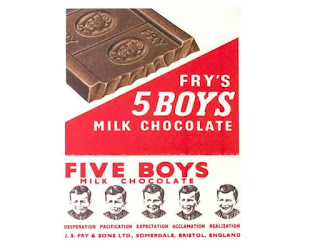
Courtesy disallows any discussion over the pros and cons of US versus UK in this confection, the age-old Hershey versus Cadbury, perhaps now academic that Cadbury, for chrissakes, are owned by the cheese paste magnate, Kraft. (The answer, by the way, is neither, my taste erring towards dark and interesting, the continental "plain" chocolate that actually bears some acquaintance with the cocoa bean.) So, with no further ado, here's a selection box of choccy treats, which I will deliver in the form of the once mighty Fry's Five Boys bar. This was a childhood treat in, admittedly, simpler times, a thin bar comprising 5 segments, each with a different boy at the different 5 stages of engagement therewith. Entitled Desperation, Pacification, Expectation, Acclamation and Realisation, the classic stages of how to bribe a small child. Once the most recognised bar in the world, it was launched in 1902, surviving until the late '70s, by which time it had become desperately low key and old hat. 

Desperation:

I Like Chocolate/Johnny and the Raindrops

Has anyone actually heard this monster before? Uncertain quite as to which demographic it was aimed toward, nonetheless it is so gallingly sickly as to deserve a place here. Johnny and the Raindrops, who "have been making music for children and their grown-ups since 2008", that quote giving away the game that they are in that small selection of bands for pre-school kids, like Australia's more famous Wiggles. (I'd love to say like They Might Be Giants, but I am aware their fans now come also in long trousers and are fiercely protective of the band and their oeuvre.)

Pacification:

Chocolate/Tindersticks

An unusual piece from the Tindersticks canon. Unusual, in that it is spoken word, spoken with a voice that sounds normal and unmannered. The singing style of the vocalist, Stuart Staples, is not always so, with one of the, let's say, more curious timbres out there. Don't get me wrong, I adore the band, and his odd vocal style is a big part of that, this song somehow diminishing him a little, making him sound just a normal lad from Nottingham. The backing remains, of course, exquisitely characteristic, a mix twixt David Lynch soundtrack and european art-house film music. It is a long track; please bear with it. If you can't, well, skip to the end. With luck you will then want to hear the whole thing.

Expectation:

Chocolate Girl/Deacon Blue

The song that first endeared me to this ongoing Scottish institution. A terrific song from their debut album, the mere act of adding some sublime pedal steels ensured my interest and attention. I have written about them before, my belief maintained that their first work was their best, further albums never quite having quite the same hooks. But they play on, fairly big hitters, still, on the bigger UK indoor venue circuit: indeed, I caught them, if briefly, playing at  festival just this last summer. With a largely all the hits show, they had the audience lapping it all out of their hands. And, sure, they played this.

Acclamation:

Chocolate Drops/Iggy Pop

A newer song, slightly, one of the highpoint of Mr Osterberg's 5 year old opus, Post Pop Depression. I like it, he coming on all over like a cross between his old mucker, David Bowie, and Mark Lanegan, the thoughtful use of chimes in the percussion department always a mood lifter in my house. It has intriguing lyrics, Pop's own, added to a riff album producer Josh Homme had had lying around for some few years. Basically a variation on the Monty Python song about looking on the bright side, here Pop muses on how, as you sink to the bottom, you become the top of that trajectory, inviting the then corollary that the brown stuff accumulating there might then become chocolate drops. Enticing stuff, eh? But it is a lovely little tune so, with that positivity in mind, who is to say the yellow snow isn't honey?

Realisation:

More Songs About Chocolate and Girls/The Undertones

I'm not sure whether this was written as a response to the Talking Heads' worthy sounding album, More Songs About Buildings and Food; I should check. (A: It came two years later and both bands were on the same label, so it seems a reasonable supposition.) No clever allegorical verbiage here, just a dumb yet smart ode to the simple pleasures of, um, chocolate and girls, sung in Feargal Sharkey's unmistakeable wobbly warble. At the end of this or any day, I am not sure if any of the greatest philosophers could put it better:

"Sit down, relax and cancel all other engagements
It’s never too late to enjoy dumb entertainment"

So, there you have it, 5 boys worth of chocolate. Before I finish, however, let me share with you the delight of discovery as to what the Scots Gaelic for candy turns out to be, sweeties being so integral in Scottish life and dentistry..... (Hint: try saying 'suiteas' aloud. And 'seòclaid' isn't heaven a million miles away, either!)


Tuesday, July 13, 2021

1971: Fillmores

Allman Brothers: Whipping Post
[purchase Don't Fight the Feeling - the Complete Aretha Franklin & King Curtis Live at Fillmore West ]
[purchase Allman Brothers Live at Fillmore East Deluxe Edition]
[purchase Mothers Fillmore East-June 1971]
[purchase Humble Pike Performance Rockin’ The Fillmore

1971 saw the closing of both the Fillmore West and the Fillmore East, the legendary venues operated by the equally legendary rock impresario Bill Graham. The original Fillmore Auditorium was located in a San Francisco building originally built in 1912, and Graham began booking shows there in 1965. It eventually became the center of the San Francisco music scene, with incredible musical performances and famous light shows. But in 1968, because of the increasing deterioration of the neighborhood and the insufficient size of the space, Graham moved his focus to the newly christened “Fillmore West.” That venue, formerly the Carousel Ballroom, was briefly run in 1968 as a cooperative venture by the Grateful Dead, Jefferson Airplane, Quicksilver Messenger Service and Big Brother and the Holding Company, before Graham took ownership and began booking shows there. (The original Fillmore was, for a while, operated by a different company as the “New Old Fillmore.”) 

The name “Fillmore West” was chosen because earlier in 1968, Graham had taken over a derelict space in New York City originally built for the Yiddish theater in the mid-1920s, and opened it as the Fillmore East. That venue, like its West Coast sibling(s) became hugely popular and influential, with shows on multiple nights a week, typically triple bills at 8 and 11 pm. The Fillmore East also featured elaborate light shows. 

However, by1971, the economics of the music business was changing in favor of stadium and arena shows (boo!), and Graham decided to shutter both venues. The last concert at the Fillmore East was an invitation-only affair on June 27, 1971, featuring The Allman Brothers Band, The J. Geils Band, Albert King and special surprise guests (Edgar Winter's White Trash, Mountain, The Beach Boys, Country Joe McDonald). The Fillmore West closed on July 4, 1971, after five nights of concerts by 14 bands, mostly from the San Francisco area, including Santana, the Grateful Dead, Hot Tuna, Quicksilver Messenger Service, and the New Riders of the Purple Sage. 

The Fillmore West eventually became a Honda dealership, before becoming a music and event venue called SVN West. The Fillmore East went through a few other iterations as a music venue before becoming The Saint, a gay nightclub in the 1980s. The former lobby of the venue is now a bank, and the auditorium was demolished to build an apartment building. 

The original Fillmore became a punk venue, The Elite Club, before reopening under Graham’s management. It was damaged in an earthquake, and after Graham died in 1991, it was repaired and reopened as The Fillmore. Live Nation operates the venue and has rebranded a number of theaters around the country with the Fillmore name, although in some cases, most notably at New York’s Irving Plaza, it didn’t take. 

Although 1971 was a bad year for the Fillmores West and East, it was a good year for albums recorded at the venues. On May19, 1971, Aretha Live at Fillmore West was released. It had been recorded there in March, and included a number of covers of current popular music. It’s pretty great, featuring, in addition to the amazing Franklin, King Curtis on sax, leading a band that included, among others, Billy Preston, Cornell Dupree, Bernard Purdie, and the Memphis Horns. And there’s a duet with Ray Charles. During the same shows, King Curtis’s band, which was also the opening act, recorded its performances (mostly covers), and they were released as Live at Fillmore West in August. Tragically, a week after its release, Curtis was stabbed to death in New York. 

If there’s one album that rock fans associate with the Fillmore East, it is the Allman Brothers’ At Fillmore East, recorded there in March, 1971 and released on July 6, 1971. I’m not really sure what else to say about this album that hasn’t been said better by others. Suffice to say that it is one of the greatest live rock albums of all time, and probably just one of the best rock albums of all time (which is why when I picked one song to feature above, it was from that album). In 2004, the album was selected for preservation in the Library of Congress, deemed to be "culturally, historically, or aesthetically important" by the National Recording Registry. 

In June, 1971, The Mothers (formerly known as The Mothers of Invention, led by Frank Zappa) recorded performances at the Fillmore East (and some additional performances in May in Michigan), for Fillmore East-June 1971, released in August. It is raunchy and juvenile, and while it has some good music, really hasn’t aged well. 

Humble Pie, which featured Steve Marriott and Peter Frampton, recorded performances at the Fillmore East in May, 1971, and released Performance Rockin’ The Fillmore in November, 1971. I can’t say that I’m at all familiar with it, although I have a vague sense that I’ve heard the single from it, “I Don’t Need No Doctor.” Before the album was released, Frampton left the band for a few years of minimal success before he came alive, briefly.

Thursday, March 25, 2021

Pat: Patrick O’Hearn

Group 87: Future of the City
[purchase

When I suggested this theme, I was trying to think of a St. Patrick’s Day theme that didn’t fall back on some variation of Irish music, so it is kind of funny that I’m writing about a guy named Patrick O’Hearn (although it sounds Irish, it turns out that it may more likely be English). 

Frankly, what I knew about Mr. O’Hearn before starting this piece was that he was once in a band that I liked back in the 80’s called Group 87, but I didn’t even know what instrument he played. The band put out a self-titled album in 1980 that was given pretty heavy airplay at WPRB, but I’m guessing that most people reading this have never heard of it. 

Group 87 is an instrumental album that mixed rock, jazz, fusion, and what would eventually be called new age music, and it was really well done (it rocks more than it “new ages,” if that’s a phrase, and we all know it isn’t). Considering the style, and the time, it isn’t surprising that the album went nowhere, and the band was cut by Columbia Records, only to re-emerge in 1984 with a second album on EMI that I have never heard. All because the same A&R guy who signed them at Columbia had moved to EMI—Bobby Colomby, who had been the drummer for Blood, Sweat & Tears. 

But it turns out that O’Hearn, and the rest of Group 87 have had pretty interesting and fairly successful careers, pretty much off of the Jordan Becker radar. Group 87’s trumpeter was Mark Isham, who had played with, among others, Van Morrison, before becoming a new age and soundtrack star and in-demand session musician. The guitarist, Peter Maunu, is also a prolific session musician, with credits that range from Jean-Luc Ponty, and The Commodores. And while not an official member of the group, the drums on their debut were played by Terry Bozzio, who had played with Zappa and U.K. before forming Missing Persons with, among others, his wife Dale Bozzio and other former Zappa band members. 

But this is about O’Hearn, who started as a bass player, and began playing professionally at 15. Moving to San Francisco, he played mostly jazz, playing bass for well-established artists such as Charles Lloyd, Joe Henderson, Dexter Gordon, Joe Pass, Woody Shaw, Eddie Henderson, and Bobby Hutcherson, as well as musicians who were his contemporaries, and eventually joined Frank Zappa’s band, where he began experimenting with synthesizers. 

In 1979, he joined friends Isham, Maunu (and Bozzio) to form Group 87. Bozzio then recruited O’Hearn to move into the new wave world, joining Missing Persons, where he played both synthesizer and bass, and hopefully cashed in on their popularity. When that band broke up in 1986, O’Hearn eventually started a solo career in the new age and ambient genres, where he has been quite successful, as well as working on soundtracks. To date, he has released 13 solo albums. And, in another genre-bending move, he played bass with John Hiatt on tour from 2007-2010 and in the studio through 2012 (so he wasn’t there when I saw Hiatt at the Tarrytown Music Hall in 2014). 

Although one of the things I like about writing these little blog posts is that I get to write about stuff that I know, the best part is finding out things that I didn’t know.

Thursday, October 15, 2020

Guitar Heroes: Scrap Metal

Gretchen Menn: Scrap Metal
[purchase

The guitar, of course, is the signature instrument of rock music, and it should also come as no surprise that over the years, I’ve written about, or at least mentioned, most of my favorite guitarists on this blog and elsewhere. Never Eddie Van Halen, whose untimely loss inspired this theme, but he’s a guitarist whose talent I appreciated, but I never was a big fan of the music he created (and it was nice to see that most serious obituaries of EVH mentioned one of my true favorites, Allan Holdsworth, as a primary influence on him. Which sounds weird--as if I was happy that EVH died. I’m not.) 

So, rather than tread down another well-worn path, I decided to write about a great guitarist, about whom I know very little—Gretchen Menn. I first learned about Menn when my wife showed me something in a Smith College publication about her. Menn, a proud member of the class of ’97 (my wife is ’82; my daughter is ’15), was a music major at Smith, and it led me to check out her music. And it turns out that, in pretty much every way, Menn is a real badass.

According to her website bio, Menn, whose father was the editor in chief of Guitar Player magazine, studied classical guitar before moving on to rock and jazz. At Smith, she “convinced a professor to allow her to launch a special studies project on the music of Frank Zappa. Her analyses of “The Sheik Yerbouti Tango” and “The Girl in the Magnesium Dress” showed an interest in genre-bending composition that would manifest later in her original instrumentals.” 

After college, she went to flight school, flying regional jets before turning to a music career, playing in a few different projects before releasing her debut album, Hale Souls, from which our featured song, “Scrap Metal” comes. It’s a classic guitar shredding showcase, and as a shredder, Menn takes a backseat to no one. But she is much more than just a technical wizard. Again, quoting from her website, “[s]he has studied, in equal parts, the music of Mozart, Beethoven, Steve Morse, Frank Zappa, and Jimmy Page.” 

Speaking of Jimmy Page, Menn is the guitarist, playing Page’s parts, in Zepparella, an all-female Led Zeppelin tribute band. You can see her here channeling Page, bowed guitar and all:

In 2016, Menn released her second solo album, Abandon All Hope, a musical adaptation of Dante’s Inferno. Not surprisingly, it is a little more complex and varied in tone than her debut, and includes strings and other instruments (and a chorus), all orchestrated by Menn. Here’s the first track, “Shadows.”

Friday, June 7, 2019

Trees/Grass: Stumpy Meets The Firecracker In Stencil Forest


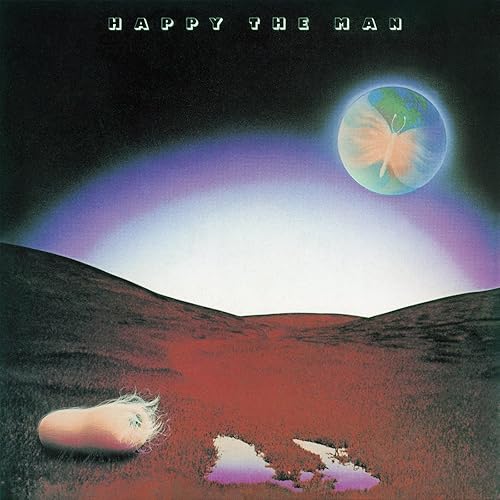
Happy The Man: Stumpy Meets The Firecracker In Stencil Forest
[purchase]

It has been a while since I’ve written about prog rock, and I initially considered writing about two songs from one of my favorite Genesis albums, Selling England By The Pound, “The Battle of Epping Forest,” based on a real gang war, because “forest,” and/or “I Know What I Like (In Your Wardrobe),” about a groundskeeper who says, “Me, I'm just a lawnmower/You can tell me by the way I walk.”

But no, let’s go deeper into the prog rock weeds.

Prog, at least back in its heyday of the early/mid 70s was really a European thing. Most of the famous bands associated with the genre are English, German, French, Italian, etc. But there were American prog bands. Back in 2015, Rolling Stone published a list of the 50 Greatest Prog Rock Albums of All Time, and fittingly, most were from European bands, most of which you have probably heard of (including the aforementioned Selling England By The Pound, at No. 6. The highest ranked U.S. album was from Frank Zappa and the Mothers of Invention, One Size Fits All (Canadians Rush, though had albums ranked 3 and 11.)

Bringing up the rear, at 50, was the self-titled debut album from a band that many consider the greatest American prog band of them all, Happy The Man, maybe, the greatest band that you’ve never heard of.

Formed in and around James Madison University in Virginia in 1973, the band predictably went through lineup changes before settling down, moving to Washington, D.C., and becoming well-known enough that Arista Records signed them. And at about the same time, the newly solo Peter Gabriel met with the band and demoed a couple of songs, before Gabriel decided to go in a different direction for his first album. I kind of wish he had stuck with HTM, though, because it probably would have been great.

These guys could play, with complex songs mixing Zappa, Gentle Giant and Canterbury Scene type songs with more Genesis like ballads. What they really couldn’t do was sing, or write lyrics (often an issue with bands of this type). But if you stick to the instrumentals, you will be blown away.

“Stumpy Meets The Firecracker In Stencil Forest” is a great, knotty instrumental, featuring great guitar, sax and synth playing, and if the often excessive length of prog songs turns you off, it is a compact 4:16. (And look, just because the title references a “stencil forest,” that doesn’t mean that it doesn’t have trees. The Black Forest isn’t black, and is filled with trees. Rain forests aren’t made of rain. Bighorn National Forest isn’t filled with sheep. Just saying.)

After releasing their debut, Happy The Man toured around the country, opening for bands as diverse as Renaissance and Hot Tuna, and recorded and released a second just slightly less amazing album, Crafty Hands. Neither album sold at all, and Arista dropped them. A third album was recorded in 1979, but not released until 1983 (I’ve never heard it), and keyboard player Kit Watkins left to join the somewhat more famous British band Camel. Other members of HTM formed and played in obscure bands or as solo acts over the years, and there was a brief reunion in the early 2000s.

If you like this genre of music and haven’t heard of Happy The Man, check out this song, and their first two albums (feel free to skip the three songs with vocals, but they do have some merit).

Friday, October 5, 2018

Leaves: All I Want Is To Be (Is By Your Side)


Peter Frampton: All I Want Is To Be (Is By Your Side)
[purchase]

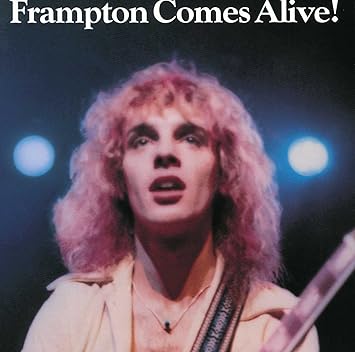
It is far from an original thought to note that Frampton Comes Alive! came out of nowhere. Up until its release, Frampton, a talented guitarist, a passable singer, and a good looking guy with great hair, had experienced some minor fame with various bands, notably The Herd and Humble Pie, and as a sideman, but his pre-Comes Alive! solo career was generally underwhelming. A&M co-founder Jerry Moss had signed Frampton to the label when he was 19, because "He had a cool face, he didn't mind working, and he had a great attitude.” Frampton toured relentlessly and was one of those artists whose songs seem to work better live than on vinyl. And there was the talk-box effect.

So, when he recorded a live album, mostly at the Winterland in San Francisco, but also at the Long Island Arena and SUNY Plattsburgh, there really wasn’t much expected—it was released in January, 1976, after the holiday buying season—and A&M had its collective fingers crossed that it might sell half a million copies and be certified as a gold record. Instead, the album turned into the ultimate “grower.” It charted at No. 51 its second week, then rose to No. 22, No. 6, No. 4 and No. 2, where it stalled throughout March, before hitting No. 1 in April. And it showed staying power, bouncing around the top 10 for the rest of 1976, logging a total of 10 weeks at No. 1, and selling a shocking 6 million copies, which broke Carole King's sales record for Tapestry. Ultimately, it has sold more than 11 million copies worldwide.

Why? I’m not really sure. It is not a great album; much of it is really pretty ordinary (which is why his prior solo albums were not big hits). There are a handful of really good rock songs on the album—songs that rocked hard enough, but not too hard to be offensive—filled with hooks and tight playing. As a high school student in 1976, I can tell you that rock radio played the crap out of the record, and it certainly was a part of the soundtrack of my high school years. Mostly, we heard the singles: "Show Me The Way," "Baby, I Love Your Way," and "Do You Feel Like We Do," but some stations went a couple of tracks deeper than that. So, it might just have been a case of the right album at the right time—a solid product, well promoted, that probably became discussed as one of those things that you had to buy, because everyone was buying it--sort of a pre-Internet version of going viral.

In addition to the rockers, a number of the songs on the live album were acoustic, which were included at Moss’ insistence.  They showcased Frampton’s fine playing and made for a nice contrast from the heavier tracks. One of the best of these is “All I Want To Be (Is By Your Side),” originally from his debut solo album. It’s a nice, bluesy, love song, although I find the lyrics a bit confusing—“I don't care if they cut my hair/All I want to be is by your side.” Huh? But it satisfies the theme by being one of approximately a billion songs that mention four leaf clovers. Yeah, I could have gone with the Old 97’s, but I’m trying to write about artists that I haven’t featured before.

Comes Alive! was, by far, the pinnacle of Frampton’s career. His next album, rushed out to capitalize on his new-found superstardom, was generally substandard, marred by a cheesy, cheesecake album cover and a truly sappy title track. It sold reasonably well, but was generally mocked, including by Frank Zappa. He then starred in the critically panned Sgt. Pepper's Lonely Hearts Club Band film, and was in a serious car accident. A few years later, all his guitars were believed to be destroyed in a cargo plane crash that killed three people, including the black Les Paul Custom that appeared on the cover of Comes Alive! (although it was found years later and returned to him).

Since then, Frampton has released albums, toured with his childhood friend David Bowie (who had been an art student of Frampton's father) and others as a sideman, released an unsuccessful Frampton Comes Alive! II, and has generally stayed active musically, even if most people don’t realize it.  And, like many of us, he no longer has great hair.

I think that it is fair to say that if the universe hadn’t aligned to give Peter Frampton one of the bestselling albums of his era, he’d probably have continued, putting out a series of albums that would have bubbled under the radar of most listeners, maybe occasionally having a radio hit, before being pushed aside from the public consciousness by new generations of musicians, like, say, Foghat, or Pat Travers. That certainly doesn’t mean that they are not good—to the contrary, such artists, including Frampton, are fantastically talented, but still, the incredible, massive,  success of Comes Alive! is an anomaly.

Monday, July 30, 2018

Remedies: Mental Medication


U.K.: Mental Medication [purchase]

The original lineup of U.K. brought together some of the best at their instruments British prog rockers. The band was formed in the late 1970s by drummer Bill Bruford, who had played in Yes and King Crimson, and singer/bassist John Wetton, who had played with Bruford in King Crimson and had also been part of Roxy Music and Uriah Heep. Bruford and Wetton each recruited another musician, with Bruford bringing Allan Holdsworth, who had been with Soft Machine, Tony Williams’ Lifeline, Gong, and Jean-Luc Ponty, as well having played on Bruford’s debut solo album, and Wetton inviting Eddie Jobson, a keyboard player and violinist who had played with him in Roxy Music, and who was in Frank Zappa’s band.

U.K., the one and only album recorded by this lineup is considered by many to be a prog-rock classic. Excellent playing (of course) on interesting, unusual songs, featuring a true fusion of rock, jazz and classical influences, has made this one of my favorites—which is not surprising, considering that Bruford is probably my favorite drummer, Holdsworth is my favorite guitarist, and I have lots of respect for both Wetton and Jobson.

That being said, I have to admit that “Mental Medication” is not one of my favorite songs from the album. There’s something about Wetton’s vocals, particularly at the beginning, that I don’t love. But there’s a thrilling four minute stretch of instrumental music, including a guitar solo from Holdsworth that is both jaw dropping and subtle at the same time, and a violin solo from Jobson, all over Wetton’s stellar bass playing and Bruford’s signature drumming, that makes it worth a listen.

Sadly, after some extensive touring, tensions in the band led to Wetton and Jobson “firing” Holdsworth, and Bruford also left. Rather than find a new guitarist, the remaining members brought in drummer Terry Bozzio, also from Frank Zappa’s band, and recorded Danger Money as a trio. It isn’t a bad album, and actually spawned a minor hit, “Nothing to Lose.” After a live album, Wetton and Jobson themselves disagreed on the future of the band, and they broke up. A couple of years later Wetton formed Asia, with Steve Howe, Carl Palmer and Geoff Downes, which definitely sounded a lot like what U.K. might have sounded like if it tried for a more commercial sound.

Bruford took some of the songs that he had written for a second U.K. album and used them on his second solo album, the great One of a Kind (which also featured Holdsworth on guitar). There were a few Wetton/Jobson led reunions of U.K. over the years, featuring various drummers and guitarists, but the original lineup never got back together.

Sadly, both Wetton and Holdsworth died in 2017, which I commemorated here.

Friday, October 14, 2016

SONGS FROM MY 1ST ALBUM: L.A.WOMAN

It's a tricky one this, as, of course, is honesty, weaving a devious path between credibility and risibility. Achieving both, no doubt. And the heightened self-aggrandisement of claiming that coveted hipper than thou award is no mean attraction. So I lie. There, I've said it. L.A.Woman was not my first album. That was Sgt Pepper, but my sister bought me that because she wanted it. And it wasn't my second. That was Pictures at an Exhibition (E.L.P.), and my parents, bless them, bought me that, based on my instructions. But it was my third, and the first, bought with my accumulated savings from Christmas and birthdays. So it counts, don't it? Sort of. And I am so grateful of that, because, let me set the record straight, for once and for all, it is and remains one of the finest recordings of this and last century.


Let me take you back. I was 14 in 1971. That's a good age to be becoming obsessed by music and it was a good year to be becoming obsessed by music. Now, better people than I have already laid down the challenge that this was the year of the lodestone, most notably, David Hepworth, UK eminence grise of music journalism, sometime presenter of The (Old Grey) Whistle Test, the "serious" grown up big brother of Top of the Pops, clips from each show which litter my previous posts. He was also responsible, in one form or another, for the magazines, amongst others, Smash Hits, Q, Mojo and The Word, often alongside laconic sidekick, Mark Ellen. This is what he says about that year, even going so far as to write a book about it. But I knew none of that then, I was just eagerly lapping up all the sounds exposed to my wide ears. Most afternoons were spent visiting my friendly and local record shop, Complete Audio Systems, of Eastbourne, Sussex, known to one and all as Cas(s)music. With an astonishing indulgence, they happily allowed a stream of spotty schoolboys to put on headphones and nod away for hours listening to side 1 of this, side 2 of that, even if purchases were, well, infrequent. The owner clearly seemed to have a U.S. west coast bent, presumably explaining my enduring love for the obscure and arcane offerings from late 60s and early 70s California: It's a Beautiful Day, Stoneground, Tonto's Expanding Headband, all equally devoured, alongside more familiar fare, Zappa, the Byrds and Jefferson Airplane. Christ, I must have been an insufferable and precocious brat, but happy and fond-remembered days. The Doors, of course, I knew from their big hit single some 4 years previous, but was certainly unprepared for the splendour of the set piece magnum opus that saw my headphones ripped off, replaced by those of my chum Nigel. The storm became ridden and  I was instantly smitten.


 The cover, reproduced at the top, above, had something to do with it, originally having the picture of the band printed onto the yellow inner sleeve, visible through a perspex window, rather than later versions where it was printed as one, all on card. Gone was movie star looks love god Morrison, now a bearded grizzly bear stared balefully out. (I should add I had a thing about beards in those days ahead of being able to grow anything myself. For me the Beach Boys became hip the minute I saw the cover of Live In Concert, ahead even of hearing the songs.......Even Mike Love. Hell, especially Mike Love!) As was my wont, I duly went back and read the inkies of the day, Melody Maker and N.M.E. (New Musical Express) to discover the backstory of booze and bedevilment. I never got round to hearing any more of the record before I was back at the shop, paying my near £2 (about $2.50 today) for my own pristine copy.

Unusually I never quite took to the title track. I found it too long, too loud and too, um, obvious. Yes, I have warmed more to it in the intervening years, but my tastes were more to the mellower aspects, Riders and my lasting favourite, Hyacinth House, below. (AKA, probably, the "cocktail music" epithet made by fast exiting erstwhile producer, Paul Rothschild) I was so convinced as to the perfection of this song that I insisted on playing it to my mother, whose tastes were more of the Jim Reeves persuasion. I forget her opinion, but I felt it helped explain that awful question so beloved of parents, so what sort of music is it that you like? I never felt comfortable saying "rock", as that would have meant "and roll" to my disapproving mother.


But there was also my introduction, more than likely, to any concept of the blues, as a genre and as a genre with a history. Their cover of the John Lee Hooker staple, Crawling King Snake, certainly had an effect on me, the line about getting down on your hands and knees (baby) in particular playing strange tricks on my pubescent mind. Spider on the wall? Wooooo, way too much for my limited understanding to contain and possibly having laundry outcomes. (TMI...)


Luckily I could fall back on the mysticism of Morrisons poetry, and, at 14, yes, it was poetry and, yes, it was mystic. Bob Dylan may just have now been awarded the 2016 Nobel Prize for literature, but I know who I would have awarded it to in 1971. And, however corny, today, 45 years on, indeed do I still feel and share the "immaculate" we is, even if I were never stoned.


I could play more, point you to more, but time and space have their purpose. I know the Doors have swung in and out of favour, aided and abetted by innumerable books and films, a mythology as much as anything. The naysayers can go take one, I won't and don't listen. How many records from 45 years ago do you still play? How many records of 45 years ago still gain plaudits? It's true, often only of this generations and of any generations awkward teens, but that is truth enough for me.

You mean you don't already own this? Buy!
O, and that book by David Hepworth? There too.

Saturday, August 15, 2015

Big bands: Zappa and ELO


Two classics for you in a short post before time's up for the current theme:

I've posted more than once here about FZ and still - 40+ years on - revere the irreverence of Overnight Sensation. Zappa led a band large enough at most times to qualify for our theme's (6 or more band members) limit. And more. The man composed/orchestrated for the band. I've read that he could write musical score as fast as it came to his head - I imagine a scene from Amadeus where Mozart is scribbling away as he explores harmonic options. Yes, a certain amount of drivvel emanated from Zappa's musical mind. (Sheik Yerbouti maybe?) At any rate: Big Bands idea number one: my favorite Zappa orchestral work, from Hot Rats - well, not this version.
 
purchase Peaches en Regalia


As I postponed, delayed and thought through the Big Band theme possibilities, I found myself wandering back in the disco '70s. Alongside Fleetwood Mac and Steve Miller, there was the Electric Light Orchestra. Aka Jeff Lynne's ELO. Like many other Big Band candidates, ELO varied in size from year to year, with wind and string instruments/musicians in addition to Lynne, Roy Wood and Bev Bevan as staple/founding members.


purchase Strange Magic 


Tuesday, July 21, 2015

It's Elemental: Earth Angel


The Penguins: Earth Angel
[purchase]

Change is one of the few things that we can count on. Marriage equality, which not so long ago seemed first impossible, then unlikely, is now the law of the land. Donald Trump has changed from a bufoonish businessman to a bufoonish politician. In my lifetime, we have gone from a world with a handful of TV stations, a music industry dominated by large companies issuing vinyl and computers that filled rooms to virtually unlimited access to all media, including on powerful computers we carry in our pockets.

When Plato and Aristotle passed for scientists, they understood that there were four elements—earth, air, fire and water, and maybe a fifth, “aether.” A similar five element system was posited in Hindu writings, and the Buddha taught about the first four. The Chinese philosophers had five—Fire, Earth, Metal, Water and Wood, while Japanese tradition followed the Hindu system. Or at least, that’s what Wikipedia says. Modern science, however, considers elements to be substances defined by their atomic numbers, with 118 of them currently identified. If anything, the classical elements are now loosely identified with the states of matter—solid, gas, liquid and plasma.

The song, “Earth Angel,” refers to one of the classical elements directly, and even, to some degree, to the aether, because that’s where angels dwell. It was the one and only hit song by the Penguins (penguins, of course, live where Water is often a solid, although the group was from Los Angeles, where Water is now at a premium, the Earth quakes, Fire ravages the countryside and the Air is almost solid). The Penguins, a doo-wop group that morphed from an earlier group, the Hollywood Flames (Fire!!), literally recorded the demo version of the song in a garage in 1954, often having to stop recording when a neighbor’s dog barked.

The music business was so different in those days that the demo, physically carried to a record store as an acetate by producer/label owner Dootsie Williams (who also recorded comedy records by Redd Foxx and violinist Johnny Creach, who years later, as Papa John Creach, played with the Jefferson Airplane/Starship and Hot Tuna), was played on a radio show, requests came in, Williams decided to release it without dubbing any more instrumentation, and a hit was born (despite the fact that Williams insisted on releasing it as the b-side of the now forgotten "Hey Señorita"). The success of the song created a demand that apparently almost bankrupted Williams, who ran out of label paper. Its timelessness and beauty has resulted in sales of millions of copies over the years, numerous cover versions and soundtrack appearances. And not surprisingly, it resulted in years of litigation among Williams, members of the group, putative song writers and Mercury (an Element!) Records, which later signed the Penguins and released a more produced and less successful version of the song.  One of the songwriter claimants, Jesse Belvin, actually was required by the judge to stand up and sing his version, which led to his being awarded a portion of the credit.  The Penguins later released a nostalgia novelty song called "Memories of El Monte," based on the "Earth Angel" chord changes, and containing bits of other doo-wop songs, including "Earth Angel," which was written by Frank Zappa and Ray Collins, pre-Mothers of Invention.

I was introduced to this song years ago by my parents, who are high school sweethearts and remembered dancing to the song during their courtship during the 1954-55 era. My parents married in 1959 and are still together. And while that hasn’t changed, like all relationships, theirs has changed over the years, from being young marrieds with small kids, to successful adults who put those kids through college, to amazing grandparents. I’ve seen my parents dance over the years, usually at weddings and bar mitzvahs, and while I’m sure that they dance differently now than they did back when “Earth Angel” was a hit, I know that their love and respect for each other hasn’t changed, and, if anything, has grown stronger.

Monday, August 18, 2014

Offensive: Camarillo Brillo


Frank Zappa: Camarillo Brillo
[purchase: Camarillo Brillo]

The Wiki informs us that Camarillo is the location of a mental institution and that there were housed therein patients whose hairstyle was "frizzed out" as a result of electro-shocks. I had come to my own conclusion that his use of "Brillo" certainly referenced certain other human "curlies". Quite likely that both are possible: Zappa had a way of pushing societal limits, almost to the point of being offensive.

SMM has numerous other Zappa posts [http://sixsongs.blogspot.com.tr/search/label/Frank%20Zappa], and most of them verge towards the offensive either in title or in content: Don't Eat the Yellow Snow, Stinkfoot, Dinah Moe Humm, I Am the Slime ...

Overnite Sensation is likely Zappa's most offensive oevre: the picture frame that surrounds the cover artwork is one step short of nasty. Kind of a modern Heironymus Bosch.


Camarillo Brillo is only one of several songs on the album that push the limits of the acceptable  - that is assuming that you are not among those who find rock 'n roll to be the devil's music to start with, of course. But this goes well beyond what the 1950's critics had in mind when they condemned rock. Just check it out:

She stripped away
Her rancid poncho
An' laid out naked by the door
We did it till we were un-concho
An' it was useless any more


For my part, back when this came out and I was in my impressionable 20s, I memorized every line of the lyrics. I can still more or less sing along the entirety of the album from memory - 40+ years later. It was/is Zappa's irreverence for societal norms that brought meaning to his music. Aside from his guitar chops: the YouTube live versions don't even approach the guitar skills of this, the studio version.

Thursday, May 15, 2014

Television: I’m the Slime

Frank Zappa: I’m the Slime

[purchase]

After a remarkable burst of posts regarding radio, it would seem that Television has us at a loss here at Star Maker. How can this be? Television surely occupies at least as important a place in our culture as radio does, yet I confess it took me a while to think of songs for this theme. I think it has to do with how we relate to TV, at least here in the United States. Television embarrasses us. If you want to insult an actor, tell him he is a television actor. For every John Travolta, there are ten Adam Wests. And most people forget that Travolta first became famous as the Fonz, a fact I would bet his publicist does not emphasize. We all have TV shows we love, that have influenced us greatly, but we don‘t discuss them with the same pride as a favorite movie. And so it is with songs about TV as well. You will find affectionately mocking covers of theme songs, but no one takes the originals seriously as great music when they cover TV themes. Original songs about TV have this same gently satiric tone; I hope to get to one of those later. But I know of no songs that simply embrace TV as an art form or an inspiration without apology, although the case can certainly be made

Frank Zappa, predictably, doesn‘t even try. He comes right out and spells out bluntly what makes us so uneasy about television. To him, it represents all the worst excesses of mass media, with all the big brother implications. Ironically, the video I have chosen is a television performance of I‘m the Slime. It comes from a 1976 episode of Saturday Night Live, and features an unlikely collaborator named Don Pardo.

Friday, March 7, 2014

Scrabble Value Letters (Z): Zomby Woof

 
[Purchase Asphalt Orchestra - Zomby Woof]
[Purchase Frank Zappa - Zomby Woof] 


I learned about Frank Zappa in college, though I had heard "Don't Eat the Yellow Snow" on the radio once before when a disc jockey made fun of it. I liked it anyway.

So Apostrophe and Joe's Garage (Act One) and Chunga's Revenge are favorites of mine for their combination of juvenile humor and complex musicianship, Then I lost interest in the man, even if I still bought a number of his albums. He became more of a misogynistic misanthrope to me than anything else--doesn't he like anyone or anything?

When this topic came up, I searched through songs I had in old playlists and the word "zombie" came up. Zombies are a hot topic in movies and TV shows and songs, of course. I considered posting a few that approached the subject from different angles.

Then this song popped into my head. The Frank Zappa and the Mothers version is off Over-Nite Sensation, which has a lot of great tunes, but also some of his rudest, most sexist lyrics. The album version starts out with Frank falling asleep and transforming into Ricky Lancelotti's crazed zombie/wolfman sex fiend, with Tina Turner and the Ikettes on backup vocals (uncredited on the album).

I figured I would check for You Tube videos. There are the requisite guitar jams; they are fine, but just not my cup of tea. And there is the video above. Crazed street musicians taking on the master?

It turns out the Asphalt Orchestra is an offshoot of Bang on a Can, the New York City "new music" promoters..They are professionals, looking like they are having a lot of fun. You have to see it to appreciate it, and man, I do.

At this moment, the Asphalt Orchestra has a Kickstarter Project to record their version of the Pixies' first full LP Surfer Rosa. It might not get funded, but we have not heard the last of them.
The Asphalt Orchestra is a 12 member post-modern "marching band." They have worked with other musicians such as David Byrne, St. Vincent, and Brian Eno.

by Paul Tessene

(SMM welcomes Paul and looks forward to reading his regular postings in his own name starting after this post on his behalf)

Sunday, November 24, 2013

Leftovers (Stage Banter): Whippin' Post


Frank Zappa: Whippin' Post

If you're going to focus on the link between Leftovers and Thanksgiving, this first post may seem out of place: we haven't yet celebrated the feast that leaves us with the days' worth of turkey. On the other hand, in keeping with the way that giving thanks carries with it a reflection back on times past, there's no reason not to bring you songs we might have posted during the year but never got around to a few days before T'day.

Flippant, irreverent, baiting, provocative, Frank Zappa had a lot to say, both on stage and off.  At times, you find his words so far off-the-wall that you're sure he can't be serious; or in an interview, his politcal views perceptive and well out in front of most of his contemporaries.

This clip could have almost gone into the "Brothers" theme: written by Greg Allman of the Brothers. Here, we've got (I believe) Bobby Martin doing some fine vocal work following FZ's intro banter and later guitar solos.

Would you all like some more-a?

Tuesday, June 11, 2013

AND BANDS : FRANK ZAPPA AND THE MOTHERS OF INVENTION


Ruben and the Jets: Cheap Thrills

Purchase Link

OK, guys, I'm playing with you today, but you probably knew that. I felt the opportunity for a double "and band" too tempting to pass, hence the apparent contradiction between the title and the subsequent link. For those who don't know, "Cruisin' with Ruben and the Jets" was the 4th LP by Frank Zappa and the Mothers of Invention, or, strictly speaking, the Mothers of Invention, but, hey, it's my column, and it's what we all called 'em. This record, a pastiche of and paean to Zappas love of doo-wop, deliberately played the Mothers entirely in role, as a  mythical band, Ruben and the Jets, with  Zappa being their leader, Ruben Sano. Arriving on top of his earlier and decidedly uncommercial product, perhaps as the original singles made no mention of Zappa or the Mothers name, the songs received considerably more airplay and exposure, ironically, than when it became re-released with the "real" name of the band. Indeed, jocks felt they had unearthed some old original songs from the 50s. This is an old trick, not forgotten by many a band and canny producer to this day.
My exposure to this, over the other side of the atlantic, and barely into double figures of age in 1968, its year of release, was somewhat arduous. Indeed, it was, I am shamed to admit, only as I researched this piece that I ever got round to listening to any of the tracks.(Please don't tell anyone I know.) Because Zappa was always to me a far better idea than a reality. I'll explain. During my early teens many, many afternoons were spent in one particular record shop, which had a very liberal approach to letting local schoolboys while away their days, headphones on, going thru' the racks. As well as filling my ears with what I wanted to listen to, generally standard UK rock, I could fill my eyes with all the weird and wonderful names and album covers of innumerable west coast bands, as they were then called. So, as Deep Purple choogled in my ear, I was leafing through Stoneground, It's a Beautiful Day, Captain Beefheart, Moby Grape etc etc. And Frank Zappa, with and without the Mothers of Invention, clearly the ugliest group of reprobates ever. Which was high praise. My guess now is that the owner of the shop was a fan, but, given their duration of stay in the racks, I sometimes wonder how many ever got sold. Believe me, there is somewhat of a difference between L.A. and Eastbourne, Sussex. I did eventually buy "Hot Rats", loving it to this day, but other and earlier Zappa was, shall we say, rather too difficult an appreciation to aquire, so I had to remain with just liking the image and dropping the name.
So, fast forward forty plus years and what do I think? Hmmm, Ok, I suppose. I guess you had to be there....... But I defend my right to upholding this self-deception for much of my life. I dare say I am not alone, especially when I note Beefheart is also in the list mentioned above.
When and if, having been blown away by my enthusiasm, you get to listen to the link, you will discover this a bit different from the one currently available for purchase, the originals having fallen victim to a later re-mix, by Zappa, with some change of musicians, causing uproar within hardcore afficianados. The youtube link is a vinyl rip from the original version.
Should you be looking for any other product by the "Ruben" band, you will probably find another LP, confusingly also by Ruben and the Jets. Just to be awkward, this is a conceptual tribute band, formed to emulate and take forward the success of the brand. Their producer, awkward as ever? Frank Zappa!

Thursday, September 27, 2012

Mixed Formats: Peaches en Regalia


Dweezil Zappa: Peaches en Regalia

purchase link [Frank Zappa/Hot  Rats - Peaches en Regalia]


Life goes on. Your favorite music blog may be facing hard times – but it is still online and it is pumping out new tunes for you to listen to.  Once again, we’ve got a new topic for you and your bloggers are doing their best in the face of difficult odds to bring you songs of mixed styles that don’t really fit any genre.

First and foremost in this category for me is Frank Zappa. Yes, he had a number of songs that made it into the Top/Pop lists, but he always gave the impression that it didn’t really matter to him whether it was a hit or not (perhaps better if so, but … what mattered was impact: did it carry a message?)

His music touched on jazz, folk, and – of course – pop/rock. And it is with this in mind that I choose Zappa for my “doesn’t  fit any genre”  posting)

Life goes on. While not an outright fan of Zappa’s offspring, I  appreciate the fact that Dweezil and Moon Unit care enough for their father’s legacy that they are putting time and effort into keeping the flame burning (yes, I am sensitive to the pecuniary incentives)

Peaches en Regalia, originally from the Mothers’  Hot Rats album, combines pop, rock, jazz and classical genres in one piece. Zappa’s original selection of instrumentation and notation make this clear.

For my “safe” posting (having been repeatedly burned posting my own mp3s recently), I am linking to the son’s version of “Peaches”.  Dweezil may lack his father’s flamboyant style, appearance and guitar chops, but the rendition is credibly authentic: the xylophone, the tempo, the notes could almost be mistaken for a recording by his dad.

Suppose you comment and tell us what the genre is?

Monday, April 9, 2012

The Naughty Bits: Dinah Moe Humm


Frank Zappa: Dinah Moe Humm


There are bits that are naughty on Over-nite Sensation, my favorite Frank Zappa and the Mothers of Invention studio album (from 1973). In tune with our theme of naughty bits this week, in addition to my choice here, the list of songs on the album includes such memorable titles as Dirty Love, Camarillo Brillo and an album cover that is ...er... messy. Maybe not even naughty, and closer to nasty - but peoples' perception of these sorts of things (personal taste) is always relative. (Click the image above to view a larger version where you can peruse the frame in more detail - should you so wish.) The album includes musical input from Jean-Luc Ponty, George Duke and, uncredited, Tina Turner and the Ikettes.

Just one chunk of the lyrics of Dinah Moe Hum should suffice to give you a taste:

[I] Whipped off her bloomers and stiffened my thumb
And applied rotation on her sugar plum
I poked & stroked till my wrist got numb
[And I] Still didn't hear no Dinah-Moe Humm
 

Not intending to confuse fun with funny (bloomers!), I always thought that the man himself looked kinda funny (that furry facial hair). And I know that what I perceive as a wacky sense of humor in his lyrics is not to everyone’s taste. Zappa has been accused of being immature ["puerile"] at times, but for my part, I chuckle at the way he makes fun of American suburban tastes - on one hand appearing not to take anything too seriously, and on the other hand cranking out some serious political opinions about changes that he felt were needed in American culture/morals/law. He was a strong opponent of the trend during his lifetime towards more state censorship in song lyrics. Mixing themes of naughty and politics, these selected lyrics from "Brown Shoes ..."  about "city hall fred" embody his position:
I'd like to make her do a nasty
On the white house lawn

The MGM censors understood something very different from what Zappa had in mind. The PMRC (Parents Music Resource Center that included Tipper Gore) had their own interpretation of some of his lyrics; he had his. I urge you to read his comments to Congress in 1985 if you value your First Ammendment rights.

Sunday, February 19, 2012

Spoken Word: Valley Girl


Frank Zappa : Valley Girl

[purchase at the Galleria or here]

This 1982 song may be totally obvious to the max. I'm like, whatever! Frank Zappa—or more accurately, his 14-year-old daughter Moon Unit—started a Valspeak craze, where normally articulate Americans began to emulate the lingo of the San Fernando Valley of southern California. Fer shure! And you, too, can sound like a Valley Girl using this handy online translator. Seriously bitchin'!

Valley Girl was Zappa's only top 40 hit. Like, oh my God! I was all like, no way!

(The way cool photo up there is bitchin' J-rock superstar Yoshiki. Some fly dude or dudette came up with it when he bought a trippendicular home in Encino. Way!)

Monday, January 9, 2012

All That Jazz: Zoot Allures


Frank Zappa: Zoot Allures

[Purchase]

For those who have written off Zappa's music as a bit too busy and a bit too weird, here's a four minute instrumental that will hopefully make you give the former "Movie King of Cucamonga" another chance. Recorded live, the title track to his 1976 album is a mid-tempo jazz/rock fusion piece featuring Zappa's guitar solidly in the forefront. You can also hear Zappa regular Ruth Underwood on marimba, Dave Parlato on bass, Lu Ann Neil on harp and future Missing Persons Terry Bozzio on drums. (Only Bozzio and Zappa made the album cover.) Here's Zappa your grandma would like and , even so , a prime example of why he's a guitar god ( ranked #22 in Rolling Stone's recent list of Greatest Guitarists).

Not that the whole album is like this. In fact "Zoot Allures" is followed by the goofy "Disco Boy" with lyrics featuring Zappa's adolescent bathroom humor. As a certain 65 year old British rock star once sang "He took it all too far, but boy could he play guitar".