









Showing posts with label Camel. Show all posts

Monday, February 28, 2022

Weather: Which Way The Wind Blows

Anthony Phillips: Which Way the Wind Blows
[purchase

I’ve been having trouble with this theme (and, based on the lack of posts, I’m not the only one)—not that there is a lack of appropriate songs, because there are tons, but for me, there has to be some reason to write about the song—like a personal story, a political connection, or just because I want to write about the artist or song. So, when this song came up in a search, and I listened to it again (after many years), I realized that this song could actually have worked for our “What If” theme that I enjoyed. Plus it has been nearly two months since I’ve delved into the world of prog-rock obscurity, so why not? 

This song sort of answers the burning question, “What if Anthony Phillips had never left Genesis?” 

I’m pretty sure that I’ve discussed the origins of one of my favorite bands somewhere—original members Peter Gabriel, Tony Banks, Mike Rutherford, Anthony Phillips and Chris Stewart all met in the 1960s at the Charterhouse School in England. Eventually connecting with older Charterhouse alum, the singer, songwriter, producer and convicted child abuser Jonathan King, who named the band and got them signed. Stewart left and was replaced by another Charterhouse alum, John Silver, who was later replaced by John Mayhew. After recording their second album Trespass, Phillips, the guitarist, quit, due to bad health and stage fright, and was eventually replaced by Steve Hackett; Mayhew was sacked and replaced as drummer by Phil Collins. 

So, let’s say that Phillips never left, so Hackett never joined. In the short term, there probably wouldn’t have been much difference because both guitarists, who became good friends, acknowledge that their sound and sensibilities were very similar, but our featured song gives you a sense of what the band might have sounded like after Gabriel left, and Collins stepped up as lead singer. 

After Phillips left Genesis, he wanted to continue a project he had been working on with Rutherford but first decided to expand and improve his musical knowledge and ability, studying classical music, orchestration and harmony, and taking lessons in guitar and piano. Eventually, Phillips and Rutherford returned to their project, which was slowed by the fact that Rutherford’s commitments to the increasingly popular Genesis were taking up more and more time. A push to finish the album came in fall 1974, when Steve Hackett injured his hand, delaying a Genesis tour, and allowing Phillips and Rutherford time to complete the bulk of the recording. In addition to bringing Collins in to sing on two tracks, Hackett’s younger brother John contributed flute on some of the songs. 

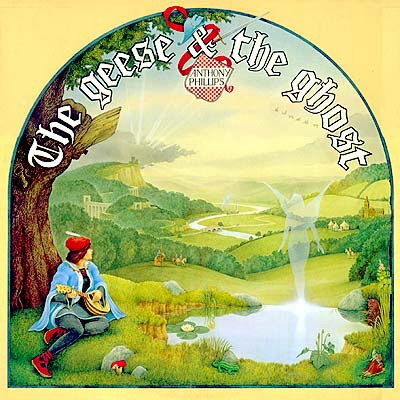
The album, The Geese and the Ghost, was finally finished in 1976, but Genesis’ label Charisma refused to release it, so it sat in the vaults until March 1977, just as punk was on the rise, and the sort of lyrical classical/folk influenced prog rock of the album was falling out of favor, and it was a commercial failure. Compare that to Hackett’s first solo album, Voyage of the Acolyte, which was mostly recorded around the same time, and also included contributions from Collins on vocals (and drums), Rutherford and John Hackett, but was released in 1975, and charted in the UK and (just barely) in the US. 

Our featured song, “Which Way The Wind Blows,” is a quiet ballad featuring Phillips, Rutherford and Collins, and would not have sounded at all out of place on Trick of the Tail, the first Genesis album on which Collins served as lead vocalist, released in 1976. Compare it, for example, to “Ripples,” from that album. 

Phillips tried to move toward a more pop direction, but that also was unsuccessful (although I found this track fun), and while he has released other solo albums, Phillips’ focus was more on soundtracks and “library music,” and occasionally guesting on projects with Rutherford, Camel, and Hackett.

Sunday, September 8, 2019

HORSE/S: PAUSE FOR A HOARSE HORSE/HOME


Country music has always had a chequered history over here in the UK, there being an understandable suspicion of the more rhinestones and bouffant hair variety that, for so many years, gave even the genre a bad name outside its immediate milieu. Personally it was always the 'and western' that put me off, only many years coming to know and love quite what that might mean, as in western swing. But country-rock, or perhaps as we now should call it, americana, that's a whole different plate of beans. Us brits have taken to that in a big way, both in terms of growing our own and offering a sometimes more sympathetic audience to visitors as they get at home. Todays piece is decidedly too old for americana, being from the early 70s, when bands like Cochise and Starry Eyed and Laughing were adding influences culled from The Byrds and the Burritos.  The pre-punk of pub-rock, the early backlash to the some of the preposterousnesses of prog, saw also a lot of country tropes mixed into the pot, alongside soul and straight ahead rock'n'roll. Brinsley Schwarz, an early home for Nick Lowe, and Chilli Willi and the Red Hot Peppers were frontrunners, influentially if not necessarily in sales. Nowadays there are as many gritty blue collar banjo and steel bands over here as, well, in a short Nashville street. So a few, my favourites being Camden's Rockingbirds. Plus several festivals devoted to the genre.

Home had only a brief window. Resolutely 3rd tier in terms of attainment and success, famous as much for where the members went next as in their own right. The track above comes from their 1971 debut, the sleeve illustration giving a fair idea of where they were hailing from and striving at. I actually bought this at the time, it various surviving culls on my collection, as history re-decided my earlier tastes. However there was clearly a hint of something, the twin guitars of Laurie Wiseman and Mick Stubbs soaring higher than the journeyman songs and vocals, mainly provided by Stubbs.  Bass was provided by one Cliff Williams, yes, that one, and was more adventurous, say, than his later job, with drums and background keys courtesy Mick Cook and Clive John.


A second record followed, the eponymous 'Home', by which time they had ditched John and ploughed, generally, a yet more earnest west coast vibe, if more Outlaws than Eagles, winning over fans from the bands they played support to. But those fans weren't putting their hands in their pockets, and the moment called for a prog-rock concept album, echoing similar bands in similar circumstances, Camel and Wishbone Ash, last gasps of the longhairs before punk blew down the doors. (Of course, history also reminds us that the longhairs never actually went away, just having shorter hair and shorter songs, most continuing to this day.) The Alchemist was the 3rd and last album put together by Home. Stylistically different, it isn't all bad, if desperately dated.


Stubbs left and the remainder of the band toured as Al Stewart's backing band, before going their separate ways. Wisefield joined, arguably appropriately, his guitar style being eminently suitable, the above mentioned Wishbone Ash, Cook joined the Groundhogs and, earlier keyboards man, John was by now with Man. Stubbs, surprisingly, as the songsmith and singer, or possibly because of that, struggled the most, largely disappearing from view. The big ticket fell to Williams, filling the AC/DC bassist role for the next 39 years. A waste of his talent, IMHO, but what do I know, as his accountant might remind me.

Pause.

The early 70s were a bumper time for would be jobbing musicians, record companies falling over each other to give multi-disc contracts to barely out of school buskers, allowing them to build up their skills, hone any talents and, eventually, or so the labels hoped, repay the investment. Bands like Home were everywhere, chock full of musicians often later making a greater inroads elsewhere. Often with back catalogues mostly forgotten, I enjoy looking back and remembering. This piece began musing on country and english. Funny how it seems to have ended elsewhere.

Friday, June 7, 2019

Trees/Grass: Stumpy Meets The Firecracker In Stencil Forest


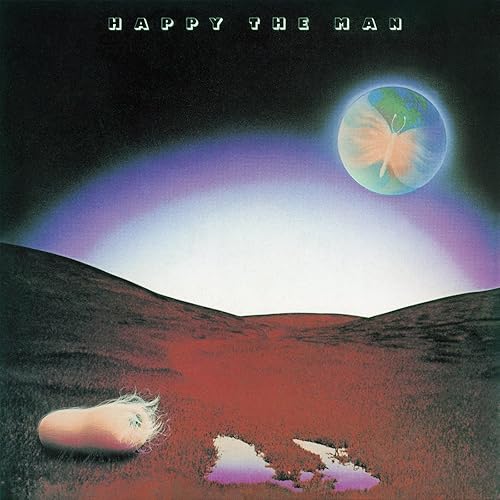
Happy The Man: Stumpy Meets The Firecracker In Stencil Forest
[purchase]

It has been a while since I’ve written about prog rock, and I initially considered writing about two songs from one of my favorite Genesis albums, Selling England By The Pound, “The Battle of Epping Forest,” based on a real gang war, because “forest,” and/or “I Know What I Like (In Your Wardrobe),” about a groundskeeper who says, “Me, I'm just a lawnmower/You can tell me by the way I walk.”

But no, let’s go deeper into the prog rock weeds.

Prog, at least back in its heyday of the early/mid 70s was really a European thing. Most of the famous bands associated with the genre are English, German, French, Italian, etc. But there were American prog bands. Back in 2015, Rolling Stone published a list of the 50 Greatest Prog Rock Albums of All Time, and fittingly, most were from European bands, most of which you have probably heard of (including the aforementioned Selling England By The Pound, at No. 6. The highest ranked U.S. album was from Frank Zappa and the Mothers of Invention, One Size Fits All (Canadians Rush, though had albums ranked 3 and 11.)

Bringing up the rear, at 50, was the self-titled debut album from a band that many consider the greatest American prog band of them all, Happy The Man, maybe, the greatest band that you’ve never heard of.

Formed in and around James Madison University in Virginia in 1973, the band predictably went through lineup changes before settling down, moving to Washington, D.C., and becoming well-known enough that Arista Records signed them. And at about the same time, the newly solo Peter Gabriel met with the band and demoed a couple of songs, before Gabriel decided to go in a different direction for his first album. I kind of wish he had stuck with HTM, though, because it probably would have been great.

These guys could play, with complex songs mixing Zappa, Gentle Giant and Canterbury Scene type songs with more Genesis like ballads. What they really couldn’t do was sing, or write lyrics (often an issue with bands of this type). But if you stick to the instrumentals, you will be blown away.

“Stumpy Meets The Firecracker In Stencil Forest” is a great, knotty instrumental, featuring great guitar, sax and synth playing, and if the often excessive length of prog songs turns you off, it is a compact 4:16. (And look, just because the title references a “stencil forest,” that doesn’t mean that it doesn’t have trees. The Black Forest isn’t black, and is filled with trees. Rain forests aren’t made of rain. Bighorn National Forest isn’t filled with sheep. Just saying.)

After releasing their debut, Happy The Man toured around the country, opening for bands as diverse as Renaissance and Hot Tuna, and recorded and released a second just slightly less amazing album, Crafty Hands. Neither album sold at all, and Arista dropped them. A third album was recorded in 1979, but not released until 1983 (I’ve never heard it), and keyboard player Kit Watkins left to join the somewhat more famous British band Camel. Other members of HTM formed and played in obscure bands or as solo acts over the years, and there was a brief reunion in the early 2000s.

If you like this genre of music and haven’t heard of Happy The Man, check out this song, and their first two albums (feel free to skip the three songs with vocals, but they do have some merit).

Wednesday, September 27, 2017

Down: Geese


Camel: The Flight of the Snow Goose  
Anthony Phillips: The Geese and The Ghost
[purchase The Snow Goose]
[purchase The Geese and The Ghost]

One of the joys of a theme-focused blog is that it gives you a challenge to wrack your brain and try to think of a related topic. And it can be fun to take the theme to an unexpected place. Clearly, the obvious way to interpret “Down” is consistent with the thumbnail being used to illustrate the theme—“toward or in a lower place or position.” But the word has other meanings, including certain feathers of a bird used for insulation, often from a goose. So, here we are.

Camel is one of those English prog-rock bands from the 70s that had some success, both critically and commercially, but aren’t generally grouped in the top tier of the genre’s acts. Nevertheless, they released a bunch of good albums and have continued to perform and record until the present day, with a dizzying revolving door of members surrounding founding member Andrew Latimer.

After releasing two albums with minimal success, the band decided to try a concept album. Rejecting a few novels to base their work on, they ultimately decided to attempt to create a work based on a 1941 novella by Paul Gallico (a prolific writer probably best known for The Poseidon Adventure), titled The Snow Goose. It tells the very sentimental story of the friendship and love between Philip Rhayader, a disabled artist living in a remote lighthouse in Essex, England, and a local girl, Fritha. A wounded snow goose is nursed back to flight by Fritha, whose friendship with Rhayader grows, while the goose returns over the years to the lighthouse. Rhayader uses his sailboat to rescue hundreds of soldiers in the Dunkirk evacuation, but is lost. The goose finds Fritha on the marshes, which she interprets as Rhayader’s soul leaving her, and she realizes her love for the lost man. The lighthouse is leveled by German aircraft, destroying all of Rhayader’s work, except for a portrait of Fritha, as a child, holding the injured snow goose.

The story struck a chord, and the book won an O. Henry Prize in 1941. It was read on the radio in 1944, turned into a BBC TV movie in 1971 featuring Richard Harris (as the goose—just kidding), and that won a Golden Globe and was nominated for both a BAFTA and Emmy. When Camel announced that it planned to release their musical adaptation of the book, Gallico gallantly threatened to sue the band (yay, lawyers!), so they were forced to call the album Music Inspired By The Snow Goose, and they had to abandon the idea of using lyrics based on the text, rendering the album fully instrumental. Despite these obstacles, the album, released in 1975, was both a critical and commercial success.

It is a beautiful, moving work, featuring rock instrumentation along with the London Symphony Orchestra (and, on one song, a duffle coat, used to simulate the flapping of wings). It is hard to pick a favorite song, but to be theme-appropriate, I picked “Flight of the Snow Goose,” which starts off slowly, but builds to a triumphant end.

In doing my research for this, I found a review which claimed that the Gallico novella also inspired another song, Anthony Phillips’ “The Geese and The Ghost.” Turns out, that isn't true. In fact, the title derives from two sounds on the ARP Pro-Soloist synthesizer which was used on the album.

Phillips was the original guitarist in Genesis, but left after recording their second album, Trespass, ultimately being replaced by Steve Hackett. Phillips left due to a combination of stage fright and other health reasons, and an aversion to being in the public eye. After leaving Genesis, Phillips decided to study music, and didn’t record anything for a number of years. His solo debut, The Geese and The Ghost, featuring some music that he had worked on while still in Genesis with friend and former schoolmate Mike Rutherford, and solo compositions, was released in 1977.  In addition to Rutherford, Phil Collins provided some vocals (recorded before he succeeded Peter Gabriel as Genesis’ singer) and Hackett’s brother John added flute.

In general, the album is somewhat folky, with orchestral flourishes, and the title track is beautiful. Genesis fans could definitely hear a kinship to some of the quieter moments of Trespass. Phillips went on to release music to little commercial success, more successfully create “library music” for use in films and TV shows, and appear on other artists' albums playing guitar and keyboards.

In fact, in 1982, Phillips appeared on Camel’s album The Single Factor, and co-wrote a song with Andy Latimer. That album is utterly devoid of any goose-related material (which unfortunately cannot be said of our local athletic fields).

Monday, June 20, 2016

Roads/Streets:Tenemos Roads


National Health: Tenemos Roads
[purchase]

There was a time and place when the idea of a “supergroup” combining the members of Hatfield and the North and Gilgamesh would have been a big deal. That time was the late 1970s, and the place was England, particularly Canterbury. I’ve written in the past about the so-called “Canterbury Scene,” focusing mostly on the bands Gong and Soft Machine, but there were many other groups, often with overlapping membership, that created interesting music at that time and in that place. These musicians were, for the most part, profoundly talented, extremely adventurous, and mostly forgotten, certainly on this side of the Atlantic.

Hatfield and the North was one of the best regarded bands from this scene. After the usual musical chairs, its membership essentially solidified as vocalist/bassist Richard Sinclair (formerly of Caravan, later of Camel), guitarist Phil Miller (formerly of Matching Mole), drummer Pip Pyle (formerly, and later, of Gong), and keyboardist Dave Stewart (formerly of Egg and not the guy from the Eurythmics, but later of Bruford), and a trio of female singers known as the Northettes, Barbara Gaskin, Amanda Parsons and Ann Rosenthal. Gilgamesh was somewhat lesser known, was organized around keyboard player Alan Gowen, and included, among others, guitarist Phil Lee and bassist Neil Murray (later of Whitesnake and Black Sabbath). Both bands played music that was a fusion of rock, jazz and classical influences.

The new band, which came to be called “National Health,” was to include most members of both, but, of course, that was unlikely to work out.  Initially, Bill Bruford was the drummer, but he was replaced by Pyle, Murray replaced Mont Campbell as bassist, and by the time the self-titled debut album was released, Gowan was credited only as a guest, along with Parsons, the only Northette to participate. Nevertheless, they created a great album, if maybe not quite a masterpiece. Mostly instrumental, it is complex, interesting prog rock without much of the pompousness that has given the genre a bad name.

Leadoff track, “Tenemos Roads,” a 14 and a half minute piece written by Stewart, has a catchy opening theme and a long instrumental section before Parsons’ ethereal vocals enter. Prog rock songs often have spacy lyrics, and “Tenemos Roads” is part of that tradition. Something about a place in the stars, and history and men making war and fish living in the sea. Whatever. After a bit of spacy noodling, the song picks up again, and almost rocks out to the end.

I know that may not sound all that enticing, but trust me, it is really good, so give it a listen.

National Health released a maybe even better album the next year, Of Queues And Cures, and then went into hibernation, reuniting in 1982 for D.S. Al Coda, a tribute to Gowen, who had died the previous year of leukemia. And that was pretty much it from this particular combination of musicians, except for some live releases and Missing Piece, a collection of early songs featuring Bruford, Steve Hillage and others.

Wednesday, April 30, 2014

Radio:Wavelength

[purchase]

I don’t really remember listening to the radio when I was really little. It just wasn’t a big deal to my parents. I guess I have some memories of the standards that played on their clock radio when they woke up to WNEW-AM in the mornings. It wasn’t until the summer of 1969, when I was picked up in the mornings to go to day camp, that I remember listening to the top-40 station, WABC, and for the first time really being captivated by rock music. I think my life-long obsession with music and radio truly began during the summers of 1972 and 1973 when I worked as a DJ at the radio station at Timber Lake Camp, WTLC (which appears no longer to exist). Somehow, my 11 and 12-year old self understood the mystery and power of broadcasting, even on a tiny, closed circuit station in a sleep away camp in Phoenicia, New York. I learned that radio was best for allowing imagination to fly. You didn’t know who the DJ was, you didn’t know what the studio looked like, and you could envision anything you wanted about the songs. Also, it was fun to play music that you liked (although we had very few records at camp), and talk about them.

My musical tastes moved from pop hits on tinny AM stations to the more interesting FM dial not too long after, and again, there was a progression from the more commercial outlets, like WPLJ to the then free-form “progressive” WNEW-FM. I remember during high school spinning the dial on the stereo in my room, looking for good music, on all of the rock stations in the New York area, and even discovering the wild world of college radio stations at, what the Replacements later referred to as the “Left of the Dial.”

By the time I went to college, I was hooked on music, and I’m pretty sure that my father still has nightmares about helping me carry box after box of heavy vinyl records up the four flights to my freshman year room. I considered joining the college station, WPRB, but held off until second semester, when I had gotten my feet wet academically, and my first extracurricular activity, the marching band, wound down a bit after football season. Working at WPRB was a transformative event in my life, much of which I’ve discussed in other pieces here and elsewhere. It exposed me to all sorts of music, it gave me a peer group of similarly minded people with strong opinions about music and the willingness to argue about it, it gave me ability to think on my feet, speak publicly and educate others. It exposed me to the music business, gave me the chance to interview musicians and humorists and allowed me to introduce acts from the stage. It gave me some experience with running a business, dealing with both managers and volunteer workers and taught me something about leadership. And it conditioned my brain to think of musical themes.

Each of these things has, in some way, affected my subsequent life—school, work, relationships, raising children, volunteer work and music blogging. So, yeah, radio has been important to me. Even with the options of CDs, iTunes, streaming services and satellite radio, I still listen to radio regularly (both in the car, and streaming on my computer), mostly to WFUV-FM, whose DJs clearly have a similar love of the medium (and more so, I guess, because they have been willing to take the risks inherent in making radio a career). But outside of WFUV, I find most radio around here unlistenable for long periods, either because of dullness of their playlists, or their commercials, or their lack of intelligent DJs, which is, ironically, the result of the success of the medium in making money.

Van Morrison has clearly been deeply affected by radio, although in his case, it has influenced the creation of his music. I’ve often joked that every Van Morrison song mentions radio, and while that is a bit of hyperbole, other than “Wavelength,” which I feature above, there are, at least, “Caravan,” “Brown Eyed Girl,” “Domino,” “In The Days Before Rock ‘n’ Roll,” “Call Me Up In Dreamland,” “Take Me Back,” “On Hyndford Street,” “T.B. Sheets,” “Real, Real Gone” and “The New Symphony Sid."

There is an argument to be made that I should have written about “Caravan,” which I think is a consensus pick as a better song, in general, and a better song about radio, but I decided to go with “Wavelength,” in part because of its title. But the song is cleverly about radio in two different ways. Morrison starts the song off by making it clear that, at least initially, he is talking about “wavelength” metaphorically as the connection between a couple—

This is a song about your wavelength 
And my wavelength, baby 
You turn me on 
When you get me on your wavelength 

But later, the song segues into a reminiscence listening to music on the Voice of America, particularly Ray Charles, and then Van throws in a little reference to hearing his own “Brown Eyed Girl.”

The version in the video above (I recently got a “take down notice” for posting “Come On Eileen,” and I am concerned that posting a downloadable version of another mainstream hit like “Wavelength” might lead to another) is the original, featuring the distinctive synthesizer part (played by Peter Bardens, best known, I guess, as a member of Camel), which is reminiscent of radio waves. Here’s a live version, from a 1980 performance in Montreux that downplays the synths for horns and a bit more soul.

The power of radio has stayed with me since I was a child, which has been great for me, and clearly has influenced Van Morrison to create his brilliant body of work, which is even better for the world.