Showing posts with label Peter Gabriel. Show all posts

Tuesday, January 2, 2024

In Memoriam-Robin Lumley and John Giblin


 [purchase Product]

Robin Lumley and John Giblin were members of Brand X at various times.  I’ve written before about Brand X, a jazz-rock fusion band probably best known for the contributions of Phil Collins (who I’ve written about, too), but the band’s membership was somewhat of a revolving door.  (And I wrote about another member, guitarist John Goodsall, for our 2021 In Memoriam theme.)  Lumley was a founding member of the band, on keyboards, and was involved from 1974-1980, with a brief hiatus in 1978, while Giblin, a bass player, was a member in 1979, although his recordings were released through 1982. 

Robin Lumley was born on January 17, 1948, in Devonport, England.  Originally a drummer, he switched to keyboards in the 1970s.  In 1972, his former neighbor, David Bowie, rang him up one day, to see if he would be interested in replacing Bowie’s ill keyboard player, Matthew Fisher from Procol Harum, starting the next day.  He was interested and joined the Spiders From Mars.  After that, Lumley worked as a studio musician and met Collins, which led to the formation of Brand X.  Lumley also became interested in music production.  His hiatus from Brand X in 1978 was to work on production projects, including Rod Argent’s Moving Home, and Bill Bruford’s Feels Good to Me, and he later produced records for Orleans, Anthony Phillips and Isotope, among others.

In the 1980s, he formed a jazz-rock band that included Rod Argent, Graeme Edge (of the Moody Blues), Morris Pert (of Brand X), and Gary Brooker (of Procol Harum). Lumley later married an Australian and moved to Australia. In 2001, he formed SETI with Graeme Edge, bassist Rob Burns, and Rod McGrath (cellist for the West Australian Symphony Orchestra).  He also composed and produced music for over 250 television and radio commercials for numerous television productions in the US, UK and Australia.

Lumley died from heart failure in Plymouth, on March 9, 2023, at the age of 75.

***

John Giblin was born on February 26, 1952, in Bellshill, Scotland.  He was best known as a studio musician, contributing bass to albums and performances by artists such as Peter Gabriel, Paul McCartney, Eric Clapton, Kate Bush, Simple Minds, John Anderson, Phil Collins, Al Green, and Annie Lennox.  Giblin was best known for his mastery of the fretless bass.

As noted above, Giblin recorded with Brand X in 1979, when the band was being pushed to make more commercial music.  The surprising response to this pressure was to have two separate units record—one with bassist Percy Jones, keyboard player Peter Robinson, drummer Mike Clarke and Goodsall, and the other featuring, Lumley, Giblin, Collins and Goodsall.  The output of these two groups were released, but no improvement in commercial success was achieved, leading to a band breakup.

More recently, Giblin was playing more acoustic bass, and was involved in projects with Peter Erskine of Weather Report and Alan Pasqua of Tony Williams Lifetime. 

Giblin died of sepsis following a long illness on May 14, 2023 in Cheltenham, England, aged 71.

You can hear both men on the Brand X track in the video, “Algon (Where an Ordinary Cup of Drinking Chocolate Costs £8,000,000,000),” a title taken from a Monty Python sketch (in which the cup of chocolate only cost £4 million), from the Product album.
 

Monday, February 28, 2022

Weather: Which Way The Wind Blows

Anthony Phillips: Which Way the Wind Blows
[purchase

I’ve been having trouble with this theme (and, based on the lack of posts, I’m not the only one)—not that there is a lack of appropriate songs, because there are tons, but for me, there has to be some reason to write about the song—like a personal story, a political connection, or just because I want to write about the artist or song. So, when this song came up in a search, and I listened to it again (after many years), I realized that this song could actually have worked for our “What If” theme that I enjoyed. Plus it has been nearly two months since I’ve delved into the world of prog-rock obscurity, so why not? 

This song sort of answers the burning question, “What if Anthony Phillips had never left Genesis?” 

I’m pretty sure that I’ve discussed the origins of one of my favorite bands somewhere—original members Peter Gabriel, Tony Banks, Mike Rutherford, Anthony Phillips and Chris Stewart all met in the 1960s at the Charterhouse School in England. Eventually connecting with older Charterhouse alum, the singer, songwriter, producer and convicted child abuser Jonathan King, who named the band and got them signed. Stewart left and was replaced by another Charterhouse alum, John Silver, who was later replaced by John Mayhew. After recording their second album Trespass, Phillips, the guitarist, quit, due to bad health and stage fright, and was eventually replaced by Steve Hackett; Mayhew was sacked and replaced as drummer by Phil Collins. 

So, let’s say that Phillips never left, so Hackett never joined. In the short term, there probably wouldn’t have been much difference because both guitarists, who became good friends, acknowledge that their sound and sensibilities were very similar, but our featured song gives you a sense of what the band might have sounded like after Gabriel left, and Collins stepped up as lead singer. 

After Phillips left Genesis, he wanted to continue a project he had been working on with Rutherford but first decided to expand and improve his musical knowledge and ability, studying classical music, orchestration and harmony, and taking lessons in guitar and piano. Eventually, Phillips and Rutherford returned to their project, which was slowed by the fact that Rutherford’s commitments to the increasingly popular Genesis were taking up more and more time. A push to finish the album came in fall 1974, when Steve Hackett injured his hand, delaying a Genesis tour, and allowing Phillips and Rutherford time to complete the bulk of the recording. In addition to bringing Collins in to sing on two tracks, Hackett’s younger brother John contributed flute on some of the songs. 

The album, The Geese and the Ghost, was finally finished in 1976, but Genesis’ label Charisma refused to release it, so it sat in the vaults until March 1977, just as punk was on the rise, and the sort of lyrical classical/folk influenced prog rock of the album was falling out of favor, and it was a commercial failure. Compare that to Hackett’s first solo album, Voyage of the Acolyte, which was mostly recorded around the same time, and also included contributions from Collins on vocals (and drums), Rutherford and John Hackett, but was released in 1975, and charted in the UK and (just barely) in the US. 

Our featured song, “Which Way The Wind Blows,” is a quiet ballad featuring Phillips, Rutherford and Collins, and would not have sounded at all out of place on Trick of the Tail, the first Genesis album on which Collins served as lead vocalist, released in 1976. Compare it, for example, to “Ripples,” from that album. 

Phillips tried to move toward a more pop direction, but that also was unsuccessful (although I found this track fun), and while he has released other solo albums, Phillips’ focus was more on soundtracks and “library music,” and occasionally guesting on projects with Rutherford, Camel, and Hackett.


Friday, October 22, 2021

Rock Hall Snubs: King Crimson


King Crimson
: The Court of the Crimson King
[purchase The Condenced 21st Century Guide to King Crimson 1969-2003

I think that it was in the Bill James Historical Baseball Abstract that I read, years ago, something like the only definition of who belongs in the (baseball) Hall of Fame is who gets elected. In other words, even in a statistically driven sport such as baseball (which has become even more so due to the work of James and fellow sabermetricians), there’s no formula to decide who belongs. James, and others, have created various predictive formulas, but they are not an attempt to determine who deserves to be in the Hall, but rather to predict whether the player’s statistics are the type that would convince the voters to vote them in. 

This type of determination is even harder to do with the Rock Hall, because there are no stats, really, other than maybe sales, or streams, or concert attendance-but I think most people (at least most people who read this type of blog) are unwilling to equate popularity with quality. Although it is nice when it happens. For the Rock Hall, it sort of just comes to down to gut feelings, considering some objective, but mostly subjective factors—plus a fan vote. Of course to be fair, it is hard to take the Rock Hall all that seriously when it inducted Bon Jovi a few years ago. 

My pitch today is for King Crimson, which based on the number of times I’ve written about them, their music or their members (see here, here, here, here, here, here, here, here, here, here, here, here, here, and most recently, here), you might assume are my favorite band. They aren’t (don’t ask me what is, though). But when you look at the quality and variety of their work, the length of their career, even with all of the interruptions, and most notably, the influence of the band on so many genres of music, it is hard to justify their exclusion. There is one full member of King Crimson who is a Rock Hall inductee (and another performer who sang one song for Crimson who is in the Hall……the answer will be at the end of this piece). 

It is hard to argue that King Crimson did not influence, among other genres, progressive rock, hard rock, various forms of metal, jazz/rock fusion, punk, new wave, grunge, math rock, jam bands, noise rock, and even hip-hop. There’s a nice summary of some of this in Wikipedia, or just Google “King Crimson influence” and fall down the rabbit hole. 

Also, arguably, Robert Fripp belongs in the Hall individually for his solo guitar work/"Frippertronics" and collaborations with Brian Eno, David Bowie, Peter Gabriel and others. 

That’s it. Show me a band or artist that is more influential than King Crimson that hasn’t already been inducted. 

The answer to the question is that drummer Bill Bruford was inducted into the Rock Hall as a member of Yes, as was Jon Anderson, who sang “Prince Rupert Awakes” on Crimson’s third album, Lizard.

Monday, February 8, 2021

Walls/Obstructions: The Walls Came Down


The Call: The Walls Came Down
[purchase

If we were playing a game where I asked you to guess what band I was talking about, and the clues were: This band released their first album in the early 1980s. They wrote powerful rock anthems, with meaningful lyrics, sometimes with Christian themes, and performed them passionately and well, you very well might think I was talking about U2, which went on to become one of the biggest, most successful bands of all time. But of course, you saw the picture and read the title, so you know that I am talking about The Call, which, despite some success, did not go on to become one of the biggest, most successful bands of all time. 

OK, were they as good as U2? Not in my mind. But were they better than a lot of their contemporaries who went on to more fame and fortune? Definitely. 

The Call was formed in 1980 in Santa Cruz, and the leader and lead singer was Michael Been, who was born in Oklahoma, but moved to Chicago after high school. A performer from an early age, Been entered the Illinois state comedy competition (who knew that was a thing), coming in second, ahead of his friend John Belushi. 

After attending the University of Illinois in Chicago and playing in local bands, Been moved to the Los Angeles area in 1972, played in some bands, was a session musician, including on some Christian music albums, before relocating to Santa Cruz and, eventually forming The Call. Their first, self-titled, album was on a major label, was produced by Hugh Padgham, and had the Band’s Garth Hudson on a few tracks. I remember liking it a lot, and playing some tracks from it on WPRB. I wasn’t the only one. Peter Gabriel referred to the band as “the future of American music,” and recruited them to open for him. Gabriel later played on The Call’s third album, as did Simple Minds’ Jim Kerr and Robbie Robertson, and Bono appeared on their 1990 album Red Moon, as did T-Bone Burnett. Martin Scorsese cast Been in The Last Temptation of Christ, as the apostle John. Despite this appreciation, their success was limited and fleeting. 

The second album, Modern Romans, was released after I graduated from college, but I listened to it often, and loved our featured song, “The Walls Came Down.” A stridently anti-war song, it was inspired when Been saw the idealism of the '60s give way to more materialistic and militaristic mindsets of the Reagan years, including the Grenada and Lebanon conflicts. It uses the biblical imagery of Jericho’s walls coming down (without ever mentioning Jericho), and ends, though with the modern sentiment: 

I don't think there are any Russians
And there ain't no Yanks
Just corporate criminals
Playin' with tanks 

The band broke up after releasing Red Moon in 1990, and put out a reunion album in 1997, but that was it. Been played as a sideman for others, including Harry Dean Stanton, but for years acted as a sound engineer for Black Rebel Motorcycle Club, which featured his son, singer and bassist Robert Levon Been. (I haven’t been able to determine whether he was named in honor of two members of The Band, but it certainly makes sense). Been died of a heart attack in 2010, backstage at a music festival in Belgium, where BRMC was appearing. 

So, why did The Call not reach even half of U2’s fame? Were they too strident and angry? Was front man Been’s lack of classical good looks part of the issue? Read some of the tributes to Been and The Call here, and you get a sense that they were one of those bands that should have been bigger, but just never got there, and no one can really explain why.

Friday, June 7, 2019

Trees/Grass: Stumpy Meets The Firecracker In Stencil Forest


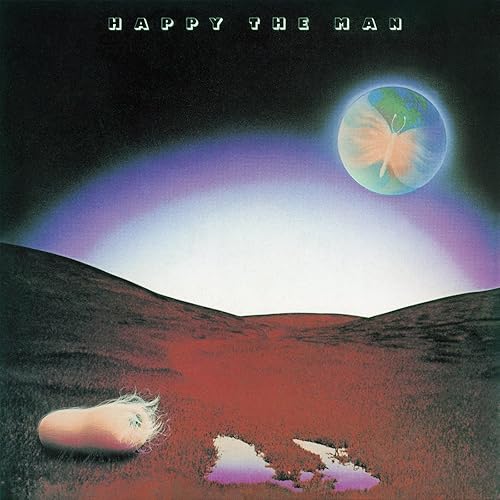
Happy The Man: Stumpy Meets The Firecracker In Stencil Forest
[purchase]

It has been a while since I’ve written about prog rock, and I initially considered writing about two songs from one of my favorite Genesis albums, Selling England By The Pound, “The Battle of Epping Forest,” based on a real gang war, because “forest,” and/or “I Know What I Like (In Your Wardrobe),” about a groundskeeper who says, “Me, I'm just a lawnmower/You can tell me by the way I walk.”

But no, let’s go deeper into the prog rock weeds.

Prog, at least back in its heyday of the early/mid 70s was really a European thing. Most of the famous bands associated with the genre are English, German, French, Italian, etc. But there were American prog bands. Back in 2015, Rolling Stone published a list of the 50 Greatest Prog Rock Albums of All Time, and fittingly, most were from European bands, most of which you have probably heard of (including the aforementioned Selling England By The Pound, at No. 6. The highest ranked U.S. album was from Frank Zappa and the Mothers of Invention, One Size Fits All (Canadians Rush, though had albums ranked 3 and 11.)

Bringing up the rear, at 50, was the self-titled debut album from a band that many consider the greatest American prog band of them all, Happy The Man, maybe, the greatest band that you’ve never heard of.

Formed in and around James Madison University in Virginia in 1973, the band predictably went through lineup changes before settling down, moving to Washington, D.C., and becoming well-known enough that Arista Records signed them. And at about the same time, the newly solo Peter Gabriel met with the band and demoed a couple of songs, before Gabriel decided to go in a different direction for his first album. I kind of wish he had stuck with HTM, though, because it probably would have been great.

These guys could play, with complex songs mixing Zappa, Gentle Giant and Canterbury Scene type songs with more Genesis like ballads. What they really couldn’t do was sing, or write lyrics (often an issue with bands of this type). But if you stick to the instrumentals, you will be blown away.

“Stumpy Meets The Firecracker In Stencil Forest” is a great, knotty instrumental, featuring great guitar, sax and synth playing, and if the often excessive length of prog songs turns you off, it is a compact 4:16. (And look, just because the title references a “stencil forest,” that doesn’t mean that it doesn’t have trees. The Black Forest isn’t black, and is filled with trees. Rain forests aren’t made of rain. Bighorn National Forest isn’t filled with sheep. Just saying.)

After releasing their debut, Happy The Man toured around the country, opening for bands as diverse as Renaissance and Hot Tuna, and recorded and released a second just slightly less amazing album, Crafty Hands. Neither album sold at all, and Arista dropped them. A third album was recorded in 1979, but not released until 1983 (I’ve never heard it), and keyboard player Kit Watkins left to join the somewhat more famous British band Camel. Other members of HTM formed and played in obscure bands or as solo acts over the years, and there was a brief reunion in the early 2000s.

If you like this genre of music and haven’t heard of Happy The Man, check out this song, and their first two albums (feel free to skip the three songs with vocals, but they do have some merit).

Tuesday, October 30, 2018

Trick/Treat: A Trick of the Tail


Genesis: A Trick of The Tail
[purchase]

So, my last post was about a band that started off very proggy, then gradually got poppier, before hitting it big. Why not follow that with a post about band that started off very proggy, then gradually got poppier, before hitting it big?

There are some differences, however. First, writing about Supertramp was a new experience for me, and to be fair, they were a band that I liked, but never really loved. Genesis, on the other hand, is a band that I have long loved, even after it was no longer remotely fashionable, and about which I have written a few times. Also, Supertramp’s early albums are pretty much forgotten, while Genesis’ (except their first), are still fondly remembered by those who enjoy the genre. And Supertramp essentially faded into oblivion after their major breakthrough, while Genesis continued to be successful, as they became more and more mainstream, to the point that even I gave up on them.

Many fans consider Genesis’ album The Lamb Lies Down on Broadway to be a creative peak, and in some ways, it was—complex, dark, and in many places, brilliant. On the other hand, its attempt at a story was pretty much incomprehensible and there are parts of the album that sort of work in the story, but you really don’t want to listen to more than once. As most Genesis-ophiles know, after The Lamb, singer and visual focus Peter Gabriel decided to stop being part of the scenery and left the band.

Despite what many people may believe, The Lamb was not only a Gabriel project—most of the music for that album was written by the other members of the band, with the lyrics being written by Gabriel—a departure from the band’s prior more collegial practices, which led to the tensions resulting in Gabriel’s quitting. Although the music press assumed that this would be the end of the band, the remaining members wanted to continue—and the fact that they did so successfully does put to lie the myth that Gabriel was the creative heart of Genesis.

Determined to create a great new album, the band wrote a bunch of songs that hearkened back to the album before The Lamb, Selling England By The Pound, with a more pastoral, more English, more fun sound, and also included some jazzier sections, influenced by Phil Collins’ work with Brand X. It is an oft-told story that they auditioned a number of singers, assisted by Collins, but none clicked. So, like many organizations, they decided to promote from within, and Collins seized the front-man role and ran with it, ultimately doing credible versions of many of the songs originally sung by Gabriel. No, he didn’t have Gabriel’s edginess or weirdness, but he had a nice voice, and a genial, amusing stage presence.

The album, A Trick of the Tail may well be the point where Genesis best balanced its prog-rock heritage and its newer pop sensibility. There are many songs on this album that I love as much as anything that preceded them, and the title track, while not my favorite, is still a fine song. Based loosely on one of William Golding’s not-Lord-of–the-Flies books, The Inheritors (remember, songwriter Tony Banks was a graduate of the Charterhouse School, one of the oldest “public” schools in England), it is about an alien character who leaves his own world for that of humans, where he is captured and displayed as a freak, before escaping back to his “city of gold,” evading the humans who sought to plunder it. It is a bouncy pop tune, with the playfulness of older songs such as, say, “Harold The Barrel,” or “I Know What I Like,” and while it has its more complex moments, it is definitely a move toward pop, but to me, not in a bad way.

It also was the first Genesis song to have a video, and it is truly appalling. I mean really, really bad. Which is remarkable, because it was directed by the same guy who did the great video for “Bohemian Rhapsody.”

So, check out both the album and song (but not the video, for god's sake), and you are in for a treat. (Sorry.)

Sunday, January 14, 2018

Sinking & Falling: When You’re Falling

Afrocelt Sound System with Peter Gabriel: When You’re Falling

[purchase]

The easy way to address our new theme would be with songs about falling in love. There is nothing wrong with that approach, but I am more interested in what else falling can refer to. In When You’re Falling, the falling is quite literal, especially in the notorious official video. I have used a live version instead for two reasons. First, the sound quality is better, allowing you to really hear all of the moving parts of a great song and band. And second, some people may react to the official video in exactly the way the record label feared at the time, and that would be an unfair distraction from a fine song. Let me explain.

On the commercial strength of Sledgehammer in particular and the album So in general, his label Virgin let Peter Gabriel start his own vanity label. Others, like Prince with Paisley Park, would use such labels for their releases and those of friends. Gabriel, however, launched Real World as a home for contemporary world music, as opposed to the more traditional forms. Afrocelt Sound System caught his ear with their amazing fusion of Irish and African music. It sounds unlikely until you hear it, but Irish traditional music has a percussiveness that the band uses as a bridge to the music of another world, and the result is infectious and very danceable. The band had released two albums of instrumentals that are well worth seeking out, before deciding in 2001 to broaden their appeal by working with guest vocalists. Gabriel was an obvious choice. When You’re Falling sounds like Gabriel must have written it, but in fact his only role was singing it.

I mentioned the official video, which I called notorious. It depicts a man falling out of the sky, into a city that appears to be New York. He falls through the sidewalk and through the earth itself, and out the other side into space. Along the way, he is observed by three separate characters played by Peter Gabriel. One of these characters is an airline pilot. The video came out briefly in the late summer of 2001. Of course, then 9/11 happened, and the label pulled the video for fear that people would associate it with the tragedy. Hence the notoriety I mentioned. For Afrocelt Sound System, this meant that the wider fame and popularity they were seeking eluded them. They deserved better.

Thursday, November 2, 2017

Train: Somewhere Down The Crazy River

 
Robbie Robertson: Somewhere Down The Crazy River
[purchase]

Writing for three different music blogs often results in crossover posts. I wrote about The Jam here recently, and have just submitted a piece about another Jam song to Cover Me. And I recently wrote about The Last Waltz at Another Old Guy, so I guess that I have Robbie Robertson on my mind.

Strangely, though, this song popped into my head, despite the fact that its title doesn’t have the key word in it, and would seem more appropriate for a Boat theme. And yet, it works.  It took Robertson 11 years before he released his first, self-titled, solo album in 1987, and tried to stretch beyond the Americana sounds that he played for so many years with The Band. The album was produced by Daniel Lanois, who was also working with U2 and Peter Gabriel at the same time, and all of the members of U2, as well as Gabriel and members of his band all appear on the album. Lanois’ typically dreamy, atmospheric sound pervades the album.

“Somewhere Down the Crazy River” is an odd song. Robertson only sang lead on two Band songs, and Levon Helm has claimed that Robertson’s mic was off during the Last Waltz concert (and the Internet rumor mill has his mic off during most Band shows), so it is not Robertson’s singing that he will be remembered for. According to Lanois, he secretly recorded Robertson telling a story about hanging out with Levon Helm in Arkansas, fishing with dynamite on hot nights. Because that’s apparently what one does. Meanwhile, Robertson was fiddling with a Suzuki Omnichord, which Lanois also recorded, and he superimposed the storytelling over that, creating the basic tracks for the song. In between the spoken word parts, which have a sort of Tom Waits feel, Robertson sings, perfectly well, I might add:

Catch the blue train
To places never been before
Look for me
Somewhere down the crazy river
Catch the blue train
All the way to Kokomo
You can find me
Somewhere down the crazy river

In each case, the second “Somewhere Down the Crazy River,” is sung, somewhat distorted, by Sam Llanas of The BoDeans. Also featured on the track are fine bass playing and drumming by Tony Levin and Manu Katché, both of  Gabriel’s band (among other things). And Bono is somewhere in the mix, too. It is curiously compelling, which is a tribute to the combination of Robertson’s charismatic, deep voice, his storytelling ability, Lanois’ production and the talent of the musicians. And despite its unconventional sound, it was released as the album’s first single, and was successful.

The video for the song (above), was directed, like The Last Waltz, by Martin Scorsese, whose infatuation with Robertson’s face was still in force. Robertson’s lust interest is played by Maria McKee, at the time the lead singer of the pioneering “cow-punk” band Lone Justice, who were a mid-80s “next big thing” that never happened. Which in itself was sad, since McKee’s voice is incredible (and her solo career never went anywhere, either). She sings on a different song on the album, and one can only assume that she was chosen to be in the video for her looks. When asked about her “acting skills,” McKee was quoted as saying: "... what did I do, I was just being licked by Robbie..."

Wednesday, September 27, 2017

Down: Geese


Camel: The Flight of the Snow Goose  
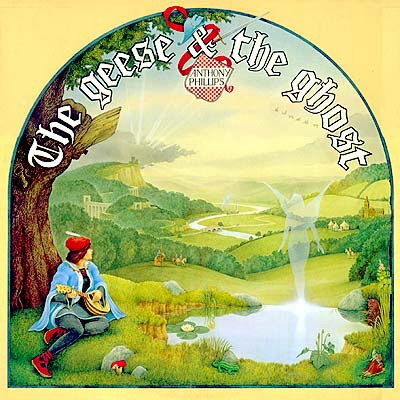
Anthony Phillips: The Geese and The Ghost
[purchase The Snow Goose]
[purchase The Geese and The Ghost]

One of the joys of a theme-focused blog is that it gives you a challenge to wrack your brain and try to think of a related topic. And it can be fun to take the theme to an unexpected place. Clearly, the obvious way to interpret “Down” is consistent with the thumbnail being used to illustrate the theme—“toward or in a lower place or position.” But the word has other meanings, including certain feathers of a bird used for insulation, often from a goose. So, here we are.

Camel is one of those English prog-rock bands from the 70s that had some success, both critically and commercially, but aren’t generally grouped in the top tier of the genre’s acts. Nevertheless, they released a bunch of good albums and have continued to perform and record until the present day, with a dizzying revolving door of members surrounding founding member Andrew Latimer.

After releasing two albums with minimal success, the band decided to try a concept album. Rejecting a few novels to base their work on, they ultimately decided to attempt to create a work based on a 1941 novella by Paul Gallico (a prolific writer probably best known for The Poseidon Adventure), titled The Snow Goose. It tells the very sentimental story of the friendship and love between Philip Rhayader, a disabled artist living in a remote lighthouse in Essex, England, and a local girl, Fritha. A wounded snow goose is nursed back to flight by Fritha, whose friendship with Rhayader grows, while the goose returns over the years to the lighthouse. Rhayader uses his sailboat to rescue hundreds of soldiers in the Dunkirk evacuation, but is lost. The goose finds Fritha on the marshes, which she interprets as Rhayader’s soul leaving her, and she realizes her love for the lost man. The lighthouse is leveled by German aircraft, destroying all of Rhayader’s work, except for a portrait of Fritha, as a child, holding the injured snow goose.

The story struck a chord, and the book won an O. Henry Prize in 1941. It was read on the radio in 1944, turned into a BBC TV movie in 1971 featuring Richard Harris (as the goose—just kidding), and that won a Golden Globe and was nominated for both a BAFTA and Emmy. When Camel announced that it planned to release their musical adaptation of the book, Gallico gallantly threatened to sue the band (yay, lawyers!), so they were forced to call the album Music Inspired By The Snow Goose, and they had to abandon the idea of using lyrics based on the text, rendering the album fully instrumental. Despite these obstacles, the album, released in 1975, was both a critical and commercial success.

It is a beautiful, moving work, featuring rock instrumentation along with the London Symphony Orchestra (and, on one song, a duffle coat, used to simulate the flapping of wings). It is hard to pick a favorite song, but to be theme-appropriate, I picked “Flight of the Snow Goose,” which starts off slowly, but builds to a triumphant end.

In doing my research for this, I found a review which claimed that the Gallico novella also inspired another song, Anthony Phillips’ “The Geese and The Ghost.” Turns out, that isn't true. In fact, the title derives from two sounds on the ARP Pro-Soloist synthesizer which was used on the album.

Phillips was the original guitarist in Genesis, but left after recording their second album, Trespass, ultimately being replaced by Steve Hackett. Phillips left due to a combination of stage fright and other health reasons, and an aversion to being in the public eye. After leaving Genesis, Phillips decided to study music, and didn’t record anything for a number of years. His solo debut, The Geese and The Ghost, featuring some music that he had worked on while still in Genesis with friend and former schoolmate Mike Rutherford, and solo compositions, was released in 1977.  In addition to Rutherford, Phil Collins provided some vocals (recorded before he succeeded Peter Gabriel as Genesis’ singer) and Hackett’s brother John added flute.

In general, the album is somewhat folky, with orchestral flourishes, and the title track is beautiful. Genesis fans could definitely hear a kinship to some of the quieter moments of Trespass. Phillips went on to release music to little commercial success, more successfully create “library music” for use in films and TV shows, and appear on other artists' albums playing guitar and keyboards.

In fact, in 1982, Phillips appeared on Camel’s album The Single Factor, and co-wrote a song with Andy Latimer. That album is utterly devoid of any goose-related material (which unfortunately cannot be said of our local athletic fields).

Wednesday, July 19, 2017

On/Off: Turn It On Again

Genesis: Turn It On Again
[purchase]

If you are a fan of Genesis, as I have made it abundantly clear that I am, there are a number of turning points where people jumped on and off the band’s wagon. Genesis’ rise to popularity probably began with their second album, Trespass, which introduced the band’s dense, theatrical progressive style (their debut, From Genesis to Revelation, sounds mostly like a cross between The Moody Blues and pre-disco Bee Gees). From there, the band gathered followers until 1974’s epic (and epically confusing) concept double album, The Lamb Lies Down on Broadway. Then, lead singer and focal point, Peter Gabriel climbed up Solsbury Hill and out of the band.

Gabriel was, of course, replaced by Phil Collins, and while the next few albums were somewhat lighter and simpler than in the Gabriel-era, they were still recognizably prog. Many Gabriel lovers were reflexively turned off, but Collins’ greater accessibility (and even a love song) retained some fans and attracted more. But when guitarist Steve Hackett defected, and Genesis released …And Then There Were Three…, with an actual pop hit, much of the old guard jumped off.

Not me, though. I had moved to college at that point, and was working at WPRB, at a time when our staff included both lovers of prog and punk (and lovers of both), when the rock music world was really changing. And while it seemed that Genesis might have been done, instead, we got Duke, which I liked. It had long, proggy songs, but also harder rock, and maybe one of the band’s most divisive songs, “Misunderstanding,” an obvious attempt at a pop hit that sounded like nothing the band had ever done. Collins reportedly based the song on The Beach Boys' "Sail On, Sailor", Sly and the Family Stone's "Hot Fun in the Summertime" and (ugh!) Toto's "Hold the Line.” The album was the band’s first to top the UK charts, and hit 11 on the US Billboard Hot 200. I remember long discussions in the WPRB studios as to whether Duke indicated that the band was staying on course, or whether “Misunderstanding” and some of the other poppier tracks were an indication that they were off the tracks.

As it happened, “Turn It On Again,” our featured and theme-appropriate song, was probably the song that showed the direction that Genesis was heading towards. An apparently fairly straight ahead rocker about a man obsessed with television, it nevertheless had sections in odd time signatures (13/4 and 9/4). (Aside—the first song I thought about for this theme, The Tubes’ “Turn Me On,” another TV focused tune, was actually the subject of this piece I wrote back in 2014).

When the band reconvened to create their new album, they reportedly decided to focus on simpler songs, and the result was Abacab. That album’s harder edges, punchier synths, “gated” drum sound and even horns, led to commercial success, reaching number one on the UK Albums Chart and number 7 on the US Billboard 200, but I think that it is fair to say that fans of songs like “Supper’s Ready,” jumped off the bandwagon in droves. A popular (mostly) live double album was next, followed by a self-titled disc in 1983, that, while still retaining a few longer pieces, is probably mostly remembered for its pop hits, and the catchy, but ultimately very embarrassing song, “Illegal Alien.” The album reached No. 1 in the UK and No. 9 in the US, so clearly their fanbase was increasing, but, I suspect, even more longtime supporters were turned off.

I flipped the “off” switch on my fandom after the next disc, Invisible Touch, which had some well-crafted songs, but ultimately left me cold. Although I heard some of the songs on the next album, We Can’t Dance, on the radio, I didn’t buy it. The next album was recorded without Collins, and I think it is fair to say that most Genesis fans were put off by Calling All Stations—I know that I never turned it on.

That all being said, there have been rumors over the past few years of a Genesis reunion, now that Phil Collins has rescinded his retirement notice. If I were a betting man, and I’m not, I’d say the chances of a Collins/Rutherford/Banks reunion is high—it would incredibly lucrative to get them on stage (and probably a popular album, if they cut one). Hackett, who often tours playing old Genesis songs, has indicated a willingness to join, but I’d bet that scheduling would make that a less likely option. And I think that the chances of Gabriel signing on would be low, although the concept has been bandied about. I’d be interested in seeing them, increasingly so depending on how much of the “classic” lineup was on stage, but suspect that it would be a stadium tour, which turns me off.

Wednesday, June 28, 2017

Right: Red Right Hand


Nick Cave & The Bad Seeds: Red Right Hand
[purchase the album]
[purchase Seasons 1-3 of Peaky Blinders]

Sometimes, a song seems to have been written for a specific event, but it turns out to be a coincidence. I remember just after 9/11, at least three songs were being played on the radio that appeared to relate to the attack—Wilco’s “Jesus, Etc.,” with its references to tall buildings shaking, skyscrapers scraping together and smoke, Afro-Celt Sound System and Peter Gabriel’s “When You’re Falling,” with its references to falling off of buildings through smoke and clouds, and Ryan Adams’ “New York, New York,” which sounds like a love song to the devastated city. But each of these songs was written before the attack and have nothing to do with it (the Ryan Adams song is actually a love song to a city resident, and the video was shot 4 days before, and includes shots of the World Trade Center).

Which is a long way around saying that Nick Cave & The Bad Seeds’ song, “Red Right Hand,” sounds like it was written specifically to be the theme song for the BBC TV show, Peaky Blinders, but, in fact, was written two decades earlier.

For those of you who are living under a rock, or under an outdated belief that television sucks, it is currently the age of “Peak TV,” where there is just so much great stuff available to watch, on streaming platforms, cable, and even on broadcast TV, that it is literally impossible to see everything good. A few years ago, my friend Tom suggested that I watch Peaky Blinders, a show about a Romani/Irish gang run by the Shelby family in Birmingham, England, after World War I, and I decided to give it a try. The Peaky Blinders gang, which actually existed, supposedly derived their name from the practice of stitching razor blades into the peak of their flat caps to use as weapons, but that story may be apocryphal.

I was hooked, immediately. The central character, Tommy Shelby, a damaged, decorated veteran, is ambitious, ruthless and apparently fearless. His goal appears to be to consolidate the family power, then to expand their influence to London, and maybe further. As is common in such stories, such as The Godfather, or Boardwalk Empire (to which it is often compared), there is a plan to begin to move toward engaging in legitimate business, which turns out to never be as easy as it seems. They are opposed not only by other criminal gangs, but also by the authorities, who want to both use the Blinders for their own agenda, while ultimately bringing them down. This ambiguity includes an uneasy relationship with Winston Churchill.

The show is, often, over the top, with choreographed and hyper-dramatic scenes of violence and mayhem, but it is also a family drama, as Tommy needs to deal with his brothers and other gang members, a headstrong sister who ran off with a Marxist, and his aunt, who ran the gang while the men were off at war, and still wields substantial power. There are, of course, love interests and interactions with Downton Abbey-esque nobility, Italian and Jewish gangsters, and IRA fighters.

In any event, Tommy Shelby, as played by Irish actor Cillian Murphy, is one scary motherfucker. And “Red Right Hand,” describes

A tall handsome man 
In a dusty black coat with 
A red right hand 

The rest of the lyrics describe this man as terrifying, mysterious and dangerous:

You'll see him in your nightmares 
You'll see him in your dreams 
He'll appear out of nowhere but 
He ain't what he seems 

Not to mention the fact that the music, as is typical for Nick Cave & The Bad Seeds, is eerie and filled with foreboding. It sets a perfect tone for the show, and the song, and other Cave songs, are used throughout the series to great effect. There have been three seasons, so far, with two more promised.

But, as I said, the song was released in 1994, when Cillian Murphy was playing in rock bands, two years before he got his first acting gig. Prior to Peaky Blinders, the song was used in a number of films, including Dumb and Dumber, and the Scream franchise, and in an episode of The X-Files. It has even been used by the South Australian Tourist Board for a commercial campaign.

I have to admit that before watching the show, I was no fan of Cave. And I still don’t love all of his music—some of it is just too dark and strange for me. But Peaky Blinders turned me on to “Red Right Hand,” and other songs of his that I’ve grown to love.

Friday, March 31, 2017

Prison: Famous Prisoners Set

Songwriters are often concerned with issues related to social justice, so it’s no surprise that they have taken up the causes of those who were wrongly imprisoned. In this set, we can hear some of the great music that can result, and we can see both the power and the limits of the power that music has to bring about change.

Peter Gabriel: Biko

[purchase]

By the time Peter Gabriel recorded Biko, it was already too late for the song’s subject. Stephen Biko was an anti-Apartheid protestor in South Africa, and the government had already silenced him. Gabriel, in writing the song, hoped to highlight the case as a protest against Apartheid. By itself, the song did not end Apartheid, but it helped keep the memory of Stephen Biko alive.

Special AKA: Nelson Mandela

[purchase]

By the same token, this Special AKA song did not achieve its goal by itself, but it served as a rallying call as the protests against Apartheid worldwide became more effective. The story of Nelson Mandela had a happier ending than that of Stephen Biko; Mandela was freed when Apartheid ended, and he became the country’s first president of the post-Apartheid era.

Bob Dylan: Hurricane

[purchase]

All of these songs are about racism in some way. Here in the United States, we like to think that we have conquered this evil, but that certainly was not true when Bob Dylan wrote this one to highlight the case of Rubin “Hurricane” Carter. This song was probably the most successful of the three presented here, in that it brought the spotlight to a case that was eventually retried, and Carter was freed. Dylan’s song did not cause that in a vacuum, but it probably had more to do with the outcome than the other songs presented here. Still, cases like this one still happen now, but the victims are generally not as well known.

Wednesday, March 1, 2017

Pour: Red Rain


purchase [red rain]


I am pretty sure that I memorized the entirety of <Selling England ByThe Pound>. Probably couldn’t sing along today on the first try - but it would come back quickly, I knew it that well. As years went by, it was Phil Collins whose name cropped up more frequently (one of the early MTV hits was his "You Can’t Hurry Love") - while Peter Gabriel was more or less dismissed. Worse: Gabriel was denigrated as being not quite of right mind ... maybe kind of crazy?
Like many other "combos", Genesis was good because of the cross-fit of its' leads styles: Collins tends to the middle, Gabriel to the edges. But which of the two is more creative? For that matter: What defines creativity? Producing more? Being more artistic? Sorry: I mean "artistic"?
That said, while Collins remained in the spotlight, Gabriel faded. Well ... not entirely. He, too made an early MTV appearance with Sledgehammer: a whopper of a production. It must have pushed the limits of video editing to the edges for its time (The Wikipedia says it earned the most awards any clip has ever attained. Rightly so. IMHO way surpassing another MTV clip of about the same time: I Want My MTV/Money for Nothing). Virtually every frame (25 per second) of Sledgehammer is a separate shot. Talk about attention to detail! And it that attention to detail that may have marked Gabriel as not quite "right".
But, as much as I love both the Sledgehammer video and the song itself, it is only tangentially related to the current SMM theme of <pour>. What we need is a song that relates to pour, and Sledgehammer's closest reference is to "blue sky".
To the rescue, as I attempt to focus on Gabriel: <Red Rain>. Lots of pouring here. Again and again: we've got ... "pouring down all over me". But this isn’t a case of trying to make the foot fit the shoe .... it's a darned good song that you should really take a listen to the clip at the top.