












Showing posts with label Stanley Jordan. Show all posts

Monday, July 18, 2022

Home: I Don’t Want To Go Home

Southside Johnny and the Asbury Jukes: I Don’t Want To Go Home
[purchase

I mentioned a few weeks ago that I’d been spending a lot of time preparing for my 40th college reunion, which was a lot of fun. But I want to talk today, a little, about our 25th reunion. At that time, although I was an active alumnus, in the sense that I went to reunions and sporting events and was proud of my college, I did little or no volunteer work for my class or school. In my mind, the reunion just sort of happened, and although I knew that classmates were involved in organizing it, I had no clue as to how much work it takes, and how hard it is to do it. I know now. Trust me, I know now. 

When I showed up at our 25th, in addition to receiving a uniquely beautiful garish jacket, I found out that our entertainment for one of the evenings was going to be Southside Johnny and the Asbury Jukes. I had always enjoyed their music, had played them occasionally on the radio during college, and was surprised that they would be appearing at our reunion. Typically, classes hire cover bands of various styles, and to my knowledge it was unusual to have a “name” band, even one whose best years seemed to be behind them, as entertainment. I later discovered that the band was paid for by a wealthy classmate, so that the cost was not passed along to the rest of us, which was nice of him. (This appearance appeared to set off a bit of an arms race among reunions classes, with appearances by acts such as Joan Jett, Duran Duran, Naughty By Nature, some version of the Beach Boys, and others until it seems that the University has discouraged this practice. Also, Phil Lesh played with his son, who was graduating, one year at an off-campus eating club, and Stanley Jordan joined in.) 

They were great, if a little loud under our tent, and the picture above is from his performance (and thanks to the classmate who provided me with this and other pictures from that night for our slideshow, because that was 2007, before everyone carried a digital camera in their pocket). 

Southside Johnny (John Lyon) and Bruce Springsteen met as young, aspiring musicians in the late 1960s, became close friends, and were both involved in creating the New Jersey/Asbury Park sound. A number of musicians played with both men, including Gary Tallent and Vini Lopez, who went to high school with Lyon, and Steve Van Zandt. But where Springsteen went on to become The Boss, Southside’s success was more limited. There are tons of articles on the Internet discussing their friendship, which continues, but I found one from 2012, an interview with Lyon, that seems to lay it out pretty clearly. According to that article, even in the early days, Lyon knew that among all of the musicians in their group, Springsteen stood out. As Lyon remembered, “He just had that presence where you couldn’t take your eyes off him.” Lyon described the difference between the bands: “He's got more straight ahead rock 'n' roll roots and I have more rhythm and blues roots. And I have a horn section and he doesn't." 

Southside Johnny and the Asbury Jukes’ first album, I Don’t Want to Go Home, is excellent, and the title track, written by Van Zandt (who also produced the record), is maybe the band’s signature track. It’s a blusey, horn-drenched rocker, telling the story of someone who, well, doesn’t want to go home and face the fact that his love has left him. For what it is worth, I’m using a live version of the song, from the 1980 album Reach Up and Touch the Sky, because I like it a little better. 

Lyon has continued to perform and record pretty much non-stop with various lineups of the Jukes, solo, and with other side projects, but has generally flown under the radar. But, at least back in 2012, Lyons seemed comfortable with his career. As he said in that interview: 

I like where I am. I'm friends with a lot of these guys who have become big rock stars and it's not for me. I treasure my privacy and l like being left alone on the street. Garry Tallent and I were talking a couple of years ago and realized everybody pretty much got what they wanted. Steven always wanted to be active politically and to play music and now he's an actor as well. Bruce always wanted to make his music count for people. He carried himself as a person who has something to say, and still does. And I've always wanted to be as free and odd and eccentric as I wanted, because I'm just naturally that way - and I can. I haven't put on a suit for 40 years.
Monday, April 22, 2019

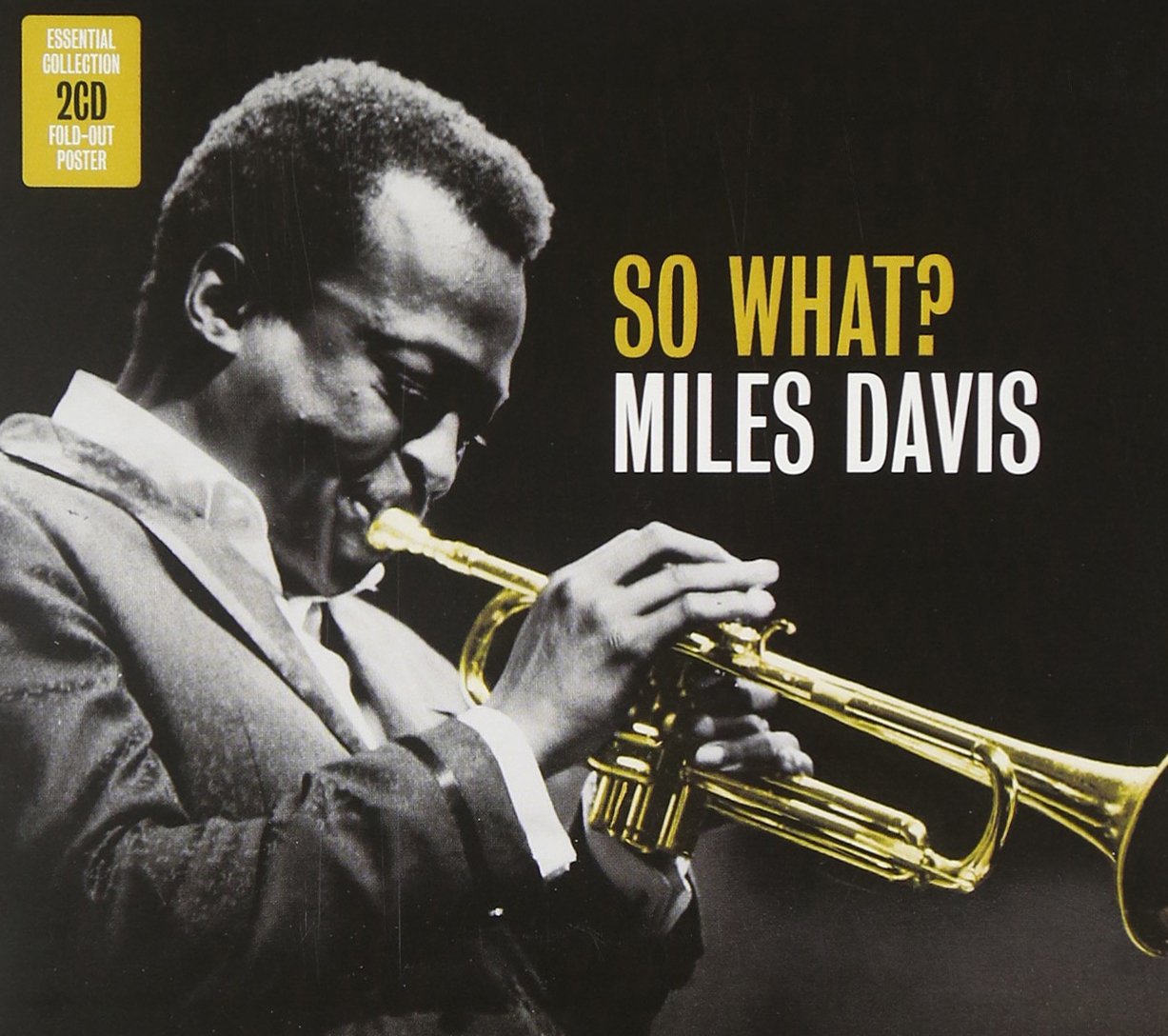
What?!: So What


Miles Davis: So What
[purchase]

I’m pretty sure that I’ve lamented here at some point that I’m not a musician, and don’t really have the knowledge or vocabulary to analyze music, which is why most of my writing about music is some combination of historical discussion, memories tied to the music and personal opinions about what I like and what I don’t like. For someone who purports to opine about music for an audience, it is a real flaw, but as you can see, from the nearly 100 pieces that I’ve written here, plus the ones elsewhere, I haven’t let this stop me.

So, when I read that Miles Davis’ album, 1959’s Kind of Blue was important because it showed Davis was moving from hard bop to a modal approach, I’m really not sure what that means. But, I know what I like, and the music on Kind of Blue is incredible, even if I can’t really explain why. The fact that it is, by many accounts, the greatest selling jazz album of all time, and to some, the greatest jazz album of all time, tells me that I’m not the only one who likes it. Plus, I’m willing to bet that most of the purchasers couldn’t explain the difference between hard bop and modal.

The first song on the album, “So What,” may well be Davis’ most well-known song (although there appears to be some thinking that Gil Evans wrote the introduction). The title reportedly came from actor Dennis Hopper’s response to Davis’ intellectual musings.

The playing by Davis and the other members of his sextet, a veritable Jazz Hall of Fame consisting of saxophonists John Coltrane and Julian "Cannonball" Adderley, pianist Bill Evans, bassist Paul Chambers, and drummer Jimmy Cobb, is amazing. But let me quote someone who knows what he is talking about, Richard Cook, author of It’s About That Time: Miles Davis On and Off Record and former editor of Jazz Review:

The mystery of the piece is its air of elusive, almost secretive possibility. One feels that the solos could go anywhere, could follow any path, could drift on without stopping, and not feel ‘wrong’. It is a definition piece of jazz, if one identifies that music as something played by intuition and living on its instincts. For once, there seems to be no contrast in the solos played by Davis, Coltrane and Adderley: they move seamlessly together, as if each man were playing his part in a predetermined plan. Evans’s accompaniments are handsomely shaded, although one has to strain to follow him: the ear is drawn irresistibly to the horns and what they are saying. On his own solo, which features some surprisingly dissonant voicings that he plays on the bridge, the horns riff behind him. In the end, the music drifts back towards Chambers and his ostinato melody, Jimmy Cobb ticking impassively at his ride cymbal, Evans playing the so-what tag, and the entire piece fading away into silence.

Interestingly, when they played the song live, they played it faster, which I think detracts from some of that mystery, but does show off the musicians’ chops.

By the time I saw Miles Davis, in 1985, he had long passed the point that his music had the kind of influence that it had back when Kind of Blue was released, and for some time after. But he was playing to large crowds, including at the Pier on Manhattan’s West Side where I saw him (with Stanley Jordan, just a few years out of college at that point, opening). What I remember most about that concert (other than being amazed that Stanley was opening for Miles Davis), was that Davis’ band was incredible, that he spent much of the show playing with his back to the audience, and that occasionally, his playing was pretty remarkable.

Monday, January 9, 2012

All That Jazz: The Lady In My Life


Stanley Jordan: The Lady In My Life
[purchase]

You can argue whether Stanley Jordan is the most talented guitarist ever (whatever that means), but there is no argument that he is the most talented musician that I am personally acquainted with. Stanley was a year ahead of me in college and worked at WPRB, where I sometimes followed him on the air. Even then, it was clear that he was prodigiously talented, and we were all in awe of his playing, not to mention the fact that he was, and is, a nice guy. His claim to fame was his mastery of the “tapping” technique, in which he uses both hands to tap the strings, allowing himself to play multiple lines at the same time, so it often sounds like more than one guitar is playing.

After he graduated from Princeton in 1981, he went off and, I understand, played on the streets. He released an independent record in 1982, but burst upon the jazz scene in 1984 when he made a surprise unscheduled appearance at the Kool Jazz Festival in New York and blew the audience and critics away. I remember reading articles in The New York Times about this and being so excited for Stanley. He followed up this triumph with his major label debut on Blue Note Records, “Magic Touch”, which included his versions of jazz standards, originals and covers of pop and rock tunes, including “The Lady in My Life”, originally done by a little-known singer named Michael Jackson. It was amazing to hear the quality and confidence of his playing on “Magic Touch”, and amusing to see Stanley—the guy from college—in the video for this song on MTV, back when they played music, back when they even played good music. (Possibly more amusing was his cameo in the Bruce Willis/Kim Basinger movie “Blind Date”). “Magic Touch” topped the jazz charts, and appeared on the Billboard 200 and R&B/Hip Hop charts. I got to see him perform a couple of times in jazz clubs in New York, and continued to be impressed by his music and his graciousness. (That means he either actually remembered me, or pretended to).

Unfortunately, the music business isn’t really set up for someone with Stanley’s eclectic tastes, and certainly wasn’t in the ‘80s and ‘90’s. His albums bounced around from straight jazz, to rock covers (even “Stairway to Heaven”), to Ravel’s Bolero, and other places in between. This meant that he was not doctrinaire enough for the jazz purists, and there was really no market for instrumental versions of popular songs. Ultimately, he cut back on touring and recording and devoted himself to music therapy.

I ran into Stanley last summer at his 30th college reunion, and he was excited about his soon-to be released album, “Friends”, in which he played with a number of great guest musicians, including Kenny Garrett, Christian McBride, Nicholas Payton, Regina Carter, Kenwood Dennard, Bucky Pizzarelli, Mike Stern and Charlie Hunter. The album came out a few months ago, and reaffirming his eclectic tastes, it includes jazz standards, classical pieces, originals and a Katy Perry cover. I heartily recommend it. Maybe now, in the Internet era, where music distribution is more democratic, the world will finally catch up to Stanley Jordan’s virtuosity and broad vision.

Saturday, August 7, 2010

Me Last: Willow Weep For Me


Stanley Jordan: Willow Weep For Me

[purchase]

It's late night back East, so let's begin the week's phase-out with something mellow and dreamy: jazz-fusionist Stanley Jordan's half-improvisational live cover of jazz standard Willow Weep For Me, the tune almost unrecognizable amidst the slip-and-slide of Jordan's signature two-handed guitar-tapping technique. Can you dig it? I knew that you could...