Bitches Brew was the first that I heard (of) Miles Davis. It must have been mid '70s.
Much later, I saw him live in Istanbul near the end of his life. My wife was 5 months pregnant and *man* was he loud. My son-to-be kicked his way through that one. I think it qualifies as "he's been to a Miles Davis concert". We were in something like row 5, which undoubtedly added to the volume. That outdoor venue appears to have been one leg of his 1988 European tour which apparently he cut short for health reasons. Despite his fame/acclaim, he came across as particularly ornery.
There's a fair amount of Davis' work that I find hard to access/enjoy. This 1954 piece - Minor March - isn't one of those. Maybe it's partially the effect of Milt Jackson and his vibraphone that makes the piece (the album? Quintet/Sextet) fairly melodic.
Minor March was written by Jackie McLean who plays the sax on it. Wikipedia says that Davis wrote in his autobiography, "I remember Jackie got so high he got terrified he couldn't play. I don't know what that shit was all about, but after this date, I never used Jackie again." Wikipedia says he never recorded with the man again.
"Main Street is a metonym used to denote a primary retail street of a village, town or small city in many parts of the world. It is usually a focal point for shops and retailers in the central business district, and is most often used in reference to retailing and socializing."
Well, there's a thing. Metonym, I mean, a word previously outside my knowledge and vocabulary. And of course I love it and you can expect its casual drop into a future post real soon. But I felt I needed clarification of what quite an exile from main street might really mean. Sure, we know what the Stones meant, I think, but, to go all literal, surely it means they were strictly side streets. Or maybe back streets. But, anyway let's have a traipse around some main streets and see where we end up.
London is so big it would be invidious to classify which street is actually more main than any of the others, but, to apply the wiki description, certainly in terms of the main shopping drag and flagship stores, it probably fits the bill best. Plus, and essentially therefore, it has a song about it. A good one too, the output of early Everything But The Girl. Long before the drum and bass electronic clatter of Walking Wounded, they, married couple Ben Watt and Tracey Thorne, were offering delicate jazz tinged whimsy like this. With charm abundant.The lyrics explain perfectly why Oxford Street counts as main street: to those living outside the metropolis, coming in by train as a special treat, Oxford Street is exactly where you would head, if retail was your thing. And, let's face it, more people came to London to shop than to go to the museums. (I guess if you are already a Londoner, you may be more inclined to go to the West End or Brick Lane, depending on resources or requirements.)
Whilst there is a Main street in New York, most folk won't see it a go to, more a go through, so I think it's probably Fifth Avenue. Not everybody gets to pay the prices or even gain admission, so it's good to see the other side, Dylan LeBlanc's wry reflection on being a pauper in the glitz, a string drenched lament that sounds more (Best) western in style than the north east. Lovely song. Other contenders could be, for the more budget conscious, Broadway or Union Street.
OK, a bit of a cheat here, for Paris, but, hell, it was the obvious, right from the start of choosing the thematic approach, right? La belle Joni, peak folk becomes jazzier period, with the lyrically all over the place paean to, well, french kissing. Miles knew, however, that main street, Paris, equals Les Champs Elysees, another eye-waveringly temple to gratuitous wealth. Personally I always preferred Les Halles, the old market and, now, state of the art mall. Let's ask a local.
So where next on this whirlwind? Well, rather than a shuffle through the fleshpots further, the above is a lesser heard oddity from the touched by genius pen of Roy Wood, the Move, ELO and Wizzard man. A schizoid blend of the Glenn Miller sound, mixed with Brian Wilson, it is a delightful way to end this mosey up the main streets of Mammon.
Enjoy, and although the shops are all closed, you can still find all these goodies: EBTG, Dylan, Joni and Roy.
What makes a standard a standard? Clearly, there has to be something timeless about the songwriting, and there probably has to be a performance of the song that captures the imagination of other musicians, and through them the interest of their audiences. Certainly, “My Funny Valentine” qualifies as a standard. According to Wikipedia, the song, written by the great team of Rodgers & Hart for the 1937 musical Babes In Arms, appears on more than 1300 albums performed by over 600 artists, ranging from Chet Baker to Miles Davis, to Frank Sinatra, to Ella Fitzgerald to Chaka Khan, to Linda Ronstadt, to Elvis Costello. Apparently, it has become a song that many jazz musicians are sick of; yet it continues to be performed and recorded (although I read somewhere that in the 50s, one New York club owner banned the song).
I think that what makes the song so compelling is that while it is a love song, it isn’t a song where the singer objectifies his or her love. To the contrary, the song is a catalogue of physical imperfections that nevertheless do not detract from the ardor that the singer professes. And since most of us aren’t perfect and fall in love with imperfect people, there’s a universality in this sentiment.
It appears that it took almost two decades for the song to move from Broadway to the Great American Songbook. In fact, when Babes In Arms was made into a movie in 1939 featuring Judy Garland and Mickey Rooney, the future classic wasn’t even used. But a gentle, quiet version of the song, sung in 1954 by the trumpeter Chet Baker (who had performed on an instrumental version with Gerry Mulligan the prior year that was so good that the Library of Congress added to the National Recording Registry in 2015) made the music world reconsider “My Funny Valentine.” Sinatra recorded it the same year, a couple of years later, Miles Davis recorded it with his quintet, and it was off to the races.
In fact, in 1957, the song appeared in the film Pal Joey, which was loosely adapted from Rodgers and Hart's 1940 musical of the same name, despite the fact that it hadn’t appeared in the musical. Sort of a musical make up call.
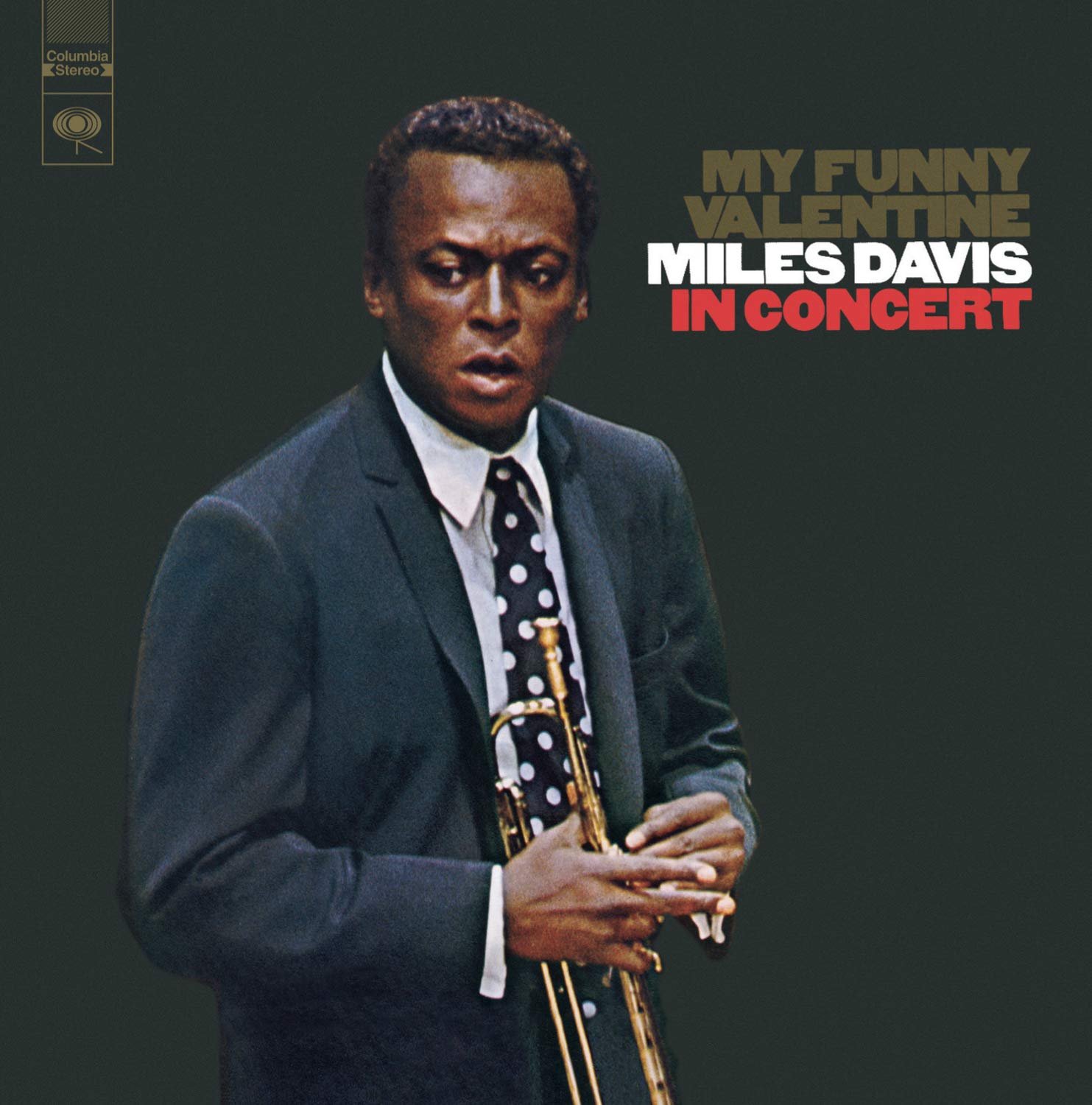
The version featured above, though, is from My Funny Valentine: Miles Davis in Concert, recorded on February 12, 1964, at the Philharmonic Hall of Lincoln Center in New York City, and in addition to Davis, features Herbie Hancock on piano, Ron Carter on bass, Tony Williams on drums and George Coleman, whose sax solo is remarkable.
I don’t think that we post many 15 minute jazz pieces here, so, when we do, it better be good—and this really is.
What has gotten into you, J. David, you may be asking. When we see your name on a SMM post, we can usually expect an alt-country song, maybe some old prog, or a new wave/power pop tune. Or something about TV or the Mets. But lately, we’ve had Miles Davis, William DeVaughn, and a couple of fake pop bands.
And now, Fleetwood Mac.
And not even the cool, bluesy Fleetwood Mac that never gets played on the radio (except, occasionally for “Oh Well” and maybe the original “Black Magic Woman” or “Sentimental Lady,” if the DJ is showing off).
Not even the experimental Fleetwood Mac that recorded “Tusk” (which I love).
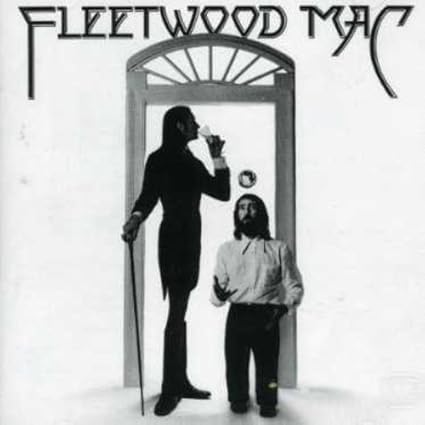
But instead,“Landslide,” the Stevie Nicks tune that was a moderate hit from the band’s first album with Nicks and Lindsey Buckingham. Who are you, and what have you done to J. David?
Look, I chose the song because it fits the theme, and avoids the obvious (although I expect to get to those guys next), but it is actually one of my favorite Fleetwood Mac songs. I’ll admit that the Fleetwood Mac album, and Rumours, are great albums (and I love the song “Tusk,” if not the album so much), but I don’t go out of my way to listen to them. To me, they exist in a world of good music that has just been overplayed, and usually, I’d just rather listen to something else.
Not surprisingly, the song is rooted in Nicks and Buckingham’s relationship, at a time when their professional and personal lives were not going well, she was living in the Rockies, and the landslide metaphor related to everything that was crashing down on her.
A month or so ago, Angela Hughey wrote an excellent “Five Good Covers” piece about the song at Cover Me, and she is a fine writer, so just go here and read it after you finish my piece, if you want to learn more about the song, and hear five good covers of it. There’s also a “Best Fleetwood Mac Covers Ever” piece over there from a year ago, in which I wrote about covers of other Mac songs, but Seuras Og (who, like me writes both here and there), acknowledged his own attraction to “Landslide,” and posted yet another cover. So read that, too.
I’m pretty sure that I’ve lamented here at some point that I’m not a musician, and don’t really have the knowledge or vocabulary to analyze music, which is why most of my writing about music is some combination of historical discussion, memories tied to the music and personal opinions about what I like and what I don’t like. For someone who purports to opine about music for an audience, it is a real flaw, but as you can see, from the nearly 100 pieces that I’ve written here, plus the ones elsewhere, I haven’t let this stop me.
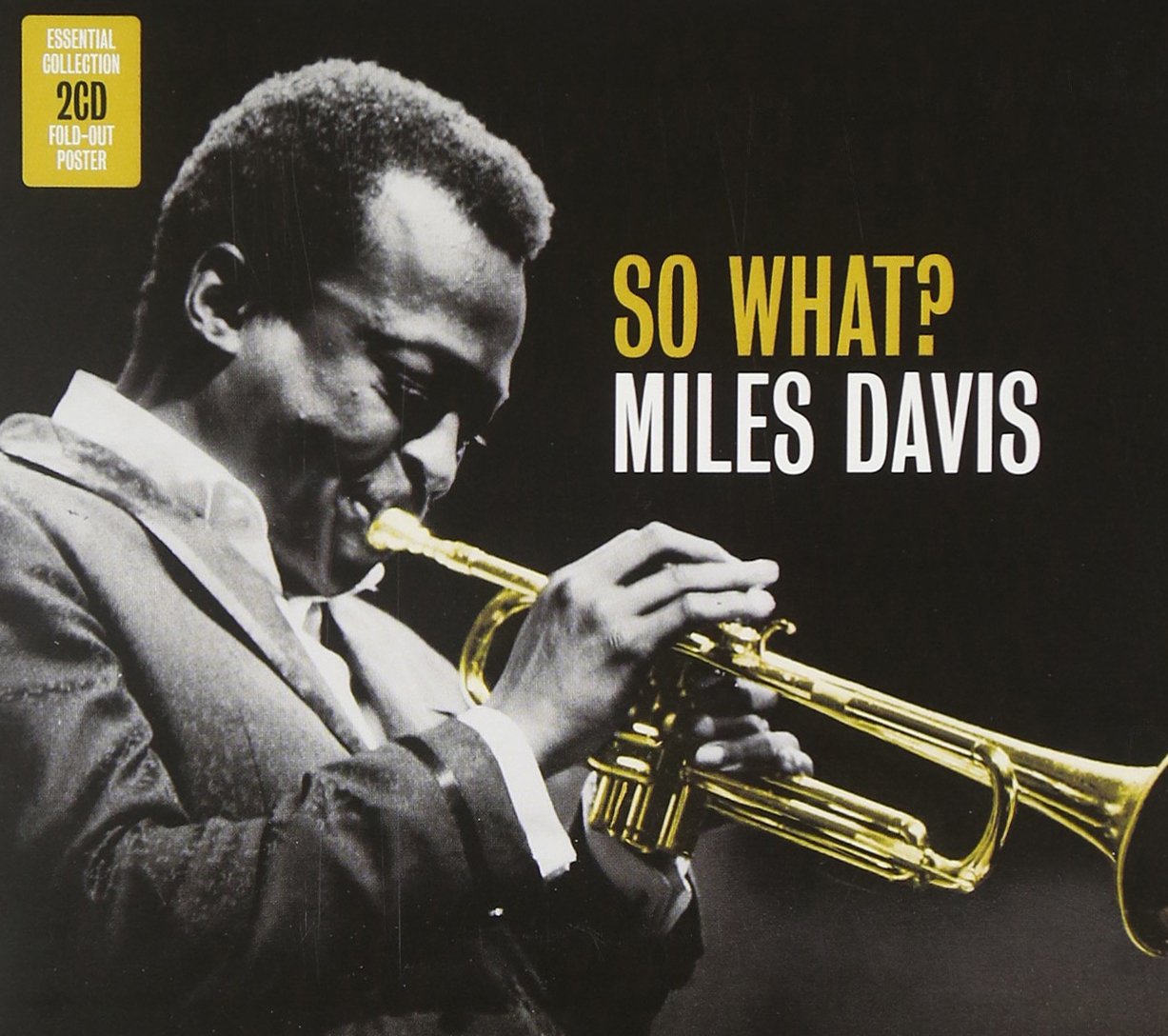
So, when I read that Miles Davis’ album, 1959’s Kind of Blue was important because it showed Davis was moving from hard bop to a modal approach, I’m really not sure what that means. But, I know what I like, and the music on Kind of Blue is incredible, even if I can’t really explain why. The fact that it is, by many accounts, the greatest selling jazz album of all time, and to some, the greatest jazz album of all time, tells me that I’m not the only one who likes it. Plus, I’m willing to bet that most of the purchasers couldn’t explain the difference between hard bop and modal.
The first song on the album, “So What,” may well be Davis’ most well-known song (although there appears to be some thinking that Gil Evans wrote the introduction). The title reportedly came from actor Dennis Hopper’s response to Davis’ intellectual musings.
The playing by Davis and the other members of his sextet, a veritable Jazz Hall of Fame consisting of saxophonists John Coltrane and Julian "Cannonball" Adderley, pianist Bill Evans, bassist Paul Chambers, and drummer Jimmy Cobb, is amazing. But let me quote someone who knows what he is talking about, Richard Cook, author of It’s About That Time: Miles Davis On and Off Record and former editor of Jazz Review:
The mystery of the piece is its air of elusive, almost secretive possibility. One feels that the solos could go anywhere, could follow any path, could drift on without stopping, and not feel ‘wrong’. It is a definition piece of jazz, if one identifies that music as something played by intuition and living on its instincts. For once, there seems to be no contrast in the solos played by Davis, Coltrane and Adderley: they move seamlessly together, as if each man were playing his part in a predetermined plan. Evans’s accompaniments are handsomely shaded, although one has to strain to follow him: the ear is drawn irresistibly to the horns and what they are saying. On his own solo, which features some surprisingly dissonant voicings that he plays on the bridge, the horns riff behind him. In the end, the music drifts back towards Chambers and his ostinato melody, Jimmy Cobb ticking impassively at his ride cymbal, Evans playing the so-what tag, and the entire piece fading away into silence.
Interestingly, when they played the song live, they played it faster, which I think detracts from some of that mystery, but does show off the musicians’ chops.
By the time I saw Miles Davis, in 1985, he had long passed the point that his music had the kind of influence that it had back when Kind of Blue was released, and for some time after. But he was playing to large crowds, including at the Pier on Manhattan’s West Side where I saw him (with Stanley Jordan, just a few years out of college at that point, opening). What I remember most about that concert (other than being amazed that Stanley was opening for Miles Davis), was that Davis’ band was incredible, that he spent much of the show playing with his back to the audience, and that occasionally, his playing was pretty remarkable.
During this theme, there has already been a mention of “the elephant in the room.” To me, the phrase refers to an obvious choice that everyone is ignoring. Indeed, it sometimes seems to me that one of our themes is more difficult than it needs to be, because everyone is rejecting a song as too obvious, My rule is that the first song that comes to mind is first for a reason: its quality. So here is my post of Autumn Leaves.
I know the song as a jazz standard. Cannonball Adderley’s version was released in 1958, one of three versions that year that established the song as a jazz classic. The passionate playing here of especially Miles Davis and Adderley show why. Although the song would become one of Davis’ signature tunes, available in at least four different live versions dating from 1958 to 1966, this is the only studio version of it that Davis made. Davis introduces the song, and his soloing stays close to the melody. This allows Adderley to make his entrance soloing, without restating the melody at all. So this version becomes a showcase for Adderley, which would explain why it is on his album, not Davis’. But make sure to listen all the way through to this one, for Hank Jones’ startling second solo near the end.
In researching this post, I discovered something I never knew: Autumn Leaves has words! In fact, it has two sets of words, in French and English. The French lyric is the original. It started life as a poem, Les Feuilles Mortes by Jacques Prevert, and it was set to music by a Hungarian, Joseph Kosma. Yves Montand was the first to record it, in 1945. The French poem is quite different from the English lyric. Here is one translation I found:
Oh I would like you so much to remember/
The joyful days when we were friends./
At that time, life was more beautiful/
And the sun burned more than it does today.
Fallen leaves can be picked up by the shovelful/
You see, I have not forgotten…/
Fallen leaves can be picked up by the shovelful,/
So can memories and regrets./
And the north wind takes them/
Into the cold night of oblivion.
You see, I have not forgotten/
The song you used to sing me./
This song is like us./
You used to love me and I used to love you/
And we used to live together/
You loving me, me loving you./
But life separates lovers,/
Pretty slowly, noiselessly,/
And the sea erases on the sand/
The separated lovers’ footprints
Karrin Allyson’s Autumn Leaves is the only version I could find sung in both languages. Allyson takes the French lyrics in the original tempo, and then switches to double time for the English lyrics. At both speeds, she finds all of the emotional power of the song. The English lyric is almost a new song. Johnny Mercer wrote it in 1950, and his wife at the time, Jo Stafford, was the first to sing it. There is, in my mind, no good name for the musical genre that Stafford worked in. I have heard it called “Standards”, but that term can refer to any song that is performed by multiple artists. I have also heard it called “pop music”, but again the term has broader application. At any rate, I am referring to the musical genre where the singer performs with a full orchestra, and the arranger is just as important as the singer. Frank Sinatra and Nat King Cole are examples of artists in this genre, and both would record their own versions of Autumn Leaves. Whatever this genre should be called, it is one of my least favorites, which is why I did not include Jo Stafford’s Autumn Leaves in this post.
In the jazz world, there are two ways to perform Autumn Leaves, fast and slow. Karrin Allyson does both, but I wanted to conclude with a great slow sung version, and Paula Cole of all people nails this one. Actually, the choice of Cole for this one makes more sense than I expected. I knew Paula Cole as a major label artist who had sung with Peter Gabriel and then had solo hits with Where Have All the Cowboys Gone? and I Don’t Wanna Wait. But it turns out that Cole was jazz singer before any of that happened. She records on her own label these days, using Kickstarter for funding, and her most recent album, Ballads, marks a return to her roots.
For those who remember 2012, I mentioned in a post that one of the first dates I went on with my now wife was to see the movie Bring On The Night, which was the Michael Apted-directed documentary about the creation of Sting’s first solo album The Dream of the Blue Turtles and the subsequent tour. We loved the movie, and I still have fond memories of seeing it, both because of the film and my date.
I enjoy learning about how music is created, probably because my love of music is not coupled with any real ability to make it. I’m jealous of those who can, so this movie was right up my alley. I was also a big Police fan and had heard, and liked, The Dream of the Blue Turtles. I know that Sting has gotten a reputation for arrogance and pretension over the years, but as someone who likes the often pretentious prog rock, it didn’t bother me that for his first solo album, Sting tried to move beyond the reggae flavors of the Police and try to push the boundaries a bit. As a brief aside, I had the chance to briefly interview Sting the summer before my senior year in college, backstage at an outdoor concert at Liberty Bell Race Track in Philadelphia. He was extremely genial and answered all my probably dumb questions, and readily recorded a station ID that we ran regularly — Stewart Copeland, on the other hand, had to be shamed into even doing a station ID for us. But he did two. You can hear them here.
In addition to wanting to expand his musical palette (which the Police had begun to do as time went on), Sting decided that his band wouldn’t be The Police Mark II (or III, for those few Henry Padovanifans out there), and instead chose young, hotshot jazz musicians. This isn’t as strange as it sounds — Sting’s earliest gigs were playing jazz and fusion music in Newcastle during his free time during college and while working as a teacher. Here's a jazzy tune from Sting's last pre-Police band, Last Exit—the melody of which was used in Blue Turtles' "We Work the Black Seam."
The people that he chose were all extraordinary musicians. Keyboard master Kenny Kirkland had played with Wynton Marsalis, bass player Daryl Jones had been in Miles Davis’ band, and Branford Marsalis, on sax, had been in Art Blakey’s Jazz Messengers, and played with his brother Wynton, Herbie Hancock and Dizzy Gillespie. Drummer Omar Hakim, who was in Weather Report (with Mino Cinélu), was the only member with significant rock credits, having backed Carly Simon, David Bowie and Dire Straits. In addition, Sting brought on veteran backup singers Janice Pendarvis (who was in another of my favoritedocumentaries, 20 Feet From Stardom) and Dolette McDonald (who worked with the Talking Heads, but was not in another of my favorite music films, Stop Making Sense, or on my favorite Talking Heads album).
The film shows how this mostly non-rock band fused with Sting to create a sound that was still identifiably rock, but had some elements of jazz. Maybe the easiest way to see what Sting was after is to compare the original Police version of “Shadows In The Rain,” a somewhat meandering, spooky dub track, with the studio version from Blue Turtles, which was reportedly based on the original demo that Sting wrote. Amusingly beginning with Marsalis asking frantically what key the song is in over a funky Hakim groove, a harsh voiced Sting enters, and the song turns into an exuberant, upbeat soulful and jazzy tune with solos from Kirkland and Marsalis.
Part of the tension in Bring On The Night, beyond the question of whether the whole concept would work, is that the band was scheduled to play some live shows on little rehearsal. As you can see from the video above, they had no problem with the performance, and the exuberance of the album track is even more apparent.
Another part of the tension in the movie is that it shows, in pretty graphic detail, the birth of Sting and wife Trudy Styler’s son Jake, who is now this guy.
In 1981, after my junior year in college, I went to Europe with my two roommates, Jon, who was also a junior, and Neal, who had just graduated. We flew into Brussels and had open tickets home from London, and a Eurailpass. We had very little pre-planned, in the pre-Internet, pre-cell phone era, so every day was an adventure as we had to figure out what we were going to do, where we were going to stay, where we were going to eat and how and where we were going to travel. As best I can recall, our major information source was a book called “Let’s Go: Europe,” which was at the time, considered to be the best source for student (read: “cheap”) travel, and we used it, despite its Harvard roots. (In researching this article, I found out that the Let’s Go organization was founded by Oliver Koppell, who became a well-known New York politician and lawyer, and an early business manager was Andrew Tobias, who became a prominent writer.)
This lack of planning and lack of options like Google and Yelp resulted in lots of serendipity. We stumbled upon a rustic street fair in Lucerne, fireworks in Paris, a free Gil Evans Orchestra concert in, I believe, Florence, and had many other adventures. We mostly stayed in cheap hotels, filled with other students who wanted a bit more privacy and flexibility than youth hostels, although we did stay in one very nice hostel in Switzerland.
Another vestige of the era was that wherever we went, there were actual record stores, and I would occasionally break away from my friends, who were not nearly as obsessed with music as I was, to paw through their wares, looking for things I couldn’t find in the U.S. I did bring back one LP, Sky’s debut, which somehow survived the trip. But one thing that was somewhat strange to me was that many record stores allowed you to listen to new records to sample them before, the store presumably hoped, you would buy them. I remember walking into a store, I think in Switzerland, and seeing the new Pat Metheny & Lyle Mays album, with the unusual title, As Falls Wichita, So Falls Wichita Falls. I had no idea what to expect—I was familiar with Metheny’s solo work, and his great albums with the Pat Metheny Group, which featured Mays on keyboards—but why was this album credited only to the two of them?
Luckily, I was able to ask to hear the album. The title track is a long, side-length piece that was at times atmospheric, and at others it was filled with driving percussion—sort of a mix between jazz, rock, Latin and ambient music. Of course, I didn’t get to hear the whole thing—they skipped ahead to move things along. I don’t specifically recall my reaction to our featured song, "September Fifteenth," but I know that I got the album after I returned home from our trip (which was shortened by the air traffic controller’s strike that led to President Reagan destroying the union, and which forced us to scramble to get ourselves home), and I listened to it often. I got the chance to hear The Pat Metheny Group at Princeton later that year, and while I do not recall whether they played this song (they probably didn't, based on setlists from other shows from the same time), I do still remember being embarrassed by percussionist Nana Vasconcelos when I asked him a dumb question between sets.
"September Fifteenth" is, simply, a beautiful song. It is dedicated to Bill Evans, the great piano player, who died on that date while the album was being recorded. Evans, who cut his teeth playing with Miles Davis before beginning a distinguished career as a leader of his own groups, was an influence on both Metheny and Mays. For the most part, the song is a guitar and piano duet, with some synthesizer, mostly at the beginning. You can hear how Metheny and Mays pay tribute to Evans, if you compare "September Fifteenth" to Evans’ own work with guitarist Jim Hall, who was also a huge influence on (and ultimately a collaborator with) Metheny:
Pat Metheny is one of the biggest stars in jazz—he tours and records often, with various groups, exploring different styles of music, both inside and outside the jazz world. As I was writing this piece, I started to wonder, where the hell was Lyle Mays? And to be honest, it isn’t easy to find out much about his recent life. His last album with Metheny was released back in 2005 and his last solo album was released five years before that.
The most recent thing that I was able to locate from Mays is this video from 2011, recorded at the TEDxCaltech conference.
It appears to be an attempt to meld three of Mays’ loves—music, technology and math. As Mays says in this article:
What do you get when the IT Department is the band? Jimmy Branly (drums) is a recording engineer. Andrew Pask (woodwinds) is a programmer who works for Cycling 74 (the company which makes the brilliant MAX software), Bob Rice (guitar and sounds) is a sound designer/engineer/synth programmer, Tom Warrington (bass) is a math wiz, Jon 9 (visualizations) designs, builds, and provides content for video installations, and Rich Breen could build (and nearly has built) recording studios MacGyver style. And what kind of music should one make when Stephen Hawking is in the audience at CalTech? Jazz alone doesn’t cut it.
Read the article if you want to know more, because I cannot even attempt to summarize what is going on. But the music still sounds good, and it is therefore a bit sad that Mays isn’t out there more, playing and recording music.
A change from some recent jottings, as I ease myself back into something at least resembling a comfort zone, avoiding the scatter gun of chuck everything at the browser, hoping some will stick of recent weeks. And, astonishingly, given my floundering ill-preparedly in the sea of big band jazz, this is partly jazz. But partly folk, with a tinge of classical chamber string quartet for good measure, and altogether the best damn piece of recorded music of the last decade. Sure, yeah, and other opinions are available but bear with me. It'll be worth it, I promise.
Colin Steele is a Scottish trumpeter. Trumpet to me is an instrument I always despised, smacking of the worst excesses of jazz, which to me, as a boy, meant Kenny Ball and his Jazzmen. Or it meant the hideous over instrumentation of 60s pop, wherein any and every band had to smothered in brass and strings. Even 'cool' bands ruined their reputations, Love and the Byrds for two, with the infernal parping I now know and love. Strangely, I can't claim it was Miles and Chet that put me right, although, ultimately, they did, it was more Chumbawamba who bludgeoned me into an acceptance of a trumpets worth. Anyhoo, Steele started his career in the late 80s, tinkering in the ranks of maverick Scots experimental soul boys, Hue and Cry, as they threw jazz and Latin into an ever smoother mix. Tiring of that and traveling through Europe, predominantly France, where bebop is still a potent groove, picking up more echoes of funk and worldbeat to his repertoire, he then formed his Quintet, up to now largely orthodox jazz, albeit well-received and acclaimed, within the minnow pool of UK jazz. This is by now the early years of this century. Jazz musicians traditionally don't make money from their muse, relying on outside projects to butter their bread, coming into contact with musicians from other spheres, and there has been a noble tradition of folk-jazz fusion in Scotland. Steele has thus found himself in the ranks of Scottish dance band, the wonderfully named Ceilidh Minogue and the unclassifiable The Unusual Suspects, themselves who could have been a shoo-in for this fortnights theme. But never had their been anything with with solo trumpet as a lead instrument.
"Stramash" burst into being after a visit to the Festival Interceltique, L'Orient in France, 2008, having immersed himself in Islay island life to prepare this immaculate gem. The folk purists at this meeting of the Celtic nations initially turned their noses up at this jazz trumpeter invading their domain, but not for long. The record followed in 2009, and was garlanded with accolades, becoming the Guardian national newspapers Jazz album of that year. Here's a wonderful review from All About Jazz. "Stramash" is a Scottish word meaning commotion or kerfuffle and is so apposite for the joyful ensemble pieces that flit between genre, effortlessly interwoven and interlinked. Enough of this, ye'll be wanting some music. Trumpet, sax, piano, bass, drums? Check. String quartet? Check. Fiddle and bagpipes? Check.....
3 consummate excerpts. I request you, nay, I require you to tarry no longer, Buy it!!!!
Ev'ry Time We Say Goodbye was composed by Cole Porter for a musical called Seven Lively Arts. Slowly but surely it became a jazz standard, losing the apostrophe in the title along the way. It was taken on by many a talented musician over the years, but Trane's melancholy interpretation has to my knowledge never been surpassed. Incidentally, this (1961) was the first time he played the soprano sax on an album, an instrument none other than Miles Davis had bought for him when they were touring Europe together.
On my desert island, there are going to be times when I need to hear some jazz, and that means Miles Davis. Specifically, that means Kind of Blue. Davis heard music in his head that no one else did, and he found some of the best musicians in jazz history to play it. So, Flamenco Sketches has John Coltrane and Cannonball Adderley on saxes, and Bill Evans on piano. Of course, you can hear for yourself what a great trumpet player Miles Davis was. Flamenco Sketches comes at the end of Kind of Blue, and it is human nature that we can only remember so much information at a time. So, even though Kind of Blue only has five songs, it is the first four that people remember. Flamenco Sketches is a beautiful ballad with very subtle Spanish accents. It’s the kind of song you can get lost in, because it is so quiet and delicate. But it also rewards close listening.
Miles Davis' tune All Blues is a jazz arrangement of a 12-bar blues. It first appeared on his 1959 Kind of Blue, which is on about a zillion Top Ten Jazz Albums Like Ever lists. The reasons for this are twofold: the tune itself is a intricate, lengthy improvisation based solely on chord scales, giving the musicians great freedom, and the players themselves were terrific artists at the top of their game. Let's see. Miles Davis, of course, on trumpet. Bill Evans on piano. Two stellar sax players: Cannonball Adderley on alto and the incomparable John Coltrane on tenor. Paul Chambers on base and Jimmy Cobb on drums. If I were to pick one single jazz song to play for curious alien visitors, this would be the one.
You know which musicians reaaally love to cover this? Guitarists! I'm looking at my not-all-that-extensive collection and even then, I've got covers by Larry Carlton, Pat Martino, George Benson, Stanley Jordan, Kenny Burrell, and Jim Hall. But the one I've chosen to share is by three - count 'em – three guitarists. I like this version because it's got that bluesy slide guitar intro that echoes the 12-bar blues origin of the song. Corey Christiansen is a professor of music at both Utah State and Indiana Universities, and he drops in to my town to play every so often. He's truly gifted and a nice guy to boot.
Miles Davis was a musical genius. I do not use the term lightly. But Miles had the ability to hear in his head music that no one had ever heard before. And he did this at least three times in his career. First, he heard cool jazz when everyone else was blowing hot. Next, he created an acoustic jazz sound where the structure of the songs was implied rather than stated. And finally, and most radically of all, Miles, for better or worse, created fusion jazz. And remember that, regardless of what fusion became, the electric music of Miles Davis was a true fusion, representing the full potential of what electric jazz could be.
Kind of Blue was the album that represented the epitome of Miles Davis’ cool jazz sound. In contrast to the loud and showy hot jazz of the day, the music of Kind of Blue is quiet, and emphasizes the ensemble sound over soloing. The solos are there, but they arise organically out of the group sound. And, in the midst of this, there is the song Blue in Green. Here, for my money, is the perfect jazz ballad. I could possibly say more, but it isn’t necessary. The song says it all.
Mile Davis is a true jazz giant and the only jazz trumpeter who can stand shoulder to shoulder with Louis Armstrong in the hall of jazz imortals. This recording of Thelonious Monk's 'Round Midnight (with John Coltrane on Tenor Sax) is stunning.
Freddie Hubbard may not be as well known as the other jazz icons featured in this post, but he certainly qualifies as one of the all-time greats. Before his solo career he played on such seminal albums as Eric Dolphy's Out To Lunch and Herbie Hancock's Maiden Voyage. This one comes from my favoite Freddie Hubbard album, Red Clay (1970). It's nice and funky.
Lee Morgan is maybe the most accessible jazz trumpeter for those new the genre. He started playing as a professional while still a teenager. Tragically, Lee Morgan was murdered by his common-law wife at the young age of 33.
Clifford Brown was another brilliant trumpeter who tragically passed away at a young age. He was only 25 years old when killed in a traffic accident. His recorded work is wonderful but who knows what might have been...
Star Maker Machine does not accept music submissions from artists or promoters. However, most of the contributors here do accept submissions for our own blogs, listed below. Please visit our blogs, take the time to listen to what we post, and then feel free to contact us if you feel that your music would be a good fit.