







Showing posts with label The Jayhawks. Show all posts

Monday, November 23, 2020

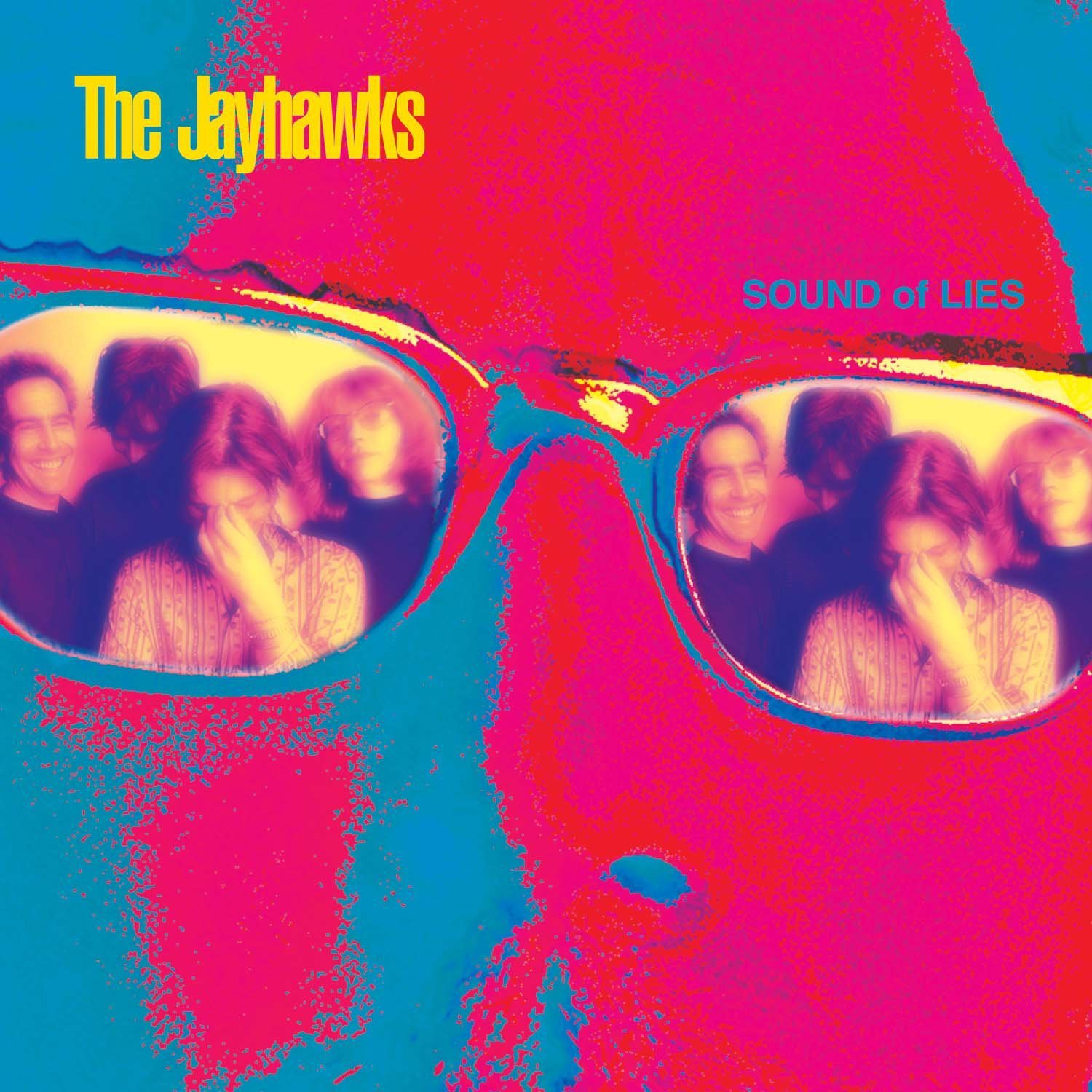
No Thanks: Sound of Lies

The Jayhawks: Sound of Lies
[purchase

There are so many things not to be thankful for in 2020, which will go down in history as a particularly bad year. Maybe not as bad as during the Civil War, or the Great Depression, or other periods of strife and struggle, but I think that the sheer number of different bad things that have happened during the year is unprecedented. I know that I’ve written a few political pieces on this music blog recently, so I hope that this one is the last for a while, but as I put figurative pen to paper, our political system is being bent to the point that there is real concern about it breaking. I’m confident that it will not snap, but like most things that are stressed to the breaking point, it will be weakened, maybe permanently. 

So, why, “Sound of Lies?” Because one of the things that I will not miss from 2020 is worrying that every time I turn on the radio, or TV, or check social media, I will be barraged by a steady stream of lies from the president and his henchpersons, sycophants and enablers. I mean, we all knew that most politicians shaded the truth when expedient, and that some lied, outright. But the sheer volume of dissembling and BS from this crowd has been astonishing and exhausting. I fully expect that, shortly after January 20, 2021, there will be stretches of days where I don’t even think about the President, and don’t have to get angry about his lies, which I expect to improve my mental health. 

“Sound of Lies,” the song, is the title track of the Jayhawks’ 1997 album, which followed the departure of co-leader Mark Olson, and the resulting primacy of Gary Louris as singer and songwriter. And the album also marked a shift in the band’s Americana-based sound to include more pop influences, although the twang wasn’t completely eradicated. It’s an album that received mixed reviews at the time—in fact, they were “mixed” not in the sense that reviewers thought the album was mediocre, but in the sense that some reviewers loved it and others hated it. I suspect that many of the “haters” were the folks who object to bands that change and grow over time. And, in fact, many writers, often in pieces discussing the album’s reissue in 2014, noted that it had held up well over the years.  In an interview from 2014 about the album, Louris said:

It’s probably our favorite album as well. It is the 'fuck you' record. It really is the fuck everybody record, I really remember Olsen had left, he had quit, I was going through a divorce, I was a mess, I was drinking too much, I was unhappy… I really felt this was the last Jayhawks record, and why not go out with a bang, so fuck it? 

The song, though, is not a glossy pop song, but is, instead, a quiet, heartbreaking ballad, which is consistent with the dark place he was in. And while the lyrics to the song don’t really relate to the current political situation, these lines do resonate: 

The sound of lies rings funny
Against the truth 

Despite Louris’ belief, it was far from the Jayhawks’ last album (it wasn’t even their last album with Olsen), and despite the despair and exasperation, they’ve gone on to continued creative success. 

Hopefully, next year, at this time, we can all put aside our current despair and exasperation, and move on to be thankful about the truth.

Friday, April 24, 2020

Electricity: Magnolia Electric Co.


Magnolia Electric Co.: The Dark Don’t Hide It
[purchase]

Back in 2013, a few months after Jason Molina died at the age of 39, of “alcohol abuse-related organ failure,” I wrote about one of his songs for the “Punctuation” theme. The song, “John Henry Split My Heart,” was credited to Songs:Ohia, from an album called Magnolia Electric Co., and I noted that there’s some dispute over whether or not this album was the last Songs:Ohia album or the first Magnolia Electric Co. album.

Today’s song, though, is from What Comes After The Blues, which is definitely a Magnolia Electric Co. album, and it’s a good one. It’s kind of obligatory to refer to Neil Young when discussing Molina’s music, and it’s definitely there in this one—feedback laden guitars, heartfelt, quavery singing, and dark songwriting demonstrate Molina’s debt to Young. But it’s far from a ripoff, and probably more than an homage, because Molina’s music sounds like Molina.

As I noted in my prior piece, I’m not incredibly familiar with all of his work, but most of the songs that I have heard have grabbed me, and none moreso than “The Dark Don’t Hide It,” which might have been the first Molina song that I ever heard. Although I’m not sure where (but WFUV would be a good guess). There’s definitely some Neil in the intro, but it also reminds me a bit of the Jayhawks’ “Waiting For The Sun,” and the song is elevated by female harmony vocals from Jennie Benford.  The lyrics are clever, but dark, for example:

Now the world was empty on the day they made it 
But heaven needed a place to throw all the shit 
Human hearts and pain should never be separate 
They’d tear themselves apart just trying to fit 

Magnolia Electric Co. released only three more albums after What Comes After The Blues, including Sojourner, a box set, which in its full incarnation included three full-length albums, one four-song EP, one documentary movie on DVD, a celestial map and a medallion, enclosed in a wooden box. All of the releases are worth checking out.

Friday, July 12, 2019

ALABAMA:THE BLIND BOYS OF

Being neither resident in the state, or even the country, my observations from afar lead me to feel Alabama doesn't get much good press, even in the medium of popular song. Especially in the medium of popular song. And when the only two positives come from Al Jolson and Lynyrd Skynyrd, you know you're in trouble. (Nah, I take that back about Skynyrd, I bloody love that song, but it only exists as an attempt to justify the place from the ire of others. But we all know that. Right?)


Moving swiftly on, there is one Alabama icon that really does make me gleam, that being this astonishingly lasting vocal group from the state. Granted it can not have been an easy start in life, born both blind and black below the Mason-Dixon line in the pre-war years of the great depression. But maybe, just maybe, being at the now anaethemically named Alabama Institute for the Negro Blind gave these boys a start they mightn't have otherwise achieved. For they were boys, just 9 years old as they gave their first concerts, in the school chorus as the Happyland Jubilee Singers. The idea of blind gospel singers seems somewhat of a lame trope these days, a cliche to fill gaps in our knowledge, yet it was actually quite a big deal back then, the Happyland Jubilee Singers getting their big break from a 'Battle of the Blind Boys' music competition. (Beat that, Simon Cowell, although X Factor does increasingly feel it is muscling in on disabilities.) Up against the Jackson Harmoneers, the publicity gave both bands a boost, as they became the Five Blind Boys of Alabama and the Five Blind Boys of Mississippi respectively, touring both together and, sometimes, as each other. The Alabama version got a record contract and a hit, in 1948, and that was the end, all but, of the rival version.

Gospel was big in the 1950, and it was to this genre the boys stayed true. Original founding member Clarence Fountain had this to say about this decision. Of course, as the decades have rolled by, there have been many instances where they have seemed to sing of more secular themes, but never have they sung a lyric where an ambivalence about to whom the song is addressed cannot be drawn. Thus, as the 60s became the 70s, with R'n'B and Soul taking great strides through the white dominance of the day, so the Blind Boys were there, reminding all as to where these musical forms had a common home. (Indeed, how many of the giants in those styles hadn't started off in the church? Aretha and Al were certainly no exceptions.)

It wasn't because any of this I was drawn to the group, almost more despite the religion. I have little truck with it myself, probably since, as a teenager and when asked, ahead of having my appendix out, my father proclaimed me as heathen. (The nurse duly wrote that down.) But I do love a harmony vocal, but, rather the honey smooth, the more raggedy the better, think Lindisfarne and the Jayhawks, so when the Blind Boys starting cropping up on albums I was listening too, my attention was picqued. These were often tribute albums, whereby the great and the good would queue up to pass cover on their peers, such as Richard Thompson. And then came Solomon Burke's majestic comeback in 2002. So, when in 2004 they collaborated with Ben Harper, more so because of their involvement, this was a record I had to have: 'There Will be a Light'. And again, in 2005, with 'Atom Bomb', they having been now tucked under the wing of Peter Gabriel's Real World record label. Astonishingly, a full 50 albums into their career, suddenly they were hot property, filling concert halls both alone and in cahoots with musicians from all walks and at all stages of their careers. True, there have had to be changes along the way; there are none of the original 5 left, let alone performing, newer members snucking in seamlessly over the decades, different voices, different timbres, the overall sound, the overall performance remaining little changed. The current line-up does however still include Jimmy Carter, also a pupil at that Alabama Institute, but too young for their debut in 1939. Whilst a touring member ahead of that time, it was only officially in 1982 that he made his recording presence as a member. Nonetheless, his legacy with the originals is sufficient to consider him as one. Here's his take on it all. (Clarence, mentioned above and in the interview, died last year.)

I can't even begin to give full due acclaim to this wonderful institution, coming so late to their game, having to be born and whatnot, but, scattered both within the piece and below, enjoy some musical heaven.


Finally, and with enormous excitement, I can report I am finally getting to see them live, next month, at the Cambridge Folk Festival, here in the U.K., alongside Amadou and Maryam, blind husband and wife world music titans from Mali, who themselves met similarly, at Mali's Institute for the Young Blind. I cannot wait.


Any of these....

Sunday, December 10, 2017

THE END: AIN'T NO END/JAYHAWKS

Been thinking a bit about ends recently, as in end of times rather than the other ends of, well, anyone. That can be depressing thinking, either choice actually, but, let's face it, the world ain't actually being done any great favours by those that have earnt(?) the right to control it. So how best to lift the mood and bring a smile to proceedings? I find a rousing raggedy chorus of purpose to be an apt and welcome remedy. So who better than the never more ragged, vocally anyway, Jayhawks. Short of early 70s Lindisfarne, no-one does it better. Love it, especially when comes the awkward and never more effective collision of Mark Olson and Gary Louris is there, something that real life failed ever to make for a permanent connection. Their 1992 - 95 recordings, 'Hollywood Town Hall' and 'Tomorrow the Green Grass', albums 3 and 4 respectively, are perhaps the best examples of how to 'do' americana, and are certainly my favourite.


This song, however dates earlier than that, and one I first picked up on that green Rykodisc 20th anniversary sampler that you really ought to have. Rykodisc are one of those labels that just guarantee
satisfaction, always a reliable source of good music, in no small part due to the Joe Boyd connection, Ryko having bought his label, Hannibal, and thus granted much wider attention to his roster. A man who can do no wrong, his pedigree is impeccable. (Whaddya mean, you don't know who Joe Boyd is? Until I get round to a post wholly devoted, go here. Or better, read this.) Anyhow, I digress, the song, apart from that inclusion, that comes from the band's somewhat tentative second step, 'Blue Earth', in 1989. Their debut had been a low-key and local production and release, this being an attempt to woo the majors. Unfortunately circumstance allowed it to be little more than slightly enhanced demos, Louris having even left the band through an injury, wooed back to overdub his guitar and vocal parts onto the Olson penned songs. He stayed. Derided as primitive at the time, it is both template and masterclass for what would follow, with a little added rough polish.

The song is a treat, but I can't say I fully understand the lyrics, it may be best that way. But given the frequency with which live versions of it abound on the youtube, including the one I show, I can't help but feel it a metaphor for the on-off relationship between Louris and Olson. After Louris rejoined the band, Olson left in 1995, the band continuing without him. In a hiatus nearly a decade later, the pair hooked up as a duo, 'From the Jayhawks', and toured, ultimately appearing on each other's solo albums and, in 2009, a creditworthy acoustic duo effort, 'Ready for the Flood'. 2011 saw Jayhawks, the band,  reconvene, lasting 3 or so years before Olson again skipped camp, albeit after the excellent 'Mockingbird Time'. The band, helmed by Louris continues sporadically. I don't know (and I don't wish to check) whether the Olson-free band play 'Ain't No End' and hope they don't, as my vision of/for the song is that there ain't no end to the possibility of a Jayhawks band with both of 'em. Whimsy? Maybe. And probably deeply insulting to the exemplary other members, one also that fails to recognise the actual greater commercial success of the band between the Olson memberships. Such is life, I need both in my Jayhawks and it's my piece!

Here's the original.

Tuesday, February 24, 2015

Songs South: Honky Tonk Blues


Hank Williams, "Honky Tonk Blues"
Honky Tonky Blues, purchase


I lived ‘down South’ for a number of years, but I hated Southern music, or “Country” as it should be properly named. Wouldn’t even entertain it. Granted, I was down there when Grunge was bitch-slapping the popular music scene and Nirvana was sitting atop a new Olympus.

Country music was the stuff the sorority girls who wouldn’t give me a second glance were listening to. My general impression of country music was of those girls heading to Walnut Creek Amphitheater in straw cowboy hats, mini skirts and boots. Or rednecks in pickups.

I defined country music by the those who listened to it, with no understanding or knowledge of the roots and history, the depth or multitudinous of genres and styles, and I failed to read its influence on almost everything else I was listening to.

But, to be fair, my strongest impression of ‘country’ music at that time was Alan Jackson’s “Chattahoochee”, which made brave but strange reference to ‘hootchie coochie’, among other things my misplaced northern soul just couldn’t cotton to…

Which is too bad, as I feel I came to a grand tradition pretty late, and have been trying to make-up ground for a long time.

Luckily, I found Hank Williams, listened to more than the radio hits of the Allmans, and Lynyrd Skynyrd; I found Cash—but we all did, at some point. I found a lot of good stuff, mostly through what I was already listening to and following the influences of bands in the alt-country scene that I’d learned to love, like Uncle Tupelo, Wilco, and The Jawhawks. It is strange, in retrospect, how much I loved those bands yet still took such a circuitous route to country music.

However crooked, or slow, I did find my way.

And I can’t think of a better song to fit this month’s category of “South”, than Hank Williams’ “Honky Tonk Blues”.

The song is perfect: a strutting, ramble-rhythm, fiddles in the back pushing the melody, the purring shimmy of the pedal steel and Williams’ inimitable lamenting warble—I can’t call it a yodel. That voice was the veritable personification of pain and misery, light coming though it like a half-empty whiskey bottle on the windowsill. To say he yodeled would be to diminish the palpable spirit he brought to song. That voice, a transcendent, plaintive howl, personifies in a single instance, the searching earnestness of all his pain, misery, mischief, and occasional happiness. Some might hear Williams pull that ‘country shit’ and think, no, not for me. But, they are missing out on what amounts to pure poetry.

“Honky Tonk Blues” is exactly what it is: a shuffling lament of leaving the country for the big town, and wanting nothing more than to get back home. It’s ‘country mouse, city mouse’, a tale told and retold. It’s William’s warning about straying too far from what you know, but then, when you take Williams’ hard luck myth and real life blues, all of his songs are some kind of warning. Hank ‘s legend sometimes outshines the simple, sad elegance of his music. But songs like “Honky Tonk Blues” are pure magic, and do more than cast a spell. Rather, his music spells out the blueprint for country music.  He reminds me of all the stuff I missed when I was down South, and make me want to get back as soon as I can. Honky Tonk blues, indeed.

Sunday, May 25, 2014

Side Projects: Golden Smog


Golden Smog: V
[purchase]

For the next couple of weeks, we will be writing about “Side Projects,” the musical projects that are created when an artist decides to moonlight away from his “regular” band. These projects happen for many different reasons—the desire to explore a different kind of music, the opportunity to play with different people, the chance for a sideman to step to the front, or even just to fill time between releases.

Golden Smog appears to have developed because a bunch of friendly, similarly inclined musicians from different bands had fun playing together. As befits their name (which was taken from the second episode of The Flintstones), the origins of Golden Smog are clouded in the mists of history. They started in the late 1980s in Minneapolis as a loose collection of musicians who joined together to play mostly covers, possibly at first in 1987 to support Kraig Johnson, of Run Westy Run, at a solo show. According to Marc Perlman of The Jayhawks, and a member of Golden Smog, that show included guitarists Dan Murphy of Soul Asylum and Gary Louris of The Jayhawks, Perlman on bass and Soul Asylum vocalist Dave Pirner on drums. Other early members included Chris Mars of The Replacements and Jim Boquist of Son Volt, and they became a regular feature of the Minneapolis bar scene. Gary Louris remembers it all somewhat differently, and if you really want more on the band’s origins, read this article from No Depression.

The band’s first release was a 1992 EP of covers, On Golden Smog. Because of contractual issues, the band members used pseudonyms derived from their middle names and the street they grew up on, and included Murphy (“David Spear”), Pirner (“Anthony James”), Louris (“Michael Macklyn”), Perlman (“Raymond Virginia”), Johnson (“Jarrett Decatur”) and Mars (“Eddie Garfield”) who also created the cover art. The relaxed nature of the collaboration was demonstrated by the fact that one song had lead vocals from Soul Asylum roadie Bill Sullivan.

Over time, the members of the band started to bring original songs to the group, and this culminated in 1996’s release, Down By the Old Mainstream, in which Wilco’s Jeff Tweedy (“Scot Summit”) replaced Pirner, and Mars was replaced with Honeydogs’ drummer Noah Levy (“Leonardson Saratoga”). The album contained mostly original songs, with two covers. At the time, Soul Asylum was already a couple of years past their breakthrough hits, The Jayhawks had released a couple of well received albums, but were reeling from the loss of singer Marc Olson, and Wilco was still gaining its footing. Tweedy, who as a Bellville West High School student had actually interviewed Murphy for a music magazine, reportedly appreciated the support he received from his fellow Smoggers following the breakup of Uncle Tupelo and the mixed reviews for Wilco’s debut.

As a fan of Wilco, Soul Asylum and The Jayhawks, I was inclined to like Golden Smog, and this album got me hooked. I especially loved the opener, “V,” featured above, a wistful remembrance of a friendly and supportive barmaid, that, nevertheless rocks. This was a disc that was played to death in our house. I know that some reviews, predictably, denigrated some of the songs as ones that were not good enough for the member’s regular bands, but I think that is too facile a critique. Not every song is a gem, but even the weaker ones are worthwhile.

It took a few years for the band members’ schedules to align to allow the recording and release of a second album, this time with Big Star drummer Jody Stephens instead of Levy. Weird Tales was released in 1998, and consisted of all originals (and all of the members got to use their own names). It has a somewhat more somber tone than the prior disc, but also has a few rockers, including my favorite track, “Until You Came Along.” One review described it as “long and sloppy and uneven and enjoyable, and thus easily pigeonholed as the kind of long, sloppy, uneven, enjoyable record that happens when a bunch of people who kind of know each other sit down with some guitars—yes, we understood, Golden Smog was a Traveling Wilburys full of people nobody really knew.”

My family enjoyed this album, and my wife and I saw the band put on a great show at Irving Plaza in New York. By that time, it was clear that Tweedy was getting most of the attention, as Wilco had released both Being There and the first Mermaid Avenue collaboration with Billy Bragg.

And that seemed to be pretty much it for Golden Smog, as the members’ regular bands and projects took precedence. I was, therefore, excited when the band announced a concert at the Bowery Ballroom in the summer of 2004, and my wife and I went. One of our favorite memories of that night was sitting in this little alcove in the balcony with our friends before the show started, and the actors Adam Goldberg and Christina Ricci, who were a couple at the time, came and sat with us. We became close friends and still hang out. Not really. They actually ignored us and we played the blasé New Yorkers and ignored them, but it was still pretty cool. It was a fun, very loose show, filled with Golden Smog songs and lots of random covers ranging from Carly Simon, to The Fugs to Neil Young to Talking Heads. No Tweedy this time, but the band included Louris, Perlman, Murphy, Johnson, Steve Wynn (of the Dream Syndicate) and his wife, drummer Linda Pitmon, David Poe, Jenni Muldaur, James Mastro (of The Bongos) and others.

The tour led to another album, Another Fine Day, mostly recorded in Spain, with additional material (including Tweedy’s contributions) added later. It is a good album, but I never really fell in love with it, nor did I love the also perfectly fine (but Tweedy-less) EP Blood on the Slacks. I can’t say that my lack of interest in these later discs is a result of their quality or just the fact that I didn’t listen to them over and over again, but it is what it is.

Golden Smog has turned out to be a pretty long-running side project, which allowed its members to have fun, try new things with different band members, but never seemed to get in the way of the members’ “day jobs.” And I think they put out a bunch of good music.

Monday, April 15, 2013

Rain: Save It For A Rainy Day


The Jayhawks: Save It For A Rainy Day
[purchase]

I never saw The Jayhawks with both Gary Louris and Mark Olson, although about a year after I saw the Louris-led version of the band at Town Hall in New York, I saw a Louris/Olson show at the Bowery Ballroom, and yeah, their voices do sound incredible together. But I also like the music that the band did after Olson left, and the album Rainy Day Music is probably my favorite with that lineup.

In early 2004 my family and I went to see The Jayhawks, with Josh Rouse opening, at Town Hall, a venerable, relatively small venue in New York where I also took my bar review course. So, enjoying myself in that space, where contracts, torts and other arcana were drilled into my brain, always seemed a little strange. But I digress. Somehow, we got great seats, very close to the stage, and it turned out to be a memorable concert. Josh Rouse was an excellent opener—he had recently released his 1972 album, which my family enjoyed maybe as much as we did Rainy Day Music.

The Jayhawks were also great. I hadn’t focused on how good a guitarist Louris is, and the band was tight and the songs were exactly what we expected. One thing I enjoy about going to concerts with my wife and kids is hearing them sing along, because they are actually talented, unlike yours truly, who is much, much better at writing about music than singing. Ask my daughter.

During the performance of “Save It For A Rainy Day,” after Louris sang:

Waiting for a breakthrough
What will you set your mind to?
We stood outside the Chinese restaurant
in the rain

someone in the crowd whooped loudly. I mean, incredibly loudly. And from that moment, I have never heard this song without actually whooping myself at that point in the song, out loud, or internally, if it wouldn’t be appropriate for a grown man to scream at that particular moment.

So, thanks, Mr. Jayhawks-concert-going-whooper for forever changing how I listen to this song. And, if by some strange coincidence, you are reading this, please let me know what there was about standing outside a Chinese restaurant in the rain that so excited you. Because for the past 9 years, I have wondered.

Wednesday, June 3, 2009

Questions : When Will We Be Married ?


The Waterboys : When Will We Be Married ?

[purchase]

The Jayhawks : Will I Be Married ?

[purchase]

(bonus track) : Estil C. Ball & Orna Ball : Paper of Pins

Although they (almost) share the same title, those two songs from 1988 and 1989 ask questions about a future wedding in opposite ways : while in the Waterboy's song, marriage seems like a hope, the Jayhawk's character pictures it with fear. But in the first song, I can sense a hidden threat from the courting guy ("when you'll go, you'll go with me", the "black bow"). Is it because he's determine to take her whatever happens and to take her even to death's shores? But maybe it is just my interpretation or my twisted understanding of English...

The bonus track has no question in his title, but I found it yesterday while digging for old rarities for River's Invitation. I didn't know this folk song, but in a certain way it's an answer (in a man and woman, call & response way so popular in the beginning of the century)to the first 2 songs, with a great punch line.

BTW, this month will be our 7th wedding anniversary. I realized that AFTER picking the songs (not that I had forgotten...).

Friday, March 27, 2009

Record Labels: Twin/Tone

"Massive success would have been a dream come true, but a person's dreams are so different at 30 than they are at 20. Maybe my dreams did come true and I didn't notice ... or maybe they weren't such great dreams to begin with." --Paul Westerberg

Minneapolis-St. Paul was an amazing place for underground rock 'n' roll in the 1980s and Twin/Tone Records was there to capture nearly all of it. Co-founded in 1977 by Paul Stark and longtime Replacements fix-it-man, Peter Jesperson, Twin/Tone all but documented the Minneapolis scene. The label peaked in the mid-'80s when The Mats went semi-large nationally and Soul Asylum followed closely behind. Sure, there were important bands not on Twin/Tone, Hüsker Dü most famously. But, no other label had so many essential Twin Cities acts: The Suburbs, Babes In Toyland, Poster Children, and today's three representatives, The Replacements, Soul Asylum, and The Jayhawks.

Twin/Tone went into hibernation in the mid-'90s, about the time the initial wave of indie-to-major signings ran its course. The label failed, not because of a lack of quality product, but due to simple economics. Said Stark, "Unless you were on one of the two coasts and had connections to major label distribution, there was nothing you could do. You need to go out to lunch and spend face time with people that are going to influence, whether it be press or radio or distribution, stuff like that. I just never really cared to play that game. I was more interested in developing groups."

Replacements - Take Me Down To The Hospital [purchase]

The kings of the drunk tank. From their 2nd album (and 3rd release), Hootenanny (1983), this is probably my favorite Mats song and a sleeper in their Twin/Tone catalog. Great dynamic, the song constantly threatens to fly apart, but never quite does. Chris Mars (drums) and Tommy Stinson (bass) lock into a tight, almost '50s kinda groove, Paul Westerberg (guitar/vocals) howls to perfection, and Bob Stinson (alien guitar spillage) plays lead like a madman falling down stairs. God bless Bob, perennial member of the All-Underrated Team.

Soul Asylum - Closer To The Stars [purchase]

Given Dave Pirner's later dalliance with Winona Ryder, this song has taken on an ironic cast. Nevertheless, this track from While You Were Out (1986) is one of Soul Asylum's best performances and remains in the setlist for a reason. Great vocal by Pirner (in his absolute prime), the band rocks, but it's original drummer Grant Young who steals the show. The production isn't all that good, but you can hear Young carry the band through a few different sections. Live, this would've been face-melting.

Jayhawks - Martin's Song [purchase]

The Jayhawks actually hit their stride after leaving Twin/Tone. I think Hollywood Town Hall (1992) and Tomorrow The Green Grass (1995), released on Def American, are equally brilliant statements and on the short list of best alt.country albums of all-time. But, Blue Earth (1989), from which "Martin's Song" comes, certainly has its moments. It's a great country-rocker, Mark Olson's vocals eerily echoing Gram Parsons. Meanwhile, Gary Louris' harmony vocals ride on top as his deft string bending pays homage to Clarence White. The drums kind of fall apart at the end, but hey, these were basically gussied-up demos. No one ever accused Twin/Tone of overdressing for the party.

Tuesday, July 1, 2008

Fifty States: Nevada


Jayhawks: Nevada, California [purchase]

"Can you help me to find Nevada, California
The last thing I did
Was I tried to hold her."


I'm not sure if this is cheating because there isn't actually a Nevada, California. There IS a Nevada City, which is about 45 minutes away from Chico, where I happened to get my undergrad degree. In fact, in 1992 I was serving as music director of the Chico State campus radio station, KCSC, when The Jayhawks' Hollywood Town Hall album fell into my lap. While I was fully immersed in that golden age of college rock ... before it metastasized into grunge and alternative ... I simply couldn't deny the old-school country-rock appeal of The Jayhawks. With the high, lonesome harmonies that recalled Gram Parsons and the Flying Burrito Brothers and a deceptively crunchy guitar sound akin to their labelmates, The Black Crowes, this album proved crucial for me. I didn't know it then, but it was about to launch me headlong into the alt.country scare of the mid-'90s. If country-rock holds even the slightest appeal for you, Hollywood Town Hall and 1995's Tomorrow The Green Grass are absolutely essential.

Sunday, June 29, 2008

Fifty States: Ohio


The Jayhawks: Somewhere In Ohio

[purchase]

Americana at it's finest...

I hope I'm not taking away from someone posting a Neil Young song, but I do hope I can turn y'all on to the Jayhawks.