Showing posts with label Blind Boys of Alabama. Show all posts

Tuesday, April 12, 2022

Paul Songs: Broken Bones & Pocket Change


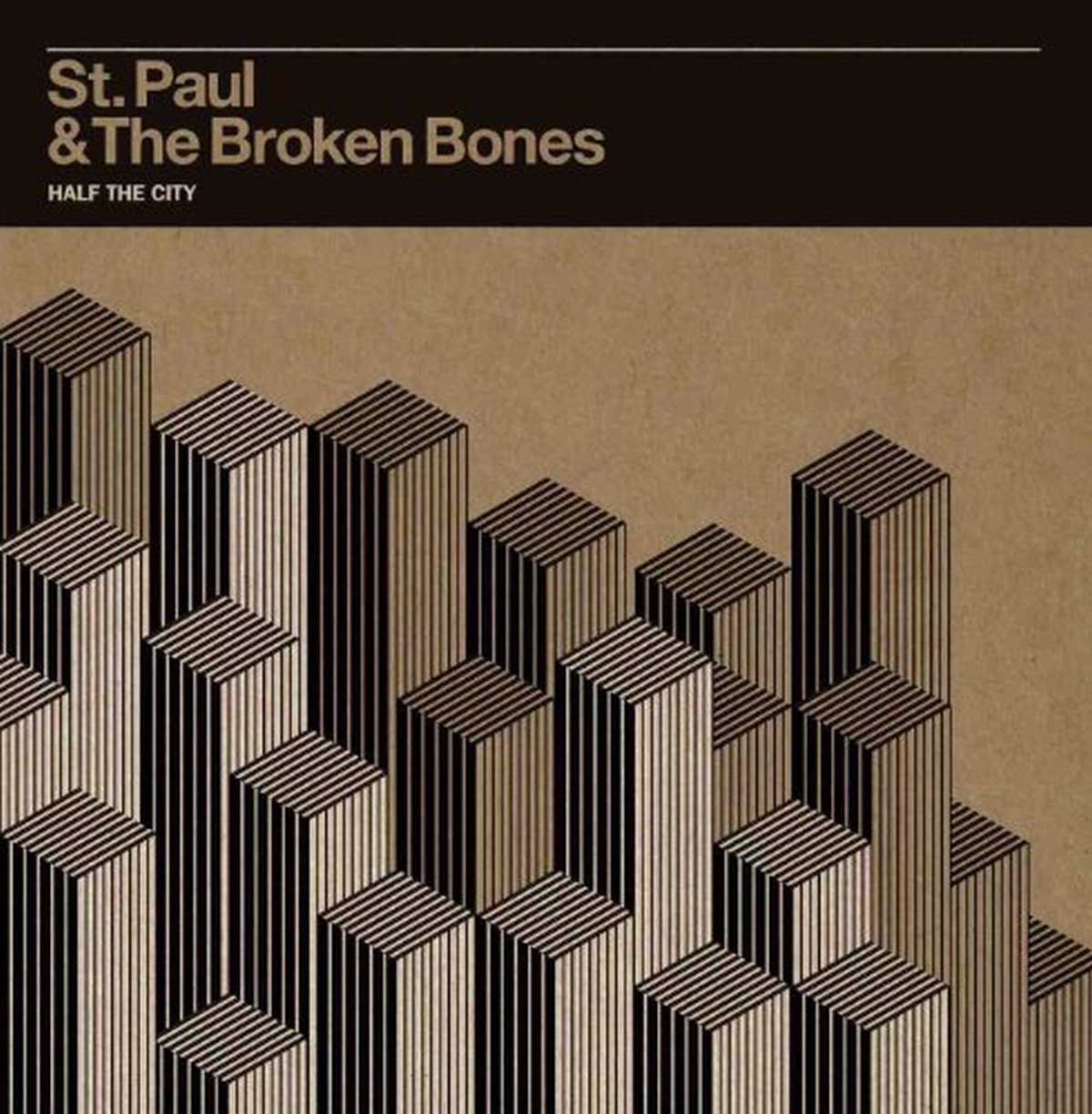
St. Paul & The Broken Bones: Broken Bones & Pocket Change
[purchase

When a musician leaves the stage and heads into the crowd, you never know what is going to happen. That’s probably why you don’t really see it very often, and when it does happen, there’s usually a phalanx of security guards to protect the musicians from bodily harm. I’ve written about one time that I saw The Decemberists leave the stage in Amsterdam to reenact the 1667 Battle of Chatham, and another time that Buddy Guy jumped off the stage in Central Park and eventually approached my wife and I, and our two-month-old son, who was at his first concert (not including a couple he attended in utero). And I recall seeing the Blind Boys of Alabama do it, also in Central Park. I’m sure there are more examples, but the only other one that I can specifically recall was when I saw St. Paul & The Broken Bones at the Capitol Theatre in 2019.  Although I feel like that is something that Bono has done on occasion, and we all know what his real first name is, right?

I’ve mentioned in passing before that I occasionally blog about shows at the Capitol Theatre, the storied venue in Port Chester, New York. When they announce shows, I can request a ticket, and if I am chosen, I get to go for free, and write about the show. They then post what I wrote, usually with a bunch of nice pictures taken by a professional photographer, on their website, in a section called the “Squirrel Blog.” Squirrels are important to the Cap. I blogged that show, so let me borrow from what I wrote back then, when it was fresh in my memory: 

After Janeway introduced and thanked the band, they launched into the emotional “Broken Bones & Pocket Change,” as Janeway plunged into the crowd before walking upstairs, singing from the side boxes, traversing and nearly climbing off the balcony, and ending the show from the boxes on the other side. 

You can see a video of that part of the show here. I don't think you can see me in the video, but I'm standing in front of the soundboard, because someone once told me that it was the best place to stand.

The “Janeway” that I referred to is Paul Janeway, the titular "St." Paul, who had trained as a preacher before eventually turning to music. The band’s name came from our featured song, the first that Janeway wrote with bassist and co-founder Jesse Phillips. They formed the group in 2012 in Birmingham, Alabama, and soon became an 8-piece soul band that included guitarist Browan Lollar, who had been part of Jason Isbell’s band The 400 Unit and keyboard player Al Gamble (whose brother Chad is the drummer in the 400 Unit). Their first full album, Half The City, which contained our featured song, was released on Single Lock Records, which I only mention because one of the owners is John Paul White (of The Civil Wars), and then, only because we are focusing on “Pauls.” 

Here's how I described their performance that night: 

Janeway regally commanded the stage, a shiny cape over his shoulders like Solomon Burke, and the crowd was in his hands from the start. 

Good performers feed off the energy of the crowd—great ones take that energy and send it back, magnified, and that’s exactly what Janeway and the band did, holding nothing back through the hour and a half set. His voice is a freak of nature, rich and soulful—think Al Green or Otis Redding—with an otherworldly falsetto that thrilled the crowd. 

It was a great show, I got to see it for free, the lead singer left the stage and climbed into the balcony, and nobody got hurt. If that's not a great night, I don't know what is.

Friday, July 12, 2019

ALABAMA:THE BLIND BOYS OF

Being neither resident in the state, or even the country, my observations from afar lead me to feel Alabama doesn't get much good press, even in the medium of popular song. Especially in the medium of popular song. And when the only two positives come from Al Jolson and Lynyrd Skynyrd, you know you're in trouble. (Nah, I take that back about Skynyrd, I bloody love that song, but it only exists as an attempt to justify the place from the ire of others. But we all know that. Right?)


Moving swiftly on, there is one Alabama icon that really does make me gleam, that being this astonishingly lasting vocal group from the state. Granted it can not have been an easy start in life, born both blind and black below the Mason-Dixon line in the pre-war years of the great depression. But maybe, just maybe, being at the now anaethemically named Alabama Institute for the Negro Blind gave these boys a start they mightn't have otherwise achieved. For they were boys, just 9 years old as they gave their first concerts, in the school chorus as the Happyland Jubilee Singers. The idea of blind gospel singers seems somewhat of a lame trope these days, a cliche to fill gaps in our knowledge, yet it was actually quite a big deal back then, the Happyland Jubilee Singers getting their big break from a 'Battle of the Blind Boys' music competition. (Beat that, Simon Cowell, although X Factor does increasingly feel it is muscling in on disabilities.) Up against the Jackson Harmoneers, the publicity gave both bands a boost, as they became the Five Blind Boys of Alabama and the Five Blind Boys of Mississippi respectively, touring both together and, sometimes, as each other. The Alabama version got a record contract and a hit, in 1948, and that was the end, all but, of the rival version.

Gospel was big in the 1950, and it was to this genre the boys stayed true. Original founding member Clarence Fountain had this to say about this decision. Of course, as the decades have rolled by, there have been many instances where they have seemed to sing of more secular themes, but never have they sung a lyric where an ambivalence about to whom the song is addressed cannot be drawn. Thus, as the 60s became the 70s, with R'n'B and Soul taking great strides through the white dominance of the day, so the Blind Boys were there, reminding all as to where these musical forms had a common home. (Indeed, how many of the giants in those styles hadn't started off in the church? Aretha and Al were certainly no exceptions.)

It wasn't because any of this I was drawn to the group, almost more despite the religion. I have little truck with it myself, probably since, as a teenager and when asked, ahead of having my appendix out, my father proclaimed me as heathen. (The nurse duly wrote that down.) But I do love a harmony vocal, but, rather the honey smooth, the more raggedy the better, think Lindisfarne and the Jayhawks, so when the Blind Boys starting cropping up on albums I was listening too, my attention was picqued. These were often tribute albums, whereby the great and the good would queue up to pass cover on their peers, such as Richard Thompson. And then came Solomon Burke's majestic comeback in 2002. So, when in 2004 they collaborated with Ben Harper, more so because of their involvement, this was a record I had to have: 'There Will be a Light'. And again, in 2005, with 'Atom Bomb', they having been now tucked under the wing of Peter Gabriel's Real World record label. Astonishingly, a full 50 albums into their career, suddenly they were hot property, filling concert halls both alone and in cahoots with musicians from all walks and at all stages of their careers. True, there have had to be changes along the way; there are none of the original 5 left, let alone performing, newer members snucking in seamlessly over the decades, different voices, different timbres, the overall sound, the overall performance remaining little changed. The current line-up does however still include Jimmy Carter, also a pupil at that Alabama Institute, but too young for their debut in 1939. Whilst a touring member ahead of that time, it was only officially in 1982 that he made his recording presence as a member. Nonetheless, his legacy with the originals is sufficient to consider him as one. Here's his take on it all. (Clarence, mentioned above and in the interview, died last year.)

I can't even begin to give full due acclaim to this wonderful institution, coming so late to their game, having to be born and whatnot, but, scattered both within the piece and below, enjoy some musical heaven.


Finally, and with enormous excitement, I can report I am finally getting to see them live, next month, at the Cambridge Folk Festival, here in the U.K., alongside Amadou and Maryam, blind husband and wife world music titans from Mali, who themselves met similarly, at Mali's Institute for the Young Blind. I cannot wait.


Any of these....

Sunday, April 14, 2019

WHAT?! : .........A WONDERFUL WORLD


I absolutely loathe this song. Or at least in the iteration it is best known, the version that ruined weeks and weeks and weeks of my childhood, spoiling my Top of the Pops viewing by being number one forever, or seeming to be. Louis bloody Armstrong, gurning away to the camera, all grimaces and duff notes, perpetually mopping his brow. How could anyone sweat that much? And as for the "woahhhhh yeaaaaaah" at the end. Dreadful, and still able to bring me out in hives. Now, don't get me wrong, I was probably about 10 years old, how was I to know that this buffoon was one of the seminal voices of jazz, albeit via a trumpet than his frayed vocal cords? I know all that now and respect the dude but still cannot allow myself much to like him. (And don't get me started on 'Hello Dolly'........)

But you know, it isn't actually a bad song. Or at least is capable of being made into quite a good song. There have been very many covers, many of which are clearly tributes to the original and, broadly, unnecessary. Then there are the standard make-overs in the idiom of the day. And others that are just downright odd. As in, what were they thinking? (I think a look in the eyes of the performers might just answer that question.)

But here are trio that, I believe, pass muster.


You could say this is just another idiom of the day offering, but you will have to understand the amount of love I have for this venerable performer, the sadly late Rico Rodriguez. This pillar of reggae trombone delighted me for many of his decades of activity in music. I probably first came across him on, again, Top of the Pops, he always present, alongside sidekick Dick Cuthell, on flugelhorn, whenever the Specials had a song in the chart. I later understood he had been an original in the early days of ska and reggae, in Jamaica, associated with the Skatalites, ahead of becoming an occasional member of Georgie Fame's Blue Flames in the 60s. His latter days were spent as a focal member of Jools Holland's Rhythm and Blues Orchestra, his solo spots always getting fond applause, even if eventually did little other than hold his trombone and sing a little. (Come to think of it, were I to witness, as a 10 year old, these performances, him as a grey bearded ancient, I wonder too whether I would have a similar opinion as I do now of Satchmo?)


Mac Rebennack, aka Dr. John is a serious fan of Armstrong and his legacy, producing a whole album in tribute to him. And it is a corker, start to finish, all tempered with the loose N'Awlins swing for which Rebennack is rightly lauded. This version also featured the Blind Boys of Alabama, vocal staples of a gospel and r'n'b sensibility since the cusp of the 40s. Having started off as a session man, a member of the fabled Wrecking Crew, Dr John invented himself as voodoo shaman, the Night Tripper, in 1968. However, he has perhaps become now more associated as a custodian and standard bearer for the musical pot-pourri that is his home city, often working with other vintage names from the heritage of New Orleans. His live shows remain a thing of wonder.


Finally I offer the majesty that is the vocal of Robert Wyatt. I apologise for each of my three choices having grey and grizzled beards; such now is the territory of musical iconography. Wyatt is another with a long lineage harking back into the 60s, initially as the drummer for proto-jazz-proggers Soft Machine and then his own band, Matching Mole. Following a terrible accident, in which he broke his back, he has become an elder statesman of a politically-hued brand of often unclassifiable blends of jazz, latin and all else available, both on his own and in any number of collaborations. And the odd hit single. This version of the song is the closing track on a wonderful 3 hander, alongside saxman, Gilad Atzmon and violinist Ros Stephen. This distils all the kitsch out of Armstrong's version, leaving a lighter sweetness that doesn't cloy on repeated. I love it.

Rico
Rebennack
Robert

Wednesday, September 20, 2017

Down: Way Down In The Hole


Tom Waits: Way Down In The Hole
[purchase]
[purchase The Wire soundtrack, with 4 of the 5 versions used in the credits]

This year, it seems like I’m writing more about television related music. I watch an enormous amount of television, and I do think that there is so much great stuff to watch these days. In fact, there’s a ton of shows out there now that I would like to check out, but there are just so many hours in the day. In addition, there are a bunch of older shows, often considered to be among the medium’s best, that I have never seen. Some, I’m not interested in, like Game of Thrones, but mostly it is because I didn’t start watching them during their initial run, such as The Sopranos (80 episodes), or Mad Men (92 episodes), or Breaking Bad (62 episodes, plus I’d have to watch Better Call Saul), and their multi-season runs make binge watching difficult.

A few years ago, when I started my own practice, there wasn’t much work right away. I decided to binge watch one of the shows that I had missed, and hit upon The Wire. It was only five seasons (and 60 episodes), it was supposed to be greatAlso, I was a big fan of Homicide: Life On The Streets, which shares significant creative DNA with The Wire.  And my wife wasn’t interested in it. Perfect. (I also watched the 24 episode British show The Thick of It, which was amazing, and easily the most profane program I have ever watched).

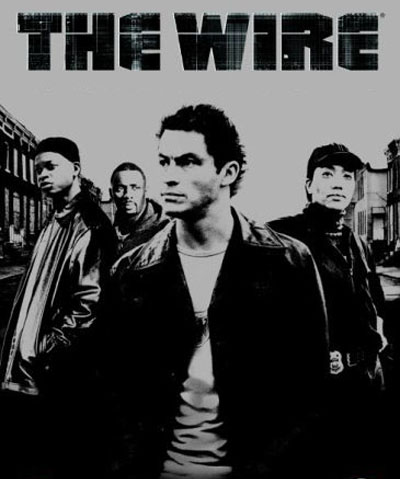
The Wire was, in fact, great, and harrowing, and depressing and brilliant. The way that it dissected the Baltimore of its era by focusing on the decay of its major institutions—the police, the unions, the government, the schools, the press, and even the street gangs—was remarkable. The narrative style was groundbreaking, and the performances, by actors who rarely, if ever, have reached the same level of quality since, were stunning. And there was Omar.

But, as I so often have to remind myself, this is a music blog. The credits for the first season ran over a cover of Tom Waits’ “Way Down In The Hole,” recorded by the Blind Boys of Alabama. At the time, I didn’t know that it was a cover, because I’m not that big a Waits fan. The second season, they used the original. For season three, it was a Neville Brothers cover, and in season 4, they commissioned a version, credited to DoMaJe, sung by Baltimore middle schoolers, which related to the season’s focus on the public schools. The final year, they used a cover by Steve Earle, who also acted in the show. Here are all of the credit sequences, conveniently edited into one video:


If you’d like to read more about the credits, go here.

David Simon, the creator of The Wire, followed up that show with a number of well-received television projects.  Generation Kill, which I haven't seen, was about the 2003 invasion of Iraq.  Tremé, which I loved, taught me an enormous amount about post-Katrina New Orleans, and that amazing city's culture, particularly its music. After that, he adapted my friend Lisa Belkin's book Show Me A Hero into a gripping miniseries about zoning (cheap joke--it was about race, and politics and ambition and much more).  A couple of weeks ago, his new show, The Deuce, focusing on the sex and pornography industry in New York in the 1970s, debuted to critical acclaim.  So far, I think it is good, but, and I bet Simon gets tired of hearing this phrase, it isn't The Wire (but is it more like that show than the other Simon projects?).