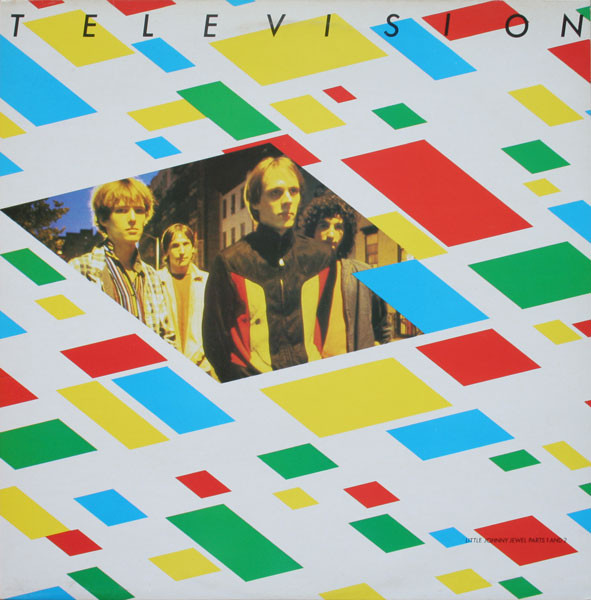
I scanned my list of potential subjects for this theme (read my last post if you don’t know what I’m talking about) and decided again to write about a band that I hadn’t discussed before—Television. I’ve written about small-t television many, many times, here and elsewhere (not going to link, since there are too many), because watching TV is probably how I spend more of my leisure time than anything else, but I’ve never written about the band. While Todd Rundgren’s failure to ever be discussed in this space was very surprising, it is almost as surprising that Television has only been discussed twice—back in 2008 and 2009—and both times about the same song, “Marquee Moon.” Which happens to be an excellent song, but we’re going back to Television’s first release, “Little Johnny Jewel,” a single on their manager’s label, released in 1975.
Although Television came up out of the same C.B.G.B. scene as the Ramones, Blondie, Patti Smith, Talking Heads, Richard Hell and the Voidoids and the Heartbreakers, among others, who I often played on the radio back in the 1979-1982 period when I was doing college radio, I had trouble connecting with the band then. As someone who grew up on classic rock and prog, I (eventually) came to understand the hard, fast ethos of punk that those other bands followed (although for some, that changed over time) as a rejection of the older forms of rock. While I still loved what I grew up on, I also learned to love punk (and new wave). But Television’s meandering jams and guitar solos and stream of consciousness lyrics, sung by Tom Verlaine in a yelping voice that, to my ears at least, made David Byrne sound great in comparison, somehow didn’t fit in to the slots that I had in my head at the time. I couldn’t understand how they were in the same category as the Ramones, whose simple two-minute songs done at breakneck speed were nothing like the long songs that Television produced.
Because of their timing, and their identification with the downtown NYC music scene, and because of the rough sound of their music, Television is usually lumped in with the punks, but interestingly, I’ve seen them referred to as both proto-punk and post-punk, which seems impossible without some sort of time machine. And yet, it makes sense, when you look closely. Television presaged punk both temporally and in their attitude, but their sound was not “punk” in the way that word is commonly used, so like “post-punk” bands, they embraced the brashness of punk, but not all of the sound.
In my old(er) age, I’ve come to appreciate Television more and more. Maybe it is my more mature approach to music that is less interested in putting artists and their music in genre slots, so that I enjoy the connections that artists that seem very different actually have. I know, for example, that the first time that I heard “Impossible Germany,” by Wilco, one of my favorites, I was struck by how the intertwined guitar parts played by Nels Cline and Jeff Tweedy reminded me of Television’s Verlaine and Richard Lloyd.
As mentioned above. “Little Johnny Jewel” was the first song released by Television, its 7 plus minutes split into two parts on a 45, and it’s an odd one. Opening with a bass line (from Fred Smith, who had replaced Richard Hell), before Billy Ficca’s drums and the guitars enter, the instrumental eventually resolves into a groove before the vocals begin. The song may be about Iggy Pop, whose real name was James Newell Osterberg, Jr., but his middle name is sometimes listed as “Jewel.” There’s a long instrumental guitar section featuring Verlaine soloing in the middle that sounds closer to psychedelia or even jazz than punk before the groove returns, along with the lyrics:
Oh, Little Johnny Jewel He's so cool
But if you see him looking lost
You ain't gotta come on so boss
Verlaine recalled in an interview: “Lou Reed asked me, ‘Why’d you put out this song? This is not a hit.’ I said, ‘What band playing a bar in New York, issuing their own single, is gonna have a hit?’” However, the single sold surprisingly well, and arguably kickstarted the New York punk movement.
If you are of a certain age (old) and in the UK, there is the classic line: "They think it's all over; it is now!" It refers to the football world cup final of 1966, which the more jingoistic members of the community of football fans and union flag wavers treat, along with "the" war, as one of the twin pillars of an Englishness I have never subscribed to. Probably because I consider myself scots, but, anyway, these were the classic last lines uttered by the hoarse, excitable TV commentator, Kenneth Wostenholme, as Geoff Hurst scraped in a last gasp fourth goal, right on the blast of the referees final whistle. No football fan me, but I do remember watching the game, aged 9, as it was probably watched by near every adult and child in the country, assuming, that is, they had a telly. There wouldn't have been anything else on anyway. But it is a lovely line, bearing repeating whenever something seems to be at and and then, suddenly, perhaps with an additional slight surprise, now is.
Which set me thinking about all this break-up songs out there, and the differing responses to the news that may transpire. With good old i-tunes coming up trumps on that score.
Fool:
Fool, If You Think It's Over
I had forgotten how impossibly young Chris Rea actually ever was. I remember thinking this song great, when it came out, back in 1978. From his debut album, which garnered him a grammy, Best New Artist, if actually little then much to further his career. Indeed, so prophetic was it, Rea was thinking of turning his back on music thereafter, returning to running the family restaurant his parents wanted of him. Luckily, it wasn't, and he would have been a fool had he thought so. It was only after he drove home, that Christmas, that he found a substantive royalty check on his doormat, sufficient to reverse his fortunes and set up a sensible pension plan. (Actually not; he bought a Ferrari, but, should you wonder, yes, it was that Christmas!)
Fuck:
Fuck You, It's Over
I still wonder whether I am allowed to spell that word out, so much a product of my times and upbringing I am. Sure, I say it a lot, and enjoy doing so. But, having got that out of the way, I believe it a totally valid use of the word in this context, the combination of dismay, contempt and dawning realisation, and I praise the sometimes somewhat histrionic Glasgow band for its use. I may be wrong, but they sound dumpee rather than dumper. Fuck is a common word in Scotland's second city, finding application as a noun, a verb, an adjective and probably many others, adverb, pronoun, preposition or conjunction. Heck, even a good old interjection too, from time to time. Glasvegas seemed only to have a brief window of opportunity, always seeming to promise more than delivered, but were fun. (Stop press: they tour their new, 4th album next year!)
Glad:
Glad It's Over
A curious little number from Jeff Tweedy's Wilco, one that was initially pencilled in for 2007's Sky Blue Sky, later ditched, appearing on the Alpha Mike Foxtrot rarities compendium, as well as OST appearance for Heroes, the TV series about special powered mutants. Very Beatle-y, I feel, as well as containing considerably sour grapey misogynistic lyrics. Unless you subscribe to it being a reverse projection of 10cc's I'm Not In Love. Which it could be, I guess, I didn't listen to the end.
Dream (or not):
Don't Dream It's Over
I like this song, the sentiment being very much of reassurance and reconciliation, even if against all the odds. Old suckers like me are always up for that. of course, it is New Zealand's finest, Crowded House, who did the original version you remember better, but I like the salty tang of this version, Sarakh Blasko's voice full of antipodean charm. Can do without the choral oohs and aah, mind, but still a great version. It comes from a not half bad Australasian tribute to the music of Neil and Tim Finn, occasionally bandmates in both Split Enz and Crowded House, the former Tim's band, the latter seen as Neil's, even if Tim stayed around for a while, ahead of some classic sibling frictions got the better of the two of them.
Don't:
Don't Tell Me That It's Over
Well, that was a surprise! I was actually looking for the Amy McDonald song of the similar name, she occupying possibly similar territory as Glasvegas, being remembered more for her 15 minutes than the fact she still plays and performs. Blink-182 are seldom my bag, but their snotty nose brat schtick can appeal on occasion. Like here. But, like most snotty nosed brats, I can only stomach small doses.
And, talking of small doses, this brief interlude of a post is over.
This is going to be one of those posts that tries to create a fusion of different things. Let’s see if it works, or if it turns out to be like “cold fusion.”
Remarkably, although I’ve mentioned them in writing about Jeff Tweedy, Jay Farrar, and Wilco, I’ve never written a post on this site about Uncle Tupelo (although I did a long one at Cover Me). I wasn’t aware of the band during their existence, and learned about them after discovering Wilco and Son Volt, the two bands that were formed when childhood friends Tweedy and Farrar could no longer coexist. I wrote in detail about Uncle Tupelo’s history in that Cover Me piece, so, if you are really interested, go check it out, and come back here when you are ready.
R.E.M.’s Peter Buck heard Uncle Tupelo perform a cover of the Louvin Brothers’ song “Great Atomic Power” at a concert, and contacted the band after the show. The three musicians found a great deal of overlap in their musical interests, including bluegrass, and decided to do an acoustic project together. The band’s prior album, Still Feel Gone was, for the most part, a rocker, so it was a bit of a risk to follow it up with an acoustic album, and their record company was pressuring them to move to an even more rock-oriented sound, to compete with the emerging grunge movement. But Farrar and Tweedy were, as always, headstrong, and pissed at their label’s failure to pay them royalties, so they must have figured, “Fuck it,” we’re going to work with Peter Buck, and do an acoustic album.
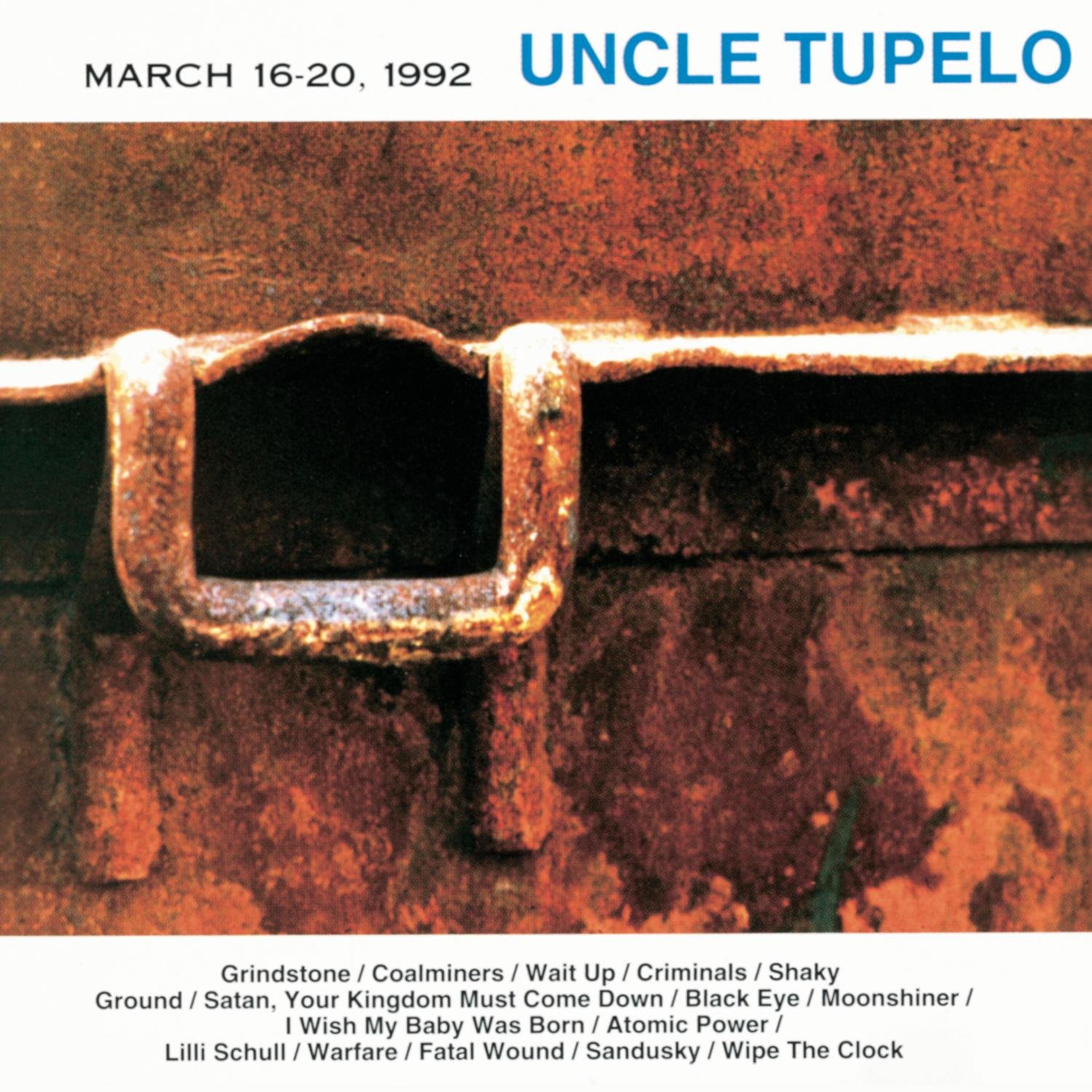
That album, March 16–20, 1992, mixed classic country tunes with originals that fit seamlessly with the older songs. Roadie Brian Henneman, who later founded the Bottle Rockets, even got to play the mandolin that was used in “Losing My Religion.” Uncle Tupelo’s cover of “Great Atomic Power” is very faithful to the Louvin Brothers’ original, and it is a very, very odd song.
It mixes the imagery of a devastating nuclear explosion with Armageddon, and asks the question—when that horrible time comes, will you be ready to meet your savior? As the lyrics inform us:
There is one way to escape and be prepared to meet the Lord Give your heart and soul to Jesus, He will be your shield and sword He will surely stand beside and you'll never taste of death For your soul will fly to safety and eternal peace and rest
The Louvin Brothers, Ira and Charlie, were popular in the 1950s and 1960s, and came from the gospel tradition, as many country singers did, so the fire and brimstone is not all that surprising. Charlie seemed to be the stable brother, while Ira was an alcoholic, who engaged in erratic and often abusive behavior, including toward his brother. Ira was married four times, and wife number three shot him four times in the chest and twice in the hand after he allegedly tried to strangle her with a telephone cord. Ira once made a racist remark that so angered Elvis Presley that Elvis refused to record any Louvin Brothers’ songs, probably costing the duo significant royalties.
Ultimately, Charlie had enough, and the brother act broke up in favor of separate solo careers. Ira and wife number four died in a car accident in 1965, when a drunk driver hit their car; Charlie lived until 2011, and recorded and performed until close to the end.
The Louvin Brothers make a brief appearance in Episode 4 of the Ken Burns documentary, Country Music, before the documentary moves on to a more popular act, The Everly Brothers, which is ironic because a suggestion that the Louvins change their sound to be more like the Everlys reportedly depressed Ira and contributed to his alcoholism.
As I write this, I’ve watched four episodes of Country Music and am enjoying it immensely. I really know little about the history of country music—it was not something that I listened to growing up in the NY suburbs. Like the blues, much of my knowledge of the genre has come from listening to covers, like “Atomic Power,” and going back to listen to the originals. And as I have become increasingly interested in Americana music, I find myself more interested in the music’s roots.
I’m someone who finds how things start to be fascinating, so it has been interesting learning about the long background and history of country music. One of the things that I have found striking is that even in its earliest days—going back to the 19th century—one of the hallmarks of country music has been nostalgia for older, simpler times. And I get that, although it often seems that there’s a real fear of trying anything new and radical. Which is why Elvis Presley, who came from a country and gospel tradition clearly scared the crap out of, and was rejected by, the establishment.
And it is interesting, too, that when the Louvin Brothers, who were traditionalists, chose to write “Great Atomic Power,” about something new and scary, rather than write about the potential of the new technology, they (and co-writer Buddy Bain, a musician and DJ) focused instead on its destructive power, and tied it to traditional religion.
For what it is worth, what made Uncle Tupelo stand out from the crowd was the way that they fused the tradition of old time country music with the new energy of punk, so it is also interesting that March 16–20, 1992 sounds so traditional. It is a bit of an oversimplification, but as time went on, it seems like Farrar (and Son Volt) has more often followed the country tradition of looking backwards, while Tweedy (and Wilco), have tended to look forward, including more rock and experimental influences in their music.
Of course, the potential of atomic power was touted by many, and numerous nuclear plants were built in the US and elsewhere, because of the desire to move away from depleting and polluting fossil fuels, until, at least in this country, the tide turned against them due to the danger of accidents and the difficulty in safely storing the radioactive waste. However, there seems to be some attempt to revive the industry, as it becomes clear that use of carbon based fuel continues to damage the environment, although its serious risks continue to be an obstacle.
The risks, of course, are real, as Chernobyl and Fukushima, among others, remind us. And I recall, that during my sophomore year in college, one of my roommate's friends stayed with us when his college was closed because of the partial nuclear meltdown at Three Mile Island.
A few years later, when I was a very junior associate at a very large Wall Street law firm, I was mostly working on two cases. One was the representation of Drexel Burnham, in the various investigations arising from the Mike Milken/junk bond issues. The other was representing Public Service of New Hampshire in proceedings to determine whether the costs involved in constructing the Seabrook nuclear power plant were reasonable, and could thus be passed along to the ratepayers. For the first one, much of my work revolved around gathering and reviewing Drexel Burnham documents to see whether they were responsive to an ever growing number of government subpoenas. The second one had me and a slightly more senior lawyer traveling regularly to Philadelphia to prepare our clients and monitor extremely dull hearings about arcane engineering issues.
Neither of these were particularly interesting, and I did have some qualms about representing a nuclear plant, but that’s the way it goes as a young lawyer at big firms.
One day, though, the senior partner on the Drexel case offered me the opportunity to spend a week (with other lawyers) at Drexel’s office in Beverly Hills. This was during the winter in New York, so it seemed like it would be fun. And, in those days, we all flew first class and stayed in fancy hotels. I was excited. Shortly after that, the senior partner on the Seabrook case offered me the opportunity to spend the same week in the small town in New Hampshire where the plant was, doing work in a makeshift office on the construction site. I, not at all regretfully, told him that I couldn’t, because I was going to Beverly Hills. A little while later, I got a call informing me that I was going to fly to California, spend half the week there, then take a redeye to Boston and drive to Seabrook. I will never forget that one day, I was staying at the Biltmore Hotel in Beverly Hills and walking around Rodeo Drive in warm weather and the next day I was tramping through the mud in the cold, and staying at the Hampton Falls Inn, a motel near the plant. At that point, I was no fan of atomic power, great or not.
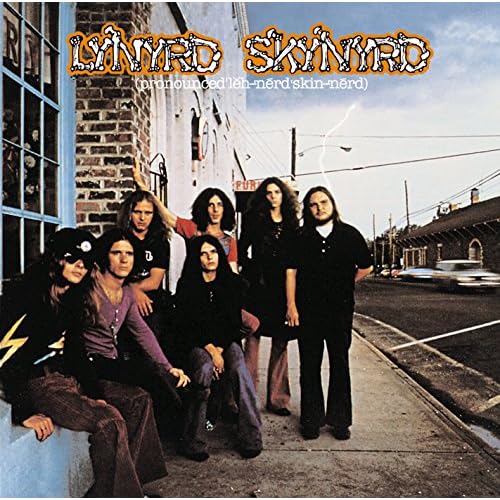
A few years back, I wrote a piece for Cover Me that was timed to run on the anniversary of the plane crash that killed three members of Lynyrd Skynyrd, Ronnie Van Zant, Steve Gaines, and his sister Cassie Gaines, along with the pilot, co-pilot and the band’s assistant road manager. The rest of the band, manager and crew all suffered serious injuries. I melded the blog’s In Memoriam series with a Full Album treatment, focusing on the band’s debut, Pronounced ‘Lĕh-‘nérd ‘Skin-‘nérd. One of the things that struck me as I was writing it was that a number of the songs were drawn from the remarkably colorful life of singer Ronnie Van Zant, including “I Ain’t The One,” meaning “the father,” "Tuesday's Gone," about the change in his life following a major label deal, and, most amusingly, “Gimme Three Steps.”
The song recounts a true incident when Van Zant used a fake ID to enter a bar in Jacksonville, Florida and made the mistake of dancing with another man’s wife or girlfriend. When the aggrieved gentleman appeared to be reaching for a gun, Van Zant told him: "If you're going to shoot me it's going to be in the ass or the elbows... just gimme a few steps and I'll be gone." He ran out of the bar and back to the truck where his bandmates Gary Rossington and Allen Collins were waiting. They reportedly wrote the song that day, possibly in the truck. It is unclear whether that bar was The West Tavern, later known as the Pastime, or another bar called The Little Brown Jug, whose name conveniently allowed them to rhyme it with “cutting the rug,” but it hardly matters. In addition to being a great tune, what makes the song a classic is Van Zant’s presence of mind to ask for a head start, then beating a hasty, panicked retreat when circumstances resulted in his getting that lead preventing him from getting shot. Because, if nothing else, if he had been killed in that bar, not only wouldn’t we have “Gimme Three Steps,” but the last song on Pronounced would never have been recorded, and concertgoers would have nothing stupid to yell out.
If you have read any of my stuff here, there, or there, you know that I’m a huge fan of the Drive-By Truckers, and the album that broke them to a wider audience, Southern Rock Opera, is filled with Skynyrd references and allusions. They’ve even been known to work a little “Gimme” into one of their songs, live. And here’s something I just found, a Village Voice article from 2002 about the Truckers, after the release of Southern Rock Opera, entitled "Gimme Three Stepsisters," which gets into some of the Skynyrd stuff. (Not a bad article, despite getting the drummer’s name wrong).
And, if you read my stuff here, there or there, you also know that I’m a big fan of Uncle Tupelo (and the bands that formed from its demise). Their last gig ever ended with a sloppy cover of “Gimme Three Steps” featuring Bottle Rockets singer (and former Uncle Tupelo roadie), Brian Henneman, on lead vocals.
For me this was always the consummate Byrds track, given as it is one of the earliest outriders, 1966, for their later more overt country influences. Undoubtedly a yee-haw hayride of a tune, yet coupled with, literally, spaced out lyrics, it was ideal for the time; the Byrds still in their first flight of success, together with the race for the moon being in full pelt. Too 'and western' for the UK charts it bombed in my home-land, but did better at home, no little assistance coming from the phased psychedelia of the instrumental middle 8. Indeed it is still argued as to whether it was forerunner more of psychedelia or of country-rock. Both, say I.
The video represents it's first airing, on the Smother Brothers Show, with a 4 member band, the legendary rotating door of this band already in full swing. Whilst writer of the song and singer Jim (later Roger) McGuinn is clearly still present, along with Chris Hillman and Michael Clarke, on 12-string rickenbacker, bass and drums respectively, David Crosby is conspicuously absent for the first time. Especially as he was, arguably, the biggest space cadet and sci-fi freak in the band. And Gene Clark, in or out of the band depending on whether there was a plane trip expected, and who was nominally only a supporting musician for the recording, is there, pretending to play Crosby's guitar. It seems certain his is the key second voice in the harmony however, miming though they all are. A memorable tale from the time was that the band famously took out a million dollar insurance policy, with Lloyds of London, against being abducted by aliens. They didn't of course. And weren't. Although, with Jim to Roger, who's to say?
It remained a staple of live performances over the years, as members came and went, McGuinn the sole staple, but the style of the song fitting well with the directions driven by later members Gram Parsons and Clarence White. There is a nice video filmed in the desert featuring the former, but with the original recording still the one playing. Various reunions of the earlier line-up also featured it, as have various off-shoots of the original band, notably the equivalently ever changing Flying Burrito Brothers, who probably featured every other living Byrd, McGuinn apart, at some stage. McGuinn also trots it out at the drop of a hat, it often being the song chosen should he make a guest appearance, as he here does with Wilco.
Getting older mostly sucks. I’m sore, I take medication, I have to watch my diet, and on and on (actually, I just can’t remember everything about getting old that sucks). One good thing, though, is that I now enjoy foods that I never thought that I would like when I was younger. So, hello, Brussels sprouts, cauliflower, nuts of all kinds, beets, spinach, squash, sweet potatoes, and yogurt. Sorry, broccoli and seafood, I’m still not there (notwithstanding the one oyster I gulped down at Husk in Nashville, a restaurant everyone should try to go to), and I don’t expect that to change.
Pecan pie always looked kind of gross to me. You had these huge nuts that looked like tiny brown brains entombed in some sort of sticky goo. Usually, it was easy to walk right past it to something with chocolate, lots of chocolate. Because chocolate is what desserts are supposed to be.
I’m not sure when my opinion changed, but it turns out that pecan pie is not just good, it is amazing. Sweet, smoky and what turns out to be the perfect ratio of goo to crunch. And sometimes there’s bourbon in it. And sometimes there’s chocolate. And sometimes there are both bourbon and chocolate.
The song “Pecan Pie,” is by Golden Smog, the so-called alt-country supergroup that I have written about at length here, and there, so I won’t repeat myself. It was written by Jeff Tweedy, and was originally rejected from Wilco’s first album. Unlike some of the other songs on Golden Smog’s debut, Down By The Old Mainstream, which rock, “Pecan Pie” is more folky and stripped down, with acoustic guitars and mandolins. I’ve seen it described as being about dessert and longing, and that’s about as good a description as I can think of.
At the end of this goofy performance at a high school benefit in 2013(!) you can hear Tweedy, a pretty fair songwriter, remark that it is the best song that he has ever written, although you can’t always take him seriously. Nevertheless, he has been known to play it at both Wilco and solo shows (sometimes with Golden Smog friends), so clearly, he enjoys it.
Thanksgiving is a great holiday, at least for me, who was lucky enough to grow up in a family that got along. (And were, and still are, all politically pretty close in our beliefs, mostly preventing fights at the table.) In fact, when I was a kid, I lived up the street from my aunt (my mother’s sister) and uncle, and my uncle’s brother’s family also lived in the neighborhood. There were 9 kids, and all of us considered (and still consider) ourselves cousins, even though that wasn’t completely true. We would have huge Thanksgivings, with the three families, plus grandparents, and I can’t remember ever having any real stress.
Of course, over time, Thanksgiving morphs. People move, grow up, marry, divorce and die, changing the dynamic. I remember having to alternate spending Thanksgiving with my parents or my wife’s family, which then merged into a single affair, now at our house. My son has started to alternate years with his fiancée’s family, and a divorce has forced a nephew and niece to only be available every other year. My daughter lives in Spain, and last year was the first Thanksgiving without my father. And this year, my in-laws are not coming, because my father-in-law finds the travel too difficult (so we are bringing them leftovers on Friday). So, it will be a small-ish group getting together next Thursday, for good food, drinks and conversation.
My wife will be making a chocolate pecan pie. All will be good with the world.
Sometimes, a song seems to have been written for a specific event, but it turns out to be a coincidence. I remember just after 9/11, at least three songs were being played on the radio that appeared to relate to the attack—Wilco’s “Jesus, Etc.,” with its references to tall buildings shaking, skyscrapers scraping together and smoke, Afro-Celt Sound System and Peter Gabriel’s “When You’re Falling,” with its references to falling off of buildings through smoke and clouds, and Ryan Adams’ “New York, New York,” which sounds like a love song to the devastated city. But each of these songs was written before the attack and have nothing to do with it (the Ryan Adams song is actually a love song to a city resident, and the video was shot 4 days before, and includes shots of the World Trade Center).
Which is a long way around saying that Nick Cave & The Bad Seeds’ song, “Red Right Hand,” sounds like it was written specifically to be the theme song for the BBC TV show, Peaky Blinders, but, in fact, was written two decades earlier.
For those of you who are living under a rock, or under an outdated belief that television sucks, it is currently the age of “Peak TV,” where there is just so much great stuff available to watch, on streaming platforms, cable, and even on broadcast TV, that it is literally impossible to see everything good. A few years ago, my friend Tom suggested that I watch Peaky Blinders, a show about a Romani/Irish gang run by the Shelby family in Birmingham, England, after World War I, and I decided to give it a try. The Peaky Blinders gang, which actually existed, supposedly derived their name from the practice of stitching razor blades into the peak of their flat caps to use as weapons, but that story may be apocryphal.
I was hooked, immediately. The central character, Tommy Shelby, a damaged, decorated veteran, is ambitious, ruthless and apparently fearless. His goal appears to be to consolidate the family power, then to expand their influence to London, and maybe further. As is common in such stories, such as The Godfather, or Boardwalk Empire (to which it is often compared), there is a plan to begin to move toward engaging in legitimate business, which turns out to never be as easy as it seems. They are opposed not only by other criminal gangs, but also by the authorities, who want to both use the Blinders for their own agenda, while ultimately bringing them down. This ambiguity includes an uneasy relationship with Winston Churchill.
The show is, often, over the top, with choreographed and hyper-dramatic scenes of violence and mayhem, but it is also a family drama, as Tommy needs to deal with his brothers and other gang members, a headstrong sister who ran off with a Marxist, and his aunt, who ran the gang while the men were off at war, and still wields substantial power. There are, of course, love interests and interactions with Downton Abbey-esque nobility, Italian and Jewish gangsters, and IRA fighters.
In any event, Tommy Shelby, as played by Irish actor Cillian Murphy, is one scary motherfucker. And “Red Right Hand,” describes
A tall handsome man In a dusty black coat with A red right hand
The rest of the lyrics describe this man as terrifying, mysterious and dangerous:
You'll see him in your nightmares You'll see him in your dreams He'll appear out of nowhere but He ain't what he seems
Not to mention the fact that the music, as is typical for Nick Cave & The Bad Seeds, is eerie and filled with foreboding. It sets a perfect tone for the show, and the song, and other Cave songs, are used throughout the series to great effect. There have been three seasons, so far, with two more promised.
But, as I said, the song was released in 1994, when Cillian Murphy was playing in rock bands, two years before he got his first acting gig. Prior to Peaky Blinders, the song was used in a number of films, including Dumb and Dumber, and the Scream franchise, and in an episode of The X-Files. It has even been used by the South Australian Tourist Board for a commercial campaign.
I have to admit that before watching the show, I was no fan of Cave. And I still don’t love all of his music—some of it is just too dark and strange for me. But Peaky Blinders turned me on to “Red Right Hand,” and other songs of his that I’ve grown to love.
We briefly interrupt our annual In Memoriam theme to start a new tradition—highlighting the 10 most viewed posts of 2015.
The variety of music discussed on this site is broad, and our international roster of writers brings different perspectives to their pieces. One of the great things about Star Maker Machine is that it gives our writers a forum to write about anything they want, as long as they can relate it, in some way, to our bi-weekly theme. In our top 10, there are personal memories, political and social discussions, remembrances of those who have passed, brushes with celebrity, and even just posts about songs, music and musicians. This list includes discussions of folk, rock, old-time pop, klezmer, and spoken word.
So, in case you missed them, here are the most viewed posts from the last calendar year. But they are only a small sampling of what you will find in our archives, which we invite you to explore.
I lived ‘down
South’ for a number of years, but I hated Southern music, or “Country” as it
should be properly named. Wouldn’t even entertain it. Granted, I was down there
when Grunge was bitch-slapping the popular music scene and Nirvana was sitting
atop a new Olympus.
Country music
was the stuff the sorority girls who wouldn’t give me a second glance were
listening to. My general impression of country music was of those girls heading
to Walnut Creek Amphitheater in straw cowboy hats, mini skirts and boots. Or
rednecks in pickups.
I defined
country music by the those who listened to it, with no understanding or knowledge
of the roots and history, the depth or multitudinous of genres and styles, and
I failed to read its influence on almost everything else I was listening to.
But, to be fair, my strongest impression of ‘country’ music
at that time was Alan Jackson’s “Chattahoochee”, which made brave but strange
reference to ‘hootchie coochie’, among other things my misplaced northern soul
just couldn’t cotton to…
Which is too
bad, as I feel I came to a grand tradition pretty late, and have been trying to
make-up ground for a long time.
Luckily, I found
Hank Williams, listened to more than the radio hits of the Allmans, and Lynyrd Skynyrd;I found Cash—but we all did, at some
point. I found a lot of good stuff, mostly through what I was already listening
to and following the influences of bands in the alt-country scene that I’d
learned to love, like Uncle Tupelo, Wilco, and The Jawhawks. It is strange, in
retrospect, how much I loved those bands yet still took such a circuitous route
to country music.
However crooked,
or slow, I did find my way.
And I can’t
think of a better song to fit this month’s category of “South”, than Hank
Williams’ “Honky Tonk Blues”.
The song is
perfect: a strutting, ramble-rhythm, fiddles in the back pushing the melody,
the purring shimmy of the pedal steel and Williams’ inimitable lamenting
warble—I can’t call it a yodel. That voice was the veritable personification of
pain and misery, light coming though it like a half-empty whiskey bottle on the
windowsill. To say he yodeled would be to diminish the palpable spirit he
brought to song. That voice, a transcendent, plaintive howl, personifies in a
single instance, the searching earnestness of all his pain, misery, mischief,
and occasional happiness. Some might hear Williams pull that ‘country shit’ and
think, no, not for me. But, they are missing out on what amounts to pure
poetry.
“Honky Tonk
Blues” is exactly what it is: a shuffling lament of leaving the country for the
big town, and wanting nothing more than to get back home. It’s ‘country mouse,
city mouse’, a tale told and retold. It’s William’s warning about straying too
far from what you know, but then, when you take Williams’ hard luck myth and
real life blues, all of his songs are some kind of warning. Hank ‘s legend
sometimes outshines the simple, sad elegance of his music. But songs like
“Honky Tonk Blues” are pure magic, and do more than cast a spell. Rather, his
music spells out the blueprint for country music. He reminds me of all the stuff I missed when I
was down South, and make me want to get back as soon as I can. Honky Tonk
blues, indeed.
One of the best things about writing for this blog is that it has given me an outlet to use music as a way to write about myself, my family, my friends and my opinions—and not only about music. I get to write about whatever the hell I want, as long as I can tie it to the theme, no matter how tenuously. And I’m glad that today, in addition to a little personal self-reflection, I get to write about one of my favorite bands.
Wilco is definitely in my top 5. And yet, I’ve never actually written about a Wilco song on this blog. I’ve mentioned them often, and I’ve written about Golden Smog and former member Jay Bennett, and even a whole piece on Jeff Tweedy’s stage banter. So, when I started to narrow down the possibilities for this piece, upon reflection, I decided to finally discuss this band, and their self-referential song, “Wilco (The Song)” from, yes, Wilco (The Album). I’m heading into a bit of a Wilco period now, because I’ve committed to write a thing or two about them for my other blogging home, but I’m not on deadline there, so this comes first.
I think that any sort of artist has to have enough ego to believe that what he or she produces would be interesting to other people. Sure, there are stories about great artists who were unknown until their hidden work surfaced after death, but I think that it is a fair generalization. The belief that your work would interest others, though, doesn’t necessarily mean that you have to be arrogant. Many great musicians, painters, writers, etc. seem to be relatively humble, and based on what I’ve read about him, Jeff Tweedy appears to be one of those guys. Clearly, he has enough confidence to have gone from the new kid, barely able to play his instrument and booking gigs for his friend’s brothers’ band, to the leader, primary songwriter and front man of one of the most well-respected, analyzed and popular rock bands of its era. And yet, so much of Tweedy’s music, with Wilco and otherwise, is mysterious and to a great degree appears to be distanced from his life. So often in Wilco’s music, even the most emotional songs are not simple confessionals, but seem to be written for a character or filled with odd metaphors. And for the most part, he appears to have kept his personal life relatively simple and private (if you count having footage of your family in a documentary and touring with your son, relatively simple and private). What I’m trying to say, is that he doesn’t seem like the kind of guy who wants the spotlight on him, although he does seem, now, comfortable in that spotlight.
There’s a part of me that wishes I was more like that. And not only that I wish that I could write music, play and sing as well as Tweedy, but I can’t, and I’ve accepted that. I’ve always had opinions about music, but except for that brief period from 1979-1982 when I got to opine to a small audience on a college radio station in central New Jersey, my opinions were shared only with friends and family. I’ve also always thought that I was a good writer, but since college, my only writing of note was a law review article and a bunch of legal papers, which only rarely allowed me to show any sort of creativity.
A few years ago, I took some fiction writing classes with an excellent teacher, and he encouraged me to write, which I did, until time, money and a feeling that I was repeating myself ended my participation. But the positive reactions that I got from the other members of my class, the teacher, and my family, made me feel good. And, for a short time, that was it. I didn’t have the confidence that what I was writing was anywhere good enough to try to have published. Then, I started reading music blogs. Some of them are incredible, and others, frankly are dull and poorly written. But I really liked one called Star Maker Machine. Good writers writing about interesting music. One day, I saw that the blog was looking for writers. I inquired, wrote a piece which was published and then became a regular contributor. The positive feedback that I received encouraged me to write more, and to begin writing for Cover Me, where I also have gotten encouragement and praise. So, yeah, I have enough of an ego now, that I think that my writing is worthy of being read by others. But I’m still afraid to try to do anything other than to write for free blogs, in part because I feel that doing more would require more work, research and rigor than I think I’m willing to do, and in part because I’m worried that I will fail. Which is why I give enormous credit to those of my friends who write, perform or make art for all or part of their living.
So, the question at hand, is, why would the popular but unassuming Wilco, led by the popular but unassuming Jeff Tweedy, put out an album called Wilco (the Album) and lead it off with “Wilco (the Song)”? My take on it was that the band was having a little bit of fun with its audience, which takes the band very seriously. It is clearly tongue in cheek, as if it was actually necessary to make it clear that the song was a song, the album was an album, and later, the tour was, yes, Wilco (the Tour) (where I purchased Wilco (the Tote)).
Then there are the lyrics. Essentially, they say that you shouldn’t worry about your problems, because, hey, Wilco will love you, and that will fix everything. I take that to be a mocking of the band’s celebrity and power that fits more into the self-deprecating humor that Tweedy is known for, and to me, explains the title.
I found an interview in which he discussed the fact that Wilco (the Album) was meant to be more fun and lighthearted than its immediate predecessors, with the goofy cover of a camel’s birthday party as further evidence, and the song was not only meant as somewhat of a lark, but also as a way of reintroducing the band, after some instability. Ultimately, Tweedy said, “we struggled with a lot of other titles that felt more exemplary of what the music was. But nothing else felt quite so succinct."
So, while the song is self-referential, it may not be completely self-reflective. Unless it is.
For the next couple of weeks, we will be writing about “Side Projects,” the musical projects that are created when an artist decides to moonlight away from his “regular” band. These projects happen for many different reasons—the desire to explore a different kind of music, the opportunity to play with different people, the chance for a sideman to step to the front, or even just to fill time between releases.
Golden Smog appears to have developed because a bunch of friendly, similarly inclined musicians from different bands had fun playing together. As befits their name (which was taken from the second episode of The Flintstones), the origins of Golden Smog are clouded in the mists of history. They started in the late 1980s in Minneapolis as a loose collection of musicians who joined together to play mostly covers, possibly at first in 1987 to support Kraig Johnson, of Run Westy Run, at a solo show. According to Marc Perlman of The Jayhawks, and a member of Golden Smog, that show included guitarists Dan Murphy of Soul Asylum and Gary Louris of The Jayhawks, Perlman on bass and Soul Asylum vocalist Dave Pirner on drums. Other early members included Chris Mars of The Replacements and Jim Boquist of Son Volt, and they became a regular feature of the Minneapolis bar scene. Gary Louris remembers it all somewhat differently, and if you really want more on the band’s origins, read this article from No Depression.
The band’s first release was a 1992 EP of covers, On Golden Smog. Because of contractual issues, the band members used pseudonyms derived from their middle names and the street they grew up on, and included Murphy (“David Spear”), Pirner (“Anthony James”), Louris (“Michael Macklyn”), Perlman (“Raymond Virginia”), Johnson (“Jarrett Decatur”) and Mars (“Eddie Garfield”) who also created the cover art. The relaxed nature of the collaboration was demonstrated by the fact that one song had lead vocals from Soul Asylum roadie Bill Sullivan.
Over time, the members of the band started to bring original songs to the group, and this culminated in 1996’s release, Down By the Old Mainstream, in which Wilco’s Jeff Tweedy (“Scot Summit”) replaced Pirner, and Mars was replaced with Honeydogs’ drummer Noah Levy (“Leonardson Saratoga”). The album contained mostly original songs, with two covers. At the time, Soul Asylum was already a couple of years past their breakthrough hits, The Jayhawks had released a couple of well received albums, but were reeling from the loss of singer Marc Olson, and Wilco was still gaining its footing. Tweedy, who as a Bellville West High School student had actually interviewed Murphy for a music magazine, reportedly appreciated the support he received from his fellow Smoggers following the breakup of Uncle Tupelo and the mixed reviews for Wilco’s debut.
As a fan of Wilco, Soul Asylum and The Jayhawks, I was inclined to like Golden Smog, and this album got me hooked. I especially loved the opener, “V,” featured above, a wistful remembrance of a friendly and supportive barmaid, that, nevertheless rocks. This was a disc that was played to death in our house. I know that some reviews, predictably, denigrated some of the songs as ones that were not good enough for the member’s regular bands, but I think that is too facile a critique. Not every song is a gem, but even the weaker ones are worthwhile.
It took a few years for the band members’ schedules to align to allow the recording and release of a second album, this time with Big Star drummer Jody Stephens instead of Levy. Weird Tales was released in 1998, and consisted of all originals (and all of the members got to use their own names). It has a somewhat more somber tone than the prior disc, but also has a few rockers, including my favorite track, “Until You Came Along.” One review described it as “long and sloppy and uneven and enjoyable, and thus easily pigeonholed as the kind of long, sloppy, uneven, enjoyable record that happens when a bunch of people who kind of know each other sit down with some guitars—yes, we understood, Golden Smog was a Traveling Wilburys full of people nobody really knew.”
My family enjoyed this album, and my wife and I saw the band put on a great show at Irving Plaza in New York. By that time, it was clear that Tweedy was getting most of the attention, as Wilco had released both Being There and the first Mermaid Avenue collaboration with Billy Bragg.
And that seemed to be pretty much it for Golden Smog, as the members’ regular bands and projects took precedence. I was, therefore, excited when the band announced a concert at the Bowery Ballroom in the summer of 2004, and my wife and I went. One of our favorite memories of that night was sitting in this little alcove in the balcony with our friends before the show started, and the actors Adam Goldberg and Christina Ricci, who were a couple at the time, came and sat with us. We became close friends and still hang out. Not really. They actually ignored us and we played the blasé New Yorkers and ignored them, but it was still pretty cool. It was a fun, very loose show, filled with Golden Smog songs and lots of random covers ranging from Carly Simon, to The Fugs to Neil Young to Talking Heads. No Tweedy this time, but the band included Louris, Perlman, Murphy, Johnson, Steve Wynn (of the Dream Syndicate) and his wife, drummer Linda Pitmon, David Poe, Jenni Muldaur, James Mastro (of The Bongos) and others.
The tour led to another album, Another Fine Day, mostly recorded in Spain, with additional material (including Tweedy’s contributions) added later. It is a good album, but I never really fell in love with it, nor did I love the also perfectly fine (but Tweedy-less) EP Blood on the Slacks. I can’t say that my lack of interest in these later discs is a result of their quality or just the fact that I didn’t listen to them over and over again, but it is what it is.
Golden Smog has turned out to be a pretty long-running side project, which allowed its members to have fun, try new things with different band members, but never seemed to get in the way of the members’ “day jobs.” And I think they put out a bunch of good music.
I have to admit that I cannot remember ever being at a bar for last call. Which is not a joke—you know, like “if you remember the sixties, you weren’t there” (variously attributed to Robin Williams, Grace Slick, Paul Kantner, Dennis Hopper, Judy Collins, George Harrison, Pete Townshend and Timothy Leary, among others, including a comedian, Charlie Fleischer, who may have been the first to say it). It’s just that my heaviest imbibing days came when I was in college, and we almost never went to bars. Not to mention that I’m generally too, say, thrifty, to pay bar prices for a long night of drinking.
But I understand that “last call” is a big deal, because it requires you to fight inertia and the effects of alcohol, leave the cozy confines and head out into the world. Either you have to go home, or you are with someone, or you are alone, maybe disappointingly so. But you are probably drunk, and you need to decide whether to find somewhere else to keep drinking, or you have to accept the fact that the drinking part of the evening is over.
Not surprisingly, last call is a topic that is not uncommon in the music world, and we will touch on three very different songs, but not Kanye West’s “Last Call,” or Semisonic’s “Closing Time.” And because I don’t have a clever organizing principle, let’s just go in chronological order.
I’ve written before about the Dead Kennedys, and how their very name was a slap in the face to political correctness. In their classic “California Über Alles,” they poked fun at the supposed hippie/fascist tendencies of then (and current) California governor Jerry Brown who, in the song, somehow becomes dictator of the United States. But not long after this was released, the country actually elected conservative president Ronald Reagan, whose vision for America scared the DKs even more than Brown’s supposed “suede denim secret police.”
Thus, the band released this revised version, called “We’ve Got a Bigger Problem Now,” which starts with a lounge jazz arrangement and the lyrics:
Last call for alcohol. Last call for your freedom of speech. Drink up. Happy hour is now enforced by law.
While most of the most dire predictions in the song didn’t come true, some did, and I think you can draw a direct line from the Reagan presidency to the current Tea Party fanaticism that led to the government shutdown.
The loudest concert that I ever went to was Hüsker Dü at Irving Plaza in 1986. By far. And Dwight Yoakam opened, which was probably the oddest combination at any concert that I have ever been to.
I’ve always appreciated Hüsker Dü’s ability to write poignant songs, with great melodies, while still keeping their hardcore roots. My wife, on the other hand, has trouble hearing past the feedback and screaming, and doesn’t get it.
“First of the Last Calls” is from an early EP, Metal Circus, and it definitely falls more on the hardcore end of the spectrum. But you can still hear songwriter Bob Mould’s gift for writing great riffs, in this song about a man’s losing fight with the bottle. Mould, who has struggled with various substance abuse issues, has had an impressive career with Hüsker Dü, Sugar and as a solo artist. Not to mention writing the theme song to The Daily Show (although the current version is a cover by They Might Be Giants).
Changing things up a bit, we come to a song by another excellent songwriter with substance issues, but who succumbed to them—Jay Bennett, who passed away from an overdose of prescription painkillers back in 2009. Probably best known for his work with Wilco, and for being fired from Wilco in a scene captured in the incredible film, I Am Trying to Break Your Heart, Bennett was in a regionally popular band, Titanic Love Affair, before joining Wilco, and had an intermittently brilliant solo career after leaving.
His talent, as a songwriter, producer/arranger and multi-instrumentalist. cannot be denied, and from all reports, he is not the only person to butt heads with Jeff Tweedy. Bennett plays all of the instruments on this song, a kind of peppy story about failed love at a bar, from his posthumously released album, Kicking at the Perfumed Air.
Good night--time to leave--drive safely, and don't forget to tip your waitress.....
The theme this week is Stage Banter. I know that when I go to a concert, I like it when the performer talks to the audience—it makes it seem like he or she is having fun, and we often learn something about the artist. Of course, some performers are better at this than others. Some performers readily regale the audience with stories and anecdotes and some drop amusing quips but others simply seem to have trouble even telling you the name of the song or introducing the band.
A few weeks ago, I attended the Clearwater Festival on the Hudson River, and for the most part, the music was memorable. But I also know that my experience was improved by hearing Judy Collins’ tales about the various protest marches she participated in and her arrests, or how her apartment in New York seemed to host a revolving door of fellow folkies. And Mavis Staples’ stories of playing for Martin Luther King, and her statement that even an injured knee wouldn't keep her from performing. And gruff voiced Jason Isbell asking the sign language interpreter to tell the crowd that he sounded like the smooth, soulful Solomon Burke—and his story about how back in his Drive-By Truckers days, another interpreter just stopped signing when faced with a particularly ribald Mike Cooley song.
It has been said that some comedians say funny things, and others say things funny (note the use of the passive voice, so that I don’t have to find an actual quote), and the same is true of stage banter. Jeff Tweedy is one of those guys who says things funny, and it doesn’t seem like he is trying. It is a matter of timing, of inflection, and of course content.
For those who don’t know, Tweedy and Jay Farrar were members of the band Uncle Tupelo, another of those bands that are more influential than they were popular in their day (which is referenced in the clip). Tweedy and Farrar were high school friends who bonded over their shared tastes in music. After Tweedy joined Farrar and Farrar’s older brothers in a band, Jeff and Jay continued to play together in various groups which ultimately became Uncle Tupelo. That band was best known for its blending of punk with more traditional Americana music (although that term wasn’t around yet). Their debut album No Depression gave a name to the emerging sound, sometimes also called “alt-country.”
Initially, Farrar was the dominant personality in the band, doing more of the songwriting, lead singing and guitar. Tweedy played bass and was, if you will pardon the reference, the “Other Guy.” As time went on, however, Tweedy began to take a more assertive role in the band. And like so many friends who have one thing in common, it turned out that Tweedy and Farrar really had very little in common. Much has been written about Uncle Tupelo’s split, but based on what I have read, it seems like both protagonists are difficult personalities who have to share the blame. Farrar claims that Tweedy was resentful of his talent and tried to hit on his girlfriend, while Tweedy has asserted that Farrar was domineering, refused to treat him as an equal and even refused to sing harmony on his songs. Farrar quit the band, passing the word to Tweedy through their manager, and a farewell tour resulted in more fighting and recrimination.
Farrar formed Son Volt and Tweedy formed Wilco. Although most critics seem to agree that Son Volt’s first album was better than Wilco’s, since then Tweedy’s and Wilco’s popularity and critical acclaim have outstripped Farrar’s and Son Volt’s. Personally, I’m a fan of both bands, and I think that they have both put out excellent music. Son Volt was even better than I expected at their Clearwater performance, but Wilco has become, to me, one of the best around. Having seen both bands a few times, I can attest to the fact that Tweedy’s stage banter is usually brilliant, while Farrar seems to avoid talking on stage as much as possible.
The enmity and hostility between Jay and Jeff has continued. The odds on a Uncle Tupelo reunion, or seeing, say, Farrar sit in at a Wilco concert, seem unfortunately pretty slim. I was struck by that at Clearwater, where I saw former band mates Jason Isbell and Patterson Hood play together, and I later saw pictures of them hanging out together watching Son Volt from backstage.
Which is all background to the clip, in which Tweedy tells a story of being on vacation in Mexico, and finding out that Farrar is staying on the same beach. I won’t ruin the clip by describing it—as I said, Tweedy has a gift for saying things funny, and I won’t do it justice—but Jeff’s mumbling recreation of their awkward greeting after 10 years of silence is priceless.
It struck me that I’ve been writing for this blog for about a year and a half without posting about one of my favorite bands, Wilco. Not on this blog, at least. I’ve seen Wilco perform a few times, and their shows are almost always memorable. My favorite one, however, was an outdoor show in 2009 at the minor league baseball stadium in Wappinger’s Falls, New York (home of the Hudson Valley Renegades). It was a beautiful summer night, I was there with my son, we stood close enough to the stage to hear well without being too close, and the band was incredible. Because it was at a baseball stadium, they shot Wilco t-shirts into the crowd between sets. And we got one.
I turned my son on to Wilco, and he became a big fan. In turn, my kids have introduced me to a number of musicians that I now enjoy, and Wilco’s opening act that night was an artist that my son loved, Conor Oberst. It took me a while to appreciate him, and I will argue that his music has improved over the years, as he has matured, become somewhat less affected and simplified his writing. I loved his later Bright Eyes album Cassadaga and his self-titled “solo” album. But on the tour in question, he was performing as “Conor Oberst and the Mystic Valley Band,” making them theme-appropriate.
Some artists need to be reined in to prevent their excesses from overwhelming their brilliance, and I think the fact that even though Oberst was the clear leader, it was more of a band than a solo project, made their output extremely appealing. In fact, as much as I was looking forward to seeing Wilco, I was hoping for a good set from the opener.
And Conor and the Mystic Valley Band kicked ass. Their set consisted of mostly songs from their then-current album and the “solo” disc, and I even recognized most of them. The band put on a great show, and I think that they impressed and even converted most (if clearly not all) of the audience, some of whom sadly had no interest in appreciating the quality of the performance and just wanted to get on to the headliner. They set a high bar that night, and Wilco actually surpassed them, which is no shame.
“Danny Callahan,” from Oberst’s self-titled album, is one of my son’s favorites, and for good reason. A great, almost bouncy, melody is coupled with literate and uplifting lyrics, but about a very serious subject, the death of a young cancer patient, failed by “Western medicine”.
That night, my son and I stood in front of a large taping rig, and we later found out that the show was recorded and posted at the incredible nyctaper.com site, which offers a huge archive of interesting and usually amazingly well recorded live shows from the New York area. This recording is from that great evening, when my son and I saw two transcendent sets, standing in centerfield under the clear Hudson Valley sky.
For the soundtrack to the 1996 film I Shot Andy Warhol, Wilco covered "Burned", a song Neil Young wrote and sang on the first Buffalo Springfield album thirty years earlier. While the original had that "vintage whine" of Neil's, we get Jeff Tweedy's stoner-drawl and some far out guitar feedback--which may actually fit the lyrics better. Many cuts on the Warhol album have 90's era bands (R.E.M, Luna, Bettie Serveert) knocking out 60's covers. As with most soundtracks, it's a mixed bag.
Teenage Fanclub also covered an uptempo version of "Burned" as a B side to their 1995 "Sparky's Dream" single. I don't have it but you can check it out here .
As a listener and blogger, I tend to favor a focus on history, production and musicality over text. From that perspective, today's song is easy to present: penned by Woody Guthrie fifty years before it was set to music and recorded by Billy Bragg and Wilco on their Grammy-nominated Mermaid Avenue collection, Walt Whitman's Niece is a fun rockabilly stomper that recounts a based-on-fact narrative of a night with a seaman friend and some girls. Period.
But as a teacher of English and Communications, trained in poetic parsing, it's hard not to notice the concrete power of the text here. These are heavily down-to-earth lyrics, with the first two verses constructed of structurally consistent couplets of event-oriented plot lines paired with self-aware lines protecting the anonymity of the people and places involved, ad infinitum, until we reach absurdity of not even being able to know which rug they lie on, which stairs they climbed to get there, which book of poems the unnamed seaman and narrator heard from the unnamed girls of the titular lyric.
If that were all he wrote, then the song would be an interesting exercise, nothing more. But perhaps not surprisingly for those who recognize the literate poetic genius of Guthrie himself, in that it reads a bit like a Whitman poem, especially at the end, the lyrical structure belies the crypticism of the words it contains. Here's verse three of three in its entirety, a testament to both the project and the poet it pays tribute to:
My seaman buddy and girl moved off after a couple of pages and there I was, All night long, laying and listening and forgetting the poems. And as well as I could recall or my seaman buddy could recollect, My girl had told us that she was a niece, of Walt Whitman, but not which niece, And it takes a night and a girl and a book of this kind A long long time to find its way back
When one thinks of Woody Guthrie, one usually things of music with a message. Guthrie sang songs of tolerance, peace, hope, and understanding. He was one of the most important songwriters of the 20th century. He changed beliefs with his words and killed fascists with his machine.
Woody Guthrie also wrote the song "Hoodoo Voodoo."
There's a reason you'll find Aquarium Drunkard at the top of pretty much any list of links in the mp3 blogosphere. Since 2005, "the blog's contents change as The Drunkard's interests do" and The Drunkard, aka Satisfied '75, has nary missed a beat with a proper swarm of hip readers. Keeping us informed daily with interviews, reviews, and news, AD is my favorite of the "big blogs." I tune in for the New Orleans flavor and gritty Americana tunes, as well as the occasional taste of garage or funk. If I listened to new music it would probably be all the same stuff you can find here.
The Late Greats was one the first blogs that garnered a bookmark upon my discovery of this wing of the web.The Duke of Straw does the writing, and while his words are often brief, the qualities of the songs speak for themselves. As the Wilco song the blog is named for might suggest, The Late Greats often features tunes you won’t hear on the radio - or anywhere else in the blogosphere for that matter. He’s single-handedly turned me on to large a number of artists that I wouldn’t know about otherwise.
Some of my favorite aspects of The Late Greats are the recurring post topics. Wayback Wednesdays, Compare/Contrast, and Homonyms are some of the templates The Duke regularly injects great music into. Well put together mixes, features on Canadian/Australian artists, and Guilty Pleasures (hot female crooners) are some of the other posts that keep me coming back. But one of the most unique and useful idea The Duke has come up with is Digging Through the Live Music Archive (So You Don’t Have To), which is exactly what it sounds like. Taking a few queues from this music-blog veteran - The Late Greats has been posting since early ’06 – I have some similar recurring post themes over at my place.
What sets The Late Greats even further apart from other music blogs are the occasional original compositions mixed in with the tunes. The Duke and his wife Coconut are part-time musicians. Some of their work can be found here.
Currently, The Late Greats is in the midst of a Mix Week. They’re pulling older mixes from the archives to bring you an unprecedented amount of musical goodness. It’s blogs like this one that got me started and continue to remind me what community music sharing is all about.
Star Maker Machine does not accept music submissions from artists or promoters. However, most of the contributors here do accept submissions for our own blogs, listed below. Please visit our blogs, take the time to listen to what we post, and then feel free to contact us if you feel that your music would be a good fit.