Showing posts with label Jeff Tweedy. Show all posts

Wednesday, December 22, 2021

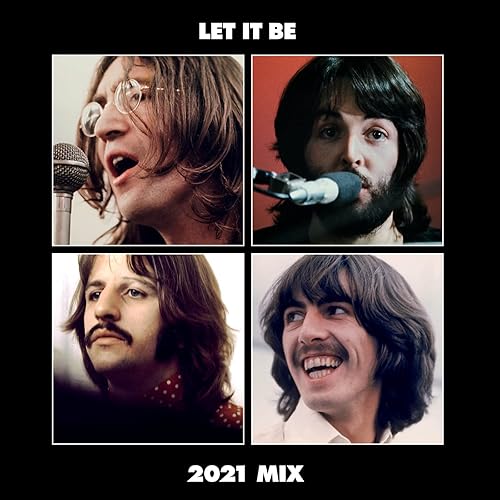
Mary and Joseph: Let It Be

The Beatles: Let It Be
[purchase the basic version]
[purchase the Super Deluxe version

It’s been a crazy couple of weeks, as we move toward year-end. I’ve had a bunch of work (yay!), there’s been tons of holiday prepping and gatherings, and my daughter and her boyfriend are visiting from Barcelona for a couple of weeks. And if that’s not enough, my 94 year-old uncle passed away, after a long, and mostly happy and healthy life, which required my wife and me to jump on a plane on Sunday night to get to Florida for the funeral, returning early Tuesday because, we thought, we had Broadway tickets for my family for that night. Unfortunately, the show got cancelled, because of COVID, which was disappointing.

All of this is in partial explanation of why I didn’t write last week, and why this piece is going to be a little shorter than my average Iliad-length posts. But I hate missing a theme, so I wanted to make sure that I put something up on the site before trying to figure out my [spoiler alert] In Memoriam post subject(s). 

Here’s the gist of what I want to say—if you like rock music, which you probably do because you are reading this, make sure you watch the Beatles documentary, Get Back. It’s worth the 8 hours of time, and you can usually get a free week of Disney+ if you don’t already have a subscription. It’s an incredible document of the four brilliant Beatles, and their world, in 1969. You can see their friendship, strained by their growing creative and other differences, their creativity and talent, their humor, and both their sophistication and naivete. And how much they smoked. Here they are, at the peak of their popularity and power, but clearly contemplating the end of their partnership. And none of them had celebrated their 30th birthday yet. 

I’m far from the biggest Beatles fan, but I was fascinated by the thing—not only the film itself, but thinking about how the director, Peter Jackson, chose what excerpts from the hundreds of hours of film he had available. Most critics have pointed out that the version that Jackson presented was more positive than the general received narrative—that the sessions were filled with bickering, and that Yoko Ono was disruptive. Instead, we see lots of camaraderie and collaboration interspersed with the bickering and nastiness, and mostly Yoko kept to herself and looked bored. What really happened? I don’t know, and unless you watch all of the raw film, there are really very few living people who actually do know. 

So, there’s a moment in the film where Paul McCartney sits down at the piano and starts playing what would become “Let It Be.” When I was watching, it seemed like he was creating it on the spot, but a little research turned up the fact that it was something he had been playing around with for a little while. Still, it was pretty cool to hear the song, which references McCartney’s mother Mary, in its embryonic stages. 

In addition to suggesting that you watch the whole documentary, I recommend that you read some of the many articles about the film and our feature song written by people who know much more about the Beatles than I do, and who are better writers. Use that Google thing—there are lots out there, discussing the film from many angles and points of view. Although I particularly liked this one, featuring a number of well-known songwriters discussing how they felt watching it. I mean, Jeff Tweedy said that he burst into tears a few times while watching it. And if that’s not an incentive to watch, what is?

Tuesday, September 1, 2020

Mail: Letters to Cleo

Letters to Cleo: Here and Now 

[purchase Aurora Glory Alice

This theme was inspired by the attempt by the Trump administration to damage the United States Postal Service, apparently to make voting by mail more difficult, or subject to challenge, or both. 

Despite that, I’m not going to write about a song that discusses the mail, or letters, or mail carriers. Instead, let’s discuss the band Letters to Cleo, making this my second consecutive post about a Boston area band. 

Formed in 1990, the lineup coalesced around 1994, and the band’s name came from a box of letters that singer Kay Hanley had sent to a childhood pen pal that were returned, and which she discovered when the band was trying to pick a name. 

Their first album, Aurora Gory Alice, spawned a single, “Here and Now,” that was a Billboard Modern Rock hit, was popular on college radio, and was on the Melrose Place soundtrack. It’s a great alternative pop/rock song and is probably the one Letters to Cleo song that anyone who could name a Letters to Cleo song could name. 

After that, the band released a couple of albums with decreasing success, had some songs on soundtracks (including covers of “I Want You to Want Me,” and “Cruel to be Kind,” from 10 Things I Hate About You), had some personnel turnover, and broke up in 2000. The members went off to solo careers, or formed or joined other bands. Singer Hanley also provided vocals for the Josie & The Pussycats movie. There were some brief reunions in 2007 and 2009, and that would have been that. Letters to Cleo would be one of those bands that some people fondly remembered, and “Here and Now” would show up occasionally on radio or streaming stations that play 90s alt-rock. 

Except that’s not what happened. 

In 2011, Michael Schur, one of the creators of the great TV show, Parks & Recreation, saw Hanley at a charity music event in Boston. He was a fan of Letters to Cleo, and decided to put one of the characters, Ben Wyatt, played by Adam Scott, in a t-shirt with the image of the Aurora Gory Alice album on it. He got approval from the dormant band’s management to create the shirt, which had never before existed. In anticipation, the band printed up a few hundred shirts and posted it on their website. 

After the episode aired in 2012, Letters to Cleo trended on Twitter, and the t-shirts started to move. And in 2014, when the show created a “Pawnee/Eagleton Unity Concert,” they called in a bunch of real stars to appear, including Ginuwine, Jeff Tweedy (as the frontman of the reunited band Land Ho!), The Decemberists, and Yo La Tengo, who dressed up as Indiana University coach Bobby Knight and performed Night Ranger's "Sister Christian,” as Bobby Knight Ranger. And Letters to Cleo. 

I couldn’t find their performance (and actually don’t specifically recall if they showed them perform on the show), but you can see some of the members in this video.

After that, they put out some new music and a holiday EP, and did some shows before live shows ended earlier this year. So, are they back? I wouldn’t bet against it.

Wednesday, June 3, 2020

War/Peace: The Warrior’s Code


I suspect that many of you who read this blog also attend live music performances—or at least, you did before that stopped being a thing (temporarily, I hope). Musicians have been trying different ways to get live music out to their fans, some for free, some charging, some seeking “tips,” and others seeking charitable donations, while some are trying to use Patreon or other similar subscription type programs to try to partially replace the revenue lost from cancelled tours. I think that it is pretty well known that these days, most musicians make the bulk of their living from touring and merch, and not so much from streaming and music sales.

Since the pandemic closed most venues, I’ve watched some of my favorite musicians from the comfort of my house—Richard Thompson, Jason Isbell and Amanda Shires, Dan Bern, Rhiannon Giddens and Francesco Turrisi, as well as her fellow Native Daughters, Amythyst Kiah, Allison Russell and Leyla McCalla, Ben Nichols of Lucero, Jeff Tweedy, Raul Malo, Lucy Wainwright Roche, Indigo Girls, and I’m sure I’m leaving some out. Most of these performances have come from the performers’ homes (or, at least where they are sheltering), except for an Isbell/Shires album release show from the stage of an empty Brooklyn Bowl in Nashville. These performances aren’t the same as being at a live show, but on the other hand, they are also more intimate—as one friend mentioned to me after we separately watched Richard Thompson, her husband was excited to be able to see the master’s hands close up while he played the guitar.

Last Friday, I watched most of an unusual performance—Dropkick Murphys, a band that is closely associated with the Boston Red Sox (they even were given World Series rings by the team one year), playing live on the field at an empty Fenway Park, with the band members all more than the now traditional six feet apart. The concert was organized to promote a number of charitable organizations, which is common for the band. For nearly two hours, the band ripped it up with their trademark Celtic flavored punk, and they were amazing. It wasn’t the same as when I saw them live at Warped Tour 15 years ago, but then again, what is? I had to reluctantly step away after two hours for a virtual college reunion Zoom session, but the next day, I found the video, and watched the end, when Bruce Springsteen appeared on the giant video screen in centerfield and performed two songs with DKM—one of theirs (“Rose Tattoo,”) and one of his, “American Land,” an appropriate anthem for our times, with its message of an America made up of immigrants and people of all races. Remarkably, considering the logistics, the entire concert sounded great, and I give much credit to whoever did the sound.

One of the songs that they played that night was “The Warrior’s Code,” which technically isn’t about war, but about a boxer, "Irish" Micky Ward. But since boxing and war often use each other’s metaphors and terminology, I’m OK with this. Also, back in 2016, I wrote about a different DKM song, a cover of “Fields of Athenry,” which is about World War I (and it is far from the only song by the band that references actual war, for example “The Fighting 69th” (Civil War) and “Johnny, I Hardly Knew Ye” (anti-war song written in Ireland in 1867), all of which were played at Fenway, along with a cover of The Standells' “Dirty Water,” which has nothing to do with war, but which I wrote about, here.)

The video of the show is still available here, among other places, so check it out, and send a few bucks to the charities.

Monday, September 23, 2019

Power: Atomic Power


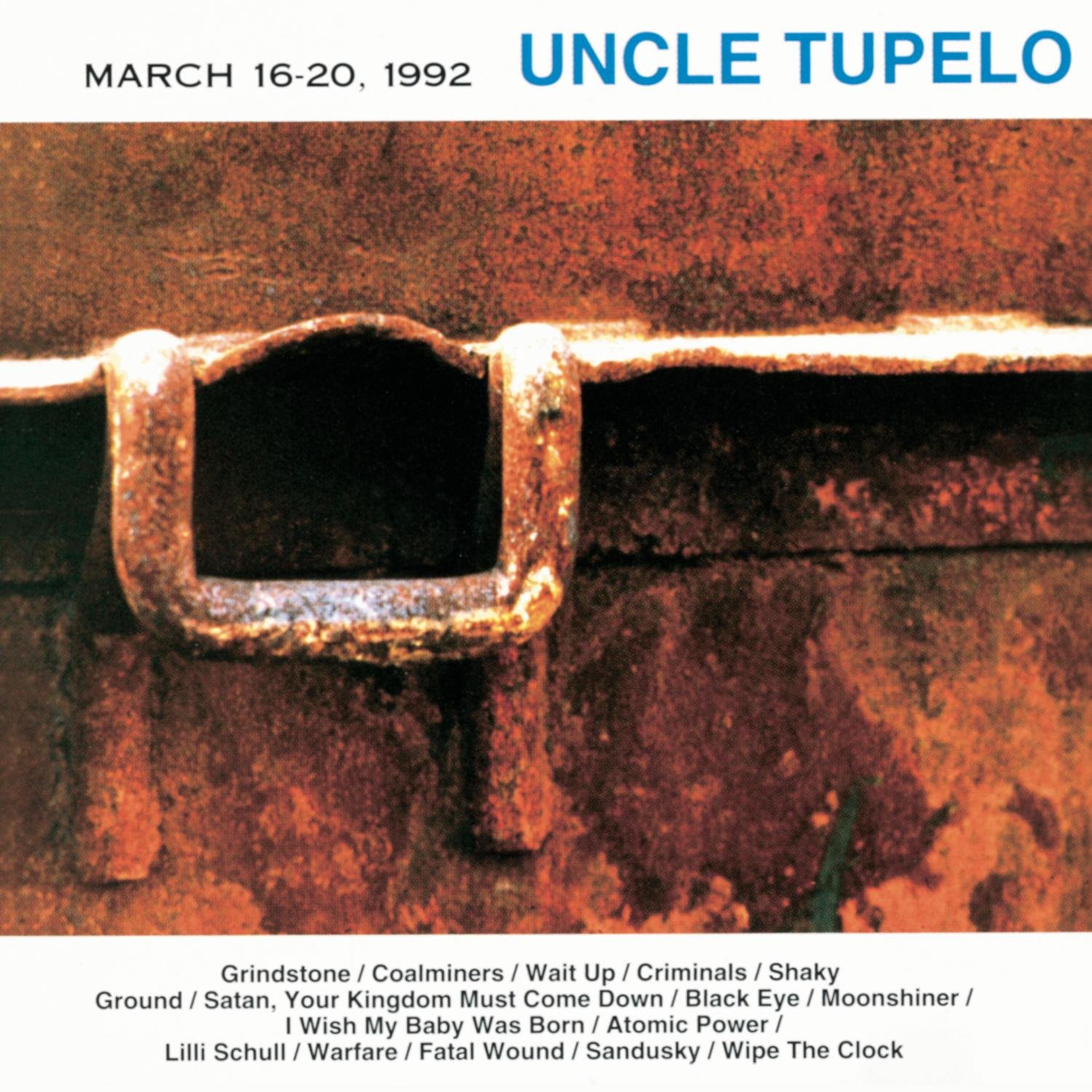
Uncle Tupelo: Atomic Power
[purchase]

This is going to be one of those posts that tries to create a fusion of different things. Let’s see if it works, or if it turns out to be like “cold fusion.”

Remarkably, although I’ve mentioned them in writing about Jeff Tweedy, Jay Farrar, and Wilco, I’ve never written a post on this site about Uncle Tupelo (although I did a long one at Cover Me). I wasn’t aware of the band during their existence, and learned about them after discovering Wilco and Son Volt, the two bands that were formed when childhood friends Tweedy and Farrar could no longer coexist. I wrote in detail about Uncle Tupelo’s history in that Cover Me piece, so, if you are really interested, go check it out, and come back here when you are ready.

R.E.M.’s Peter Buck heard Uncle Tupelo perform a cover of the Louvin Brothers’ song “Great Atomic Power” at a concert, and contacted the band after the show. The three musicians found a great deal of overlap in their musical interests, including bluegrass, and decided to do an acoustic project together. The band’s prior album, Still Feel Gone was, for the most part, a rocker, so it was a bit of a risk to follow it up with an acoustic album, and their record company was pressuring them to move to an even more rock-oriented sound, to compete with the emerging grunge movement. But Farrar and Tweedy were, as always, headstrong, and pissed at their label’s failure to pay them royalties, so they must have figured, “Fuck it,” we’re going to work with Peter Buck, and do an acoustic album.

That album, March 16–20, 1992, mixed classic country tunes with originals that fit seamlessly with the older songs. Roadie Brian Henneman, who later founded the Bottle Rockets, even got to play the mandolin that was used in “Losing My Religion.” Uncle Tupelo’s cover of “Great Atomic Power” is very faithful to the Louvin Brothers’ original, and it is a very, very odd song.


It mixes the imagery of a devastating nuclear explosion with Armageddon, and asks the question—when that horrible time comes, will you be ready to meet your savior? As the lyrics inform us:

There is one way to escape and be prepared to meet the Lord
Give your heart and soul to Jesus, 
He will be your shield and sword 
He will surely stand beside and you'll never taste of death 
For your soul will fly to safety and eternal peace and rest 

The Louvin Brothers, Ira and Charlie, were popular in the 1950s and 1960s, and came from the gospel tradition, as many country singers did, so the fire and brimstone is not all that surprising. Charlie seemed to be the stable brother, while Ira was an alcoholic, who engaged in erratic and often abusive behavior, including toward his brother. Ira was married four times, and wife number three shot him four times in the chest and twice in the hand after he allegedly tried to strangle her with a telephone cord. Ira once made a racist remark that so angered Elvis Presley that Elvis refused to record any Louvin Brothers’ songs, probably costing the duo significant royalties.

Ultimately, Charlie had enough, and the brother act broke up in favor of separate solo careers. Ira and wife number four died in a car accident in 1965, when a drunk driver hit their car; Charlie lived until 2011, and recorded and performed until close to the end.

The Louvin Brothers make a brief appearance in Episode 4 of the Ken Burns documentary, Country Music, before the documentary moves on to a more popular act, The Everly Brothers, which is ironic because a suggestion that the Louvins change their sound to be more like the Everlys reportedly depressed Ira and contributed to his alcoholism.

As I write this, I’ve watched four episodes of Country Music and am enjoying it immensely. I really know little about the history of country music—it was not something that I listened to growing up in the NY suburbs. Like the blues, much of my knowledge of the genre has come from listening to covers, like “Atomic Power,” and going back to listen to the originals. And as I have become increasingly interested in Americana music, I find myself more interested in the music’s roots.

I’m someone who finds how things start to be fascinating, so it has been interesting learning about the long background and history of country music. One of the things that I have found striking is that even in its earliest days—going back to the 19th century—one of the hallmarks of country music has been nostalgia for older, simpler times. And I get that, although it often seems that there’s a real fear of trying anything new and radical. Which is why Elvis Presley, who came from a country and gospel tradition clearly scared the crap out of, and was rejected by, the establishment. And it is interesting, too, that when the Louvin Brothers, who were traditionalists, chose to write “Great Atomic Power,” about something new and scary, rather than write about the potential of the new technology, they (and co-writer Buddy Bain, a musician and DJ) focused instead on its destructive power, and tied it to traditional religion.

For what it is worth, what made Uncle Tupelo stand out from the crowd was the way that they fused the tradition of old time country music with the new energy of punk, so it is also interesting that March 16–20, 1992 sounds so traditional. It is a bit of an oversimplification, but as time went on, it seems like Farrar (and Son Volt) has more often followed the country tradition of looking backwards, while Tweedy (and Wilco), have tended to look forward, including more rock and experimental influences in their music.

Of course, the potential of atomic power was touted by many, and numerous nuclear plants were built in the US and elsewhere, because of the desire to move away from depleting and polluting fossil fuels, until, at least in this country, the tide turned against them due to the danger of accidents and the difficulty in safely storing the radioactive waste. However, there seems to be some attempt to revive the industry, as it becomes clear that use of carbon based fuel continues to damage the environment, although its serious risks continue to be an obstacle.

The risks, of course, are real, as Chernobyl and Fukushima, among others, remind us. And I recall, that during my sophomore year in college, one of my roommate's friends stayed with us when his college was closed because of the partial nuclear meltdown at Three Mile Island. A few years later, when I was a very junior associate at a very large Wall Street law firm, I was mostly working on two cases. One was the representation of Drexel Burnham, in the various investigations arising from the Mike Milken/junk bond issues. The other was representing Public Service of New Hampshire in proceedings to determine whether the costs involved in constructing the Seabrook nuclear power plant were reasonable, and could thus be passed along to the ratepayers. For the first one, much of my work revolved around gathering and reviewing Drexel Burnham documents to see whether they were responsive to an ever growing number of government subpoenas. The second one had me and a slightly more senior lawyer traveling regularly to Philadelphia to prepare our clients and monitor extremely dull hearings about arcane engineering issues.

Neither of these were particularly interesting, and I did have some qualms about representing a nuclear plant, but that’s the way it goes as a young lawyer at big firms. One day, though, the senior partner on the Drexel case offered me the opportunity to spend a week (with other lawyers) at Drexel’s office in Beverly Hills. This was during the winter in New York, so it seemed like it would be fun. And, in those days, we all flew first class and stayed in fancy hotels. I was excited. Shortly after that, the senior partner on the Seabrook case offered me the opportunity to spend the same week in the small town in New Hampshire where the plant was, doing work in a makeshift office on the construction site. I, not at all regretfully, told him that I couldn’t, because I was going to Beverly Hills. A little while later, I got a call informing me that I was going to fly to California, spend half the week there, then take a redeye to Boston and drive to Seabrook. I will never forget that one day, I was staying at the Biltmore Hotel in Beverly Hills and walking around Rodeo Drive in warm weather and the next day I was tramping through the mud in the cold, and staying at the Hampton Falls Inn, a motel near the plant. At that point, I was no fan of atomic power, great or not.

Wednesday, June 27, 2018

Burn/Fire: Fire Door


Ani DiFranco: Fire Door [purchase]

I’m using this Ani DiFranco song, which mentions fire, as an excuse to write about the recent Clearwater Festival, where DiFranco performed. More to the point, though, the weekend was hot and sunny, and despite some precautions, I did get a little burned.

I’ve written about Clearwater before, and it is one of the regular musical highlights of the year for me. Every year is the same, but different, and not just because there are different acts. Like most years, it was a long weekend filled with great music, some of which are new discoveries. Like most years, we get there early, claim our spot at the main Rainbow Stage, and walk around the place, shopping, visiting the Activist Area, and taking in the beauty of the Hudson River. As usual, we ran into friends. And like most years, there is some weather issue—as noted, this year it was hot and sunny both days, which is better than rain, or high humidity, but can be uncomfortable.

This year, though, it seemed as if the festival bookers didn’t have as many big name acts as in the past, especially on Saturday (and some “regulars” such as Toshi Reagon and Josh Ritter were absent). I don't know whether that was a money issue, an editorial decision, or based on availability, or some combination, but it meant that we spent the weekend sampling lots of music from bands that we were unfamiliar with, often moving from stage to stage to catch partial sets. My wife and I (and our daughter who attended with us—another difference) spent more time apart because different things interested us. Because there were fewer “must see” acts on the main stages, I visited the Dance Stage multiple times, which I had never done, to hear Cajun and Zydeco music, and we spent time at the intimate Workshop Stage for the first time, which led to my favorite performance of the weekend.

So, here we go. On the bus ride from the parking lot to the Festival site, we overheard a group of young women bemoaning their hangovers, and their concern that it would affect their performance. Of course, we had to ask them about this, and they turned out to be singers from a band billed as “Upstate Rubdown,” but which at the Festival called themselves “Upstate.” In my exhaustive pre-Festival research, I had checked out their music, and they were on the list of bands that I wanted to try to see. But we began, traditionally, at the main Rainbow Stages with what I call the “old folkies show,” now called “Songs for Pete and Toshi,” to honor the founders of the event. It included, David Amram (87), Josh White, Jr. (77), Tom Chapin (73), The Kennedys, Mike & Ruthy, Tom Paxton (80) and the Don Juans (58 and 66), and Joanne Shenandoah (60).

After a bit of that, we decided to move to the smaller Hudson Stage to check out Upstate. And they were great, despite any lingering hangovers. My daughter described them as like Lake Street Dive crossed with the Staves. She also believes that she may have met some of the women we spoke to on the bus when she visited their alma mater, SUNY New Paltz, for an a capella event.

Next up on that stage was Making Movies, two sets of brothers, one of Panamanian heritage and the other of Mexican heritage, who rocked bilingually, and included many songs focusing on the newsworthy plight of immigrants. Their music reflected many influences, including various genres of rock, Latin and African music.

 
We then returned to the Rainbow Stage for husband and wife-fronted The War and Treaty, which melded blues, rock, R&B and gospel.


They were also excellent, but it was really hot, and I wanted to check out singer/songwriter Margaret Glaspy back at the Hudson Stage (where I could stand in the shade). She was good, too, and I particularly enjoyed her Lucinda Williams cover.


After that, I met up with my wife, and we browsed some of the environmentally focused vendors, before I plunged into the Dance Stage for Beausoleil avec Michael Doucet, and enjoyed their Cajun dance music (but not as much as my friend Frank, who was dancing hard, and sweating through at least his first shirt of the day).

 
I headed back to the Hudson Stage for Beth Orton, and while I was a fan of her early songs, I was not familiar with much of what she was performing, and I had some trouble connecting with some of the unfamiliar songs, which were pretty dark and downbeat.


So, it was back to the Dance Stage for C.J. Chenier and the Red Hot Louisiana Band, a hard rocking Zydeco unit, which filled the floor with joyous dancers (including Frank, sweating through another shirt).

 
It was finally time for the “headliners” at the Rainbow Stage, and we got to hear pop humorists They Might Be Giants. My daughter again pithily remarked at how much work they put into very silly songs.

 
After that, we took a brief trip over to the Sloop Stage, where festival regulars, The Kennedys, displayed their usual excellent singing, playing, songwriting, and storytelling.


But we returned to the Rainbow Stage to hear first night closer, Ani DiFranco, another regular Clearwater performer, who played an strong set that combined her distinctive guitar style with her broadly political, thought provoking songwriting. I don’t believe that she played “Fire Door,” but I wasn’t really listening for it—nevertheless, it is a fine song, about dealing with the aftermath of a relationship betrayal. She did start the set with “Little Plastic Castle,” which I love. So that was nice.


Not bad for Day 1, right?

Sunday promised to be even hotter, but undaunted, our trio of music lovers arrived early, set up at the Rainbow Stage, wandered around a bit and returned for a new feature. Choir! Choir! Choir!, a couple of Canadians who specialize in creating participatory choirs, invited all interested to the front of the stage to learn the background parts to the folk classic, “Turn! Turn! Turn!” My wife and daughter participated, because they have beautiful voices and love to sing. I sat back and listened, because as anyone who knows me knows, I cannot sing. At all. They had fun, although it was a bit disappointing in the end because the lead singers, some of the “old folkies,” didn’t seem to understand what was going on, and were even less rehearsed than the choir.


After that, my wife and daughter headed over to the Workshop Stage for a “harmony workshop” with the band Mipso, while I went to check out River Whyless at the Hudson Stage.


I enjoyed their folk rock sound, but decided to leave part way through their set to join my wife and daughter for two reasons—to hear Mipso, and to try to make sure I got a seat for the next performer at that small tent, Rhiannon Giddens. The tent was packed, with an overflow crowd standing and sitting around the edges. Mipso, a rootsy, folk rock band, played songs and answered questions from the crowd. What I heard made me want to check them out when they did a full set later in the day.


When they were done, a few people left, but the crowd size increased as the time for Giddens to take the stage approached. Luckily, I was able to get a seat.

Rhiannon Giddens is remarkable. Her latest album made my list of favorite music of 2017. She’s a MacArthur award winner, and her bio on their website begins:

Rhiannon Giddens is a singer, instrumentalist, and songwriter enriching our understanding of American music by reclaiming African American contributions to folk and country genres and revealing affinities between a range of musical traditions, from gospel and Celtic to jazz and R&B. 

During the next hour, she sang, played the guitar, banjo, and fiddle, and discussed each song with us, and they included everything that is mentioned above, including a song in Gaelic and one in Spanish.


Being able to see a genius with such prodigious talent in an intimate venue was one of the best things that I have ever experienced at Clearwater.

After a quick lunch, I checked out Terrance Simien and the Zydeco Experience at the Dance Stage (Frank, however, wasn’t there on Sunday—maybe he was doing laundry), and they provided some rocking Louisiana sounds.

Then, I checked out country rock legends Dave Alvin and Jimmy Dale Gilmore, who played some songs that I recognized, both originals and covers, while never missing a chance to say each other's full names.


I wandered back to the Hudson Stage to listen to Mipso, and their music was equally enjoyable in a larger setting.
 

It was now time for the headliners, so it was back to our base at the Rainbow Stage to hear an hour of Rhiannon Giddens, with a full band, including fellow former Carolina Chocolate Drop Hubby Jenkins on guitar (and lead vocals on a few songs). What the set lost in intimacy, it made up in power. As you can probably guess, her performances were the highlight of the weekend for me.

Next up was Jeff Tweedy, who I am also a huge fan of. Tweedy delivered a set of mostly Wilco songs, with a few covers, Loose Fur songs, and new songs mixed in. As much as I like him, I think that his solo act would be better in a small club than a large festival stage. His stage banter, though, mostly about his perceived personal and professional failures, was extremely amusing, as expected.

Finally, the weekend ended with an amazing, rocking set from The Mavericks, who are not only a great band to see live, they also seem to be enjoying themselves on stage as much as we did in the audience. I think that my daughter, who was not familiar with the band, is a fan now.


I grudgingly left during the Mavericks’ last song, to try to beat the crowd, sadly listening to the sound of them tearing the joint up fade away while we approached the buses, although I suspect the extra few minutes wouldn’t have made a huge difference in our exit time.

We returned home, exhausted, hot, burned and tanned, and in awe of all of the great music we heard over the weekend. It wasn’t the best lineup I’ve ever heard, but to some that is to some degree beside the point.

Wednesday, November 15, 2017

All The Fixings: Pecan Pie


Golden Smog: Pecan Pie
[purchase]

Getting older mostly sucks. I’m sore, I take medication, I have to watch my diet, and on and on (actually, I just can’t remember everything about getting old that sucks). One good thing, though, is that I now enjoy foods that I never thought that I would like when I was younger. So, hello, Brussels sprouts, cauliflower, nuts of all kinds, beets, spinach, squash, sweet potatoes, and yogurt. Sorry, broccoli and seafood, I’m still not there (notwithstanding the one oyster I gulped down at Husk in Nashville, a restaurant everyone should try to go to), and I don’t expect that to change.

Pecan pie always looked kind of gross to me. You had these huge nuts that looked like tiny brown brains entombed in some sort of sticky goo. Usually, it was easy to walk right past it to something with chocolate, lots of chocolate. Because chocolate is what desserts are supposed to be. I’m not sure when my opinion changed, but it turns out that pecan pie is not just good, it is amazing. Sweet, smoky and what turns out to be the perfect ratio of goo to crunch. And sometimes there’s bourbon in it. And sometimes there’s chocolate. And sometimes there are both bourbon and chocolate.

The song “Pecan Pie,” is by Golden Smog, the so-called alt-country supergroup that I have written about at length here, and there, so I won’t repeat myself. It was written by Jeff Tweedy, and was originally rejected from Wilco’s first album. Unlike some of the other songs on Golden Smog’s debut, Down By The Old Mainstream, which rock, “Pecan Pie” is more folky and stripped down, with acoustic guitars and mandolins. I’ve seen it described as being about dessert and longing, and that’s about as good a description as I can think of. At the end of this goofy performance at a high school benefit in 2013(!) you can hear Tweedy, a pretty fair songwriter, remark that it is the best song that he has ever written, although you can’t always take him seriously. Nevertheless, he has been known to play it at both Wilco and solo shows (sometimes with Golden Smog friends), so clearly, he enjoys it.

Thanksgiving is a great holiday, at least for me, who was lucky enough to grow up in a family that got along. (And were, and still are, all politically pretty close in our beliefs, mostly preventing fights at the table.) In fact, when I was a kid, I lived up the street from my aunt (my mother’s sister) and uncle, and my uncle’s brother’s family also lived in the neighborhood. There were 9 kids, and all of us considered (and still consider) ourselves cousins, even though that wasn’t completely true. We would have huge Thanksgivings, with the three families, plus grandparents, and I can’t remember ever having any real stress.

Of course, over time, Thanksgiving morphs. People move, grow up, marry, divorce and die, changing the dynamic. I remember having to alternate spending Thanksgiving with my parents or my wife’s family, which then merged into a single affair, now at our house. My son has started to alternate years with his fiancée’s family, and a divorce has forced a nephew and niece to only be available every other year. My daughter lives in Spain, and last year was the first Thanksgiving without my father. And this year, my in-laws are not coming, because my father-in-law finds the travel too difficult (so we are bringing them leftovers on Friday). So, it will be a small-ish group getting together next Thursday, for good food, drinks and conversation.

My wife will be making a chocolate pecan pie. All will be good with the world.

Friday, January 23, 2015

Self Reflection: Wilco (The Song)


Wilco: Wilco (the Song)
[purchase]

One of the best things about writing for this blog is that it has given me an outlet to use music as a way to write about myself, my family, my friends and my opinions—and not only about music.  I get to write about whatever the hell I want, as long as I can tie it to the theme, no matter how tenuously. And I’m glad that today, in addition to a little personal self-reflection, I get to write about one of my favorite bands.

Wilco is definitely in my top 5. And yet, I’ve never actually written about a Wilco song on this blog. I’ve mentioned them often, and I’ve written about Golden Smog and former member Jay Bennett, and even a whole piece on Jeff Tweedy’s stage banter. So, when I started to narrow down the possibilities for this piece, upon reflection, I decided to finally discuss this band, and their self-referential song, “Wilco (The Song)” from, yes, Wilco (The Album). I’m heading into a bit of a Wilco period now, because I’ve committed to write a thing or two about them for my other blogging home, but I’m not on deadline there, so this comes first.

I think that any sort of artist has to have enough ego to believe that what he or she produces would be interesting to other people. Sure, there are stories about great artists who were unknown until their hidden work surfaced after death, but I think that it is a fair generalization. The belief that your work would interest others, though, doesn’t necessarily mean that you have to be arrogant. Many great musicians, painters, writers, etc. seem to be relatively humble, and based on what I’ve read about him, Jeff Tweedy appears to be one of those guys. Clearly, he has enough confidence to have gone from the new kid, barely able to play his instrument and booking gigs for his friend’s brothers’ band, to the leader, primary songwriter and front man of one of the most well-respected, analyzed and popular rock bands of its era. And yet, so much of Tweedy’s music, with Wilco and otherwise, is mysterious and to a great degree appears to be distanced from his life. So often in Wilco’s music, even the most emotional songs are not simple confessionals, but seem to be written for a character or filled with odd metaphors. And for the most part, he appears to have kept his personal life relatively simple and private (if you count having footage of your family in a documentary and touring with your son, relatively simple and private). What I’m trying to say, is that he doesn’t seem like the kind of guy who wants the spotlight on him, although he does seem, now, comfortable in that spotlight.

There’s a part of me that wishes I was more like that. And not only that I wish that I could write music, play and sing as well as Tweedy, but I can’t, and I’ve accepted that. I’ve always had opinions about music, but except for that brief period from 1979-1982 when I got to opine to a small audience on a college radio station in central New Jersey, my opinions were shared only with friends and family. I’ve also always thought that I was a good writer, but since college, my only writing of note was a law review article and a bunch of legal papers, which only rarely allowed me to show any sort of creativity.

A few years ago, I took some fiction writing classes with an excellent teacher, and he encouraged me to write, which I did, until time, money and a feeling that I was repeating myself ended my participation. But the positive reactions that I got from the other members of my class, the teacher, and my family, made me feel good. And, for a short time, that was it. I didn’t have the confidence that what I was writing was anywhere good enough to try to have published. Then, I started reading music blogs. Some of them are incredible, and others, frankly are dull and poorly written. But I really liked one called Star Maker Machine. Good writers writing about interesting music. One day, I saw that the blog was looking for writers. I inquired, wrote a piece which was published and then became a regular contributor. The positive feedback that I received encouraged me to write more, and to begin writing for Cover Me, where I also have gotten encouragement and praise. So, yeah, I have enough of an ego now, that I think that my writing is worthy of being read by others. But I’m still afraid to try to do anything other than to write for free blogs, in part because I feel that doing more would require more work, research and rigor than I think I’m willing to do, and in part because I’m worried that I will fail. Which is why I give enormous credit to those of my friends who write, perform or make art for all or part of their living.

So, the question at hand, is, why would the popular but unassuming Wilco, led by the popular but unassuming Jeff Tweedy, put out an album called Wilco (the Album) and lead it off with “Wilco (the Song)”? My take on it was that the band was having a little bit of fun with its audience, which takes the band very seriously. It is clearly tongue in cheek, as if it was actually necessary to make it clear that the song was a song, the album was an album, and later, the tour was, yes, Wilco (the Tour) (where I purchased Wilco (the Tote)).

Then there are the lyrics. Essentially, they say that you shouldn’t worry about your problems, because, hey, Wilco will love you, and that will fix everything. I take that to be a mocking of the band’s celebrity and power that fits more into the self-deprecating humor that Tweedy is known for, and to me, explains the title. I found an interview in which he discussed the fact that Wilco (the Album) was meant to be more fun and lighthearted than its immediate predecessors, with the goofy cover of a camel’s birthday party as further evidence, and the song was not only meant as somewhat of a lark, but also as a way of reintroducing the band, after some instability. Ultimately, Tweedy said, “we struggled with a lot of other titles that felt more exemplary of what the music was. But nothing else felt quite so succinct."

So, while the song is self-referential, it may not be completely self-reflective. Unless it is.

Sunday, May 25, 2014

Side Projects: Golden Smog


Golden Smog: V
[purchase]

For the next couple of weeks, we will be writing about “Side Projects,” the musical projects that are created when an artist decides to moonlight away from his “regular” band. These projects happen for many different reasons—the desire to explore a different kind of music, the opportunity to play with different people, the chance for a sideman to step to the front, or even just to fill time between releases.

Golden Smog appears to have developed because a bunch of friendly, similarly inclined musicians from different bands had fun playing together. As befits their name (which was taken from the second episode of The Flintstones), the origins of Golden Smog are clouded in the mists of history. They started in the late 1980s in Minneapolis as a loose collection of musicians who joined together to play mostly covers, possibly at first in 1987 to support Kraig Johnson, of Run Westy Run, at a solo show. According to Marc Perlman of The Jayhawks, and a member of Golden Smog, that show included guitarists Dan Murphy of Soul Asylum and Gary Louris of The Jayhawks, Perlman on bass and Soul Asylum vocalist Dave Pirner on drums. Other early members included Chris Mars of The Replacements and Jim Boquist of Son Volt, and they became a regular feature of the Minneapolis bar scene. Gary Louris remembers it all somewhat differently, and if you really want more on the band’s origins, read this article from No Depression.

The band’s first release was a 1992 EP of covers, On Golden Smog. Because of contractual issues, the band members used pseudonyms derived from their middle names and the street they grew up on, and included Murphy (“David Spear”), Pirner (“Anthony James”), Louris (“Michael Macklyn”), Perlman (“Raymond Virginia”), Johnson (“Jarrett Decatur”) and Mars (“Eddie Garfield”) who also created the cover art. The relaxed nature of the collaboration was demonstrated by the fact that one song had lead vocals from Soul Asylum roadie Bill Sullivan.

Over time, the members of the band started to bring original songs to the group, and this culminated in 1996’s release, Down By the Old Mainstream, in which Wilco’s Jeff Tweedy (“Scot Summit”) replaced Pirner, and Mars was replaced with Honeydogs’ drummer Noah Levy (“Leonardson Saratoga”). The album contained mostly original songs, with two covers. At the time, Soul Asylum was already a couple of years past their breakthrough hits, The Jayhawks had released a couple of well received albums, but were reeling from the loss of singer Marc Olson, and Wilco was still gaining its footing. Tweedy, who as a Bellville West High School student had actually interviewed Murphy for a music magazine, reportedly appreciated the support he received from his fellow Smoggers following the breakup of Uncle Tupelo and the mixed reviews for Wilco’s debut.

As a fan of Wilco, Soul Asylum and The Jayhawks, I was inclined to like Golden Smog, and this album got me hooked. I especially loved the opener, “V,” featured above, a wistful remembrance of a friendly and supportive barmaid, that, nevertheless rocks. This was a disc that was played to death in our house. I know that some reviews, predictably, denigrated some of the songs as ones that were not good enough for the member’s regular bands, but I think that is too facile a critique. Not every song is a gem, but even the weaker ones are worthwhile.

It took a few years for the band members’ schedules to align to allow the recording and release of a second album, this time with Big Star drummer Jody Stephens instead of Levy. Weird Tales was released in 1998, and consisted of all originals (and all of the members got to use their own names). It has a somewhat more somber tone than the prior disc, but also has a few rockers, including my favorite track, “Until You Came Along.” One review described it as “long and sloppy and uneven and enjoyable, and thus easily pigeonholed as the kind of long, sloppy, uneven, enjoyable record that happens when a bunch of people who kind of know each other sit down with some guitars—yes, we understood, Golden Smog was a Traveling Wilburys full of people nobody really knew.”

My family enjoyed this album, and my wife and I saw the band put on a great show at Irving Plaza in New York. By that time, it was clear that Tweedy was getting most of the attention, as Wilco had released both Being There and the first Mermaid Avenue collaboration with Billy Bragg.

And that seemed to be pretty much it for Golden Smog, as the members’ regular bands and projects took precedence. I was, therefore, excited when the band announced a concert at the Bowery Ballroom in the summer of 2004, and my wife and I went. One of our favorite memories of that night was sitting in this little alcove in the balcony with our friends before the show started, and the actors Adam Goldberg and Christina Ricci, who were a couple at the time, came and sat with us. We became close friends and still hang out. Not really. They actually ignored us and we played the blasé New Yorkers and ignored them, but it was still pretty cool. It was a fun, very loose show, filled with Golden Smog songs and lots of random covers ranging from Carly Simon, to The Fugs to Neil Young to Talking Heads. No Tweedy this time, but the band included Louris, Perlman, Murphy, Johnson, Steve Wynn (of the Dream Syndicate) and his wife, drummer Linda Pitmon, David Poe, Jenni Muldaur, James Mastro (of The Bongos) and others.

The tour led to another album, Another Fine Day, mostly recorded in Spain, with additional material (including Tweedy’s contributions) added later. It is a good album, but I never really fell in love with it, nor did I love the also perfectly fine (but Tweedy-less) EP Blood on the Slacks. I can’t say that my lack of interest in these later discs is a result of their quality or just the fact that I didn’t listen to them over and over again, but it is what it is.

Golden Smog has turned out to be a pretty long-running side project, which allowed its members to have fun, try new things with different band members, but never seemed to get in the way of the members’ “day jobs.” And I think they put out a bunch of good music.

Sunday, July 7, 2013

Stage Banter: Jeff Tweedy


[purchase Sunken Treasure, which includes more Tweedy banter]

The theme this week is Stage Banter. I know that when I go to a concert, I like it when the performer talks to the audience—it makes it seem like he or she is having fun, and we often learn something about the artist. Of course, some performers are better at this than others. Some performers readily regale the audience with stories and anecdotes and some drop amusing quips but others simply seem to have trouble even telling you the name of the song or introducing the band.

A few weeks ago, I attended the Clearwater Festival on the Hudson River, and for the most part, the music was memorable. But I also know that my experience was improved by hearing Judy Collins’ tales about the various protest marches she participated in and her arrests, or how her apartment in New York seemed to host a revolving door of fellow folkies. And Mavis Staples’ stories of playing for Martin Luther King, and her statement that even an injured knee wouldn't keep her from performing. And gruff voiced Jason Isbell asking the sign language interpreter to tell the crowd that he sounded like the smooth, soulful Solomon Burke—and his story about how back in his Drive-By Truckers days, another interpreter just stopped signing when faced with a particularly ribald Mike Cooley song.

It has been said that some comedians say funny things, and others say things funny (note the use of the passive voice, so that I don’t have to find an actual quote), and the same is true of stage banter. Jeff Tweedy is one of those guys who says things funny, and it doesn’t seem like he is trying. It is a matter of timing, of inflection, and of course content.

For those who don’t know, Tweedy and Jay Farrar were members of the band Uncle Tupelo, another of those bands that are more influential than they were popular in their day (which is referenced in the clip). Tweedy and Farrar were high school friends who bonded over their shared tastes in music. After Tweedy joined Farrar and Farrar’s older brothers in a band, Jeff and Jay continued to play together in various groups which ultimately became Uncle Tupelo. That band was best known for its blending of punk with more traditional Americana music (although that term wasn’t around yet). Their debut album No Depression gave a name to the emerging sound, sometimes also called “alt-country.”

Initially, Farrar was the dominant personality in the band, doing more of the songwriting, lead singing and guitar. Tweedy played bass and was, if you will pardon the reference, the “Other Guy.”  As time went on, however, Tweedy began to take a more assertive role in the band. And like so many friends who have one thing in common, it turned out that Tweedy and Farrar really had very little in common. Much has been written about Uncle Tupelo’s split, but based on what I have read, it seems like both protagonists are difficult personalities who have to share the blame. Farrar claims that Tweedy was resentful of his talent and tried to hit on his girlfriend, while Tweedy has asserted that Farrar was domineering, refused to treat him as an equal and even refused to sing harmony on his songs. Farrar quit the band, passing the word to Tweedy through their manager, and a farewell tour resulted in more fighting and recrimination.

Farrar formed Son Volt and Tweedy formed Wilco. Although most critics seem to agree that Son Volt’s first album was better than Wilco’s, since then Tweedy’s and Wilco’s popularity and critical acclaim have outstripped Farrar’s and Son Volt’s. Personally, I’m a fan of both bands, and I think that they have both put out excellent music. Son Volt was even better than I expected at their Clearwater performance, but Wilco has become, to me, one of the best around. Having seen both bands a few times, I can attest to the fact that Tweedy’s stage banter is usually brilliant, while Farrar seems to avoid talking on stage as much as possible.

The enmity and hostility between Jay and Jeff has continued. The odds on a Uncle Tupelo reunion, or seeing, say, Farrar sit in at a Wilco concert, seem unfortunately pretty slim. I was struck by that at Clearwater, where I saw former band mates Jason Isbell and Patterson Hood play together, and I later saw pictures of them hanging out together watching Son Volt from backstage.

Which is all background to the clip, in which Tweedy tells a story of being on vacation in Mexico, and finding out that Farrar is staying on the same beach. I won’t ruin the clip by describing it—as I said, Tweedy has a gift for saying things funny, and I won’t do it justice—but Jeff’s mumbling recreation of their awkward greeting after 10 years of silence is priceless.