












Showing posts with label Al Green. Show all posts

Tuesday, January 2, 2024

In Memoriam-Robin Lumley and John Giblin


 [purchase Product]

Robin Lumley and John Giblin were members of Brand X at various times.  I’ve written before about Brand X, a jazz-rock fusion band probably best known for the contributions of Phil Collins (who I’ve written about, too), but the band’s membership was somewhat of a revolving door.  (And I wrote about another member, guitarist John Goodsall, for our 2021 In Memoriam theme.)  Lumley was a founding member of the band, on keyboards, and was involved from 1974-1980, with a brief hiatus in 1978, while Giblin, a bass player, was a member in 1979, although his recordings were released through 1982. 

Robin Lumley was born on January 17, 1948, in Devonport, England.  Originally a drummer, he switched to keyboards in the 1970s.  In 1972, his former neighbor, David Bowie, rang him up one day, to see if he would be interested in replacing Bowie’s ill keyboard player, Matthew Fisher from Procol Harum, starting the next day.  He was interested and joined the Spiders From Mars.  After that, Lumley worked as a studio musician and met Collins, which led to the formation of Brand X.  Lumley also became interested in music production.  His hiatus from Brand X in 1978 was to work on production projects, including Rod Argent’s Moving Home, and Bill Bruford’s Feels Good to Me, and he later produced records for Orleans, Anthony Phillips and Isotope, among others.

In the 1980s, he formed a jazz-rock band that included Rod Argent, Graeme Edge (of the Moody Blues), Morris Pert (of Brand X), and Gary Brooker (of Procol Harum). Lumley later married an Australian and moved to Australia. In 2001, he formed SETI with Graeme Edge, bassist Rob Burns, and Rod McGrath (cellist for the West Australian Symphony Orchestra).  He also composed and produced music for over 250 television and radio commercials for numerous television productions in the US, UK and Australia.

Lumley died from heart failure in Plymouth, on March 9, 2023, at the age of 75.

***

John Giblin was born on February 26, 1952, in Bellshill, Scotland.  He was best known as a studio musician, contributing bass to albums and performances by artists such as Peter Gabriel, Paul McCartney, Eric Clapton, Kate Bush, Simple Minds, John Anderson, Phil Collins, Al Green, and Annie Lennox.  Giblin was best known for his mastery of the fretless bass.

As noted above, Giblin recorded with Brand X in 1979, when the band was being pushed to make more commercial music.  The surprising response to this pressure was to have two separate units record—one with bassist Percy Jones, keyboard player Peter Robinson, drummer Mike Clarke and Goodsall, and the other featuring, Lumley, Giblin, Collins and Goodsall.  The output of these two groups were released, but no improvement in commercial success was achieved, leading to a band breakup.

More recently, Giblin was playing more acoustic bass, and was involved in projects with Peter Erskine of Weather Report and Alan Pasqua of Tony Williams Lifetime. 

Giblin died of sepsis following a long illness on May 14, 2023 in Cheltenham, England, aged 71.

You can hear both men on the Brand X track in the video, “Algon (Where an Ordinary Cup of Drinking Chocolate Costs £8,000,000,000),” a title taken from a Monty Python sketch (in which the cup of chocolate only cost £4 million), from the Product album.
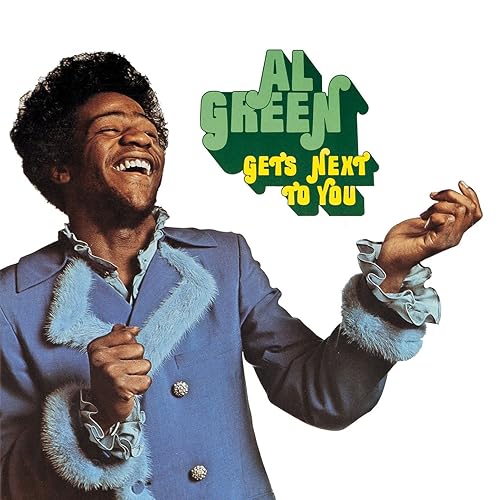
 

Monday, April 6, 2020

Alone: Tired of Being Alone


Al Green: Tired of Being Alone
[purchase]

I’ve already lost count of how long I’ve been stuck at home—the few times I've gone out to get provisions or walk doesn’t really relieve the feeling of confinement—and it is getting tiresome. Other than the fact that the “current situation” has left us with nothing to look forward to—concerts are canceled, vacations are canceled, reunions are canceled, even our family seders are canceled, and I suspect that my daughter’s trip home this summer will be canceled—the hardest thing to deal with has been the isolation.

Don’t get me wrong—I’m generally an introvert—what I guess is considered a social introvert, meaning that I’m more comfortable in small social settings, enjoy being alone, and can appear to be more extroverted in some situations (my “Reunions Dad” personality), but then require some alone time to recharge. So, in theory, this whole staying home thing is not far from my wheelhouse. (But I’m not a hermit or a hoarder). And, luckily, I have my wife with me, so I’m far from really alone.

But since this whole thing started, as I mentioned in my last piece, I’ve thrown myself into connecting on social media and with my college classmates. We did that large Zoom gathering, and another one yesterday with about 100 people, which included a remarkable coronavirus panel, which I'd argue equaled anything that you can see on cable news.  Plus, a yoga demonstration. And as part of the planning process, I’ve been in contact by email, Facebook, Facebook Messenger, Slack, and even telephone with classmates (and an actual face-to-face meeting with one who lives around the corner, from a safe distance), and there’s always some personal catching up, even with people that I was never really close with. Even on work calls, with clients, co-counsel and even opposing counsel, there’s often a discussion of “how are you doing?" And like many others, we are using Zoom to have family calls and hang out virtually with friends. Just over two years ago, I wrote a piece on my personal blog called “In Praise of Social Media,” during a period when Facebook and other platforms were being rightly criticized for their flaws. But I saw the value in the connections that I made and maintained online, and if anything, it is more important right now. As someone with my personality type, this sort of social interaction from a distance is really perfect.

Al Green is, of course, one of the all-time greats, and his song “Tired of Being Alone” is, of course, on one of my many COVID-82 playlists. Released in 1971, it reached #11 on the Billboard Hot 100 and # 7 on the Hot Soul Singles Chart, and continues to be popular today. Because it is a great song. Of course, it isn’t about being forced to shelter in place, but about a lost love, because you don’t write great soul songs about being stuck in your house alone, living in sweatpants and bingeing Netflix. Although many musicians finding themselves with time on their hands are writing songs for the “current situation”—let me recommend Dan Bern’s new EP, Quarantine Me if you want to hear some good ones—I doubt that they will ultimately have the lasting appeal of “Tired of Being Alone.”  Green also has covered the great Hank Williams song, "I'm So Lonesome I Could Cry."  So, yeah, he's lonely.

Speaking of musicians stuck at home, how long will it be before there’s a genre of “how hard it is to be at home” songs to rival the many, many “how hard it is to be on the road” songs?

Friday, July 12, 2019

ALABAMA:THE BLIND BOYS OF

Being neither resident in the state, or even the country, my observations from afar lead me to feel Alabama doesn't get much good press, even in the medium of popular song. Especially in the medium of popular song. And when the only two positives come from Al Jolson and Lynyrd Skynyrd, you know you're in trouble. (Nah, I take that back about Skynyrd, I bloody love that song, but it only exists as an attempt to justify the place from the ire of others. But we all know that. Right?)


Moving swiftly on, there is one Alabama icon that really does make me gleam, that being this astonishingly lasting vocal group from the state. Granted it can not have been an easy start in life, born both blind and black below the Mason-Dixon line in the pre-war years of the great depression. But maybe, just maybe, being at the now anaethemically named Alabama Institute for the Negro Blind gave these boys a start they mightn't have otherwise achieved. For they were boys, just 9 years old as they gave their first concerts, in the school chorus as the Happyland Jubilee Singers. The idea of blind gospel singers seems somewhat of a lame trope these days, a cliche to fill gaps in our knowledge, yet it was actually quite a big deal back then, the Happyland Jubilee Singers getting their big break from a 'Battle of the Blind Boys' music competition. (Beat that, Simon Cowell, although X Factor does increasingly feel it is muscling in on disabilities.) Up against the Jackson Harmoneers, the publicity gave both bands a boost, as they became the Five Blind Boys of Alabama and the Five Blind Boys of Mississippi respectively, touring both together and, sometimes, as each other. The Alabama version got a record contract and a hit, in 1948, and that was the end, all but, of the rival version.

Gospel was big in the 1950, and it was to this genre the boys stayed true. Original founding member Clarence Fountain had this to say about this decision. Of course, as the decades have rolled by, there have been many instances where they have seemed to sing of more secular themes, but never have they sung a lyric where an ambivalence about to whom the song is addressed cannot be drawn. Thus, as the 60s became the 70s, with R'n'B and Soul taking great strides through the white dominance of the day, so the Blind Boys were there, reminding all as to where these musical forms had a common home. (Indeed, how many of the giants in those styles hadn't started off in the church? Aretha and Al were certainly no exceptions.)

It wasn't because any of this I was drawn to the group, almost more despite the religion. I have little truck with it myself, probably since, as a teenager and when asked, ahead of having my appendix out, my father proclaimed me as heathen. (The nurse duly wrote that down.) But I do love a harmony vocal, but, rather the honey smooth, the more raggedy the better, think Lindisfarne and the Jayhawks, so when the Blind Boys starting cropping up on albums I was listening too, my attention was picqued. These were often tribute albums, whereby the great and the good would queue up to pass cover on their peers, such as Richard Thompson. And then came Solomon Burke's majestic comeback in 2002. So, when in 2004 they collaborated with Ben Harper, more so because of their involvement, this was a record I had to have: 'There Will be a Light'. And again, in 2005, with 'Atom Bomb', they having been now tucked under the wing of Peter Gabriel's Real World record label. Astonishingly, a full 50 albums into their career, suddenly they were hot property, filling concert halls both alone and in cahoots with musicians from all walks and at all stages of their careers. True, there have had to be changes along the way; there are none of the original 5 left, let alone performing, newer members snucking in seamlessly over the decades, different voices, different timbres, the overall sound, the overall performance remaining little changed. The current line-up does however still include Jimmy Carter, also a pupil at that Alabama Institute, but too young for their debut in 1939. Whilst a touring member ahead of that time, it was only officially in 1982 that he made his recording presence as a member. Nonetheless, his legacy with the originals is sufficient to consider him as one. Here's his take on it all. (Clarence, mentioned above and in the interview, died last year.)

I can't even begin to give full due acclaim to this wonderful institution, coming so late to their game, having to be born and whatnot, but, scattered both within the piece and below, enjoy some musical heaven.


Finally, and with enormous excitement, I can report I am finally getting to see them live, next month, at the Cambridge Folk Festival, here in the U.K., alongside Amadou and Maryam, blind husband and wife world music titans from Mali, who themselves met similarly, at Mali's Institute for the Young Blind. I cannot wait.


Any of these....

Sunday, February 27, 2011

The Hammond Organ -> Doublespeak: Glory Glory


Al Green: Glory Glory

[purchase]

Organist and songwriter Charles Hodges isn't necessarily a household name, but his work on the higher end of the Hammond keyboard is quite easy to pick out of a lineup, once you know what to listen for - or to look for on a label. In the same way that Booker T. was the in-house organist for Stax, the distinctive keywork of Charles Hodges, one of three brothers who comprised the core of the Hi Records Rhythm Section [featured above, with Charles standing in the center], can be heard on almost every record from the label during the sixties and seventies, including Ann Peebles' seminal I Can't Stand The Rain, and on many of Al Green's biggest hits, where he lends subtle support to the honey-voiced soul singer.

Our transition song this week isn't famous - it's a true deep cut from Full of Fire, in which the now-Reverend Green began to leave behind his tendency towards emotionally oozing love songs, choosing instead to explore his blossoming religious nature with a record heavy on the gospel soul. But it takes us quite deftly from last week's instrumental focus to a new thematic challenge, wherein we post songs which use the same word twice in their title.

Thursday, October 21, 2010

Call Me: Call Me (Two Soulful Versions)

CandlestickTelephoneGal-aretha


Aretha Franklin: Call Me

[purchase]

Al Green: Call Me (Come Back Home)

[purchase]

I'm back from 3 weeks in Europe; didja miss me? I missed SMM, especially Discovery Week, which I watched from afar (and great, great job, everyone!) Every day I wrote a post in my head about a discovery of mine, which I'd change by the next day. I mean, where would I even begin? With my very first 45 record that I listened to over and over on my little kiddie record player at the tender age of 4? That would be The Andrews Sisters "Sugar in the Morning" (and if I could ever get hold of that single, I'd be over the moon!) Or would I write about my most recent discovery, NICO Touches the Walls, a group I'm exploring right this very moment after hearing "THE BUNGY" last week? Because I've been around for a long time, you could say I'm spoiled for choice. And while I may not know you well or even at all, I can pretty much say for certainty that all of you are the same – music moves you and your life. The song may not remain the same but music is important. Do you find yourself at a loss for words when you find yourself fervently proselytizing about some special song or group, only to be told that your listener "doesn't really pay attention to music at all." I'm left guppying in amazement.

Therefore, I'm going to sneak in a bit of discovery for my "Call Me" songs.

I grew up in suburban Detroit (aka The Motor City – Motown) in the '60s, which means I listened to a whole lot of soul music at a tender age on WKNR (Keener 13) and CKLW (which, okay, was technically a Canadian station, but it was just across the river). One of my favorite singers then and now is Aretha Franklin, a Detroit native.

Aretha wrote "Call Me" in 1970 as a slow piano-backed ballad, which is backed with the famous session musicians, the Muscle Shoals Rhythm Section. She pleads with her lover to keep in touch during their upcoming separation, but expresses confidence that love will carry them through. And you get the feeling it will.

Another powerful soul singer expresses the same sentiment in a song of (nearly) the same name. Al Green's 1973 hit implies that his upcoming separation may be permanent and perhaps their love isn't quite so solid, but he urges his lover to "come back home" if the going gets rough.

I was reminded of the staying power of this tune when I heard it Tuesday while shopping at my local Ross, a store that plays some pretty good music and isn't afraid to turn it up, either. I know you notice ambient music, too, admit it. You're the person next to me in the elevator who knows I'm not some crazy woman laughing at nothing - I'm just chuckling at the incongruity of that Muzaked version of "White Wedding."

Sunday, June 21, 2009

Cry Cry Cry: I'm So Lonesome I Could Cry


Al Green: I'm So Lonesome I Could Cry

[purchase]

This is a theme I can really work with. I love depressing music. Let's start with a great cover of one of the all-time great sad sack songs. Al Green sings Hank Williams.