To say I am fond of pedal steel guitar would be an understatement; I bloody adore the instrument and how it sounds, whether as high lonesome shorthand for classic country, or, indeed, often more whenever it pops up in unexpected settings. This year we lost two or the best, two, even if I often confused the one with the other, with this piece probably now continuing to prolong the blurring of my Bucky with my Buddy.
So, in alphabetical, we got Mr Bucky Baxter, who left us in May. Born in Florida 65 years ahead of that, he was perhaps best known for his pivotal role in the bands of Steve Earle and of Bob Dylan. Indeed, he was a Duke for the three breakthrough albums of Earle's early career, Guitar Town through Copperhead Road, appearing sporadically thereafter. His was the steel in R.E.M.'s World Leader Pretend, and on Ryan Adam's Gold album, he featured on Joe Henry's Trampoline and, possibly surprisingly, played on and produced a record, Cockahoop, by the ex-Catatonia singer, husky welsh chanteuse, Cerys Matthews. But it was as a Bob Dylan regular on the Never Ending Tour throughout most of the 90s that his name became best known. Indeed, Dylan had come across him at a Steve Earle concert, asking him to teach him how to play the instrument. (History has not revealed how well that went.) In the studio, he also appeared on Dylan's Unplugged and Time Out of Mind, the latter, not without coincidence, one of my favourite Dylan's.
Fearless Heart/Steve Earle & the Dukes (1986)
World Leader Pretend/R.E.M. (1988)
Tryin' To Get To Heaven (live)/Bob Dylan (1999)
I have to mention Dylan some more, as Baxter was there for one of the two ever times I have caught the Bob live, when he headed a stormy Friday night in July at the Phoenix festival, near Stratford-on-Avon, in 1995. If Blackbushe a decade before had been sublime, this was ridiculous, all songs unidentifiable in the muddy sound, all party to tuneless new arrangements. All unidentifiable until Baxter's steel gave a hint of the original melodies, a highlight in an otherwise forgettable evening. O, had it been to the standard of the Vienna concert, above, four years later.
Baxter wasn't all that ambitious, it seems, happy to be a contributor rather than the focus of attention. But he did make one solo recording, Most Likely No Problem, an instrumental album which is worth the seeking out, with an astonishing who who's of participants.
The Big Difficult/Bucky Baxter (1999)
Here's a nice interview which gives an idea of the man. Finally, those with a finger on the pulse might know he is/was the father of the up and coming Rayland Baxter.
Buddy Cage, not to be confused either with another fellow deceased steel maestro Buddy Emmons, was a Canadian by birth, born a few years ahead of Baxter, in 1946. Another musician proficient in his instrument from an early age, he first drew attention in canadian country-rockers, Great Speckled Bird. However it was his longterm tenure in the steel seat for Grateful Dead offshoot band, New Riders of the Purple Sage, between 1971 and 1982, that he will be best remembered, taking the reins of the instrument from Jerry Garcia. Frankly, a much more adept player than Garcia. He also did a load of sessions, including, the ubiquitous Dylan reference, laying down some tracks on the many and varied Blood on the Tracks sessions, if only once on the actual studio release.
Calgary/Great Speckled Bird (1970)
Gypsy Cowboy/NRPS (1972)
Peggy O/NRPS (2010)
Although the Riders continued for several more years, Cage had not been tempted to return to that fold until 2005, until after founder member, John Dawson had put the original band to bed in 1997. Their 2012 release, 17 Pine Avenue, I thought terrific and well up to the standards of their earlier work, better even, tighter without their notorious cannabinoid looseness of yore.
The intervening years had him back to guesting on innumerable projects, but he never made a solo record. Perhaps closest might have been if the music from a Dutch tour, in 2005, had been ever committed to posterity. In cahoots with Derek Trucks and Sonny Landreth, both accomplished legends on slide, it was called Steelin' and Slidin'. (I wonder if any clips are available?)
Steelin' and Slidin'/Trucks, Cage and Landreth (2005)
Here's an interview with him from his second spell with the band. Multiple myeloma took him in February.
No personal story, no long history lesson, no political discussion today. Just a short discussion about a fine song, Guy Clark’s “Desperados Waiting For A Train.” (I mentioned this song a few years ago in a piece on Clark’s “Homegrown Tomatoes," but it’s worth its own post.)
As someone who backed into “country” music through alt-country/Americana/roots/folk music, I first became aware of the great songwriter Guy Clark from covers, particularly this version on Nanci Griffith’s 1998 release, Other Voices, Too (A Trip Back To Bountiful). On that album, Griffith performed the song with Clark, Jerry Jeff Walker, Steve Earle, Rodney Crowell, Jimmie Dale Gilmore, and Eric Taylor. In fact, before Clark released a version, on 1975’s Old No.1, it had already been covered by Walker, Rita Coolidge, David Allan Coe and Tom Rush. And before Griffith’s version was released, it had been covered by Slim Pickens and probably most famously, The Highwaymen (Johnny Cash, Waylon Jennings, Willie Nelson, and Kris Kristofferson, some pretty fine songwriters in their own right). And there have been many other covers released and performed, including by Earle, on his recent tribute to Clark, and Jason Isbell, who performed the song at Guy Clark's induction into the 2015 Austin City Limits hall of fame ceremony. Which is just to say that many, many great musicians and songwriters have felt the song worthy of recognition.
Clark had the ability that some great writers, and not only songwriters, have of being able to economically create an entire world, and entire characters, with no wasted words. (On the same album, Griffith also covered Richard Thompson and Woody Guthrie, who have that same talent.) I’m jealous as hell. In less than five minutes, the song tells the story of the relationship between a boy and an old man, and you can feel the love they felt for each other, and the respect that the boy had for the man, an old school oil worker, who seemed to the boy like he was from an old western. And one day, the boy realizes that the man is old, and dying, and the metaphorical train comes to take him away. Two lives in about four and a half minutes of brilliance. I don’t know if the song is studied in songwriting classes, but it should be.
It’s a true story. Clark wrote it about his grandmother’s boyfriend, who stayed at the hotel that she ran in a small Texas town. You can read more about it here.
In 1998, when Griffith released her album, she appeared with all of the guys (including Guy) who sang with her on David Letterman’s show. And since readers of my work here know I’m a huge Letterman fan, and a huge fan of the song, here’s a video:
Is there a more archetypal US couple than Jack and Diane? Well, of course, the answer is an unreserved yes, but, ignoring that, this couple have maintained an ongoing virtual life, come what may, in the nearly 37 years since John Mellencamp brought them first to our attention. Hell, he wasn't even John Mellencamp then, being still the John Cougar some manager thought sounded cooler than his given name. But ain't it a great song?
The song very nearly didn't make it, Mellencamp having dumped it, being unable to get his band to give the accompaninent he heard it as needing. It took Mick Ronson, yes that Mick Ronson, to insist he give it another crack, this time with Ronson on additional guitar. The iconic hand claps shouldn't even be there, being initially just part of the click track to facilitate the arrangement. But it just sounded better with than without. And should you still be pondering the Ronno/Mellencamp linkage, most odd in retrospect, the Spider from Mars and the midwest journeyman roots artist, remember then that John, then Johnny, Cougar was being pushed as a slightly Bowie-esque retro-rocker in the mid 70s, and that the aforementioned manager was Tony DeFries, the famous main man of MainMan, who also looked after Bowie. Anyhow, this song was many years after the DeFries management, but I am sure that's where the pair of them first met. Ronson subsequently invented himself as a go-to guitarist for anyone from Bob Dylan to Ian Hunter, ditching the spandex and stack heels along the way, whilst DeFries ditched Cougar to the no lesser delights of Rod Stewart's management team and Billy Gaff.
The song did well. Number 1 in 1982 for 4 weeks, still his biggest hit. It has also given birth to a number of references across music and film, as the names Jack and Diane have almost come to be generic of just about any young couple in their struggle to stay together. It was certainly the first I had heard of the artist, his earlier US hits having failed to translate across this pond. And I heard no more of him for some time, despite ongoing success in the US. I guess my tastes had always been a tad rootsier than the charts, and I was developing a taste for Steve Earle, as he ploughed his country into a rock furrow. What I didn't know was that (by now named) John Cougar Mellencamp was traversing the opposite direction, in 1987 they each perhaps halfway in the transition. Earle produced 'Guitar Town' in 86 and, a year later, Mellencamp produced 'The Lonesome Jubilee', still, for me, his masterpiece.
Of course he has made many a record since then, most of it in a similar vein, much of it to a high standard. A heart attack slowed him a little in the 90s, yet ironically boosted his status. By his return to performance he was being greeted as a similar icon to the working man as Springsteen, and would appear on stage with the Bob Dylans, Willie Nelsons and Neil Youngs of this world. And so he has continued, increasingly a politicised performer, albeit with views fairly constantly to the left of centre, no small critic of the current regime. (Indeed, I hadn't realised until this day that he was, in fact, one of the founding fathers, with Young and Nelson, of Farm Aid.)
So what of Jack and Diane? Well, they made a (brief) reappearance in the 1998 song, 'Eden is Burning', but the song is, presumably, so allegorical as to give no personal update. But I'll bet he worries who they voted for, last time around. But he still plays it.
A stark, unforgiving and unrepentant reflection on drug addiction and personal destruction: I cannot think of another song so blatantly unapologetic in directly speaking of the reasons for , effect and legacy of drug abuse than Steve Earle's 1996 song "CCKMP (Cocaine Cannot Kill My Pain)."
The song is dark and disturbing, a funeral dirge, and one of Earle's most direct and earnest narratives in a career that has gloriously reveled in using song as story.
I have to say, for a long time, I wasn't sure what the song meant to accomplish on a narrative or artistic level. That is, until I started to think of it in terms of what Earle was doing as a writer rather than a singer. It's not really persona adoption, where an author gives us the means to understand a life, a personality and motivations we don't have the direct access or ready evidence to understand. The recreation of a life the consumer (listener or reader, I suppose is better) doesn't know is the basis of creative work, the lifeblood and reason narrative--be it song, story, poem, painting, or sculpture--exists. We read (or look at or listen) to the stories of others so we can understand. Art creates not a forgiveness or a justification so much as an understanding and a sense of empathy. That's why we go to art: to learn what others know through a vicarious experience. This is also a notion that has come under attack with increasing indignation lately. I feel like we're wading in territory of intolerance and victimhood that threatens to drown us and thus, end the artists' ability to explore and bring to the life the story of others and shed light into places that few of us know. Intolerance is a singular animal, destructive to others, regardless of the motivation or what political or social spectrum it stems from. If we kill voices, or worse, lay exclusive claim to certain stories or voices, we risk losing the stories entirely. To illustrate my point, I direct you to this article from the New York Times. I'm not really sure what the problem is: be it a lived experience or an imagined one, if it is an experience others can benefit from living, even just on a page, it is most likely valuable. So, Earle is allowed to give us this dark slice of addiction and despair because it is his own experience of both. However, this tangible hold on addiction doesn't give the author exclusive rights to the story, does it?
Of course, what I find refreshing about Steve Earle's "CCKMP" is the visceral rawness of the experience he presents. He doesn't have to explain himself, he just gives us a story that is his story. Or was. Earle is famously clean and sober now and works hard to help others out of the place he was once trapped in. His own experiences gave rise to this simple, uncompromising reflection on his own addiction. Of course, he owns the story and the pain that colors it, and by sharing it, he does shine light into a dark corner we don't know. Earle can give us this story because he lived it and thus owns the scars. But, the artist's job is to do this: let us understand the pain that causes the scars in hopes we don't inflict the same on ourselves. Art is meant to bring experience to life; if the artist has lived the experience, they have every right to it. If they haven't, can we still appreciate their efforts to interpret and bring to life the experiences of others? I'd say yes, resoundingly so. Without art, without interpretation in attempt to understand, what would we know?
This year, it seems like I’m writing more about television related music. I watch an enormous amount of television, and I do think that there is so much great stuff to watch these days. In fact, there’s a ton of shows out there now that I would like to check out, but there are just so many hours in the day. In addition, there are a bunch of older shows, often considered to be among the medium’s best, that I have never seen. Some, I’m not interested in, like Game of Thrones, but mostly it is because I didn’t start watching them during their initial run, such as The Sopranos (80 episodes), or Mad Men (92 episodes), or Breaking Bad (62 episodes, plus I’d have to watch Better Call Saul), and their multi-season runs make binge watching difficult.
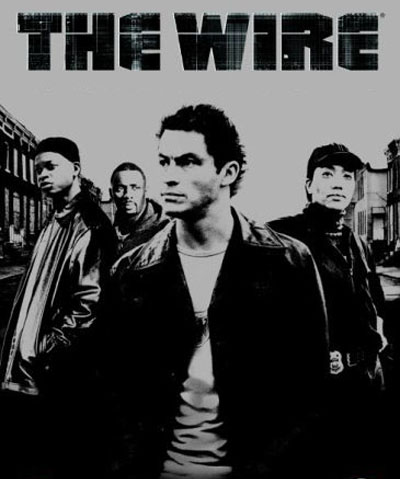
A few years ago, when I started my own practice, there wasn’t much work right away. I decided to binge watch one of the shows that I had missed, and hit upon The Wire. It was only five seasons (and 60 episodes), it was supposed to be great. Also, I was a big fan of Homicide: Life On The Streets, which shares significant creative DNA with The Wire. And my wife wasn’t interested in it. Perfect. (I also watched the 24 episode British show The Thick of It, which was amazing, and easily the most profane program I have ever watched).
The Wire was, in fact, great, and harrowing, and depressing and brilliant. The way that it dissected the Baltimore of its era by focusing on the decay of its major institutions—the police, the unions, the government, the schools, the press, and even the street gangs—was remarkable. The narrative style was groundbreaking, and the performances, by actors who rarely, if ever, have reached the same level of quality since, were stunning. And there was Omar.
But, as I so often have to remind myself, this is a music blog.
The credits for the first season ran over a cover of Tom Waits’ “Way Down In The Hole,” recorded by the Blind Boys of Alabama. At the time, I didn’t know that it was a cover, because I’m not that big a Waits fan. The second season, they used the original. For season three, it was a Neville Brothers cover, and in season 4, they commissioned a version, credited to DoMaJe, sung by Baltimore middle schoolers, which related to the season’s focus on the public schools. The final year, they used a cover by Steve Earle, who also acted in the show.
Here are all of the credit sequences, conveniently edited into one video:
If you’d like to read more about the credits, go here.
David Simon, the creator of The Wire, followed up that show with a number of well-received television projects. Generation Kill, which I haven't seen, was about the 2003 invasion of Iraq. Tremé, which I loved, taught me an enormous amount about post-Katrina New Orleans, and that amazing city's culture, particularly its music. After that, he adapted my friend Lisa Belkin's bookShow Me A Hero into a gripping miniseries about zoning (cheap joke--it was about race, and politics and ambition and much more). A couple of weeks ago, his new show, The Deuce, focusing on the sex and pornography industry in New York in the 1970s, debuted to critical acclaim. So far, I think it is good, but, and I bet Simon gets tired of hearing this phrase, it isn't The Wire (but is it more like that show than the other Simon projects?).
I don't know what colour the devil's right hand may be, but it would not surprise me if it were, too, red, what with what he has in it, as the theme moves to another right hand. (And there are a few other right hands out there, should the rest of the team choose to follow.....)
The song, 'Devil's Right Hand', written by Steve Earle in the very early 80's, yet appearing first on 1989's 'Copperhead Road', down to an earlier record label owning the rights to it, on an album they never released. So already typically part of the Earle paradigm of paradox, luck never quite in step with his profligate writing talents. And, since then, much as Earle's fortunes have changed in every which way, down, up and sideways, so the song has morphed with him, appearing in many styles and with, often, subtle symbolic shifts in the lyric. It was still his encore when I saw him live last year.
At face value it is a simple and almost traditional folk ballad, warning of the dangers of gunplay. Earle himself fought initially shy of citing it an overt anti-firearms/anti-handgun song. But, at at time when his own private life was under some federal scrutiny, there came a surprising life imitates art moment. I will let Earle take up the tale:
And I make no bones about including a 3rd version, this time the re-recording for the 'Brokeback Mountain'. Why a re-recording? It seems there was some disquietude in having a film set between 1963 and 1983 featuring a song (nominally) from after that time. This faster version is designed to be in the style of relevant time period. (And you thought filmmakers just slap any old song in to fit a mood, with neither thought nor consistency! Well, of course most do......)
With a song of this sort, a message with a moral, a good ol' tale of ornery folk, it has been hardly surprising that it has been much covered by the great and the good, with the royalty of country outlaw chic leading the way. Johnny Cash and Waylon Jennings have each performed it separately, as well as together, in tandem with Willie Nelson and Kris Kristofferson, as the Highwaymen. Webb Wilder, Bob Seger and, english folk giants, Show of Hands (not on youtube), have also done the song proud. (Strangely, and I cannot quite see why, youtube shows me that not a few white supremacist bands have taken it up. I had never quite seen them on that side of the gun lobby, not least as I might be reasonably happy to see them all shoot themselves up, but I digress...)
Devil's Right Hand, buy it and make him one-handed!! Even more versions than featured here!!!
So much to say about this band that hasn't been said. Where to begin? Hailing from Belfast, they scored a criminally semi-hit with their track "Belfast" from the 1990 eponymous debut.
Led by Bap Kennedy (brother of the famous pop vocalist, Brian Kennedy), lifted and sent gloriously soaring by the lead guitar work of Paul Toner, Energy Orchard were one of those bands that probably (unfairly) got their shot at a major deal because: Irish. And because: U2. But they deserved better. Much better.
Their first album has been in my regular rotation since 1990, not only for the allegiance it pays to it musical predecessors, Van Morrison being the obvious comparison, but also because it is a collection of rock songs so solid, so perfectly played, so gloriously about the emotional lift that only rock music can bring, as to be timeless. Kennedy's vocals and themes are full of longing and hope; the music rises in hopeful crescendos, a spiritual and strange sort of aching that transcended the limited '90s studio production of gilded keyboard and polished glitz. The best songs on their first album smolder, then blaze like church hymns. The Celtic roots are unavoidable, both because of geographical origins, but also because there is something of that rollicking Irish pub sing-around that sits at the heart of this music. But, like all great bands, Energy Orchard kept that original idealism and took it well beyond the limits of genre.
Energy Orchard went on to put out three more albums (Stop the Machine, Shinola, and Painkiller) as well as double disc live set called Orchardville. The live set burns with a vibrant, ripping energy that never quite came across on the studio stuff, but one senses that labels and producers might have had more to say about that than the band did. It always seemed to me that Energy Orchard, left on their own, would have been much more of the amazing band they were, but also a truly influential rock band. I suspect there was always some meddling prat in their midst, pushing for radio-friendly pop songs. And if you recall early to mid-'90s pop radio, you might forgive the band for only making four albums.
The amazing potential the Energy Orchard had, however, is evident in Bap Kennedy's solo career. An incredible country singer, he's worked with the likes of Steve Earle, and his catalog, which includes a stunning album-length tribute to Hiram King Williams, Hill Billy Shakespeare ( you know him as Hank), is as stellar and legit as anything you'd label as 'real country'. (Domestic Blues and Lonely Street are amazing, too among others.) Kennedy's still producing albums, including last year's Let's Start Again.
I went to Belfast a few years ago, and listened to Bap's solo stuff, as well as all of the Energy Orchard albums--it was something I always wanted to do: connect the place the music came from, see if the connection of place matched the emotional connection Bap's music had always made with me. It was a good experience, and I couldn't help feeling a little like the protagonist of "Sailortown", their other big hit and one the greatest songs ever recorded about youth and all it's mysteries and how they can be figured out by escaping, out to sea, through the bottle, in the arms of love. It's a sad song, with an incredibly redemptive sense of celebrating even the darkest of our days.
...I can't sit still, too much on my mind.
Gotta get outta this place, while I'm
Still young and alive.
I'll go walking down to Sailortown,
And I look out to the sea.
When them big ships come sailing in,
Maybe this one's for me.
I've belted out "Sailortown" many a night when I felt the same way. I belted it out in Belfast that night, too, drunk on more than beer and whiskey. The power of great music: even the inherently sad songs, when played with the right kind of guts, can lift you. "Sailortown" has always made me think that no matter what, as long as I had a song (and perhaps a drink or two), I'd get to stay 'young and alive', too...
Sailortown, live :
and studio:
And, a bonus track, just so you can get an idea of that gospel-true soaring takeoff and comedown these guys did so well, an incredible version of "Hard Street":
Although the day that commemorates the American Revolution has just passed, the idea of “revolution” is not limited to the U.S.A. The word “revolution” is from the Latin “revolutio,” meaning to turn around, and in politics, of course, it means a change, usually of regime. It also is used to describe the turning of records or CD’s, those somewhat quaint media that we used to use to listen to music. So, melding the two meanings, for the next couple of weeks, we here at SMM will be writing about songs that relate to Revolution, and fittingly, we begin with a song that declares, that the revolution, like our new theme, starts NOW!
Most political revolutions have resulted in one political group overthrowing another (like the Russian or French Revolutions) (and, unfortunately, often becoming as oppressive as their former oppressors), or a colonial group throwing off the rule of colonizers (like the American Revolution) (ditto).
Marxist theory posited a “permanent revolution,” which was championed by Trotsky as a way for the proletariat to obtain power. And in our featured song, Steve Earle argues for a new, grassroots revolution to address the problems that he saw in the American society of 2004. Earle, whose message had become increasingly political, found himself excoriated by the right wing for his leftist politics. As the presidential election approached, Earle wanted to make a statement against the Bush Administration and its policies, and he recorded the album, The Revolution Starts...Now. In the liner notes to the album, Earle explained:
The Constitution of The United States of America is a REVOLUTIONARY document in every sense of the word. It was designed to evolve, to live, and to breathe like the people that it governs. It is, ingeniously, and perhaps conversely, resilient enough to change with the times in order to meet the challenges of its third century and rigid enough to preserve the ideals that inspired its original articles and amendments. As long as we are willing to put in the work required to defend and nurture this remarkable invention of our forefathers, then I believe with all my heart that it will continue to thrive for generations to come. Without our active participation, however, the future is far from certain. For without the lifeblood of the human spirit even the greatest documents produced by humankind are only words on paper or parchment, destined to yellow and crack and eventually crumble to dust.
His call to personal political revolution is made clear by the lyrics of the song:
Yeah the revolution starts now In your own backyard In your own hometown So what you doin’ standin’ around? Just follow your heart The revolution starts now
Of course, history shows that Bush defeated Kerry in 2004, and it wasn’t until 2008 when Earle’s (somewhat reluctantly) favored candidate, Barack Obama, was democratically elected (Earle would have preferred a socialist, which, despite what you may hear from the right, President Obama is clearly not).
Whether that qualifies as a “revolution” is open to debate, I’d say. But, interestingly, Obama’s presidency has only increased thecall for a revolution from the right, which in many instances has challenged the legitimacy of his election and has obstructed Obama’s agenda. Many of these more radical truth deniers have adopted the “Tea Party” moniker, drawing from the iconography of the American Revolution, although some of us think that they have more in common with another group of revolutionaries with a narrow, theistic point of view, the Taliban. It is interesting that the Tea Party movement is funded by rich capitalists who fear that continued government support of poor Americans might take away some tiny fraction of their billions, but is often championed by people who need the very government support that they eschew, making it more of an "Astroturf" movement than a real "grassroots" one.
And it is also interesting that much of the “progress” made by these right wingers has come from the kind of local action that Earle would probably approve of—taking control of school boards and local government units, and other small scale activities. Unfortunately, the result of this conservative activity ultimately has resulted in the imposition of reactionary policies, either by vote, inaction, or even through endorsement by one of the worst Supreme Courts ever. The exact opposite of what Earle was looking for, which is a shame.
A couple of weeks ago, I attended the Clearwater Festival, mostly for the great music. But I was happy to see that the Activist Area was fully staffed, with many groups and people dedicated to trying to change the country and the world to make it fairer, cleaner and better for everyone, in the spirit of one of Earle's idols, Pete Seeger and his wife Toshi. So, there is hope.
Though "alt.country" wouldn't be called that for a few more years, its big bang moment came in 1988, with the release of two of the most significant records the genre ever produced.
In 1988, Steve Earle stood at a career crossroads. He had put out two fairly successful, left-of-center country records, Guitar Town and Exit 0. But, personality clashes and an escalating drug habit left Earle on the outs with his label, MCA. (Legend has it Earle for years refused to get a haircut, just to piss off the MCA suits.) To make peace, he was reassigned to the label's new UNI imprint. His first -- and only -- record for UNI was Copperhead Road. Free of the Nashville label's radio-dependent production ethos, Earle adopted a rock-influenced sound and wrote his strongest set to date. Half the album is about love and family, while the other half is made up of story songs, with a political edge. That includes the great "Johnny Come Lately," on which Earle is backed by the Pogues. Two dozen years after its release, the song still packs a powerful punch, capturing the challenges returning war heroes faced after the Vietnam war and even to this day.
While Earle's career had been steadily building for several years, Lucinda Williams seemed to come out of nowhere. Her 1988 self-titled album was actually her third record. The first two, released on the archival Folkways label, were little noted nor long remembered. Though an accomplished songwriter, Williams had no significant covers of her music. Despite stays in Austin and L.A., she really wasn't part of any music scene. Yet she had already earned a reputation in the music industry as someone who was both extremely good and extremely protective of her artistic vision. Her demos were shopped to major labels for years, but Williams vetoed potential deals. She ended up releasing Lucinda Williams on Rough Trade, a struggling punk indie label. It was an immediate success, garnering glowing reviews and big-name endorsements. Emmylou Harris and Shawn Colvin, among others, sang her praises. Emmylou, Mary Chapin Carpenter and Patty Loveless charted with covers of Lucinda Williams songs. Perhaps the most interesting cover was delivered by Tom Petty, who included the stalker anthem, "I Changed the Locks on My Doors" on the She's the One soundtrack album.
Despite Rough Trade's shaky distribution, Lucinda Williams sold more than 100,000 copies. (Sadly, it's now the only album in the Lucinda Williams catalog that's not available digitally.) Copperhead Road also went gold. Both records inspired a new generation of singer/songwriters, who nestled somewhere between rock and country. Williams' and Earle's paths would eventually cross, when she appeared on his 1997 comeback record, and he produced her 1998 masterpiece, Car Wheels on a Gravel Road. Those records, like the 1988 records that preceded them, helped define alt.country...whatever that means.
A mountain is the product of geological upheaval, but it represents solidity. Dave Carter, in his song The Mountain, finds a symbol of spiritual truth here. Carter referred to many different spiritual traditions in his writing; I don’t think divisions between them were important to him. The Mountain refers to Native American beliefs with Carter’s typical economical eloquence. The song showcases Tracy Grammer’s voice beautifully.
Steve Earle finds both the solidity and the upheaval in his song The Mountain. Earle made the song the title track from the bluegrass album he recorded with the Del McCoury Band. The song is about a coal miner who has seen his home ravaged as strip mining replaced the traditional mining methods he grew up with. So, on the face of it, Earle takes the idea of a mountain more literally than Dave Carter. And yet, I think it’s fair to say that Earle’s song also has a spiritual dimension as well. For the album, Earle, by his own account, had to learn to sing. He was several albums into his career, and Earle had always done all of the vocals on his albums. But he had never tried to blend his voice with others before. I remember reading at the time how Earle had to basically start from scratch, and really learn how to use his voice. His performance of The Mountain remains some of the best evidence that all of that hard work paid off.
Talk about late! Here’s a guy who loses the woman he loves, and that’s when he decides to be faithful to her. It doesn’t sound like she’s coming back.
The song is by Steve Earle. Usually, Earle is not afraid to speak his mind. But his album The Mountain showed a different kind of fearlessness. The entire album is a collaboration between Earle and the Del McCoury Band. McCoury was and is one of the big names in bluegrass music. My first reaction, and many other people’s I’m sure, when I heard of this project was, “huh?” Earle does not have a typical bluegrass voice, to put it mildly. But he set his mind to doing this album, and doing it right. I remember reading how Earle had to basically relearn how to sing for this. The results? Earle still doesn’t have a typical bluegrass voice, but somehow it works. He does have an unmistakable talent for writing in this style. The Mountain was an album I knew I would either love or hate. It has become a favorite.
Just to be clear before we start... These are two different songs, by two different artists, but they both tell of the same stretch of Houston highway. Telephone Road is a highway in south Houston that developed a less than stellar reputation over the years as a place you could go to easily find "fun or a felony."
Of course, Rodney Crowell and Steve Earle aren't really strangers to either of those things. It's no surprise then that both have penned tributes to this street of ill repute.
Both artists, though, seem to have fond memories of the time they spent on Telephone Road in their younger days. Wether it's Crowell boasting of watching "Johnny Cash, Carl Perkins, and The Killer puttin' on a show" as a mere child, or Earle sampling each of the one "hundred honky tonks" that lined the roadside... both look back on their experiences with a sense of wistfulness. It's as though they wish they could go back.
If nothing else, they can take us there with their songs.
Here's one more quickie that didn't quite fit in with the happy songs I posted yesterday.
This is one from Steve Earle's 2002 odds and ends release, Side Tracks. It's a stark powerful song about a prison guard on death row and the many sights he's seen in his work. A guest appearance by The Fairfield Four adds a nice dimension to this one. The sombre sounds of the track certainly fit the subject matter.
We are a people perpetually balanced on a tightrope stretched between our history and our potential, one faltering step away from a headlong tumble from the most dizzying of heights. But fear not – we're working with a net.
In spite of our worst intentions and ignorance of our own history, our Constitution has, thus far, proven resilient enough to withstand anything that we throw at it, including ourselves. For myself, my faith in this one institution of our all too human (and therefore imperfect) society is absolute, but, I hope, not blind. It was built to last, but only if properly maintained. Fierce vigilance against the erosion of its proven principles is the very heart of our peculiarly American brand of democracy.
- Steve Earle, July 4th, 2002
We kick off our civics lesson theme this week with angry, aging alt-country musician Steve Earle's sweeping condemnation of both the very insufficiencies of Compassionate Conservatism as a mechanism for perpetuating those values which we as Americans claim as ideals, and of the misguided complacency of those who accept that standpoint as "the best we can do".
It's a pretty extreme lesson to start the week with, but there's much here about the state of our current civic society -- a veritable laundry list of social and civic issues, from global warming to HMOs -- and Earle makes a pretty explicit connection between what he sees as our abdication of our full responsibilities as citizens and the ways in which he sees the limited passions of the conservative platform as, ultimately, eroding the very foundation of our democracy. Take a gander at the lyrics, and you'll see what I mean:
Yeah, take a look in the mirror now tell me what you see Another satisfied customer in the front of the line for the American dream I remember when we was both out on the boulevard Talkin' revolution and singin' the blues Nowadays it's letters to the editor and cheatin' on our taxes Is the best that we can do Come on...
Through these words, supported by driving guitars and an understated, half-ironic lack of intonation, Amerika v. 6.0 offers a pretty thorough look at what happens when we limit our civic responsibility out of fear and selfishness. Earle has angrier songs (his cover of Nirvana's Breed, for example, rocks much harder than this) but I think he doesn't want to scare us off with too much anger -- after all, the second person address of the first verse makes it clear right from the get go that Earle is asking us to own our own complacency, and yelling at people isn't always the best approach if ownership is the goal.
The push to do better -- to take up the mantle of civic action upon ourselves -- may be otherwise unstated, but I don't think you'll find many who can argue that this is a song of despair. Rather, this is a call to action, just one of many we are sure to hear this week, which traces its call to action to the folk process which lies at the very foundation of Earle's electro-roots sound.
Star Maker Machine does not accept music submissions from artists or promoters. However, most of the contributors here do accept submissions for our own blogs, listed below. Please visit our blogs, take the time to listen to what we post, and then feel free to contact us if you feel that your music would be a good fit.