As my friend and multi-site blogging colleague Seuras pointed out, I do fly the prog rock flag often in this space, and I also write regularly about Americana music (which is what I seem to listen to mostly these days), and 70s-80s punk/new wave, not to mention a bunch of pieces about TV. But another genre that I’m a big fan of is power pop, which, I guess, tries to rehabilitate the uncool “pop” genre by adding the word “power” to it. And I have focused on its purveyors here before, but never about the dB’s.
The dB’s seem exactly like a band that I would have been deeply into when they started in the ‘80s. Their first album, Stands for Decibels, came out in 1981, while I was working at WPRB, and its power pop crossed with jangle sound would have fit right into my playlists then, but I really don’t remember it at all. Nor do I remember their second album, which came out in 1982 at some point. After college, when I started to become a big fan of R.E.M., and the band led by their producer, Mitch Easter, Let’s Active, I somehow became aware of the dB’s, led by Peter Holsapple and Chris Stamey, who was a childhood friend and former bandmate of Easter’s, although I similarly have no recollection of their third album.
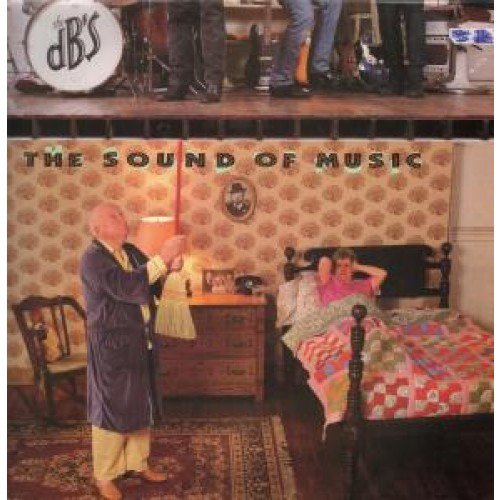
In 1987, at a time when I was starting out as a lawyer, and making real money for the first time, I was comfortable taking a flyer on a CD, and I remember getting the dB’s album The Sound of Music, probably after hearing something from it on the radio, probably WFUV. And it was good. It was filled with great, catchy songs, but my favorite then, and now, was “Change With The Changing Times,” which also featured Benmont Tench, from Tom Petty’s Heartbreakers, on organ (but not founding member Stamey). It’s a song about a man worrying that if he doesn’t keep up with his love’s changing interests, he’ll lose her. And it is catchy as hell.
Here's the part of the blog post where I should pivot from writing about the song, to commenting about how, considering the leaked Alito opinion on abortion, America is about to change, and wondering how we will change with the changing times. But, honestly, I’m so sickened by the fact that we stand on the brink of seeing a Supreme Court packed by politicians who represent a minority of Americans strip a broadly popular constitutional right from women, with an opinion that might have well simply been a picture of Alito raising his middle fingers at most of the country, and which leaves open the actual risk of rolling back other constitutionally-guaranteed rights, ranging from marriage equality, contraception, sexual privacy, and even public school funding, that I really don’t want to go there. Any more than I just did.
To say I am fond of pedal steel guitar would be an understatement; I bloody adore the instrument and how it sounds, whether as high lonesome shorthand for classic country, or, indeed, often more whenever it pops up in unexpected settings. This year we lost two or the best, two, even if I often confused the one with the other, with this piece probably now continuing to prolong the blurring of my Bucky with my Buddy.
So, in alphabetical, we got Mr Bucky Baxter, who left us in May. Born in Florida 65 years ahead of that, he was perhaps best known for his pivotal role in the bands of Steve Earle and of Bob Dylan. Indeed, he was a Duke for the three breakthrough albums of Earle's early career, Guitar Town through Copperhead Road, appearing sporadically thereafter. His was the steel in R.E.M.'s World Leader Pretend, and on Ryan Adam's Gold album, he featured on Joe Henry's Trampoline and, possibly surprisingly, played on and produced a record, Cockahoop, by the ex-Catatonia singer, husky welsh chanteuse, Cerys Matthews. But it was as a Bob Dylan regular on the Never Ending Tour throughout most of the 90s that his name became best known. Indeed, Dylan had come across him at a Steve Earle concert, asking him to teach him how to play the instrument. (History has not revealed how well that went.) In the studio, he also appeared on Dylan's Unplugged and Time Out of Mind, the latter, not without coincidence, one of my favourite Dylan's.
Fearless Heart/Steve Earle & the Dukes (1986)
World Leader Pretend/R.E.M. (1988)
Tryin' To Get To Heaven (live)/Bob Dylan (1999)
I have to mention Dylan some more, as Baxter was there for one of the two ever times I have caught the Bob live, when he headed a stormy Friday night in July at the Phoenix festival, near Stratford-on-Avon, in 1995. If Blackbushe a decade before had been sublime, this was ridiculous, all songs unidentifiable in the muddy sound, all party to tuneless new arrangements. All unidentifiable until Baxter's steel gave a hint of the original melodies, a highlight in an otherwise forgettable evening. O, had it been to the standard of the Vienna concert, above, four years later.
Baxter wasn't all that ambitious, it seems, happy to be a contributor rather than the focus of attention. But he did make one solo recording, Most Likely No Problem, an instrumental album which is worth the seeking out, with an astonishing who who's of participants.
The Big Difficult/Bucky Baxter (1999)
Here's a nice interview which gives an idea of the man. Finally, those with a finger on the pulse might know he is/was the father of the up and coming Rayland Baxter.
Buddy Cage, not to be confused either with another fellow deceased steel maestro Buddy Emmons, was a Canadian by birth, born a few years ahead of Baxter, in 1946. Another musician proficient in his instrument from an early age, he first drew attention in canadian country-rockers, Great Speckled Bird. However it was his longterm tenure in the steel seat for Grateful Dead offshoot band, New Riders of the Purple Sage, between 1971 and 1982, that he will be best remembered, taking the reins of the instrument from Jerry Garcia. Frankly, a much more adept player than Garcia. He also did a load of sessions, including, the ubiquitous Dylan reference, laying down some tracks on the many and varied Blood on the Tracks sessions, if only once on the actual studio release.
Calgary/Great Speckled Bird (1970)
Gypsy Cowboy/NRPS (1972)
Peggy O/NRPS (2010)
Although the Riders continued for several more years, Cage had not been tempted to return to that fold until 2005, until after founder member, John Dawson had put the original band to bed in 1997. Their 2012 release, 17 Pine Avenue, I thought terrific and well up to the standards of their earlier work, better even, tighter without their notorious cannabinoid looseness of yore.
The intervening years had him back to guesting on innumerable projects, but he never made a solo record. Perhaps closest might have been if the music from a Dutch tour, in 2005, had been ever committed to posterity. In cahoots with Derek Trucks and Sonny Landreth, both accomplished legends on slide, it was called Steelin' and Slidin'. (I wonder if any clips are available?)
Steelin' and Slidin'/Trucks, Cage and Landreth (2005)
Here's an interview with him from his second spell with the band. Multiple myeloma took him in February.
Since its formation in 1968, King Crimson has gone through many different lineups and musicians, and over the years, there has been some sort of official differentiation between “members” and additional musicians who recorded and/or toured with the band, although some people moved between the two statuses. In 2020, we lost three musicians affiliated with King Crimson, two full members, and one who declined the rights and privileges, such as they are, of that status. Two of those remembered here were involved in 1970, the third played during the more recent configuration of King Crimson, from 2013 until his death earlier this year.
Gordon Haskell was a school friend of King Crimson leader Robert Fripp, and played with him in a band when they were teenagers, before moving on to become the bass player in the band Fleur de Lys (and, apparently, briefly sharing a flat with Jimi Hendrix). They also acted as a house band for Atlantic Records, which gave Haskell the opportunity to work with noted producers, including George Martin, Arif Mardin and Glyn Johns. He recorded a solo album in 1969, but it went nowhere.
Meanwhile, his old friend Robert was having problems of his own. After recording In the Court of the Crimson King, a legitimate classic, and touring behind the album, both Ian McDonald and Michael Giles left the band. Then, singer/bass player Greg Lake quit, planning to form Emerson, Lake and Palmer. After hiring, and then sacking, the still unknown Elton John (who got paid £250 for not working) as the vocalist on Crimson’s second record, In The Wake of Poseidon, Lake ultimately agreed to sing on the album (in exchange for Crimson’s PA equipment), but there was one song that Fripp felt wasn’t right for Lake. He approached Haskell, who recalled, “I straight away, without any hesitation, said ‘absolutely not’. I was totally R&B oriented and it wasn’t my sort of music. I didn’t like King Crimson. Anyway, after a while I said I’d think about it, and my wife got to work on me because she wanted a regular income so in the end I joined.” Haskell sang on one song, “Cadence and Cascade,” which is a beautiful ballad, beautifully sung, as you can hear at the link above.
After completing Poseidon, Fripp regrouped again, adding more musicians, who began work on Lizard, which was jazzier and more avant-garde than the two prior records, and it was not a good experience for Haskell, who sang and played bass on the album. He didn’t like the music, noting that “At the end of one song, ‘Indoor Games’, I just burst out laughing. You can hear it on the album. They thought it was really freaky, that I’d understood the lyrics and my part – but the truth of the matter is, it was a lousy song, the lyrics were ludicrous and my singing was atrocious so I just burst out laughing. And they thought it was wonderful!” Haskell left the band, acrimoniously, during rehearsals for live performances, and later King Crimson for royalties.
After leaving King Crimson, Haskell struggled for years, before having a hit single in England, “How Wonderful You Are” in 2001 and he followed that up with a successful album, Harry’s Bar, in 2002. His next record was not as well-received, and he was released by his label after a dispute. From then on, Haskell continued to release music without much success, and wrote an autobiography, The Road to Harry’s Bar.
Haskell died from cancer on October 15, 2020 at the age of 74. Announcing his death, the official King Crimson website noted, “The
experience was not a happy one for Gordon and he bitterly regretted his
decision to join,” and that Haskell had “come to detest” the song
“Cadence and Cascade,” which is a shame.
Keith Tippett also played on the Poseidon and Lizard albums. Allmusic’s biography of Tippett states that he “held an unparalleled place in British contemporary music,” due to the breadth of his collaborations, the variety of music he wrote and performed, and the influence that he had on other musicians. Tippett's work ranges from free improvisation as a solo pianist and with duos and small groups, to compositions for, and performances with, contemporary classical groups and large-scale works for Jazz Orchestra.
Tippett (whose last name was actually Tippetts, which he changed for the delightful reason that he was tired of seeing his name on posters with the apostrophe after the last “t” and not the “s”), was a classically trained pianist who had formed a jazz band, the Keith Tippett Sextet, which released its first album in 1969. Other members of that band included Elton Dean, later of Soft Machine, and Mark Charig and Nick Evans, who also contributed to King Crimson albums. Tippett was hired to play piano on Poseidon (including some pretty playing on “Cadence and Cascade”), and along with Charig and Evans, played on Lizard and Islands. His influence in King Crimson increased over time, and he claimed that Fripp offered him co-creative control over the band if he would join full time. However, as he remembered, “I didn’t want to join King Crimson, not because I didn’t like King Crimson, I had great respect for the band, but I wanted to be doing other things, I didn’t want to just go out on the road for eighteen months. I had too much love for the sextet and it would have taken me away from the jazz scene.”
One of those things was to put together a 50 piece band, Centipede, that included members of his jazz band, along with members of Soft Machine, King Crimson, and other bands that skirted the progressive rock/jazz genres, along with students from the London School of Music. It released an album, Septober Energy, produced by Fripp (who had appeared live with the band, but was not on the album), in 1971. Melody Maker wrote about this album, “In this one piece he has done more than almost anybody else that comes to mind in breaking down barriers in rock, jazz and classical music” The album was, however, not commercially successful, probably for the reason that it broke so many barriers.
Tippett continued to perform and record improvisational and avant-garde jazz music and jazz/rock with various combinations of musicians, including many from the Canterbury scene, until fairly recently—his discography as a leader and sideman is vast.
Tippett succumbed on June 14, 2020 to a heart attack after two years of recurring illness at the age of 72.
After disbanding a version of King Crimson in 2008 and playing with various Crimson-related musicians before briefly retiring, Fripp decided to form a new King Crimson lineup, this time with three drummers. One of the drummers was Bill Rieflin, who had played with, among others, Ministry, KMFDM, and R.E.M. after Bill Berry left the band. Although mostly known for playing industrial and darker rock music, his stint with R.E.M. and his work on other projects demonstrated the wide scope of his talent. In addition, he was a prolific session musician, recording with artists from Nine Inch Nails to experimental rockers Swans and pop singer Robbie Williams. He released his first solo album, Birth of a Giant in 1999, which included contributions from Fripp and Trey Gunn, who was in King Crimson at the time.
Over the years, Rieflin, who also played keyboards and other instruments, had collaborated with Fripp in a number of different projects, and participated in Fripp’s Guitar Craft project, about which he stated (before joining Crimson), “I couldn't possibly describe in any detail the impact this has had in my life; I can say that it was and continues to be significant. Were I to say "life-changing," this would be true, but it wouldn't begin to communicate the depth of the experience.”
So his inclusion as part of the new “seven-headed monster” configuration of Crimson, along with Fripp, Tony Levin, Mel Collins, Pat Mastelotto, Gavin Harrison (who had played in prior versions of the band), and Jakko Jakszyk, was not surprising. I saw this band play in 2014 and was blown away by the power and intricacy of the percussion work (as well as by the rest of the band, of course). Here’s a video of the three drummers, with Rieflin in the center, “soloing” during rehearsals in 2014, highlighting how they play both in unison and separately.
Rieflin took a “sabbatical” from the band in 2016, but returned in 2017 to create a “Double Quartet” formation, but rather than have four drummers (that would be crazy, right?), he focused on “mellotron, keys and fairy dusting, rather than using drums as a main instrument.” He didn’t appear on the autumn US tour in 2017 (when I saw them again, and they were, again, great), but returned in 2018 before taking another sabbatical in 2019.
Rieflin died on March 24, 2020 from cancer at the age of 59.
As in, yes, if you are asking me whether I won't, no thanks, I will survive. I will, rather than rejecting the alternative option, but this song offers so much that is apt to this theme that I will disregard any earlier appearance, a decade ago. (Even if it uses up my favourite version ever.) But this is where we all, the survivors, or most of us, stand on 2020, defiant and steadfast against the tide of badness, with light beginning to seep through the cracks. Covid 19? The vaccine beckons. Donald aka Agent Orange? The back door is open and waiting. The economy? Hmm, well, we'll have to see on that one. Boris and his chumocracy of cronies? That too.
It's true, the song was originally a sturdy polemic against a returning suitor, or as wiki puts it so neatly: "the narrator's discovery of personal strength following an initially devastating breakup". The assertive lyric, carried by and coupled with an uplifting and anthemic tune, guarantees for a sea of raised hands on the dance floor, and not just by righteous rejectees. I love it.
Gloria Gaynor introduced us all to the song, an astonishing 42 years ago. I was not, it's fair to say, a fan of disco in 1978, but I could see this was one terrific song. Indeed, even the stuffy old Library of Congress put it up, in 2016, for the National Recording Registry, alongside such essentials of every collection as Alan Sherman's Hello Muddah, Hello Faddah and Swanee, by Al Jolson. (I jest: they have a cracking selection!) VH1 gave it the accolade of the Greatest Ever Dance Song in 2000, Rolling Stone only managing it a number two in their 2012 Best Disco Tracks of All Time.
Over the years many have tried to bring their bit of something to the song, many, most, in truth, poor and lucklustre facsimiles, but some have been really rather interesting. A rule I have is that, if it includes the rolling piano intro, I will listen to no more. Here's a few that don't:
Dig a little beneath the initial hit of gruyere, and this, by the Puppini Sisters, is actually a delight. I don't go a whole bundle of the recalibration of songs into a faux-forties Andrews/Beverley Sisters style, but this transcends my prejudice, by playing rather more with the arrangement, some glorious walking bass and aan unexpected choral middle eight and coda.Who the Puppini Sisters? A clue; they ain't, but one actually is Puppini by name and they were doing this sort of thing way ahead of Scott Bradleee, if from downtown London rather than New York. (Has Bradlee tackled the song? Of course he has.......)
Much as I adore R.E.M., I confess to finding their throwaway b side live/impromptu covers a slightly less than intrinsic need, but, against that odd, this one conveys just enough charm to make it, Stipe's stumbling through the lyrics a little haphazardly falls just the right side of endearing.
SMM used to have a gentleman's agreement not to include anything too new, mainly then a naive hope that it would keep the RIAA off our case, from the days we put up mp3s. This is barely a couple of months old, but in the spirit of survival, or its flip, given we may not be here next year, mankind, not the site, I feel I have to place it. A terrific version, a slow chant of faith. Lykke Li is a Swede, one of a bevy of Nordic artists firmly finding their feet in the world of electronica and ambient.
And so finally to Anohni, or, as she still was at the time of this recording, Antony, a song so suited on so many levels, not least the comments on youtube, made to proclaim the ownership of this wracked performance. Some say she overeggs near all she touches. I say bring it on.
So, my new year resolution: survive!
(OK, you want the Cake one too? We all need Cake in these dark days, the darkness potentially deeper ahead the dawn.)
No, not, really not a snarky, snidey post at all, but a comment that might not have been out of place even as little as a year ago. And, had the forces of Agent Orange had their way, would be as true in another year. But, for sure, everybody now knows who Joe is. So what if the lyrics, clearly a companion song to Hey, Joe, don't fit the circumstances, never let that get in the way of a great song saluting a greater moment. And, if we disregard the main thrust of the words, and cherry pick the odd phrase, and disregard the new order New Order allegedly might have been celebrating with their name, yeah, it's an OK comment. Who listens to words anyway? And I can't really buy into conspiracy theories about Manchester pop groups. "There's a storm in the sky passing over"
Well done, America. Now how do we get rid of our own World Leader Pretend over here in the UK?
It's been a while since I've posted on SMM. No excuses--just the unpredictable rhythms of life that sometimes stir a current that takes you in strange directions. Riding the waves hasn't gotten me too far, a few thousand words deep into other projects, but not closer to anyplace special. Missing having a place to talk music with like minded obsessives, and with the permission of the venerable KKafa, who answered the door when I knocked, I'm back.
SMM is a place I always find the kind of unique connection that good writing and great music can make in a life. And I really missed that.
So, hello. Again.
Our theme is “Open/Close.” I looked through my library for songs about openings and closings, and when I came across the 1998 hit, "Closing Time", by Seminsonic, and felt the familiar, shuddery revulsion that ubiquitous, somehow pseudo-anthem always brings up, and used that as impetus to get a little creative on the theme.
I decided to look at great opening and closing tracks from albums. How important is the first introductory burst of sound from the opening of an album, the signal of what is to come? If it's weak, a song you really don't like, the album as a whole might be doomed. It's a great song, an epic introduction, you'll never forget that perfect sensation of hearing it for the first time. Example: REM's "Radio Song", from 1991's Out of Time, was such a grave sonic let down for me that it kind of ruined the band, once my near beatific favorite, for me permanently. Whereas, "Up The Beach", from Jane's Addiction's explosive Nothing's Shocking, was akin to perhaps seeing the Red Sea part under the hand of Moses. Or something similarly miraculous. Oddly, both albums, while wildly different in so many ways it seems silly to compare them, could have been vastly different, even better, had they been tracked differently. Out of Time really should have opened with "Losing My Religion", that strident, minor key pop mediation on anger, played on a very non-top 40 mandolin; Nothing's Shocking would have been even more epic had it opened with "Coming Down the Mountain", an pure avalanche of a song.
The opening, then, is of the utmost importance. As is the ending. And how many albums end as memorably as they started? It's surprisingly few. But, then, that is my opinion and comes from my lament at the seemingly lost art of the full length album, and the collection of songs as a celebration, not just the single. Growing up, the 45, then the cassingle, was always secondary to the whole LP. The best bands put out the single, and the B-side was the 'unreleased' material. Kind of essential to the rest of the album, a completion of the experience as a whole. But, B sides that are better than the A is another topic entirely.
I scrolled through my Spotify feed (Sadly, I don't have a single CD, LP, or cassette in my possession right now), and found what I thought might be a good start to, and by no means exhaustive or exclusive, list of a handful of the greatest pairings of opening and closing tracks to feature on an album.
In no specific order, I posit the following opening and closing tracks to be the GOAT
The Rolling Stones, Goat's Head Soup: Side A, track 1: "Dancing With Mr. D"; Side B, Track 5: "Star, Star". Wicked, naughty, steeped in dark arts, these two songs provide the caps to my favorite Stone’s album ever. 1973's Goat's Head Soup, is a druggy, boogie down trip. There’s a strangely sinister vibe to the whole collection. "Mr. D" concerns death, and possibly meeting the devil to discuss matters related to how the narrator might exit this world for another. "Star, Star" is...well, if you haven't heard it, you've heard about it. It's classic Jagger bravado, and might be the response to Carly Simon's mysterious "You're So Vain." It doesn't really ever make itself clear on that, but it is a celebration of the activity that culminates in the ‘little death’...to draw a connection. If there's a reason people thought rock n roll might be the devil's music, Goat's Head Soup makes for pretty compelling evidence.
AC/DC, Highway to Hell: Side A, track 1: "Highway to Hell:; Side B, Track 5: "Night Prowler" This classic opens with one of rock’s greatest travelogues, an invitation to travel straight to rock n roll hell, set to an instantly iconic guitar riff. The whole album is amazing, but starting with such a striding opening salvo, you are along for the ride, no matter where it takes you--I said it was hell, right? AC/DC proceeds to walk you along the same dark, dirty path as the Stones did, and they distinguish themselves as the only band that makes the Devil seem like a cool guy you want to hang out...The album closes out with the dark, blues dirge"Night Prowler", a sinister soliloquy of a serial killer, delivered by Bon Scott in his signature howl. The song generated a lot of controversy, so it's best just to dig it as AC/DC's unique take on the blues.On a strange note, the last words ever recorded by Bon Scott, as the song and the album fade out are "Shazbot nanu nanu", the famous catchphrase of one Mork, from a place called Ork...it was meant to be funny, but it is perfectly sinister here.
Prince and the Revolution, Purple Rain: Side A, Track 1: "Let's Go Crazy" is about as close to church as one can get. The man in the pulpit is calling the faithful to the ceremony, and it's impossible not to heed the call. Side B, track 4, "Purple Rain" is epically beautiful, achingly sad, and elegiac. And it was somehow transcendent when it was new, a gospel tune over a rock orchestra, and a searing guitar solo to end. The song has never lost that sense of mournful beauty. It's poignant now, more than ever, as Prince's going home hymn. When I get to heaven, I too, hope to hear "Purple Rain" playing me in.
The Who, Who's Next--not a question so much as dare to step up to a fight. Side A, track 1: "Baba O'Riley" is arguably the greatest, most imitated, most triumphant rock anthem. Ever. If you like rock n roll, have ever been moved by the power of simple chords, pumped at high volumes, chances are, "Baba O'Riley" set you down the road to glorious ruin and riot. The name is still a misnomer, even to people who love the song. The lyrics are strange and a bit more like a medieval pastoral than a stadium sing along. But, when Townshend sets the windmill going, and you're invited to scream the words that so aptly sum up so much of our collective youthful glory ("Teenage wasteland!"), you have to believe in the power of three chords and the truth. Side B, Track 4 is "Won't Get Fooled Again", which contains so much legendary greatness it is hard to call it just a song. It's a call to arms and poetic in its anger. The song gives eloquence voice to rail againstyour frustrations and limits, and is a license to break the rules that keep you tied down. It crescendos with the greatest scream ever recorded in modern music. It's the song Whitman might have recorded, had he been born 100 years later. And, in the end it's the greatest 'eff you' ever recorded.
Who's Next, one of rock's great albums, starting and ending with two of the most powerful songs ever recorded , is one the greatest rides you can ever take in the grooves of a vinyl record, and the greatest fulfillment of rock music's transformative promise. And, my obvious vote for greatest opening/closing set in rock history.
I know that my chosen song for this piece asks a question, but the answer to the question isn’t the mystery. In this case, it is the question itself, and the context in which it became famous, that is the mystery, albeit one that was solved years after the precipitating event, and the release of this song.
On October 4, 1986, newscaster Dan Rather was walking on Park Avenue in New York to his apartment after having dinner with a friend, when he was attacked and beaten by two “well-dressed” men, one of whom kept demanding, “Kenneth, what was the frequency?” Why Rather was attacked, why the assailant demanded to know the “frequency,” and kept calling Rather “Kenneth” were mysteries. Rather was quoted as saying, "I got mugged. Who understands these things? I didn't and I don't now. I didn't make a lot of it at the time and I don't now. I wish I knew who did it and why, but I have no idea."
The New York Timesarticle about the incident referred to the motive as a “mystery,” so I guess this officially validates my choice of subject.
The phrase, “What’s the frequency, Kenneth,” became part of popular culture afterwards, and in October, 1993, about 7 years after the event, R.E.M. recorded a song with that title, and included it on the 1994 album, Monster. According to Michael Stipe, the song isn’t directly about the Dan Rather incident, but is about the Generation X phenomenon in contemporary mass media, sung in character as an older critic whose information consists exclusively of media products:
I wrote that protagonist as a guy who's desperately trying to understand what motivates the younger generation, who has gone to great lengths to try and figure them out, and at the end of the song it's completely fucking bogus. He got nowhere.
Rather actually performed the song with R.E.M. on the Late Show With David Letterman. Based on that clip, it is no mystery why Rather did not pursue a singing career.
In 1997, the mystery was solved.
Just prior to the release of Monster in 1994, William Tager shot and killed an NBC technician, Campbell Montgomery, outside the sound studio of the Today Show. Tager had tried to enter the the studio with an assault rifle, and Montgomery died in an attempt to block him. Tager was arrested and reportedly told police that the television network had been monitoring him for years and beaming secret messages into his head. He apparently came to NBC looking for a way to block those transmissions.
Tager was convicted of murder and sentenced to 25 years in Sing Sing prison, not far up the road from where I’m sitting right now, and later told a psychiatrist that he was a time traveler from a parallel world in the year 2265. A convicted felon in the future, Tager said he was a test-pilot volunteer in a dangerous time travel experiment. If he was successful on his mission, his sentence would be overturned and he would be set free. The authorities in the future kept tabs on him via an implanted chip in his brain. During the examinations, Trager also confessed that he had attacked Dan Rather because he mistook him for the Vice President of his future world, one Kenneth Burrows.
When Rather saw a picture of Tager in the newspaper, he identified him as the man who attacked him.
Of course, Dan Rather’s career took off after his coverage of the assassination of JFK in 1963, an event which some believe has never been properly solved. They’re wrong.
This is going to be one of those posts that tries to create a fusion of different things. Let’s see if it works, or if it turns out to be like “cold fusion.”
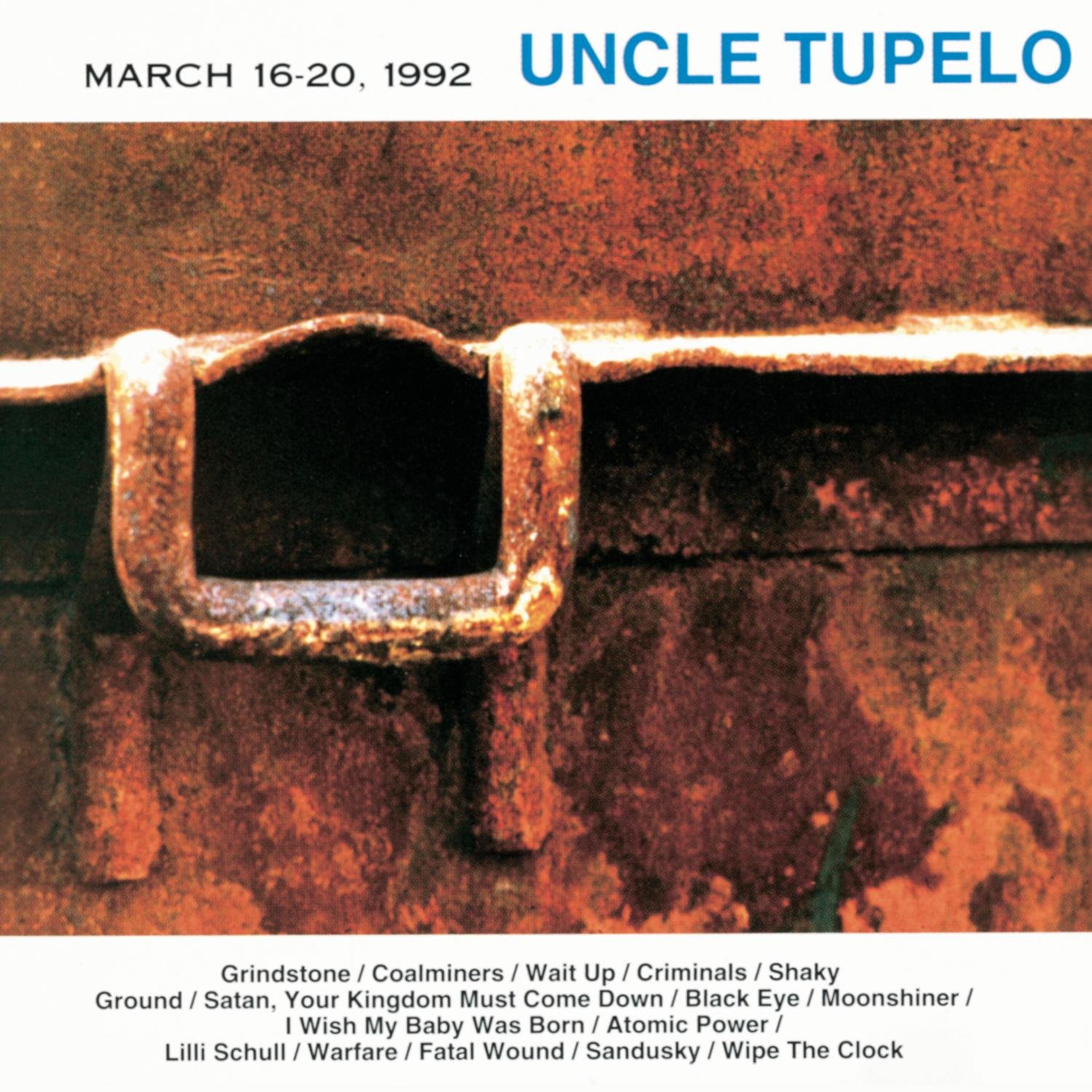
Remarkably, although I’ve mentioned them in writing about Jeff Tweedy, Jay Farrar, and Wilco, I’ve never written a post on this site about Uncle Tupelo (although I did a long one at Cover Me). I wasn’t aware of the band during their existence, and learned about them after discovering Wilco and Son Volt, the two bands that were formed when childhood friends Tweedy and Farrar could no longer coexist. I wrote in detail about Uncle Tupelo’s history in that Cover Me piece, so, if you are really interested, go check it out, and come back here when you are ready.
R.E.M.’s Peter Buck heard Uncle Tupelo perform a cover of the Louvin Brothers’ song “Great Atomic Power” at a concert, and contacted the band after the show. The three musicians found a great deal of overlap in their musical interests, including bluegrass, and decided to do an acoustic project together. The band’s prior album, Still Feel Gone was, for the most part, a rocker, so it was a bit of a risk to follow it up with an acoustic album, and their record company was pressuring them to move to an even more rock-oriented sound, to compete with the emerging grunge movement. But Farrar and Tweedy were, as always, headstrong, and pissed at their label’s failure to pay them royalties, so they must have figured, “Fuck it,” we’re going to work with Peter Buck, and do an acoustic album.
That album, March 16–20, 1992, mixed classic country tunes with originals that fit seamlessly with the older songs. Roadie Brian Henneman, who later founded the Bottle Rockets, even got to play the mandolin that was used in “Losing My Religion.” Uncle Tupelo’s cover of “Great Atomic Power” is very faithful to the Louvin Brothers’ original, and it is a very, very odd song.
It mixes the imagery of a devastating nuclear explosion with Armageddon, and asks the question—when that horrible time comes, will you be ready to meet your savior? As the lyrics inform us:
There is one way to escape and be prepared to meet the Lord Give your heart and soul to Jesus, He will be your shield and sword He will surely stand beside and you'll never taste of death For your soul will fly to safety and eternal peace and rest
The Louvin Brothers, Ira and Charlie, were popular in the 1950s and 1960s, and came from the gospel tradition, as many country singers did, so the fire and brimstone is not all that surprising. Charlie seemed to be the stable brother, while Ira was an alcoholic, who engaged in erratic and often abusive behavior, including toward his brother. Ira was married four times, and wife number three shot him four times in the chest and twice in the hand after he allegedly tried to strangle her with a telephone cord. Ira once made a racist remark that so angered Elvis Presley that Elvis refused to record any Louvin Brothers’ songs, probably costing the duo significant royalties.
Ultimately, Charlie had enough, and the brother act broke up in favor of separate solo careers. Ira and wife number four died in a car accident in 1965, when a drunk driver hit their car; Charlie lived until 2011, and recorded and performed until close to the end.
The Louvin Brothers make a brief appearance in Episode 4 of the Ken Burns documentary, Country Music, before the documentary moves on to a more popular act, The Everly Brothers, which is ironic because a suggestion that the Louvins change their sound to be more like the Everlys reportedly depressed Ira and contributed to his alcoholism.
As I write this, I’ve watched four episodes of Country Music and am enjoying it immensely. I really know little about the history of country music—it was not something that I listened to growing up in the NY suburbs. Like the blues, much of my knowledge of the genre has come from listening to covers, like “Atomic Power,” and going back to listen to the originals. And as I have become increasingly interested in Americana music, I find myself more interested in the music’s roots.
I’m someone who finds how things start to be fascinating, so it has been interesting learning about the long background and history of country music. One of the things that I have found striking is that even in its earliest days—going back to the 19th century—one of the hallmarks of country music has been nostalgia for older, simpler times. And I get that, although it often seems that there’s a real fear of trying anything new and radical. Which is why Elvis Presley, who came from a country and gospel tradition clearly scared the crap out of, and was rejected by, the establishment.
And it is interesting, too, that when the Louvin Brothers, who were traditionalists, chose to write “Great Atomic Power,” about something new and scary, rather than write about the potential of the new technology, they (and co-writer Buddy Bain, a musician and DJ) focused instead on its destructive power, and tied it to traditional religion.
For what it is worth, what made Uncle Tupelo stand out from the crowd was the way that they fused the tradition of old time country music with the new energy of punk, so it is also interesting that March 16–20, 1992 sounds so traditional. It is a bit of an oversimplification, but as time went on, it seems like Farrar (and Son Volt) has more often followed the country tradition of looking backwards, while Tweedy (and Wilco), have tended to look forward, including more rock and experimental influences in their music.
Of course, the potential of atomic power was touted by many, and numerous nuclear plants were built in the US and elsewhere, because of the desire to move away from depleting and polluting fossil fuels, until, at least in this country, the tide turned against them due to the danger of accidents and the difficulty in safely storing the radioactive waste. However, there seems to be some attempt to revive the industry, as it becomes clear that use of carbon based fuel continues to damage the environment, although its serious risks continue to be an obstacle.
The risks, of course, are real, as Chernobyl and Fukushima, among others, remind us. And I recall, that during my sophomore year in college, one of my roommate's friends stayed with us when his college was closed because of the partial nuclear meltdown at Three Mile Island.
A few years later, when I was a very junior associate at a very large Wall Street law firm, I was mostly working on two cases. One was the representation of Drexel Burnham, in the various investigations arising from the Mike Milken/junk bond issues. The other was representing Public Service of New Hampshire in proceedings to determine whether the costs involved in constructing the Seabrook nuclear power plant were reasonable, and could thus be passed along to the ratepayers. For the first one, much of my work revolved around gathering and reviewing Drexel Burnham documents to see whether they were responsive to an ever growing number of government subpoenas. The second one had me and a slightly more senior lawyer traveling regularly to Philadelphia to prepare our clients and monitor extremely dull hearings about arcane engineering issues.
Neither of these were particularly interesting, and I did have some qualms about representing a nuclear plant, but that’s the way it goes as a young lawyer at big firms.
One day, though, the senior partner on the Drexel case offered me the opportunity to spend a week (with other lawyers) at Drexel’s office in Beverly Hills. This was during the winter in New York, so it seemed like it would be fun. And, in those days, we all flew first class and stayed in fancy hotels. I was excited. Shortly after that, the senior partner on the Seabrook case offered me the opportunity to spend the same week in the small town in New Hampshire where the plant was, doing work in a makeshift office on the construction site. I, not at all regretfully, told him that I couldn’t, because I was going to Beverly Hills. A little while later, I got a call informing me that I was going to fly to California, spend half the week there, then take a redeye to Boston and drive to Seabrook. I will never forget that one day, I was staying at the Biltmore Hotel in Beverly Hills and walking around Rodeo Drive in warm weather and the next day I was tramping through the mud in the cold, and staying at the Hampton Falls Inn, a motel near the plant. At that point, I was no fan of atomic power, great or not.
I suggested this theme (or something like it), thinking that there were large numbers of songs that fit, but strangely the first thing that came to mind when I sat down to write was the name Bill Million, best known as a member of The Feelies (and, it turns out, it isn't even his real name).
Coming out of Haledon, New Jersey, The Feelies formed in 1976 around guitarist/songwriters Million and Glenn Mercer, reportedly after Million, tripping on acid, passed Mercer’s house and heard his band playing the Stooges “I Wanna Be Your Dog.” They soon gained a reputation as a live band. Ultimately, the group also included Keith Clayton on bass and Anton Fier (that guy!) on drums.
The Feelies remarkable first album, Crazy Rhythms, came out in 1980, during my WPRB days, and I remember thinking that it was unlike anything I had ever heard before. If you took the early Talking Heads’ quirkiness and twitchiness, Television’s intertwined guitars with strumming that would be made more famous in a few years by R.E.M. (who were influenced by The Feelies), add a touch of Dick Dale surf guitar, a bit of Phillip Glass/Steve Reich minimalism, some Eno drones, a heaping spoonful of Velvet Underground and back it with what is almost always referred to as “nervous drumming,” you might come close to understanding what they sounded like. And yet, it was something totally original. The Village Voice ranked it as the 17th best album of 1980, just behind X’s Los Angeles and ahead of Bowie’s Scary Monsters, The Rolling Stones’ Emotional Rescue, Joy Division’s Closer, and Argybargy by Squeeze, to name a few. Rolling Stone has ranked it as the 49th best album of the Eighties.
The album is many tracks deep, and we played the crap out of it. That year, the band performed at a party in a campus gym, and while their energy was evident, the bad sound and acoustics made it frustrating, because it was impossible to really appreciate the precision with which they played. Those of us who were familiar with the album enjoyed it, if with some disappointment at the sound, but I suspect that the performance failed to make many converts.
For various reasons, The Feelies splintered after Crazy Rhythms, with members leaving and starting side projects. They pretty much dropped out of sight until 1986, when Mercer and Million, with bass player Brenda Sauter, percussionist Dave Weckerman (who had returned to the band after leaving before Crazy Rhythms was recorded), and drummer Stanley Demeski released the folkier, less nervous, The Good Earth, produced by Peter Buck of R.E.M. They also appeared in Jonathan Demme’s movie, Something Wild. 1988’s Only Life was The Feelies' major label debut, and it was followed in 1991 by the somewhat harder rocking Time For A Witness.
And that was it, it seemed, for The Feelies.
But Million’s Princeton student son had been jamming with Mercer, who lived nearby, and that led to a reunion and a new album in 2011, Here Before, which simply sounds like it hadn’t been a decade since they had been together. Early this year, they released another fine collection, In Between.
Most of the band’s lead vocals are handled by Mercer, but our featured song, “Raised Eyebrows,” from Crazy Rhythms, is essentially an instrumental that features Million injecting the phrase "You get old." It is much better than my description.
Or what my wife calls slidy steel. Too obvious, too literal? Well maybe, but I cannot let this pass, the instrument being my favourite musical sound, as well as being a great way to pep up lack-lustre material: go ask Dylan*! But who or what to feature, as there are way too many wonderful players to give each a shout.
Born and bred in the UK it was never something I had knowingly heard until my teens, until a sideways lurch from my love of the Byrds led me to the Flying Burrito Brothers. I was hooked by those searing, sweeping shards of glissando, melancholia on max. For a while, the mere presence of steel was enough to draw me in, my understanding of the instrument leading me away from Kleinow to Perkins, from Rhodes back to Maness, taking in the heights of Emmons and Leisz along the way. Seemingly a near impossible instrument to play, needing co-ordination of fingers, hands, knees and feet, all working against each other, it has escaped an exclusively country music manifestation and has infiltrated other genres. Which is, eventually, where I get to the titular player.
Cole is english. That alone used to be remarkable in its own right, but his list of sessions reveal the degree with which he is held in international acclaim. Put off by the ubiquity of "plain" guitar, and intrigued by the 'Sleepwalk' of Santo and Johnny, he sold all his toy trains to buy, first, a lap steel, then retrading up to the full pedal steel experience. Initially orthodox, applying country tropes to a standard heavy rock framework, in the band Cochise, it was really after their demise that he found his feet (knees, hands and fingers.) Big breakthrough, arguably, was his appearance on Elton Johns's equivalently breakthrough album, 'Madman Across the Water', on standout track, 'Tiny Dancer'.
But it is his more exotic excursions into ambient, jazz and electronica that really crystallise for me the enormity of his talent. Here are examples of each:
Pavane pour une enfante défunte ('Transparent Music' 1989)
Chasing a dream ('Lush Life' 2009)
Hipalong hop ('Stop the Panic' 2000)
These are but tasters for the horizons he expands, alone and in collaboration, yet still as likely to turn up, in a tiny club, playing still alongside old chums like Terry Reid or Hank Wangford. I have certainly travelled cross-country for the opportunity to see the sidesman, not the singer. But pride of place in the Cole canon has to be this performance, with R.E.M., as part of a british TV special. Never has Country Feedback fed so far back into emotion. Listen and weep.
Things are going to change on January 20. In the abstract, as an American citizen, I’m pleased that our country has a long tradition of peaceful transfers of power between incoming and outgoing presidential administration. But in the real world, I really wish that there was some way to prevent the president elect from taking office. As I wrote elsewhere a few days after Election Day:
It made me wonder how this great country could elect someone whose apparent view of appropriate behavior is the exact opposite of how I was raised and how I raised my children. I know that he is a liar, a bully, a sexual predator and a man who had no compunctions mocking a person with a disability, the parents of an American serviceman who died in action, and women who fail to meet his personal standards of beauty, but whether or not the candidate himself is actually a racist, homophobic, antisemitic, misogynistic, white supremacist, that’s the rhetoric that he used to fire up his supporters.
So, yeah, I’m not a fan.
I mean, whether or not the latest Russia blackmail material story is true or not, what amazes me is thatit actually seems plausible that someone who bragged about grabbing women's genitals without consent or joked (?) about dating his own daughter would hire Russian hookers to provide a golden shower. Plus, we know how much he loves gold.
It is hard to tell what the lyrics are to The Fleshtones’ “The World Has Changed,” because singer Peter Zaremba has a bit of a mushmouth, and they don’t seem to be available anywhere on the Internet, so I can’t really tell whether the whole song works for my premise, but the chorus, “Don’t you understand the world has changed?” is good enough. The Fleshtones, by the way, formed in Queens, NY, my native borough, in the mid-1970s and their brand of fun, sloppy, supercharged garage rock meshed well with the punk and new wave scene in New York during that period. I remember playing them on the radio, and this song comes from their first full album, Roman Gods, on I.R.S. Records. The Fleshtones, despite a fairly strong cult following, never really hit it big, like their label mates The Go-Go’s or R.E.M., but have continued to record and perform to the present (unlike The Go-Go’s or R.E.M.).
Back to politics. In 2008, Barack Obama ran on a platform that emphasized hope and, yes, change. Hope for a better future, and change from the failed presidency of Dubya. And while President Obama’s eight years weren’t perfect, they were pretty damned good. He brought a thoughtfulness and decency to the office, gave African Americans and other minority group members hope that they could aspire to the Presidency (and by implication, to anything), and extended health care to millions. He helped bring the country out of the massive recession and financial crisis that confronted him when he took office, gave the order to kill Bin Laden, and was a shining example of how to be a husband and father. Among many other things.
Two nights ago, he gave a stirring, inspirational and personal farewell speech that, fittingly, returned to the themes of hope and change that were crucial to his election. Because he, and his speechwriters, are better writers than me, let me quote a bit from that speech, on the issue of change:
This is where I learned that change only happens when ordinary people get involved and they get engaged, and they come together to demand it.
After eight years as your President, I still believe that. And it's not just my belief. It's the beating heart of our American idea — our bold experiment in self-government. It's the conviction that we are all created equal, endowed by our Creator with certain unalienable rights, among them life, liberty, and the pursuit of happiness. It's the insistence that these rights, while self-evident, have never been self-executing; that We, the People, through the instrument of our democracy, can form a more perfect union.
What a radical idea. A great gift that our Founders gave to us: The freedom to chase our individual dreams through our sweat and toil and imagination, and the imperative to strive together, as well, to achieve a common good, a greater good.
For 240 years, our nation's call to citizenship has given work and purpose to each new generation. It's what led patriots to choose republic over tyranny, pioneers to trek west, slaves to brave that makeshift railroad to freedom. It's what pulled immigrants and refugees across oceans and the Rio Grande. (Applause.) It's what pushed women to reach for the ballot. It's what powered workers to organize. It's why GIs gave their lives at Omaha Beach and Iwo Jima, Iraq and Afghanistan. And why men and women from Selma to Stonewall were prepared to give theirs, as well. (Applause.)
So that's what we mean when we say America is exceptional — not that our nation has been flawless from the start, but that we have shown the capacity to change and make life better for those who follow. Yes, our progress has been uneven. The work of democracy has always been hard. It's always been contentious. Sometimes it's been bloody. For every two steps forward, it often feels we take one step back. But the long sweep of America has been defined by forward motion, a constant widening of our founding creed to embrace all and not just some.
The President used the word “change” 19 times in his address, which I don't think is a coincidence. If you want to read a really good speech, check it out here (you can watch it, too).
We don’t know exactly how things are going to change starting on the 20th, but there are bad indications, in what the new guy is saying (or what may be in his heart), what he is doing, and what his nominated appointees have said and are saying. Let’s hope that this is one of President Obama’s “one step[s] back” after his two strides forward. Because otherwise, we’ve got a problem.
I’m a little obsessed with baseball right now, on the verge of Game 1 of the World Series. As a Mets fan, this has really been an unexpected and exciting playoff run. I’ve already discussed this in my Future post, and I’ve also written about tonight’s Game 1 starter, Matt Harvey, the Dark Knight of Gotham.
Which brings me to today’s discussion of Batman. I was utterly unaware of the Batman comics that predated the TV series that ran from January 12, 1966, to March 14, 1968. I have a pretty strong memory of watching maybe the first episode as a young child, and watching many more episodes, either during the initial run, or after school in syndication. I’m sure I knew that it was silly, even before I understood the concept of “camp.”
I never read any of the later Dark Knight stuff, or any of the later Batman comics, and while I remember seeing the Tim Burton/Michael Keaton Batman movie, I can’t remember whether I’ve seen any of the sequels or reboots (although I’m pretty sure I saw the one with George Clooney). Because I really don’t care all that much.
In fact, after all these years, it is probably the great theme song from the TV series that I remember the most. Written by the great musician, composer and arranger Neil Hefti (who also wrote the Odd Couple theme), the version that played during the credits is faster, and was arranged by the great composer and arranger Nelson Riddle. And I’m obviously not the only one with the song stuck in my brain, because the “Na na na na na na…..Batman!” meme is pretty much ubiquitous on the Internet. (There are, apparently 80 “nas” in the theme.) You can even buy shirts with it.
R.E.M. submitted their reimagining of the theme for inclusion in the soundtrack of Batman Returns, the sequel to the first Burton/Keaton film. It was rejected, and instead became the B-side to the “Drive” single, and has been included in a few box sets and anthologies. It actually hit #11 on the UK charts, and was used by the Weather Channel under local weather updates.
My song choice is a no-brainer for this month’s theme; it’s long
been in any number of my personal faves lists—I have a lot of ‘lists’, that
cover any emotional, historic, or aesthetic and are subject to as many,
probably a lot more, criteria for membership. I know—the whole list thing has
been done, thanks very much Nick Hornby…But, I don’t believe there is a true
music fan who does not naturally gravitate towards list making. It’s almost
instinctual—a way of cataloging the music one loves and justifying the
multiverse of songs, bands and genres we love. No reason one can’t have
favorites in multiple arenas of music, and revel in their love of many sounds.
The song I picked for this month’s theme fits neatly under three—probably
more—categories. One: it’s from a band that is at the top my personal Most Influential
list. Two: it is featured on an album that is on my personal Top Albums of all
Time list. And three: it is one the first songs I played live with a band
(another list—bands I’ve played in), and still one of my favorite songs to
play.
So, I present, in honor of “Cartoons and Comics”: REM’s
“Superman”… an obvious choice. The song is originally a cover by ‘60s band, The Clique. They were from Texas, and honestly: I don’t know much more about them.
REM’s version was recorded for the album Life’s
Rich Pageant, and released in 1986. It received some airplay, but not as
much as their breakthrough, “Fall on Me.”
It is also the first time bassist Mike Mills handled lead
vocals—according to the Wikipedia page, lead signer Michael Stipe did not like
the song and wanted little to do with the recording. He handles backing vocals
only on the cut.
Historically, it might be a silly little single, dashed off
and added to the album to perhaps lift the spirit of the thing, add a little
levity in an otherwise somber, yet still emotional driving set of songs.The originally is garage rock at it’s best: sludgy guitars, churning and ditzy rhythm, and full of hippy, 1960’s bounce and
sunshine.
Lyrically, I like the fact
that it takes an iconic story of a guy we all know (Superman), and puts him in
the place of any average love sick dude, pining for a girl he probably has no
chance of getting. Is it really Superman, or is this guy just bragging? I don’t
know; but I do like the very human quality the speaker shows—a lot of bravado
to cover up the very evident self-doubt. But, no one ever won by sitting back
and letting the race come to them, right…? This guy might be a little full of
himself, but, in the end, I think he definitely got the girl…
I love this song, not only for the sense of fun it still has
and the infectious urge to bob along when the hear it, but also for what it
represents to my own personal heritage of music. REM was one of the first
‘real’ bands I listened to: I graduated from Bon Jovi, Cinderella and a lot of
other hair metal crap to their 1987 release, Document, and I’ve always felt they were my introduction to music
that mattered. And certainly, they set me on a path of amazing musical
discoveries. Life’s Rich Pageant is a
collection of songs so integral to my early education that to go back and
listen to it is an exercise equally nostalgic and educational at the same time.
Nostalgic because those songs still make the same spark in me as when I first
heard them and was instantly hooked. Educationally? Probably for the same
reasons—good music has that ineffable sense of importance that it achieves
almost upon first listen. You hear a great song and it immediately finds a
place in your heart, in your personal favorites list. There is time enough for
explication and analysis, to determine where the music actually fits and on which
list. It’s that initial spark, that beautiful chemistry, that defies numbers
and categorization. It is what, as Kant said, makes music the ‘quickening art’—something
that is alive in you for the first time. Loving music brings that quickening
sensation on a near daily basis. I can’t think of anything else more
exhilarating, save for having a few Superpowers of your own…
Later today, my long-beleaguered Mets will be playing a decisive Game 5 in their division series. Win, and continue on to the league championship series against the even longer-beleaguered Cubs, and be one step from the World Series. Lose, and start booking tee times.
Back when baseball was the unquestioned National Pastime, its major league franchises were mostly clustered in the relatively cold cites of the northeast and Midwest. It wasn’t until the 1950s that baseball expanded to Southern California, and it took until 1966 for a major league team to play south of Washington, D.C. or St. Louis. It isn’t surprising, then, that the start of the baseball season, in the springtime, was often conflated with the return of warmer weather and rebirth. And because every team starts every spring tied with all the others and, theoretically at least with an equal chance to win the championship, the phrase “hope springs eternal,” is often used to refer to baseball. It appears that the phrase was first used by Alexander Pope, in his 1734 poem An Essay on Man. (Pope was well known for his translations of Homer, but he never got to see a homer, although he might have seen cricket or rounders. Nor would Pope have been aware that Ernest Thayer borrowed his line in the most famous baseball poem ever, Casey At The Bat).
Back in the spring, most commentators figured the Mets would be improved over the last season, but would finish behind the Washington Nationals, who were expected to run away with the pennant. In May, when I wrote about Matt Harvey, the starting and winning pitcher in Game 3 of the division series that I had the opportunity to attend (see above), things still looked positive for the Mets, before they swooned in mid-season. But strong pitching and good trades led them back to success, and the collapse of the amusingly dysfunctional Nationals, gave the Mets the National League Eastern Division crown, and at least a shot at moving on, pending tonight’s results.
The Baseball Project was a “supergroup” formed by members of R.E.M., The Young Fresh Fellows, The Dream Syndicate (among other bands) to write and perform songs about baseball. I made the mistake of referring to them as a “novelty act” on another site, which band member Mike Mills took issue with on Twitter. (As a big fan of R.E.M., it was actually pretty cool to have Mike Mills annoyed with me.) They’ve released a whole bunch of good music, covering baseball-related topics as diverse as racism, the mysterious death of Ed Delahanty in 1903, labor relations, wife-swapping, eccentrics, fans, the Hall of Fame, and keeping score.
For the 2010 season, the band recorded for espn.com a series of songs designed to be a real-time commentary on the season. One of them, “All Future and No Past,” took its title from a quote from Indians player/manager Lou Boudreau: “On opening day, the world is all future and no past.” Boudreau, who appears to have been quite a guy, was a rare player/manager (starting when he was 25), also played professional basketball, and while playing major league baseball actually obtained his bachelor’s degree in education and was an assistant basketball coach at the University of Illinois.
The song is, as expected, an optimistic look at the potential that a number of teams could have, if everything broke their way, when “everybody has a chance.” Of course, there is a melancholy undercurrent to the song, because we know that it is unlikely that every team’s future will be bright. We know baseball is a zero-sum game-- every game has a loser, few teams advance to the postseason, only two make the World Series, and one gets to be champion.
As a Mets fan, it is hard to divorce the past from the future. Historically, the Mets have been often terrible, sometimes epically so, and their periods of quality have been few and usually short-lived. To now, things have broken the Mets’ way, and if they can get by the Dodgers tonight, there’s no reason to believe that they can’t beat the Cubs. But I have to admit that the success of the team this season has been a surprise, and even if they lose, I will (eventually) recognize that it was a fun season, one that gave me way more pleasure than I expected on Opening Day.
And beyond that, with their cadre of hard throwing, talented young pitchers, the Mets have a chance at a great future. Of course, as the first Mets’ manager, Casey Stengel once said, “Never make predictions, especially about the future.”
Star Maker Machine does not accept music submissions from artists or promoters. However, most of the contributors here do accept submissions for our own blogs, listed below. Please visit our blogs, take the time to listen to what we post, and then feel free to contact us if you feel that your music would be a good fit.





























:format(jpeg):mode_rgb():quality(90)/discogs-images/R-5390576-1392195210-7910.jpeg.jpg)