Showing posts with label Jason Isbell. Show all posts

Tuesday, October 4, 2022

Musician Authors: Josh Ritter


Josh Ritter: Southern Pacifica
[purchase] 

Not every great songwriter is a great writer, and not every great writer is a great songwriter. But some folks can pull off both, and those are the people that we are going to focus on for the next couple of weeks. 

Josh Ritter is, in my opinion, a great songwriter. He’s a gifted storyteller, writes interesting lyrics and wonderful music. I’ve seen him a few times—as a solo act at the Clearwater Festival (boy, do I miss that event), with his band a few years ago at the Beacon, touring on the album he worked on with Jason Isbell (and with Amanda Shires as the opener), and most recently, in May, again as a solo act, at the Tarrytown Music Hall. I described that show on Facebook as a “Fun, dark, surprisingly intimate solo acoustic show.” If I recall, Ritter was, like so many artists these days, just getting back to serious touring, and was a bit contemplative. 

Ritter has written two novels, the first of which, Bright’s Passage, I read when it came out in 2011. Which is a long time ago, so I really don’t remember all the details of the plot. So here’s the synopsis from Wikipedia: 

The novel follows a young, widowed veteran of the First World War, Henry Bright, as he and his infant son, along with an unlikely guardian angel flee from a forest fire and Bright's cruel in-laws. Shifting between their strange journey through West Virginia's hickory-canopied foothills, Bright's plausible memories of the trenches of France, and recollections from his childhood, the novel is at times suspenseful and kinetic, quiet and eerie, and at times humorous. 

I do remember it being both suspenseful and odd, and at times humorous, but also mystical and spiritual. I also remember thinking that it was an excellent first novel, but not necessarily a great novel. In researching this, I read the review in The New York Times (by Stephen King, no less), which agreed: 

This is the work of a gifted novelist, but the size of that gift has yet to be determined. One thing that is sure: Ritter has not, as yet, fully unwrapped it.

Ritter’s second novel, The Great Glorious Goddamn of It All, was published in September, 2021, and I have not read it. It seems to have gotten good reviews, although the Times doesn’t appear to have reviewed it (although they did publish an interview with Ritter about the book). 

As you can guess, a lot of Ritter’s songs tell stories, and rather than overthink this by trying to pick the perfect song to match the theme, I’m going to go with one that works as a story, if not spelled out in as much detail as in a novel, and happens to be one of my favorites, “Southern Pacifica,” from his 2010 album, So Runs The World Away (which is a quote from a pretty fair writer, Shakespeare).  Ritter described the song in an interview as: 

It's a song about being on a train and not knowing where you're gonna go, but knowing you're gonna meet your destiny out there. It's an intense song - it's about rolling past the predators in the night. Where I grew up, trains would go through towns at all hours. I'd get to see them roll right by the grade school where I went to school. The (school) field ended at the train tracks and the trains would go all over the place - New Orleans, Albuquerque, all these incredible places I wanted to see.

Tuesday, April 12, 2022

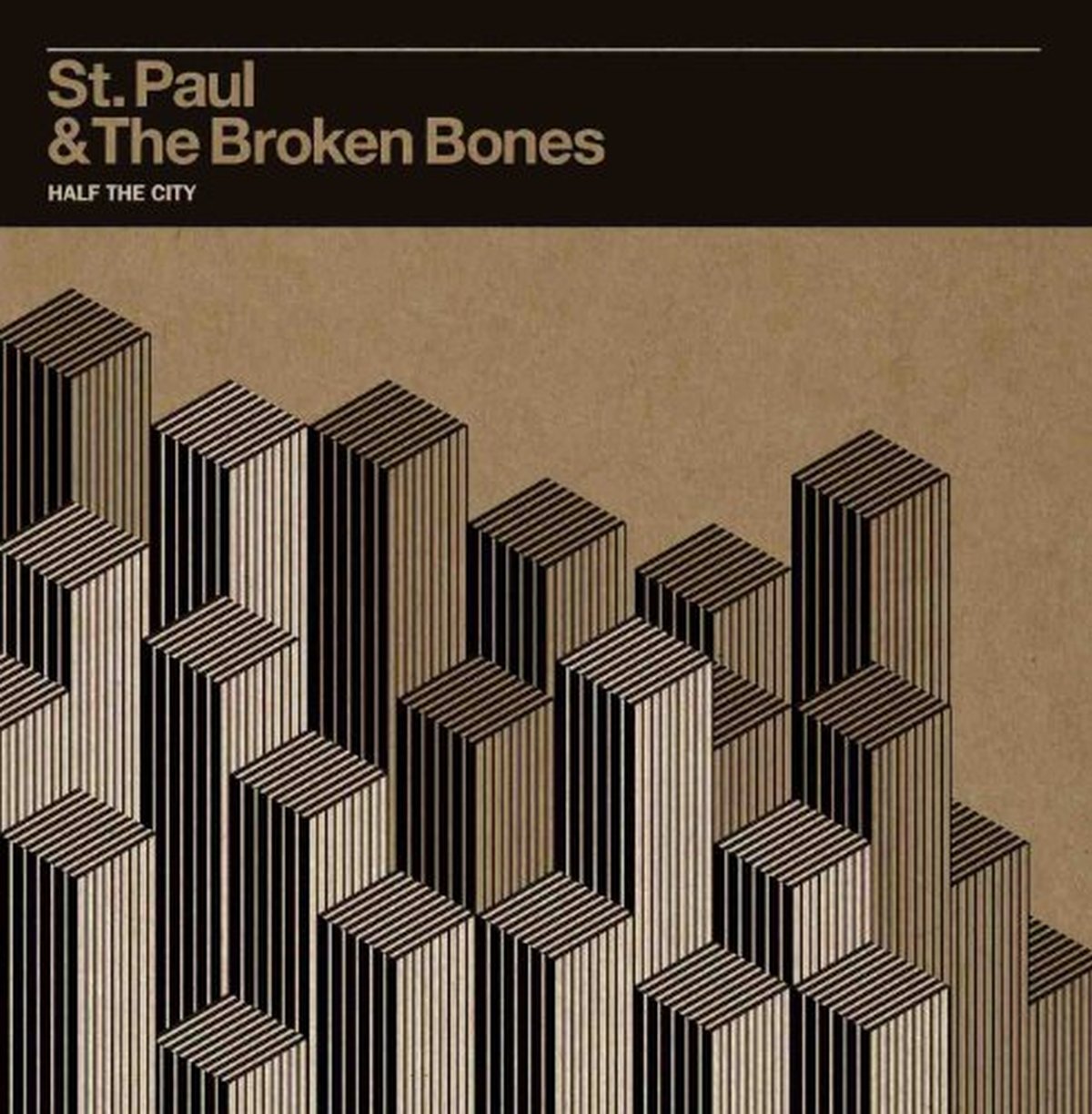
Paul Songs: Broken Bones & Pocket Change


St. Paul & The Broken Bones: Broken Bones & Pocket Change
[purchase] 

When a musician leaves the stage and heads into the crowd, you never know what is going to happen. That’s probably why you don’t really see it very often, and when it does happen, there’s usually a phalanx of security guards to protect the musicians from bodily harm. I’ve written about one time that I saw The Decemberists leave the stage in Amsterdam to reenact the 1667 Battle of Chatham, and another time that Buddy Guy jumped off the stage in Central Park and eventually approached my wife and I, and our two-month-old son, who was at his first concert (not including a couple he attended in utero). And I recall seeing the Blind Boys of Alabama do it, also in Central Park. I’m sure there are more examples, but the only other one that I can specifically recall was when I saw St. Paul & The Broken Bones at the Capitol Theatre in 2019.  Although I feel like that is something that Bono has done on occasion, and we all know what his real first name is, right?

I’ve mentioned in passing before that I occasionally blog about shows at the Capitol Theatre, the storied venue in Port Chester, New York. When they announce shows, I can request a ticket, and if I am chosen, I get to go for free, and write about the show. They then post what I wrote, usually with a bunch of nice pictures taken by a professional photographer, on their website, in a section called the “Squirrel Blog.” Squirrels are important to the Cap. I blogged that show, so let me borrow from what I wrote back then, when it was fresh in my memory: 

After Janeway introduced and thanked the band, they launched into the emotional “Broken Bones & Pocket Change,” as Janeway plunged into the crowd before walking upstairs, singing from the side boxes, traversing and nearly climbing off the balcony, and ending the show from the boxes on the other side. 

You can see a video of that part of the show here. I don't think you can see me in the video, but I'm standing in front of the soundboard, because someone once told me that it was the best place to stand.

The “Janeway” that I referred to is Paul Janeway, the titular "St." Paul, who had trained as a preacher before eventually turning to music. The band’s name came from our featured song, the first that Janeway wrote with bassist and co-founder Jesse Phillips. They formed the group in 2012 in Birmingham, Alabama, and soon became an 8-piece soul band that included guitarist Browan Lollar, who had been part of Jason Isbell’s band The 400 Unit and keyboard player Al Gamble (whose brother Chad is the drummer in the 400 Unit). Their first full album, Half The City, which contained our featured song, was released on Single Lock Records, which I only mention because one of the owners is John Paul White (of The Civil Wars), and then, only because we are focusing on “Pauls.” 

Here's how I described their performance that night: 

Janeway regally commanded the stage, a shiny cape over his shoulders like Solomon Burke, and the crowd was in his hands from the start. 

Good performers feed off the energy of the crowd—great ones take that energy and send it back, magnified, and that’s exactly what Janeway and the band did, holding nothing back through the hour and a half set. His voice is a freak of nature, rich and soulful—think Al Green or Otis Redding—with an otherworldly falsetto that thrilled the crowd. 

It was a great show, I got to see it for free, the lead singer left the stage and climbed into the balcony, and nobody got hurt. If that's not a great night, I don't know what is.

Monday, November 22, 2021

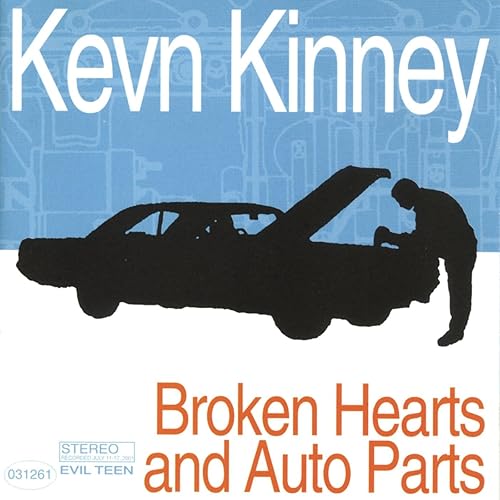
Break/Broken: Broken Hearts and Auto Parts


Kevn Kinney: Broken Hearts and Auto Parts
[purchase] 

Somehow, I almost completely missed Drivin’ N Cryin’, a band that emerged from Atlanta in the mid-1980s. Probably because they started after my college radio days, and because I don’t think they got much airplay in the northeast. But at some point, I heard the song, “Broken Hearts and Auto Parts,” by Kevn Kinney, who was the lead singer of the band, and I really liked it. (Which led me to investigate some of their music). 

It’s a profoundly sad song, and the title is explained by the very first line: “Ain't been the best year so far...I lost my girl, I lost my car.” And the song continues with a litany of loss and sadness, leading to a remarkable catchy chorus, despite its wistfulness: 

It's been broken hearts and auto parts and everything between.
I was on the move and in a suit, and on the silver screen.
Where I could hide for days, and live inside my dreams.
It's been broken hearts and auto parts this year.


Drivin’ N Cryin’ put out music through the nineties before taking a break, reforming in the late 2000s and releasing an album in 2009 and a series of EPs in 2012-2013. At that point, guitarist Sadler Vaden joined the band for a spell, before leaving to join Jason Isbell’s band, the 400 Unit, and a new album was released in 2019. Kinney’s solo career also continued through the 90s and 2000s, and his most recent release, with a version of Golden Palominos, A Good Country Mile, featured a cover of Isbell’s “Never Gonna Change,” (which was mentioned in a piece I wrote about Golden Palominos a few years back). 

As most of you who’ve read my work know, I’m a big fan of Isbell’s (and if you didn’t know it, the number of references to him in this piece about a Kevn Kinney song should clue you in a little). Back when the Georgia Senate races were the big political news, Isbell promised on Twitter that he’d do an album of covers of songs by Georgia artists if both Ossof and Warnock won. They did, and Isbell and his band, and a number of guests, actually made good on their Twitter promise (unlike the many people who have promised to leave the US if one or the other candidate won the presidency), recently releasing Georgia Blue. One of the tracks on the album is Drivin’ N Cryin’s “Honeysuckle Blue,” sung on the album by Vaden (who was not in the band when that song was released). And I was lucky enough to see him sing it the other night during a great set by Isbell and the 400 Unit: 

It will be interesting to see if the inclusion of “Honeysuckle Blue” on Georgia Blue leads to a revival of interest in Drivin’ N Cryin’ and Kinney, who have flown somewhat under the radar (although they are members of the Georgia Music Hall of Fame). 

FWIW, Isbell has promised to do an album of Texas covers if Beto O’Rourke wins the governorship. Which is another reason to hope that happens.

Wednesday, October 13, 2021

What If: Jason Isbell Never Left Drive-By Truckers

[purchase Live at the Shoals Theare] 

If you know me, or have read my blog posts (and frankly, there are too many to link to), you probably know that I’m a huge fan of both Jason Isbell and Drive-By Truckers. I first became aware of both of them when I received a copy of the Truckers’ album Decoration Day as a bonus from a record club. That serendipitous freebie helped to change my musical tastes, and led me to a number of bands and musicians that are now amongst my favorites. It’s a great album, and it was hard not to be impressed by the two songs written and sung by Jason Isbell, “Outfit” and “Decoration Day.” I later discovered that Isbell was new to the band, and was only in his mid-20s, younger than the other songwriters in the group, Patterson Hood and Mike Cooley. Although Isbell was only in the band for three albums, I think that many fans consider this to be one of their best periods, and possibly their best. 

It has been reported that Isbell had been asked to take a break from the band because his alcoholism and drug use had made him unreliable; when he refused, he was forced out of the band. Isbell began a solo career, sobered up, and eventually released Southeastern, a masterpiece, which, along with his subsequent albums, has solidified him as one of the best, if not the best, singer-songwriter in the Americana field, and he has the awards to justify that. 

After the departure of Isbell, the Truckers went through a period of lineup changes, and the release of a number of albums whose quality varied, but all of which were good, until the release of a run of fine, politically charged albums, the best of which, in my opinion, was 2016’s American Band. The Truckers, particularly Hood, were at the vanguard of a reassessment of southern identity, what Hood had called “the duality of the Southern thing,” in interviews and in articles in the press and online.

Isbell, too, hasn’t shied away from political statements on his albums, and on analyzing what being from the South means, and he recently became the poster child for artists insisting that venues require COVID testing for admission. 

So, what would have happened if Isbell had stayed a member of the Truckers? I’ll try to keep it simple, and when I post this in some fan groups on Facebook, I’m sure that people more knowledgeable about the people and situations involved will have their own ideas, but that’s sort of the point of alternative history, right? 

The darkest, saddest, timeline would have had Isbell clean up just enough to stay in the band, but never truly get clean and sober. While he continues to write great songs, and play great guitar, at some point, he gets in too deep with his addictions, never marries Amanda Shires, and like his close friend Justin Townes Earle, overdoses. 

I’d hope, though, for a better outcome—pressured by the members of the Truckers and other friends, Isbell cleans up and becomes an equal songwriting partner in the band, which goes on to greater success, as the 3-4 Isbell songs per album replace some of the weaker cuts, and albums such as American Band, which have little or no filler, become epic double CDs that receive both commercial and critical acclaim. Maybe, at some point, while the band is on a hiatus, Isbell releases a solo album or two, which highlight his individual talent. Maybe he eventually decides to leave the band to go solo, or maybe he’s happy in the band setting, with the occasional solo release or collaboration. 

Luckily, in the real world, Isbell and the Truckers reconciled. Back in 2013, right around the time that Southeastern came out, I went to the Clearwater Festival where both Isbell and Hood were scheduled for solo sets, and they sat in with each other for a song. In 2014, Hood, Cooley and Isbell performed at a benefit at the Shoals Theatre in Florence, Alabama, and there have been a few other instances of Hood and Isbell popping on stage during gigs. 

A couple of weeks ago, Isbell curated a two day festival, ShoalsFest, where both his band, the 400 Unit, and the Truckers, were scheduled to perform. So, if you want a sense of what it might have been like had Isbell had never left the Truckers, the video above is a performance of (most of) the song “Outfit,” featuring Hood and Cooley joining Isbell and the 400 Unit {the original video, of "Decoration Day," was taken down). But maybe an even better example is the video below, from the night after ShoalsFest, where Isbell joined the Truckers for a couple of songs. The sound isn’t great, but, damn. Just damn.

Monday, December 7, 2020

Leftovers: Crowded Table (Looking Forward)

[purchase]

I guess this is sort of related to my “No Thanks” post about Old 97’s “Lonely Holiday,” but back in June, when I think that we were really coming to grips with the changes that the coronavirus was causing to our lives, our theme was “Looking Forward,” as in, things we were looking forward to in the After Times. I wrote about seeing live music, which I continue to miss terribly. 

But, as you know if you’ve read my “Lonely Holiday” piece, not to mention some of my other writings about family and friend-filled meals, I miss getting together with people to eat. Whether it is a holiday meal, or a backyard BBQ, or even if there’s no specific reason, I love to cook for a group, and I enjoy eating with a group. So, yeah, I miss having a crowded table. 

Now, the song, “Crowded Table,” by The Highwomen, seems to me about more of a big nuclear family, but the message still fits. 

I want a house with a crowded table
And a place by the fire for everyone
Let us take on the world while we're young and able
And bring us back together when the day is done 

And, to add to the inclusivity message: 

The door is always open
Your picture's on my wall
Everyone's a little broken
And everyone belongs
Yeah, everyone belongs 

If you don’t already know, The Highwomen are an all-female country/Americana “supergroup” created officially in 2019 by Amanda Shires, Brandi Carlile, Maren Morris, and Natalie Hemby, all of whom have varying levels of fame in the business. The idea was to pay homage to The Highwaymen, Johnny Cash, Waylon Jennings, Kris Kristofferson and Willie Nelson. So, they didn’t want to put much pressure on themselves, right? Their first live appearance was at a show celebrating Loretta Lynn’s 87th birthday at the Bridgestone Arena in Nashville (go big, or go home, I guess). 

The project was designed to include other musicians, so that their first single, “Redesigning Women,” had a video that included, among others, Tanya Tucker and Wynonna Judd, and their self-titled debut album featured a re-write of Jimmy Webb’s “Highwaymen,” other co-writes with, among others Jason Isbell (Shires' husband), Miranda Lambert, and Ray LaMontagne, and appearances by Yola, Sheryl Crow, Isbell, and members of Carlisle’s and Shires’ bands.

“Crowded Table,” was written by Hemby, Carlile and Lori McKenna, and features vocals that weave in and out of unison and harmony. Rolling Stone considered the song to be the Highwomen’s mission statement noting that it is "looking for a world where everyone is given a chance to fit in. This isn’t about leaning in or fighting for the top chair. It’s about making room." 

Which is a good message, both as I look forward to someday sitting at a crowded table for a big meal, but also as we look forward to the post-Trump world.

Monday, September 28, 2020

Empty: Empty Baseball Park

Whiskeytown: Empty Baseball Park
[purchase] 

When I suggested the Empty theme, it was prompted by watching sports in empty stadiums, and honestly, I had forgotten about this song. If you have read my posts here and elsewhere, you know that I’m a sports fan, mostly New York teams (Mets, who I have written about often, Giants, Knicks, Red Bulls, Sky Blue), plus Arsenal and Princeton sports, the US Women’s and Men’s National Soccer Team, and the Olympics, World Cup, etc. 

As the pandemic closed things down, sports were an early casualty, so that being stuck at home wasn’t tempered by the chance to watch games on TV. Slowly, though, games started to return, beginning with the German Bundesliga, then other European soccer leagues, all of which were played in empty stadiums. In the USA, because our response to the coronavirus was incompetently handled by our incompetent president, the first games that started were played in “bubbles,” where the players and staff were isolated from society to prevent infection. So, both the NWSL and MLS played, as did the NBA and NHL, at various central locations, with reasonable success. 

But summer means baseball, and for me, I love watching Mets games, even when the team is, as usual, not good, in part because it is a long standing tradition, but also because the Mets announcers, Gary Cohen, Keith Hernandez and Ron Darling are the best. (And if you don’t believe me, read this, subscription to The Athletic required, and well worth it.)  Baseball ultimately decided to have a truncated season, with some new on and off-field rules, with the games played in the teams’ parks, not a bubble (although they are moving to a bubble for the playoffs). But again, there were no fans allowed, although some teams allowed fans to buy plastic cutouts of themselves, their families, random other people, and even pets, to make it look like people were in the stands. And like most of the other empty stadium sports, fake crowd sounds were pumped into the stadium and/or played on the broadcasts to lend some degree of normality. 

I watched a good part of the Mets’ season, in the empty baseball parks, and despite the talent on the team, and the fact that the number of teams qualifying for the playoffs was increased, the team fell short—which was a disappointment, because most prognosticators had the team at least making the playoffs. But as the cliché goes, that’s why you play the games. 

So, when I started looking for songs for this theme, “Empty Baseball Park” jumped out at me. Whiskeytown was a band founded by Ryan Adams, and was known for excellent songwriting, inconsistent performances and internal turmoil. The band cycled through members, with only Adams and Caitlin Cary as consistent participants. The band released only three full albums, but their influence can be seen by the fact that there are at least two books about the band. 

Adams is one of those scarily talented songwriters and performers who has probably thrown away more great songs than most people write. He’s also known for being personally difficult, having issues with drugs and alcohol, and, most recently, being accused of sexual harassment. I’ve long appreciated Adams’ talent, and appreciated his part in helping Jason Isbell get sober and supporting his career, but it is hard to ignore the harassment issues, which he has denied, but which appear to have derailed his career, at least for now. And Isbell has distanced himself from his former friend. 

But, back to the song. “Empty Baseball Park” was originally recorded as a demo, along with other songs, called the “Baseball Park Sessions.” Many of the demos later appeared on Whiskeytown’s 1997 Strangers’ Almanac album, but not this one. In 1998, the band reissued its debut album, Faithless Street, and included a slew of bonus tracks, including “Empty Baseball Park.” Now, despite my long discussion of playing sports in front of empty seats, that’s not what the song is about. Rather, it is a reminiscence by Adams of growing up in Raleigh, North Carolina, and his aimless activities, including hanging out in an empty baseball park after the bars closed, with, reportedly, a young woman, and pretending that a game was going on. 

It’s not the best Whiskeytown song, but I’m glad that this theme reintroduced me to it.

Wednesday, July 8, 2020

Wait/Don’t Wait: Desperados Waiting For A Train


Nanci Griffith: Desperados Waiting For A Train
[purchase]

No personal story, no long history lesson, no political discussion today. Just a short discussion about a fine song, Guy Clark’s “Desperados Waiting For A Train.” (I mentioned this song a few years ago in a piece on Clark’s “Homegrown Tomatoes," but it’s worth its own post.)

As someone who backed into “country” music through alt-country/Americana/roots/folk music, I first became aware of the great songwriter Guy Clark from covers, particularly this version on Nanci Griffith’s 1998 release, Other Voices, Too (A Trip Back To Bountiful). On that album, Griffith performed the song with Clark, Jerry Jeff Walker, Steve Earle, Rodney Crowell, Jimmie Dale Gilmore, and Eric Taylor. In fact, before Clark released a version, on 1975’s Old No.1, it had already been covered by Walker, Rita Coolidge, David Allan Coe and Tom Rush. And before Griffith’s version was released, it had been covered by Slim Pickens and probably most famously, The Highwaymen (Johnny Cash, Waylon Jennings, Willie Nelson, and Kris Kristofferson, some pretty fine songwriters in their own right). And there have been many other covers released and performed, including by Earle, on his recent tribute to Clark, and Jason Isbell, who performed the song at Guy Clark's induction into the 2015 Austin City Limits hall of fame ceremony. Which is just to say that many, many great musicians and songwriters have felt the song worthy of recognition.

Clark had the ability that some great writers, and not only songwriters, have of being able to economically create an entire world, and entire characters, with no wasted words. (On the same album, Griffith also covered Richard Thompson and Woody Guthrie, who have that same talent.) I’m jealous as hell. In less than five minutes, the song tells the story of the relationship between a boy and an old man, and you can feel the love they felt for each other, and the respect that the boy had for the man, an old school oil worker, who seemed to the boy like he was from an old western. And one day, the boy realizes that the man is old, and dying, and the metaphorical train comes to take him away. Two lives in about four and a half minutes of brilliance. I don’t know if the song is studied in songwriting classes, but it should be.

It’s a true story. Clark wrote it about his grandmother’s boyfriend, who stayed at the hotel that she ran in a small Texas town. You can read more about it here.

In 1998, when Griffith released her album, she appeared with all of the guys (including Guy) who sang with her on David Letterman’s show. And since readers of my work here know I’m a huge Letterman fan, and a huge fan of the song, here’s a video:

Wednesday, June 3, 2020

War/Peace: The Warrior’s Code


I suspect that many of you who read this blog also attend live music performances—or at least, you did before that stopped being a thing (temporarily, I hope). Musicians have been trying different ways to get live music out to their fans, some for free, some charging, some seeking “tips,” and others seeking charitable donations, while some are trying to use Patreon or other similar subscription type programs to try to partially replace the revenue lost from cancelled tours. I think that it is pretty well known that these days, most musicians make the bulk of their living from touring and merch, and not so much from streaming and music sales.

Since the pandemic closed most venues, I’ve watched some of my favorite musicians from the comfort of my house—Richard Thompson, Jason Isbell and Amanda Shires, Dan Bern, Rhiannon Giddens and Francesco Turrisi, as well as her fellow Native Daughters, Amythyst Kiah, Allison Russell and Leyla McCalla, Ben Nichols of Lucero, Jeff Tweedy, Raul Malo, Lucy Wainwright Roche, Indigo Girls, and I’m sure I’m leaving some out. Most of these performances have come from the performers’ homes (or, at least where they are sheltering), except for an Isbell/Shires album release show from the stage of an empty Brooklyn Bowl in Nashville. These performances aren’t the same as being at a live show, but on the other hand, they are also more intimate—as one friend mentioned to me after we separately watched Richard Thompson, her husband was excited to be able to see the master’s hands close up while he played the guitar.

Last Friday, I watched most of an unusual performance—Dropkick Murphys, a band that is closely associated with the Boston Red Sox (they even were given World Series rings by the team one year), playing live on the field at an empty Fenway Park, with the band members all more than the now traditional six feet apart. The concert was organized to promote a number of charitable organizations, which is common for the band. For nearly two hours, the band ripped it up with their trademark Celtic flavored punk, and they were amazing. It wasn’t the same as when I saw them live at Warped Tour 15 years ago, but then again, what is? I had to reluctantly step away after two hours for a virtual college reunion Zoom session, but the next day, I found the video, and watched the end, when Bruce Springsteen appeared on the giant video screen in centerfield and performed two songs with DKM—one of theirs (“Rose Tattoo,”) and one of his, “American Land,” an appropriate anthem for our times, with its message of an America made up of immigrants and people of all races. Remarkably, considering the logistics, the entire concert sounded great, and I give much credit to whoever did the sound.

One of the songs that they played that night was “The Warrior’s Code,” which technically isn’t about war, but about a boxer, "Irish" Micky Ward. But since boxing and war often use each other’s metaphors and terminology, I’m OK with this. Also, back in 2016, I wrote about a different DKM song, a cover of “Fields of Athenry,” which is about World War I (and it is far from the only song by the band that references actual war, for example “The Fighting 69th” (Civil War) and “Johnny, I Hardly Knew Ye” (anti-war song written in Ireland in 1867), all of which were played at Fenway, along with a cover of The Standells' “Dirty Water,” which has nothing to do with war, but which I wrote about, here.)

The video of the show is still available here, among other places, so check it out, and send a few bucks to the charities.

Thursday, May 18, 2017

Gold: The Golden Palominos


Golden Palominos: Boy(Go)
[purchase]

The legendary supergroups like Cream or Blind Faith or CSN&Y were attempts to join musicians famous from other projects into a, well, super group, but they often foundered due to the conflicting egos of the members. The Golden Palominos, often referred to as an “indie-rock supergroup,” was different, gathering changing groups of generally less famous artists for each album.

Originally founded in the early 1980s by Anton Fier, a drummer who had been an early member of, among other bands, The Feelies, the first incarnation of the Golden Palominos was filled with avant-garde musicians like Fred Frith, Arto Lindsay and Bill Laswell, many of whom were influenced by the “No Wave” movement and often had as much jazz influence as indie-rock. Their self-titled debut was experimental, noisy and even featured turntable scratching, a rarity outside of hip-hop in that era.

My introduction to the band was from their very different second album, 1985’s Visions of Excess, which was significantly more accessible. The original attraction was “Boy (Go),” featuring lead vocals from R.E.M.’s Michael Stipe, and guitar from Richard Thompson. The album also featured vocals from John Lydon (a/k/a Johnny Rotten) and supergroup veteran Jack Bruce, as well as the debut appearance of singer Syd Straw, who is on the list of people who should be way more famous. Despite the unusual roster of musicians, the album hangs together pretty well, and is never dull. Also, there’s a great cover of Moby Grape’s “Omaha,” also sung by Stipe.

The Golden Palominos put out albums every few years throughout the 1980s and 1990s, a few of which I own, with a constantly changing group of performers, including Matthew Sweet, T-Bone Burnett, Bernie Worrell, Bob Mould and Bootsy Collins, with Stipe, Thompson and Straw dropping by occasionally, joining core members Fier, bassist Laswell and guitarist Nicky Skopelitis for, not surprisingly, varied sounds and results. In 2012 Fier, and a different group of musicians joined Kevn Kinney of Drivin’ & Cryin’ for a new album, A Good Country Mile. That album includes a cover of a Jason Isbell written Drive-By Truckers song, “Never Gonna Change.” (Self-promoting side note—Drivin’ & Cryin’ was the band that Trucker Patterson Hood was opening for when he saw the incident that inspired the song “Opening Act,” which you can read more about here.)

Give Fier and his Golden Palominos sidekicks credit for pushing the envelope, trying new things and always making interesting music. They cannot be pigeonholed, and if that hindered them from gaining an identity and becoming a true “supergroup,” it never prevented them from following their muse wherever it took them. In a world filled with artists mining the same groove until it turns into a rut (thanks, Nick Lowe), it is refreshing, if not always easy, to listen to a project like the Golden Palominos that constantly challenges.

Tuesday, March 21, 2017

Prison: Prisoners of Their Hairdos


Christine Lavin: Prisoners of Their Hairdos
[purchase]

My recent run of television-related posts would suggest a discussion of The Prisoner, one of the great TV shows of the 1960s, and one of the first shows designed to blow the viewers’ minds, and I still might, but while it had a theme song (with a great credit sequence), it really wasn’t a music based show.

I’ve also recently written elsewhere about Jason Isbell’s cover of Thin Lizzy’s “Jailbreak,” so that’s out. As I perused my music library, I came across this song, which I hadn’t listened to in years, and which reminded me that you don’t need to be in a cell to be a prisoner.

Christine Lavin has been on the folk scene since the 1980s, and while she has had a long, successful career as a singer-songwriter, she never had the sort of national breakout that some of her contemporaries like Suzanne Vega, Tracy Chapman or Shawn Colvin, although she is incredibly well respected in the folk music world. Lavin writes mostly about relationships, and while she can write seriously, she is probably best known for her sense of humor. Many of her songs are laugh out loud funny. I sometimes wonder if her lack of fame stems from the fact that women folk singers are stereotypically supposed to be sad, tortured souls, and Lavin’s humor prevents her from being taken seriously. But that’s really too bad, because she has consistently written and performed great songs, not all of which are jokey.

In addition, she has long been an incredible supporter of other musicians, playing them on the radio, and working with them. I remember listening to her as the first host of WFUV’s Sunday Breakfast, playing music by artists she liked, sometimes even unreleased tracks. Even after friend (and fellow former WPRB Program Director John Platt) took over the show, Lavin would send him music to play, and she occasionally would sub for him. As much as I loved listening to John, which I don’t get to do as much since the station, in a bad move, pushed him to Sunday evening, when sports, TV, life and dinner usually take precedence (sorry!), it was fun to hear Lavin’s unique style every once in a while.

“Prisoners of Their Hairdos” is on the funny side of Lavin’s musical spectrum, and points out that some people’s coiffures are so distinctive that:

If they changed the way they combed their hair 
They'd never be recognized anywhere 
They're prisoners 

Lavin lists Crystal Gayle, Dorothy Hamill, Don King, Lyle Lovett, Gloria Steinem, Stevie Nicks Leon Redbone, Pee Wee Herman, Tom Wolfe, Pope John Paul, Ted Koppel, and Mary Travers as hairdo prisoners, and I’m sure we could think of more recent ones, since the song was released in 1991. An amateur golfer/more amateur president comes to mind…..

The song points out that ZZ Top are, similarly, prisoners of their beards, and Dolly Parton is a prisoner of her…….wigs. But, on the other hand, the B-52’s beehives, she suggests, are prisoners of the band.

There was a time where I had a great deal of hair, but time and genetics has rendered me almost bald, and now I keep my hair short, for ease of care. Typically, when I go to the barber, she asks me, “what do you want to do?” And my response is usually, “there really isn’t much you can do.” My daughter’s father-in-law (English really needs a word like machatenester or consuegro) shaves his head daily, and has tried to convince me to do the same. I’ve declined, because I don’t want to become a prisoner of my baldness.

Friday, August 26, 2016

Music Festivals: Newport Folk Festival 2012-Dawes


Dawes: A Little Bit of Everything (Live from Newport 2012)
[purchase the album that this song is on]

I have written about the trip that my wife and I took to the Newport Folk Festival back in 2012 a few times. It was our first time there, and it was a great experience, despite the fact that we got rained on both days. At a festival often identified with Bob Dylan, it was fitting that a hard rain did fall, and we unsuccessfully sought shelter from the storm, as we waited for our ship to come in and take us back to our hotel.

But I haven’t written about the moment at the festival that I remember most strongly. It was not a pleasant moment, and I’m willing to bet that my wife will be surprised when she reads this.

I’ve been a lawyer for a long time, and for a while before our Newport trip, I had not been happy at my job. Despite that, I stuck through it, because the pay wasn’t bad, and I had settled into somewhat of a rut—sort of like the one that Nick Lowe wrote about in “Rocky Road” (“The rut I was in had once been a groove”). By the time we went to Newport, the end was in sight, and I was looking for a new gig. I actually spent a good portion of my post-festival Newport vacation reviewing deposition transcripts using the Panera Bread’s free wi-fi (which was better than the hotel’s) for a summary judgment motion to try to stay in the senior partner’s good graces, to keep the paychecks coming in. I did a good job, I think, and I ended up creating a 45 page statement of undisputed facts from my Newport work. We lost the motion, and the trial (which I helped prepare for, but which took place as I was basically out the door.) So, as we were enjoying our time in Newport, I was very uneasy, because I didn’t know how long I would be staying at the firm, and had no alternatives, other than the risk of starting my own law practice.

One of the bands that I was excited to see at the festival was Dawes, a band that seems to have recently evolved into essentially the Newport Festival house band—supporting other musicians who don’t always travel with backup musicians, and often having other performers sit in with them. In fact, that is one big way that Newport differs from the other festival that we have gone to (and which I have written about), the hopefully-returning-in-2017 Clearwater Great Hudson River Revival. Although it does happen at Clearwater (seeing Jason Isbell and Patterson Hood sit in during each other’s solo set was a highlight, and there are other examples), it seems like more of a regular thing at Newport for people to play with each other. This adds a feeling of camaraderie and friendship to the music, and you get to hear interesting, often unique, combinations (like this great version of The Band’s “It Makes No Difference” by My Morning Jacket, with Brittany Howard of Alabama Shakes, from the 2012 festival, that I missed waiting for a ferry to get us out of the rain).

Dawes’ sound is often compared to the Laurel Canyon sound of the 1970s—CSNY, Joni Mitchell, The Byrds, etc., with a bit of Band thrown it. And I also have to believe that they also were influenced by the Uncle Tupelo/Wilco/Son Volt/Jayhawks alt-country sound and artists like Ryan Adams. In keeping with their debt to the great confessional singer-songwriters, their lyrics often plumb emotional topics, which is certainly true about one of my favorite Dawes songs, “A Little Bit of Everything.” The song has three vignettes: the first, focusing on a man planning to jump from a bridge, not for any one reason, but for an accumulation of things, the second about an older man in a buffet line, musing over his life’s disappointments while deciding what to eat, and the third features a woman writing invitations to her wedding, and explaining to her fiancé why she was working so apparently humorlessly on the wedding planning. As the song’s writer, Taylor Goldsmith, explained in an interview, “each verse would provide the phrase with new meaning. In the first verse, it’s used to describe why life’s unlivable, in the second, what it takes to forget, and finally, what matters most about love.”

So, I’m sitting there, watching Dawes, getting toward the end of a great first Newport day, very much enjoying their set, when they launch into “A Little Bit of Everything,” in the version you can hear above. And the next thing I know, tears are streaming down my face. Was I identifying with the suicidal guy who was feeling overwhelmed? With the old guy at the buffet thinking about “when his bright future had left him”? Or the woman who reassured her fiancé about the power of finding the person you truly love? Clearly, it was a little bit of everything, but it affected me so profoundly.

I recovered, though, both at the festival, where we went on to see Amy Helm, Patty Griffin and the beginning of My Morning Jacket before we evacuated, but also professionally. I played out the string at my old job, and in March of 2013, I opened up my own practice. It hasn’t been easy, and there have been struggles, but I’ve learned an enormous amount and have never enjoyed being a lawyer as much.

That all being said, I still get emotional when I hear this song, which, I guess, shows that Mr. Goldsmith knows what he is doing.

Thursday, June 9, 2016

Father: Outfit


Outfit, by The Drive-By Truckers

The Drive-By Truckers are a group of novelists parading as a country rock band: amazingly well versed in telling stories in their songs, often done in the most literary ways. Adopting the voice of a character, using metaphor and image in ways seen traditionally in literature, sometimes even forgoing singing and just delivering lyrics as spoken monologues.  Not that this is unique in music, by the Truckers take on everything, from lyrical content to song structure, is 
rare and unmatched as far as anything else going on in the rock world. Their catalog is full of characters and settings that would be lucidly at home in any Flannery O’Connor story. My favorite member of this outfit is the now solo Jason Isbell. He’s delivered a library’s worth of southern gothic, tall tales and legends, outrageous characters and backwoods, down-home spirit in his music. My words pale in comparison and in accurately praising or describing the true-to-life and tangible literary landscape that Isbell is responsible for bringing to vivid life though song.

One of my favorite songs is the ballad Outfit, from Decoration Day. It’s a monologue, delivered to an unseen child by a distinctly opinionated, and somewhat weary father. The speaker’s voice is soaked in wisdom, perhaps whiskey, too, and the advice he offers covers some distinctly strange notions and concepts of how to live a good life. But in the end, it’s a story of a man’s love for his family delivered to a possibly wayward child who he fears losing, or perhaps sees slipping into the kid of life he himself could have had and because of his proximity and understanding of that particular danger, wants nothing more than for his child to do right. And in that worry about his child going wayward, we also read the father’s lamenting the life he’s lived. Good or bad, you can tell dad wants better for his own son, and though the advice is delivered out of love, there is a bit of envy, too: the speaker has lived a life, that while live primarily out of love, hasn’t been quite the one he wanted. His son, meanwhile, is a singer, as opposed to a house painter and refrigerator repairman.  When the father tells the son “Don't sing with a fake British accent”, there’s a bit of envy there. As if he should harbor such opinions.

But more, so, there’s the admonishment to not repeat the same mistakes and above all, to never act like “act like your family's a joke.” In the end, I suppose it’s a song about what every good father wants for his children: for their lives to be better than his own.  

Here's Isbell, post Truckers, doing Outfit on KEXP...

Thursday, June 25, 2015

Fireworks: Green Eyes and a Heart of Gold


The Lone Bellow: Green Eyes and a Heart of Gold
[purchase]

Most of the time, I’ve been posting at least twice to each theme, in part because I enjoy writing these things, and in part because the blog needs content. After my first post on the Reunion theme, I decided to wait until after I attended the Clearwater Festival to see whether something would spark a second post on that theme (like when Patterson Hood and Jason Isbell played together a couple of years ago). Unfortunately, I miscalculated, the theme ended between the two days of the festival, and here we are in the Fireworks theme. Which is kind of too bad, because, as it turns out, I actually found a few Reunion ideas over the weekend, starting with the fact that I spent Saturday listening to music with my wife, my sister and a cousin, sort of a reunion in and of itself, and Sunday, I got to hear old friends Lucy Kaplansky and Richard Shindell, who recently had a bit of a reunion themselves with their recent cover album as The Pine Hill Project. And after a crazy rain squall interrupted their set, on a stage hard by the Hudson River, they returned to play some of their solo work, including Kaplansky’s great, personal song entitled, yes, “Reunion.”

But I blew it, and now I have to write about Fireworks. I like fireworks. But they have to be serious fireworks—not the small town, shoot off a few blasts before ending with a nice finale type that they had for many years where I live (although they have been improving lately). No, I’m talking about the kind of fireworks that fill the sky with colored lights and make your stomach hurt from the booms.

I have a few fireworks memories, and at the risk of leaving myself without a second post subject, here are some of them, in rough chronological order.

After my junior year in college, my roommates Neal and Jon and I went to Europe. We were in Paris one evening, in Montmartre, when a crowd started to gather in front of the Sacré-Coeur Basilica. We had no idea what was going on, and since none of us spoke French, if there were any posted signs, we were clueless. Eventually, someone told us that there would be fireworks that evening, for a midsummer celebration. They were pretty great fireworks, especially because they were set off directly over the crowd. The consequences of that decision were apparently not considered, because flaming paper and debris began to fall over us, which was kind of scary. I don’t think they do it that way anymore.

I remember going to Shea Stadium in the 1980s, when the Mets were, as usual, bad, and Fireworks Night meant a rare full house. (Now, they do more than one, which just seems excessive). I remember sitting way up in the upper deck a few times for the excellent pyrotechnics. There was this guy who sat up there, a heavy guy with a thick beard known as “Fuzzy,” who insisted that the airplanes that flew over Shea were “taking a big risk” flying over the stadium as the fireworks were exploding. Fuzzy was, clearly, an idiot. However, to this day, I insist on repeating “They’re taking a big risk” every time I see a plane fly overhead during a fireworks display.

Also Mets related is my third story--I was going to watch the Fourth of July fireworks on the East River from the roof of my friend Joe’s apartment building in 1985. I remember it being quite a wild party, but even more memorable than the fine display in the sky were the fireworks at the Mets/Braves game that night in Atlanta, which we followed during the night and into the early morning. Often considered one of the craziest games ever, it went 19 innings and ended at 4 a.m. The Mets were winning 7-4 going into the 8th inning. The Braves went up 8-7 in the bottom of the 8th, and due to two long rain delays, it was near midnight when the 9th inning started. It was Fireworks Night in Atlanta, but most of the fans left, assuming that they would be cancelled due to the length of the game. The Mets tied the game up in the 9th, and it went to extra innings. The Mets scored 2 in the 13th, and the Braves tied it up again. It dragged on the 18th, and the Mets took the lead. The Braves were down to their last player, Rick Camp, a relief pitcher who was an awful hitter. Of course, he hit the only home run of his career to tie it. But in the top of the 19th, the Mets plated 5. The Braves answered back with 2 more, and the tying run at the plate was Camp. He struck out to end the game, and at 4 a.m., the Braves shot off their fireworks, scaring their neighbors.

The following year, 1986, was the centennial celebration of the Statue of Liberty, and New York threw an enormous party. There were speeches, concerts, Tall Ships, and what was, until that time, the largest fireworks display ever in the world. I remember that it was hot, crowded, and that the fireworks were spectacular. I also remember that somehow, no one seemed to realize that the subway would be mobbed immediately after the fireworks ended, and we all moved slowly, trying to stay together, as we were herded toward the few open entrances. I remember that the train thankfully was air conditioned, and that it was so crowded on the trains that strangers sat on people’s laps to squeeze more bodies onto the cars.

My son was born in April, 1990, and I think that it was in 1991 that my wife and I thought that it would be a good idea to take him to the Fourth of July fireworks. We started by going to a barbecue restaurant on the Upper West Side, then took the subway, with Adam in his stroller, downtown, then walked over to the East River to watch. Almost immediately after they started, the kid understandably got scared and started to cry. We decided to leave and take a cab home. Of course, the traffic was crazy, and we were stopping and starting all the way home. As we got sort of close to our apartment, Adam threw up in the cab, which did not make us popular with the driver. We finally got home, threw the kid in the bath to clean of the vomit, then cleaned ourselves off. My wife still, nearly a quarter of a century later, wrongly believes that this incident demonstrated bad parenting. I think it was just a well-intentioned mistake that had no lasting negative effect on the boy, who seems to like fireworks just fine.

Finally, starting in 1996, to celebrate the university’s 250th anniversary, Princeton began to have a fireworks show during Reunions (yep, I came back to that theme anyway). The following year, at my 15th Reunion, we saw the display, which was pretty incredible. In a flashback to my Montmartre experience, flaming debris landed in some dry grass and a brush fire started, which was quickly extinguished. The Reunions fireworks continue to impress (we saw it again at the 20th, 25th and 30th). The picture above, though, is by my friend and classmate Noel Valero, from this year’s show, and it won the reader photography competition sponsored by the Princeton Alumni Weekly. (One of my wife’s pictures from Reunions, of a little baby, was chosen as an editor’s favorite.)

And while we are bringing things full circle, back to Clearwater. On Sunday, I arrived late after coaching a youth soccer game (my boys scored three at the end to win 3-2, a heck of a way to end a season), and was confronted with a choice. Toshi Reagon, who in some ways embodies the festival as much as anyone—the daughter of Freedom Singers and civil rights activists Bernice Johnson Reagon and Cordell Hull Reagon, the goddaughter of festival founder Pete Seeger and named after Pete’s wife, she is also a political and lesbian activist and a kick-ass performer. Or The Lone Bellow, one of my favorite new Americana bands. My wife chose Toshi, and I went for the Lone Bellow, on the theory that Toshi is likely to be there next year, but I wasn’t sure that The Lone Bellow would. They really put on a great set, although it was distractingly hot. And they sang this song, which mentions New York Fourth of July fireworks, and the subway. If it only mentioned Reunions, Paris and the Mets, it really would have tied everything together, but you can’t have everything.