All the same thing, aren't they? All have hooves and tails, and the why-the-long-faces, so, yes, they must be. OK, I know, they aren't, but can you all recall the differences? I will assume that you know horses, the odd-toed ungulate mammal, whether cart, race or just a plain old Dobbin, so, moving swiftly on......
Friday, September 13, 2019
HORSE/S: PONY/S, DONKEY/S, MULE/S & ASS/ES
Posted by Seuras Og at 12:00 AM View Comments
Labels: Beck, Emmylou Harris, Funkadelic, Horse/s, Jimmie Rodgers, Los Lobos, Mark Knopfler, The Cramps
Thursday, September 12, 2019
Horse/s: Rocking Horse
purchase [ ABB Rocking Horse ]
In some ways, this could have slipped into the <Slide> theme - slide being a forte of the Allman Brothers since their inception.
The Allman Brothers Band has been around for a number of years in one iteration or another. Among their other contributions to music, there is the off-shoot band named Gov't Mule, formed by Warren Haynes, a later addition to the ABB. Haynes is stage center in the above clip doing the vocals, and might also note Allen Woody, who also joined the ABB when they reunited in the late 80s.
Since the current theme is <Horse> and this post references <Rocking Horse> it wouldn't hurt to take a minute to look down that path: What it is, what it represents/means...
>> A wooden construction that simulates a real horse that you can mount and "ride"
I can think of a number of "rocking" associations that might fit.
Foremost is "rock" .. and you can work your way on down the path of what "rock" embodies on your own.
I guess I can also conjure up images of why you might associate horses within the realm of rock.
The lyrics tell a typical ABB story: on a path that isn't so good and that I just can't leave: "to die in the saddle must be my destiny"
There are different such of possible interest:
Sara Evans with a song of the same name but kinda different
Posted by KKafa at 1:35 PM View Comments
Labels: Allman Brothers, Gov't Mule, Greg Allman, horse, Horse/s, Sara Evans
Wednesday, September 11, 2019
Horse/s: The Horse
Cliff Nobles and Co. : The Horse
[purchase]
If you have attended or watched a sporting event in the United States in the last few decades, you almost certainly have heard the marching or pep band play “The Horse,” the 1968 instrumental hit single from Cliff Nobles and Co. (I know that I played it at least twice as a member of the Princeton University Marching Band, which, by the way, is celebrating its 100th year of having invented the football marching band, only 50 years after Princeton and Rutgers invented college football.) And, there’s a chance that you might have heard the original, horn-filled song on the radio, or streaming, or however you consume music. But what you didn’t hear was Cliff Nobles. Because Cliff was the vocalist in the band, and “The Horse” is an instrumental.
According to Bobby Eli, guitarist on the track, he, guitarist Norman Harris, bassist Ronnie Baker, and drummer Earl Young created the music jamming in the studio—in fact, neither Nobles, nor Jesse James, the producer who took writing credit, were present in the studio at the time.
“The Horse” was released as the B-side to the single “Love is All Right,” which is essentially the same song, but with Nobles’ fine soul vocals. I have to admit to never having heard that version until I started writing this, and it stands on its own. But, for whatever reason, it was the stirring, if somewhat repetitive, instrumental that piqued the interest of DJs, and it peaked at No. 2 on both the Billboard Hot 100 and R&B charts, before becoming often used as a theme song, or in stadiums and arenas.
The musicians that created and recorded “The Horse” received only a small fee, and producer/”writer” James refused to give them any more, leading to an acrimonious split. Eli, Harris, Baker and Young became part of the “MFSB” collective, who backed many, many groups, and had a hit of their own with “TSOP (The Sound of Philadelphia),” and Baker, Harris and Young were also members of The Trammps. The baritone sax player was Mike Terry, who also played on, among other things, Martha and the Vandellas' “Heat Wave,” and The Supremes’ “Where Did Our Love Go,” and as a member of the Funk Brothers, he performed on thousands of Motown recordings from 1960-1967.
Despite his obvious talents, Nobles never sang on a hit song, and later worked in construction and the electronic generation industry, which is ironic, since “The Horse” is used to generate energy at sporting events (is that too tenuous a connection?)
Over at Cover Me, I wrote a piece defending Dexy’s Midnight Runners, which discussed their excellent covers of both “The Horse” and “TSOP.” (I wrote another defense of them here, too, but it wasn’t as good).
Posted by Jordan Becker at 8:00 AM View Comments
Labels: Cliff Nobles, Dexys Midnight Runners, Horse/s, Martha and the Vandellas, MFSB, The Supremes, The Trammps
Sunday, September 8, 2019
HORSE/S: PAUSE FOR A HOARSE HORSE/HOME
Country music has always had a chequered history over here in the UK, there being an understandable suspicion of the more rhinestones and bouffant hair variety that, for so many years, gave even the genre a bad name outside its immediate milieu. Personally it was always the 'and western' that put me off, only many years coming to know and love quite what that might mean, as in western swing. But country-rock, or perhaps as we now should call it, americana, that's a whole different plate of beans. Us brits have taken to that in a big way, both in terms of growing our own and offering a sometimes more sympathetic audience to visitors as they get at home. Todays piece is decidedly too old for americana, being from the early 70s, when bands like Cochise and Starry Eyed and Laughing were adding influences culled from The Byrds and the Burritos. The pre-punk of pub-rock, the early backlash to the some of the preposterousnesses of prog, saw also a lot of country tropes mixed into the pot, alongside soul and straight ahead rock'n'roll. Brinsley Schwarz, an early home for Nick Lowe, and Chilli Willi and the Red Hot Peppers were frontrunners, influentially if not necessarily in sales. Nowadays there are as many gritty blue collar banjo and steel bands over here as, well, in a short Nashville street. So a few, my favourites being Camden's Rockingbirds. Plus several festivals devoted to the genre.
Home had only a brief window. Resolutely 3rd tier in terms of attainment and success, famous as much for where the members went next as in their own right. The track above comes from their 1971 debut, the sleeve illustration giving a fair idea of where they were hailing from and striving at. I actually bought this at the time, it various surviving culls on my collection, as history re-decided my earlier tastes. However there was clearly a hint of something, the twin guitars of Laurie Wiseman and Mick Stubbs soaring higher than the journeyman songs and vocals, mainly provided by Stubbs. Bass was provided by one Cliff Williams, yes, that one, and was more adventurous, say, than his later job, with drums and background keys courtesy Mick Cook and Clive John.
A second record followed, the eponymous 'Home', by which time they had ditched John and ploughed, generally, a yet more earnest west coast vibe, if more Outlaws than Eagles, winning over fans from the bands they played support to. But those fans weren't putting their hands in their pockets, and the moment called for a prog-rock concept album, echoing similar bands in similar circumstances, Camel and Wishbone Ash, last gasps of the longhairs before punk blew down the doors. (Of course, history also reminds us that the longhairs never actually went away, just having shorter hair and shorter songs, most continuing to this day.) The Alchemist was the 3rd and last album put together by Home. Stylistically different, it isn't all bad, if desperately dated.
Stubbs left and the remainder of the band toured as Al Stewart's backing band, before going their separate ways. Wisefield joined, arguably appropriately, his guitar style being eminently suitable, the above mentioned Wishbone Ash, Cook joined the Groundhogs and, earlier keyboards man, John was by now with Man. Stubbs, surprisingly, as the songsmith and singer, or possibly because of that, struggled the most, largely disappearing from view. The big ticket fell to Williams, filling the AC/DC bassist role for the next 39 years. A waste of his talent, IMHO, but what do I know, as his accountant might remind me.
Pause.
The early 70s were a bumper time for would be jobbing musicians, record companies falling over each other to give multi-disc contracts to barely out of school buskers, allowing them to build up their skills, hone any talents and, eventually, or so the labels hoped, repay the investment. Bands like Home were everywhere, chock full of musicians often later making a greater inroads elsewhere. Often with back catalogues mostly forgotten, I enjoy looking back and remembering. This piece began musing on country and english. Funny how it seems to have ended elsewhere.
Posted by Seuras Og at 5:51 AM View Comments
Labels: AC/DC, Brinsley Schwarz, Camel, Chilli Willi & the Red Hot Peppers, Cochise, Home, Horse/s, Rockingbirds, Starry Eyed & Laughing, Wishbone Ash
Friday, September 6, 2019
HORSE/S: CRAZY HORSE
Hell, yeah, in the week, near enough, ol' Shakey reveals the forthcoming of his back to the day job with the Horse, what better time to celebrate this most epochal and emblematic of Neil Young's backing crews. You can have your Stray Gators, your Promise of the New, Pearl Jam and Booker T even, it is with the Horse that the ragged glory of his plaid shirt flaps the most. Never quite as celebrated as they should be, even oft denigrated for their supposedly simplistic backing, they are the perfect frame around which their boss can shine brightest. And it they are so dumb, how come that most attempts to emulate fall so short?
Present in one form or another since 1969, a number of musicians have been included under the banner, the band existing as much in it's own right, gigging, albums, rather than merely, as they are often perceived, waiting at home for Young to revive them from their slumbers. Because such waits can be lengthy. Very. And uncertain. The core, essentially, is the rhythm section partnership of Billy Talbot, bass, and Ralph Molina, drums.
Go back further, to 1963, and the vital spark of the band was in, astonishingly, doo-wop, a capella street corner crooning. A mix of West Side Story and what would now be called a boy band. Along with Danny Whitten and a couple of others, they even got as far as recording, first as Danny & the Memories, later as the cooler entitled Psyrcle, the zeitgeist now clearly barber avoidant. (Sadly I can find no clips of the latter, all the more disappointing, the Psyrcle having one Sly Stone, then a local record store owner, as their producer.)
It wasn't until the early noughties that I actually caught them with Young, at Birmingham's National Exhibition Centre (UK), usually a soulless arena, that night shaken to the pillars by a the intensity of the fragile yet triumphant powerhouse of the collaboration.
Latterly the pairing has been increasingly intermittent, some fans despairing ever of that call ever coming round again, not least as Young was seemingly so entrenched with Promise of the New, the band of and with two of the sons of Willie Nelson. News had also come of Poncho retiring from performance. So it was with some glee that whispers came, late last year, of a 'Horse of a Different Colour', with a series of concerts following. And more this year. And you can stuff different colour, this was Crazy Horse, with the added attraction of the return of Nils Lofgren to replace Sampedro. OK, so the song comes from the wrong band, but, hell, Long May they Run. And for sure an album is coming.....
Here
Posted by Seuras Og at 4:09 AM View Comments
Labels: Booker T. and the MG's, Crazy Horse, Danny & the Memories, Horse/s, Ian McNabb, Neil Young, Pearl Jam, Promise of the New, Stray Gators, The Psyrcle, The Rockets
Wednesday, September 4, 2019
Horse/s: Sometimes A Pony Gets Depressed
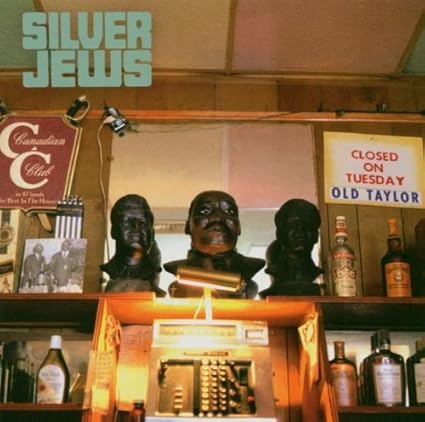
Silver Jews: Sometimes A Pony Gets Depressed
[purchase]
My summer sabbatical is over! I’m refreshed, recharged, and ready to rock! Thanks to Kkafa and Seuras Og for keeping the lights on while I was on blogging holiday.
So, about a month ago, David Berman committed suicide, hanging himself in Brooklyn. He was 52. Berman was the driving force behind the band Silver Jews, and more recently Purple Mountains, and his death led to an outpouring of praise for his songwriting and sadness about the circumstances of his death, which makes sense, because he was a talented songwriter, and for god sakes, he was only 52.
I was aware of some of the Silver Jews’ music—I picked up a bunch of tracks when eMusic actually had lots of good music, cheap—originally attracted by the name, but drawn in by Berman’s quirky wordplay and mostly deadpan delivery. But until he died, I really didn’t know much about him.
Berman’s father was a lobbyist for firearm, alcohol and other controversial industries, a fact which later gave Berman much angst. While a student a U Va, he made music with classmates Stephen Malkmus and Bob Nastanovich, and after graduation, they moved to Hoboken and began recording as Silver Jews. Meanwhile, Malkmus started Pavement, which went on to more acclaim, leading to the mistaken impression that Silver Jews was a Pavement side project.
During this period, Berman entered a graduate writing program at U Mass Amherst, and sparked by that, Silver Jews released a number of albums in the late 1990s, and Berman released a collection of poetry. More albums followed, but after 2001’s EP Tennessee, Berman struggled with depression and substance abuse, and in 2003 he attempted suicide.
The Silver Jews got back together in 2005 for Tanglewood Numbers, which was, according to Berman, the only album that he was 100% sober for, and which was more polished and rocking than the band’s previous efforts. Our feature song, “Sometimes a Pony Gets Depressed” is from that album, and couples upbeat, uptempo music with lyrics that probe displacement and depression. It is a striking song, and one not easily forgotten once heard. (In any event, who has a pony?)
Berman seems to have had some interest in horses. Silver Jews’ second album, Bright Light, has an album cover featuring a notebook with a horse made out of blank adhesive labels, a song called “Horseleg Swastikas,” and another song with the lyric “my horse's legs look like four brown shotguns.” And there may be more. Is this a reference to horse = heroin? Maybe, but considering the source, it is likely to have many more levels than that.
In 2009, Berman stepped away from music in part to try to make amends for the work of his estranged father, and HBO began production of a series based on Berman’s unpublished book about him, which eventually was scuttled. And earlier this year, Berman began releasing music as “Purple Mountains,” and a tour was planned but never happened.
Heck of an upbeat way to return from summer vacation, right?
Posted by Jordan Becker at 8:30 AM View Comments
Labels: David Berman, Horse/s, Pavement, Silver Jews, Stephen Malkmus
Tuesday, September 3, 2019
Horse/s: Dark Horse
purchase [ Harrison's album of the same name]
I suppose that this could almost have fallen under the <slide> theme. Slide guitar is one area where George Harrison made a name. (See "My Sweet Lord").
It's been pointed out that of all the Beatles, the term "dark horse" probably best applies to George Harrison: someone who keeps their abilities and interests a secret, a surprise. Certainly, in terms of the heydays of the Beatles, Harrison fit the term. Known by name, but not as mediatic. Yes, he penned some of the Beatles' best (myself, I vote for Harrison's Taxman, below).
Then, following on the breakup of the band, Harrison's first two solo albums positioned him as the band's dark horse: <All Things Must Pass>, <Living In the Material World> and even the subsequent <Concert for Bangladesh> proved his dark horse status - all well received and charting well. A hit-generating contender beside McCartney and Lennon.
It was after this that Harrison headed into some real dark days - and not the kind defined by the term "dark horse" unless you twist the dictionary definition by comparing the life of a man to that of a horse. Stuff that's more like Darkest Days of Our Lives material. He tried to start his own recording label. Named Dark Horse no less. And the album of the same name (for which this was to be the hit song) didn't do so well. Perhaps not a surprise, considering the content focus, with songs titled "So Sad" and the classic "Bye Bye Love". As reviewer Nick Deriso said, the album is a "downer". Rolling Stone called it a "shrivelled career", 'awkward", "insufferable" and "hoarse"- pun probably intended. Ouch!
That said: this IS the one and only George Harrison. RIP.
Posted by KKafa at 12:08 PM View Comments
Labels: apple, dark horse, Eric Clapton, George Harrison, horse, Horse/s, my sweet lord, tax
Saturday, August 31, 2019
Slide: Slide Away
purchase [ other stuff from Muzai Records ] (The label for Sunken Seas)
The <slide> theme was deliberately left nebulous enough to allow for slide guitar entries or some pedal steel, and if you happen to follow my personal tastes, you'll know that my favorite musicians include masters of that style: Ry Cooder, David Lindley, Bonnie Raitt, Lowell George.
As I often do, I scratched out a couple of starting lines heading down that path with the intention of letting the idea stew for a couple of days before settling on one of the slide masters. As we are now at the end of the <Slide> theme calendar, it looks like that one will have to wait for our traditional November <Leftovers> theme because (Baby, Baby, Baby ....) I'm out of time.
Yet, as that idea sat on the desktop, I also began work on a song or two with <Slide> in the title. This would have been last week, some time before the Video Music Awards earlier this week. Pure coincidence, since I had no way of knowing the song list for this week's Video Music Awards.
Bono, Oasis, The Verve, Noel Gallagher ... they've all got songs named <Slide Away>. Bono doing the vocals on a Michael Hutchence composition. And Oasis doing the Noel Gallagher song of the same name. And then Miley Cyrus this past week. And then, as a last minute bonus, yet another Slide Away from a group on Muzai Records called Sunken Seas. There's probably more out there.
Not knowing much of anything about any of these, I guessed that they were likely variations/covers of someone's original.
I can't think of too many other song titles of exactly the same name that are distinctly different songs. At the same time, you could surmise that the conceit behind the song name is obvious enough that any could hit on the title for an original: I guess it shouldn't come as too much of a surprise ... how often does love end in one party slip/sliding off down a different path? Slide Away is a quite natural occurrence - whether as an act IRL or as a title for a creative work. The song stories are all "love songs" in one form or another. The Gallagher/Oasis and the Verve's are more centered on sliding away together; Cyrus' and Hutchence's are more about being away.
The Verve:
Hutchence/Bono:
Cyrus:
Sunken Seas:
Posted by KKafa at 8:46 AM View Comments
Labels: Bono, Michael Hutchence, Miley Cyrus, Noel Gallagher, Oasis, Slide, Sunken Seas, The Verve
Wednesday, August 28, 2019
Slide: Mud Slide Slim
purchase [Mud Slide Slim]
What to make of James Taylor's musical career?
Myself - having spent a number of formative years in North Carolina ... I kind of embraced his early career. I loved his simple, but crisp, guitar picking: his plaintive vocals and somewhat mournful messages. Lots of loss and sadness.
And then, at what appeared to be a high point in a rising career, comes the Carly Simon story (that - while potentially a win-win affair - didn't seem to bring either career any benefits)
Now, I don't mean to say he has become irrelevant - his music from the 70s (Sweet Baby James, Mud Slide Slim) guarantee him a top spot in the history of rock/pop, but since then, he had slid (slided?) down the list of important musical influences - and you wouldn't have thought he would become so irrelevant if you were living back in 1972 or so. Mud Slide Slim makes for "pleasant listening",but it nowhere near carries the value of Sweet Baby James.
Said Rolling Stone at this point in his career:
"Something has gone askew. James’ career is the lie to his art, for, if he is by nature an introspective reclusive, the effect of his career is the opposite. The discrepancy which makes James’ enormous success grotesque to the outsider is exactly what makes it personally threatening to him. So James himself perpetuates his problems, by releasing a best-selling record which aims at their solution."
The Rolling Stone review of the album back in '71 pretty muchly panned Taylor's effort as no follow-up to the previous.
OK. Heard. How's about this?
Marianne Faithful:
Hmmm...
Posted by KKafa at 1:47 PM View Comments
Labels: James Taylor, marianne faithful, Slide
Sunday, August 25, 2019
SLIDE: CHAIN UP THE SWINGS/MICHAEL MARRA
Another little known artist, I know, as I near singlehandedly drive down the ratings of this once mighty blog, but this is a fella you really should be aware of. Or have been aware of, as he is now deceased, having died actually a few years back, in 2012. But, even if he were only ever world famous in Dundee, his rich legacy is still available. Oh, and why this particular song? Look sideways to the picture, the slide. Well, I grew up thinking of the children's playground as the swings and slides, as, give or take a roundabout or a see-saw, that's what they were. This song celebrates, or not, the quaintly scottish presbyterian practice of chaining access to such fripperies on the Lord's day, when god fearing kids should be engaged in matters strictly avoidant of fun. Whilst I don't know whether the practice is still widespread, I would not be at all surprised if it is still mandatory in Stornoway, capital of the Western Isles, or Outer Hebrides. Until recently there were no access to Sunday newspapers on the day they were published, ferries and flights to the island being cried down by The Lord's Day Observance Society. Shops, bars and restaurants were also all closed, the loophole being "except for travellers", necessitating the great and good to have to make wee journeys of a sunday...... (For what it is worth and, apropos of nothing, this is the liberal community from whence the mother of the current POTUS came. And mine.)
Dundee is on the other side of the country, and on the mainland, in the kingdom of Fife, wedged in between Edinburgh and Aberdeen. Famous as a shipping port, the centre of the once mighty Jute industry, and more recently of the D.C. Thomson newspaper publishing empire, still sending out copy to expats and their descendants worldwide. (What do you mean, you haven't heard of Oor Wullie or the Broons?) Marra started his career, like many scots, in London, his first gig being with fellow countryman, Dougie MacLean, ahead of some minor acclaim in the band, Skeets Boliver . However, the explosion of punk , the mid 70s, was no time for this amalgam of styles, let alone the chorus of the song below, euphemistically retitled for press releases as 'streethouse' door, so back to Dundee he went.
Back home, alongside his burgeoning solo career as an acerbic singer-songwriter, often at the piano, he worked extensively in theatre projects, both acting and as musical director. His records, and there were 7 between 1980 and 2002, were well-received by the critics, which somehow always seems to equivalently equate with poor sales and, at best, a cult status. His style of writing embraced any number of styles, usually that most applicable to the song, often a pithy observation around some tale culled from the news or his personal experience. He often wrote about about artists, both musical and otherwise. Here are 2 examples, the first relating to a scarcely believable true story, about when Frida Kahlo visited Dundee. A live performance, this demonstrates his strength in a live setting, but apologies if you need subbies.
This next was sparked into fruition by the doyen of english folk singing, Martin Carthy, on the occasion of his being awarded an MBE, Member of the most Excellent Order of the British Empire, you know, the one John Lennon sent back. The intro explains.
Luckily, there are a fair few live documents of his career, both on disc and DVD. It is probably to those I would direct the novice. However, like myself, if the bait takes, soon you will want the studio sets as well.
Although he has gone, as I said, his legacy lives on. Dundee indie band, the Hazey Janes, contain his daughter, Alice, and son, Matthew. Indeed, the band backed Marra live and on an EP, 'Houseroom', his last recording, in 2012. He was already ill with the throat cancer that killed him. And, since then, Alice has gone on to produce her own tribute to her father, both on record, and as a show. Here is her version of the featured song.
Michael.
Alice.
Posted by Seuras Og at 1:10 PM View Comments
Labels: Alice Marra, Dougie MacLean, Martin Carthy, Michael Marra, Slide, the Hazey Janes
Friday, August 23, 2019
SLIDE: THE SLIDE SONG/SPIRITUALISED
The first, I think, post to fully reference this longstanding UK band. Always classified under 'space-rock', a confusing terminology that can embrace everything from Telstar to Pink Floyd, they have been in orbit for nigh on 30 years, arising out of the remnants of Spacemen 3. Jason Pierce, aka J. Spaceman, one of the 2 frontmen of the earlier group, left, taking most of the band with him, together with their signature sound, a heady mix of prolonged and treated chordal notes and drones, allied with a near gospel sensibility in the vocal timbres. Space-rock is also often a lazy shorthand for drug enhanced higher states, and there was always little doubt of this, evidenced freely within the bands output, certainly to begin with.
1992 saw their first album, 'Lazer Guided Melodies', which, although more overtly 'rock' in it's approach, the only true 'band' album, with solid driving 'motorik' drums, already the seeds of the more majestic and symphonic sound were being sown, with strings and brass augmenting the band. It was 2nd album, 'Pure Phase', that gave greater structure, albeit with also a greater amorphous dreamscape stateliness, to what was becoming indelibly Pierce's trademark. Indeed, the concept of Spiritualised as a band was already beginning to wilt, fast becoming a studio vehicle for Pierce to utilise whomsoever to project his ideas. The Balanescu Quartet, classical mavericks, were drawn in for this record, much as he dismissed his earlier colleagues. I remember buying this at the time, quite struck by the difference from anything else going on. (Confession: I bought it on the strength of the artwork, it just looked enticing, a trick Pierce has always employed.) For the swiftly following 'Ladies and Gentlemen, We Are Floating in Space', this went a step further, with, as well as the Balanescu Quartet, in came the London Gospel Choir, suddenly an obvious step in this otherwise emphatically non-sectarian music. And Dr John, the voodoo night-tripper himself. (All of these and pedal steel maestro, B.J. Cole, plus a cast of dozens, appear in the track below this paragraph.) This proved to be the breakthrough earlier threatened, being named 1997 album of the year by the influential New Musical Express (NME). The US was also listening, acclaim coming from Rolling Stone and Village Voice. If there any few lingering uncertainties as to the source of Pierce's inspiration, the special editions of this came in a box designed to appear as the packaging of a box of pills, with dosage advice and a foil-sealed lining over the disc itself. Latterly Pierce has tried to deflect the obvious, citing the message to be of music being his drug. OK, right.
A long gap followed before any further work, the intervening time period fraught with internal difficulties with whatsoever members of the rapidly changing band were still involved. Indeed, mirroring the initial formation of the band out of Spaceman 3, most of the band left en masse, forming another band, Lupine Howl, not without some initial acclaim. The 2 Spiritualised albums of the first half of the 90s took further the gospel sound and influence ahead of yet another hiatus. Perhaps bringing home all the rumours to roost, in 2005 Pierce collapsed, nearly dying on at least one occasion and spending much of the time in hospital, the experience perhaps the stimulus to another game changer, 2008's 'Songs in A/E', A/E (accident and emergency) being the UK parlance for E.R. Even if much of the material was written earlier, within the recording come distinct echoes of the morgue and, as a result the gospel (and blues) hues have a more positive and even a truly spiritual basis. Go figure the song below, old bluesman in space being the vibe offered to me. With space being perhaps that corridor between this world and the next.
Still far from well, with tales of experimental chemotherapy for a never quite specified liver disease, subsequent output has been slow and scant. 'Sweet Heart Sweet Light' in 2012 was deigned to show a poppier side, ahead of last years 'And Nothing Hurt', very much a return and reprise of earlier motifs, massed choirs and string quartets, very much a companion piece to 'Ladies and Gentlemen, We Are Floating in Space'. This is the lead track:
'The Slide Song', which references this piece, comes from 'Pure Phases'. I think it encapsulates the whole Spiritualised sound and ethos. If you don't like it, well, you won't like much else. So what does it all mean? And why Slide? The lyric seems to suggest a regret, an inability to change or make amends. A slide into where he was going, perhaps, but when all is said and done, does it really matter? I just slide into the music.
Slide in, yourself?
Posted by Seuras Og at 11:56 AM View Comments
Labels: Balanescu Quartet, Lupine Howl, pink floyd, Slide, Spacemen 3, Spiritualised, the Tornadoes
Saturday, August 17, 2019
CUTLERY THAT CUTS: SETTING SCALPELS FREE/ASAF AVIDAN
Can a scalpel be considered cutlery, or, equally alarmingly, should it be considered cutlery? Received wisdom would suggest, must suggest, no to both questions. But, isn't it all about what is to hand at any time, as in, what you have available at times of hunger? Ask Hannibal Lecter.
Anyhow, who here has heard of Asaf Avidan, my featured artist? Certainly one of the more distinctively voiced of singers, he falls probably into the category of a marmite singer, but one, like the spread, I could suck from a spoon. Not literally, clearly, that would be a bit eww, but get past the initial curdle as he, and it is a he, hits your ears, and the experience can be worthwhile. Big in Israel, as an israeli artist, he has been making records for over a decade. The one instance approaching a wider fame came in 2012, when an early song was picked up by german DJ Wankelmut and remixed.
It is the overwrought and slightly manic vocal that cuts through, progressively more and more frantic in repetition. A song my wife played me when we were courting, our rituals invariably including the playing of ever more arcane nuggets, culled well away from any mainstream, it, as well as bringing us together*, had me searching for more evidence and information. Already 4 years old at the time of the remix, it came, in original form, from the debut album by Asaf Avidan and the Mojos, briefly huge in Tel Aviv. By the time the remix was topping various mainland europe chart,s the band was over, Avidan launching his solo career the same year.
'Setting Scalpels Free' is the 2nd track from 'Different Pulses', the first solo record. From the title, let alone the lyrics, both of this and of 'One Day', reveal the Avidan is now shallow thinker, his songs often a tortured maelstrom of verbiage that, at their best, can recall Leonard Cohen. Indeed, on first hearing, I assumed the song below, 'A Gun and a Choice', to be a cover.
A 2nd album followed in 2015, 'Gold Shadow', slightly thinner fare to me, less anguished and playing more to expected musical styles. A 3rd disc, 'The Study on Falling', arrived in 2017, veering between an orthodox guitar rock and the oddly experimental, his voice remaining a tool to test the limits of the human larynx. And, while failing to break any sales records, it is worth noting the calibre of musicians now supporting him, at least in the studio, the title track, below, and much of the album featuring americana heavyweights like Jim Keltner and Doug Pettibone.
We missed a recent tour, my wife and I. She feels he no longer packs the punch to the guts of 'Different Pulses'. I remain less dismissive, but, jings, we both regretted our joint failure on reading this.
Finally, something a little different, a guest appearance on a record by Bosnian composer, Goran Bregovic, where the combination of his characteristic vocal and the overtly eastern mediterranean arrangement takes me to a place I would like to see Avidan explore the more.
Knife, fork, fingers? Tuck in.
*And, yes, we had clocked the lyrics!
Posted by Seuras Og at 4:38 AM View Comments
Labels: Asaf Avidan, Cutlery that cuts, Gregor Bregovic, Hannibal Lecter
Thursday, August 15, 2019
Cutlery that cuts: Slash (of GNR)
purchase [Live and Let Die]
Now ... guns aren't knives but they have the potential to inflict the same kind of mayhem.
Of course I know of/about, and I listen (rarely) to Guns 'N Roses, but I have not previously delved much deeper down their path. As said before, that's one of the side benefits of blogging for SMM: you might learn something new each time you post. And that I did. Fame, rancor and more.
So: it's Slash. Slash being a viable extension to the knives, forks (and no longer, spoons) theme. Actually born Saul Hudson (and apparently picking up the nickname from Hollywood actor Seymour Cassel on account of Saul's teenage personality), the moniker comes, apparently, from his inclination towards being everywhere - slashing left and right in his endeavors.
While in LA in the mid 80s, Saul/Slash met up with and formed GNR with Axl Rose and the rest of the band. Moving on later, he set up more than one band on his own including Snakepit, BluesBall and Velvet Revolver.
Know him or not, fan of his or not, he is listed among the top guitar players of all time by Guitar World, Rolling Stone and more. It's his solo from <November Rain> that gets the most pointers, so we'll go with that: a/the cut above.
November Rain aside, there's also <Live and Let Die>, which for me, places the man and the band near the top of any list of songs to know. Hard to beat 007. At least attempting so.
Posted by KKafa at 1:04 PM View Comments
Labels: Cutlery that cuts, elton john, GNR, Guns n Roses, Slash
Friday, August 9, 2019
Cutlery that cuts: The First Cut is the deepest
purchase [ P.P. Arnold's The First Cut]
Well ... actually, no intent on the part of the moderator to incite or encourage violence. On the other hand, in my note to SMM bloggers, I pointed out that most of the initial round of posts were focused on spoons - as opposed to the alternative forks and knives. (Neglected to mention sporks!) So ... either forks (possibly as ... in the road ... ) or, of course, cutlery of the cutting kind.
There are a couple of note-worthy versions of <The First Cut is the Deepest>, but the first that caught my attention was from Cat Stevens. Actually, it was Tea for the Tillerman that turned me on to Cat Stevens (later Yusuf Islam) and it was only after the hits from Tea for the Tillerman that I went backwards and forwards to catch some of his other work - including, belatedly, The First Cut.
Although his version pre-dates most of the equally well-known renditions by Rod Stewart and Sheryl Crowe, it isn't particularly well-known that the first released version is from P.P. Arnold (released just before Stevens' own version).
Looking at the Cat Stevens official version, I find myself considering the roads he has been down. I trust he still likes dogs.
The song carries a poignant story line: you never forget your first love-loss. Probably true, and even shrinks of today with all their research and methods can't say for sure if it's true or not, right?
Not much here in the way of blood and gore of the type perpetrated by knives and similar blades. Sorry.
In the end, the most famous version of the song appears to be the Rod Stewart version, included on his 1976 "Definitive Rod Stewart" and later releases.
Posted by KKafa at 10:24 AM View Comments
Labels: cat stevens, Cutlery, Cutlery that cuts, P.P. Arnold, Rod Stewart, Sheryl Crowe, yusuf islam
Thursday, August 8, 2019
CUTLERY THAT CUTS: STAB YOR BACK/THE DAMNED
Week 3 of cutlery, the title now revealing the true needs of our admin guy: he didn't want posts about the transmission of food from plate to mouth, he wanted gore, guts and gristle, spoons eviscerating eyes, forks tining tongues and knives, well, knives carving, cutting, stabbing, slashing. I think.
This hit the spot? Buoyed by my recent referencing them here, I thought it not unreasonable to again revisit cartoon punksters, the Damned. The featured song, to my mind epitomises the glory and spirit of punk, a noisy, rudimentary canter through a couple of chords, short and to the point, waxing lyrically, if not that melodiously, about anything other than the moon in June. And, in the case of the Damned, more with a broad grin and a swagger than the sneer and spit of the Sex Pistols. OK, maybe not the peak cut from their career, but unarguably a synopsis of their sound and modus operandi. Mudhoney certainly thought so.
The Damned were in the right place and at the right time, London, the mid 1970s, all the original members part of the evolving scene that smashed, if but briefly, the reign of the older rock pantheon. Dave Vanian, vocals, Captain Sensible, bass, and Rat Scabies, drums, had performed together, along with future Pretender in chief, Chrissie Hynde, in the subtly entitled 'Masters of the Back Side'. Sadly, or perhaps for the best, no recordings were ever made, let alone live gigs performed. Brian James, the guitarist, had been in 'London SS', another not quite ever making it band, again with other alumni later to make names for themselves elsewhere, as members of the Clash and Generation X. (This I can't resist, Brian James then, the only one with the name his mother called him, right? Wrong, real name Brian Robertson, engaging possible confusion with this fella. Or worse.)
Three years they were back, minus James and Edmonds, Sensible switching to guitar, adding aussie ex-Saint, Algy Ward on bass. As punk begat new wave, so the tone mellowed slightly, with cover versions appearing perhaps a little more necessarily, James having largely written the first 2 albums.
In 1997 Captain Sensible and Vanian decided to relaunch the b(r)and, Sensible moving up to guitar, spending the next decade with various accomplices and little success. However, in the flurry of interest around the 30th anniversary of Punk, enthusiasm was re-awakened, together with back to back touring, and suddenly, in 2008, they were everywhere. In 2015 a documentary, 'Don't You Wish we Were Dead', was made, with a small clip here. It is worth the whole watch, if you can find it.
Damned if you don't.....
Posted by Seuras Og at 6:36 PM View Comments
Labels: B.A. Robertson, Brian Robertson, Cutlery that cuts, Mudhoney, nick lowe, pink floyd, The Damned
Saturday, August 3, 2019
Cutlery: Dave Mathews/Spoon
purchase [ Dave Mathews]
Cutlery goes beyond spoons - but that seems to be the SMM focus for some reason. So ...here's some more spoon.
Somewhere back a few years ago, I was sure that I fell in love with a Dave Mathews band piece. I have never been able to find that song a gain but the more I listen to the bandm the more I am sure it really was a Dave Mathews piece that I fell in love with.
My search for Cutlery has lead me once again to Dave Mathews.
The Dave Mathews band is much more than Dave. Sure .... he's the focal point, creative muse etc, but - like many "bands" - he's one part of the greater: incredible bass and equally great lead guitar here.
And this song is kind of a complex piece:
The songs incorporates shades of Peter Gabriel - certainly there are Genesis-type musical progressions. (Doesn't this evoke Gabriel?):
Maybe I'm crazy
And laughing out loud makes it all pass by
And maybe you're a little crazy
And laughing out loud makes it all alright
The rest of the lyrics are equally oblique. I mean, what do you make of this?:
Spoon in spoon
Stirring my coffee, I
Thought of this and turned to the gate
But on my way, crack lightning and thunder
I hid my head and the storm slipped away, well
Posted by KKafa at 12:08 PM View Comments
Labels: Cutlery, Dave Mathews, Spoon
Wednesday, July 31, 2019
Cutlery: The Dreaded Spoon
purchase [ Bruce Hornsby & Ricky Scaggs]
One of my all-time favorite albums is Bruce Hornsby and Ricky Scaggs' album of the same name.
I ran across it on a Delta flight and went out and bought it soon after I landed, it sounded so good.
The album is pretty well geared to Bluegrass - no surprise considering Scaggs' influence and a certain bent in Hornsby's style over the years.
The Dreaded Spoon is by no means the best of the pick from the album. For the most part, the song themes are decidedly Western/cowboy.
From <Come on Out>:
Come on out, with your hands up...
From <Hills of Mexico>:
And we all got full of stickers from the cactus that did grow
And the outlaws there to rob us in those hills of Mexico ...
Written by Hornsby, The Dreaded Spoon is a song about his father: a kind of catharsis in that the song relates a childhood memory of family visits to Dairy Queen. The spoon perennially resides in the glove compartment but comes out for his father's ice cream treat. Hey - my dad had his own quirks - as do I. Besides, there are a lot worse uses of spoons than scooping up frozen desert!
The lyrics are a paean to American junk food - spoonfulls of the kind of stuff they say you shouldn't be eating: curly fries and fritters, cakes and Sunday pies (any different than Monday pies?).
One critic panned the song; another called it hilarious.
And ... why not ...
Come On Out :
Posted by KKafa at 12:03 PM View Comments
Labels: Bruce Hornsby, Cutlery, Ricky Scaggs, Spoon
Sunday, July 28, 2019
CUTLERY: SPOON
Well, this could be interesting as of the moment I type this, I know nothing of the band Spoon, and have never knowingly listened to a note they have played. Yet, given the paucity* of songs/bands in this theme, I think this is time for a crash course immersion. Plus, one of my on-line buddies rates them. Good a time as any.
(*I've elected to avoid "fork in the road" and similar, unless, y'know, I don't.)
So, where to start? Wiki is a bit dry a source, discounting opinion for facts, whereas I always prefer opinion to take precedence. Allmusicgroup can be a good place to start, they saying some sound statements about the band, pointing me towards where I should look next. And, you can have your Pitchforks, your Stereogums and your Consequences of Sound, when in need, it is always the Guardian that remains my trustiest source, a daily print newspaper. (Go me!) Here's a good taster. And it seems they are indie. Or what the last generation but one called rock, for fear of being mistaken for their dads, who called rock'n'roll rock, for fear of being mistaken for theirs. Young(ish) men with guitars. With plus marks for naming themselves after this piece of gold-plated Can.
An interesting exercise in all, and guaranteed more to appall than enthrall, but such is life. Who reads this stuff anyway?
This is the one to get, if you consider 'Telephono' a free gift courtesy the joy of 'Soft Effects'.
Posted by Seuras Og at 6:04 AM View Comments
Labels: Can, Cutlery, Smokey Robinson and the Miracles, Spoon, The Motors
Thursday, July 25, 2019
CUTLERY: MACK THE KNIFE
Kurt Weill and Bertolt Brecht famously liked their grub, forever breaking off mid stanza to rustle up some rostbratwurst-und-kartoffeln, so cutlery always played a big part in their output, from Alabama Song**, a left-over from our last theme, which tackles southern soul food, to the Black Freighter, about the perils of cruise line buffet dining. Mack the Knife is arguably the best known of all their collaborations, which plays on a riff around a family so poor they each had but the use of one of their limited supply of eating irons. Mack, as head of the family, had access to the sole knife, with Lotte 'the fork' and Caspar, their son, 'the spoon.' Of course, translation from the original german has sometimes masked this true meaning, not least as, when Weill relocated to the states, tinseltown demanded the less literal versions we know today, fearing the american audience might wish something a little more metaphorical from old europe, especially as it was still black and white in those then still troubled parts of the world.
(Before we discuss some of the versions of this ditty, in a pause, let's reflect on life and it's parallel relationship with art, well, blogging, for by extreme coincidence, my favourite blog/message board, 'Afterword', has just this week asked for cutlery based musings, and, similarly, get this, a mere 7 years ago, Britains Guardian newspaper wrote this, also about Caspar and his ilk.)
Most folk, and I mean most old folk like me, first heard about Mack through Bobby Darin, as only the very very old and odd would be familiar with the original. (Have you ever sat through an entire Brecht and Weill in the original? And I don't mean the souped up David Bowie vehicle, itself, um, challenging*, let alone the whole Deutsche cabaret style.) But Darin gives a bouncy rendition, full of finger popping' opportunity, beloved of that style. I actually quite like it, the gold turning rapidly to base metal if copied by anyone, yes, anyone, in the same lounge/lobby format.
*Link unavailable, but trust me, I watched on the TV.
Jimmie Dale Gilmore was part of the seminal pre-americana country trio, the Flatlanders, alongside Joe Ely and Butch Hancock. I confess to finding his vocals a little too gloopy on most occasions, but here he nails it, a languid sway of background instrumentation conjuring elegant decay. So redolent is it of the production of Dylan/U2 producer Daniel Lanois, I had to look up whether it was, discovering it was the excellent Buddy Miller, guitarist and producer in no small right himself.
Simpler still is this delightful acoustic rendition by Vikesh Kapoor, a 21st century troubadour in the style of Woody Guthrie, so in a time and, if you expect his name to define his music, culture out of place. An excellent debut, 'The Ballad of Willy Robbins', from which this comes, came out in 2013, following which zilch.
Of course I got to play this, a completely off the wall version by my man, the good doctor, Mac Rebennack, Dr. John. Define it how you like, it could come from any of the last 8 decades and still sound completely out of place and of its time. An added bonus is the fact that, again, it gets the taste of this fella out my mouth. OK, not so keen on the rap section, but hey.
I thought 5 my limit, at least with directly featured videos, a struggle with the myriad options available, so I have nipped outside of my own collection into Second Hand Songs, the essential aide memoire for a covers freak like me, where I found many more. Plus, I wanted a feminine take on it. Unfortunately, the one I wanted, by Rickie Lee Jones, not only only came out a month ago, but has also yet to find a home on the youtube. So you'll have to wait. (It's good, tho') By way of consolation, here's a weird one from the 'Sleepwalk' hitmakers, Santo and Johnny. Kinda cute, yes? Kinda kitsch.
**This just in: how did you like Jimbo and the boys take on Alabama Song? Try this for size!
Get 'em all here!
Posted by Seuras Og at 12:51 PM View Comments
Labels: Bobby Darin, Brecht/Weill, Cutlery, Doors, Dr. John, Frank Sinatra, Jimmie Dale Gilmore, louis armstrong, Mack the Knife, Michael Buble, rickie lee jones, Santo & Johnny, steeleye span, Ute Lemper, Vikesh Kapoor
Saturday, July 20, 2019
Alabama: Alabama Bound
purchase [Doc Watson]
As I noted last post, the train is a classic element of music from the south -be it the blues or country. Whether it is the rhythm of the wheels on the rails that matches the musical beat, the role the railroad played in the escape from the south, the resemblance of the whistle and some of the sounds you can get from the harmonica or the loneliness that can come from being on the road.
Herewith 3 versions in somewhat chronologichal order of the classic that combines once again Alabama and trains:
Leadbelly:
Doc & Merle :
Arlo Guthrie
and just for silliness:
Posted by KKafa at 3:08 PM View Comments
Labels: Alabama, Arlo Guthrie, Doc Awtson, Leadbelly, The Muppets, Trains