Showing posts with label pink floyd. Show all posts

Friday, August 26, 2022

DON"T : NEED THIS PRESSURE ON (CHANT No. 1)

Actually, as the avid trainspotters will already have conjectured, and loudly, it is the other way around, it is Chant No.1 (We Don't Need This Pressure On), but how other the heck do I squeeze this stonking tune into the category? How can it be that this energetically funky slice of dance hall joy could come from the soon to be so very anodyne Spandau Ballet? And as for New Romanticism, whatever that was or might be, this owes more, musically, to the early posturing of Wham, themselves later capable also of saccharine drenched dreck.

I remember that time period well, as both myself and the media were scrabbling around to find the next big thing, although I dare say our parameters were somewhat different. I just needed something with a bit more wallop than the increasingly post punk power pop and new wave, each becoming overly formulaic and meh. I was still reading the inkies, Melody Maker and New Musical Express, so was open to all the hype available. I was watching the somewhat ludicrous appearance of the bright young things, hogging the limelight in and around that London town, a million miles away from the always less demonstrative Birmingham. (Altho' there were stirrings.....) The fashion didn't grab me, but, and they seemed the market leaders, that Spandau Ballet seemed to have an interesting take on combining styles and genres into an appealing musical mix.

The above, their first single, came out on Halloween's day, 1980. I liked. I can't remember whether I admitted that, but it didn't seem long before Chant came along, and it became OK to like the band. Heck, a lot of people were making that choice. I bought the debut album, not realising Chant wasn't on it. And, the singles apart, it was a tad underwhelming. Wiki now tells me that was on the second album, but that passed me by. I guess, as a newly married junior Dr, my earlier vice-like grip on the charts was losing some. So it was Gold and True that next alerted me to this band. Where had it all gone so wrong? Vapid, ainsipid ballads of the lowest common denominator, I couldn't distance myself quick enough. Of course, they sold zillions and they were everywhere. Snippets of later material came to my ears, but, the spell broken, they meant nothing to me.

Apart from being always in the playlist of any and every Gold, Platinum and whatever FM, easy listening halls of drain for children of the 70s and 80s, forever broadcasting in malls and waiting rooms, Spandau Ballet ceased to hold any consequence for me. I knew they had all sued each other, but more fool they. Until something strange occurred. In 2018, Pink Floyd drummer Nick Mason decided to get his hand back in, his day job seeming unlikely to be a thing again. He was eager to revive and revitalise the earlier late 60s and cusp of the 70s catalogue of his old band, and looked for an appropriate organ. His band, Saucerful of Secrets, named after the album, was that organ, but it was the line-up that surprised, featuring, as it did, in pole position, that of Gary Kemp. That Gary Kemp, the Spandau keyboards guy, and the writer of most their songs, the good, the bad and the indifferent. Here he would be employed on guitar and vocals. Interviews revealed him to be a true fan and, similarly, to be quite the scholar around that period of English music history. I went to see the band. They were great. HE was great, and my opinion jumped small buildings, further cemented by hearing his good natured podcasts, alongside Guy Pratt, another Secret Saucerman. Hell, his favourite record was/is Liege and Lief, the Fairport Convention record that effectively invented folk-rock. Suddenly he was again a good guy!

I still can't listen to much Spandau. But the early stuff, following my years of after the event prejudice, suddenly I can face their music and dance. That must be good, mustn't it?

Chant!

Thursday, January 28, 2021

Over: The Go-Gos, Head Over Heels


Purchase Head Over Heels--skip the middleman, buy from the band! 

I love songs that work in dichotomy. Particularly, when the upbeat melody and sound of the song in no way matches the lyrics. Some songs are so happy, so poppy, that it's hard to relate the sonic sensation that listening brings when you actually listen to what the singer is on about.  I recall this was a point of criticism in 2002, when Springsteen put out the September 11th response album, The Rising. Mixed into those soaring, elegiac and hymn-like sounds were songs of tragedy, pain and heartbreak. Some too-stiff typewriter trolls found that unforgivable.

But, then, music is meant to be a healing force, and I think that a sad lyric put to a bursting, energetic melody is the perfect combo. 

Pink Floyd's "Comfortably Numb" never fails to uplift, despite the near-suicidal evocation in the lyrics. Springsteen's "The Rising" is a prayer of gratitude and awe for those who risk their lives to save others, and "Mary's Place" is a hell-with-it-all promise to the self, made at a turning point in grief and a personal decision to move on and find the beauty in life, a soul-fused, dance floor banishing of sorrow for affirmation of the fact that life goes on. 

Catharsis measured by sing-alongabiltiy, release in turning the volume up. There is just an ineffable magic about something sad that still makes you feel good. It's the magic of the music whispering the lyrics in one ear, and in the other, the gentle admonish, "Don't be sad..." 

I can't think of a better place to turn when I'm done than my record collection. 

I can write you a nice long playlist to help you out of emotional jams...

Which takes us to the song I've picked for the theme this month, which is 'over'. Over it, over done, overwrought, over and out? "Head over Heels," as done by the four album power pop, cute-punk California girls of my adolescent dreaming, The Go-Gos. A band that never got taken seriously, much to the "Doh!" of many of us who wrote them off as cream puff radio wannabes.

I love a lot of what the Go-Gos did, especially on their first album, where there was a lot of new wave grit to give the bubble gum some snap and sizzle. They made radio history with distinctly cool, distinctly genre leaning pop-punk tunes. There's glitz, and glam, but their music had a California vibe that would serve as the melodic precursor to your Green Days and your Blink 182s, abhorrent as it is to think punk could be pop, listened to by the masses and blared on commercial radio. Such is the way these things go--I mean, how many people who wear a Ramones t-shirt know the Ramones were a band? Music, as a cultural force, isn't exclusive to any one tribe, and the chameleon like appeal some bands carry is tribute to the universality of sound and the resistance we should all have toward arbitrary labels.

But, back to the Go-Gos.  They got short shrift for being the first Billboard charting, all female band to write all of their own songs, and play all of their own instruments. That sounds like a backhand slight, disguised as a compliment, but given the politics of pop music, and the exploitation that went along with so many of the hits that will forever be staples in our cultural history, the Go-Gos were a real band. With talent, and hooks, and looks.

"Head Over Heals" comes from Talk Show, their last album before they split up. It's the most commercial album they did, yet reflects the pressures of fame, and the lead single in particular speaks to the struggles the band faced with big label pressures, finances, substance abuse, and personality conflicts. Like any juggernaut pop band, the Go-Gos were put on a running cycle of touring and producing that brought fame very quickly. So many cautionary tales come from the world of pop and rock--young talent, driven by labels to repeat early flashes of magic, and then the trappings of fame, in the guise of sex, drugs and all the other glittery delights. It did the Go-Gos in, like so many other acts, but they managed four great hybrid albums in that run that reward listeners with fresh appeal, almost 40 years on. 

The Go-Gos certainly had a bright flash across the pop landscape, top 10 hits and fun videos. But, it came at a cost, as it did for so many bands, over the years. In a New York Times interview, lead singer Belinda Carlisle said "We were run ragged, we didn't know how to say no. ['Head Over Heels'] has an upbeat, cheerful melody and lyrically it really captures the darker side of fame and fortune - I had an appreciation for the lyrics then but not like I do now in hindsight." What make "Head Over Heels" such an interesting song--aside from it's confectionary of the opening piano riff to its tub thumping drums and static robot signal guitars, is the very dark nature of the lyrical content. 

Any song talking about head going over heels would most likely be about love, and while there is an intimation of romance here, "Head Over Heels" is a far darker, more plaintive song about being overwhelmed and out of control. It's a heavy ditty disguised as a light one, and the timelessness of the angst and the fear at being out of control has a universal appeal. You can tap your toes and snap your fingers to the song, but maybe it's a nervous tic rather than a signal of how into the groove you got. 

"Been running so fast
Right from the starting line
No more connections
I don't need any more advice
One hand's just reaching out
And one's just hangin' on
It seems my weaknesses
Just keep going strong..."

I know the song just went on repeat in your head--it's catchy, to say the least. But what I find most striking, again, is the dichotomy: here we have a dark confession of how fear and anxiety seem to rule the mind, and the lament that, despite best intentions, one's weaknesses are often stronger than our intentions not to be ruled by them. But, if there's anything to this song, it's the embodiment of hope and perseverance in the music. And music itself is sometimes just the thing we need to take one more step towards something better than the slow, sad moment we find ourselves in. Our weaknesses might be the only thing that has any strength, but keep working--you're doing fine, and it will get better.


Saturday, March 21, 2020

NON-SENSE: SYD

Of course there is nonsense and nonsense. It can vary from, at one extreme, merely that with which you disagree, through entertaining whimsy before finally arriving, quivering and juddering, at the howling at the moon of full blown madness. It is just over fifty years since Roger "Syd" Barrett, onetime face and voice of the then The Pink Floyd, released his first solo record, having been ejected from the band. Having enriched the band with his Edward Lear-like eccentricities of lyrical source material, knicker nickers and the like, this release now gave agonising insight into the perilous state of his psyche.


The reports weren't good. Attendees at his later performances with Pink Floyd would speak of no shows and, worse, shows where he may have been there, but was clearly somewhere miles away at the same time. Drugs, mainly the psychedelics, LSD predominantly, deemed the culprit, either by a de novo tripping of the switch or by bringing earlier to the surface that which lay anyway beneath. I don't suppose we will ever really know, but my view, professional opinion, if you like, as a practising medic, is the latter.

Terrapin/The Madcap Laughs (1969)

I remember well my first exposure to The Madcap Laughs, as the record was entitled. The cover alone was disarming enough, certainly to a 13 year old boy, just beginning a lifelong exploration of music in all its varied hues. In truth, it had been out for a couple of years, so I would have been 15, tipped in that direction by, first, the cheapo Pink Floyd compilation, Nuggets, on the Music for Pleasure label (which also put out similar curiosities by other acts as disparate as the Beach Boys, the Monkees and Donovan), and later by full price immersions in Atom Heart Mother and Meddle. A chum of mine, with preternaturally deep pockets, seemed to able to buy up anything that much cooler and on the fringes than the rest of us. We has also learnt there was a record player in the school music building, and how to get in to it out of hours. He had bought Madcap and the strange Roger Waters/Ron Geesin soundtrack of Music From The Body. The poop song apart on the latter, we agreed it held little appeal. But Madcap was deeply disturbing. None of the songs seemed complete; there seemed often a mismatch between the vocals and the backing, sometimes just with a rambling talking voice taking exit of any earlier structure mid song. And the lyrics? What was this? More a random placement of words than any storyline, words jumbling together based on their sound or upon whatsoever garbled thought processs could conjure up on the hoof, live in the studio. I later, during my psych training, learnt that this freeform word (dis)association, Knight's Move Thinking, can be a symptom of schizophrenia. OK, there were a couple of clearer and more orthodox songs, clamoured towards the end of the second side, dripping with the sense of a necessary medication having taken place. And with some relief, given at an earlier stage, in a segue of live studio tape seemingly just running, you can hear the anguish of a brain frying in real time. Shocking, heady stuff, and deeply disturbing, if likewise compelling. Of course I had to have a copy.

If It's In You/The Madcap Laughs (1969)

Dark Globe/The Madcap Laughs (1969)

"Oh where are you now 
pussy willow that smiled on this leaf? 
When I was alone you promised the stone from your heart 
my head kissed the ground 
I was half the way down, treading the sand 
please, please, lift a hand 
I'm only a person whose armbands beat 
on his hands, hang tall 
won't you miss me? 
Wouldn't you miss me at all? 

The poppy birds way 
swing twigs coffee brands around 
brandish her wand with a feathery tongue 
my head kissed the ground 
I was half the way down, treading the sand 
please, please, please lift the hand 
I'm only a person with Eskimo chain 
I tattooed my brain all the way... 
Won't you miss me? 
Wouldn't you miss me at all?"

I later bought his second LP, the less dramatically presented and titled Barrett. A gentler affair, with structure more firmly moulded upon the songs, even if as a later thought and at a latter time. His old buddy and his band replacement, David Gilmour here responsible for gilding the lily and gelding the mania. Some good songs and a smoother ride, that would later be brought back to mind by the closing scenes of the film version of Ken Kesey's book, One Flew Over The Cuckoos Nest, the sadness of seeing the madness constrained and controlled.

Love Song (Barrett, 1970)

Neither the time or place to reiterate all the later trajectories, all well documented and widely elsewhere. A journey of little sense from nonsense to no sense at all. A tragedy and a majesty combined. The old adage is that genius needs a touch of madness. I don't know about that, and certainly Syd didn't need it, nobody should or would choose psychosis. But we got to get the outcome, and for that I will always be grateful to that legacy being granted us.

Rest in peace, not pieces, you Crazy Diamond.
No laughing matter.

Friday, August 23, 2019

SLIDE: THE SLIDE SONG/SPIRITUALISED


The first, I think, post to fully reference this longstanding UK band. Always classified under 'space-rock', a confusing terminology that can embrace everything from Telstar to Pink Floyd, they have been in orbit for nigh on 30 years, arising out of the remnants of Spacemen 3. Jason Pierce, aka J. Spaceman, one of the 2 frontmen of the earlier group, left, taking most of the band with him, together with their signature sound, a heady mix of prolonged and treated chordal notes and drones, allied with a near gospel sensibility in the vocal timbres. Space-rock is also often a lazy shorthand for drug enhanced higher states, and there was always little doubt of this, evidenced freely within the bands output, certainly to begin with.


 1992 saw their first album, 'Lazer Guided Melodies', which, although more overtly 'rock' in it's approach, the only true 'band' album, with solid driving 'motorik' drums, already the seeds of the more majestic and symphonic sound were being sown, with strings and brass augmenting the band. It was 2nd album, 'Pure Phase', that gave greater structure, albeit with also a greater amorphous dreamscape stateliness, to what was becoming indelibly Pierce's trademark. Indeed, the concept of Spiritualised as a band was already beginning to wilt, fast becoming a studio vehicle for Pierce to utilise whomsoever to project his ideas. The Balanescu Quartet, classical mavericks, were drawn in for this record, much as he dismissed his earlier colleagues. I remember buying this at the time, quite struck by the difference from anything else going on. (Confession: I bought it on the strength of the artwork, it just looked enticing, a trick Pierce has always employed.) For the swiftly following 'Ladies and Gentlemen, We Are Floating in Space', this went a step further, with, as well as the Balanescu Quartet, in came the London Gospel Choir, suddenly an obvious step in this otherwise emphatically non-sectarian music. And Dr John, the  voodoo night-tripper himself. (All of these and pedal steel maestro, B.J. Cole, plus a cast of dozens, appear in the track below this paragraph.) This proved to be the breakthrough earlier threatened, being named 1997 album of the year by the influential New Musical Express (NME). The US was also listening, acclaim coming from Rolling Stone and Village Voice. If there any few lingering uncertainties as to the source of Pierce's inspiration, the special editions of this came in a box designed to appear as the packaging of a box of pills, with dosage advice and a foil-sealed lining over the disc itself. Latterly Pierce has tried to deflect the obvious, citing the message to be of music being his drug. OK, right.


A long gap followed before any further work, the intervening time period fraught with internal difficulties with whatsoever members of the rapidly changing band were still involved. Indeed, mirroring the initial formation of the band out of Spaceman 3, most of the band left en masse, forming another band, Lupine Howl, not without some initial acclaim. The 2 Spiritualised albums of the first half of the 90s took further the gospel sound and influence ahead of yet another hiatus. Perhaps bringing home all the rumours to roost, in 2005 Pierce collapsed, nearly dying on at least one occasion and spending much of the time in hospital, the experience perhaps the stimulus to another game changer, 2008's 'Songs in A/E', A/E (accident and emergency) being the UK parlance for E.R. Even if much of the material was written earlier, within the recording come distinct echoes of the morgue and, as a result the gospel (and blues) hues have a more positive and even a truly spiritual basis. Go figure the song below, old bluesman in space being the vibe offered to me. With space being perhaps that corridor between this world and the next.


Still far from well, with tales of experimental chemotherapy for a never quite specified liver disease, subsequent output has been slow and scant. 'Sweet Heart Sweet Light' in 2012 was deigned to show a poppier side, ahead of last years 'And Nothing Hurt', very much a return and reprise of earlier motifs, massed choirs and string quartets, very much a companion piece to 'Ladies and Gentlemen, We Are Floating in Space'. This is the lead track:


'The Slide Song', which references this piece, comes from 'Pure Phases'. I think it encapsulates the whole Spiritualised sound and ethos. If you don't like it, well, you won't like much else. So what does it all mean? And why Slide? The lyric seems to suggest a regret, an inability to change or make amends. A slide into where he was going, perhaps, but when all is said and done, does it really matter? I just slide into the music.

Slide in, yourself?

Thursday, August 8, 2019

CUTLERY THAT CUTS: STAB YOR BACK/THE DAMNED

Week 3 of cutlery, the title now revealing the true needs of our admin guy: he didn't want posts about the transmission of food from plate to mouth, he wanted gore, guts and gristle, spoons eviscerating eyes, forks tining tongues and knives, well, knives carving, cutting, stabbing, slashing. I think.


This hit the spot? Buoyed by my recent referencing them here, I thought it not unreasonable to again revisit cartoon punksters, the Damned. The featured song, to my mind epitomises the glory and spirit of punk, a noisy, rudimentary canter through a couple of chords, short and to the point, waxing lyrically, if not that melodiously, about anything other than the moon in June. And, in the case of the Damned, more with a broad grin and a swagger than the sneer and spit of the Sex Pistols. OK, maybe not the peak cut from their career, but unarguably a synopsis of their sound and modus operandi. Mudhoney certainly thought so.

The Damned were in the right place and at the right time, London, the mid 1970s, all the original members part of the evolving scene that smashed, if but briefly, the reign of the older rock pantheon. Dave Vanian, vocals, Captain Sensible, bass, and Rat Scabies, drums, had performed together, along with future Pretender in chief, Chrissie Hynde, in the subtly entitled 'Masters of the Back Side'. Sadly, or perhaps for the best, no recordings were ever made, let alone live gigs performed. Brian James, the guitarist, had been in 'London SS', another not quite ever making it band, again with other alumni later to make names for themselves elsewhere, as members of the Clash and Generation X. (This I can't resist, Brian James then, the only one with the name his mother called him, right? Wrong, real name Brian Robertson, engaging possible confusion with this fella. Or worse.)

New Rose
So, 'New Rose', October '76, their first single and, more momentously, THE first UK punk single, beating the Sex Pistols to it by a week or five, credit being due to the savvy chutzpah of their record label, 'Stiff', and the no-nonsense, get on with it approach of then house producer, Nick Lowe. The parent album, 'Damned Damned Damned', swiftly following, it too the first in the field, the band joining the Pistols of the infamous 'Anarchy' tour of more cancellations than performances. A 2nd album, 'Music For Pleasure', followed hot on it's heels, adding 2nd guitarist, Lu Edmonds, currently in John Lydon's PiL. This wasn't any huge success and the band disintegrated.

Three years they were back, minus James and Edmonds, Sensible switching to guitar, adding aussie ex-Saint, Algy Ward on bass. As punk begat new wave, so the tone mellowed slightly, with cover versions appearing perhaps a little more necessarily, James having largely written the first 2 albums.

White Rabbit
In fact, if anything, as Vanian's image became increasingly vampyresque, it was the Goths to whom they were leaning. This became more overt as they moved forward, shedding and acquiring new bassists and additional keyboards along the way. Sensible gained a sudden unexpected UK number 1 hit single, 'Happy Talk', maintaining dual band and solo careers for a while, until he elected to leave the group, in 1984. This actually gave the band a boost, whilst he never quite stood the trajectory he had found himself on.

Grimly Fiendish
This song is, I feel, very redolent of Syd Barrett, and clearly fits in with the band trying, and failing, for their 2nd LP, to engage him as producer. (Erstwhile Pink Floyd bandmate Nick Mason did it instead.) Meanwhile, despite a top 3 single and their version of Alone Again Or, the band again fell apart in 1987. A short lived version built around residual duo, Vanian and Scabies, lurched into gear in the mid '90s, before they too fell out with each other. Then there was one.

In 1997 Captain Sensible and Vanian decided to relaunch the b(r)and, Sensible moving up to guitar, spending the next decade with various accomplices and little success. However, in the flurry of interest around the 30th anniversary of Punk, enthusiasm was re-awakened, together with back to back touring, and suddenly, in 2008, they were everywhere. In 2015 a documentary, 'Don't You Wish we Were Dead', was made, with a small clip here. It is worth the whole watch, if you can find it.

Evil Spirits
So, here we are, 2019, and, again, it is anniversaries that are keeping the Damned  extant. With a crowd-funded 2018 album,'Evil Spirits', produced by Tony Visconti, and a tour of 1979's 'Machine Gun Ettiquette' doing the rounds, it is, indeed, neat, neat, neat.

Damned if you don't.....

Monday, February 5, 2018

Aliens: Flight of the Moorglade


Jon Anderson: Flight of the Moorglade
[purchase]

Reading my music writing probably might give you the impression that I listen to prog rock all the time, but I don’t. More than anything, I listen to what would be classified as Americana music, but I am clearly an unrepentant lover of progressive rock. But just because I enjoy the music, that doesn’t mean that I can’t mock some of its excesses. And maybe the easiest things to make fun of about the 70s prog that I enjoy are the concept albums, with their often bizarre narratives. I mean, there are some pretty straightforward ones, like Rick Wakeman’s Journey to the Center of the Earth, essentially a dramatization of the Jules Verne novel, or Gryphon’s Red Queen to Gryphon Three, about chess (a hidden gem, by the way), or even Pink Floyd’s The Wall, basically a story about a person's difficult childhood and life.

But then there are the crazy ones, like Gong’s acid-fueled three album Radio Gnome Trilogy, or pretty much anything by Magma, or Genesis’ The Lamb Lies Down on Broadway, which purports to be about a Puerto Rican youth living in New York City, but turns surreal (and is one of my favorite albums, anyway).

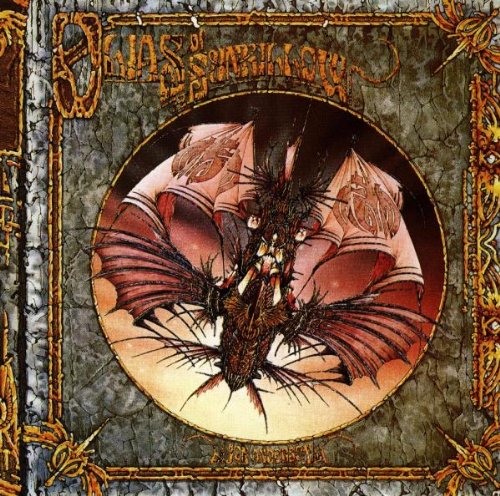
This genre of music, which is often tied up with fantasy and science fiction, is ripe for stories of aliens and interplanetary travel (although as we have seen, other genres go there, too.) And thus, we come to Jon Anderson’s Olias of Sunhillow, the Yes singer’s solo debut, released in 1976, after Yes released Relayer (an album that I have zero memory of) and before Going For The One (which I enjoyed more), during a period when the band’s members were all releasing solo albums. Wikipedia describes the album as telling:

the story of an alien race and their journey to a new world (the story printed in the LP jacket calls it "the earth", lowercase 'e') due to a volcanic catastrophe. Olias, the title character, is the chosen architect of the glider Moorglade Mover, which will be used to fly his people to their new home. Ranyart is the navigator for the glider, and Qoquaq (pronounced 'ko-quake') is the leader who unites the four tribes of Sunhillow to partake in the exodus. 

Now, let me start off by saying that I like this album, and particularly the featured track, very much. Anderson is credited with all of the voices and instruments on the album, which took two years in conception, and 8 months of work, to record. There have long been rumors that Vangelis, who had unsuccessfully auditioned for Yes at that time, and who Anderson collaborated with, played some of the parts, but both men have denied this, and unless Devin Nunes has a memo to the contrary, I see no reason to dispute that (actually, if Nunes had such a memo, it might be more likely that I’d take a contrary position, but I’m going off the rails here).

If you want a chuckle, go ahead and read the whole elaborate story, which was printed on the inner album sleeve. And because most of you won’t buy the album, here’s a link to a website devoted to Olias of Sunhillow which contains the story, and more.

Meanwhile, it appears that Anderson has been working on a sequel to Olias since 2001, to be called The Songs of Zamran: Son of Olias, and as recently as 2014, Anderson confirmed that he is still working on it. Based on his comments over the years, it will be a multi-hour work, and possibly released as an app, including visuals. Here's a preview, from 2013.  And why not, I say?

Tuesday, May 5, 2015

DARKNESS (= NOT LIGHT!!!): The Dark Side of the Moon

 photo Back_side_of_the_Moon_AS16-3021.jpg

Eeek, what have I done? What was I thinking? Without even the excuse of living in the arctic, where light and dark have a different modus operandi, I seem to have sneaked some light into the expected stygian gloom required this fortnight. I just got muddled up, sorry, forgive me. By way of penance I will post some of the blackest, darkest anti-light and anti-white I can find.......... Is the dark side of the moon dark enough for you?

DSOtM has sold a trillion zillion copies since it's first release back in 1973, making it far and away the biggest seller by UK warhorses, Pink Floyd, the template of expectation for all they produced after its wake, with possibly all the albatross that might suggest. I certainly bought it back then, but became swiftly frustrated by its ubiquity. It was everywhere and everyone had it. I sold it. OK, with hindsight I can respect its value. The use of synthesizers and loops, the use of spoken word snippets, the acceptance of non-band contributions, all of these elements were unusual for their day, as was, give or take Tommy, there being but one broad theme over the course of the album. (Quite what that theme actually was might be another story, though it was generally accepted it might come under the broad brush of what makes you mad, rather than madness per se. That was certainly the aim of the prime architect, Roger Waters, still then the unacknowledged leader of the band.)

My favourite track was always this one. The melancholy of the openining piano motif, enshrouded by the archetypal waves of Gilmour slide, a "tu-tup" from Mason and the vocal kicks in, a shock to anyone expecting the usual plaintive close harmonics of the bands main voices. Weaving wordlessly up and down, in and around the arrangement, blowing hot, then cold, then cooler still, Claire Torry shakes the tune from pillar to post, before a final period of exhausted reflection. To me it has always given the image of a strait-jacket being violently disturbed to the extent of escape therefrom, which might fit very well within the metaphor desired. I fact, as I muse, I wonder why I got rid at all, feeling a warm glow of reminiscent nostalgia.

But it is not all there is to this song, as other voices/players have found:


I love this version! Easy Club All-Stars have a bit of a track record in covering entire albums, but this was their first, later covering Radiohead, the Beatles and Michael Jackson. More a collective than a band, Kirsty Rock covers the vocal over a somewhat livelier cadence than the Pinks.


Less well known than the above, as played by Poor Man's Whiskey, it was always going to be a challenge to find any bluegrass in this quintesentially english music. Perhaps wisely eschewing the vocal for keening fiddle, this almost works, until, thinking better of that, some lack-lustre crooning does appear, almost momentarily.


Just in case you wanted to know how it might sound in the hands of a conventionally trained violinist. In fact, a full blown classical troupe, Vitamin String Quartet, give it the whole works, and a very convincing job of it too. No vocals at all. Whereas........


All voices? Maybe not. Apologies to Voices on the Dark Side, but that's where you should have remained.


Finally, the Flaming Lips, arguably true to form, initially draw you in with an idyllically sweet intro, ahead of Peaches kicking the bejasus out of any joy the tune might hold, the two aspects then taking turns to attract and dispel any appreciation remaining. One for thieir fans only, methinks.

(One I am not going to put up is an almighty clunker, produced by a whole bevy of prog rock musos who should have known better. There seems an alarming trend for this sort of thing, virtually always including Dweezil Zappa, who should stick, I feel, to the legacy of his father, than spoiling that of others......)

Purchase the Floyd, Easy Club All-Stars, Poor Man's Whiskey, Vitamin String Quartet, Voices on the Dark Side and/or Flaming Lips

Friday, January 3, 2014

In Memoriam: Storm Thorgerson and Arturo Vega


[purchase The Gathering Storm - The Album Art of Storm Thorgerson]


[purchase the iconic Ramones T-Shirt]

They were both artists, they were both influential in the music world, and they both died in 2013. But Storm Thorgerson and Arturo Vega were also very different, in their lives, in their art and in the music that they were associated with.

Thorgerson was born in England in 1944 and was a friend of Syd Barrett, Roger Waters and David Gilmour. He was a graduate of the University of Leicester and obtained a Master of Arts degree from the Royal College of Art. In 1968, he founded Hipgnosis, a graphic arts company, and Thorgerson and the company designed many of the most iconic album covers of the 1970s and 1980s, regularly for prog rock groups. The cover of Pink Floyd’s Dark Side of the Moon, designed by Thorgerson, is often considered to be the greatest album cover of all time. Thorgerson’s work frequently was surreal, with sharply focused and well lit figures in bizarre or unexpected situations. Back when an album cover was a relatively large surface, Thorgerson’s designs were definitely a lure to record store browsers. And if you were someone who partook of psychedelic substances, they could be looked at for hours in an attempt to unlock their meaning. Or so I have been told.

It would take too long to list all of the incredible covers that Thorgerson had a role in designing and creating, but to list a few (other than most Pink Floyd covers)—Led Zeppelin’s Houses of the Holy and Presence, Genesis’ The Lamb Lies Down on Broadway, Yes’ Tormato and Going for the One, the first three Peter Gabriel albums, and albums by Renaissance, Brand X. 10cc and The Mars Volta. And I am probably leaving out your favorite. It was not, however, all classic rock or prog—his portfolio included covers for Ian Dury and the Blockheads, The Cranberries, The Cult, Megadeth and The Offspring.

In addition to designing album covers, Thorgerson directed music videos for artists such as Yes, Robert Plant, Pink Floyd and Nik Kershaw.

Thorgerson suffered a stroke in 2003 and later battled cancer, which claimed his life in April, 2013.

Arturo Vega’s career may not have had the same broad scope as Torgerson’s, but his work, primarily for The Ramones, who rejected all of the pomp and excess of many of the bands that hired Torgerson, may well be as influential, and probably sold more t-shirts. But art isn’t a competition (unlike, apparently, cupcakes).

Vega was born in 1947 in Chihuahua, Mexico, but moved to New York in his early 20’s to try and become an artist. New York at that time was not the chain store paradise that it is today, and the early-1970’s music scene that grew out of bands like the Velvet Underground were spawned from grungy, dangerous downtown neighborhoods which are probably remembered more fondly now than they were back then.

While living in a loft in the East Village in 1973, Vega met Douglas Colvin, who complemented the music on Vega’s stereo. Colvin later morphed into Dee Dee Ramone, and Vega became known as the “Fifth Ramone.” In addition to often feeding, housing and supporting the band, Vega was what would now be called a branding consultant. He helped to develop their look, their lighting, and, most of all, designed one of the truly great rock band logos ever. The faux presidential seal, featuring an eagle holding an apple branch (to signify that The Ramones were as American as apple pie) and a baseball bat (in honor of Johnny Ramone’s favorite sport), with a “Hey Ho, Let’s Go” banner in its beak, surrounded by the names of the members, is not only instantly recognizable, it represented a subtle, if unmistakable “fuck you” to the establishment.

Vega claims to have seen all but 2 of the bands 2,200 plus live shows and sold t-shirts with that logo, which helped to support the band when they weren’t selling that many albums or tickets. He continued to sell Ramones shirts and memorabilia, and his logo became a badge of coolness, even with people who weren’t even born when The Ramones broke up. Although Vega worked with other musicians, he will always be identified with The Ramones, and without Vega, The Ramones might never have survived to become a force that changed music forever.

He died, of undisclosed causes, in June.

Saturday, February 25, 2012

Spoken Word: Keep Talking


Pink Floyd: Keep Talking

[purchase]

For millions of years mankind lived just like the animals.
Then something happened which unleashed the power of our imagination: We learned to talk.

Let's count the ways this song fits our theme by starting out with its (1) title, which exhorts us to Keep Talking, even though the lyrics declare the singer's inability to communicate (Why won't you talk to me?"). In fact, the theme of the entire album is (2) communication or the lack of it. The album title, The Division Bell, refers to the bell that's rung before a vote to summon members of the British Parliament, a place where (3) speechmaking is the major form of communication and where a vote solidifies into law by a verbal yes or no. Considering that Pink Floyd had undergone a very public fracture due to the (4) breakdown in communication between members David Gilmour and Roger Waters, who had left the band by 1994, there was much speculation that this song was heavily biographical.

One of the key features of this song is the (5) sampled electronic voice of physicist Stephen Hawking, who has relied on a speech synthesizer since the 80's. Gilmour, for his part, relies on a guitar talk box that merges vocal effects with his electric guitar notes, mimicking the sound of (6) human speech.
It doesn't have to be like this,
All we need to do is make sure we keep talking.

Friday, January 2, 2009

In Memoriam: Richard Wright


Pink Floyd: The Great Gig In The Sky

[purchase]

Pink Floyd keyboardist Richard Wright passed in September of this year, and though I hadn't known much about him before his death, my pursuit of appropriate fodder for a blog post on the subject back then led me to a great respect for this undersung member of one of psychedelic rock's most influential bands. Taking a cue from Nelson, here's a clip from my Cover Lay Down post on the subject:

[Richard] Wright spent much of his career as third fiddle to two powerful songwriters (and, previous to that, one additional stellar frontman), but he deserves his due: his work was hardly negligible, and he did his share of songcraft, too, on some of the best known albums from the band.

Presciently, Wright’s most famous composition is probably The Great Gig in the Sky, which begins with the line “I am not frightened to die.”


It's not every artist who writes his own perfect epitaph. You've heard it before, of course. But isolated from the grandeur that is the entirety of Dark Side of the Moon, The Great Gig in the Sky stands alone as a finite atmosphere, a wash of keys and crashing waves rising ever higher and then floating down to earth again, a lifetime encapsulated in song.

So long, Richard. See you on the other side.

Saturday, August 16, 2008

1973: Brain Damage


Pink Floyd: Brain Damage

[purchase]

I couldn't let the week go by without at least acknowledging the triumphant pentultimate track to 1973 Prog Rock masterpiece The Dark Side of the Moon, a heavily thematic tour de force which produced some pretty catchy set of tunes but which, ultimately, best displays its power as a concept album, best listened to straight through, as the premature ending of this track belies.

That said: though it cuts off abruptly, I like this track -- it's a powerful anthem and denouement all in one. But if for some odd reason you've never heard the album the way through, find someone with a likely dorm room, make sure you've got the right... um... "supplies", and bliss out for an hour or so.

Also, if my childhood memories serve me well, Brain Damage is the second Pink Floyd track most summer camp counselors learn on the guitar, just after their friends get thoroughly sick of them playing Wish You Were Here.

Then again, there's this, just for fun:

Austin Lounge Lizards: Dark Side of the Moon
[live recording]

Tuesday, May 20, 2008

Little Black Book: Vera


Pink Floyd: Vera

[purchase]

"Does anybody here remember Vera Lynn?"

Well, you've no doubt heard this song before. Weren't copies of The Wall given away with disc players, once upon a time? No? well, it sure seemed like it to me. Everybody in my peer group bought Pink Floyd discs first. "The sound will blow your mind, dude!"

That said, this version may still be new to you. It comes from something called Under Construction: The Second Demo To The Wall. "Vera" is pretty well the same from the official release, albeit rougher, but other tunes have different lyrics, alternate instrumentation, etc., so it's a pretty nice way to review an otherwise over-listened (for me at least) piece.

Monday, May 5, 2008

2:42 - Flaming


Pink Floyd: Flaming

[purchase]

Here's one of those goofy, Syd Barrett-era, Pink Floyd songs... all sing-songy, and a total goof compared with the too serious Floyd that blew up (bloated?) in the 70's.

"Flaming" is from the group's debut album, Piper At The Gates Of Dawn , which came out in 1967. The song was released as a single in the U.S., but did not chart.

This is a stereo mix of the song, by the way, off the 40th aniversary release of the album, in 2007.

Dig it.