Showing posts with label Gong. Show all posts

Friday, February 19, 2021

Main: Mainstream

Quiet Sun: Mummy was an Asteroid, Daddy was a Small Non-Stick Kitchen Utensil
[purchase

For no particularly good reason, other than I like it, I’ve been listening to a bunch of fusion and prog-rock lately (I find it good to have on while working), which meant that coincidentally, I’ve heard a bunch of Chick Corea in the days before his death. That’s just an aside to the main point of this piece which is about an almost forgotten fusion album, Mainstream by Quiet Sun. 

I remember being introduced to Phil Manzanera’s music in college by someone at WPRB. Although aware of Roxy Music, I didn’t know the names of anyone in the band other than Bryan Ferry, but I learned that Manzanera was the guitarist, and that I liked his solo work better than Roxy. I’ve written about that, and about Manzanera’s background here—and even mentioned both Mainstream and our wonderfully titled featured song—so I won’t repeat myself too much. 

As I wrote there, when Manzanera booked studio time in 1975 to record his first solo album, Diamond Head, he reunited his school band, Quiet Sun, to record some music they had previously worked on, but never recorded formally, before the group disbanded in 1972. This was not just a bunch of kids bashing around in their garage, but a talented group of musicians influenced by the Canterbury Scene. In fact, bass player Bill MacCormick had befriended Robert Wyatt (the son of a friend of his mother’s), one of the stalwarts of the scene as a founder of Soft Machine. After Quiet Sun’s first disbanding, MacCormick joined Wyatt’s band Matching Mole, Manzanera joined Roxy Music, keyboard player Dave Jarrett became a teacher, and drummer Charles Hayward played with a number of different groups, including briefly with Gong. 

But Manzanera got the band back together in 1975, recording at night after the Diamond Head sessions were done, and working on improving their earlier music with what they had learned in the intervening years (and availing themselves of Brian Eno's synthesizers and treatments). What they turned out was exciting, interesting fusion, one of the most interesting of which is our featured song (and not just because of its title, which apparently was originally the more pedestrian “Dog,” derived from a prior title, “Mummy was a Maoist, Daddy was a running dog capitalist lackey of the bourgeoisie” that songwriter MacCormick’s brother, music journalist Ian MacDonald, revised in the studio). Remarkably, the complex song was reportedly recorded in one take. 

That was it for Quiet Sun, although some of the music from the album was later performed by 801, which was led by Manzanera, and included MacCormick. On the great 801 Live album, “Asteroid” was combined with a track from Diamond Head, “East of Echo,” and became “East of Asteroid.” It is also great.

Monday, July 30, 2018

Remedies: Mental Medication


U.K.: Mental Medication [purchase]

The original lineup of U.K. brought together some of the best at their instruments British prog rockers. The band was formed in the late 1970s by drummer Bill Bruford, who had played in Yes and King Crimson, and singer/bassist John Wetton, who had played with Bruford in King Crimson and had also been part of Roxy Music and Uriah Heep. Bruford and Wetton each recruited another musician, with Bruford bringing Allan Holdsworth, who had been with Soft Machine, Tony Williams’ Lifeline, Gong, and Jean-Luc Ponty, as well having played on Bruford’s debut solo album, and Wetton inviting Eddie Jobson, a keyboard player and violinist who had played with him in Roxy Music, and who was in Frank Zappa’s band.

U.K., the one and only album recorded by this lineup is considered by many to be a prog-rock classic. Excellent playing (of course) on interesting, unusual songs, featuring a true fusion of rock, jazz and classical influences, has made this one of my favorites—which is not surprising, considering that Bruford is probably my favorite drummer, Holdsworth is my favorite guitarist, and I have lots of respect for both Wetton and Jobson.

That being said, I have to admit that “Mental Medication” is not one of my favorite songs from the album. There’s something about Wetton’s vocals, particularly at the beginning, that I don’t love. But there’s a thrilling four minute stretch of instrumental music, including a guitar solo from Holdsworth that is both jaw dropping and subtle at the same time, and a violin solo from Jobson, all over Wetton’s stellar bass playing and Bruford’s signature drumming, that makes it worth a listen.

Sadly, after some extensive touring, tensions in the band led to Wetton and Jobson “firing” Holdsworth, and Bruford also left. Rather than find a new guitarist, the remaining members brought in drummer Terry Bozzio, also from Frank Zappa’s band, and recorded Danger Money as a trio. It isn’t a bad album, and actually spawned a minor hit, “Nothing to Lose.” After a live album, Wetton and Jobson themselves disagreed on the future of the band, and they broke up. A couple of years later Wetton formed Asia, with Steve Howe, Carl Palmer and Geoff Downes, which definitely sounded a lot like what U.K. might have sounded like if it tried for a more commercial sound.

Bruford took some of the songs that he had written for a second U.K. album and used them on his second solo album, the great One of a Kind (which also featured Holdsworth on guitar). There were a few Wetton/Jobson led reunions of U.K. over the years, featuring various drummers and guitarists, but the original lineup never got back together.

Sadly, both Wetton and Holdsworth died in 2017, which I commemorated here.

Monday, February 5, 2018

Aliens: Flight of the Moorglade


Jon Anderson: Flight of the Moorglade
[purchase]

Reading my music writing probably might give you the impression that I listen to prog rock all the time, but I don’t. More than anything, I listen to what would be classified as Americana music, but I am clearly an unrepentant lover of progressive rock. But just because I enjoy the music, that doesn’t mean that I can’t mock some of its excesses. And maybe the easiest things to make fun of about the 70s prog that I enjoy are the concept albums, with their often bizarre narratives. I mean, there are some pretty straightforward ones, like Rick Wakeman’s Journey to the Center of the Earth, essentially a dramatization of the Jules Verne novel, or Gryphon’s Red Queen to Gryphon Three, about chess (a hidden gem, by the way), or even Pink Floyd’s The Wall, basically a story about a person's difficult childhood and life.

But then there are the crazy ones, like Gong’s acid-fueled three album Radio Gnome Trilogy, or pretty much anything by Magma, or Genesis’ The Lamb Lies Down on Broadway, which purports to be about a Puerto Rican youth living in New York City, but turns surreal (and is one of my favorite albums, anyway).

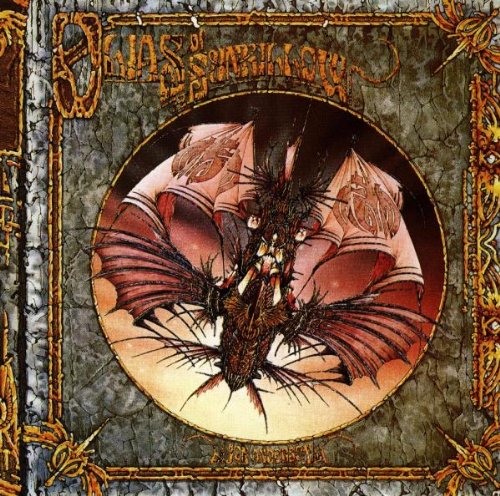
This genre of music, which is often tied up with fantasy and science fiction, is ripe for stories of aliens and interplanetary travel (although as we have seen, other genres go there, too.) And thus, we come to Jon Anderson’s Olias of Sunhillow, the Yes singer’s solo debut, released in 1976, after Yes released Relayer (an album that I have zero memory of) and before Going For The One (which I enjoyed more), during a period when the band’s members were all releasing solo albums. Wikipedia describes the album as telling:

the story of an alien race and their journey to a new world (the story printed in the LP jacket calls it "the earth", lowercase 'e') due to a volcanic catastrophe. Olias, the title character, is the chosen architect of the glider Moorglade Mover, which will be used to fly his people to their new home. Ranyart is the navigator for the glider, and Qoquaq (pronounced 'ko-quake') is the leader who unites the four tribes of Sunhillow to partake in the exodus. 

Now, let me start off by saying that I like this album, and particularly the featured track, very much. Anderson is credited with all of the voices and instruments on the album, which took two years in conception, and 8 months of work, to record. There have long been rumors that Vangelis, who had unsuccessfully auditioned for Yes at that time, and who Anderson collaborated with, played some of the parts, but both men have denied this, and unless Devin Nunes has a memo to the contrary, I see no reason to dispute that (actually, if Nunes had such a memo, it might be more likely that I’d take a contrary position, but I’m going off the rails here).

If you want a chuckle, go ahead and read the whole elaborate story, which was printed on the inner album sleeve. And because most of you won’t buy the album, here’s a link to a website devoted to Olias of Sunhillow which contains the story, and more.

Meanwhile, it appears that Anderson has been working on a sequel to Olias since 2001, to be called The Songs of Zamran: Son of Olias, and as recently as 2014, Anderson confirmed that he is still working on it. Based on his comments over the years, it will be a multi-hour work, and possibly released as an app, including visuals. Here's a preview, from 2013.  And why not, I say?

Wednesday, August 23, 2017

Shadows: Shadows Of

[purchase]

I’ve written about Gong before, a couple of times, and mentioned them in passing. They are a band that I really enjoy, and nevertheless remain pretty obscure. You could probably get a doctorate in the band’s history—it has formed, splintered, reformed, renamed, and changed members more times than one can count. Nevertheless, there’s a website that tries to chronicle Gong's various changes and permutations (as well as other bands from the Canterbury Scene).

I got into Gong through its late 1970s-early 1980s incarnation as a fusion band led by Pierre Moerlen, featuring lots of mallet percussion. The original, spacy, psychedelic version of the band was less interesting to me—although there was brilliance, there was also lots of weird, hard to listen to stuff to wade through. For the most part, the Moerlen-led band was tight, had interesting songs with an unusual amount of percussion and, maybe most importantly, featured incredible musicians, including Allan Holdsworth on guitar. If you don’t know who Allan Holdsworth was (he passed away earlier this year), find his music on the Internet. Days before his death, a 12 CD box set of his solo albums from 1982-2003, entitled The Man Who Changed Guitar Forever, was released. The title was taken from a proclamation on the cover of an issue of Guitar Player in 2008, and it isn’t an overstatement. That’s not to say that there aren’t other guitarists who changed the way guitar was played, but he’s certainly one of them. He was the favorite guitarist of Eddie van Halen; Tom Morello and Frank Zappa, among others, have cited him as an influence.

But the main reason that I’m going back to the Gong well for this theme, which has many possible topics, is that I recently had a chance to meet another of the musicians who played on this song, percussionist Mino Cinélu. Cinélu later played drums for Holdsworth, was in Weather Report, played with, among others, Pat Metheny, Peter Gabriel, Miles Davis, Sting, Kate Bush, Herbie Hancock and Branford Marsalis, and led his  own bands. Mino participated in a panel that I attended recently about copyright law and music, which was led and organized by my friend Heather--who makes her second appearance in SMM--and also featured prominent lawyers and a musicologist who have been involved in some of the most well-known music copyright cases in recent years. Although I’m a lawyer, that’s not my field, and it was fascinating.

Afterwards, we, of course, repaired to the bar for drinks, and I had a chance to chat with Mino, mentioning that I was a huge fan of Gong (particularly the one album of theirs that he appeared on), and Holdsworth, and had participated in an interview with Pierre Moerlen when he, and another formation of Gong, played at Princeton when I was a student. He couldn’t have been a nicer guy, and we’ve been in contact a few times since, most recently to confirm that he, in fact, performed in the live version of “Shadows Of” from the video above, because the Internet shockingly had conflicting information.

It was recorded at the Reading Festival in 1976, and featured Pierre Moerlen and his brother Benoit, also a percussionist, Holdsworth, bass player Francis Moze, percussionist Mirelle Bauer, woodwind player Didier Malherbe and Cinélu. Although the sound quality isn’t great, the performance is, despite the fact that it lacks the amazing acoustic guitar solo of the original, which was a rarity for Holdsworth (or, for that matter, Malherbe's great flute solo).

The Reading Festival that year was a prog-fest, although not exclusively. Other performers included Camel, Phil Manzanera/801, and Brand X. Other non-prog acts included AC/DC (listed in very small type), Black Oak Arkansas, Rory Gallagher (both in very big type), Ted Nugent, and Manfred Mann’s Earth Band. And, as they say, many, many more.

Friday, January 6, 2017

In Memoriam: Some Overshadowed 2016 Losses


In a year in which we lost David Bowie, Prince, Merle Haggard, two thirds of ELP, Paul Kantner, George Michael, Leonard Cohen, Maurice White, George Martin, Glenn Frey, Sharon Jones, and Mose Allison, to name just a very few (most of whom are still available as subjects for this theme, hint, hint), it is not surprising that some deaths during 2016 were overshadowed by bigger names. Here are a few that you may have missed:

Fred Tomlinson: Tomlinson wrote much of the music that added to the lunacy of Monty Python’s Flying Circus and other British shows, and as leader of the Fred Tomlinson singers, performed a good deal of it. If he did nothing else but write the music for “The Lumberjack Song” and lead the Vikings in singing “Spam,” he’d deserve lionization, but he did much more.

[purchase the complete Monty Python series]

Dave Swarbrick and Pete Zorn: I was introduced to both of these musicians due to their connection to Richard Thompson. Swarbrick was best known as a fiddler, and was a member of Fairport Convention, remaining as a member after Thompson left, playing numerous instruments, singing and writing songs. He also contributed to many albums by Thompson and other members of the extended Fairport circle and performed as a solo artist and in various combinations. Check out this footage of him wailing on the fiddle, and singing, with Fairport Convention live in 1970.


Pete Zorn was an American multi-instrumentalist who played with Thompson live and on record, as well as other bands, often in the same English folk world as Swarbrick, and it does seem that they crossed paths. Zorn was Gerry Rafferty’s first choice to play the sax solo in “Baker Street,” but was unavailable; instead Raphael Ravenscroft got the gig. I remember seeing Zorn play with Thompson and handling many stringed and woodwind instruments, including the bass flute. Here he is, singing and playing sax on Thompson’s “Tear Stained Letter.”

[purchase Richard Thompson’s Hand of Kindness, featuring Zorn]
[purchase Fairport Convention’s Liege & Lief]

Gilli Smyth: The co-founder of Gong, with her partner and collaborator Daevid Allen (who died last year), Smyth was a musician, poet, writer and activist. Her contributions to Gong (where she was sometimes billed as Shakti Yoni), and the spin off collections that sprung up over the years, were eccentric, provocative and always interesting. You can get a sense of her "space whispering" performing style, and that of Gong, in this performance from 1973 of “Witch's Song, I Am Your Pussy.”

[purchase Gong’s Flying Teapot]

Bernie Worrell: O.K., enough with the Brits. Worrell, a New Jersey native, was a classically trained pianist who gained fame (and entry to the Rock & Roll Hall of Fame) playing funk with Parliament/Funkadelic in the 1970s. I really began to appreciate Worrell when he joined the expanded Talking Heads. After that, he continued to play with a wide variety of musicians, and as a leader of his own group. Here he is, featured in the introduction and throughout the live performance of “Life During Wartime” from Stop Making Sense.

[purchase the DVD of Stop Making Sense]

Tuesday, December 6, 2016

Leftovers: Ste*--Prog Rock Guitarists Steve Howe, Steve Hackett and Steve Hillage


Yes: Mood For A Day  
[purchase Fragile by Yes]

Steve Hackett: Ace Of Wands
[purchase Voyage of the Acolyte by Steve Hackett]

Steve Hillage: Castle In The Clouds/Hurdy Gurdy Man (Live)
[purchase Live Herald by Steve Hillage]

Ste* was one of the odder themes we had in 2016, and in response, I wrote about brilliant guitarist Steve Tibbetts, a relatively obscure musician whose music, as I said, “exists somewhere in the never particularly commercial intersection of jazz fusion, world music and ambient music.” Thinking about our Leftovers theme, I realized that I was aware of three more guitar virtuosi whose first name is Steve. So, I figured, why not write a little about each of them, in reverse order of their fame.

Despite the fact that all three of them are remarkable guitarists, and have continued to make music for years, I pretty much stopped following their careers years ago. Whether it was a change in their music, or changes in my tastes, or, more likely, a combination of both, I’m really not knowledgeable about their work from after the 1980s, which may well be very good. I do still enjoy the music that they made back in the day.

Steve Howe (who was already the subject of a Ste* post), of course, is best known for his work with Yes. Born in 1947 in North London, he made his first recording, a cover of Chuck Berry’s “Maybelline” in 1964 with the Syndicats, and played in a number of other bands, including Tomorrow and Bodast. Check out this Bodast tune, “Nether Street,” part of which was later used in Yes’ “Starship Trooper.” After passing on the chance to join the Nice and Jethro Tull, once it was clear that Bodast was not going to get a deal, he agreed to join Yes, replacing Peter Banks. Howe’s eclectic influences, including classical, jazz, and rock helped to create the distinctive Yes sound during their best and most iconic period.

He left Yes when it broke up in 1981, wasn’t asked back for the reformation of the band (so, he didn’t play on “Owner of a Lonely Heart”), and reunited with most of the “classic” Yes lineup in Anderson Bruford Wakeman and Howe. He has participated in some, but not all, of the various Yes lineups over the years. I really stopped listening to Howe after he left Yes the first time. I never really paid much attention to his solo albums (including the ones he made while still in the band), or any of the later Yes efforts that he appeared on. There were a few good songs on the first Asia album, but I felt that the band was less than the sum of its parts, and his project with Steve Hackett, GTR, also failed to interest me. Howe continues to record with Yes and in a jazz trio featuring his son on drums, and to perform.

Steve Hackett, Howe’s GTR bandmate, is best known for his work with Genesis. Born in 1950 in central London, he was a self-taught guitarist. After gigging with a few bands, in 1970, he joined Quiet World with his brother John, a flutist, and appeared on their only album, before leaving the band. Hackett put an ad in Melody Maker magazine for musicians "determined to strive beyond existing stagnant music forms." Peter Gabriel answered the ad because his band, Genesis, had lost their original guitarist, Anthony Phillips. Like Howe, Hackett wasn’t the first guitarist in the band which made him famous, but was part of the band’s best, and best known, lineup.

Over time, Hackett began to feel marginalized by Genesis which gradually put less of his music on its albums. After the tour supporting the Wind And Wuthering album in 1977, Hackett left the band. I followed Hackett’s solo work for a while. His first solo album, Voyage of the Acolyte, recorded while he was still in Genesis, featured the band's drummer Phil Collins, who also sang on one song (before he was the lead singer of Genesis), and bassist Mike Rutherford, along with John Hackett, and is probably a minor prog rock classic. I was also a big fan of 1979’s Spectral Mornings, and continued to listen to, and enjoy Hackett’s solo work, to a somewhat diminishing degree, through the mid-1980s.

One of Hackett’s big problems is that he is a great guitarist and a bad singer. So, when he writes songs with lyrics, he either has to bring in outside vocalists with varying success, or sings himself, usually with the assistance of significant processing, and mostly unsuccessfully. After that, I again pretty much lost track of Hackett’s career—occasionally listening to some of his studio and live Genesis “revisited” work, but ignoring most of his varied output, which has ranged from classical, to world music, to blues, to prog and rock. Hackett also continues to record, as a solo artist and with others, and to tour as a solo act, and with a mostly Genesis-based show.

Steve Hillage, the youngest and least well-known of the trio of Steves, was born in 1951 in northeast London. Hillage played in a number of bands as a teenager, a couple of which even recorded and released albums. While attending university in the Canterbury area starting in 1969, Hillage began to play with other musicians and bands in the Canterbury scene. In 1971, he formed Khan, which released one album of psychedelic prog, before breaking up. Hillage then joined Kevin Ayers’ band before becoming a member of Gong in 1973, as the band was starting work in its “Radio Gnome” trilogy. But when Gong inevitably disintegrated, Hillage began a solo career.

I was introduced to Hillage while at WPRB, almost certainly from hearing his great live, spacy cover of Donovan’s “Hurdy Gurdy Man,” from the 1979 album Live Herald, which led me to the rest of his solo work. I will admit that my immersion into the Gong world focused mostly on the later, Pierre Moerlen-led albums which were almost entirely Hillage-free, and it was only much later that I spent any time listening to the bizarre Daevid Allen era band’s eclectic psychedelia that featured Hillage.

Just as I was getting into Hillage’s music, he began to move away from the prog rock guitar heroics that I liked, and into ambient dance music, which I didn’t, so I basically stopped paying attention to his career after the late 70’s. Over the years, Hillage produced albums for a variety of acts, including Simple Minds (pre-Breakfast Club fame) and continues to focus on performing and recording dance music under the name System 7 and Mirror System with his long time musical and personal partner, Miquette Giraudy. He also occasionally participates in Gong reunions. And, for some reason, he appeared on this Elton John cover “sung” by William Shatner.

I’d love to be able to tie this up with some clever ending, but like a post-Thanksgiving turkey, cranberry and stuffing sandwich, it is sometimes better just to be happy that things work together, without overthinking why.

Monday, June 20, 2016

Roads/Streets:Tenemos Roads


National Health: Tenemos Roads
[purchase]

There was a time and place when the idea of a “supergroup” combining the members of Hatfield and the North and Gilgamesh would have been a big deal. That time was the late 1970s, and the place was England, particularly Canterbury. I’ve written in the past about the so-called “Canterbury Scene,” focusing mostly on the bands Gong and Soft Machine, but there were many other groups, often with overlapping membership, that created interesting music at that time and in that place. These musicians were, for the most part, profoundly talented, extremely adventurous, and mostly forgotten, certainly on this side of the Atlantic.

Hatfield and the North was one of the best regarded bands from this scene. After the usual musical chairs, its membership essentially solidified as vocalist/bassist Richard Sinclair (formerly of Caravan, later of Camel), guitarist Phil Miller (formerly of Matching Mole), drummer Pip Pyle (formerly, and later, of Gong), and keyboardist Dave Stewart (formerly of Egg and not the guy from the Eurythmics, but later of Bruford), and a trio of female singers known as the Northettes, Barbara Gaskin, Amanda Parsons and Ann Rosenthal. Gilgamesh was somewhat lesser known, was organized around keyboard player Alan Gowen, and included, among others, guitarist Phil Lee and bassist Neil Murray (later of Whitesnake and Black Sabbath). Both bands played music that was a fusion of rock, jazz and classical influences.

The new band, which came to be called “National Health,” was to include most members of both, but, of course, that was unlikely to work out.  Initially, Bill Bruford was the drummer, but he was replaced by Pyle, Murray replaced Mont Campbell as bassist, and by the time the self-titled debut album was released, Gowan was credited only as a guest, along with Parsons, the only Northette to participate. Nevertheless, they created a great album, if maybe not quite a masterpiece. Mostly instrumental, it is complex, interesting prog rock without much of the pompousness that has given the genre a bad name.

Leadoff track, “Tenemos Roads,” a 14 and a half minute piece written by Stewart, has a catchy opening theme and a long instrumental section before Parsons’ ethereal vocals enter. Prog rock songs often have spacy lyrics, and “Tenemos Roads” is part of that tradition. Something about a place in the stars, and history and men making war and fish living in the sea. Whatever. After a bit of spacy noodling, the song picks up again, and almost rocks out to the end.

I know that may not sound all that enticing, but trust me, it is really good, so give it a listen.

National Health released a maybe even better album the next year, Of Queues And Cures, and then went into hibernation, reuniting in 1982 for D.S. Al Coda, a tribute to Gowen, who had died the previous year of leukemia. And that was pretty much it from this particular combination of musicians, except for some live releases and Missing Piece, a collection of early songs featuring Bruford, Steve Hillage and others.

Friday, January 10, 2014

In Memoriam: Kevin Ayers and Peter Banks


Soft Machine: We Did it Again [purchase]


Yes: Beyond and Before [purchase]

As we wind down the In Memoriam theme and move on to (I hope) happier discussions, I decided to wedge in another pair of tributes, this time to musicians who played on early albums by prog bands, and then left. In both cases, the bands reached significant popularity after their departure, while the musicians went on to long careers, mostly under the mainstream radar.

Let’s start with Kevin Ayers. Born in England, he was raised in Malaysia, and seemed to have taken a more stereotypical tropical approach to life. An early member of what later became known as the “Canterbury Scene,” he joined the Wilde Flowers, sort of the “mothership” of the scene. The Wilde Flowers split, essentially forming two bands: Caravan and Soft Machine, in which Ayers played bass and guitar, sang and wrote songs. Initially Soft Machine also included Robert Wyatt on drums and vocals, Daevid Allen on guitar and Mike Ratledge on organ. Unfortunately, after some gigs in France, Allen was refused entry back to England, so he stayed in France and formed Gong (which turned out pretty well for him).

As a trio, Soft Machine toured the United States, opening for Jimi Hendrix, a pretty good gig, I’d have to think, and recorded their first album, The Soft Machine in New York. The album, which is as much an odd psychedelic album as it was a proto-prog rock collection, is one of those albums that is considered very influential but is probably rarely played, and that’s too bad. The track featured above, "We Did it Again," was written by Ayers, and he sings lead. You can hear the diverse influences, including blues, psychedelic rock and prog, in the song. Imagine, if you can, hearing it go on for 45 minutes, in 1968, at a concert, especially if you were under the influence. Apparently, it was an almost religious experience.

Later, in 1968, Soft Machine recruited a guitarist named Andy Summers to replace Allen, and he toured with the band on some more American dates, including opening for Hendrix again, before Ayers had Summers fired. Summers, of course, did fine for himself, joining a little trio in 1997 called The Police.  (There must not have been hard feelings between Ayers and Summers, who later played with him).

Ayers, however, decided the touring grind was too much, sold his bass to Noel Redding of Hendrix’s band, and went off to Ibiza to hang out with Daevid Allen. I have to believe that the gentlemen enjoyed themselves pharmacologically, as befit the times, and Ayers wrote a bunch of songs that are featured on his first solo album. Through the next decades, Ayers recorded and toured with a wide variety of musicians, releasing uncategorizable albums that delighted and confounded the music world. Interestingly, one of Ayers longest musical collaborations was with guitarist Ollie Halsall, the mostly uncredited guitarist for the Beatles parody band The Rutles.

Ayers rarely seemed interested in commercial success, and he never had much, due to his musical tastes, laid back personality and, unfortunately, substance abuse issues. In the late 1990s, Ayers reappeared, but it wasn’t until 2007 that he released The Unfairground to critical acclaim and, of course, few sales. He died on February 18, 2013 in France.

Soft Machine, in Ayers’ absence, with a regularly changing cast of members, moved gradually away from psychedelia and prog toward fusion (but generally the interesting kind, especially the fascinating Third album). Allmusic considers them to be one of the more influential bands of their era.

Peter Banks was the first guitarist in Yes, and appeared on their first two albums. Was he a good guitarist? A couple of influential DJs from the BBC refer to him as the “Architect of Progressive Rock.” Gibson Guitar named him as one of the "10 Great Prog Rock Guitarists." So yeah, he was. The song above, "Beyond and Before," is the first song on the first Yes album, and Banks plays the first note, and follows that with some fine playing. So, what happened?

Artistic differences, of course. Yes was formed in mid-1968, and the initial lineup was Banks, Jon Anderson on vocals, Chris Squire on bass, Tony Kaye on keyboards, and my favorite drummer, Bill Bruford. Of course, they needed a name, and after considering Anderson’s suggestion, Life, and Squire’s suggestion, World, they agreed on Yes! (suggested by Banks, and including the exclamation point). They began to perform live, Bruford decided to quit the band and return to university, but luckily was lured back. In 1969, the band recorded and released a self-titled debut album (without the !), consisting of original songs, and two covers. Although the album failed to chart, it received generally positive reviews.

The band began to work on its followup, Time and A Word, but Anderson and Squire wanted to use an orchestra, which was still kind of a radical idea. Banks wasn’t pleased by this in theory, and when he found out that the arrangements were going to pretty much replace him (and Kaye), he became really miffed. The album was released, it did O.K., although there were some negative reviews of the use of the orchestra, the band did a tour, and the disgruntled Banks was given the boot. He was replaced by Steve Howe. (Kaye lasted one more album (The Yes Album, the band’s commercial breakthrough) and tour before being replaced by Rick Wakeman).

After a while supporting others, Banks and Kaye reunited to form Flash, which not surprisingly sounded like Yes and had minimal success in its short life, after which Banks worked as a sideman, appeared on tribute albums and released solo material (check out this one featuring Jan Akkerman of Focus, Phil Collins, John Wetton and Steve Hackett). He wasn’t even part of a Flash reunion in the early 2000s. but toured and released an album in 2006 as part of a band called Harmony in Diversity. He passed away on March 7, 2013.

Of course, Yes went on to enormous fame, with an oft-changing revolving door lineup (that, however, never again included Banks). Their most recent album featured only Squire from the original lineup, and they still tour regularly.

Sunday, April 15, 2012

Suites and Medleys: Supermarket


Pierre Moerlen’s Gong: Supermarket
[purchase]

Great, another opportunity for me to reach into my pretentious prog rock collection and dredge up another long-winded suite. Well, I sort of went there, but not exactly. Bear with me for a bit, for some exposition/history about some obscure, but interesting music. I’ll keep it short, because you can easily find more detail on the Internet if you want—especially because this is the kind of music that has long fascinated rock snobs and obsessives.

We start with the “Canterbury Scene” of the late 1960’s-70’s, centered around a group of musicians with some connection to Canterbury, England. The music is a mix of jazz, rock, prog rock, and general spaciness, and the musicians seem to create new bands, with different combinations, on a daily basis. I’d hazard a guess that various mind expanding substances were also involved.

Probably the most famous band to be considered part of the scene is Soft Machine. A founding member of that band, Daevid Allen, an Australian, and early “hippy”, is refused reentry to England in 1967 due to a visa issue, so he stays in France and forms a band called Gong. (Aside--and there are many to be had with this crowd—one brief replacement for Allen in Soft Machine is Andy Summers, who later becomes the guitarist for a somewhat popular band, The Police).

Gong is, basically, insane. Spacy, jazzy, crazy music, the band members adopt pseudonyms like Bloomdido Bad de Grasse and create a band mythology with characters named Zero the Hero, the Octave Doctors, and Flying Teapots. Remember, this was the 1970’s.

The band is a revolving door of musicians, including a brilliant, classically trained French drummer and percussionist named Pierre Moerlen, who joins, leaves, returns, ultimately takes over leadership of the band and moves it toward somewhat more conventional jazz-rock. Over time, the various members of Gong create a series of ever shifting spinoff bands, usually with the word “Gong” in the name; the one led by Moerlen becomes known, cleverly, as Pierre Morelen’s Gong. If you are interested in more detail on the Gong family tree and their inspired looniness, there is way more information than you need at this website: [Planet Gong]

As I said, Moerlen is an incredible percussionist, and his version of the band focuses on more conventional late ‘70s fusion, but with an emphasis on mallet percussion (vibraphone, xylophone, marimba, etc.). In my book, as a drummer, he is in the same league as Bruford, a subject of an earlier post, and who also spent a brief period in Gong. Alan Holdsworth, who played guitar in Bruford’s bands, also played with Moerlen.

The subject of this post is supposed to be Suites or Medleys, and the Pierre Moerlen’s Gong album Time is the Key, opens with a four track suite. At WPRB in 1980, we were big fans of these guys, and arranged to bring them to campus for a concert that was pretty amazing. My daughter still wears the t-shirt. We got to interview the band, which included guitarist Bon Lozaga, a very talented player, who was a Holdsworth disciple, and strong bassist Hansford Rowe. One or both of them lived in New Jersey, and would call the station occasionally, and we supported one of Lozaga’s projects, Boji. (Another aside—I just found a download of a Boji gig from 1981 at Trenton’s City Gardens. Here’s the opening song, and I’m pretty sure that is me doing the intro. Which shocked the hell out of me.) Boji: Katalpan Rise

I think during the interview, Moerlen said that he wrote the first side of the album on the vibraphone, and the other on the drums. Or maybe I read that somewhere, but the sound of the two sides is very different. I have linked to the third track from the suite on side one, “Supermarket,” which is fun, and playful, and has a great vibe solo. It is a little New Age-ish and sounds a little like Mike Oldfield (the “Tubular Bells” guy), which is not surprising, since Moerlen toured regularly with Oldfield. If you can track down a copy of Time is the Key, I think you will enjoy it. It isn’t the best Gong album, or even the best of the Pierre Moerlen led Gong albums (I’m a fan of Expresso II, but a case could be made for Gazeuse a/k/a Expresso), but I still like it.

Moerlen retired his version of Gong not too long after they appeared at Princeton, but tried to revive it later, with other musicians and little success. Lozaga and Rowe performed and recorded for a while as Gongzilla, creating another branch on the Gong tree. Unfortunately, Moerlen died in 2005, in his 50’s, of natural causes, ending the career of an unappreciated artist.