Showing posts with label Empty. Show all posts

Thursday, December 10, 2020

LEFTOVERS: 'EMPTY', "SPIRIT'

A leftover to encapsulate both ‘empty’ and ‘spirit’, as in I am in danger of being drained of all celebratory Christmas spirit. OK, it’s true, my score on the humbuggery meter has always been on the higher side of stripey, but whither my goat? It’s bloody Christmas songs. You’d think, what with tiers and lockdowns, that exposure to seasonal dross would have been reduced, but no, it is as if this plague year has given folk carte blanche to wheel out their own version of any old warmed up fare from years gone by. And even, in those rare instances of when a Christmas hit does other than make you want to hit someone, most of the rebakes are so soggy as to insist you do. Or yourself, or the wall, anything to block out their ceaseless epiphanies. So, for your delight and delectation, here are some of this year’s turkeys.


Fairytale of New York is (was) a pretty good song by any standard, and one, in the original, I still enjoy. But it does not translate, and I don’t even mean the fuss and nonsense about the language used. There have always been dire versions, but this years offering takes the proverbial tin of shortbread. What were you thinking, Jon bloody Bon Jovi? Just because it’s for charity dose not let you off the hook for excreting this pot-pourri of scented manure. It’s supposed to be a duet, FFS, at least try to get that, but the arrangement, the distorted vowels, the all of it, it’s awful. (One tiny weeny positive, in that the replacement lines for the term of foodstuff abuse highlighted above, is a little more inventive than many of the other bowdlerisations out there.)


I should here add my disclaimer, I never was that much keen on Slade, and was always more of a Wizzard man in the day. OK, it was good the first million or so times I heard it, but that still only takes it to about 1975. But, when you might fear it may be its own nadir, along comes bloody Robbie Williams and Jamie Cullum, the Puck and Bottom of Christmas, and, by heck, don’t they look pleased with themselves. Apparently it came out last year, but, being then spared that joy, they are now giving it an extra boost this year, clogging up all the cosy TV magazine shows with interviews and performance. (Apparently they each also have new songs apiece for this year, but I have suffered enough already, so you don’t have to either, if you are wise.) From the gurning and mugging, to the smug complicity of the horn section, aaargh. Simply aaargh.


Call me out of touch, as I understand this one is nearly a decade old, but, forgive me if I haven’t kept up with the Bieby and try to avoid the wretched Busta Rhymes at all cost. And, whilst it could be said the Bing’n’Bowie version, probably the template for odd pairings everywhere, is the best known of this venerable tune, as well as growing on me, year by year, this abomination is one I could cheerfully never hear again. If the odious vocalisaions aren’t enough, the rap, like many, it’s true, plumbs all known depths in search of a sickly slickness that will burn equally, whichever direction it explores your gut.

Had enough? I could go on but I think that is enough for one sitting, and clearly now what is needed is something soothing to bring in the new dawn of a new year. One for Robert Burns, clearly, but, sadly there being no recordings of his own renditions for posterity, instead we must make do with sweet baby James, his voice itself like a hot toddy sipped as the pipes skirl and the clock chimes. What’s that? Too much sugar? Damn right, too much sugar. I’m off to the pub. 


(They’re still closed.)

Happy Christmas!

Saturday, October 10, 2020

Empty: Darkness, Darkness


purchase [Elephant Mountain

 Emptiness can be cathartic. It can be debilitating. Kind of like the glass half full or half empty issue. Me? I am by nature a loner. I recall a semester break in my Junior year of college when I headed off into NC's Smokey Mountains for a week of "camping" all by myself - just because. (didn't even take a tent/slept under an overhanging rock) 

 This time around, I searched and dug for a song that might fit. But I kept coming up empty-handed: "songs with emptiness in the title", "songs about emptiness" ... nothing inspiring. About to give up and wait for the next theme, I finally happened on one that meant enough to me that I was willing to write a few lines. 

 Wikipedia says the Youngbloods never reached critical aclaim. A search of our own archives produces 3 posts of relevance, including -surprisingly- one from Seuras Og just two weeks ago with a mention of the Youngbloods' founder Jesse Colin Young. 

 The song, Darkness, Darkness dates from their third album (1969). The list of contributing musicians aside from the band members (Jesse Colin Young, Lowell "Banana" Levinger, Joe Bauer) includes one of my "heroes", David Lindley as well as Charlie Daniels. 

Wikipedia, again, has a list of notable covers such as Mott the Hoople, Eric Burdon, Richie Havens and Robert Plant. There's a short but informative review at AllMusic that I'll leave for you to check out on your own if you wish. 


Thursday, October 8, 2020

EMPTY: GARBAGE

Empty/Strange Little Birds (2016)

I don't think we have ever had much Garbage on this site. That might seem a dangerous place to start, dismissing the usual advice to quit whilst you're ahead, but no, it's true, I can see little or no reference at all. To the band, that is. (What else could I, or even you, possibly mean?) I loved the band on their breakthrough, a fairly rapid state of affairs, if long in the genesis. At the time the brash and somewhat strident decisiveness of the sound seemed a refreshing adjunct to the murkier tones of the grunge movement that begat the band. And I loved the contrast between the "old" guys* and their "young" singer.

Let's retrace some steps. It is 1993. Butch Vig and Steve Marker, both experienced and successful record producers have their own studio. However they weary of their trademark sonic tone, the shockwaves of the Vig produced Nevermind meaning that everybody had and wanted to sound that way. Bringing in old buddy, Duke Erikson, who had been in a couple of bands with Vig, they become engrossed in the art of the remix, their ethos being primarily to alter the direction and focus of the instrumental dynamic, playing tricks with the bass and guitar lines. From there it seems logical to see if that could apply within a live setting, to: 

"take that remix sensibility and somehow translate it into all of the possibilities of a band setup."

Initial false steps with Vig on vocals prove unsatisfactory, with a joint decision it is a female voice the catalyst missing, seeking a forceful character with a powerful voice without too much screech. Marker comes across the band, Angelfish, enjoying the cut of the jib of their striking front woman, and her characterful tones. This is Shirley Manson, and Angelfish are the new name for Goodbye Mr McKenzie, a Scottish group of a relentlessly indie oeuvre. Manson initially not even their lead vocalist, merely sharing that role until the record company get involved, contracts needing a change of name to keep her at the fore. Cue Marker, who draws her to the attention of his cronies. An unsuccessful audition takes place, Manson too much in awe of the reputation of, especially, Vig, and with her impenetrable Edinburgh accent proving indecipherable to the three americans. That seems the end of that. But luckily she seeks another chance, with the dissolution of Angelfish and Garbage are in the can.

Supervixen/Garbage (1995)

I loved those first two albums, Garbage and Version 2.0, 1995 and 98 respectively, the aggressively clean thrust of the songs a potent clarion, with short songs, garlanded both with hooks and the quirks of the three studio boffins, all exuberantly presented with the brash charisma of Manson, transformed from gauche starlet to banshee. With crossover appeal to assuage both the purists and the poppers, for a while they were unassailable.

I Think I'm Paranoid/Version 2.0 (1998)

The traditional difficult third album, Beautiful Garbage, proved as dictated, nearly sinking the band. Frictions were beginning to appear and it didn't fare so well in the charts. A fourth album, Bleed Like Me, only kept them together by performing above expectation, following which they gave themselves some needed time-off.

Bleed Like Me/Bleed Like Me (2005)

As is the way, 2007's greatest hits package, Absolute Garbage, required some new material, with four new tracks produced, a stimulus for again picking up the pieces and reconvening, recording and touring in and from 2010.

As is also the way, no band is ever now allowed to stop entirely, Garbage no different. A final "new" album, Strange Little Birds, appeared in 2016, and it is from this record that 'Empty' comes. Sadly this is not their high-water mark, much of the studio trickery that so lit up their earlier releases seemingly dissipated and, um, empty. But it is still a good enough songs by any other standard, the vocals a mix of Chrissie Hynde and Alanis Morrissette, with a sturdy backing redolent also of the Pretenders.

No Horses/single (2017)

Fast forward a year or three and the band are on tour, celebrating the twentieth anniversary of Version 2.0 with a tour, along with an extended re-release of the album. Part of this shebang included a new single, 2017's No Horses, which suggests a return to form, effecting a glorious trip-hop vibe. I caught the tail end of that tour, as it hit Birmingham, UK, and my thoughts of that night, my sole live exposure to the band are included here. I am uncertain whether that is it; prior to Covid they were said to be planning new material for a release this year and US dates are pencilled in for summer next year. So, indeed, whatever happened to Garbage?

*Erikson hits 70 in January.

Empty? Maybe, but maybe get this or this instead.


Wednesday, October 7, 2020

Empty: The Void (Filler)


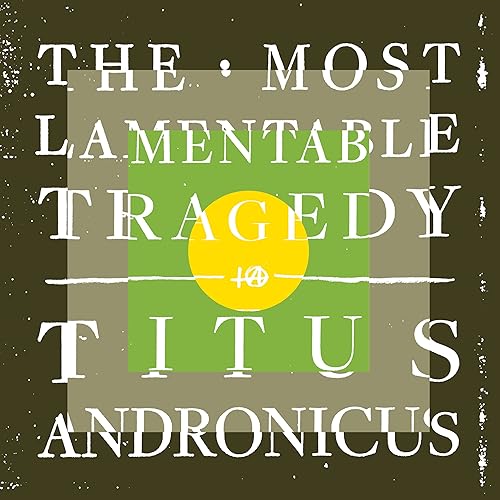
Titus Andronicus: The Void (Filler)
[purchase

Titus Andronicus is a frustrating band. (Shakespeare’s Titus Andronicus, a play that I’ve never seen, is also supposed to be pretty frustrating, and for years was considered to be his worst play. But, as it always seems to happen, it appears that this appraisal has changed. End of gratuitous Shakespeare section). They’re frustrating because they have incredibly grand ambitions, but don’t always live up to them. Because some of their music is really great, and some of it is headscratching. Because the band’s leader, Patrick Stickles, can be incredibly open and interesting when interviewed, but sometimes comes off as difficult. Although he suffers from various mental health issues, which may explain some or all of this. And, by some reports, sometimes their live shows are great, and others stink. 

And I need to admit that part of my frustration is that I recognize that Titus Andronicus is a band that requires the kind of attention that I haven’t really been able to focus on music since maybe college. 

Back when I was in high school, it was not uncommon for bands to create “rock operas” or albums that had some sort of overarching narrative. Some of these were and are considered classics, and others were considered silly or pretentious or indecipherable. As punk music began to gain notice, one of the things that you heard regularly was that the simple, stripped down music was a reaction to the excesses of classic rock and prog, and all of the hifalutin’ pretense, particularly the rock opera and its ilk. 

Eventually, though, punks succumbed to the artistic temptation of trying to create a song cycle with a narrative, and the stories that were told often rivaled the prog masters for incomprehensibility. Although the music was, generally, more concise. 

It probably came as no surprise to fans of Titus Andronicus, though, a band that fused punk with large helpings of Springsteen-esqe rock, that Sickles would attempt his own rock opera. As a Civil War buff of sorts, I first became aware of the band in 2010 when they released The Monitor, which used themes from the Civil War to reflect Stickles’ emotional issues. And some of the music really was thrilling. Their next album, Local Business, was more straight-ahead rock, but for 2015’s The Most Lamentable Tragedy, Stickels created a rock opera lasting more than an hour and half, on the topics of mental health and neurodiversity. As Spin explained

the rock opera’s plot is roughly as follows: A manic-depressive young man meets a lookalike who shows him, through pharmacology and/or religious awakening, a better way of life. He meets and falls for a girl, but has become drug-dependent and experiences a breakdown. He nearly ends it all, but learns at the last second that life is worth trudging through. It’s basically impossible to track the story just by listening — Stickles’ guttural spitting makes many tracks indecipherable — but Quadrophenia and American Idiot were hardly coherent original screenplays, either.

And have you ever read the liner notes to The Lamb Lies Down on Broadway?

The music is also diverse; while most of it skews punkward, there are also electronic/noise interludes, poppy songs, some clear Springsteen homages, fiddle-heavy Celtic rock, and a version of “Auld Lang Syne.” And it was reviewed in The New York Times

Toward the end, is “Into the Void (Filler),” a hard rocker with more than a little bit of Bob Mould/Hüsker Dü influence. I’ve read the lyrics and I’m frankly not at all sure about what it means, but if it is part of a piece about mental illness, maybe it not a surprise that it is hard to decipher. I still don’t know, though, whether the “Filler” in the title refers to filling the titular void, or that the song is filler, but I don’t think so, because it's pretty good (although I've never seen it mentioned in any of the reviews I read in preparing this piece).

I saw Titus Andronicus in 2013 at Terminal 5 in New York with my son, where they were the second act on a bill with The Menzingers opening and Lucero closing. I was excited to see Lucero for the first time since 2006 and to hear Titus Andronicus, but had never heard of The Menzingers. I think that Terminal 5 had really crappy sound, so the loud fast dense sound of Titus Andronicus was hard to listen to or understand (and looking at the setlist now, it appears they played a few songs from the not yet released The Most Lamentable Tragedy). Lucero was fine, although not as good as the first time, although it was maybe because of the bad sound. The Menzingers, though, made a good impression.

Friday, October 2, 2020

EMPTY: ROOMS/GAY & TERRY WOODS

Writing this on a windy, wet and bleak day in Shropshire, exhausted from a ramble around the Wrekin. Exactly the mood to bring on an attack of the folk-rock itch, todays scratch coming from the exquisite store cupboard of Gay and Terry Woods. And it set me a'thinking, not least of the back of the rereleased Richard and Linda Thompson catalogue, what if? OK, don't mistake me, I love RT and all of his oeuvre, but, coming out at much the same time and on the same record label, to say nothing of, broadly, the same musicians, how are we now not celebrating this other couple also? After all, what did they have in common? Talented instrumentalist and songwriter? Yup. Consummate singer of said songs? Yup. A sense of overarching melancholy? Yup, yup, yup. (To be fair, like the Thompsons, both could sing, if Terry, like Richard, was a more acquired taste. Plus their material was decidedly co-written between them.)

Empty Rooms is a classic of the early to mid seventies folk rock style. One of the finest tracks on their second album in their joint name, The Time Is Right, from 1976, I surprised to see it actually came out on the Polydor label and was not produced by John Wood, so indelibly is it stamped with the aura and ambience of the pink Island label. The slow build, the soaring vocals, initially Gay alone, autoharp and harmonium providing a desolate backing over picked guitar. Gay then harmonises with herself, with distinct echoes of, yes, Linda Thompson, but also of the lodestone of this genre, Sandy Denny. Indeed, the melody and mood is very redolent of Denny's own solo work. Finally a coda kicks in, with the Fairport rhythm section, Island records own house band for everyone at that time, the Dave's Pegg and Mattacks, accompanying Terry Wood's guitar, adding plangent chords as it fades to the end. Exquisite. As is the song below, Back to You.

But the time, sadly, wasn't right, they failing to make any great breakthrough, breaking up both as an act and a partnership after a third album. But that wasn't the end of either of them. Mind you, they had paid their dues, neither here today and gone tomorrow flitterbegibbets. Teenage sweethearts, they had grown up, in Dublin, as near neighbours, both drawn by their mutual love of music, performing together as early as 1963, mainly a mix of country, blues and a little Irish. It is hard to believe how unpopular the traditional Irish tradition was at that time. Perhaps the first group to give that tradition a good kicking was Sweeney's Men, as Johnny Moynihan, Andy Irvine and, initially, Joe Dolan transplanted Irish idioms onto a transatlantic hillbilly base. When Dolan left, Terry Woods interrupted the initial iteration of the Woods band, he and Gay, to become an integral part of the line-up. 

Meanwhile, over in England, a certain Ashley Hutchings was tinkering with the formation of a group to take the folkier leanings of his then band, Fairport Convention, further and deeper into that tradition. So having invented folk-rock with Liege and Lief, he left, an original plan being that he and Sweeney's Men would combine, bringing in Gay Woods as a female voice. Neither Irvine nor Moynihan were up for it, so Hutchings pitched the idea to some others in the same field. So, Hutchings and the Woods, in 1970, combined with the duo of Tim Hart and Maddy Pryor, to form Steeleye Span, this grouping responsible for the first record by this band, Hark the Village Wait. Less austere than later line ups, this is almost a transition, bridging the styles of Fairport and the Woods, retaining drums as an integral part of the sound if not officially of the band. But Terry Woods and Tim Hart had distinctly different opinions as to, well, just about everything, and, for the good of the band, Hutchings enlisted Martin Carthy and dumped the Woods.

There then came a brief joint membership with Ireland's answer to the Incredible String Band, Dr Strangely Strange, who were, perhaps unsurprisingly, much as the name might suggest. Even when featuring a young Gary Moore on electric guitar, they couldn't quite ever work out quite who their audience should be, and they ground to a halt, that accelerated by the Woods reviving their duo. Which is where we came in. 

On the dissolution of the duo and their marriage, Gay Woods, somewhat surprisingly and counter-intuitively, became, for a while, the brighter flame, as she applied a more modern varnish to songwriting. For a while the keyboard and synth heavy Auto da Fe were seen as Ireland's next big thing, the presence of Phil Lynott as producer and on bass helping no little. It couldn't last, however, and 1994 had her rejoining Steeleye Span, now a completely different band, with only Maddy Pryor remaining from that first line-up. For a while they were joint front women, with Woods taking over entirely for a while, as Pryor took a sabbatical. Woods left again shortly after, but not before providing the stand out track for 2000's Bedlam Born.


Terry has had a more varied career, dipping in and out of various groupings with artists as varied as (again) Phil Lynott and Ron Kavana. But his moment in the sun came a little later,  when folk-punk mavericks the Pogues needed a little more gravitas to ground their unwieldy, if effective, amalgam of the musicianship of the Dubliners with the attitudes of punk rock. Woods was the perfect bridge between the two opposing styles, his membership giving a boost of credibility to those who couldn't see past the image, and thus failed to see the astonishing songwriting of Shane MacGowan. And, as MacGowan slipped into a drunken self-parody, it was Woods who could provide the glue and keep the band together. Whilst he left in 1993, he became again present in band reunions from a decade later until final performances in 2014, spending the interim and since back with old buddies from his long and varied past. A final iteration of the Woods band, the name revived even if he the only Wood present, provide an apt reminder of his position as a weaver of styles and traditions.


Fill your rooms with this!

Monday, September 28, 2020

Empty: Empty Baseball Park

Whiskeytown: Empty Baseball Park
[purchase

When I suggested the Empty theme, it was prompted by watching sports in empty stadiums, and honestly, I had forgotten about this song. If you have read my posts here and elsewhere, you know that I’m a sports fan, mostly New York teams (Mets, who I have written about often, Giants, Knicks, Red Bulls, Sky Blue), plus Arsenal and Princeton sports, the US Women’s and Men’s National Soccer Team, and the Olympics, World Cup, etc

As the pandemic closed things down, sports were an early casualty, so that being stuck at home wasn’t tempered by the chance to watch games on TV. Slowly, though, games started to return, beginning with the German Bundesliga, then other European soccer leagues, all of which were played in empty stadiums. In the USA, because our response to the coronavirus was incompetently handled by our incompetent president, the first games that started were played in “bubbles,” where the players and staff were isolated from society to prevent infection. So, both the NWSL and MLS played, as did the NBA and NHL, at various central locations, with reasonable success. 

But summer means baseball, and for me, I love watching Mets games, even when the team is, as usual, not good, in part because it is a long standing tradition, but also because the Mets announcers, Gary Cohen, Keith Hernandez and Ron Darling are the best. (And if you don’t believe me, read this, subscription to The Athletic required, and well worth it.)  Baseball ultimately decided to have a truncated season, with some new on and off-field rules, with the games played in the teams’ parks, not a bubble (although they are moving to a bubble for the playoffs). But again, there were no fans allowed, although some teams allowed fans to buy plastic cutouts of themselves, their families, random other people, and even pets, to make it look like people were in the stands. And like most of the other empty stadium sports, fake crowd sounds were pumped into the stadium and/or played on the broadcasts to lend some degree of normality. 

I watched a good part of the Mets’ season, in the empty baseball parks, and despite the talent on the team, and the fact that the number of teams qualifying for the playoffs was increased, the team fell short—which was a disappointment, because most prognosticators had the team at least making the playoffs. But as the cliché goes, that’s why you play the games. 

So, when I started looking for songs for this theme, “Empty Baseball Park” jumped out at me. Whiskeytown was a band founded by Ryan Adams, and was known for excellent songwriting, inconsistent performances and internal turmoil. The band cycled through members, with only Adams and Caitlin Cary as consistent participants. The band released only three full albums, but their influence can be seen by the fact that there are at least two books about the band. 

Adams is one of those scarily talented songwriters and performers who has probably thrown away more great songs than most people write. He’s also known for being personally difficult, having issues with drugs and alcohol, and, most recently, being accused of sexual harassment. I’ve long appreciated Adams’ talent, and appreciated his part in helping Jason Isbell get sober and supporting his career, but it is hard to ignore the harassment issues, which he has denied, but which appear to have derailed his career, at least for now. And Isbell has distanced himself from his former friend. 

But, back to the song. “Empty Baseball Park” was originally recorded as a demo, along with other songs, called the “Baseball Park Sessions.” Many of the demos later appeared on Whiskeytown’s 1997 Strangers’ Almanac album, but not this one. In 1998, the band reissued its debut album, Faithless Street, and included a slew of bonus tracks, including “Empty Baseball Park.” Now, despite my long discussion of playing sports in front of empty seats, that’s not what the song is about. Rather, it is a reminiscence by Adams of growing up in Raleigh, North Carolina, and his aimless activities, including hanging out in an empty baseball park after the bars closed, with, reportedly, a young woman, and pretending that a game was going on. 

It’s not the best Whiskeytown song, but I’m glad that this theme reintroduced me to it.