Showing posts with label Joe Strummer. Show all posts

Friday, July 8, 2022

Begins With A J: Janie Jones

The Clash: Janie Jones
[purchase

Although my name Begins With A J, I decided not to write (more) about myself, because I do tend to go there on a regular basis. Instead, I hit upon a song that nails the theme at least four times—the title, of course, has two words that start with a J, and it was written by Joe Strummer and Mick Jones, each of whom have a name that begins with the letter. (And Strummer’s real first name is John....) It is a complete coincidence (really) that I’m also writing about a Clash song for a submission for Cover Me that won’t be running for a while, but maybe The Clash are living in my head a little (he said, after promising not to write about himself.) 

Being an American, and not being up on all of the British scandals, (although it has been interesting following Boris Johnson’s fall, after many scandals), I had no idea that “Janie Jones” was a real person. Jones (whose real name was a very theme-inappropriate Marion Mitchell) started a career in show business in the late 1950s performing in clubs in London. It was a scene that attracted artists, musicians, performers and members of the aristocracy, and Jones was supported by a sugar daddy known as “The Colonel.” 

In 1965, Jones released a song, “Witches Brew,” which hit the British charts (despite being pretty bad), and her house became a center for parties at which, it appears, people actually engaged in sexual acts with people that they were not married to. As Jones said, "It was a kind of private club where they wouldn't be disturbed," explains Janie. "I held parties every two weeks and everybody who was anybody and their friends came. They had a fantastic time. People said they were the greatest parties in London." (This, and other quotes from Jones come from an article written in 1977 by artist/journalist/muse Caroline Coon, who was also briefly The Clash’s manager. The article is behind a paywall, but you might be clever enough to figure out how to read it.) 

Future musical releases were unsuccessful, and Jones appeared on TV shows and continued her social life. She moved/fled to Hollywood in the early 1970s, but then became embroiled in a series of scandals, being accused of getting DJs to play songs in exchange for sexual favors, and for running prostitutes. A number of the women testified against Jones, and the wealthy and titled men who attended her parties were allowed anonymity. (There’s a lot more background to these scandals, which you can read about here, here, and here.) 

She was convicted and sentenced to seven years in prison and served 4. Jones explained: "I knew too much about too many people and of course, I took the piss out of the Judge in court all the time..." In May, 1977, Jones was released from prison, and turned on the radio, only to hear a song with her name as the title playing. 

“Janie Jones,” is one of The Clash’s earliest songs, written not long after Strummer joined the band. Much of it reportedly came to Mick Jones riding on the 31 bus from Harrow Road to Chalk Farm in London (making me wonder how much music would not have been written if people had cell phones to distract them throughout history). It was initially just to be about the boredom of an ordinary working life, but again, reportedly, Jones saw his namesake Janie’s name on a fellow passenger’s newspaper, and her name was added to the song, because it worked, both rhythmically and thematically. Strummer, a fan of Jones, helped to fine tune the lyrics. 

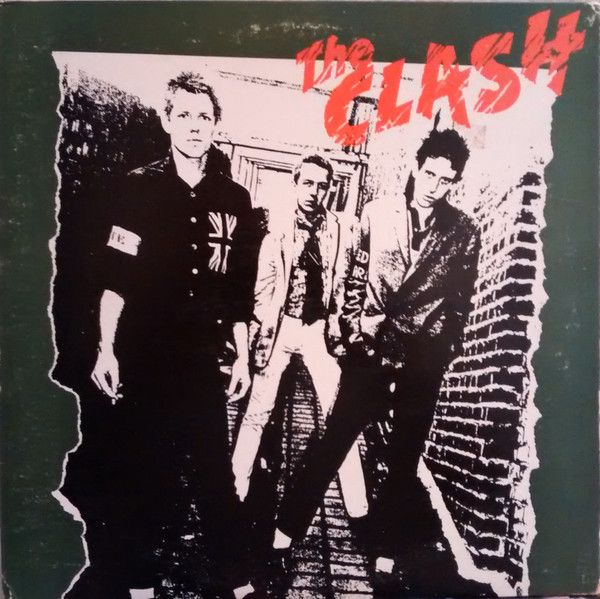
The song was the first track on The Clash’s eponymous debut album (the UK, not the US version), and may well have been played at every single Clash show. 

Caroline Coon set up a meeting between Jones and the band, and in 1982, Strummer wrote a song for Jones, “House of the Ju Ju Queen,” which was recorded with The Clash, two members of the Blockheads, and Mel Collins as the backup band. The band was billed as the “Lash,” because for contractual reasons, it couldn’t begin with a C.

Wednesday, November 17, 2021

BREAK/BROKEN: PIANO

If I get this in before a 'heart', I'll be surprised, the sentimental old buzzards that we all are, over here at SMS, but I'll have ago, knowing the thrill we all get from smashing a piano. No? Never done it? But you wan't to, don't you. Can you imagine the pure recidivist pleasure, the crash, the chords, the cacophony? We've all seen it done, surely?


Well, that was refreshing. Given custom and practice, what we now need is some music. Handily one Frank Turner has thoughtfully written a song on the subject, or about the post-traumatic debris. Wondering, perhaps, whether the piano is a metaphor for something else, the lyric certainly gives that suggestion. A pretty good song, isn't it, folk in its structure and melody, his voice in the unstructured school of similar observationalists like Billy Bragg. As the rhythm section come crashing in, the whole mood changes, into a bit of perfect and powerful 21st century pop music, indelibly English.

Broken Piano (2013)

I'll bet this is Carter's first appearance in these pages. He is an artist I have come to quite like these recent years, as he has gradually fought his way out of anonymous punky thrashes into a songwriter of some nuance. He has had a far from usual trajectory: old Etonians are more likely to end up running the country than topping the bill at medium sized music festivals; Eton College is the ultimate toff school in the country, a term there costing the price of a small family car, even before all the add-ons. Like the school uniform. Given the standard expectation for any self-respecting rocker to disguise their background, with


Joe Strummer and Shane McGowan each preferring folk forgot their sojourns at similar, if ever so slightly less elite institutions, the average public (as we call our private) school boy has to affect rough and tough back street upbringing to make it in the music biz. An Eton accent must have decimated credibility at the Roxy in 1975, or whenever. Indeed, the number of Old Etonians in the annals of popular music are relatively small. I couldn't find any, if you exclude Prince William, a contemporary of Turner, who is said to be quite the demon axe shredder. (I lied; he isn't.) But let's move on, Turner must be as sick as anyone by this concentration of his background. But, before doing so, given Eton has also a reputation as a finishing school for posh thick, Boris Johnson and that ilk, Turner actually completed his studies and then attended Mick Jaggers's old uni, the London School of Economics.

The Half-Life of Kissing/Kneejerk (2001)

A metalhead by choice in his teens, Iron Maiden* were his go-to band. And, surprise, surprise, like every other school or college, even Eton had its own band, Kneejerk, subsequently described as short-lived. From then he moved onto the post-hardcore (no, me neither) London band Million Dead. Around the time that band was appreciating 'irreconcilable differences', we should be grateful Turner caught hold of a cassette version of Bruce Springsteen's 'Nebraska'. This led to his style becoming more measured, with the introduction of melody, even if the words remained as vitriolic. Two well received albums under his name came out in the middle to late noughties, ahead of relative breakthrough, with 2009's 'Poetry of the Deed', bolstered by his relentless touring tendencies, becoming a summer festival staple across the realm of folk, roots, rock and alternative. His next move was to strip back further into a near acoustic mode, for 'England Keep My Bones'. Mind you, he kept his hardcore hand in, simultaneous touring with the unfortunately named Möngöl Horde. Switching allegiances between how much electricity he was needing to perform, The featured song for this piece comes from 2013's 'Tape Deck Heart', which, yes, was his break-up album, after the demise of a longterm relationship, making my suspicions above seem correct.

Live Fast, Die Old (2009)

I Still Believe (2012)

Keeping his b(r)and alive, a stream of EPS and compilations followed, until 2015's 'Positive Songs For Negative People', which drew some criticisms of being blander and more platitudinous lyrically, but was just as reassuringly and rousingly lively in its anthemic choruses. By now he was a chart regular, the album attaining a 2 in its week of domestic release, gaining also some US traction, 69 on the Billboard 

The Next Storm (2015)

chart. I personally didn't get on board until 2019's 'No Man's Land', a concept album, the subject matter and songs referring to powerful women, which included, in the final track, a tribute to his mother. Before, during and since he has maintained his hectic touring schedule, both solo and with the Sleeping Souls, the constant crew of musicians with him since 2006. Having discovered his work, I have delved back into his catalogue and, covid willing, he is one of the first acts I plan to see live when normal service fully resumes, this being something I have had yet to manage.

Rosemary Jane (2019)

Mindful I have strayed far from the theme, outwith the sole song offered, please accept the below as some slight recompense, being a revisioned version, 5 years on, from 2018's 'Songbook'.

Broken Piano (2018)

*Little known fact, in 2014 Turner appeared as a guest on BBC's Celebrity Mastermind, a special edition of the general knowledge quiz, wherein contestants start with a specialist round of questions. Turner chose Iron Maiden as his subject. And won!

To be perfectly Frank.....
 

Thursday, September 23, 2021

Cops: The Clash Covered


The Clash
: Police & Thieves

The Clash
: I Fought The Law

The Clash: Police On My Back 

[purchase The Clash]
[purchase Sandinista!

When I thought about responding to this theme, I realized that the Clash covered three songs (that I could think of) about police, and was going to write about them. But then I saw that Seuras was working on a post about their cover of Junior Murvin’s “Police & Thieves,” so I won’t say anything more about that one, and direct you to Seuras’ piece, when it is posted. Although I will engage in some self-promotion by referring to my earlier article about the punk/reggae connection that the Clash was very much involved in, and which mentioned how “Police & Thieves” in part inspired Bob Marley’s “Punky Reggae Party.” 

Although the Clash’s self-titled first album was released in the UK (and elsewhere) in 1977, it didn’t get released in the USA until 1979. In 1978, while working on their second album, Give ‘Em Enough Rope, Joe Strummer and Mick Jones went to San Francisco to do some overdubs at the Automatt studio, where they heard, for the first time, the Bobby Fuller Four song, “I Fought The Law.” Originally written by Sonny Curtis, the song was recorded in 1959 by Curtis and the Crickets, after Buddy Holly died, to little notice. The song was recorded by other musicians, including Bobby Fuller, with minimal success. But when Fuller re-recorded the song in 1965 with the Bobby Fuller Four, the song became a top-10 hit, and since then has been often covered. Only a few months after the song charted, Fuller was found dead from asphyxiation in his mother's car in a parking lot near his Los Angeles apartment. 

The Clash’s cover was added to the US release of The Clash and was instrumental in getting the band airplay in the US. It’s a great version of the song, to the point that I think that many people (not anyone reading this, of course) think it is an original. And that’s not to take anything away from the Bobby Fuller Four version, which is also great. Although it is interesting to think about the fact that the Clash’s version was released less than 15 years after the Bobby Fuller version, when I think about them as being from such completely different eras. If you'd like to read more about the song, from the Financial Times, of all places, go here.

London Calling is my favorite Clash album, and is actually one of my all-time favorites, and while it has a few cover songs on it, none are explicitly police related (I don’t think). Their next album, Sandinista! was a sprawling three-disc release, and some critics thought it was better than London Calling, while others, including me, thought that it had a little too much filler, and might have made a killer double album. But they do get points for ambition. There was a strong reggae and dub influence all over Sandinista!, and one of the covers on that album was “Police On My Back,” written by Eddy Grant (probably best known for his early-1980s hit, “Electric Avenue”) for his group the Equals in 1967. The Equals may well have been the first popular racially mixed band in the UK, and their version of the song, while sounding very consistent with British pop of the era, had a definite ska undertone. Interestingly, the Clash’s version is a straightforward rocker, with, to my ears, no real reggae or ska influences. And if you want to read a 29 page analysis, “Police On My Back and the Postcolonial Experience,” go here.

Wednesday, July 28, 2021

Posthumous: Redemption Song (Strummer and Cash)


Joe Strummer: Redemption Song
Johnny Cash and Joe Strummer: Redemption Song 

[purchase Streetcore]
[purchase Unearthed]

When Bob Marley wrote “Redemption Song,” one of his masterpieces which was influenced by a Marcus Garvey speech from 1937, he had already been diagnosed with the cancer that would take his life within a few years, and clearly was thinking about his own mortality. It was a rare acoustic track, and was released as a single in 1980, and on the album Uprising. Because Marley didn’t die until 1981,  the song was not released posthumously. 

However, two very fine, and related covers, of “Redemption Song” were released after the performers’ deaths, so I don’t lose any points for theme violations. (Sorry, I've been watching the Olympics.)

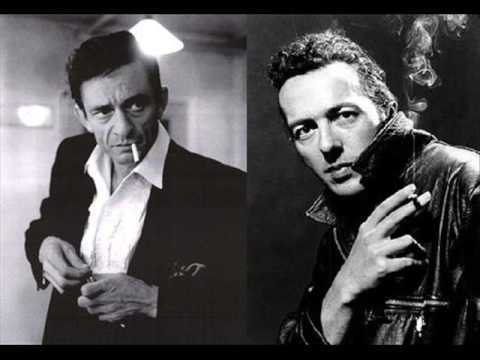
In 2002, Johnny Cash was working with producer Rick Rubin on what would become American IV: The Man Comes Around, the last album released during Cash’s life. Joe Strummer, who was on vacation in Los Angeles, decided to hang around the studio, because he was a fan of Cash—he even extended his vacation an extra day to spend time with Cash. During this time, the two men reportedly discussed a wide variety of topics—Cash’s role in the early days of rock and roll, and Strummer’s role in the early days of punk—and their love of Jamaica and its music. Strummer was, of course, a big fan of ska and reggae, and was influential in including it in The Clash’s music, and Cash owned property on the island. 

With some apparent nudging from Rubin, they decided to record a duet of “Redemption Song.” "Originally, the song was supposed to be a duet, and we recorded it as a duet. But, just in case, both Johnny and Joe sang the whole song several times," Rubin recalled. It did not, however, make it on to The Man Comes Around (which is fine, because that album is already incredible) 

In December, 2002, Strummer died due to an undiagnosed congenital heart defect, before he was able to complete Streetcore, his final album with The Mescaleros. The album was pieced together from early takes of songs and subsequent additions by producers Martin Slattery and Scott Shields.  Although it may not have originally been planned for the album, they included one of Strummer’s solo takes of “Redemption Song,” featuring only his vocal and guitar, additional guitar from Smokey Hormel, piano added by Rubin, and atmospheric harmonium added by Benmont Tench. It is spare, rough and affecting.

Rubin and Cash were working on compiling a box set of unreleased songs and alternative takes from Cash’s tenure at American Recordings, when Cash died on September 12, 2003 of complications from diabetes. He was only 71, which frankly shocked me. Unearthed, a five disc set, was released a little over a month later, and it included the duet with Strummer. As good as the solo Strummer version was, the duet—although similarly arranged—is better. Obviously. adding Johnny Cash to a song is likely to improve it, and his voice was filled with the gravitas that only increased as he aged. Second, there’s some great acoustic guitar from Tom Morello. Although I don’t think that this is a case of a cover improving on the original, it gives Marley a run for his money. 

I should add that in or about 2003, some friends of ours got a black dog, and named him Cash, in honor of the recently deceased Man in Black. In 2004, we got our own black dog, and named him Strummer, in honor of Joe (and my family’s love of music) (coincidentally, our Strummer died 7 years ago yesterday). The two dogs did spend time together and probably barked together, but they never figured out how to do “Redemption Song.”

Wednesday, November 18, 2020

Joe: various Joes

 The Social Security website shows that naming your child Joe is in decline.  Over the last 20 years, it has moved from 315th most popular to 705th. Liam, Noah and Oliver are in the first 3 for 2019. That said, there are a number of musicians named Joe - some by birth, some taken later.

Because ... the theme is Joe, these gentlemen qualify. (I don't know of any girls named Joe, but there are a few named Jo.) And ... Billie Jo Spears and  Jo Stafford kinda fit the theme-related bill.


A couple of random Joes here ... no sequence, no relation except that they are all Joe. And there's many more  Joes I didn't list, but ...hey ... my list.


Joe Satriani:  


Joe Walsh


Country Joe


Joe Cocker


Joe Strummer 


Joe Perry


Joe Elliott 


Thursday, May 3, 2018

Punk: Punky Reggae Party


Bob Marley & The Wailers: Punky Reggae Party
[purchase]

On the one hand, punk music and reggae don’t appear to have much in common musically—one is hard, fast, aggressive, and loud, the other, more laid back, slower, and mellow. I think that it is fair to point out that both styles arose as music of angry, rebellious, disaffected youth, making their philosophical connections more obvious than their musical connections. And yet we know that there has been a strong merger of the two styles, by bands like The Clash, the Two Tone bands, and in the ska-punk genre.

So, how did this marriage get arranged? Not having a clue, I turned to Google, which served me up this article that makes the case that the matchmaker was Don Letts.

Letts was born in England, of Jamaican heritage, and ran a London clothing store popular with musicians from both the punk and reggae scenes. He was able to meet Bob Marley after a gig, and they became friendly. When the Roxy nightclub opened, catering to the emerging punk scene, Letts became the DJ, and began to spin reggae and dub songs, along with punk music, in large part because the scene was so new, there weren’t that many punk records to play. Apparently, the punks enjoyed the music, including Joe Strummer of The Clash, and members of The Slits and The Sex Pistols.

Meanwhile, Letts convinced Marley, who appeared to have a negative feeling about punk based on sensationalist tabloid newspaper articles rather than from actually listening to the music, that it was worthwhile. According to Letts, he went to collect some money from Marley, dressed in punk bondage clothing, and Marley mocked him, to which Letts responded, “They ain't no crazy baldheads, they're my breddrin.” Shortly thereafter, inspired by the message and the music of punk rock (and by The Clash’s cover of the reggae song “Police and Thieves”), Marley wrote “Punky Reggae Party,” which referenced punk and New Wave, and namechecked The Clash, The Jam, The Damned, Dr. Feelgood (really more of a pub rock than a punk band, but whatever), as well as The Wailers and The Maytals. But even more importantly, Marley makes sure to point out that while all of those musicians would be at the party, “no boring old farts will be there.”

Letts went on to a career as a musician, most notably as a member, along with former Clash member Mick Jones, of Big Audio Dynamite, which mixed many genres of music, including punk and reggae where his role was, mostly, to supply audio samples to the songs. But he is best known as a filmmaker and video producer.

And the punk and reggae marriage remains strong to this day.

Wednesday, March 25, 2015

Brush With Celebrity: The Wallflowers


The Wallflowers: Reboot The Mission
[purchase]

I’ve been a fan of the Wallflowers since their second album, Bringing Down the Horse, the one that made them famous, the one with “6th Avenue Heartache” and “One Headlight” and “Three Marlenas.” I stuck with them, buying their next few albums, and enjoying them, but I had never seen them live. After the band took a hiatus, I moved on, and when they announced a show at the Tarrytown Music Hall in 2012, my wife and I decided not to get tickets. It was a hard call, but if we went to every show by every band that we liked, we would never be home, and have even less money than we do now.

The show was on a Saturday in September, and when we got back from the gym in the morning, both of us had urgent emails from my college classmate Heather, who lives in California and has many contacts in the music industry. She had mentioned to me at our 30th reunion earlier that year that she was friendly with Rami Jaffee, the keyboard player for the Wallflowers (and, among other bands, the Foo Fighters). The email asked us whether we could loan some bicycles to the band, and supply them with, as a fan of How I Met Your Mother, I will refer to as “sandwiches.” In exchange, we would get house seats.

This was a good deal. We loaned them our bicycles, but were unwilling (read—unable) to find any “sandwiches.” We drove the bicycles over to the theater and gave them to Rami, after which he, guitarist Stuart Mathis (now touring with Lucinda Williams) and opening act Mason Reed joined us for coffee at Coffee Labs.

Contrary to what we expected, they didn’t merely say “thanks,” buy us a cup of (excellent) coffee and send us on their way. Instead, we sat for, I’d say, close to an hour, chatting about this and that, and generally having a nice time. But then, it was time for them to actually use the bicycles before the show. We sat in the fourth row, and they put on a hell of a show. Afterwards, we went back behind the theater with Heather’s brother Harley (who also lives in Tarrytown) to get our bicycles back, and maybe say hi (and maybe meet Jakob Dylan). Apparently, they were surprised by the hilly terrain in our area, and were tired from the ride, but it didn’t affect the show. We didn’t however, meet Mr. Dylan.

“Reboot The Mission,” which owes a debt to The Clash and Big Audio Dynamite, mentions Joe Strummer, features vocals and guitar from Mick Jones,  was a highlight of Glad All Over, the album they were touring in support of, and is wildly catchy. Although it was a good reunion album, and got generally positive reviews, it seems that Glad All Over may have been the band’s last. At least three members, including Rami, left the band in 2013, and although they did tour at least until the end of last year, no tour dates are currently listed on their website, which, along with their Facebook page, continues to promote the 2012 release.

Thursday, March 6, 2014

Scrabble Value Letters (X): X-Ray Style

Joe Strummer and the Mescaleros: X-Ray Style

Joe Strummer and the Mescaleros: X-Ray Style (live)

[purchase]

Who knows? Maybe I will still get to my first idea for our current theme, a song starting with Z. But Z has been well represented, so I wanted to see what could be done with X. I‘m glad I looked into it, because X-ray Style is a fine addition to our theme.

Joe Strummer is justifiably best known as a founding member of the Clash. That’s understandable, since the Clash lasted for ten years, and nothing else Strummer did had the same popularity or influence. After the Clash broke up, Strummer did solo work, acted in films, worked on soundtracks, and was an occasional member of the Pogues. But the Mescaleros were the other band that Strummer really made his own. X-Ray Style is a good introduction to what this band was about. Strummer’s political concerns were a constant in all of his work, including the acting projects he chose, and X-Ray Style once again displays Strummer’s concern for the downtrodden in various societies around the world. The music has a tropical feel, and is a continuation of the global musical exploration Strummer had begun with the Clash albums London Calling and Sandinista. What I find most interesting though is Strummer’s approach to the vocal on X-Ray Style. I have presented videos for both the studio and a live version for a reason. The song comes from The Mescaleros’ first album, and Strummer is trying to decide how to present himself. The punk shouter of the past is gone, he seems to be saying, and his vocal on the album is restrained at first. Strummer seems to be saying that this is more thoughtful music, and he wants us not just to react viscerally, as we once did to his music, but now he asks us to think as well as feel. Still, this is Joe Strummer, and he was always passionate about what he did. His vocal gains more bite as the song proceeds. I assume the live version comes from a time when Strummer had lived with the song for a while, and also gained greater comfort with his new band. It’s a plugged in version that loses none of the wonderful lilt of the original, but Strummer begins with more of an edge in his voice, and gets more intense as the song goes on. He never reaches the all-out abandon of his Clash vocals, but the live X-Ray Style sounds more like the same singer.