Showing posts with label The Clash. Show all posts

Friday, July 8, 2022

Begins With A J: Janie Jones

The Clash: Janie Jones
[purchase

Although my name Begins With A J, I decided not to write (more) about myself, because I do tend to go there on a regular basis. Instead, I hit upon a song that nails the theme at least four times—the title, of course, has two words that start with a J, and it was written by Joe Strummer and Mick Jones, each of whom have a name that begins with the letter. (And Strummer’s real first name is John....) It is a complete coincidence (really) that I’m also writing about a Clash song for a submission for Cover Me that won’t be running for a while, but maybe The Clash are living in my head a little (he said, after promising not to write about himself.) 

Being an American, and not being up on all of the British scandals, (although it has been interesting following Boris Johnson’s fall, after many scandals), I had no idea that “Janie Jones” was a real person. Jones (whose real name was a very theme-inappropriate Marion Mitchell) started a career in show business in the late 1950s performing in clubs in London. It was a scene that attracted artists, musicians, performers and members of the aristocracy, and Jones was supported by a sugar daddy known as “The Colonel.” 

In 1965, Jones released a song, “Witches Brew,” which hit the British charts (despite being pretty bad), and her house became a center for parties at which, it appears, people actually engaged in sexual acts with people that they were not married to. As Jones said, "It was a kind of private club where they wouldn't be disturbed," explains Janie. "I held parties every two weeks and everybody who was anybody and their friends came. They had a fantastic time. People said they were the greatest parties in London." (This, and other quotes from Jones come from an article written in 1977 by artist/journalist/muse Caroline Coon, who was also briefly The Clash’s manager. The article is behind a paywall, but you might be clever enough to figure out how to read it.) 

Future musical releases were unsuccessful, and Jones appeared on TV shows and continued her social life. She moved/fled to Hollywood in the early 1970s, but then became embroiled in a series of scandals, being accused of getting DJs to play songs in exchange for sexual favors, and for running prostitutes. A number of the women testified against Jones, and the wealthy and titled men who attended her parties were allowed anonymity. (There’s a lot more background to these scandals, which you can read about here, here, and here.) 

She was convicted and sentenced to seven years in prison and served 4. Jones explained: "I knew too much about too many people and of course, I took the piss out of the Judge in court all the time..." In May, 1977, Jones was released from prison, and turned on the radio, only to hear a song with her name as the title playing. 

“Janie Jones,” is one of The Clash’s earliest songs, written not long after Strummer joined the band. Much of it reportedly came to Mick Jones riding on the 31 bus from Harrow Road to Chalk Farm in London (making me wonder how much music would not have been written if people had cell phones to distract them throughout history). It was initially just to be about the boredom of an ordinary working life, but again, reportedly, Jones saw his namesake Janie’s name on a fellow passenger’s newspaper, and her name was added to the song, because it worked, both rhythmically and thematically. Strummer, a fan of Jones, helped to fine tune the lyrics. 

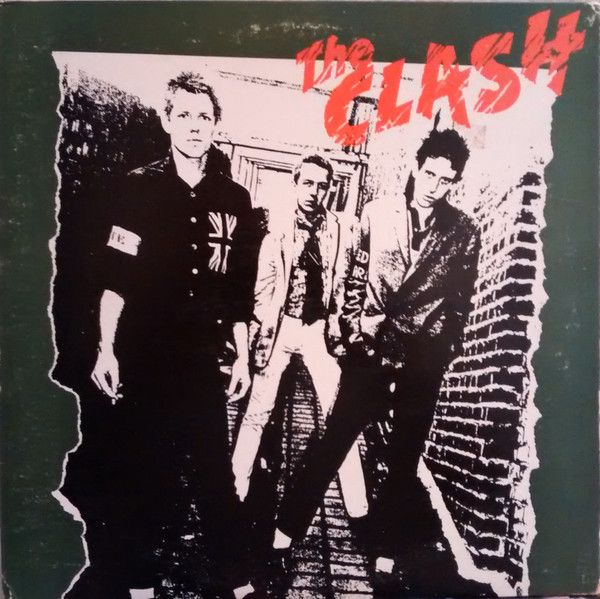
The song was the first track on The Clash’s eponymous debut album (the UK, not the US version), and may well have been played at every single Clash show. 

Caroline Coon set up a meeting between Jones and the band, and in 1982, Strummer wrote a song for Jones, “House of the Ju Ju Queen,” which was recorded with The Clash, two members of the Blockheads, and Mel Collins as the backup band. The band was billed as the “Lash,” because for contractual reasons, it couldn’t begin with a C.

Thursday, September 23, 2021

Cops: The Clash Covered


The Clash
: Police & Thieves

The Clash
: I Fought The Law

The Clash: Police On My Back 

[purchase The Clash]
[purchase Sandinista!

When I thought about responding to this theme, I realized that the Clash covered three songs (that I could think of) about police, and was going to write about them. But then I saw that Seuras was working on a post about their cover of Junior Murvin’s “Police & Thieves,” so I won’t say anything more about that one, and direct you to Seuras’ piece, when it is posted. Although I will engage in some self-promotion by referring to my earlier article about the punk/reggae connection that the Clash was very much involved in, and which mentioned how “Police & Thieves” in part inspired Bob Marley’s “Punky Reggae Party.” 

Although the Clash’s self-titled first album was released in the UK (and elsewhere) in 1977, it didn’t get released in the USA until 1979. In 1978, while working on their second album, Give ‘Em Enough Rope, Joe Strummer and Mick Jones went to San Francisco to do some overdubs at the Automatt studio, where they heard, for the first time, the Bobby Fuller Four song, “I Fought The Law.” Originally written by Sonny Curtis, the song was recorded in 1959 by Curtis and the Crickets, after Buddy Holly died, to little notice. The song was recorded by other musicians, including Bobby Fuller, with minimal success. But when Fuller re-recorded the song in 1965 with the Bobby Fuller Four, the song became a top-10 hit, and since then has been often covered. Only a few months after the song charted, Fuller was found dead from asphyxiation in his mother's car in a parking lot near his Los Angeles apartment. 

The Clash’s cover was added to the US release of The Clash and was instrumental in getting the band airplay in the US. It’s a great version of the song, to the point that I think that many people (not anyone reading this, of course) think it is an original. And that’s not to take anything away from the Bobby Fuller Four version, which is also great. Although it is interesting to think about the fact that the Clash’s version was released less than 15 years after the Bobby Fuller version, when I think about them as being from such completely different eras. If you'd like to read more about the song, from the Financial Times, of all places, go here.

London Calling is my favorite Clash album, and is actually one of my all-time favorites, and while it has a few cover songs on it, none are explicitly police related (I don’t think). Their next album, Sandinista! was a sprawling three-disc release, and some critics thought it was better than London Calling, while others, including me, thought that it had a little too much filler, and might have made a killer double album. But they do get points for ambition. There was a strong reggae and dub influence all over Sandinista!, and one of the covers on that album was “Police On My Back,” written by Eddy Grant (probably best known for his early-1980s hit, “Electric Avenue”) for his group the Equals in 1967. The Equals may well have been the first popular racially mixed band in the UK, and their version of the song, while sounding very consistent with British pop of the era, had a definite ska undertone. Interestingly, the Clash’s version is a straightforward rocker, with, to my ears, no real reggae or ska influences. And if you want to read a 29 page analysis, “Police On My Back and the Postcolonial Experience,” go here.

Wednesday, July 28, 2021

Posthumous: Redemption Song (Strummer and Cash)


Joe Strummer: Redemption Song
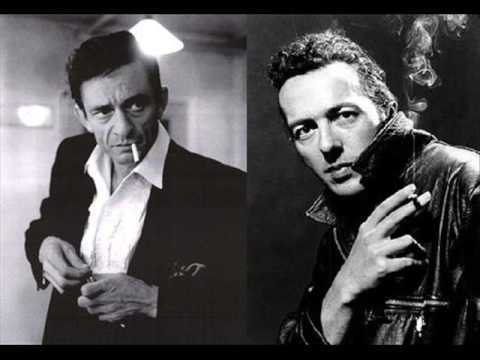
Johnny Cash and Joe Strummer: Redemption Song 

[purchase Streetcore]
[purchase Unearthed]

When Bob Marley wrote “Redemption Song,” one of his masterpieces which was influenced by a Marcus Garvey speech from 1937, he had already been diagnosed with the cancer that would take his life within a few years, and clearly was thinking about his own mortality. It was a rare acoustic track, and was released as a single in 1980, and on the album Uprising. Because Marley didn’t die until 1981,  the song was not released posthumously. 

However, two very fine, and related covers, of “Redemption Song” were released after the performers’ deaths, so I don’t lose any points for theme violations. (Sorry, I've been watching the Olympics.)

In 2002, Johnny Cash was working with producer Rick Rubin on what would become American IV: The Man Comes Around, the last album released during Cash’s life. Joe Strummer, who was on vacation in Los Angeles, decided to hang around the studio, because he was a fan of Cash—he even extended his vacation an extra day to spend time with Cash. During this time, the two men reportedly discussed a wide variety of topics—Cash’s role in the early days of rock and roll, and Strummer’s role in the early days of punk—and their love of Jamaica and its music. Strummer was, of course, a big fan of ska and reggae, and was influential in including it in The Clash’s music, and Cash owned property on the island. 

With some apparent nudging from Rubin, they decided to record a duet of “Redemption Song.” "Originally, the song was supposed to be a duet, and we recorded it as a duet. But, just in case, both Johnny and Joe sang the whole song several times," Rubin recalled. It did not, however, make it on to The Man Comes Around (which is fine, because that album is already incredible) 

In December, 2002, Strummer died due to an undiagnosed congenital heart defect, before he was able to complete Streetcore, his final album with The Mescaleros. The album was pieced together from early takes of songs and subsequent additions by producers Martin Slattery and Scott Shields.  Although it may not have originally been planned for the album, they included one of Strummer’s solo takes of “Redemption Song,” featuring only his vocal and guitar, additional guitar from Smokey Hormel, piano added by Rubin, and atmospheric harmonium added by Benmont Tench. It is spare, rough and affecting.

Rubin and Cash were working on compiling a box set of unreleased songs and alternative takes from Cash’s tenure at American Recordings, when Cash died on September 12, 2003 of complications from diabetes. He was only 71, which frankly shocked me. Unearthed, a five disc set, was released a little over a month later, and it included the duet with Strummer. As good as the solo Strummer version was, the duet—although similarly arranged—is better. Obviously. adding Johnny Cash to a song is likely to improve it, and his voice was filled with the gravitas that only increased as he aged. Second, there’s some great acoustic guitar from Tom Morello. Although I don’t think that this is a case of a cover improving on the original, it gives Marley a run for his money. 

I should add that in or about 2003, some friends of ours got a black dog, and named him Cash, in honor of the recently deceased Man in Black. In 2004, we got our own black dog, and named him Strummer, in honor of Joe (and my family’s love of music) (coincidentally, our Strummer died 7 years ago yesterday). The two dogs did spend time together and probably barked together, but they never figured out how to do “Redemption Song.”

Thursday, May 6, 2021

Fast: Fast Cars


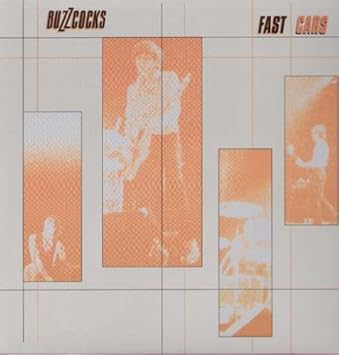
Buzzcocks: Fast Cars
[purchase

Last week, “Fast Car,” this week, “Fast Cars.” Despite the similarity in the titles, the songs could not be more different—Tracy Chapman’s is a soulful folk song, while Buzzcocks’ is a hard chunk of punk. But both are great in their own ways. 

My introduction to Buzzcocks came, as so many of my musical discoveries did, in the basement studios of WPRB. I’m pretty sure that it was the singles compilation, Singles Going Steady, filled with perfect morsels of melodic punk and heartfelt lyrics about love and sex and heartbreak, that was my gateway. It came out in 1979, and I played it regularly. Their next album, A Different Kind of Tension, came out around the same time, and was also great, although it was a little more experimental. 

I don’t think that I spent a lot of time investigating the band’s two earlier albums, both released in 1978, Another Music In A Different Kitchen, and Love Bites, probably because there were so many great songs on the two albums that I already knew better. I’ve subsequently learned about the earlier music from some compilation albums I picked up over the years. 

Buzzcocks never got the same respect as their contemporaries The Sex Pistols or The Clash, and I’d argue that they were way, way better than the Pistols, and that their limited output approaches The Clash’s in quality during the same period. However, Buzzcocks' relatively short life as a band (pre-reunions) prevented them from showing the same growth as The Clash did in their masterpieces London Calling and Sandinista! (a flawed masterpiece, I’d say). And, remarkably, although they’ve been mentioned on this blog in passing (and in a cover), there has never been a post that featured this amazing, influential band. 

Founded in 1976 by Pete Shelley and Howard Devoto, they eventually added bassist Steve Diggle and drummer John Maher and self-released an EP, Spiral Scratch. Devoto left the band (and soon formed Magazine), Shelley became the singer, Diggle moved to guitar and Garth Davies, who had been in an early version of the band, rejoined on bass, rejoined, only to be again replaced by Steve Garvey (not the baseball player). 

Signed by United Artists, their great first single, “Orgasm Addict,” was banned by the BBC, because, you know, sex, and they commenced to release the series of excellent singles that were later compiled on Singles Going Steady. Their first studio album, Another Music In A Different Kitchen, included the single, “I Don’t Mind,” which charted at number 55 in the UK Singles Chart, as well as “Fast Cars,” a song that was mostly written by Diggle in response to a car crash that he had endured. It is a typically fast and catchy song that criticizes the titular vehicles, and namechecks Ralph Nader. It seems that Mr. Diggle hates fast cars. 

The band broke up in 1981, after a dispute with their record company, reuniting in 1988, with varying lineups over the years. Shelley died of a suspected heart attack in 2018, but Buzzcocks have soldiered on with Diggle taking over vocals.

Saturday, January 11, 2020

IN MEMORIAM: BARRIE MASTERS

It is the early to mid '70s, an awkward time for the awkward young men with a penchant for the music of the day and earlier. Probably a bit young for prog and still at school when the full hippie vibe was the freak flag of the day, earnest young men with spotty faces and serious record collections already under their belt. With developed tastes already embracing country, folk and other roots genres, they were a large and restless tribe, seeking a brand, seeking a label. No, I am not talking about the assault of punk rock; they were already just a tad too old and learned for that. And, anyway, we are ahead of ourselves, it being yet to ignite. I was there. I was (am) one of those boys wanting to be men. And pub rock was our saviour, whether we were old enough to go into pubs or not.


This is not the place for a discourse in this overlooked yet influential musical movement, beyond an understanding that it provided the loosening of the established masonry that punk would later pull down, if for however briefly. But, via Brinsley Schwarz, Chilli Willi & the Red Hot Peppers, Dr. Feelgood and many others, a melting pot of styles and influences were put into the mix, thrown up in the air and allowed to land, with a ramshackle 4/4 beat and a cheeky smile, short and tuneful songs to put you on your feet. Out of the movement came many of the now established names of current music, Nick Lowe and Elvis Costello being probably the best known, as well as the germination of what then did beget punk, Joe Strummer being a member of the 101ers ahead of forming the Clash. Resolutely tending to be avoidant and ambivalent of style or uniform, pub rockers were of all shapes and sizes, fashion often thrift shop, hair allowed to be long or short, styled or merely as nature intended, facial hair optional rather than a then spurned accessory. Proudly uncool, even. Eddie and the Hotrods fitted well that template. But, in front of the motley bunch of urchins on instrumental duties, they had a cataclysmic and archetypal angry young man in singer, Barrie Masters. They had been around for a while by the time of their break through, chugging out covers of 60's garage rock.

Do Anything You Wanna Do

I was too young to go into pubs, and whilst, yes, occasionally I did, these were not the London pubs that celebrated and created the movement. That came later. I had to rely on the inkies, the musical press, NME and Melody Maker, and the TV, Top of the Pops and Old Grey Whistle Test. And they provided me plenty. TOTP was the weekly chart show, Whistle Test more for the serious (and insomniac) polymath. I devoured both. I remember my first sight of the Hotrods, probably at home, half past seven on a thursday night. Crammed between dross like David Soul, I recall being so bloody excited. They were fast, they were passionate, they were exciting, making my head whirl. Instantly my favourite band, I bought not only the single, 'Do What You Wanna Do', but the album, 'Life on the Line', too. It being 1977, punk had begun, and whilst they certainly sounded punky, there was a touch more melodicism in the undercurrent of bass and the choppy rhythms. But they didn't look it, flared trousers may even have been involved, plus they had a singer called Barrie. Apart from Clive, there can be fewer less rock'n'roll names. And that, I guess, became the problem. A flourish of singles and they were gone, overtaken and subsumed by altogether rougher looking lads. Like the Damned and the Clash. The Sex Pistols, to all intents and purposes, had, by then, been and gone. (Although, for their infamous near debut, in February 1976 at the Marquee Club, guess who the Pistols were supporting? Yup, the Hotrods.) Because of all this and despite all this, for those brief moments and for that summer they were my favourite band.

Ignore Them

Of course, the band never went away. Sure, they broke up, reformed, broke up, reformed, Masters the only constant, and looked to be going on forever, the oldest teenager in town, and still looking good. (Well, quite good.) So it was a shock when, suddenly and perhaps unexpectedly, he died,  probably a heart attack, aged 63. 2019 had been an eventful year, with a successful tour in support to similar 70s refugees, Belfast's Stiff Little Fingers, followed by a celebratory gig, drawing back a legion of ex-members to play a "Done Everything We Wanna Do" concert in April. Was this a warning that the show couldn't go on forever? I don't know, but should anyone even be surprised that it probably will, the residual members of the last band, continuing into this year, first performance tonight? Somehow the Hotrods, as they will be, won't be quite the same without Eddie. And completely different without Barrie.

Done Everything We Wanna Do: the show

R.I.P.

You know you wanna do........

Monday, December 23, 2019

Snow & Ice: Ice Cold Ice

Hüsker Dü: Ice Cold Ice
[purchase]

There are many truisms in the world of music fandom, and one of them is that when a “punk” band starts releasing well-produced albums, particularly on a major label, and particularly when the songs and playing show craftsmanship, the band’s early fans scream “sellout.” For example, The Clash were accused of “selling out” at least as early as London Calling, and certainly by the time of Combat Rock. Of course, other critics at the time, and more recently, have pointed out that another word for that is “evolving,” or that it was possible for ambitious, talented bands to want to transcend the purity of punk for a broader artistic vision and, possibly, a larger audience (and yeah, probably more money.)

Hüsker Dü emerged from Minneapolis in the late 1970s-early 1980s, and their initial approach of playing music loud, fast and hard was made clear from the name of their first album, Land Speed Record. But relatively quickly, you could hear through the aural assault (and poor production values) that songwriters Bob Mould and Grant Hart were able to write melodic pop songs. Even if those songs were played at punk rock speeds and volumes, and often dealt with difficult themes.

As their music evolved, their influence increased, and in the mid-80s, Hüsker Dü became the first band of their “scene” to sign with a major label (during a period when major labels were taking risks, looking to find the next big thing(s). Of course, the complaints of "sellout" rang out (as they did years later when Green Day transcended their punk roots and became more mainstream and popular.)  I saw Hüsker Dü tour in support of their first major label album, and it was a great, if incredibly loud show. Their second album for Warner Bros., 1987’s Warehouse:Songs and Stories, was a double album filled with well-produced, well-written songs that still had the energy of punk. It wouldn’t be a stretch at all to say that this album was one of the precursors of the “alternative rock” movement that became popular in the ensuing years. 

However, despite the quality and influence of Warehouse, it was also the end of Hüsker Dü. Over the years, Mould and Hart had developed a rivalry that was both artistic and personal, fueled first by their substance abuse, and later by Mould’s cleaning up and Hart going in the opposite direction.

One of the highlights of Warehouse is Mould’s “Ice Cold Ice,” a typically bleak and depressing but incredibly powerful song that uses cold and ice both metaphorically and literally.

In 2011, Mould was honored with a tribute concert at Los Angeles’ Walt Disney Concert Hall, mostly featuring Mould and his band playing with a series of guest stars, and it included this great version of “Ice Cold Ice,” featuring Dave Grohl:


The concert was, through a Kickstarter campaign, turned into a movie, but it doesn’t appear to be streamable at this time.

Thursday, May 3, 2018

Punk: Punky Reggae Party


Bob Marley & The Wailers: Punky Reggae Party
[purchase]

On the one hand, punk music and reggae don’t appear to have much in common musically—one is hard, fast, aggressive, and loud, the other, more laid back, slower, and mellow. I think that it is fair to point out that both styles arose as music of angry, rebellious, disaffected youth, making their philosophical connections more obvious than their musical connections. And yet we know that there has been a strong merger of the two styles, by bands like The Clash, the Two Tone bands, and in the ska-punk genre.

So, how did this marriage get arranged? Not having a clue, I turned to Google, which served me up this article that makes the case that the matchmaker was Don Letts.

Letts was born in England, of Jamaican heritage, and ran a London clothing store popular with musicians from both the punk and reggae scenes. He was able to meet Bob Marley after a gig, and they became friendly. When the Roxy nightclub opened, catering to the emerging punk scene, Letts became the DJ, and began to spin reggae and dub songs, along with punk music, in large part because the scene was so new, there weren’t that many punk records to play. Apparently, the punks enjoyed the music, including Joe Strummer of The Clash, and members of The Slits and The Sex Pistols.

Meanwhile, Letts convinced Marley, who appeared to have a negative feeling about punk based on sensationalist tabloid newspaper articles rather than from actually listening to the music, that it was worthwhile. According to Letts, he went to collect some money from Marley, dressed in punk bondage clothing, and Marley mocked him, to which Letts responded, “They ain't no crazy baldheads, they're my breddrin.” Shortly thereafter, inspired by the message and the music of punk rock (and by The Clash’s cover of the reggae song “Police and Thieves”), Marley wrote “Punky Reggae Party,” which referenced punk and New Wave, and namechecked The Clash, The Jam, The Damned, Dr. Feelgood (really more of a pub rock than a punk band, but whatever), as well as The Wailers and The Maytals. But even more importantly, Marley makes sure to point out that while all of those musicians would be at the party, “no boring old farts will be there.”

Letts went on to a career as a musician, most notably as a member, along with former Clash member Mick Jones, of Big Audio Dynamite, which mixed many genres of music, including punk and reggae where his role was, mostly, to supply audio samples to the songs. But he is best known as a filmmaker and video producer.

And the punk and reggae marriage remains strong to this day.

Tuesday, January 16, 2018

Sinking & Falling: Fall Back Down


Rancid: Fall Back Down
[purchase]

Back in 2003, my then 13 year old son was in a punk phase, which I kind of liked. He wanted to go see Rancid, the great ska-punk band that was playing at Roseland in midtown Manhattan. Not surprisingly, I agreed to take him. At the time, I was vaguely aware of Rancid, probably from hearing their 1995 song “Ruby Soho,” and maybe a couple of others. The band's early days came at a time when I wasn't listening to as much punk rock as I had when I was in college.  Although there are some who have criticized the band for being derivative, particularly of The Clash, I think that criticism was misplaced (although the Clash influence is unmistakable). There is very little in music, particularly rock music, that doesn’t build on the work of prior artists, and to me, at least, Rancid’s ability to write anthemic, catchy songs, mostly but not exclusively with a ska and punk base, while addressing social and political issues big and small make them special.

And, more to the point, they put on a great show. That night, we saw two opening acts, psychobilly band Tiger Army, which I enjoyed greatly (and who I enjoyed again the following summer at Warped Tour), and hardcore band Roger Miret and The Disasters, fronted by the former Agnostic Front singer, which I did not like. But Rancid put on a great show, and we were dancing (and my son was moshing) the whole time. The Internet doesn’t seem to have a setlist for that show, but considering that it was a single from the band’s then-current album, Indestructible, I’m pretty sure that that they played “Fall Back Down.”  I couldn't find any video from that show--in 2003, not everyone had video cameras in their pockets--but here's a video of them playing the song live, a few months earlier, which gives a sense of how good Rancid is live.

“Fall Back Down” is one of those anthemic songs that the band is so good at. Written in response to the divorce of singer/guitarist Tim Armstrong from The Distillers’ Brody Dalle, Armstrong and co-writer, singer/guitarist Lars Fredricksen, crafted a tribute to the power of friendship in the face of adversity. It peaked at number 13 on the US Modern Rock charts, and in addition to being somewhat more pop than punk, the video for the song contained appearances by a member of Good Charlotte and Kelly Osborne, which led to complaints that the band had “sold out.” The song was also used in a bunch of video games, and even as the theme to a reality show.

This theme was inspired by the effect that the racist-in-chief’s recent racist comments have had on the reputation of the United States, so this song, about friendship and support, doesn’t completely fit. And yet, if you cut out a few lines from the lyrics that directly reference the divorce, it actually kind of works pretty well, as both a reflection on the almost exactly one year since inauguration day (and its tiny crowd), and as a recognition of how we can, with our friends, make it through:

You see it's our style to keep it true 
I've had a bad year, a lot to go through 
I've been knocked out, beat down, black and blue
*                             *                                * 
If I fall back down, you're gonna help me back up again 
If I fall back down, you're gonna be my friend 

The Roseland Ballroom, where I saw that concert, has been knocked down, and a 62-story, 426-unit mixed-use tower is rising on the site.

Thursday, November 9, 2017

Train: Train in Vain


The Clash: Train in Vain
[purchase]
Back when the original wave of punk rock was hitting the US, I took to saying that punk would die off when the musicians learned to play their instruments. I was not completely right. Bands like the Sex Pistols literally died off when members succumbed to drugs. There were also those who stubbornly stayed with the style long after they were capable of more, and their music began to sound less and less authentic. But when I was right, we got vital and amazing music from people like Johnny Lydon, and we eventually got two tone ska. And we got the best of The Clash. The Clash never lost their rebelliousness, continuing to make the music they wanted to, and in complete disregard to market dictates. Their monster hit with Rock the Casbah was taken by some as a sell out, but I view it more as the marketplace catching up to them than the other way around. Before that happened, however, there was Train in Vain. The song comes from the album London Calling, which has many of the band’s best songs of political and social criticism. But Train in Vain has a classic theme for its subject: a relationship gone wrong. In the hands of The Clash, the song was propulsive rock, and very powerful. But there were other ways to hear it.

Annie Lennox: Train in Vain
[purchase]
Annie Lennox heard classic R&B. Her version became one of her biggest songs as a solo artist. It reveals a singer with legitimate chops as a soul shouter. She displays a grit here that was never a part of her vocal style with the Eurythmics, although their late rock experiments hint at it. This arrangement has a synth horn section that is little more than an idea, gone almost as soon as it appears. I would love to hear an old school R&B version that uses a live horn section all the way through the song.

Dwight Yoakam: Train in Vain
[purchase]
You could say that Dwight Yoakam brought a punk sensibility to country music when he debuted. He has always delivered high energy performances on his albums. Here, he blends his Bakersfield-inspired sound with bluegrass, to great effect. Now, Train in Vain has banjo and mandolin solos, and it all works beautifully.

Smocking Flamingo: Train in Vain
[purchase]
It was to be expected that there would be at least one Jamaican version of Train in Vain. The Clash, as they branched out from punk, were inspired by both ska and reggae, and their work in these genres was almost certainly a major inspiration for the two tone ska movement. Smocking Flamingo is a reggae and ska instrumental jam band, and the song suits them perfectly.

Friday, February 5, 2016

The Accordion: 4th of July, Asbury Park (Sandy)


" 4th of July, Asbury Park (Sandy)", better known as "Sandy," is early Springsteen and the E Street Band at their poetic best, a beautiful image-laden tone poem about Asbury Park, New Jersey, where Springsteen cut his teeth as a young musician, the place that made him, in many ways. Or perhaps his legend—it’s hard to separate the two.  "Sandy" is a wistful, fairy-tale ode to ‘home’, or at least a place that is home in the heart, much like The Clash's tribute to London in London Calling and Van Morrison's Belfast in Cyprus Avenue, evoke more than just a sense of a place.

"Sandy," from Springsteen’s second album, The Wild, the Innocent & the E Street Shuffle, is a beautiful little ballad that shuffles and skips along, mostly due to dearly departed accordionist Danny Federici's lilting and elegant accordion line. Federici, a founding member of the E Street Band, passed away in 2008. The song is a love song, for a girl, for a lifestyle, for a certain place in a certain time, destined to never really come back again, thanks to the way youth speeds away from us and leaves us with just memories. Hopefully, good ones—and the best part of good memories is how much better they get with time.

Robert Santelli, in Greetings From E Street:The Story of Bruce Springsteen and the E Street Band, describes the song as “the perfect musical study of the Jersey Shore boardwalk culture.” The song is populated with the eccentric, vibrant characters that populated many of Springsteen’s youthful, Dylan-inspired street epics: switch blade kids, tramps, factory girls…all those faces that made Springsteen’s street-scene operas such wonderful pieces of not only music, but poetry as well.


His greatest work in regards to the neon, asphalt and brick fables is Jungleland, but it is "Sandy" that invokes a sense of nostalgia, even for places an times that the listener might have no claim on at all. Springsteen is that kind of writer: universal in the experiences he relates.  But, here it is Federici’s accordion that makes "Sandy" such a beautiful song, that as the major aural element works to emphasize the sadness that sits underneath the bright sun and the brash joking of the narrator, trying to get right, but just not making it. The accordion here sounds like youthfulness, it sounds like the carnival. It sounds, truly, like a a whole soundtrack to memory.

The E Street Band still brings this tune out, as a tribute to Federici, much as 10 Avenue Freeze-out is done now as tribute to the Big Man, Clarence Clemons. That’s a hell of a thing: a song that comes to serve as a monument to one who made it sound so distinctive.  "Sandy" has always a special place for E Street Band fans, and will now stand not only as memory of Danny Federici, but as a hat tip and a wink to youthful days, long gone by…

Sunday, November 1, 2015

Math & Science: E=mc2


Big Audio Dynamite: E=mc2
[purchase]

Among the things that I never did at Princeton, either as a student or alumnus are:

-I never went by the house where Albert Einstein lived from 1933-1955;

-I never visited the Institute for Advanced Study, where Einstein worked (his Institute office was initially on the Princeton campus and he worked in the physics lab, which is now part of the campus student center, but he never was a member of the Princeton faculty, although, according to University sources, he “often helped students with math problems”);

-I never took a math class or any serious science class (I satisfied my distribution requirement through a Psychology lab and credit for a good AP Chem score from high school, which annoyed my freshman advisor, a chemistry professor, who urged me to take Organic Chemistry, an offer I declined. I also took an intro Astrophysics class which was designed for non-scientists and was an excuse to sit in a dark room and look at pictures of stars).

Math and Science are just not what I was interested in studying, and although, at least at the high school level, I could do reasonably well (I survived AP Calculus BC, but when my kids took calculus, I remembered exactly zero about it—and I still count on my fingers). To this day, I’m curious about science, but I knew that it wasn’t what I wanted to spend my time in college on.

So I’m not going to even attempt to explain what E=mc2, which is also the title of a song by Big Audio Dynamite, means. However, if any of my surprisingly large number of friends and classmates who are, in fact, physicists want to weigh in in the comments, feel free.  Which is not to say that I don’t know that it stands for--Energy equals mass times the speed of light squared. But knowing that is far from knowing what it “means.” Instead, I will talk about the song a bit, a job for which I’m somewhat more qualified.

Big Audio Dynamite was formed by Mick Jones with film director Don Letts in 1984 after Jones was tossed from The Clash. The band’s first album, This Is Big Audio Dynamite, fused The Clash’s post-Sandinista!/Combat Rock punk with dance and rap, and liberally used samples from other songs and movies, something which was pretty audacious in that era. It’s actually a pretty great record.

“E=mc2” is one of the real standout tracks. According to Wikipedia, it was the first song to be created all from samples, which either was a great achievement (particularly in the analog age), or was the first step toward the destruction of music. The song is inspired by the films of Nicolas Roeg, particularly Performance and Insignificance (in which Einstein is a character). Roeg’s films are best known for unusual directorial techniques and non-linear narratives that rearrange the time sequence, requiring the viewer to reassemble the pieces. Which, maybe, relates to the whole relativity thing (although maybe not—remember, I’m not a scientist and I’m not a film critic).

Interspersed in the song, whose lyrics reference those, and other, Roeg films, are quotes from Performance, including one snippet featuring Mick Jagger, who starred in the movie. Controversial on its release in 1970, due to its graphic sexual content, drug use and violence, it became a cult classic, and an influence on music videos and films, notably by Quentin Tarantino and Guy Ritchie (which shouldn’t be a surprise, based on the description).

In addition to being a clever, catchy tune, it was a success, hitting 11 on the UK singles chart and 37 on the US Billboard Hot Dance Club Play chart. Einstein, a violinist who loved Mozart and Bach, and whose musical tastes were described as “conservative,” probably would not have liked it.

Tuesday, July 7, 2015

Colors of the Rainbow: Pink City Twist


Fabulous Poodles: Pink City Twist
[purchase]

The Colors of the Rainbow theme was specifically chosen to celebrate the decision of the United States Supreme Court in Obergefell v. Hodges, which determined that the United States Constitution required that a marriage between two people of the same sex be treated the same as a marriage between two people of different sexes. In other words, mandating that same sex marriage be legal throughout the United States. Following the announcement of the decision, the rainbow flag motif has been everywhere. In addition, coincidentally, just the other day, the United States Women’s Soccer team, coached by an openly gay woman, with two proudly gay stars, one of whom is already married (and a few other players who have, at least, hinted at being lesbians) won the Women’s World Cup, and the adulation of men and women of all sexual preferences. While certainly not perfect (anti-discrimination laws still need fixing, and acceptance still isn’t universal, but it will never be considering that there are always going to be small minded people who reject logic and progress), I think that it is fair to say that this is the best time ever to be gay in the United States.

I was ecstatic when the Court issued its decision. It doesn’t directly affect me—I’m a straight man in a “traditional marriage” (whatever that means), and both of my children are currently in heterosexual relationships. But as a human, an American and a lawyer, it was hard for me to understand exactly what the Equal Protection Clause of the Fourteenth Amendment meant if it didn’t mean what it said—that no state could “deny to any person within its jurisdiction the equal protection of the laws.” I never understood how anyone could read that and think that it was acceptable to allow some people to marry and not others. So, to see that five Justices of the Supreme Court finally realized that this was the case was a beautiful thing. That four Justices couldn’t see it was disappointing, if not surprising, considering the degree of brainwashing (mostly religious based, in my opinion) that our country has tolerated for years against gay people. I can’t think of many days that I was prouder to be an American than on June 26, 2015.

And, as long as this struggle has taken, it is remarkable how quickly things have changed. When I was a kid, the concept of gay rights was never discussed. Even in my liberal home, in a pretty open minded area of the world, it simply wasn’t a topic of conversation. I don’t remember anyone in my high school identifying as gay, and to be fair, I don’t remember any overt anti-gay activity or taunting. Which is not to say this was a good situation—it was simply swept under the rug, presumably out of fear of ostracism, or worse. In fact, it wasn’t until 1980 that the New York Court of Appeals struck down all laws against private consensual homosexual sexual conduct between adults, a decision that had no resonance in my life (the decision warranted only a small story on page B2 of The New York Times). If my memory is wrong, then I hope that my high school friends set me straight (no pun intended). In college, in the late 1970s and early 1980s, I was aware of the existence of a Gay Alliance, and parties sponsored by gay groups, but again, I have no memory of anyone in my circle of friends identifying as gay. I’m actually surprised at how many of my college friends are gay, and embarrassed that I didn’t know it then, either because I never even considered the possibility or discussed it, or because they were uncomfortable being out in that place at that time.

My children’s generation is completely different, and that shows how things have changed, for the better. From a love that dare not speak its name, to joyous celebrations of pride, attended by everyone and anyone.

To my children, a person’s sexuality is not an issue. They have had friends come out in high school with essentially no difficulties. The high school they attended has a gay-straight alliance. They both went to colleges where there was zero stigma attached to homosexuality—in fact, at my daughter’s college it seemed that gay culture was actually the more dominant (or at least the most vocal).

I know that it is probably a cliché to say that the next generation will look at mine and shake their head at the fact that it took so long to recognize that Obergefell was the only logical conclusion that could be drawn from the Fourteenth Amendment, like my generation has trouble believing that it took until 1954 for the Supreme Court to rule that “separate but equal” treatment of blacks also violated the Constitution. And they will look at the four Obergefell dissenters as troglodytes whose reason was overwhelmed by their prejudices, like the seven Justices in the Dred Scott or Plessy majorities.

So the theme is to write about colors of the rainbow, and despite the fact that the color pink isn’t on the standard ROY G BIV rainbow, there is a long-standing relationship between the color and the gay community. I have to assume that the Nazis chose it as the color for the triangle badge they forced gay prisoners to wear for a reason (no quick answer presented itself through a Google search, and this is a music blog and not a research paper). And like so many slurs, it was later adopted as a symbol of pride. Pink was originally part of the rainbow flag designed by Gilbert Baker in 1978 for San Francisco’s first Gay Freedom Day Parade, but as demand increased, the pink stripe was removed because of the difficulty in obtaining enough fabric.

When I tried to think of a song about the color pink, there were a few that seemed to fit, but none seemed as much fun as this goofy trifle from the pretty much forgotten band The Fabulous Poodles, a band whose first album was produced by the Who’s John Entwistle, who also played bass on it. Although initially a pub-rock act, like many of their contemporaries, they morphed into a new wave band, with poppy songs and zany stage antics. Their first American album, Mirror Stars, was released on pink vinyl and reportedly outsold the debut albums from The Jam and The Clash. They even opened for the prog-rock supergroup UK on some dates in 1978, which would have made for an odd, if strangely entertaining, evening of music.

The sort of title track from their next record, Think Pink, “Pink City Twist” is essentially a surf-rock sounding instrumental track with heavy breathing and the occasional interjection of processed vocals saying “Think Pink.” I know that description doesn’t make you want to listen to the tune, but give it a listen and I guarantee that it will become lodged in your brain, like it has in mine for more than three decades.

Wednesday, March 25, 2015

Brush With Celebrity: The Wallflowers


The Wallflowers: Reboot The Mission
[purchase]

I’ve been a fan of the Wallflowers since their second album, Bringing Down the Horse, the one that made them famous, the one with “6th Avenue Heartache” and “One Headlight” and “Three Marlenas.” I stuck with them, buying their next few albums, and enjoying them, but I had never seen them live. After the band took a hiatus, I moved on, and when they announced a show at the Tarrytown Music Hall in 2012, my wife and I decided not to get tickets. It was a hard call, but if we went to every show by every band that we liked, we would never be home, and have even less money than we do now.

The show was on a Saturday in September, and when we got back from the gym in the morning, both of us had urgent emails from my college classmate Heather, who lives in California and has many contacts in the music industry. She had mentioned to me at our 30th reunion earlier that year that she was friendly with Rami Jaffee, the keyboard player for the Wallflowers (and, among other bands, the Foo Fighters). The email asked us whether we could loan some bicycles to the band, and supply them with, as a fan of How I Met Your Mother, I will refer to as “sandwiches.” In exchange, we would get house seats.

This was a good deal. We loaned them our bicycles, but were unwilling (read—unable) to find any “sandwiches.” We drove the bicycles over to the theater and gave them to Rami, after which he, guitarist Stuart Mathis (now touring with Lucinda Williams) and opening act Mason Reed joined us for coffee at Coffee Labs.

Contrary to what we expected, they didn’t merely say “thanks,” buy us a cup of (excellent) coffee and send us on their way. Instead, we sat for, I’d say, close to an hour, chatting about this and that, and generally having a nice time. But then, it was time for them to actually use the bicycles before the show. We sat in the fourth row, and they put on a hell of a show. Afterwards, we went back behind the theater with Heather’s brother Harley (who also lives in Tarrytown) to get our bicycles back, and maybe say hi (and maybe meet Jakob Dylan). Apparently, they were surprised by the hilly terrain in our area, and were tired from the ride, but it didn’t affect the show. We didn’t however, meet Mr. Dylan.

“Reboot The Mission,” which owes a debt to The Clash and Big Audio Dynamite, mentions Joe Strummer, features vocals and guitar from Mick Jones,  was a highlight of Glad All Over, the album they were touring in support of, and is wildly catchy. Although it was a good reunion album, and got generally positive reviews, it seems that Glad All Over may have been the band’s last. At least three members, including Rami, left the band in 2013, and although they did tour at least until the end of last year, no tour dates are currently listed on their website, which, along with their Facebook page, continues to promote the 2012 release.

Monday, August 5, 2013

Unusual Collaborations: Ellen Foley and The Clash


So what's Meatloaf's duet partner on "Paradise By the Dashboard Lights", Night Court star Ellen Foley, doing recording an entire album in 1981 with The Clash?  Back then, she was dating The Clash's Mick Jones. She even sang on the Sandinista! single "Hitsville UK" and the track "Corner Soul". 


Right after the band finished up Sandinista! they dutifully followed Jones into the studio to record Foley's  Spirit of St Louis (with its infamous credit "produced by my boyfriend"). "Torchlight" , with its call and response lyrics featuring Jones, wouldn't have sounded out of place on Sandinista! Nevertheless, Joe Strummer told anyone within earshot the Foley album was crap.


The Clash had another good year and a half together. Mick and Ellen didn't last quite that long. But their rocky relationship inspired the Clash's only UK#1 hit,  "Should I Stay Or Should I Go"

Saturday, March 13, 2010

1979: Jimmy Jazz


The Clash: Jimmy Jazz

Purchase

I know that everyone who is even remotely interested in The Clash already has London Calling. In that sense there's little reason to post a song from the album. But can we close off a week about 1979 without paying tribute to what is, in my opinion and that of many music journalists and bloggers, the greatest record to come out of that year? Everyone already knows all the stories about this record so all I can add is my personal experience: John Cusack said that The Clash taught him how to "think for himself, to rebel and to work at being his own man". I don't think I can quite say that, but The Clash definitely taught me that there was an entire world of music that I had never imagined. To this day, thirty years later, I probably never go a month without listening to them. Hail to 1979, if for nothing else, for producing London Calling!

Saturday, July 11, 2009

Basslines : The Guns of Brixton


The Clash : The Guns of Brixton

[Purchase]

Speaking of reggae...

Those guys were one of the rare white bands who could play reggae and make it theirs.

Sunday, February 22, 2009

Shorties: Koka Kola


The Clash: Koka Kola [purchase]

It's the pause that refreshes in the corridors of power!

There's a lot going on here in 1:48. We're in an elevator at an advertising agency. There are snake skin suits and alligator boots. A snub nose .44 comes through the door. Someone leaps from from a window.

Musically, there are verses, choruses, and even a bridge.

Just goes to show that if you keep the tempo moving, a couple of minutes gets the job done.

Good line: "Coke adds life where there isn't any."

Sunday, August 31, 2008

Work: Julie's Been Working For The Drug Squad


The Clash: Julie's Been Working For The Drug Squad

[purchase]

No one said anything about honest work when this theme was introduced, did they?


Friday, July 18, 2008

Heaven Week: The Sound Of The Sinners


The Clash: The Sound Of The Sinners

[purchase]

Joe Strummer got his gospel-cred when he sang this gravely song of praise and redemption. Tim Curry is the voice of the preacher at the end.  This song is an interesting last song to the first CD (and originally to the third side of the triple LP) because it is such a non-political offering on such an otherwise overtly political album.  Instead, the chorus at least, seems to be Joe's sincere recognition that in spite of his stardom and his drug induced fantasies, he is not in fact God.

After all this time
To believe in Jesus
After all those drugs
I thought I was Him
After all my lying
And a-crying
And my suffering
I ain't good enough
I ain't clean enough
To be Him


Thursday, June 12, 2008

Advice: Kingston Advice


The Clash: Kingston Advice

[purchase]

I know I already posted a track from Sandinista, but c'mon, it's a triple album for goodness sake.  This is a pretty depressing track.  The best advice that The Clash have to offer, given the state of the world, is "don't beg for your life".

In these days you can get no rice
No razor blades but you can get knife
In these days see the people run
They have no food but the boy have gun
In these days they don't throw the stone
Nor use the voice they use the gun alone
In these days to be an oddity
Be hunted down like a scarcity

In these days don't beg for life
Wanna take Kingston advice?
Oh please don't beg for your life