










Showing posts with label Mick Jones. Show all posts

Friday, July 8, 2022

Begins With A J: Janie Jones

The Clash: Janie Jones
[purchase

Although my name Begins With A J, I decided not to write (more) about myself, because I do tend to go there on a regular basis. Instead, I hit upon a song that nails the theme at least four times—the title, of course, has two words that start with a J, and it was written by Joe Strummer and Mick Jones, each of whom have a name that begins with the letter. (And Strummer’s real first name is John....) It is a complete coincidence (really) that I’m also writing about a Clash song for a submission for Cover Me that won’t be running for a while, but maybe The Clash are living in my head a little (he said, after promising not to write about himself.) 

Being an American, and not being up on all of the British scandals, (although it has been interesting following Boris Johnson’s fall, after many scandals), I had no idea that “Janie Jones” was a real person. Jones (whose real name was a very theme-inappropriate Marion Mitchell) started a career in show business in the late 1950s performing in clubs in London. It was a scene that attracted artists, musicians, performers and members of the aristocracy, and Jones was supported by a sugar daddy known as “The Colonel.” 

In 1965, Jones released a song, “Witches Brew,” which hit the British charts (despite being pretty bad), and her house became a center for parties at which, it appears, people actually engaged in sexual acts with people that they were not married to. As Jones said, "It was a kind of private club where they wouldn't be disturbed," explains Janie. "I held parties every two weeks and everybody who was anybody and their friends came. They had a fantastic time. People said they were the greatest parties in London." (This, and other quotes from Jones come from an article written in 1977 by artist/journalist/muse Caroline Coon, who was also briefly The Clash’s manager. The article is behind a paywall, but you might be clever enough to figure out how to read it.) 

Future musical releases were unsuccessful, and Jones appeared on TV shows and continued her social life. She moved/fled to Hollywood in the early 1970s, but then became embroiled in a series of scandals, being accused of getting DJs to play songs in exchange for sexual favors, and for running prostitutes. A number of the women testified against Jones, and the wealthy and titled men who attended her parties were allowed anonymity. (There’s a lot more background to these scandals, which you can read about here, here, and here.) 

She was convicted and sentenced to seven years in prison and served 4. Jones explained: "I knew too much about too many people and of course, I took the piss out of the Judge in court all the time..." In May, 1977, Jones was released from prison, and turned on the radio, only to hear a song with her name as the title playing. 

“Janie Jones,” is one of The Clash’s earliest songs, written not long after Strummer joined the band. Much of it reportedly came to Mick Jones riding on the 31 bus from Harrow Road to Chalk Farm in London (making me wonder how much music would not have been written if people had cell phones to distract them throughout history). It was initially just to be about the boredom of an ordinary working life, but again, reportedly, Jones saw his namesake Janie’s name on a fellow passenger’s newspaper, and her name was added to the song, because it worked, both rhythmically and thematically. Strummer, a fan of Jones, helped to fine tune the lyrics. 

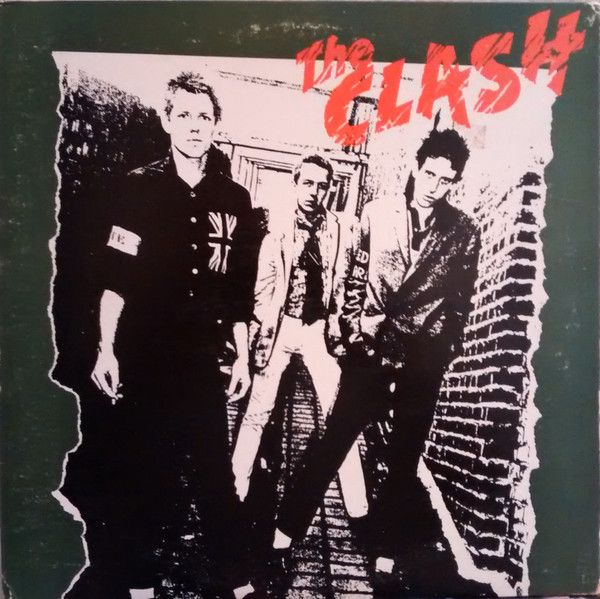
The song was the first track on The Clash’s eponymous debut album (the UK, not the US version), and may well have been played at every single Clash show. 

Caroline Coon set up a meeting between Jones and the band, and in 1982, Strummer wrote a song for Jones, “House of the Ju Ju Queen,” which was recorded with The Clash, two members of the Blockheads, and Mel Collins as the backup band. The band was billed as the “Lash,” because for contractual reasons, it couldn’t begin with a C.

Thursday, September 23, 2021

Cops: The Clash Covered


The Clash
: Police & Thieves

The Clash
: I Fought The Law

The Clash: Police On My Back 

[purchase The Clash]
[purchase Sandinista!

When I thought about responding to this theme, I realized that the Clash covered three songs (that I could think of) about police, and was going to write about them. But then I saw that Seuras was working on a post about their cover of Junior Murvin’s “Police & Thieves,” so I won’t say anything more about that one, and direct you to Seuras’ piece, when it is posted. Although I will engage in some self-promotion by referring to my earlier article about the punk/reggae connection that the Clash was very much involved in, and which mentioned how “Police & Thieves” in part inspired Bob Marley’s “Punky Reggae Party.” 

Although the Clash’s self-titled first album was released in the UK (and elsewhere) in 1977, it didn’t get released in the USA until 1979. In 1978, while working on their second album, Give ‘Em Enough Rope, Joe Strummer and Mick Jones went to San Francisco to do some overdubs at the Automatt studio, where they heard, for the first time, the Bobby Fuller Four song, “I Fought The Law.” Originally written by Sonny Curtis, the song was recorded in 1959 by Curtis and the Crickets, after Buddy Holly died, to little notice. The song was recorded by other musicians, including Bobby Fuller, with minimal success. But when Fuller re-recorded the song in 1965 with the Bobby Fuller Four, the song became a top-10 hit, and since then has been often covered. Only a few months after the song charted, Fuller was found dead from asphyxiation in his mother's car in a parking lot near his Los Angeles apartment. 

The Clash’s cover was added to the US release of The Clash and was instrumental in getting the band airplay in the US. It’s a great version of the song, to the point that I think that many people (not anyone reading this, of course) think it is an original. And that’s not to take anything away from the Bobby Fuller Four version, which is also great. Although it is interesting to think about the fact that the Clash’s version was released less than 15 years after the Bobby Fuller version, when I think about them as being from such completely different eras. If you'd like to read more about the song, from the Financial Times, of all places, go here.

London Calling is my favorite Clash album, and is actually one of my all-time favorites, and while it has a few cover songs on it, none are explicitly police related (I don’t think). Their next album, Sandinista! was a sprawling three-disc release, and some critics thought it was better than London Calling, while others, including me, thought that it had a little too much filler, and might have made a killer double album. But they do get points for ambition. There was a strong reggae and dub influence all over Sandinista!, and one of the covers on that album was “Police On My Back,” written by Eddy Grant (probably best known for his early-1980s hit, “Electric Avenue”) for his group the Equals in 1967. The Equals may well have been the first popular racially mixed band in the UK, and their version of the song, while sounding very consistent with British pop of the era, had a definite ska undertone. Interestingly, the Clash’s version is a straightforward rocker, with, to my ears, no real reggae or ska influences. And if you want to read a 29 page analysis, “Police On My Back and the Postcolonial Experience,” go here.

Thursday, June 13, 2019

SAME NAME/DIFFERENT ARTIST: MICHAEL JONES

So which Jones do you want? Mick, Mick(e)y, Mike or Michael? And which do you expect?
Let's be honest, Jones isn't such an unusual name, to the extent potential siblings David and Thomas may turn up in related contributions, but with Jones, M, we really are spoilt for choice. But I am not going to touch on the Micks of that ilk, too obvious, so how about a brace of Mickys, additional e optional.

I don't know so much about Mickey Jones beyond his being the drummer in the Dylan goes electric tour of 1966. Yup, me too, I had always assumed that Levon Helm had that seat, but he had quit the transitional Hawks --> Band shortly beforehand. Jones, having been drumming for other giants of the counter culture like Trini Lopez, was hired, staying until the fabled motorbike crash that took Dylan off the boards for a while. Jones took the opportunity for a change in career, via a short spell with Kenny Rogers and the First Edition, yes, playing on that song. He then spent the remainder of his career playing bit parts in films memorable and unmemorable, playing characters credited and uncredited, like 'Burly Miner' in 'Total Recall' and 'Mechanic' in 'National Lampoon's Vacation'.

Micky Jones, however, was possibly instrumental in one of the best and most long-standing Jam bands these islands have produced, and certainly the best from Wales, being that principalities version of the Grateful Dead. What do you mean you have never heard of Man?


Man formed out of the ashes of a not entirely unsuccessful 60s band, the Bystanders, who had some minor chart success and were regulars on the radio, when 'needle time' restrictions required there to be bands willing to play live, often performing cover versions of chart hits. However as the dawn of the 70s approached, a core of that band, principally Micky Jones, on guitar and vocals, wished to try a new direction, having been vitalised by some of the music outpouring fro the West Coast of the U.S, Moby Grape, Quicksilver Messenger Service and the Dead, guitar bands with well-honed improvisational skills, able to freewheel a 3 minute LP track into a 10 -20 minute live behemoth, sometimes longer. Initially more popular in mainland Europe, particularly Germany, the style of gigging there, involving multiple sets over a single evening, on successive nights, as a 'residency', ring any bells,  assuring their jamming competencies were put to the test. A test they passed and surpassed. A regular line-up was never quite achievable, as Jones apart, there seemed almost a revolving door policy on several members, leaving or being sacked and being recruited on several occasions. One famous member was Deke Leonard, known in his own right, left and joined again on at least 4 occasions. Perhaps best known, in his later, sometimes contemporaneous bands, was drummer Terry Williams, later of Rockpile and Dire Straits.There always seemed someone available, old or new, able to dep at moments notice, their myriad live recordings bearing witness to an astonishing array of recruits, including one John Cipollina, erstwhile member of Quicksilver Messenger Service, a case of influence joining influencee. I got to hear the band at their peak period, the early 70s, during which the most characteristic studio recordings were made. 'Be Good to Yourself at Least Once a Day' exemplifies both their style and their attitude. Coming out in 1972, this record had 2 tracks on each side, each a free wheeling extemporisation around fairly simple themes. Live, of course, only the stag curfew held any limit. It was no secret they were fans of the weed, their best known song, 'Bananas', being a celebration, in its short vocal interlude, to cannabis sativa and why. The album also gives a good potted history of Welsh rock which, despite his having been in one of his 'between' (sacked) periods, was penned by Leonard.

                                                                                                   Bananas 1972

Between 1977 and 1983 the band retired itself, the flavour of the day no longer being for long hair, dope and guitar solos. But you can't keep a good man (ouch, sorry) down and they lurched back into life, still very much under the de facto leadership of Micky Jones. Recruiting, yet again, Leonard/ also on guitar, and longterm bassist Martin Ace, together with an only once changing drummer, this line-up lasted an astonishing 9 years, ahead of then recruiting a keyboard player back into the fold. Health issues then began to arise. Jones developed signs of a brain tumour in 2002, having to leave for treatment. Intriguingly, given the title of this piece, his place was taken by his son, George. Clearly not that one. When Jones Sr. returned, Leonard again left, so George stayed on. A further deterioration meant another absence, with Martin Ace's son, Josh, replacing Micky, until the band eventually split, in 2006. Micky Jones had further tumours and eventually died as a result, in 2010. Leonard had a number of strokes and died in 2017. Various other band members have also died, often of respiratory related conditions such as lung cancer or emphysema, should all that heavy duty spliffage leave you to draw any conclusions. End of the story?


Of course not! Man continue to play, now under the helm of last man standing Martin Ace, along with his son, and Micky's son, the latter 2 having spent a spell playing under the 'Son of Man' name, ahead of becoming absorbed back into the mothership. Sort of son is the father of the man, man!

                                                                                                   Bananas 2017

Here, should this extraordinary history entice, is a greater historical detail, from the band's own site. Meanwhile, as the band have always said, quite whatever it means, keep on crinting!!!

I like to eat bananas
'Cos they got no bones
I like marijuana
'Cos it gets me stoned

Be good!

Thursday, May 3, 2018

Punk: Punky Reggae Party


Bob Marley & The Wailers: Punky Reggae Party
[purchase]

On the one hand, punk music and reggae don’t appear to have much in common musically—one is hard, fast, aggressive, and loud, the other, more laid back, slower, and mellow. I think that it is fair to point out that both styles arose as music of angry, rebellious, disaffected youth, making their philosophical connections more obvious than their musical connections. And yet we know that there has been a strong merger of the two styles, by bands like The Clash, the Two Tone bands, and in the ska-punk genre.

So, how did this marriage get arranged? Not having a clue, I turned to Google, which served me up this article that makes the case that the matchmaker was Don Letts.

Letts was born in England, of Jamaican heritage, and ran a London clothing store popular with musicians from both the punk and reggae scenes. He was able to meet Bob Marley after a gig, and they became friendly. When the Roxy nightclub opened, catering to the emerging punk scene, Letts became the DJ, and began to spin reggae and dub songs, along with punk music, in large part because the scene was so new, there weren’t that many punk records to play. Apparently, the punks enjoyed the music, including Joe Strummer of The Clash, and members of The Slits and The Sex Pistols.

Meanwhile, Letts convinced Marley, who appeared to have a negative feeling about punk based on sensationalist tabloid newspaper articles rather than from actually listening to the music, that it was worthwhile. According to Letts, he went to collect some money from Marley, dressed in punk bondage clothing, and Marley mocked him, to which Letts responded, “They ain't no crazy baldheads, they're my breddrin.” Shortly thereafter, inspired by the message and the music of punk rock (and by The Clash’s cover of the reggae song “Police and Thieves”), Marley wrote “Punky Reggae Party,” which referenced punk and New Wave, and namechecked The Clash, The Jam, The Damned, Dr. Feelgood (really more of a pub rock than a punk band, but whatever), as well as The Wailers and The Maytals. But even more importantly, Marley makes sure to point out that while all of those musicians would be at the party, “no boring old farts will be there.”

Letts went on to a career as a musician, most notably as a member, along with former Clash member Mick Jones, of Big Audio Dynamite, which mixed many genres of music, including punk and reggae where his role was, mostly, to supply audio samples to the songs. But he is best known as a filmmaker and video producer.

And the punk and reggae marriage remains strong to this day.

Sunday, November 1, 2015

Math & Science: E=mc2


Big Audio Dynamite: E=mc2
[purchase]

Among the things that I never did at Princeton, either as a student or alumnus are:

-I never went by the house where Albert Einstein lived from 1933-1955;

-I never visited the Institute for Advanced Study, where Einstein worked (his Institute office was initially on the Princeton campus and he worked in the physics lab, which is now part of the campus student center, but he never was a member of the Princeton faculty, although, according to University sources, he “often helped students with math problems”);

-I never took a math class or any serious science class (I satisfied my distribution requirement through a Psychology lab and credit for a good AP Chem score from high school, which annoyed my freshman advisor, a chemistry professor, who urged me to take Organic Chemistry, an offer I declined. I also took an intro Astrophysics class which was designed for non-scientists and was an excuse to sit in a dark room and look at pictures of stars).

Math and Science are just not what I was interested in studying, and although, at least at the high school level, I could do reasonably well (I survived AP Calculus BC, but when my kids took calculus, I remembered exactly zero about it—and I still count on my fingers). To this day, I’m curious about science, but I knew that it wasn’t what I wanted to spend my time in college on.

So I’m not going to even attempt to explain what E=mc2, which is also the title of a song by Big Audio Dynamite, means. However, if any of my surprisingly large number of friends and classmates who are, in fact, physicists want to weigh in in the comments, feel free.  Which is not to say that I don’t know that it stands for--Energy equals mass times the speed of light squared. But knowing that is far from knowing what it “means.” Instead, I will talk about the song a bit, a job for which I’m somewhat more qualified.

Big Audio Dynamite was formed by Mick Jones with film director Don Letts in 1984 after Jones was tossed from The Clash. The band’s first album, This Is Big Audio Dynamite, fused The Clash’s post-Sandinista!/Combat Rock punk with dance and rap, and liberally used samples from other songs and movies, something which was pretty audacious in that era. It’s actually a pretty great record.

“E=mc2” is one of the real standout tracks. According to Wikipedia, it was the first song to be created all from samples, which either was a great achievement (particularly in the analog age), or was the first step toward the destruction of music. The song is inspired by the films of Nicolas Roeg, particularly Performance and Insignificance (in which Einstein is a character). Roeg’s films are best known for unusual directorial techniques and non-linear narratives that rearrange the time sequence, requiring the viewer to reassemble the pieces. Which, maybe, relates to the whole relativity thing (although maybe not—remember, I’m not a scientist and I’m not a film critic).

Interspersed in the song, whose lyrics reference those, and other, Roeg films, are quotes from Performance, including one snippet featuring Mick Jagger, who starred in the movie. Controversial on its release in 1970, due to its graphic sexual content, drug use and violence, it became a cult classic, and an influence on music videos and films, notably by Quentin Tarantino and Guy Ritchie (which shouldn’t be a surprise, based on the description).

In addition to being a clever, catchy tune, it was a success, hitting 11 on the UK singles chart and 37 on the US Billboard Hot Dance Club Play chart. Einstein, a violinist who loved Mozart and Bach, and whose musical tastes were described as “conservative,” probably would not have liked it.

Wednesday, March 25, 2015

Brush With Celebrity: The Wallflowers


The Wallflowers: Reboot The Mission
[purchase]

I’ve been a fan of the Wallflowers since their second album, Bringing Down the Horse, the one that made them famous, the one with “6th Avenue Heartache” and “One Headlight” and “Three Marlenas.” I stuck with them, buying their next few albums, and enjoying them, but I had never seen them live. After the band took a hiatus, I moved on, and when they announced a show at the Tarrytown Music Hall in 2012, my wife and I decided not to get tickets. It was a hard call, but if we went to every show by every band that we liked, we would never be home, and have even less money than we do now.

The show was on a Saturday in September, and when we got back from the gym in the morning, both of us had urgent emails from my college classmate Heather, who lives in California and has many contacts in the music industry. She had mentioned to me at our 30th reunion earlier that year that she was friendly with Rami Jaffee, the keyboard player for the Wallflowers (and, among other bands, the Foo Fighters). The email asked us whether we could loan some bicycles to the band, and supply them with, as a fan of How I Met Your Mother, I will refer to as “sandwiches.” In exchange, we would get house seats.

This was a good deal. We loaned them our bicycles, but were unwilling (read—unable) to find any “sandwiches.” We drove the bicycles over to the theater and gave them to Rami, after which he, guitarist Stuart Mathis (now touring with Lucinda Williams) and opening act Mason Reed joined us for coffee at Coffee Labs.

Contrary to what we expected, they didn’t merely say “thanks,” buy us a cup of (excellent) coffee and send us on their way. Instead, we sat for, I’d say, close to an hour, chatting about this and that, and generally having a nice time. But then, it was time for them to actually use the bicycles before the show. We sat in the fourth row, and they put on a hell of a show. Afterwards, we went back behind the theater with Heather’s brother Harley (who also lives in Tarrytown) to get our bicycles back, and maybe say hi (and maybe meet Jakob Dylan). Apparently, they were surprised by the hilly terrain in our area, and were tired from the ride, but it didn’t affect the show. We didn’t however, meet Mr. Dylan.

“Reboot The Mission,” which owes a debt to The Clash and Big Audio Dynamite, mentions Joe Strummer, features vocals and guitar from Mick Jones,  was a highlight of Glad All Over, the album they were touring in support of, and is wildly catchy. Although it was a good reunion album, and got generally positive reviews, it seems that Glad All Over may have been the band’s last. At least three members, including Rami, left the band in 2013, and although they did tour at least until the end of last year, no tour dates are currently listed on their website, which, along with their Facebook page, continues to promote the 2012 release.