












Showing posts with label Mick Jagger. Show all posts

Wednesday, March 31, 2021

Passed Over: Aretha Franklin/Amazing Grace

[purchase the Complete Recordings]
[purchase the DVD of the film] 

My wife and I just finished watching the eight part NatGeo (!) series, Genius: Aretha Franklin. Season 1 was about Einstein, and season 2 was about Picasso, which puts Franklin, deservedly, into pretty lofty company. The series tells the life story of Franklin, who was notoriously private during her lifetime, and how she was able to deal with the benefits and burdens of her prodigious musical talent. It isn’t always a pretty picture—her father, well-known minister C.L. Franklin, was a controlling, philandering probable alcoholic who took Aretha out on the gospel circuit as a young teenager and appeared to have let her run around unsupervised, leading to two pregnancies at 12 and 13, and who himself impregnated a 12 year old. Aretha herself could be both cruel and supportive of her two sisters, Carolyn and Erma, fine singers in their own right, whose solo careers paled in comparison, but who regularly worked as background singers (and songwriters) for their sister. And she also made career judgments that, in retrospect, seem suspect. On the other hand, her singing, piano playing and arranging (despite not being able to read or write music), were extraordinary, and her ultimate insistence on producing credits and control over her music, was groundbreaking. Definitely worth the watch, and Cynthia Erivo’s performance as Franklin, is great. 

In 1972, coming off of one of her most successful albums, the politically charged Young Gifted and Black, Franklin suggested a return-to-her-roots gospel album. Ultimately, it was decided that Aretha would perform in a church, featuring the Southern California Community Choir, led by James Cleveland, the great gospel musician and singer, who had, in Aretha’s youth, led the choir at C.L. Franklin’s church. The TV series shows C.L. firing Cleveland because Cleveland failed to tell him about Aretha’s second pregnancy, and thus made Franklin’s decision to perform with him, and not at C.L.’s church, a deliberate slap in her father’s face. I don’t know if that is true, but it did make for good television. 

They decided to film two performances, and hired Sidney Pollack, still relatively early in his career, but with an Academy Award nomination under his belt, to direct. The performances, mostly by Franklin, but also by the choir and Cleveland, were incredible, and the word spread so that the second night became an event, and was attended by Mick Jagger and Charlie Watts, who were in Los Angeles working on Exile on Main Street (and the gospel touches on that album are often attributed to their attendance that night). C.L. Franklin showed up, too (uninvited, according to the show), and sermonized a bit. 

But when they went to get the film ready for release, a failure to use the traditional clapperboards made it impossible to synchronize the sound with the video under with the technology of the time. So, the film was put in the vault. An album including excerpts from the two nights, also named Amazing Grace, was released to both massive commercial and critical success. 

In the early 1990s, Jerry Wexler, the producer who essentially navigated Franklin to stardom after a lackluster start at Columbia Records, told a staff producer at Atlantic Records, Alan Elliott, about the footage, and they eventually discussed it over a period of years. Pollack, who was dying of cancer in 2007, encouraged Elliott to finish the movie, and he bought the rights from Warner Brothers and began the painstaking process of using digital technology to sync the music and film. It was scheduled for release in 2011, but Franklin sued to prevent its release without her permission. A few years later, the original contract that Franklin signed was found, and another release was scheduled, but Franklin sued again to prevent release. Whether her reluctance was based on a demand for money, or because her bad health prevented her from promoting the film, or out of her frustration over not ever having an acting career, or other reasons, it wasn’t until after Aretha’s death in 2018 from pancreatic cancer that Elliott was able to get her estate’s permission to release it. 

My wife and I had a chance to see the movie in 2019 at the great Jacob Burns Film Center in Pleasantville, back when people still went to movies, and it was mind blowing. It is, in many ways, very minimalist—there is no narration to speak of, no talking heads, just music (and a little preaching). Franklin is literally a force of nature, as she leaves nothing behind in singing songs that clearly have deep meaning to her, which you can see not only from her effort, but from the sweat pouring from her face

You can hear the 10 minute plus version of “Amazing Grace” in the video above. It is pretty much unbelievable. What you can’t see in the video, and you really should watch the movie--it is streaming on Hulu as this goes to press—is how the music affected everyone in the church—Franklin, the audience, the choir and the other performers. As described in an NPR piece about the movie: 

Near the end of the song "Amazing Grace," for which Cleveland has been accompanying Franklin on the piano, he slides off the piano bench, giving his space to [Alexander] Hamilton [the assistant choir director], and surrenders to shoulder-heaving sobs, rocking himself back and forth in a congregational seat. He's not the only one — by this point, audience and performers alike are wiping tears from their faces — and when Franklin herself sinks down into a seat at the song's conclusion, she well may be weeping, too. But her face is so sparkling with perspiration, it's impossible to tell for sure. 

And when they recreated a portion of it in the TV show, Erivo’s version was powerful enough to move us to tears, which is pretty amazing when you think about it.
Friday, November 6, 2020

Hidden Places: Dancing in the Street


purchase [ Martha and the Vandellas ]


Where do you dance?

Myself> at a wedding party, perhaps a similar party venue, like a year-end celebration. How about in the streets? Chicago, New Orleans, New York City. Philladelphia, PA, Baltimore, Motor City and D.C.

Aside from their country of location, what relevance to our theme? Well ..  they're places and they're not mentioned in the title.That makes them fodder for this <Hidden Places> theme. 

These cities, of course, have streets and they were chosen. Chosen to represent a kind of revolution that took hold starting back in 1964. A revolution of abandon? No, that was dancing in the streets when WWII ended. That was the jitterbug craze. But the evil that rock and roll represented was a kind of abandon where the youth danced ... wild. Arms and hands and hips all over the place. Often side by side nearly on top of eachother (definitely no social distancing here). Disgraceful.

Marvin Gaye's song - made famous by Martha and the Vandellas - has been covered by the Kinks, the Dead and Van Halen among others.

Now, 1964 is a bit early for the 'Nam revolts ... More a reaction to LBJ's Civil Rights Act? But it seems to be part of a spark that lead to a more sustained expression: we'll dance in the streets to voice our opinions and our understanding of what it means to be social. And - it doesn't even matter what you wear.

Seems quaint. These days, we'll bring our guns or drive our trucks <to the streets>


Monday, May 6, 2019

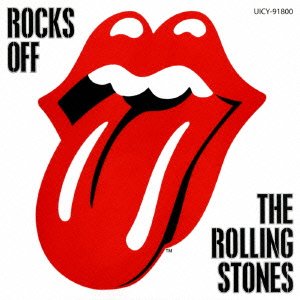
Stones That Roll: Rocks Off


Rolling Stones: Rocks Off
[purchase]

Of all of the Rolling Stones songs out there (and eventually, we had to get to them on this theme, amirite?), I chose this one for a few reasons. First, because of the title, which gives me a double dip at the theme, second, because I happened to hear it on the radio the other day, third, because it is a kick ass song, fourth, because my favorite Rolling Stones lineup included Mick Taylor, and finally, because a horn section makes any song better.

“Rocks Off” is the opening track from Exile on Main Street, an album many consider the Stones’ best work, although apparently Mick Jagger doesn’t agree. The album was recorded mostly in a villa in the south of France in 1971 (with some songs and overdubs recorded later in Los Angeles), and the recording process was notoriously chaotic, as a result of significant indulgences in bad habits and a corresponding lack of diligence on the part of all involved. Thousands of pounds of heroin reportedly made their way to the villa each week, and because of rampant absenteeism, many songs were recorded with session musicians or people playing different instruments than usual.

Whether by intention or not, “Rocks Off” is the perfect opening track for an album that was born from the Stones’ darkest behavior. It rocks like crazy, is terribly recorded, sounds murky, has vocal and instrumental parts that sort of meander in and out of the mix, is sexually suggestive, but also filled with dread and ennui, and it includes one of the great lyrics of all time—and one that seemed to exactly typify the state of mind of the band at the time: “the sunshine bores the daylights out of me.”

Most people don’t live the “rock and roll lifestyle,” and that is probably a good thing. Most of us live pretty conventional lives—we go to school, go to work, raise a family, whatever. Obviously, that’s not true about everyone, and most of us have had our periods of less than stellar behavior, but I think it is fair to say that the levels of debauchery that the Rolling Stones engaged in during the late 60s into the 70s is well beyond the levels that most people experience (or survive). And that is, probably, the reason why we mythologize the substance abusers, the hotel destroyers, the sexual experimenters, and the other outlaws of rock and roll, despite the fact that much of their behavior is, on its face, unworthy of such treatment. I find it hard to imagine, for example, any parent saying to a child, “here’s a guitar and some heroin, and if you work hard at both, someday, you might be as great as Keith Richards.” But we do lionize these performers not only because many of them create the music that we love (although some are just horrible), but also because of the vicarious thrills we get from them. Like why riding a roller coaster is so much fun—you get the excitement of danger, without the actual danger (for the most part).

Would I like to have spent months in a villa in the south of France recording an album with the Rolling Stones? Sure, although lacking any actual musical talent, I’m not sure why I’d be there. But would I have liked to spend the time drugged, debauched, frustrated and exhausted? Definitely not. But am I glad that the Stones, their sidemen, and crew did, so that I could listen to Exile on Main Street? You’re damn right I am.

Friday, May 12, 2017

Songs From Movies About Musicians: Gimme Shelter

[purchase 20 Feet From Stardom]

One of the best documentaries about musicians was 2013’s 20 Feet From Stardom, which focused on the background singers that we all have heard, but often don’t recognize by name. Not only was it interesting and filled with great music, the film addresses one of my regular writing subjects—why are some incredibly talented musicians not as famous as they probably should be. 20 Feet discusses many of the reasons—bad advice, bad luck, bad decisions, and even a lack of that certain something that allows you to traverse that 20 feet. I’ve mentioned the film before, in my piece about Darlene Love, who is probably the most famous of the singers featured in the film.

But maybe the most famous vocal discussed in 20 Feet, and for me the most memorable segment, was about Merry Clayton’s searing “rape, murder” vocal part in the Rolling Stones’ “Gimme Shelter.” Luckily, I don’t have to describe the scene in detail, because the video above is a clip from the movie, in which Clayton and Mick Jagger discuss the circumstances. But if you can’t watch the video, in short strokes, Clayton was called out of bed to sing for a band that she hadn’t heard of, was whisked to the studio, pregnant and in her pajamas, to add a searing and unforgettable part to what would become a classic song. Not only are the vocals powerful, the way her voice cracks only adds to the emotional impact of the part. In the video above, you can hear the isolated vocal tracks, which is cool. Here’s Clayton’s cover of “Gimme Shelter,” featuring occasional Stones sideman Billy Preston:


Clayton, born on Christmas Day (which led to her name) in New Orleans, was a veteran singer by the time the Stones roused her from bed. Her powerful vocals were also featured on, among other songs, Neil Young’s “The Old Laughing Lady,” and Lynyrd Skynrd’s “Sweet Home Alabama” (reluctantly). While Clayton never covered “Sweet Home,” she did do a great, soulful version of the song that it responded to:


In addition, she has had an acting career, both musically—Clayton was the Acid Queen in the first London stage production of The Who’s Tommy—and in movies and TV. More recently, she contributed vocals to albums by G. Love & Special Sauce and one of my least favorite bands, Coldplay.

Unfortunately, in 2014, Clayton was in a serious car accident that led to her having both legs amputated at the knees. She returned to the public eye in 2015, receiving an award from the Jazz Foundation of America (where Keith Richards performed "Gimme Shelter" in her honor with, among others, fellow 20 Feet star Lisa Fischer, who sang the song for years on tour with the Stones) and supporting Obamacare and the MusicCares charity that installed a chairlift in her home, and reportedly is working on a new album.

Friday, October 21, 2016

My First Album (s): Beatles 'n Stones


This is a great topic: first album. Cassette, CD, 45…

I wrote a lot for this, dividing my firsts up into multiple categories that involved the traditional first purchase, but extended to some stranger places: my mom’s record collection; the first record store I ever went to (Viva Kemp Mill Records!);  my earliest memories of flipping though records in the Kmart and being a little scared of the KISS, Ozzy and Sabbath stuff; all the way to the pawn shop that was right next to the comic shop I used to frequent every day after middle school, where I bought a then almost 10 year old copy of AC/DC’s Back in Black, for a quarter…the first tape I bought, my first 45... I thought I remembered more specifically, but it's hard to put a finger on the actual first of whatever category I actually money down on. I do remember some purchases: the vinyl pressing of USA for Africa, which was...whatever, in retrospect, but did have a blistering live version of Springsteen doing Jimmy Cliff's "Trapped", which to this day gives me the shivers when I hear it.

I realized, though, my musical memory is endless, each recollection better than the one before, so many stories that spring up from hearing even a two second scrap of a tune. Music, for those who love it, resides in what the soul must be. And the knowledge that one possesses of their musical past and how it has built towards their ever-living, always sound-tracked present, has to reside somewhere deep in the physiology, someplace close to the DNA, the stuff that makes us who we are.

After considering the many, many options I could qualify for “first”, I decided to go with this: My friend’s older brother’s LP collection.

David S. was a fourth grade rock god to me. He knew more about the Stones and the Beatles than anyone I knew. Which is to say, he was the first one to tell me about those two bands, and therefore was the ultimate authority. All his facts and tidbits and knowledge, especially of lyrical content and album cover art must have to come to him from a much older, very educated older brother  (I remember thinking his parents were his grandparents when I met them—grey and old; David was a ‘mistake’ baby).

He came over to my house for a playmate (though we didn’t call it that back then) and we spent much of the afternoon pouring over the covers of the stack of albums he brought and listening to the music. Tattoo You was really fascinating to me, with the tribal images of Mick and Keith looking like Maori warriors. Beggars Banquet was somehow a little scary looking, a place I shouldn’t be; Sticky Fingers was titillating dirty because we could pull on the zipper in the pants. Some Girls was fun in a more innocent way: the die-cut, movable features was a lot like the pop-up books I still liked at that age. He also had a copy the Beatle’s Yesterday and Today with the infamous butcher scene, though it must have been a reprint. Sgt. Pepper’s was what really grabbed me, and we poured over that famous cover scene for what seemed like hours. Abbey Road was awesome, too, due to the fact that he explained the legend that Paul was dead and this was representative of his funeral and that each Beatle was a member of the funeral party. Mind you, all of this intense scrutiny of the art work and the head-spinning tales David was telling me—the stories beyond the songs—was done to a soundtrack of what could arguably be considered the greatest rock music ever recorded. Like so many, The Beatles and the Stones hold exalted status for me in the pantheon of rock, and regardless of how far afield I stray, sometimes for good, often for worse (I went to see Quiet Riot in the 8th grade, Bon Jovi and Cinderella in 9th), I always go back to the Beatles and Stones. It doesn’t make me unique; it just means I have a pure rock pedigree, good genes, if you will. 

We eventually got around to the White Album and then, because I wasn’t really as singularly obsessed with music as David, I took us out to play war in the construction site nearby and David eventually, incensed and bored, stalked off and went back to my house. My mother had to take him home. It was a great day, one that sparked my musical journey, despite David not wanting to be my friend anymore (he was really offended at the joy I took rolling around in the dirt, shooting a fake machine gun and running myself through freshly hung drywall in effort to emulate fabulous special effects like in the movies). A great day, but one that in retrospect shows me that perhaps even at that age, I was already lacking any kind of particular, obsessive focus that if I had may have led me down a very different path in life. David might have become a rock star for all I know—he had the singularity of mind to do what it took to make great music. He had the pedigree; he knew the legends and the stories and the myths; he knew what the songs were about, especially the dirty ones, even if we didn’t really know what was going on—Jagger’s penchant for “make sweet love” as a lyric, while ubiquitous, didn’t mean much to me then, other than I knew I should giggle when I heard it. He had the moves and the ability to mimic, especially Mick Jagger. Have you ever seen a 4th grader strut and prance and mime the vocals of Mick Jagger? No? You should—it’s a lot less creepy and whole lot more entertaining than those little kids who always seem to be part of any Elvis Presley impersonation festival.

What is amazing, though, is how certain sounds, and in this case, album sleeves, certain images, especially the visual and aural beauty of rock music, can work to blow open your understanding or perception of the world around you. Up until then, I’d been grooving to things like the AM radio, or stuff that my dad would sing around the house. I had a few soundtracks to movies I loved (Star Wars, The Muppets), but otherwise, like a typical nine-year-old kid, my musical sensibility was scattered at best, influenced by what was accessible to me. I didn’t have that ever-important older sibling to act as my musical sage, guru and guide. So, I made do with what was available to me and, given the passion music stirred in me, I worked pretty hard at finding sounds after that fateful day when David S. brought over all those records. It’s been a good journey, one that gets better the longer it goes on. In terms of the metaphorical quest, this is one that needs no end, as the longer the way, the greater and more abundant the rewards.


Sunday, November 1, 2015

Math & Science: E=mc2


Big Audio Dynamite: E=mc2
[purchase]

Among the things that I never did at Princeton, either as a student or alumnus are:

-I never went by the house where Albert Einstein lived from 1933-1955;

-I never visited the Institute for Advanced Study, where Einstein worked (his Institute office was initially on the Princeton campus and he worked in the physics lab, which is now part of the campus student center, but he never was a member of the Princeton faculty, although, according to University sources, he “often helped students with math problems”);

-I never took a math class or any serious science class (I satisfied my distribution requirement through a Psychology lab and credit for a good AP Chem score from high school, which annoyed my freshman advisor, a chemistry professor, who urged me to take Organic Chemistry, an offer I declined. I also took an intro Astrophysics class which was designed for non-scientists and was an excuse to sit in a dark room and look at pictures of stars).

Math and Science are just not what I was interested in studying, and although, at least at the high school level, I could do reasonably well (I survived AP Calculus BC, but when my kids took calculus, I remembered exactly zero about it—and I still count on my fingers). To this day, I’m curious about science, but I knew that it wasn’t what I wanted to spend my time in college on.

So I’m not going to even attempt to explain what E=mc2, which is also the title of a song by Big Audio Dynamite, means. However, if any of my surprisingly large number of friends and classmates who are, in fact, physicists want to weigh in in the comments, feel free.  Which is not to say that I don’t know that it stands for--Energy equals mass times the speed of light squared. But knowing that is far from knowing what it “means.” Instead, I will talk about the song a bit, a job for which I’m somewhat more qualified.

Big Audio Dynamite was formed by Mick Jones with film director Don Letts in 1984 after Jones was tossed from The Clash. The band’s first album, This Is Big Audio Dynamite, fused The Clash’s post-Sandinista!/Combat Rock punk with dance and rap, and liberally used samples from other songs and movies, something which was pretty audacious in that era. It’s actually a pretty great record.

“E=mc2” is one of the real standout tracks. According to Wikipedia, it was the first song to be created all from samples, which either was a great achievement (particularly in the analog age), or was the first step toward the destruction of music. The song is inspired by the films of Nicolas Roeg, particularly Performance and Insignificance (in which Einstein is a character). Roeg’s films are best known for unusual directorial techniques and non-linear narratives that rearrange the time sequence, requiring the viewer to reassemble the pieces. Which, maybe, relates to the whole relativity thing (although maybe not—remember, I’m not a scientist and I’m not a film critic).

Interspersed in the song, whose lyrics reference those, and other, Roeg films, are quotes from Performance, including one snippet featuring Mick Jagger, who starred in the movie. Controversial on its release in 1970, due to its graphic sexual content, drug use and violence, it became a cult classic, and an influence on music videos and films, notably by Quentin Tarantino and Guy Ritchie (which shouldn’t be a surprise, based on the description).

In addition to being a clever, catchy tune, it was a success, hitting 11 on the UK singles chart and 37 on the US Billboard Hot Dance Club Play chart. Einstein, a violinist who loved Mozart and Bach, and whose musical tastes were described as “conservative,” probably would not have liked it.

Tuesday, January 6, 2015

In Memoriam: Bobby Keys and Ian McLagan

[purchase New Barbarians-Buried Alive: Live in Maryland]

Unfortunately, every year, we lose legendary musicians, people whose names are instantly recognizable, and we also lose a larger number of unheralded performers. And then there are guys like the two I’m writing about—Bobby Keys and Ian McLagan—who were sort of famous. If you are reading a music blog, you’ve probably heard of them, but stop someone (of a certain age) on the street, they would be more likely to have heard of, say, Joe Cocker (who died a couple of weeks later and employed both men) than either one of today’s subjects.

It is one of those strange coincidences that these two men, both of whom were associated with the Rolling Stones, died on consecutive days. Keys died on December 2, 2014 of cirrhosis and McLagan died from a stroke on December 3, 2014. And while they were both known as Stones sidemen, and performed together, their lives and careers were quite different.

Bobby Keys was the classic sideman. Born on December 18, 1943 near Slaton, Texas, Keys (which is his real last name) began touring as a sax player when he was 15, playing with, among others, another Texas boy, Buddy Holly. Keys met the Rolling Stones in 1964 and became friendly with Keith Richards, who was born on the very same day. Keys and Richards shared a love of music, mind altering substances and mischief. It was Keys and Richards who notoriously threw a television from a hotel window, and he toured with the band for years. Keys was also the best man at Mick Jagger’s wedding to Bianca. However, he was booted from the band for a while when he, supposedly, filled a bathtub with Dom Perignon, and then drained it. This was a stunt that reportedly annoyed Jagger. However, Keys was back on the team in the late 1980s, and toured with the Stones until recently.

But it was not only his partying personality that made Keys a popular sideman—he could play, adding the iconic sax solos to many tunes, notably “Brown Sugar” and “Can’t You Hear Me Knocking.” He played with innumerable other acts, including Lynyrd Skynyrd, Eric Clapton, Delaney & Bonnie, all of the Beatles and Yoko, Joe Cocker, Warren Zevon, Sheryl Crow, Jim Carroll, Barbra Streisand, Carly Simon, John Hiatt, Graham Nash, and on and on. He was part of Lennon’s “Lost Weekend,” appeared in the film Mad Dogs and Englishmen, and while he released two solo albums, he will always be best remembered as a hired gun—if one of the top guns. Unfortunately, it appears that his hard living finally did him in, and he passed away on December 2 in Franklin, Tennessee.

Ian McLagan was born on May 12, 1945, 16 years to the day before me, in Hounslow, England. A gifted keyboard player, McLagan bounced through a few bands, including one fronted by future King Crimson/Bad Company member Boz Burrell, until he was hired in 1965 for a pittance to replace the keyboard player in a band called the Small Faces. After finishing his probationary period, he joined the band, and took a pay cut. Along with Steve Marriott, Ronnie Lane, and Kenney Jones, McLagan created a body of music that still stands up today. And after Marriott left the band, and Rod Stewart and Ron Wood joined the reconstituted Faces, who reached further heights of popularity before breaking up. McLagan participated in various full and partial Small Faces and Faces reunions over the years. Although initially he left the songwriting chores to others, ultimately, McLagan wrote a number of classics, including “Stay With Me.”

In the mid-1970s, McLagan agreed to join Wood and record and tour with the Stones, apparently turning down the chance to join Kenney Jones in the Who. Tough choice. With the Stones, he contributed, among other things, the piano part to “Miss You.” He also appeared with or recorded with Chuck Berry, Rod Stewart, Bob Dylan, Jackson Browne, Bonnie Raitt, Paul Westerberg, Bruce Springsteen, Billy Bragg, Frank Black, John Hiatt, and many others, and recently had significant involvement in Lucinda Williams’ latest album, Down Where the Spirit Meets the Bone.

Unlike Keys, though, McLagan enjoyed being in or leading a band, rather than being a session musician. He formed the Bump Band, starting in the late 1970s, and he released a number of solo albums as well as recording with the Empty Hearts featuring Eliot Easton of the Cars and Clem Burke of Blondie. He was scheduled to be a part of Nick Lowe’s Quality Holiday Revue along with Los Straitjackets when he was felled by a stroke, in Austin, where he had lived for two decades, and had become an integral part of the local music scene.

The video above is one of a number of crappy videos that are available on YouTube of performances from a 1979 tour by The New Barbarians, a band featuring Keith Richards, Ron Wood, Stanley Clarke on bass, drummer Joseph “Zigaboo” Modeliste of The Meters, Keys and McLagan. Through the fuzz, you can see both of our subjects playing their hearts out and getting a bit of the glory (while the spotlight remains mostly on Richards and Wood).

The passing of Keys and McLagan, though, raises one significant question—how the hell is Keith Richards still alive?

Friday, June 6, 2014

Side Projects: Misc. Ry


What you and I might call a side project may not be such a “side” for the musician himself: you could argue that Ry Cooder has been building towards his Cuban work all his life. You could argue that most everything he does is a “side project”.

Ry's work – more than being a collection of side projects – appears to have a focus: I’d say it is to turn us on to the best of many different musics; be it the forgotten American 30s, be it the best of modern Africa or Cuba or …
Although Ry’s main focus over the years has its roots in America (Blind Willie Johnson, Woody Guthrie and more). 


Ry's mission to give us some of the best of the past include songs by Bix Beiderbecke, Jelly Roll Morton on ”Jazz”, Woody Guthrie on “Into the Purple Valley”, Lead Belly on “Chicken Skin Music”.

Yet another “side project” , if you prefer, features his efforts to share with us some of the best of Cuba through his work with the “Moula Banda Aces”, or his sojourn to African music with Ali Farka Toure,or from India with V.M. Bhatt of India, and many more beyond the Cuban style I feature here:


Buena Vista Social Club

When Cooder writes and performs his own work, he tends to criticism, often in support of “the working class”. Arguably, much of his output leans in this direction (How can a Poor Man Stand Such Times, Alimony, and even Fool for a Cigarette in that “the rich don’t smoke”)


I don’t have an inside line to the man’s mind, but I guess it’s true that nothing is “side” to him. Besides, Ry has worked with a number of folks on a regular basis. 
Again and again, Ry appears with Bobby King, Terry Evans and friends doing supporting vocal backups - hardly a side project. And well he does; their versatile 3-part harmony (and stage show) suit him and his musical choices well. Likewise his repeated collaboration with Flaco Jimenez on the accordion.

Here's yet another, where he is doing some "side work" with Mick Jagger (Memo from Turner). His guitar work absolutely drives the whole song.


Memo from Turner