Showing posts with label david bowie. Show all posts

Tuesday, January 2, 2024

In Memoriam-Robin Lumley and John Giblin


 [purchase Product]

Robin Lumley and John Giblin were members of Brand X at various times.  I’ve written before about Brand X, a jazz-rock fusion band probably best known for the contributions of Phil Collins (who I’ve written about, too), but the band’s membership was somewhat of a revolving door.  (And I wrote about another member, guitarist John Goodsall, for our 2021 In Memoriam theme.)  Lumley was a founding member of the band, on keyboards, and was involved from 1974-1980, with a brief hiatus in 1978, while Giblin, a bass player, was a member in 1979, although his recordings were released through 1982. 

Robin Lumley was born on January 17, 1948, in Devonport, England.  Originally a drummer, he switched to keyboards in the 1970s.  In 1972, his former neighbor, David Bowie, rang him up one day, to see if he would be interested in replacing Bowie’s ill keyboard player, Matthew Fisher from Procol Harum, starting the next day.  He was interested and joined the Spiders From Mars.  After that, Lumley worked as a studio musician and met Collins, which led to the formation of Brand X.  Lumley also became interested in music production.  His hiatus from Brand X in 1978 was to work on production projects, including Rod Argent’s Moving Home, and Bill Bruford’s Feels Good to Me, and he later produced records for Orleans, Anthony Phillips and Isotope, among others.

In the 1980s, he formed a jazz-rock band that included Rod Argent, Graeme Edge (of the Moody Blues), Morris Pert (of Brand X), and Gary Brooker (of Procol Harum). Lumley later married an Australian and moved to Australia. In 2001, he formed SETI with Graeme Edge, bassist Rob Burns, and Rod McGrath (cellist for the West Australian Symphony Orchestra).  He also composed and produced music for over 250 television and radio commercials for numerous television productions in the US, UK and Australia.

Lumley died from heart failure in Plymouth, on March 9, 2023, at the age of 75.

***

John Giblin was born on February 26, 1952, in Bellshill, Scotland.  He was best known as a studio musician, contributing bass to albums and performances by artists such as Peter Gabriel, Paul McCartney, Eric Clapton, Kate Bush, Simple Minds, John Anderson, Phil Collins, Al Green, and Annie Lennox.  Giblin was best known for his mastery of the fretless bass.

As noted above, Giblin recorded with Brand X in 1979, when the band was being pushed to make more commercial music.  The surprising response to this pressure was to have two separate units record—one with bassist Percy Jones, keyboard player Peter Robinson, drummer Mike Clarke and Goodsall, and the other featuring, Lumley, Giblin, Collins and Goodsall.  The output of these two groups were released, but no improvement in commercial success was achieved, leading to a band breakup.

More recently, Giblin was playing more acoustic bass, and was involved in projects with Peter Erskine of Weather Report and Alan Pasqua of Tony Williams Lifetime. 

Giblin died of sepsis following a long illness on May 14, 2023 in Cheltenham, England, aged 71.

You can hear both men on the Brand X track in the video, “Algon (Where an Ordinary Cup of Drinking Chocolate Costs £8,000,000,000),” a title taken from a Monty Python sketch (in which the cup of chocolate only cost £4 million), from the Product album.


Wednesday, March 16, 2022

MARCHING: CES BOTTES SONT FAITES POUR MARCHER


OK, so a bit of international licence here, an entente cordiale to fit the subject, which, like a kinky boot, it does, très snug. I love a bit of foreign, do I, so it was with some disappointment and frustration I have felt it wise to cancel a forthcoming jaunt to Paris. Little to bear, in comparison to our friends in Ukraine, but Putin can go sit on one. OK, as he could before, but this biscuit has been well and truly taken, the birds of his political interferences in US and UK governments now arguably coming home to roost, as "we" struggle to work out what is and isn't justified in return. Bad and sad days.

Endeavouring to remain upbeat, let's pursue the arena of pop in translation. Yé-yé, as our french cousins say. One rule, mind, that being an avoidance of where an anglophone artist simply translates their song into french, and copycats it, so none of this, no Bowie or Blondie. (Strangely, this is a trick the Beatles never pulled off, even if tried a bit of Deutsch.)

Africain à Paris/Tiken Jah Fakoly

The above is an extraordinary piece of translation, changing both the words and the locations, succeeding in an impressive alchemy. And, musically, is it any less wrong to suggest the Parisian music scene is to Africans that New York might be to an Englishman? The number of artists from that continent in the French capital, making there their music, is immense, belying a concept that Paris could well be the home of African culture.

Hey Joe/Johnny Hallyday

I'm uncertain if the translated lyric has actually, name apart, anything to do with the original, but, it being my favourite song, possessing dozens of versions of it, yes, of course, this I already have and was so already well familiar with. Fond of, less. Having said that, it was a song he never stopped playing, with this considerably later version even quite edgy, in a poundshop Keith Richards way. 

L'Amour C'Est Comme Une Cigarette/Sylvie Vartan

Well, if we are going weird, we have to go here. Ms. Easton's paean to the early morning commute seems clearly a whole different concept through a French lens, this song stealing only the tune, as it, well, as you do, compares love to a cigarette. A Gauloise, I assume. I will avoid smutty allusions around sucking on it and watching it turning slowly to ash.

D'En Haut de la Tour de Guet/Francis Cabrel

Another of my favourite songs in coverland, the translation itself a labour of love. Indeed, so wordy is most of his work that you forgive all the continentals who sang on, regardless, in English, rather than wrestle long and hard, as clearly had the performer here. It comes from an entire album's worth of similar fare, and I tip my chapeau his way.

Hôtel de Californie/The Cat Empire

Is this cheating? I suspect it is, but it is such a delightfully gallic take on the song to ignore the fact it was cobbled together in Australia by Melbourne ska-punkers The Cat Empire. And what better place to end this reverie.

Bottes by Eileen: ici


Friday, October 22, 2021

Rock Hall Snubs: King Crimson


King Crimson
: The Court of the Crimson King
[purchase The Condenced 21st Century Guide to King Crimson 1969-2003

I think that it was in the Bill James Historical Baseball Abstract that I read, years ago, something like the only definition of who belongs in the (baseball) Hall of Fame is who gets elected. In other words, even in a statistically driven sport such as baseball (which has become even more so due to the work of James and fellow sabermetricians), there’s no formula to decide who belongs. James, and others, have created various predictive formulas, but they are not an attempt to determine who deserves to be in the Hall, but rather to predict whether the player’s statistics are the type that would convince the voters to vote them in. 

This type of determination is even harder to do with the Rock Hall, because there are no stats, really, other than maybe sales, or streams, or concert attendance-but I think most people (at least most people who read this type of blog) are unwilling to equate popularity with quality. Although it is nice when it happens. For the Rock Hall, it sort of just comes to down to gut feelings, considering some objective, but mostly subjective factors—plus a fan vote. Of course to be fair, it is hard to take the Rock Hall all that seriously when it inducted Bon Jovi a few years ago. 

My pitch today is for King Crimson, which based on the number of times I’ve written about them, their music or their members (see here, here, here, here, here, here, here, here, here, here, here, here, here, and most recently, here), you might assume are my favorite band. They aren’t (don’t ask me what is, though). But when you look at the quality and variety of their work, the length of their career, even with all of the interruptions, and most notably, the influence of the band on so many genres of music, it is hard to justify their exclusion. There is one full member of King Crimson who is a Rock Hall inductee (and another performer who sang one song for Crimson who is in the Hall……the answer will be at the end of this piece). 

It is hard to argue that King Crimson did not influence, among other genres, progressive rock, hard rock, various forms of metal, jazz/rock fusion, punk, new wave, grunge, math rock, jam bands, noise rock, and even hip-hop. There’s a nice summary of some of this in Wikipedia, or just Google “King Crimson influence” and fall down the rabbit hole. 

Also, arguably, Robert Fripp belongs in the Hall individually for his solo guitar work/"Frippertronics" and collaborations with Brian Eno, David Bowie, Peter Gabriel and others. 

That’s it. Show me a band or artist that is more influential than King Crimson that hasn’t already been inducted. 

The answer to the question is that drummer Bill Bruford was inducted into the Rock Hall as a member of Yes, as was Jon Anderson, who sang “Prince Rupert Awakes” on Crimson’s third album, Lizard.

Monday, August 23, 2021

Bigger Strings: Maya Beiser-Epitaph

Maya Beiser: Epitaph
[purchase

I’m not sure where I first heard about Israel-born, avant-garde classical cellist Maya Beiser, but it might well have been from this piece by Cover Me founder Ray Padgett about her awesome cover of Led Zeppelin’s “Kashmir.” Beiser’s 2014 album Uncovered is a collection of ten rock songs completely reimagined by Beiser and arranger Evan Ziporyn, a fellow member of Bang on a Can All-Stars. The songs run the gamut from Muddy Waters to Janis Joplin, to Hendrix, Led Zeppelin, AC/DC, Nirvana (which I wrote about here), and my favorite of them all, her cover of King Crimson’s elegiac “Epitaph,” from their debut album, In The Court of the Crimson King

“Epitaph” was written by Robert Fripp, Ian McDonald, Greg Lake, and Michael Giles with lyrics written by Peter Sinfield, and those lyrics, were sung beautifully by Lake, who explained that the song “is basically a song about looking with confusion upon a world gone mad.” It features heavy use of Mellotron along with woodwinds and dramatic tympani, giving it a symphonic feel. 

It was this complex, symphonic sound that attracted Beiser, whose classical training did not prevent her from consuming and appreciating popular music throughout her life. In an interview for Classical Voice, Beiser said:

I was very much entrenched in classical music, and none of my teachers knew anything about Genesis, King Crimson, Brian Eno. It was not part of my education. I started to listen to this music and it completely transformed me. Pink Floyd were totally revolutionary, creating a symphonic like piece. King Crimson’s ‘Epitaph’ is one of my favorite songs of all time, and it lends itself to cello because their thinking was symphonic — classical. 

She continued: 

Part of my motivation for doing this album is for people to see how this is great music, how the masters of our time are just as great as but different than Beethoven and Schubert. … All classical music performances are covers. 

Continuing this approach, Beiser recently released a version of David Bowie’s last album, Blackstar, re imagined as a cello concerto. 

To create her cover of “Epitaph,” Beiser overdubbed and processed her cello, and Ziporyn added just a hint of clarinet and bass clarinet. Beiser slows down the tempo a little, and if anything, her instrumental version is even sadder and statelier than the great original. 

As a brief aside, since this is a piece about the cello and King Crimson, about five years after the debut album, a mostly different lineup of King Crimson released Red, one of my favorite albums, and it includes a cellist (and acoustic bass player), who are uncredited, and whose identity appears to still be a mystery

One more aside--the punk record label Epitaph Records, home (at times) of bands such as Rancid, Bad Religion, Descendants, The Distillers and Social Distortion, was named after a lyric from this decidedly not punk song.

Thursday, July 29, 2021

POSTHUMOUS: LOVE WILL TEAR US APART

A little over two years ago I wrote this, about the band New Order, proclaiming little love for their earlier incarnation as Joy Division, feeling unable to accommodate the spiky rhythms, spikier vocals and, spikiest of all, the odd St Vitus dance habitus of their late vocalist, Ian Curtis. (It is that easy, in my house, to build a prejudice: watch a couple of dodgy you-tubes and, pshh, gone from my life. Often forever.) Thankfully, I was taken to task for my self-imposed blanket ban on this much mythologised band, the mythology being there for good reason. A sound ticking off was administered, and I was sent to bed with copies of Unknown Pleasures and Closer to listen to, until I saw my senses. 

Of course, I had been earlier aware, and liked, the featured song. How could I be unfamiliar with it? I may not have necessarily heard the original, but the song had swiftly become a covers staple, a song reproduced across innumerable genres and by artists good, bad and indifferent. And, back when I did first hear the original, it seemed a poor relation, with too much treble and a droning monotone of a vocal, sung in a basement grumble. My poor cloth ears couldn't accommodate it, and it is only since that damascene night that have I been able to find the context to put it into a truer perspective.

Joy Division had come together almost as a whim. Bernard Sumner and Peter Hook, childhood friends, had attended a Sex Pistols show in Manchester. Invigorated by the anyone can be a star ethos, they reflexly decided to form a band, Hook borrowing money from his mother to buy a bass guitar the following day, Sumner a guitar not long after. At that stage there were other candidates for drums and vocals, the band getting through a run of drummers. The pencilled in original singer was offered a proper job and declined, leading to the time honoured british solution, an advert in the newsagent's shop window. Read by Ian Curtis, who knew of the others, he applied and was taken on in such good faith that an audition wasn't even required. At this stage the band were called Warsaw, in homage to David Bowie's Warszawa. Drummer issues continued and again the shop window posted their requirement, again with a single applicant, a school chum of Curtis's named Steven Morris. Thankfully this line-up gelled, and they were off, with a change of name becoming necessary to avoid confusion with the similarly named Warsaw Pakt, of whom little was ever heard again.

Whilst the band have a seemingly inextricable history with Tony Wilson's Factory Records, in fact it was less straightforward, with initial forays into work with other companies, with their debut, An Ideal For Living, having to be self-released. In the meantime, Curtis had approached Wilson, a prominent Manchester mover and shaker, whose day job was as a local TV news correspondent, and near goaded him into agreeing to showcase them on his music show. When he did, fulfilling that promise on 'So It Goes', his music show, he had them then contribute to Factory's first release, an EP, A Factory Sampler, produced by Martin Hannett.

Unknown Pleasures, their first LP, came out in 1979, with Hannett again on production duties, preceded, as was their usual, by the non-album single, Atmosphere. He jettisoned the sounds that they had previously been unhappy with, in earlier recordings, and gave them their signature sound, sparse and spare, with an air of clattering menace, where the spaces between were as important as the notes and rhythms. They were off the blocks running, selling out the first pressing, playing to increasing numbers of increasingly intense young men. A second record was to follow in the following year, recorded between tours that were beginning to draw a toll on the health of Curtis. He had sustained his first epileptic fit two years earlier, after a gig, Gradually the frequency and intensity had accelerated; by the tour of schedule of 1979/1980 they were near daily and often on stage, often unrecognised by the audience, his wild and flailing stage movements blurring and blending into his seizures. That his marriage was also in trouble, and he was conducting an affair, could not have helped his mental health, itself deteriorating alongside. 

The night before the band were due to start their debut US tour, he was found alone, having hung himself. This was the 18th of May, 1980, numbing his bandmates, who had never taken seriously the threats he had earlier made. Love Will Tear Us Apart was released a month later, the second album, Closer, a month later still. Each were successful, number 13 in the UK singles chart and 6 in the album chart, seen then and subsequently as a fitting memorial to the deceased singer. Inevitably, it being the way that premature death and distress can add only lustre to the career of troubled musicians, it set the residual band on their feet, if mindful of their responsibility towards him. That much was demanded of them by his fans. Intriguingly, Steven Morris has since admitted that, had Curtis not died, then the band would not, could not have continued. In turn suggesting, therefore, that the band the trio became, along with Morris's partner then wife, Gillian Gilbert, New Order, would not have existed. And they never stopped playing it.....

Love Will Tear Us Apart was re-issued on a couple of occasions, in1983 and again in 1995. On each occasion it performed well, scraping into the top 20 on each occasion, at 19.

There are a number of longer reads, many by Curtis's bandmates. This is the best, by Morris. A film about the life of Ian Curtis is due any time soon.

12"

Sunday, January 3, 2021

IN MEMORIAM: PHIL MAY

The saying always was that only the bad girls liked the Rolling Stones, which then needed a whole further category for the Pretty Things, as their reputation made the Stones, by comparison, seem like Herman's Hermits. With longer hair, tighter trousers and a r'n'b* so raw it could make you flinch, these 60's rockers were making hell long before Jagger et al were shocking the nation. How was it that I, at the age of eight, could be their number one fan?

I should add I probably wasn't, but they certainly made an impact on my formative and future tastes. I may have stated here before how recorded music first entered my reckoning, my elder sister coercing my parents into the purchase of a dansette record player. It was either second hand, or on special offer, as it came with a stack of 45s, many of which I have to this day. Mostly staid early 60s fare, Bobby's Darren and Vee, the big O, Gene Pitney, some Elvis ballads and probably an early Beatle or two. But within the stash of paper sleeved parlophones, derams and regal zonophones, there was a cardboard sleeved disc. With photos of scowling youth on the cover. Two tracks on either side! This was an EP.

I played it to death, the two main cuts, 'Rosalyn' and 'Don't Bring Me Down' being peculiarly affecting. All snarled vocals, rudimentary backing and more attitude than was ever allowed back then. Already a precocious reader of the musical press, having access to the Disc and Musical Echo, I learnt about the band. In truth I only cared about the singer, Phil May, having, probably,  a big pre-teen crush. He had the longest hair in London, I learnt, that being enough for me, shackled then in to my schoolboy compulsory short back and sides for a good many years yet. However I also being confused by one of the band having a beard, something I associated with jazzmen and my brother, and being the opposite of cool. Even discovering this was Dick Taylor, who had left the Rolling Stones nascent line-up to form this band, still sat oddly. He just looked so old.


The years went by and I became a teenager. I was now a creature of underground tastes, 'underground' the name for proto-progressive and heavy metal: hard rock as we called it. Whilst I learnt Phil May still had the longest hair in London, their first wave had peaked, necessitating a huge change in direction. I confess I was no longer on the bus at this stage, as, whilst familiar with S.F. Sorrow and Parachute, I had bigger fish to fry. S.F. Sorrow may have been the first rock opera, but I was busy listening to Tommy. The Pretty's just became another rock band on the fringes, well regarded, prolific, a bit like Savoy Brown, just nothing to bother my ears with. I even caught them live, in the 70s, if by mistake. Newly signed to Led Zeppelin's Swansong label, the one with the logo of Robert Plant with wings, a rumour spread that Zeppelin would be playing London's tiny basement Marquee Club, as a support to their new signing. Well, the Pretties played, but nobody else. Silk Torpedo was the album being promoted. I didn't buy.

I guess David Bowie gave me my renewed interest, his Pin Ups album including both the songs I had loved so much from the EP. I should declare here I abhorred these Bowie versions, my inner rock snob near fully formed, having 'preferred his earlier stuff' of Hunky-Dory. This also gave me the opportunity to whip out that EP and play it loud to my largely indifferent friends.

Years go by, decades go by, marriages, children and respectability wax and wane. And still the Pretty Things play on. It was probably about 2012 I started again to go to festivals, my tent having had a good rest for most of the decade or so ahead. One such was Lunar Festival, 2016, at Tanworth-in-Arden, near Stratford-on-Avon. One of the clinchers of my going was that the Pretties were on the bill, the other being it's nearness to where I was living. The hippy years had come and gone for the band, fame had further beckoned but never quite delivered, and they were reliant as much on their longevity as their talent. Back more to a more bluesy garage band clatter, wailing harmonica, black suits and skinny ties, they were distinctly survivors. May and Taylor, the latter back in the band having passed on some of the hippy dream, the front men alongside some younger blood, some of whom had been with the band for decades. Taylor, still with beard, looked positively ancient, but kept a tight hand on the tight Chicago blues, whilst May, thinner on top, a little paunchy, sang like a man possessed. It was wonderful, my day capped by being able to thank Mr May personally for his years of my musical pleasure, he happy to roam the crowd after the performance. 

I think it was 2019 I learnt the pair were beginning to wind down the band, emphysema playing havoc with May's singing. But there remained a promise of a lower-key acoustic version remaining a possibility. So it was a shock to learn of May's passing, in May, aged 75. Not covid, praise be, but from complications of hip surgery. Hardly rock'n'roll but hardly surprising. Making then for a surprise, as that promised material appears, the first couple of tracks a week after his death, the rest of the album, 'Bare as Bone, Bright as Blood', dropping in September. Well worth a punt.

R.I.P., big fella!

(*That's R'n'b not r'n'b, definitely not!!!!)

Friday, November 6, 2020

Hidden Places: Dancing in the Street


purchase [ Martha and the Vandellas ]


Where do you dance?

Myself> at a wedding party, perhaps a similar party venue, like a year-end celebration. How about in the streets? Chicago, New Orleans, New York City. Philladelphia, PA, Baltimore, Motor City and D.C.

Aside from their country of location, what relevance to our theme? Well ..  they're places and they're not mentioned in the title.That makes them fodder for this <Hidden Places> theme. 

These cities, of course, have streets and they were chosen. Chosen to represent a kind of revolution that took hold starting back in 1964. A revolution of abandon? No, that was dancing in the streets when WWII ended. That was the jitterbug craze. But the evil that rock and roll represented was a kind of abandon where the youth danced ... wild. Arms and hands and hips all over the place. Often side by side nearly on top of eachother (definitely no social distancing here). Disgraceful.

Marvin Gaye's song - made famous by Martha and the Vandellas - has been covered by the Kinks, the Dead and Van Halen among others.

Now, 1964 is a bit early for the 'Nam revolts ... More a reaction to LBJ's Civil Rights Act? But it seems to be part of a spark that lead to a more sustained expression: we'll dance in the streets to voice our opinions and our understanding of what it means to be social. And - it doesn't even matter what you wear.

Seems quaint. These days, we'll bring our guns or drive our trucks <to the streets>


Saturday, April 18, 2020

ELECTRICITY: TOGETHER IN ELECTRIC DREAMS/PHILLIP OAKEY & GIORGIO MORODER


Let's not forget the full glory of the title, not least as it is the how and why they happened to be together that underlines this piece. Hearing a snatch on the radio, I rather guess most civilians assume this to be the Human League, so similar it is to the template already riding high the charts. Indeed, wise to that, the record company contrived to include the song on 1988's Greatest Hits collection of that band. But it wasn't, it arising purely from the serendipity of movie producer Steve Barron rejecting Giorgio Moroder's original choice of singer for a tune he had been hired to write.


Electric Dreams was a film made by Barron, earlier better known as the director of innumerable music videos, such as Take On Me/Aha and Money For Nothing/Dire Straits. In truth, that is as much as you need to know about the film, it being somewhat lightweight tosh, with a soundtrack album, Electric Dreams, featuring many of the great and the good of the day. As I look back at this, Jeff Lynne jostling with Culture Club, plus a couple of Moroder instrumentals, it is remarkable how little else has stuck. It is, really, only the Oakey/Moroder collaboration I can recall. Or anyone else recalls. Room for confusion arises in that the duo produced an album called Electric Dreams. The song and several more they cooked hastily together. Again, only the title track has had any real posterity.

Be My Lover Now/Oakey & Moroder

Moroder seems an interesting guy, and certainly lucky to be in the right place at the right time. Whilst his website might describe him as the founder of disco, a claim he seems on shaky ground with, it correctly asserts he was a trailblazer of electronic music, seeing the more popular opportunities in synthesisers , still then more the domain of serious prog-rockers. I had not before appreciated that the song, Son of My Father, taken to the UK chart by band Chicory Tip, was one of his writes. Pretty slim fare, it's true, but it was certainly the first synthesiser led track I can recall on Top of the Pops. As a producer and studio mogul, Moroder pumped out a slew of singles, embracing the twin idioms of disco and electronica. If by attrition alone, some of these had to be hits, with Donna Summer's I Feel Love being his biggest and best known breakthrough. If many of his themes and backing tracks sounded the same, that seemed no bad thing, and he took the launch into film scores. Here, Midnight Express was clearly his high water mark, but the list of his other involvements is immense, from work with David Bowie and Blondie. And Electric Dreams, of course.

The Chase (Midnight Express)/Giorgio Moroder 

A couple of decades silence and he was again suddenly the rage, taken up by Daft Punk and celebrated once more, delighting in being able to remind the world of his modest contributions to music.....

Giorgio by Moroder/Daft Punk

Phil, or Phillip, as he now prefers, Oakey, has also made the most of his opportunities. As lead singer for Sheffield electronic noise terrorists, The Human League, beleaguered and embattled by lack of success, he was left high and dry when the musicians in that band left for Heaven 17,  alone, with only the name of the band. By some enormous quirk of fate he hired a couple more players, added in two schoolgirls he had seen dancing at a club and they were huge. And rightly so. Dare, courtesy some fabulous songs, strident yet simple synth melodies, Oakey's shaky stentorian voice and the glorious naffness of the girls, leapt into the charts as an album, the singles vying with each other to get higher and higher than the one before. Culminating, inevitably, with the joy of Don't You Want Me, number one forever over the Christmas and New Year of 1981 into 82, buoyed by a never more memorable video. If their pinnacle, it certainly wasn't all they had, that line up managing a decent follow-up ahead of creeping personal differences. Another rebirth, as Jam and Lewis picked up the band and gave them a shake, and provided much of the material, with Human shaking the rafters worldwide. Since then they plod on, Oakey, the girls and whomsoever, surviving on the oldies market and the flurries of hope that each new release provides. I think I would certainly still cross the street to see them live.

Never Let Me Go/The Human League

So, the actual song? Well, as described, Barron suggested Oakey and, seemingly, ten minutes in the studio and it was the first take that was used, achieving a 1984 number 3 hit in the UK, but only featuring in the Billboard Dance Chart, if still a not unhealthy 20. In their (electric) dreams, not.

Together?

Tuesday, March 10, 2020

SUPERSTITIONS: KNOCK ON WOOD

Now that we all know that it is often hard surfaces that carry the droplet particles we excrete contracted coronavirus out and about into the population, arguably this ain't such a good good luck charm. Unless we ritually wash our hands thereafter, for the required two minutes whilst singing a suitable song. So may I assume that given as an adjunct to this post?


As to why knocking on wood, or even just touching wood, should confer positive outcomes, this stems back to the days when it was believed that spirits and deities lived in trees, and so a way of making contact. Somehow seems a more tactile expression of faith than just projecting your thoughts into the ether, maybe why christianity appropriated the superstition, with a slight sleight, with the idea of it stemming from the tapping the wooden beams of the cross of the crucifixion. Made from, thus, a dead tree, clearly giving a mixed message to the noviciates transferring over from paganism.

Be all that as it may, clearly the authors, Steve Cropper, guitarist of Booker T's MGs, and soul singer Eddie Floyd, thought it a potent totem for their 1966 chart hit, themselves then muddling matters up with its talk of thunder and lightning, forgetting what also "touches" wood in a thunderstorm. But their luck duly held, the song was a hit for Floyd, hitting number 28 on the Billboard chart, even better, 19, in the UK., and is now an acknowledged star in the Stax firmament.


But it didn't end there, with, to date, well over a hundred and twenty covers, spanning many styles and genres. Cropper himself reprised the song for an often overlooked album, Jammed' In, a trio effort between himself, Pops Staples and Albert King. I commend the album. Floyd also repeated himself, as part of the Blues Brothers circus of films and tours. (And, yes, I am sure that is also Cropper in that clip, his face often inconveniently masked by the neck of the bass guitar.)


David Bowie, on his exit from the Ziggy/Aladdin years, famously went funky, or his manifestation thereof, and David, Live, the live showcase of the Young Americans style, produced this version. The backing is all a bit loopier than the precision of original Muscle Shoals studio setting, the vocals all over the shop. Not originally included in the album, it was released as a single in Britain, hitting a very reasonable number 10 in the chart during 1974.


Which wasn't a patch on the 1978 version by Amii Stewart, made during some down time from musical touring duties in London's theatreland. This never more disco, syndrums to the fore, version became a worldwide smash, a number one in her American home territory. Whilst I was way too cool to ever then admit to liking either her version or disco music in general, I certainly recall her performance/outfit enlivening episodes of Top of the Pops. So huge was the song in the clubs that, when the film of Studio 54, 54, was made, in 1998, it was Stewart's showstopping performance that was reimagined as a set piece performance for the film, if pseudonymised. I have never worked out quite why a song with such subject matter should be so successful with the often largely gay clientele of such clubs, most of the surrounds being metallic. (Yeah, right.)

I would have liked to have found a really out there version to finish with; sadly this wasn't to be. So iconic is the song and so distinctive the riff that none seem to stray from the rigidity of the template. However, I confess to liking this version by James Taylor, as much for the smile on his face as he sings it, acknowledging just how great a song it is.


Knock, knock.....

Friday, October 5, 2018

Leaves: All I Want Is To Be (Is By Your Side)


Peter Frampton: All I Want Is To Be (Is By Your Side)
[purchase]

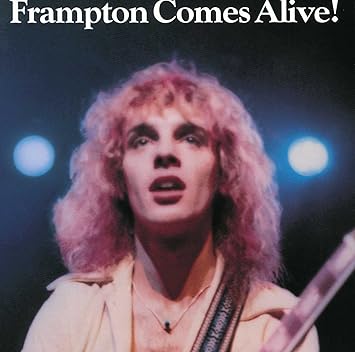
It is far from an original thought to note that Frampton Comes Alive! came out of nowhere. Up until its release, Frampton, a talented guitarist, a passable singer, and a good looking guy with great hair, had experienced some minor fame with various bands, notably The Herd and Humble Pie, and as a sideman, but his pre-Comes Alive! solo career was generally underwhelming. A&M co-founder Jerry Moss had signed Frampton to the label when he was 19, because "He had a cool face, he didn't mind working, and he had a great attitude.” Frampton toured relentlessly and was one of those artists whose songs seem to work better live than on vinyl. And there was the talk-box effect.

So, when he recorded a live album, mostly at the Winterland in San Francisco, but also at the Long Island Arena and SUNY Plattsburgh, there really wasn’t much expected—it was released in January, 1976, after the holiday buying season—and A&M had its collective fingers crossed that it might sell half a million copies and be certified as a gold record. Instead, the album turned into the ultimate “grower.” It charted at No. 51 its second week, then rose to No. 22, No. 6, No. 4 and No. 2, where it stalled throughout March, before hitting No. 1 in April. And it showed staying power, bouncing around the top 10 for the rest of 1976, logging a total of 10 weeks at No. 1, and selling a shocking 6 million copies, which broke Carole King's sales record for Tapestry. Ultimately, it has sold more than 11 million copies worldwide.

Why? I’m not really sure. It is not a great album; much of it is really pretty ordinary (which is why his prior solo albums were not big hits). There are a handful of really good rock songs on the album—songs that rocked hard enough, but not too hard to be offensive—filled with hooks and tight playing. As a high school student in 1976, I can tell you that rock radio played the crap out of the record, and it certainly was a part of the soundtrack of my high school years. Mostly, we heard the singles: "Show Me The Way," "Baby, I Love Your Way," and "Do You Feel Like We Do," but some stations went a couple of tracks deeper than that. So, it might just have been a case of the right album at the right time—a solid product, well promoted, that probably became discussed as one of those things that you had to buy, because everyone was buying it--sort of a pre-Internet version of going viral.

In addition to the rockers, a number of the songs on the live album were acoustic, which were included at Moss’ insistence.  They showcased Frampton’s fine playing and made for a nice contrast from the heavier tracks. One of the best of these is “All I Want To Be (Is By Your Side),” originally from his debut solo album. It’s a nice, bluesy, love song, although I find the lyrics a bit confusing—“I don't care if they cut my hair/All I want to be is by your side.” Huh? But it satisfies the theme by being one of approximately a billion songs that mention four leaf clovers. Yeah, I could have gone with the Old 97’s, but I’m trying to write about artists that I haven’t featured before.

Comes Alive! was, by far, the pinnacle of Frampton’s career. His next album, rushed out to capitalize on his new-found superstardom, was generally substandard, marred by a cheesy, cheesecake album cover and a truly sappy title track. It sold reasonably well, but was generally mocked, including by Frank Zappa. He then starred in the critically panned Sgt. Pepper's Lonely Hearts Club Band film, and was in a serious car accident. A few years later, all his guitars were believed to be destroyed in a cargo plane crash that killed three people, including the black Les Paul Custom that appeared on the cover of Comes Alive! (although it was found years later and returned to him).

Since then, Frampton has released albums, toured with his childhood friend David Bowie (who had been an art student of Frampton's father) and others as a sideman, released an unsuccessful Frampton Comes Alive! II, and has generally stayed active musically, even if most people don’t realize it.  And, like many of us, he no longer has great hair.

I think that it is fair to say that if the universe hadn’t aligned to give Peter Frampton one of the bestselling albums of his era, he’d probably have continued, putting out a series of albums that would have bubbled under the radar of most listeners, maybe occasionally having a radio hit, before being pushed aside from the public consciousness by new generations of musicians, like, say, Foghat, or Pat Travers. That certainly doesn’t mean that they are not good—to the contrary, such artists, including Frampton, are fantastically talented, but still, the incredible, massive,  success of Comes Alive! is an anomaly.

Thursday, January 19, 2017

Change: David Bowie's Changes


purchase [ Changes]


Even as far back as 1970, David Bowie was not considered particularly "normal". He dyed his hair some crazy color(s). He cut it strange - like no one else. Yes .. we had the Beatles's mop cuts and some hippie "let it grow" hair-styles - but Bowie was weird. He wore strange clothes.
That said, to me,  David Bowie embodied the right to be and the ability to be different. I place <Space Oddity> at the top of my personal list of Bowie's best songs (and I used it some tie back in a now removed MediaFire blog [but restored here]).


 That said, our current theme looks at Change, wherein Bowie excels.

Way back when things like changing the color of your hair, changing your born gender, changing even your appearance were looked down upon (it's still true) -David Bowie was out there doing it all.
Ch ... ch... ch ... changes (one more or one less "ch" in the original) seems to me to be the prime choice for our current theme. It merges <In Memoriam> and the current theme in one.

The lyrics, for example:  "turn and face the changes" seems to me to be the most  critical part - way out in front of the times, Bowie  seemed to know where <changes> were headed. Even when we didn't. I would place him on a per with Mr Dylan for his lyrical ability. Look what else he says: "These children that you spit on/ As they try to change their worlds/ Are immune to your consultations". Please keep in mind that this is the 70s, and you know where the world/youth was at at that time: lots of changes going down.

Known more for his "stagecraft" and songwriting, Bowie also played a few instruments. The credits for <Changes> credit him for vocals and sax. You see him playing the guitar in the clip above. His band included Mick Ronson and Rick Wakeman, both of whom worked with a number of other names you've probably heard of.

Thursday, November 10, 2016

Politics: This Is Not America

[purchase]

Just a short contribution, in light of Tuesday’s shocking election result. I’ll try to have something more substantial on the debacle over at Another Old Guy in a few days. (Here it is!)

My first thought when I heard the final result was that this was not the America that I knew, and that turned to nauseous feeling when I realized that half of this country sees America in a very different way than me—where division, hate, misogyny, racism, anti-Semitism, homophobia, bullying, greed and egotism are glorified. And I was pissed.

Here’s what my America is:

we believe that the American dream is big enough for everyone — for people of all races and religions, for men and women, for immigrants, for LGBT people, and people with disabilities. For everyone. . . .

I count my blessings every single day that I am an American. And I still believe as deeply as I ever have that if we stand together and work together with respect for our differences, strength in our convictions and love for this nation, our best days are still ahead of us.

Because, you know — you know, I believe we are stronger together and we will go forward together. And you should never, ever regret fighting for that. You know, scripture tells us, “Let us not grow weary in doing good, for in due season, we shall reap if we do not lose heart.”

So my friends, let us have faith in each other, let us not grow weary, let us not lose heart, for there are more seasons to come. And there is more work to do.

That was from the concession speech delivered by Hillary Clinton, the one candidate who was qualified, both by experience and temperament, to lead America, the candidate who, as I write this, got more votes than the President Elect, and who would have made a damn fine President. And someone who, at least publicly, is a lot more gracious than I feel right now.

 I’d like to hope that what has happened over the last year is not America. But I’m just not sure anymore.

Wednesday, October 29, 2014

Monsters: Scary Monsters


David Bowie: Scary Monsters
[purchase]

I currently live in Tarrytown, New York, which is right next to Sleepy Hollow, and our two villages share many things—a school district, a library, sports programs and a love of Halloween. Over the past few weeks, the streets have been filled with tourists, the villages are decorated with all manner of Jack O’Lanterns, scarecrows and other ghouls. We have parades, hayrides, haunted houses, bonfires and the like. I’m glad that our local merchants are able to cash in on the craze, and people seem to enjoy it, but I think that Halloween, like so many holidays, has gotten out of control. Little kids dressed up like superheroes or princesses are cute. Drunk adults dressed up like vampires or slutty nurses, not so much. I guess it is part of our culture now to try to hang on to our youth longer and longer, and while I’m in no way advocating a return to men wearing suits and hats all the time, or women having to wear dresses and stockings, I do think that there comes a time when putting on a costume in public is just silly. Except, of course, at my college reunion. And get off my lawn, you damn kids!

Speaking of college, when I worked at WPRB, David Bowie released Scary Monsters, which turned out to be another career resuscitator for him. It had a bunch of good and interesting songs, top notch musicians, including Robert Fripp, Roy Bittan and Carlos Alomar, and it hit a sweet spot between commercial and experimental, with rock, disco and electronic influences. It was both a commercial and artistic success, and is commonly considered to be Bowie’s last great album.

Princeton is only a few miles from Grover’s Mill, the site of the alien invasion from Orson Welles’ War of the Worlds radio show, which was a Halloween trick and treat of its own back in 1938. Common wisdom was that the broadcast caused wild panic, but more recent studies indicate that the craziness was overstated. I got the idea of getting a bunch of extra copies of the album from the record company and sending some WPRB staffers out to Grover’s Mill on Halloween to hand out the albums to people. What I don’t remember is what we required before we would give out the precious vinyl, who went, and how, in the pre-cell phone era, we reported this on the air. I know that we had some sort of a remote board, but maybe one of my reader/friends will have a better memory.

I do remember thinking it was a pretty funny idea. And it wouldn’t surprise me if my copy of the album, sitting in a box in my basement, was from that same package of freebies.

Saturday, November 9, 2013

Stage Names: David Bowie

[purchase]

I am pleasantly surprised that, on this, the last day of our Stage Names theme, no one has tackled David Bowie. Bowie, in my mind, qualifies twice. Born David Jones in 1947, Bowie took his stage name to avoid being confused with Davey Jones of the Monkees. And, in the course of his career, Bowie has taken on the identities of Ziggy Stardust, the Thin White Duke, and others. The first of these stage identities was Major Tom. Major Tom is an astronaut who begins by relishing the fame that space travel brings him. I grew up in the 1960s, and I can assure you that the Apollo astronauts did indeed receive rockstar-like adulation in their day that is hard to imagine today. But Tom also finds his experience isolating, and the alternate reality of his unearthly environment soon consumes him. He sings, “Here am I sitting in my tin can…” and it goes from there. David Bowie was a struggling unknown when he recorded the song, but his career mirrors it in eerie ways. Bowie would soon be rocketed into this same kind of fame, and he would eventually be consumed by it, and retreat into the oblivion of a serious cocaine habit.

Luckily, that is not the end of the story. Bowie was able to overcome his drug habit. He continued his musical pursuits with some wild experiments that, for a time, resulted in a string of unpopular albums. That may have been bad news for his fans, but it probably gave Bowie some distance from his fame that aided his recovery. By 1980, Bowie was able to revisit the character of Major Tom in the song Ashes to Ashes, and view matters in a way that was both rueful and a mature reconsideration of his career and life to that point. Since then, Bowie has continued to be a restless musical chameleon. Collaborators have included a list of people who little else in common: Nile Rodgers of the disco band Chic, Brian Eno, Bing Crosby, Freddie Mercury, and Iggy Pop, just to name a few. Albums have become less frequent of late, and there may never be another full-length tour. But David Bowie has endured far longer than Davey Jones of the Monkees, and whatever Bowie does next is sure to be worth paying attention to.

[purchase]

Monday, May 20, 2013

Flowers: Pretty Pink Rose


Adrian Belew (w/ David Bowie): Pretty Pink Rose
[purchase]

Adrian Belew is an incredible, inventive guitarist, and deserves all of the critical and commercial success that he has achieved. The story of his career is amazing—where other talented musicians toil in obscurity their whole lives, once he got his big break, Belew has consistently been able to obtain work with some of the biggest and best. To be clear—I’m not saying he isn’t worthy, because he assuredly is—I’m a big fan and really respect his music. But still, it is pretty incredible.

In short, Belew was 27 and playing with cover bands in the Nashville area, when Frank Zappa heard him play, apparently tipped off by his chauffeur. This led to an audition for Zappa, and a spot in his touring band. Brian Eno saw one of the Zappa shows and recommended Belew to his buddy David Bowie, and when Zappa went on hiatus, Belew joined Bowie’s band.

After that, while visiting New York, he became friendly with the emerging Talking Heads, and even sat in with them occasionally. During this period, he met Robert Fripp. Eventually, he joined the Talking Heads for their Remain in Light album and tours and contributed to a number of Talking Heads side projects, including the Tom Tom Club. In fact, he was supposedly asked by Tina Weymouth and Chris Frantz to replace David Byrne as front man for the Talking Heads.

Belew was then asked by Fripp to join a new band that ultimately became the rejuvenated King Crimson, and played with that band while also putting out a number of solo albums that careened among pop, rock, world music, experimental arty music, and acoustic songs. Yours truly, while working at Atlantic Records during the summer of 1982, attempted to convince the dance music person to remix a song from Belew’s first solo record, Lone Rhino, to see if it could cross over into that market. The guy actually considered it briefly before realizing that it was a pretty bad idea. Nevertheless, Belew has had a few hit songs (although not dance hits), including “Pretty Pink Rose.”

In 1990, Bowie attempted to hire Belew to tour with him to support a career retrospective box set, Sound + Vision. To help convince Belew, who had some reluctance to put his solo career on hold, Bowie offered to provide some songs to Belew, and sing on his next album. He sent over some demos, including one for “Pretty Pink Rose” which Bowie had cut with, Bryan Adams’ (!) backing band. Belew hated it. But instead of throwing up his hands, he went into the studio and reworked the song. Bowie loved the new version, and they recorded it and it hit #2 on the Billboard “Modern Rock” chart.

The performances are exuberant. The lyrics seem to be about the Cold War and include a bunch of very inventive lines—even if they are somewhat cryptic—for example:

She's the poor man's gold, she's the anarchist crucible
Flyin' in the face of the despot cannibal

You rarely hear a pop song with the words “anarchist” or “cannibal,” much less “crucible.” And Belew’s guitar screams and squiggles wildly (and I mean that in the best possible sense). I suspect that had this been released by Bowie, it would be considered a classic, but instead, it is now just a hidden treasure.

Monday, April 23, 2012

Song Chain: All The Young Dudes


David Bowie: All the Young Dudes
[purchase]

Geoviki's mention of a strange dream/nightmare combined with the mention of a television, brings to my mind this song that Bowie wrote for Mott the Hoople. Here, Bowie performs the song. He sings, "Television man is crazy saying we're juvenile delinquent wrecks", and take us from dreams of fame and fortune in the name of Jesus to the fame and fortune of various personalities of the 70s glam rock scene with much that is likewise disquieting.
(tip of the hat to Bert: I see belatedly that he sent the Mott the Hoople version your way a while back)

Tuesday, September 20, 2011

Nine Lives: Cat People (Putting Out Fire)


David Bowie: Cat People (Putting Out Fire)

[purchase]

With the release of the post-disco classic Let's Dance in 1983, David Bowie took another trend-leading musical shift. Produced by Chic's Nile Rogers, it also features Stevie Ray Vaughan on lead guitar. Four hit singles came out of this album, including this re-recorded version of Cat People (Putting Out Fire), from the 1982 erotic thriller of the same name. Bowie begins the song in a slow, goth-y baritone (and when did his voice get that low? It used to be pretty airy in the 70s, I remember), and then he kicks up the beat so you can, yanno, dance to it. This is one song where the producer's skill really stands out. So does the percussion.

My absolute favorite manga artist, Miyamoto Kano, drew this charming catboy (or nekomimi), which is a fashionable Japanese trope in both manga and cosplay. Half the fun is plotting out exactly how one has become a nekomimi, and I won't elaborate about how much other characters really, reaaaally like those ears and tail.

Friday, November 13, 2009

Name-Droppers: Reverse Chain Letter Edition


Bob Dylan: Song to Woody

[purchase]

So here we have three songs written from an artist to one of his influences. Bob Dylan's "Song to Woody" is the most direct of the three: it's a love song to Woody and his songs. It was one of only two self-penned songs on Dylan's eponymous debut, and he nicked the music from Woody's "1913 Massacre". It's obvious Dylan sees himself as the next link in the chain here, and he wants his listeners to know that, too.


David Bowie: Song for Bob Dylan

[purchase]

Nine years later, David Bowie, of all people, picks up the chain and writes "Song for Bob Dylan" for his Hunk Dory album. It's still written in the form of a letter from artist to inspiration, but it's a bit harder to follow the narrative. Who exactly is "the same old painted lady from the brow of the super brain"? I have no idea.


The Brian Jonestown Massacre: (David Bowie I Love You) Since I Was Six

[purchase]

Twenty-Five years on, the Brian Jonestown Massacre find themselves conjuring up one of their influences in "(David Bowie I Love You) Since I Was Six". This is not a gushing fan letter. The lyrics don't even mention Bowie. But the title and the borrowed melody leave no doubt about who they were thinking of.

I don't know (yet!) of any songs written to the Brian Jonestown Massacre.

Tuesday, September 30, 2008

Blog Names: Art Decade


David Bowie: Art Decade

[purchase]

"Specializing in music of the 'Long Seventies'" Emmett, Mike, Big B, and Sheridan Dupre X hold it down at Art Decade. This page comes across like some kind of inside only/mystery and I like that. I try to spin their tunes once a week for something I'd never know about but always dripping seventies and hot. Oft times contributor, ib, eventually landed his poetic entries on his own page, SibLINGSHOT. Anyways, they keep it short and so will I.

Tuesday, June 3, 2008

Boats: Red Sails


David Bowie: Red Sails

[purchase]

Oh, c'mon! like you didn't see this one coming from about 40 feet away! (If not, let me provide four of you with 10 foot poles, and...)

Anyhum, it's a ship(ish) song. Too-hum, it's going to be my last posting from the Bowie box-set, I promise. At least for a good couple of whiles.

That is seeming the trouble, for me, with box-sets from artists who cast their song-nets far and wide (and deep)... It's easy to dip into them wells... "Hmm, I need an history song? Dylan! Something about anything? Bowie! Woman done me wrong? I bet Robert Johnson has something to say about that..."

And too, the sheer quality, depth, and bredth from fellow (in the non-gender-specific encompassing of the word "fellow") posters here on SMM is nearly enough to make me wanna hide my head under a rock, just peeking out to glimpse the quality. Jeepers! Brenden K., brw, ld, hell all y'all, make me want to step up my game... You (and all the others too) write so well!

OK, now it's out there... You make me want to write better. Now all's I gots to do is 'do'...